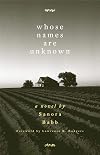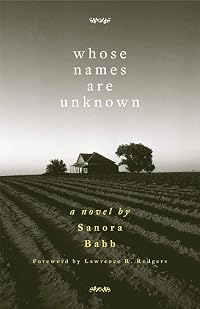
Whose Names Are Unknown
by Sanora Babb
On This Page
Description
Fiction. Literature. Sanora Babb' s long-hidden novel Whose Names Are Unknown tells an intimate story of the High Plains farmers who fled drought dust storms during the Great Depression. Written with empathy for the farmers' plight, this powerful narrative is based upon the author' s firsthand experience. This clear-eyed and unsentimental story centers on the fictional Dunne family as they struggle to survive and endure while never losing faith in themselves. In the Oklahoma Panhandle, Milt, show more Julia, their two little girls, and Milt' s father, Konkie, share a life of cramped circumstances in a one-room dugout with never enough to eat. Yet buried in the drudgery of their everyday life are aspirations, failed dreams, and fleeting moments of hope. The land is their dream. The Duanne family and the farmers around them fight desperately for the land they love, but the droughts of the thirties force them to abandon their fields. When they join the exodus to the irrigated valleys of California, they discover not the promised land, but an abusive labor system arrayed against destitute immigrants. The system labels all farmers like them as worthless " Okies" and earmarks them for beatings and worse when hardworking men and women, such as Milt and Julia, object to wages so low they can' t possibly feed their children. The informal communal relations these dryland farmers knew on the High Plains gradually coalesce into a shared determination to resist. Realizing that a unified community is their best hope for survival, the Dunnes join with their fellow workers and begin the struggle to improve migrant working conditions through democratic organization and collective protest. Babb wrote Whose Names are Unknown in the 1930s while working with refugee farmers in the Farm Security Administration (FSA) camps of California. Originally from the Oklahoma Panhandle are herself, Babb, who had first come to Los Angeles in 1929 as a journalist, joined FSA camp administrator Tom Collins in 1938 to help the uprooted farmers. As Lawrence R. Rodgers notes in his foreword, Babb submitted the manuscript for this book to Random House for consideration in 1939. Editor Bennett Cerf planned to publish this " exceptionally fine" novel but when John Steinbeck' s The Grapes of Wrath swept the nation, Cerf explained that the market could not support two books on the subject. Babb has since shared her manuscript with interested scholars who have deemed it a classic in its own right. In an era when the country was deeply divided on social legislation issues and millions drifted unemployed and homeless, Babb recorded the stories of the people she greatly respected, those " whose names are unknown." In doing so, she returned to them their identities and dignity, and put a human face on economic disaster and social distress. show lessTags
Recommendations



















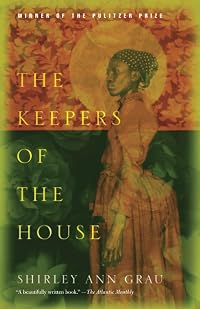
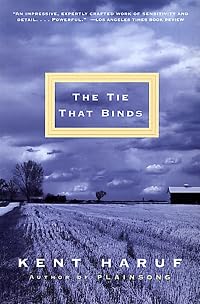
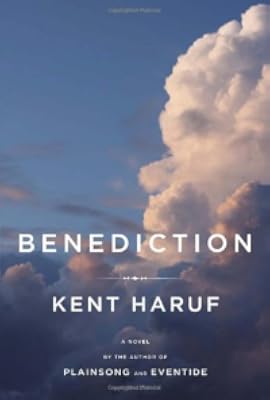
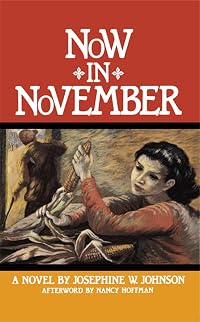



Member Recommendations

Member Reviews
I picked up Sanora Babb's novel, WHOSE NAMES ARE UNKNOWN (2004), because I'd read her memoir, AN OWL ON EVERY POST, and enjoyed it immensely. I found the novel to be highly autobiographical, as her fictional Dunne family's hard times on Colorado's high plains very closely followed those of the Babbs in her memoir. But then it diverged sharply, when, thoroughly beaten down by dust storms and drought, the Dunnes packed it all in and joined that mass migration to California in search of a better life. Their lives in the migrant pickers camps of California are no better, as they are forced to work for slave wages, and when the workers rise up and strike for better pay, they are evicted from the camps and nearly starve in the process. There show more is much ink given here to the humiliations and indignities suffered by the migrant families, all lumped together as 'okies,' by the better off California natives. The children especially suffered from this cruel discrimination.
Per the introduction to Babb's novel, it was written in 1939, but because of the enormous success of Steinbeck's THE GRAPES OF WRATH, the publishers chose not to publish it, fearing it would be viewed as a copycat novel. Ironically, Steinbeck had used many of Babb's own notes and papers from her work with the Farm Security Administration in GRAPES, something she was never credited for. Her novel was only 'rediscovered' and finally published more than eighty years later.
The book's title was taken from eviction notices posted on farms by banks dufing the Dust Bowl years when they foreclosed, as they were not always sure who was still living there.
The subject of Babb's novel can be, and often is, quite heartbreaking. And it should indeed be ranked alongside Steinbeck's. There are flashes of beautiful, even brilliant writing here, and I'm glad I read it. Very highly recommended.
- Tim Bazzett, author of the man memoir, BOOKLOVER show less
Per the introduction to Babb's novel, it was written in 1939, but because of the enormous success of Steinbeck's THE GRAPES OF WRATH, the publishers chose not to publish it, fearing it would be viewed as a copycat novel. Ironically, Steinbeck had used many of Babb's own notes and papers from her work with the Farm Security Administration in GRAPES, something she was never credited for. Her novel was only 'rediscovered' and finally published more than eighty years later.
The book's title was taken from eviction notices posted on farms by banks dufing the Dust Bowl years when they foreclosed, as they were not always sure who was still living there.
The subject of Babb's novel can be, and often is, quite heartbreaking. And it should indeed be ranked alongside Steinbeck's. There are flashes of beautiful, even brilliant writing here, and I'm glad I read it. Very highly recommended.
- Tim Bazzett, author of the man memoir, BOOKLOVER show less
"The desperation of living came up in him again, in anger and in humiliation; in anger he shook his fist, shook it hard and fierce at something in the world”
This is an absolute gem of a book. Written in the 1930s but not published until 2006 because it was completed around the same time as Steinbeck's The Grapes of Wrath but was considered too similar. Maybe that was true but Whose Names Are Unknown stands the test of time, and really shouldn’t have been hidden away for so long.
It follows the plight of Milt and Julia Dunne and their family. Farming in the Oklahoma Panhandle they are faced with terrible choices. Their crops consistently fail while the dust storms becomes ever more destructive. The chapter where Julia writes a diary show more describing the storms is terrific.
"April 27. Black as night nearly all day. This is one of the hardest weeks. Many nights we can hear the cattle bawling for water. They sound pitiful and helpless, and there’s nothing any of us can do. We need groceries today but don’t dare venture out. With our wheat gone our credit won’t be worth anything”
Dispossessed and ashamed they flee to California, in the hope of a better life. It doesn’t exactly work out that way.
It’s a powerful, compelling story that gathers resonance as you unpeel the layers. The destruction of the environment, economic migration, greedy and rapacious banks/ corporations, low wages, exploitation. It went straight on to my favourite shelf. show less
This is an absolute gem of a book. Written in the 1930s but not published until 2006 because it was completed around the same time as Steinbeck's The Grapes of Wrath but was considered too similar. Maybe that was true but Whose Names Are Unknown stands the test of time, and really shouldn’t have been hidden away for so long.
It follows the plight of Milt and Julia Dunne and their family. Farming in the Oklahoma Panhandle they are faced with terrible choices. Their crops consistently fail while the dust storms becomes ever more destructive. The chapter where Julia writes a diary show more describing the storms is terrific.
"April 27. Black as night nearly all day. This is one of the hardest weeks. Many nights we can hear the cattle bawling for water. They sound pitiful and helpless, and there’s nothing any of us can do. We need groceries today but don’t dare venture out. With our wheat gone our credit won’t be worth anything”
Dispossessed and ashamed they flee to California, in the hope of a better life. It doesn’t exactly work out that way.
It’s a powerful, compelling story that gathers resonance as you unpeel the layers. The destruction of the environment, economic migration, greedy and rapacious banks/ corporations, low wages, exploitation. It went straight on to my favourite shelf. show less
It is the late 1930s and the country is still in the throes of the Great Depression. On top of that, the Oklahoma panhandle is plagued by drought and dust storms of historic proportions. The wheat farmers in the region, who struggle to make ends meet in the best of times, are becoming increasingly desperate as their crops have been wiped out for several seasons in a row. Tired of the hunger, illness, and abject poverty they face on a daily basis, many families give up and migrate to California where they hope to establish better lives. Instead, they find nothing but disillusionment in the Golden State, where they are met with contempt, humiliation, and violence from the local farm owners. Told from one family’s perspective, this is a show more story of the struggle to maintain one’s dignity and basic humanity in the face of almost overwhelming economic deprivation.
So, you may be thinking “Wait, I know this book—The Grapes of Wrath, right?” Well, no, but it almost was. Rather, this is the basic outline of Sanora Babb’s Whose Names Are Unknown, which was written at virtually the same instant as John Steinbeck’s classic work. However, because Babb was an unproven novelist who lacked Steinbeck's star power, her novel was not published at the time; in fact, her original publisher reneged on a contract to produce the book, fearing competition with such a notable rival. To make matters worse, it languished in manuscript form for another 65 years before finally being brought to a wider audience!
That is a real shame because while the two novels are very similar in the subject matter they cover, they do tell somewhat different versions of the story. I actually preferred Steinbeck’s detailed, well-paced, and sweeping approach, but I did appreciate Babb’s concise tale that focuses far more on personal relationships, particularly those involving the younger and female characters. It is also less heavy-handed in terms of its political motivation, which can feel a little dated to the modern reader. Still, if you have read The Grapes of Wrath, you will probably feel like you already know what Whose Names Are Unknown is all about, which makes it difficult to recommend without some reservation. show less
So, you may be thinking “Wait, I know this book—The Grapes of Wrath, right?” Well, no, but it almost was. Rather, this is the basic outline of Sanora Babb’s Whose Names Are Unknown, which was written at virtually the same instant as John Steinbeck’s classic work. However, because Babb was an unproven novelist who lacked Steinbeck's star power, her novel was not published at the time; in fact, her original publisher reneged on a contract to produce the book, fearing competition with such a notable rival. To make matters worse, it languished in manuscript form for another 65 years before finally being brought to a wider audience!
That is a real shame because while the two novels are very similar in the subject matter they cover, they do tell somewhat different versions of the story. I actually preferred Steinbeck’s detailed, well-paced, and sweeping approach, but I did appreciate Babb’s concise tale that focuses far more on personal relationships, particularly those involving the younger and female characters. It is also less heavy-handed in terms of its political motivation, which can feel a little dated to the modern reader. Still, if you have read The Grapes of Wrath, you will probably feel like you already know what Whose Names Are Unknown is all about, which makes it difficult to recommend without some reservation. show less
This novel depicts the lives and struggles of Oklahoma farmers in the Depression and Dust Bowl drought, and their westwards migration to California in search of work. If that sounds like a plot summary of The Grapes of Wrath, that's because it is. This novel had the misfortune to be written and considered for publication just at the same time that Steinbeck's masterpiece hit the shelves and sold the best part of half a million copies over the next five months, so "obviously, another book at this time about exactly the same subject would be a sad anticlimax!”, in the publisher's words. The novel didn't see the light of day for another two thirds of a century and was published in 2004, a year before the author's death at the age of 98. show more It is a shorter novel than Steinbeck's and its prose has a starker simplicity and portrays with somewhat greater clarity the sufferings of the families, especially the central family of the Dunnes. We learn much more about the Dunnes' lives in Oklahoma than we do those of Steinbeck's Joads - two thirds of this book is set in Oklahoma, as opposed to only the start of Steinbeck's, and there is less focus here on the actual journey westwards. That said, I would say that Babb's characters are less memorable than the Joads, and for me at least, I would say that this novel pulled somewhat less of a personal emotional punch. show less
You may already know the story of Whose Names Are Unknown and its path to publication. If so, you may wish to skip the next paragraph. I'm including it because I found it fascinating. Truly, it's the primary reason I picked this novel up.
In the 1930s, author Sanora Babb was working as a volunteer for the Farm Security Administration in California. She helped in the camps for displaced farmers. Under the recommendation of Tom Collins, the same Collins who served as the primary source for The Grapes of Wrath, Babb began to compile notes about her experience. Twice, she crossed paths with John Steinbeck. Babb went on to write about the workers and the camps in Whose Names Are Unknown. In 1939, she found a publisher for the novel in Random show more House. All was set. Then The Grapes of Wrath became a sensation. It won the Pulitzer. It won the National Book Award. It was the best selling book of the year. And suddenly, Random House was no longer interested (though they did pay her). In fact, no publisher wanted anything to do with Babb's novel. All knew it would be viewed at best as an anti-climatic follow-up to Steinbeck's novel, at worst a horrible imitation. So Whose Names Are Unknown remained unpublished and unknown until it was picked up by a university press, sixty-five years later, in 2004.
Since its publication, there has been some question as to whether one writer was trying to trying to capitalize off the other's project. Some question as to whether one writer used the other's notes. Personally, I think both were just moved by the situation and had the same great idea at the same time. Unfortunately for Babb, her time came a tad too late.
Undoubtedly, there is quite a bit of similarity between the two novels. Both focus on an Oklahoman family, despite the fact that the Dust Bowl affected other states as well. Both show their journey to California, bouncing around from camp to camp. Both show the desperation of a family being pushed to its limits. While I strongly feel Whose Names Are Unknown stands on its own, I agree with the publisher: at the time, it would not have had the best results.
Yet, Whose Names Are Unknown is not The Grapes of Wrath. Yes, the plots and characters are certainly similar. Even the tone of both pieces, a tone of sadness and protest, was similar. But while Steinbeck moved the Joad family out west as soon as he could, Babb took her time moving the Dunne family. While Steinbeck was much more obvious with his meandering metaphors, Babb stayed primarily focused on the central plot. While Steinbeck unleashed the longest work he'd written up to that point in his life, Babb kept her story incredibly concise. Two sides of the same coin? Yes. But both were stellar in their own regard.
As a long-time Steinbeck fan, I'm quite partial to Steinbeck. That said, Whose Names Are Unknown could've easily earned a place alongside The Grapes of Wrath in my heart, but it did fail on one regard: it was too concise. There are times when the Dunne family seems on the brink of collapse. Then the next chapter they're getting along decently. There's no bridge or explanation. This was particularly noticeable at a point in the story when the family is thrown from their small home with all their possessions. The next chapter, the family is in their kitchen with all their possessions. Was this a new home? The old? What happened? There are a few too many moments such as these that keep an observant reader asking, “what did I miss?” I can't help but wonder if word got out about Steinbeck's upcoming novel, and if there wasn't a rush to finish this one. That would certainly be a logical reason for some of the holes in the story. Even with the holes, however, the reader can surmise what happened in the in-between and not miss too much.
So fellow writers, remember the lesson of Babb and Steinbeck: while you're sitting on your wonderful idea, a muse may be handing your novel to another writer. Not that I think Babb was sitting on her idea, or made any wrong choices in the matter, but it's still a valuable lesson. No, I think the misfortunes of Whose Names Are Unknown can be chalked up to the cosmos or fate or chance or whatever you want to call it. Fortunately, we now have access to this great work, and while it may be too late for the migratory workers of the 1930s, it might be just in time for our current mounting troubles with the climate and worker's rights. Maybe the fates had reason to delay this novel's publication. show less
In the 1930s, author Sanora Babb was working as a volunteer for the Farm Security Administration in California. She helped in the camps for displaced farmers. Under the recommendation of Tom Collins, the same Collins who served as the primary source for The Grapes of Wrath, Babb began to compile notes about her experience. Twice, she crossed paths with John Steinbeck. Babb went on to write about the workers and the camps in Whose Names Are Unknown. In 1939, she found a publisher for the novel in Random show more House. All was set. Then The Grapes of Wrath became a sensation. It won the Pulitzer. It won the National Book Award. It was the best selling book of the year. And suddenly, Random House was no longer interested (though they did pay her). In fact, no publisher wanted anything to do with Babb's novel. All knew it would be viewed at best as an anti-climatic follow-up to Steinbeck's novel, at worst a horrible imitation. So Whose Names Are Unknown remained unpublished and unknown until it was picked up by a university press, sixty-five years later, in 2004.
Since its publication, there has been some question as to whether one writer was trying to trying to capitalize off the other's project. Some question as to whether one writer used the other's notes. Personally, I think both were just moved by the situation and had the same great idea at the same time. Unfortunately for Babb, her time came a tad too late.
Undoubtedly, there is quite a bit of similarity between the two novels. Both focus on an Oklahoman family, despite the fact that the Dust Bowl affected other states as well. Both show their journey to California, bouncing around from camp to camp. Both show the desperation of a family being pushed to its limits. While I strongly feel Whose Names Are Unknown stands on its own, I agree with the publisher: at the time, it would not have had the best results.
Yet, Whose Names Are Unknown is not The Grapes of Wrath. Yes, the plots and characters are certainly similar. Even the tone of both pieces, a tone of sadness and protest, was similar. But while Steinbeck moved the Joad family out west as soon as he could, Babb took her time moving the Dunne family. While Steinbeck was much more obvious with his meandering metaphors, Babb stayed primarily focused on the central plot. While Steinbeck unleashed the longest work he'd written up to that point in his life, Babb kept her story incredibly concise. Two sides of the same coin? Yes. But both were stellar in their own regard.
As a long-time Steinbeck fan, I'm quite partial to Steinbeck. That said, Whose Names Are Unknown could've easily earned a place alongside The Grapes of Wrath in my heart, but it did fail on one regard: it was too concise. There are times when the Dunne family seems on the brink of collapse. Then the next chapter they're getting along decently. There's no bridge or explanation. This was particularly noticeable at a point in the story when the family is thrown from their small home with all their possessions. The next chapter, the family is in their kitchen with all their possessions. Was this a new home? The old? What happened? There are a few too many moments such as these that keep an observant reader asking, “what did I miss?” I can't help but wonder if word got out about Steinbeck's upcoming novel, and if there wasn't a rush to finish this one. That would certainly be a logical reason for some of the holes in the story. Even with the holes, however, the reader can surmise what happened in the in-between and not miss too much.
So fellow writers, remember the lesson of Babb and Steinbeck: while you're sitting on your wonderful idea, a muse may be handing your novel to another writer. Not that I think Babb was sitting on her idea, or made any wrong choices in the matter, but it's still a valuable lesson. No, I think the misfortunes of Whose Names Are Unknown can be chalked up to the cosmos or fate or chance or whatever you want to call it. Fortunately, we now have access to this great work, and while it may be too late for the migratory workers of the 1930s, it might be just in time for our current mounting troubles with the climate and worker's rights. Maybe the fates had reason to delay this novel's publication. show less
The backstory is more interesting than the novel. Babb was working in an FSA migrant camp during the depression, helping migrant workers in their struggle to work and live. One day a well-known journalist visited the camp, and Babb’s boss asked her to share some of her notes with the writer, in the hope that an article and publicity would generate support for their work. She did. She was also working on a novel of her own. The journalist borrowed her notebook. His name was John Steinbeck, and some months later, “The Grapes of Wrath” was published. By then, Babb’s manuscript, which had been accepted for publication, was cancelled… editor Bennett Cerf told her they didn’t need another migrant-worker saga now. This is her show more novel, finally published in 2004.
It’s not bad. Moving among several dry land farm families on the plains, beset by drought and dust storms, predatory banks, impoverishment, hunger, and helplessness, it touches on pretty much all the same themes as Grapes. It’s Willa-Cather-ish in some lyrical descriptions of the landscape, and the sheer loneliness and menace of the life these homesteaders live, as well as their care and help for each other. The treatment of these laboring people by the bosses and growers is an atrocity, producing despair, suicide, and early deaths.
But Babb is not Steinbeck. The families are almost indistinguishable, characters wooden. And her language never soars to the level of myth or Biblical tragedy as his does…though the suicide of a shopkeeper comes close. Two awful childbirth scenes, both producing dead infants, is overkill. Two sexual encounters are maudlin and coy. Conversations among the characters become infodumps or lectures delivered as set pieces. I found myself skimming the last pages, just to finish.
Interesting but not captivating. Competent but rarely impressive. Even as Steinbeck used Babb’s in-the-trenches work to build his own novel and beat her to the punch, his is still the great one. Cerf was probably right. show less
It’s not bad. Moving among several dry land farm families on the plains, beset by drought and dust storms, predatory banks, impoverishment, hunger, and helplessness, it touches on pretty much all the same themes as Grapes. It’s Willa-Cather-ish in some lyrical descriptions of the landscape, and the sheer loneliness and menace of the life these homesteaders live, as well as their care and help for each other. The treatment of these laboring people by the bosses and growers is an atrocity, producing despair, suicide, and early deaths.
But Babb is not Steinbeck. The families are almost indistinguishable, characters wooden. And her language never soars to the level of myth or Biblical tragedy as his does…though the suicide of a shopkeeper comes close. Two awful childbirth scenes, both producing dead infants, is overkill. Two sexual encounters are maudlin and coy. Conversations among the characters become infodumps or lectures delivered as set pieces. I found myself skimming the last pages, just to finish.
Interesting but not captivating. Competent but rarely impressive. Even as Steinbeck used Babb’s in-the-trenches work to build his own novel and beat her to the punch, his is still the great one. Cerf was probably right. show less
A classic. Empathetic portrait of a community of Oklahoma farm families affected by the Depression and by the accompanying dust storms. Story zeroes in on the Dunne family in particular. A group (including that family) set out and become migrant workers in Arizona and California. The author worked for the FSA (government agency helping impoverished farmers) and must have used some of her own experiences and that of clients. Steinbeck's masterwork came out at the same time this did, and the publisher felt one work on that subject was enough and chose Grapes of wrath. Worth reading.
Anyone reading both works may decide which they like better.
Anyone reading both works may decide which they like better.
Members
- Recently Added By
Lists

Books Read in 2021
5,361 works; 113 members

Books We Love to Reread
695 works; 298 members

Vlogbrothers Book Recommendations
307 works; 4 members
Author Information

7+ Works 529 Members
Some Editions
Awards and Honors
Common Knowledge
- Original publication date
- 2004
- Important places
- Oklahoma, USA
- Important events
- Great Depression
- Dedication
- To the people who do the work of the western valleys
- First words
- Although the old man had raised a fair crop of broomcorn that summer and the price per ton was better than usual, by the time the year's debts were paid and a little money kept back to send to the mail order houses for winter... (show all) needs, nothing was left.
Classifications
Statistics
- Members
- 393
- Popularity
- 79,712
- Reviews
- 15
- Rating
- (4.14)
- Languages
- English, French, German
- Media
- Paper, Audiobook, Ebook
- ISBNs
- 13
- ASINs
- 4