On This Page
Description
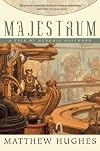
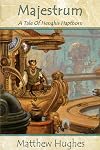
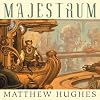
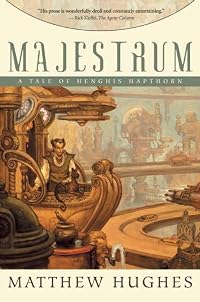
The scientific method and a well-calibrated mind have long served freelance discriminator Henghis Hapthorn, but the universe is shifting away from logic and reasen towards a new age of sympathetic association, better known as magic. This change is evidenced by the transformation of Hapthorns electronic integrator into a small fruit-eating creature and the splitting of Hapthorn's own personality into two distinct beings sharing one body. When Hapthorn is hired by Loard Afre to investigate the show more motives of his daughter's new companion, a young man of indeterminate circumstances, he takes the job expecting it to allow him the opportunity to explore and understand his changing universe. Little does he realize, but the path of discovery will lead to deeper questions, amysterious assignment from the Archon himself, and the ancient and powerful secret name. show lessTags
Recommendations








Member Reviews
I loved this book's tone of voice, which is that of the narrator, Henghis Hapthorn. Very droll, amusing, even funny at times. Majestrum is a science fantasy, I guess, but first of all it's a mystery, and I don't go for those much. I like to solve puzzles on occasion, and I love to read sf/fantasy, but mixing them together seems to be not such a good idea. Henghis has no friends, though, so without an intricate puzzle plot to drive things along, what would we have left? Really, the tone of voice kept me reading, just for the love of hearing the words in my head. Hughes is a very good writer. I think he overdid the mystery aspect of it, though. At least as a mystery n00b, I really couldn't follow the connections. It was too subtle for me, show more perhaps. In fact, "subtle" describes the book quite well, and that's part of it's charm, as with the work of Gene Wolfe. Think of Wolfe with a sense of humor (as he nearly does in Wizard and Knight). Yet, also think of the highly cerebral Sherlock Holmes. As with the Conan Doyle stories, things build steadily to a head, with our hero only barely breaking a sweat. This book could have ended with a great epiphany for our hero, who lives in his head, and finds that his magical alter ego is taking over said head as the Great Wheel turns and the age of rationalism gives way to that of magic. Instead he whines that soon he will be relegated to a dusty back corner, his life effectively over. This is an interesting device Hughes employs, and it does give him an additional main character (even if that character is, actually, part of Henghis himself). But my point is this: here we have this very self-satisfied guy, whom we like very much, but still, he's quite full of himself. He has no friends, no family. When his interrogator (far future Earth's equivalent of a PIM) turns into a familiar with a fondness for fruit, we see how Henghis really doesn't like having to put up with other's differences and quirks. No one seems worthy of his time or respect, basically. And no one deserves an answer to a question, either. It's always "It would be premature to say." It's funny, but there it is. So the world this man has built his life and reputation on is changing drastically. The rules he follows will no longer apply. In fact, we see he is literally being turned out of his own mind by his alter ego, which belongs to the world coming into being. And he whines about it. He isn't happy about it. The finale comes, his alter ego saves the day, and Henghis is finished. Out of a job, and at the end of his life. (The finale is a bit unsatisfying, but that's possibly because I didn't tie all the threads together, and so it didn't seem like things were taking their course; they just seemed to come to an end. But as I say, that's probably because my mystery-reading muscles are weak.) For the mystery fans in the house, this was probably a terrific ending. But for me, it was a let-down. Perhaps because I didn't quite get it, but also perhaps because there wasn't enough wonder and awe, enough, er, magic. Just a lot of flimsy metaphysical mumbo-jumbo barely making any sense. Perhaps I'm not enough of an "intuitive" to enjoy this sort of thing, eh? I like my fantasy to play by the rules, and I want those rules spelled out. Scenes like this just rub me the wrong way.
"So you projected yourself into our realm," my other self said.
"Yes. Since Majestrum had my name, I was connected to the fragment of him that had taken refuge in the realm connected to our old universe by the interplanar device. He, in turn, could connect with the fragments of his flesh that had survived."
This sort of chewing-gum construction just sounds weak to me. I'm okay with a guy like Sauron withdrawing for eons to rebuild his strength, returning through his nine Nazgul to re-conquer Middle Earth. That works for me. You kill the big guy, but he's really powerful, and so he's not really dead. This is kind of what goes on in Majestrum, except there's this really weak pseudo-rational explanation for how the Evil One manipulated people from beyond the grave (or interplanar existence, whavever). Maybe it would've been better had the author just said he used his magic powers, which though weak, slowly moved events along until finally all was in place, ready for his return. In other words, I don't really want to know that Colonel Mustard killed the butler in the pantry with the rolling pin. It's enough to know that the Colonel is the incarnation of evil and has powers beyond imagining. Ooh, yeah.
I'd like to add that I did manage to slog through the huge Vance's Dying Earth omnibus by Gollancz. Not sure what all the hoo-hah is about Jack Vance, frankly. I'd rather read Matt Hughes any day. Looking forward to reading more of his work. Next time I'll take notes -- maybe that'll help. It always helped playing Clue. show less
"So you projected yourself into our realm," my other self said.
"Yes. Since Majestrum had my name, I was connected to the fragment of him that had taken refuge in the realm connected to our old universe by the interplanar device. He, in turn, could connect with the fragments of his flesh that had survived."
This sort of chewing-gum construction just sounds weak to me. I'm okay with a guy like Sauron withdrawing for eons to rebuild his strength, returning through his nine Nazgul to re-conquer Middle Earth. That works for me. You kill the big guy, but he's really powerful, and so he's not really dead. This is kind of what goes on in Majestrum, except there's this really weak pseudo-rational explanation for how the Evil One manipulated people from beyond the grave (or interplanar existence, whavever). Maybe it would've been better had the author just said he used his magic powers, which though weak, slowly moved events along until finally all was in place, ready for his return. In other words, I don't really want to know that Colonel Mustard killed the butler in the pantry with the rolling pin. It's enough to know that the Colonel is the incarnation of evil and has powers beyond imagining. Ooh, yeah.
I'd like to add that I did manage to slog through the huge Vance's Dying Earth omnibus by Gollancz. Not sure what all the hoo-hah is about Jack Vance, frankly. I'd rather read Matt Hughes any day. Looking forward to reading more of his work. Next time I'll take notes -- maybe that'll help. It always helped playing Clue. show less
If you turn to the page in the dictionary with the phrase "witty and amusing," you'll probably note the addenda" "See Matthew Hughes." There is very little about this novel that I don't like. I like the character of Henghis Hapthorn, who manages to be arrogant and put-upon at the same time. I like the world depicted, with its atmosphere of ancient history and inexorable cycles. About the only point holding me back in terms of giving all five stars to this story is that I have sense that the plot is a little too rounbabout for its own good, though it certainly allows Hughes to give you a good tour of his universe. Some readers might also become impatient with the conceit of how the protagonist has literally become of two minds; one show more posssessed of a hard-knuckled rationalism, the other fitted by temperment to thrive in the coming return of magic. show less
The Spiral Labyrinth is the latest novel in the chronicles of Henghis Hapthorn, Matthew Hughes' master detective, but to get the most out of it one needs to have first read Majestrum, (and perhaps the six Hapthorn stories originally published in The Magazine of Fantasy and Science Fiction, and subsequently collected in the Gist Hunter and Other Stories, though one can manage the novels without them.) Anything by Matthew Hughes is in the "must read" category, so if you are unfamiliar with the series, it is well worth buying both books at a go (Amazon.ca offering convenient discounts with their 'buy both and save' button).
Henghis Hapthorn is the Archonate's finest discriminator, a master of deductive reasoning. Unfortunately, in this show more penultimate age, magic is again beginning to intrude into the universe, disrupting the rationale causation that is the basis of Henghis' investigations. Hapthorn struggles against the changing nature of reality, and the realization that his particular talents are becoming increasingly obsolete in the new age of sympathetic magic. Forced to defend the value of empiricism against various practitioners of magical intuition, his own logical deductions are often mistaken for magic, to his considerable annoyance. Imagine a sardonic Sherlock Holmes set in Jack Vance's Dying Earth, and you pretty much get the idea.
The first novel, Majestrum concerns unraveling a conspiracy against one of Earth's leading families; the second, The Spiral Labyrinth, follows Haphtorn into a parallel world completely dominated by magic. The mysteries are original, compelling, and satisfyingly twisty, but plot is entirely secondary to the droll dialog and wry worldbuilding.
One particularly original aspect of the Henghis Hapthorn chronicles is how the author solves the eternal problem of finding someone to whom the super sleuth can explain everything (i.e., the 'Watson' character): thanks to events recounted in The Gist Hunter and Other Stories, Hapthorn has become a split personality, allowing our protagonist to argue his various clues and cases with, um, himself. It is a clever conceit used to good comic effect, but Hughes also seems to be raising, in a pretty direct and literal manner, the larger question of whether people are ever really honest with themselves.
Hughes is a master of the ironic monolog, and much of Hapthorn's first person narration reveals him skirting over certain moral ambiguities or presenting himself in a better light than might altogether be justified by the facts. (Indeed, when they get around to making the film version of the Hapthorn chronicles, I envisage Kelesy Grammer cast in the title role, rather than, say, Jeremy Irons.) Conceited, self-satisfied, preening gasbag though he might be, Henghis Hapthorn is nevertheless oddly loveable and often rises to the occasion, demonstrating considerable genius and even heroism. And just underneath the irony lies a whole other layer of philosophical debate that underpins much of Matthew Hughes writing. In other words, Matthew Hughes is seriously funny.
But do not just take my word for it: sample chapters of all Hughes major works are available on his website at www.archonate.com. (But if you are moved to obtain the complete Matthew Hughes cannon – which I highly recommend -- note that Gullible's Travels is in fact an omnibus edition of Fools Errant and Fool Me Twice.) show less
Henghis Hapthorn is the Archonate's finest discriminator, a master of deductive reasoning. Unfortunately, in this show more penultimate age, magic is again beginning to intrude into the universe, disrupting the rationale causation that is the basis of Henghis' investigations. Hapthorn struggles against the changing nature of reality, and the realization that his particular talents are becoming increasingly obsolete in the new age of sympathetic magic. Forced to defend the value of empiricism against various practitioners of magical intuition, his own logical deductions are often mistaken for magic, to his considerable annoyance. Imagine a sardonic Sherlock Holmes set in Jack Vance's Dying Earth, and you pretty much get the idea.
The first novel, Majestrum concerns unraveling a conspiracy against one of Earth's leading families; the second, The Spiral Labyrinth, follows Haphtorn into a parallel world completely dominated by magic. The mysteries are original, compelling, and satisfyingly twisty, but plot is entirely secondary to the droll dialog and wry worldbuilding.
One particularly original aspect of the Henghis Hapthorn chronicles is how the author solves the eternal problem of finding someone to whom the super sleuth can explain everything (i.e., the 'Watson' character): thanks to events recounted in The Gist Hunter and Other Stories, Hapthorn has become a split personality, allowing our protagonist to argue his various clues and cases with, um, himself. It is a clever conceit used to good comic effect, but Hughes also seems to be raising, in a pretty direct and literal manner, the larger question of whether people are ever really honest with themselves.
Hughes is a master of the ironic monolog, and much of Hapthorn's first person narration reveals him skirting over certain moral ambiguities or presenting himself in a better light than might altogether be justified by the facts. (Indeed, when they get around to making the film version of the Hapthorn chronicles, I envisage Kelesy Grammer cast in the title role, rather than, say, Jeremy Irons.) Conceited, self-satisfied, preening gasbag though he might be, Henghis Hapthorn is nevertheless oddly loveable and often rises to the occasion, demonstrating considerable genius and even heroism. And just underneath the irony lies a whole other layer of philosophical debate that underpins much of Matthew Hughes writing. In other words, Matthew Hughes is seriously funny.
But do not just take my word for it: sample chapters of all Hughes major works are available on his website at www.archonate.com. (But if you are moved to obtain the complete Matthew Hughes cannon – which I highly recommend -- note that Gullible's Travels is in fact an omnibus edition of Fools Errant and Fool Me Twice.) show less
Matthew Hughes is a writer whose main body of work revolves around a far future earth which might be usefully thought of as taking place an eon or two before Vance's Dying Earth. Science is still the dominant force in the universe, but there are suggestions that Magic is waiting in the wings, and the sun, while bright, has changed to a deeper orange color.
Into this realm, in this book, strides Discriminator Henghis Hapthorn. Possessing a strangely transformed AI, now in the form of a wizard's familiar, and in addition, a split personality in the back of his mind, Henghis is the foremost freelance investigator in the world, if not the entire "Spray" of inhabited worlds.
In the course of Majestrum, Henghis is contracted for a number of show more cases, which, while at first seem to have nothing to do with each other, in the end start to draw together into a single whole tapestry that the Archonate's answer to Sherlock Holmes slowly brings to light...
Henghis is a very droll character in an very interesting world. Hughes' voice and writing have improved and developed. He reads less like a pastiche of Vance and more of a voice in his own right. While fans of Vance (like me) will find much to love here, Hughes' writing is much less aping him and rather more nuanced homage and commentary. I enjoyed the character and his adventures with a most satisfactory and catholic thoroughness. And more importantly, the little details of his worlds. For example, the way the aristocracy limits their interactions with their perceived inferiors and how to get around that:
"Say that I will be presently," I said. I went to a wall cabinet and brought forth a cincture of woven metallic fibers; I bound it around my skull so that a lozenge fixed to its mid point was centered on my forehead. The small plaque was inlaid with the insignia of a honorary rank that had been bestowed on me by the Archon Dezendah Vesh some years before, in gratitude for discreet services.
I signaled to my integrator that I was ready. Instantly, a screen appeared in the air before me and, a moment later, it filled with the aristocrat's elongated face. His abstracted gaze seemed to slide over me as if unable to get a grip, then managed to achieve focus. It was to assist Lord Afre's perception that I had donned the Archonate token. Members of the uppermost strata of Old Earth's human aristocracy had, over the millennia, become increasingly attuned to such symbols. They could see rank quite clearly, and could perceive details of clothing and accessories so long as they were fashionable. Persons who possessed neither title nor office often found it difficult to attract and hold their attention, although their household servants were able to do so by adopting specific postures and gestures while wearing livery.
Afre's pale and narrow lips parted, permitting a few words to escape in the drawl that was fashionable among the upper reaches of Olkney society. "Hapthorn? That you?"
Once again, I look forward to reading even more of the Archonate (and in fact my next book completed will also be by Hughes, a book of stories mainly set there). Fans of Vance, especially, shouldn't miss Hughes' work. show less
Into this realm, in this book, strides Discriminator Henghis Hapthorn. Possessing a strangely transformed AI, now in the form of a wizard's familiar, and in addition, a split personality in the back of his mind, Henghis is the foremost freelance investigator in the world, if not the entire "Spray" of inhabited worlds.
In the course of Majestrum, Henghis is contracted for a number of show more cases, which, while at first seem to have nothing to do with each other, in the end start to draw together into a single whole tapestry that the Archonate's answer to Sherlock Holmes slowly brings to light...
Henghis is a very droll character in an very interesting world. Hughes' voice and writing have improved and developed. He reads less like a pastiche of Vance and more of a voice in his own right. While fans of Vance (like me) will find much to love here, Hughes' writing is much less aping him and rather more nuanced homage and commentary. I enjoyed the character and his adventures with a most satisfactory and catholic thoroughness. And more importantly, the little details of his worlds. For example, the way the aristocracy limits their interactions with their perceived inferiors and how to get around that:
"Say that I will be presently," I said. I went to a wall cabinet and brought forth a cincture of woven metallic fibers; I bound it around my skull so that a lozenge fixed to its mid point was centered on my forehead. The small plaque was inlaid with the insignia of a honorary rank that had been bestowed on me by the Archon Dezendah Vesh some years before, in gratitude for discreet services.
I signaled to my integrator that I was ready. Instantly, a screen appeared in the air before me and, a moment later, it filled with the aristocrat's elongated face. His abstracted gaze seemed to slide over me as if unable to get a grip, then managed to achieve focus. It was to assist Lord Afre's perception that I had donned the Archonate token. Members of the uppermost strata of Old Earth's human aristocracy had, over the millennia, become increasingly attuned to such symbols. They could see rank quite clearly, and could perceive details of clothing and accessories so long as they were fashionable. Persons who possessed neither title nor office often found it difficult to attract and hold their attention, although their household servants were able to do so by adopting specific postures and gestures while wearing livery.
Afre's pale and narrow lips parted, permitting a few words to escape in the drawl that was fashionable among the upper reaches of Olkney society. "Hapthorn? That you?"
Once again, I look forward to reading even more of the Archonate (and in fact my next book completed will also be by Hughes, a book of stories mainly set there). Fans of Vance, especially, shouldn't miss Hughes' work. show less
ORIGINALLY POSTED AT Fantasy Literature.
Majestrum is a relatively short (232 page trade paperback) science fantasy set in our own far-future universe which has been colonized far and wide by humans from "Old Earth." The protagonist, Henghis Hapthorn, is a "discriminator" ("he unravels conundrums, picks apart puzzles, uncovers enigmas") who uses his keen logical skills to solve mysteries.
But some strange stuff is going on: Mr Hapthorn's integrator (a sentient computer which assists him in his work) has recently donned flesh and blood and become more like a familiar than a computer. Also, the small intuitive part of Henghis's psyche has suddenly asserted itself as a separate personality which shares Henghis's brain and body. These show more occurrences seem to indicate that sympathetic association (magic), which waxes and wanes across the eons, is now rising again. And soon Henghis Hapthorn's double personality and his familiar find themselves hunting an ancient evil force which is trying to resurface.
Majestrum is a fast-paced novel which reads much like a crime thriller (Matthew Hughes writes those under the name Matt Hughes) with a heavy dose of sarcasm, irony, and dry humor. The few characters are well-drawn and I am interested enough in one of them -- the archon Filidor -- that I may read the previous Archonate novels in which he was the main character.
Mr Hughes confesses to being a Jack Vance fan, and this influence is definitely noticeable. I thought I also detected some echoes of Ursula Le Guin -- especially in the spare style and the importance of names in the magic system.
Matthew Hughes' droll writing style is amusing, and there are many laugh-out-loud moments such as when Henghis has to put on upper-class ornamentation so that the nobles can perceive him, when his integrator/familiar falls asleep at crucial moments, and when hardened criminals are given to the Corps of Buffoons, fitted with coercion suits, and compelled to publicly act in bawdy plays. Even the character names are funny: Glam Botch, Bristal Baxandall, Vhobald Hammis.
This was an inventive and entertaining novel but (as usual) I've got a few minor complaints to mention. The writing style, which seemed clever at first, was overdone to the point where I really wanted to take my blue pencil to it. There were too many ten-dollar words (e.g., peregrinations, transmogrification, pansophical, ratiocination) and the characters "ascend" rather than go up, "peruse" instead of read, and "ascertain" instead of figure out. And I started to tire of these sorts of constructions (all of the characters speak this way):
* "The ensuing conversation was one of those colloquies that occur when no one wishes to mention the particularly salient fact that is nonetheless in the front of each participant's mind."
* "She made no answer but the set of her mouth told me that she had sustained worse injury than being made ridiculous before all whose opinions she valued, bad as that hurt must have been to one of her milieu."
* "She turned her head away and I could see her undertaking the uncharacteristic effort of thinking."
* "I then executed the precise formal motions that would register in the hyperesthetic circuits of his aristocratic neural net."
* "But my fear is swept away by a presentiment that I am about to experience astonishments."
The ending of Majestrum was so far-fetched that I suspect that Mr Hughes was actually going for camp. (If I had read any of his other novels, I'd have a better feel for this.) Henghis Hapthorn who, according to his alter-ego is "trapped in linear rationalism," dismisses key facts and comes to a ridiculously and obviously wrong conclusion about the strange case they're working on, and ends up putting themselves in danger. But the climax unravels itself so quickly and painlessly that there's not much feeling evoked from the reader. This seemed inconsistent with the way that the evil enemy had been portrayed up to this point, and I was a bit let down.
But, overall Majestrum is an entertaining and quick read. If you're already a Matthew Hughes fan, if you enjoy Jack Vance style science fantasy, or if you're looking for something a bit quirky and light, then I recommend Majestrum. If you're only into traditional epic fantasy or sword & sorcery, or if you have no patience for a magniloquent writing style, look elsewhere.
Read this review in context at Fantasy literature. show less
Majestrum is a relatively short (232 page trade paperback) science fantasy set in our own far-future universe which has been colonized far and wide by humans from "Old Earth." The protagonist, Henghis Hapthorn, is a "discriminator" ("he unravels conundrums, picks apart puzzles, uncovers enigmas") who uses his keen logical skills to solve mysteries.
But some strange stuff is going on: Mr Hapthorn's integrator (a sentient computer which assists him in his work) has recently donned flesh and blood and become more like a familiar than a computer. Also, the small intuitive part of Henghis's psyche has suddenly asserted itself as a separate personality which shares Henghis's brain and body. These show more occurrences seem to indicate that sympathetic association (magic), which waxes and wanes across the eons, is now rising again. And soon Henghis Hapthorn's double personality and his familiar find themselves hunting an ancient evil force which is trying to resurface.
Majestrum is a fast-paced novel which reads much like a crime thriller (Matthew Hughes writes those under the name Matt Hughes) with a heavy dose of sarcasm, irony, and dry humor. The few characters are well-drawn and I am interested enough in one of them -- the archon Filidor -- that I may read the previous Archonate novels in which he was the main character.
Mr Hughes confesses to being a Jack Vance fan, and this influence is definitely noticeable. I thought I also detected some echoes of Ursula Le Guin -- especially in the spare style and the importance of names in the magic system.
Matthew Hughes' droll writing style is amusing, and there are many laugh-out-loud moments such as when Henghis has to put on upper-class ornamentation so that the nobles can perceive him, when his integrator/familiar falls asleep at crucial moments, and when hardened criminals are given to the Corps of Buffoons, fitted with coercion suits, and compelled to publicly act in bawdy plays. Even the character names are funny: Glam Botch, Bristal Baxandall, Vhobald Hammis.
This was an inventive and entertaining novel but (as usual) I've got a few minor complaints to mention. The writing style, which seemed clever at first, was overdone to the point where I really wanted to take my blue pencil to it. There were too many ten-dollar words (e.g., peregrinations, transmogrification, pansophical, ratiocination) and the characters "ascend" rather than go up, "peruse" instead of read, and "ascertain" instead of figure out. And I started to tire of these sorts of constructions (all of the characters speak this way):
* "The ensuing conversation was one of those colloquies that occur when no one wishes to mention the particularly salient fact that is nonetheless in the front of each participant's mind."
* "She made no answer but the set of her mouth told me that she had sustained worse injury than being made ridiculous before all whose opinions she valued, bad as that hurt must have been to one of her milieu."
* "She turned her head away and I could see her undertaking the uncharacteristic effort of thinking."
* "I then executed the precise formal motions that would register in the hyperesthetic circuits of his aristocratic neural net."
* "But my fear is swept away by a presentiment that I am about to experience astonishments."
The ending of Majestrum was so far-fetched that I suspect that Mr Hughes was actually going for camp. (If I had read any of his other novels, I'd have a better feel for this.) Henghis Hapthorn who, according to his alter-ego is "trapped in linear rationalism," dismisses key facts and comes to a ridiculously and obviously wrong conclusion about the strange case they're working on, and ends up putting themselves in danger. But the climax unravels itself so quickly and painlessly that there's not much feeling evoked from the reader. This seemed inconsistent with the way that the evil enemy had been portrayed up to this point, and I was a bit let down.
But, overall Majestrum is an entertaining and quick read. If you're already a Matthew Hughes fan, if you enjoy Jack Vance style science fantasy, or if you're looking for something a bit quirky and light, then I recommend Majestrum. If you're only into traditional epic fantasy or sword & sorcery, or if you have no patience for a magniloquent writing style, look elsewhere.
Read this review in context at Fantasy literature. show less
This book is a mix of science fiction, steampunk, and fantasy, all rolled into a far out future where humans have colonized thousands of planets. Its a great story, with great dialogue, mostly between a man, his alter ego, and his Artificial Intelligence/Familiar.
A few things - the dialogue can take a little bit to get used to, it has a Victorian Times feel to it, but it really grows on you. There are also a number of characters that blend in together. Its mostly that the names are hard to follow.
Hengis Hapthorn himself is a great character in line with Sherlock Holmes, he's a detective, or maybe better yet, a private investigator. He is well respected in his field, but he is not perfect - he has a few weaknesses, namely his ego, and show more bouts of depression when he can't figure something out. It makes his character interesting. There a few other characters, The Archon is an interesting figure, but we don't know much about him, beyond a cursory introduction of how he runs Old Earth.
The world this story is set in is quite fantastic, you have a very rounded world, complete with history and interesting places. But, like all good authors do, the settings is described as part of the story. Its also complex enough that it lends itself easily to sequels. I would love to visit this place - Too bad its only fiction :) show less
A few things - the dialogue can take a little bit to get used to, it has a Victorian Times feel to it, but it really grows on you. There are also a number of characters that blend in together. Its mostly that the names are hard to follow.
Hengis Hapthorn himself is a great character in line with Sherlock Holmes, he's a detective, or maybe better yet, a private investigator. He is well respected in his field, but he is not perfect - he has a few weaknesses, namely his ego, and show more bouts of depression when he can't figure something out. It makes his character interesting. There a few other characters, The Archon is an interesting figure, but we don't know much about him, beyond a cursory introduction of how he runs Old Earth.
The world this story is set in is quite fantastic, you have a very rounded world, complete with history and interesting places. But, like all good authors do, the settings is described as part of the story. Its also complex enough that it lends itself easily to sequels. I would love to visit this place - Too bad its only fiction :) show less
Entertaining story about a Sherlock Holmes-type character in a world where science is waning in favor of magic. The writing is excellent, very witty with a light touch. The story is let down by a climax in which the main character is a bit of a weenie. But the ride is thoroughly entertaining.
Full review here.
Full review here.
Members
- Recently Added By
Lists

Genre Benders: Fantasy + Mystery
108 works; 16 members
Author Information

94+ Works 2,240 Members
Some Editions
Series


Belongs to Publisher Series
Common Knowledge
- Canonical title
- Majestrum
- Original publication date
- 2006
- People/Characters
- Henghis Hapthorn
Classifications
Statistics
- Members
- 261
- Popularity
- 124,617
- Reviews
- 15
- Rating
- (3.61)
- Languages
- English, French
- Media
- Paper, Audiobook, Ebook
- ISBNs
- 5
- ASINs
- 4