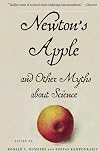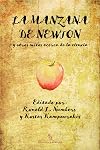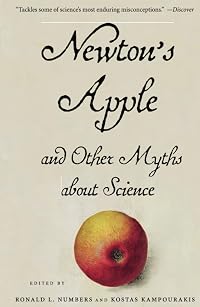
Newton’s Apple and Other Myths about Science
by Ronald L. Numbers
On This Page
Description
"Edited by Ronald Numbers and Kostas Kampourakis, Newton's Apple and Other Myths about Science debunks the widespread belief that science advances when individual geniuses experience 'Eureka!' moments and suddenly comprehend what those around them could never imagine. Science has always been a cooperative enterprise of dedicated, fallible human beings, for whom context, collaboration, and sheer good luck are the essential elements of discovery,"--Amazon.com.Tags
Recommendations










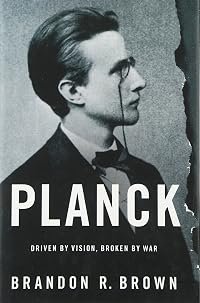
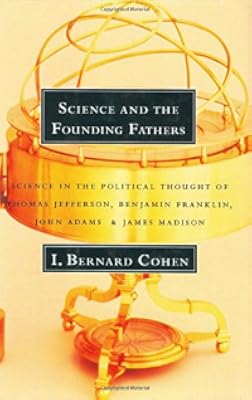

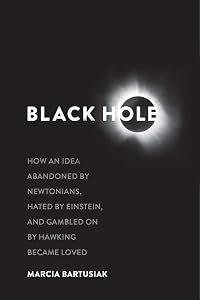
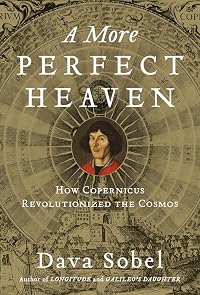





Member Recommendations
themulhern "The Invention of Science" is an impressive work of scholarship that manages to refute several of the essays in "Newton's Apple" (without deigning to notice this shallow, offensive, and ephemeral work, I hope).
Member Reviews
I strongly suspect that this book is a waste of paper. I expected it to be more organized, but it is just a bunch of disconnected essays by various people "debunking" some straw man myth about science. These very short essays set up some myth that people who actually are interested in the topic do not really subscribe to and then try to attack that myth, often in a vapid and ineffective way. Better to go to some sort of real work on any of these subjects than to waste your time on these mini-essays with their cheap shots and footnotes.
The first essay "That there was no scientific activity between Greek Antiquity and the Scientific Revolution" is just a terrible start, in part because it lacks a definition of scientific activity. It also show more uses the fact that Caesar sent for a Greek scholar from Alexandria when he decided he needed to reform the calendar to demonstrate that there was no scientific activity in the Roman Empire This strikes me as too ludicrous an argument to argue with. Read Neal Stephenson's "Mother Earth, Mother Board" for a better treatment of the importance of the library of Alexandria in antiquity. show less
The first essay "That there was no scientific activity between Greek Antiquity and the Scientific Revolution" is just a terrible start, in part because it lacks a definition of scientific activity. It also show more uses the fact that Caesar sent for a Greek scholar from Alexandria when he decided he needed to reform the calendar to demonstrate that there was no scientific activity in the Roman Empire This strikes me as too ludicrous an argument to argue with. Read Neal Stephenson's "Mother Earth, Mother Board" for a better treatment of the importance of the library of Alexandria in antiquity. show less
Ratings
Members
- Recently Added By
Lists

Science
28 works; 1 member
Author Information

36+ Works 1,539 Members
Ronald L. Numbers is Hilldale and William Coleman Professor of the History of Science and Medicine at the University of Wisconsin-Madison
Awards and Honors
Classifications
- Genres
- Nonfiction, Science & Nature, History, General Nonfiction, Religion & Spirituality
- DDC/MDS
- 001.96 — Computer science, information & general works Computer science, knowledge & systems Knowledge and learning in general Aliens/UFOs Errors, delusions, superstitions
- LCC
- Q172.5 .E77 .N49 — Science Science (General) General
- BISAC
Statistics
- Members
- 78
- Popularity
- 406,345
- Reviews
- 1
- Rating
- (3.10)
- Languages
- English, Spanish
- Media
- Paper, Ebook
- ISBNs
- 6
- ASINs
- 1