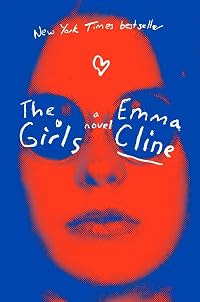
The Girls
by Emma Cline
On This Page
Description
Northern California, during the violent end of the 1960s. At the start of summer, a lonely and thoughtful teenager, Evie Boyd, sees a group of girls in the park, and is immediately caught by their freedom, their careless dress, their dangerous aura of abandon. Soon, Evie is in thrall to Suzanne, a mesmerizing older girl, and is drawn into the circle of a soon-to-be infamous cult and the man who is its charismatic leader. Hidden in the hills, their sprawling ranch is eerie and run down, but show more to Evie, it is exotic, thrilling, charged -- a place where she feels desperate to be accepted. As she spends more time away from her mother and the rhythms of her daily life, and as her obsession with Suzanne intensifies, Evie does not realize she is coming closer and closer to unthinkable violence. show lessTags
Recommendations


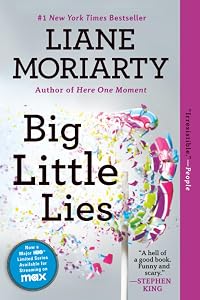
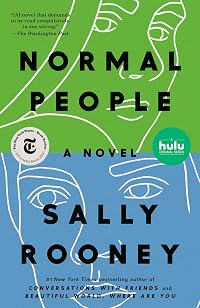
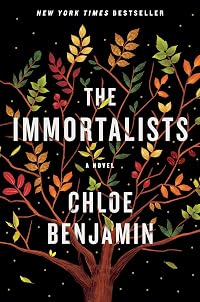
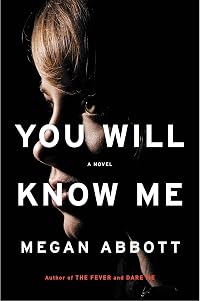


Member Recommendations

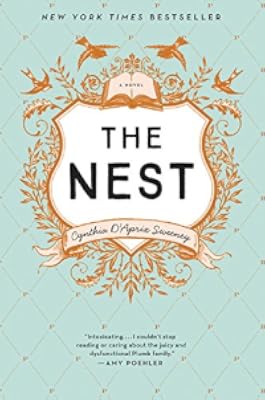
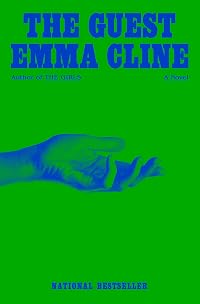
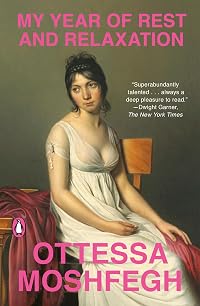
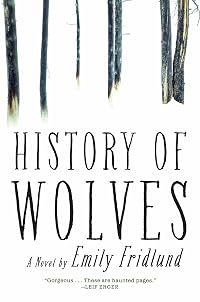
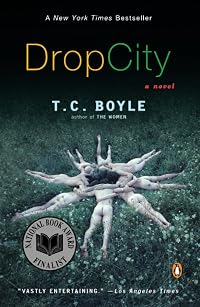
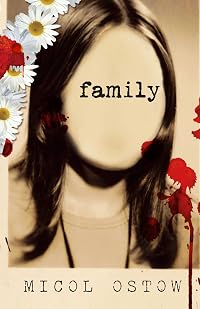
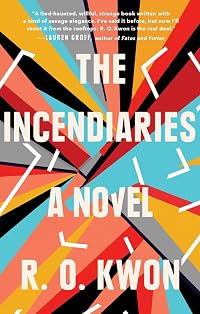
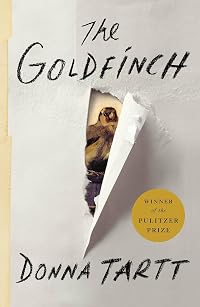
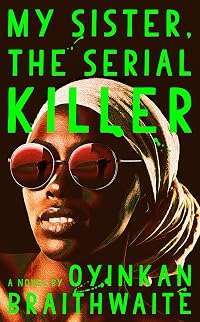
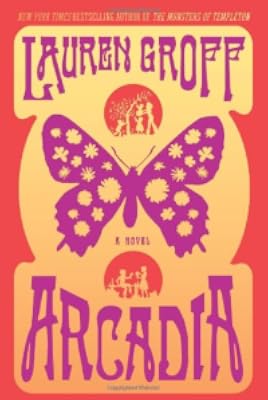
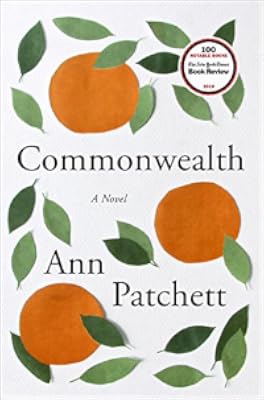
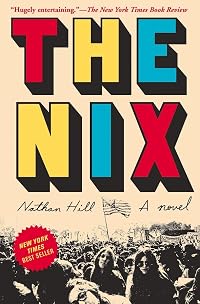
shaunie Similar doom-laden atmosphere with something horrible about to happen in the summer heat - but whilst Cline's book is this year's must-read Vine's book is far more tense and exciting.

Member Reviews
The author did a great job of showing us the narrator's motivations for getting involved in a Manson-like cult and how it continued to haunt her into her adulthood. Her main connection to the cult was surprising -- the ultimate girl-crush, twisted. I say "girl crush" because it seemed like the narrator's attraction to Suzanne was never fully developed into a confession about same-sex attraction in general. Maybe it wasn't meant to, but I was curious about how that attraction played out for the narrator in the rest of her life. It's possible too that Suzanne ruined her toward other women. You can see that this book stays with you and makes you think. I recommend it!
In the summer of '69, a teenage girl, Evie, becomes caught up with a cult based on the Manson family.
But it is a mistake to think this is a novel about Charles Manson. The title says exactly what this novel is about: the girls (and women) and the trap that our society sets for them, the trap of defining our self-worth and identity solely through the presence of a man. All of the female characters in this novel have fallen into this trap: Evie herself, her mother, her father's girlfriend, her friend Connie, the teenage girl she meets as an older woman, and especially the girls living with Russell (the Manson character). And the men themselves, concerned only with themselves and their own desires, are universally unworthy of this female show more subjugation. Well, not all men. There is, briefly, Tom, who is able to see the commune with clear eyes and tell the truth about it, but Evie wills herself to blindness nevertheless.
When that trap is taken to extremes, when the girls relinquish their sense of self so completely that they will do anything their man tells them to, it inevitably ends in violence, but who are the victims? Other women, primarily, and young boys--not just the one who is murdered, but also the boy living at the commune. This is a modern American fable.
But Evie herself is not in thrall to Russell as these other girls are. The person who captivates her is Suzanne. When she first sees Suzanne, Evie thinks she is completely free, that she does not care what anyone else thinks about her. Of course, we later see that this is very much a false impression, but this is what attracts Evie to Suzanne in the first place. And we wonder, as we see Evie in her middle-aged incarnation, lonely and alone, if she had just managed to break herself free from the trap and find herself a Suzanne who had also gotten free, might she have found happiness? show less
But it is a mistake to think this is a novel about Charles Manson. The title says exactly what this novel is about: the girls (and women) and the trap that our society sets for them, the trap of defining our self-worth and identity solely through the presence of a man. All of the female characters in this novel have fallen into this trap: Evie herself, her mother, her father's girlfriend, her friend Connie, the teenage girl she meets as an older woman, and especially the girls living with Russell (the Manson character). And the men themselves, concerned only with themselves and their own desires, are universally unworthy of this female show more subjugation. Well, not all men. There is, briefly, Tom, who is able to see the commune with clear eyes and tell the truth about it, but Evie wills herself to blindness nevertheless.
When that trap is taken to extremes, when the girls relinquish their sense of self so completely that they will do anything their man tells them to, it inevitably ends in violence, but who are the victims? Other women, primarily, and young boys--not just the one who is murdered, but also the boy living at the commune. This is a modern American fable.
But Evie herself is not in thrall to Russell as these other girls are. The person who captivates her is Suzanne. When she first sees Suzanne, Evie thinks she is completely free, that she does not care what anyone else thinks about her. Of course, we later see that this is very much a false impression, but this is what attracts Evie to Suzanne in the first place. And we wonder, as we see Evie in her middle-aged incarnation, lonely and alone, if she had just managed to break herself free from the trap and find herself a Suzanne who had also gotten free, might she have found happiness? show less
For any generation, there are political and cultural markers that define and shape it and that remain forever engraved in their collective memories: for the baby boomers, it’s the assassinations of John F Kennedy and Martin Luther King, the Vietnam War,…and the Manson murders. The murders perhaps more than anything put an end to the idealized view of the hippie movement by revealing its dangerous underbelly and upended the philosophy of ‘peace, love, and understanding’ that had propelled the 1967 summer of love and signalled that it was truly and completely over.
So when reading The Girls by author Emma Cline, it was impossible for an old boomer like me not to feel…not nostalgia certainly but more perhaps a visceral memory of show more the fear that the event inspired. Certainly this is not the first novel to create a fictional account based on the events surrounding the murders that I have read but it was one of the first that took me back so strongly to that summer of ’69 and that says a lot about the book especially as Cline avoids stressing the extreme violence as a means to engender an emotional response. This is more about the psychology behind cults that allows this kind of violence to occur than about the event itself.
The narrator, Evie, now middle-aged, is looking back at the year 1969. Her parents are divorced and are moving on with their lives and her best friend has rejected her, leaving her lonely and rebellious. It is then when she spots the women in the park, seeming to move with a kind of confidence and joy that Evie wishes she could emulate. When she finally meets them and is invited to join their ‘family’, she is more fascinated by Suzanne, one of the girls in the cult, than by Russell, the Manson-like leader who is, interestingly, hardly present in the story except as an idealized symbol of power to his followers, an ideal that is completely negated when he actually is present. This is a tale more about the women who are seduced by the idea of a powerful man, women who seek validation and strength from this man who, in reality, in no way resembles the ideal. He is at best a catalyst -the women act on his orders while he remains hidden in the shadows. Rather than giving them strength, he drains them of theirs. But even then, when the cult is finally uncovered, Russell hides while the girls still try to protect him:
Even at the end, the girls had been stronger than Russell.
The Girls is not an easy read. It is a fascinating psychological thriller but it is also an unapologetic feminist novel. Cline has created a powerful narrative about identity and friendship and the trap too many young women fall into of allowing others to define their value. As such, it is almost unrelentingly dark and pessimistic about the role of women in society, not only in the past but in the present where Evie is confronted with the reality of how little has changed as she watches another young woman lose her self-worth to a man who considers her as little more than a useful prop in his life. And yet Cline manages to deliver her message without beating the reader over the head with it, a feat somewhat like walking a high wire without a net and she does it without a misstep. The Girls has been receiving a lot of hype and I have to say this is the rare book that deserves it. That this is Cline’s debut novel makes it even more impressive.
Thanks to Netgalley and Random House for the opportunity to read this book in exchange for an honest review show less
So when reading The Girls by author Emma Cline, it was impossible for an old boomer like me not to feel…not nostalgia certainly but more perhaps a visceral memory of show more the fear that the event inspired. Certainly this is not the first novel to create a fictional account based on the events surrounding the murders that I have read but it was one of the first that took me back so strongly to that summer of ’69 and that says a lot about the book especially as Cline avoids stressing the extreme violence as a means to engender an emotional response. This is more about the psychology behind cults that allows this kind of violence to occur than about the event itself.
The narrator, Evie, now middle-aged, is looking back at the year 1969. Her parents are divorced and are moving on with their lives and her best friend has rejected her, leaving her lonely and rebellious. It is then when she spots the women in the park, seeming to move with a kind of confidence and joy that Evie wishes she could emulate. When she finally meets them and is invited to join their ‘family’, she is more fascinated by Suzanne, one of the girls in the cult, than by Russell, the Manson-like leader who is, interestingly, hardly present in the story except as an idealized symbol of power to his followers, an ideal that is completely negated when he actually is present. This is a tale more about the women who are seduced by the idea of a powerful man, women who seek validation and strength from this man who, in reality, in no way resembles the ideal. He is at best a catalyst -the women act on his orders while he remains hidden in the shadows. Rather than giving them strength, he drains them of theirs. But even then, when the cult is finally uncovered, Russell hides while the girls still try to protect him:
Even at the end, the girls had been stronger than Russell.
The Girls is not an easy read. It is a fascinating psychological thriller but it is also an unapologetic feminist novel. Cline has created a powerful narrative about identity and friendship and the trap too many young women fall into of allowing others to define their value. As such, it is almost unrelentingly dark and pessimistic about the role of women in society, not only in the past but in the present where Evie is confronted with the reality of how little has changed as she watches another young woman lose her self-worth to a man who considers her as little more than a useful prop in his life. And yet Cline manages to deliver her message without beating the reader over the head with it, a feat somewhat like walking a high wire without a net and she does it without a misstep. The Girls has been receiving a lot of hype and I have to say this is the rare book that deserves it. That this is Cline’s debut novel makes it even more impressive.
Thanks to Netgalley and Random House for the opportunity to read this book in exchange for an honest review show less
The Girls is Emma Cline's first novel, and yet there is nothing about the novel to suggest this fact. The entire story exemplifies mature writing. Ms. Cline never beats readers over the head with her themes, her messages, or anything else. Hers is a nuanced story that creates a similar obsession to Evie's within readers. She also makes the story about more than the cult, for the emotions and experiences Evie has are ones with which most female readers will be familiar. Evie's story is as much a coming-of-age story as it is an awakening of female awareness and the role society has created for females.
Note that The Girls is an emotional book. We see Evie as a young girl, in the first stages of teenage rebellion, searching for a new show more identity and craving excitement in a way only teenagers can. We also see Evie as an adult, coming to gripes with her past. Both versions of Evie are raw and desperate; young Evie is desperate for love, while older Evie is desperate for peace. Both are supremely angry, and both leave a significant impression on a reader. In addition, these are not superficial emotions. These are raw, visceral, and barely-contained emotions that can make reading the novel difficult at times because of their intensity.
The emotions are not the only things that are intense. Cult life is consuming; Evie's relationship with Suzanne is equally so. The duties of the girls on the ranch are disturbing, and it becomes way too clear at just how easy it is to manipulate the right type of person with something as simple as attention, ritual, and rhetoric. Ms. Cline uses this depressing backdrop of abject poverty and hero worship to frame Evie's past and present, define friendship, and derive some unsettling truths about responsibility of one's actions.
The Girls is not an easy book to read, and yet the conclusions to which Ms. Cline leads readers are vital. While the action takes place on the ranch and surrounding this cult, the story has universal appeal in regards to its messaging. In fact, the lessons about identity, belonging, cause and effect, and the lasting impact of one intimate relationship are profound and downright chilling. The Girls not only lives up to the hype, it surpasses it and really is one of the must-read books of the year. show less
Note that The Girls is an emotional book. We see Evie as a young girl, in the first stages of teenage rebellion, searching for a new show more identity and craving excitement in a way only teenagers can. We also see Evie as an adult, coming to gripes with her past. Both versions of Evie are raw and desperate; young Evie is desperate for love, while older Evie is desperate for peace. Both are supremely angry, and both leave a significant impression on a reader. In addition, these are not superficial emotions. These are raw, visceral, and barely-contained emotions that can make reading the novel difficult at times because of their intensity.
The emotions are not the only things that are intense. Cult life is consuming; Evie's relationship with Suzanne is equally so. The duties of the girls on the ranch are disturbing, and it becomes way too clear at just how easy it is to manipulate the right type of person with something as simple as attention, ritual, and rhetoric. Ms. Cline uses this depressing backdrop of abject poverty and hero worship to frame Evie's past and present, define friendship, and derive some unsettling truths about responsibility of one's actions.
The Girls is not an easy book to read, and yet the conclusions to which Ms. Cline leads readers are vital. While the action takes place on the ranch and surrounding this cult, the story has universal appeal in regards to its messaging. In fact, the lessons about identity, belonging, cause and effect, and the lasting impact of one intimate relationship are profound and downright chilling. The Girls not only lives up to the hype, it surpasses it and really is one of the must-read books of the year. show less
A woman, Evie Boyd, alone in a borrowed house near the beach. Unannounced the son of the owner of the house arrives with his teenage girlfriend. The dynamic is awkward, because Evie feels awkward with anyone but also because she thinks she sees something of her younger self in the teenage girl, Sasha. And her own teenage self is not someone she wants to remember. Yet she seems compelled to revisit that fateful summer when she was fourteen. And so the novel, primarily, follows Evie’s path through that summer long ago, when she first met Suzanne and the other girls who hung out at the ranch, and later joined in with them and their charismatic leader, Russell. Maybe if she had been wiser or older or more cynical or less taken with show more Suzanne, she might have left after one quick visit. But she stayed and embraced the other-worldly vibe of the place never realizing, really, that the group at the ranch were on a descending spiral and that violence and death would be the inevitable result. Evie, apparently, escapes — her adult self is a testament to her non-culpability — yet can she ever truly escape, because violence, now, she understands, lies just the below the surface everywhere.
This is intensely good writing. Cline’s prose is suffused with sentence fragments that evoke the different atmosphere of the parts of the novel set in the late ‘60s. She aligns our sympathies with Evie even as she displays Evie’s flaws and penchant for self-deception. And burgeoning love that she can’t quite hold on to. Evie is a wonderful creation and her later adult self is a compelling reminder that nothing that happens to us fails to leave its mark. Emma Cline is an author to follow.
Highly recommended. show less
This is intensely good writing. Cline’s prose is suffused with sentence fragments that evoke the different atmosphere of the parts of the novel set in the late ‘60s. She aligns our sympathies with Evie even as she displays Evie’s flaws and penchant for self-deception. And burgeoning love that she can’t quite hold on to. Evie is a wonderful creation and her later adult self is a compelling reminder that nothing that happens to us fails to leave its mark. Emma Cline is an author to follow.
Highly recommended. show less
This one bowled me over, and I’m not easily bowled. Too brilliantly written to be ignored, yet way too chilling to work as a pleasant read. I’m not sure what the average male reader will make of this tale of a young girl in the 1960s falling under the thrall of a Manson-like cult, but as a member of the opposite gender and a child of the 60s, I can testify to the fact that the psychology of this book is scarily authentic. Cline captures the loneliness and angst of female teens like the voyeur, then projects that loneliness and angst over top of 1960s America, a decade itself fraught with angst, evoking a reality so desolate and repugnant that 14yr old Evie’s attraction to the lifestyle of love and sisterly acceptance promised by show more the cult she adopts seems not so much incredible as inevitable.
The book raises many questions, the predominant of which is: To what extent is our craving for love so desperate that we will do literally anything to hold onto it? In choosing to narrate the tale from the point of view of Evie as a rootless, apathetic adult, however, the novel also tackles this question’s uncomfortable flip side: To what extent is a life bereft of the hope of love worth living?
Admit this was such an uncomfortable read I might have been tempted to drop it, had it not been for Cline’s brilliant prose. The novel reads like someone used a switchblade to carve away every scintilla of narrative fat, leaving behind a tale that’s beautifully but brutally sparse. Evie’s seduction into the cult, for instance, consumes maybe two pages, but within those two pages are captured whole volumes on the nature of malevolence, desperation, seduction, and self-delusion. The other 366 pages are just as chillingly brusque.
For once, I second the praises of the many reviewers who have lauded The Girls. It’s dark, disturbing, haunting and borderline brilliant. The closest literary comparison I can make is to The Lord of The Flies … another book that does such a chillingly credible job of capturing the psychological horror of abandonment, I probably won’t be reading it ever again. show less
The book raises many questions, the predominant of which is: To what extent is our craving for love so desperate that we will do literally anything to hold onto it? In choosing to narrate the tale from the point of view of Evie as a rootless, apathetic adult, however, the novel also tackles this question’s uncomfortable flip side: To what extent is a life bereft of the hope of love worth living?
Admit this was such an uncomfortable read I might have been tempted to drop it, had it not been for Cline’s brilliant prose. The novel reads like someone used a switchblade to carve away every scintilla of narrative fat, leaving behind a tale that’s beautifully but brutally sparse. Evie’s seduction into the cult, for instance, consumes maybe two pages, but within those two pages are captured whole volumes on the nature of malevolence, desperation, seduction, and self-delusion. The other 366 pages are just as chillingly brusque.
For once, I second the praises of the many reviewers who have lauded The Girls. It’s dark, disturbing, haunting and borderline brilliant. The closest literary comparison I can make is to The Lord of The Flies … another book that does such a chillingly credible job of capturing the psychological horror of abandonment, I probably won’t be reading it ever again. show less
I admit, I am one of those strange humans that is fascinated with serial killer lore. I am not sure what it is, but I find it fascinating, and that scares me!
But - I like to get neck deep into their psyche, figure out what went wrong and when, and what lead them to their psychological demise. Cults are even more fascinating!
That being said, I heavily researched Charles Manson and his family throughout the years. I gobble up any spin off, documentary or movie on this cult.
I find Mr Manson quite entertaining, batshit crazy and yet still quite charming, and that disgusts me, but it doesn't mean I will stop! lol.
I found this spin off of the 60s hippy commune family turned murderers *quite* delightful.
I always wondered about how it show more would feel inside the mind of a young girl and how she could possibly be involved in such psychosis. I get it now! The girls perspective was so far removed, vague and just... well the author NAILED it on what its like to be mature at 14 years old and narrowly missing utter catastrophe !
We all know what happens at the end, but yet we still can't look away!
Excellent haunting writing, we get to know the main characters very well and feel for them. We perhaps feel a bit drowsy and overwhelmed towards the end when the train careens off the tracks.
4 solid stars, which may not be fair- since I reserve 5 stars for my absolute favorites which are well known loved repeat authors and don't make me feel squeamish in their writing.
This is her first novel so Ms. Cline will wow us again I am certain!
This came very close to being a solid 5 star fave!
I look forward to what else this author has to offer us! show less
But - I like to get neck deep into their psyche, figure out what went wrong and when, and what lead them to their psychological demise. Cults are even more fascinating!
That being said, I heavily researched Charles Manson and his family throughout the years. I gobble up any spin off, documentary or movie on this cult.
I find Mr Manson quite entertaining, batshit crazy and yet still quite charming, and that disgusts me, but it doesn't mean I will stop! lol.
I found this spin off of the 60s hippy commune family turned murderers *quite* delightful.
I always wondered about how it show more would feel inside the mind of a young girl and how she could possibly be involved in such psychosis. I get it now! The girls perspective was so far removed, vague and just... well the author NAILED it on what its like to be mature at 14 years old and narrowly missing utter catastrophe !
We all know what happens at the end, but yet we still can't look away!
Excellent haunting writing, we get to know the main characters very well and feel for them. We perhaps feel a bit drowsy and overwhelmed towards the end when the train careens off the tracks.
4 solid stars, which may not be fair- since I reserve 5 stars for my absolute favorites which are well known loved repeat authors and don't make me feel squeamish in their writing.
This is her first novel so Ms. Cline will wow us again I am certain!
This came very close to being a solid 5 star fave!
I look forward to what else this author has to offer us! show less
Members
- Recently Added By
Published Reviews
ThingScore 75
The Girls works a well-tapped vein in literary fiction: the queasy exploration of how young women with crippled egos can become accessories to their own degradation. Joyce Carol Oates and Mary Gaitskill are masters of this theme. Cline’s contribution is a heady evocation of the boredom and isolation of adolescence in pre-internet suburbia, in houses deserted by their restless, doubt-stricken show more adult proprietors where “the air was candied with silence.” The novel is heavy with figurative language; Cline has a telling fondness for the word “humid.” Not all of this comes off effectively (Evie’s mom makes Chinese ribs that “had a glandular sheen, like a lacquer”), but most of it does (Evie, dazzled by her father’s girlfriend, thinks she has a life “like a TV show about summer.”) show less
added by Nickelini
Lists

Best Historical Fiction
620 works; 261 members

Best Contemporary Literary Fiction (Around the Last 30 Years)
388 works; 124 members

Female Author
1,234 works; 67 members

Top Five Books of 2016
795 works; 229 members
Female Protagonist
1,056 works; 57 members

Books Set in California
112 works; 15 members

Contemporary Fiction
109 works; 7 members

Top Five Books of 2017
757 works; 231 members

100 Best Thrillers of All Time
100 works; 6 members

Books Read in 2017
4,249 works; 130 members

International Dublin Literary Award Longlist 2018
22 works; 2 members

Literature About Women and Girls
394 works; 39 members

Indie Next Picks
196 works; 4 members

Shirley Jackson Award Winners and Shortlist 2007-2020
77 works; 6 members

Books Read in 2016
4,666 works; 199 members
First Novels
373 works; 17 members
Books With Girls in Titles
27 works; 2 members
Books Set in Los Angeles
40 works; 8 members

Books Tagged Cults
14 works; 1 member

sad girl books
41 works; 2 members

Biggest Disappointments
606 works; 168 members

Florida
366 works; 3 members

Reading Glasses Podcast
410 works; 3 members

1001 Books You Must Read Before You Die
1,448 works; 1,134 members

True Crime
156 works; 1 member
Author Information

17+ Works 5,557 Members
Emma Cline is the writer of the novel,The Girls and was the recipient of the Paris Review Plimpton Prize. In 2017, she was one of Granta's Best Young American Novelists. (Bowker Author Biography)
Some Editions
Awards and Honors
Awards
Distinctions
Notable Lists
Series
Belongs to Publisher Series
Llibres Anagrama (28)
Otavan kirjasto (258)
Common Knowledge
- Canonical title*
- Tytöt
- Original title
- The Girls
- Original publication date
- 2016-06-14
- People/Characters
- Evie Boyd
- Important places
- Los Angeles, California, USA
- First words
- I looked up because of the laughter, and kept looking because of the girls.
- Quotations
- The sun spiked through the trees, like always—the drowsy willows, the hot wind gusting over the picnic blankets—but the familiarity of the day was disturbed by the path the girls cut across the regular world. Sleek and th... (show all)oughtless as sharks breaching the water.
- Last words
- (Click to show. Warning: May contain spoilers.)He smiled at me as he passed, and I smiled back, like you would smile at any stranger, any person you didn't know.
- Blurbers
- Dunham, Lena; Egan, Jennifer; Haddon, Mark
- Original language
- English
- Canonical DDC/MDS
- 813.6
- Canonical LCC
- PS3603.L547
*Some information comes from Common Knowledge in other languages. Click "Edit" for more information.
Classifications
Statistics
- Members
- 4,134
- Popularity
- 3,728
- Reviews
- 260
- Rating
- (3.54)
- Languages
- 14 — Chinese, Danish, Dutch, English, Estonian, Finnish, French, German, Hungarian, Italian, Polish, Portuguese, Spanish, Swedish
- Media
- Paper, Audiobook, Ebook
- ISBNs
- 69
- ASINs
- 13