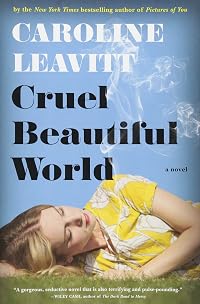
Cruel Beautiful World
by Caroline Leavitt
On This Page
Description
Sixteen-year-old Lucy Gold is about to run away with a much older man to live off the grid in rural Pennsylvania, a rash act that will have vicious repercussions for both her and her older sister, Charlotte. As Lucy's default parent for most of their lives, Charlotte has seen her youth marked by the burden of responsibility, but never more so than when Lucy's dream of a rural paradise turns into a nightmare.Cruel Beautiful World examines the intricate, infinitesimal distance between show more seduction and love, loyalty and duty, chaos and control, as it explores what happens when you're responsible for things you cannot make right.
Set against a backdrop of peace, love, and the Manson murders, the novel is a reflection of the era: exuberant, defiant, and precarious all at once. And Caroline Leavitt isat her mesmerizing best in this haunting, nuanced portrait of love, sisters, and the impossible legacy of family.
. show less
Tags
Recommendations
Member Recommendations
Member Reviews
Near perfection (~90%).
(Full disclosure: I received a free ARC for review through Edelweiss/Library Thing. Trigger warning for rape and domestic violence.)
Once again, Iris thought, here she was, undone by love and mad with grief because of it. She had seen that poster in Lucy’s room, that ridiculous sentiment that you don’t belong to me, and I don’t belong to you, but if we find each other, it’s beautiful. What a stupid thing to say! Of course people belonged to each other. Love owned you. It kept you captive.
At sixty-seven, Iris Gold had long since given up on having children. She and her late husband Doug were never quite able; and, when she broached the idea of adopting, he insisted that he didn't want to raise children who show more weren't his own, biologically speaking.
But after a long and loving - if unconventional - marriage, Doug passed away in his sixties, felled in his beloved garden by a heart attack. Initially grief-stricken, Iris finally decided to carry on, as she always had done. Iris is nothing if not a survivor - a "tough old bird" - and this would hardly be the first time she'd had to fend for herself (the scandal!). So she decided to use the money Doug left her to travel to all the places she'd dreamed of, but had never been able to go: Paris. Spain. Istanbul.: "The whole world was opening for her."
Days before she was to depart for her new life, an unexpected phone call threw Iris Gold one more curve ball - and not the last. A man from Iris's long-buried past had died suddenly; he and his wife perished in a club fire, leaving their two little girls orphaned. Five-year-old Lucy and six-year-old Charlotte had no other relatives. Reluctantly, Iris canceled her plans and took the girls in. In her golden years, Iris finally got the life she'd always wanted; or almost, anyway. She fell in love quickly and deeply, as did Lucy; Charlotte was a little slower to come around, but come around she did.
Now it's eleven years later; Lucy is a sophomore in high school, and Charlotte will be headed off to college in a few short months. But Iris's life is upended again, when Lucy disappears on the last day of school. Though Iris doesn't know it yet - won't, for many months - Lucy ran off to the Pennsylvania wilderness to be with her thirty-year-old English teacher, William Lallo. In her wake, Lucy leaves behind a cryptic note assuring Iris and Charlotte of her safety - and a family that's tattered and struggling, but surviving as best it can.
Cruel Beautiful World is one damn cruel and beautiful book. The story is told from a multitude of perspectives: Iris, Lucy, and Charlotte, of course; but also Patrick, a small farmer/would-be-botanist/widower to whom Lucy reaches out for help; Patrick's ex-in-laws, who blame Patrick for their daughter's death; William's mother Diana, who insists on her son's innocence; and the rapist himself, William Lallo (more on that later). The story very quickly branches out and becomes much bigger than Lucy and William. While their story plays out in 1969 - against the backdrop of the Tate-Labianca murders and the Manson Family trial; the Vietnam War and Kent State - its roots lie in 1917, in World War I and a whirlwind romance between a twenty-seven-year-old, red-headed "spinster" and a soldier home on leave.
What initially drew me to this book was the mention of the Manson girls in the synopsis. I have a thing for cults in general, and the Manson Family in particular (childhood true crime buff with a college minor in sociology here). Yet the connection is much smaller and more tenuous than I expected - and I'm okay with that. The Manson murders are just one of several then-current events that set the backdrop for the story. As her "relationship" (if you can call it that) with William sours, Lucy draws parallels between him and Charlie. Yet there's also a murder much closer to home that strikes fear into Lucy's heart, causing William to bring a gun home - which only intensifies her fear. Likewise, in reaction to the Kent State massacre, campus protests against the Vietnam War heat up, which heightens Lucy's homesickness - with Charlotte now at Brandeis, certainly the sisters could bond over marches and sit-ins?
Going back even further, Iris's situation - and that of so many other women who found meaningful, paying work, only to have it taken away at the end of the war - mirrors Lucy's too. When marriage and the end of WWI forces her to leave her job as a welder at a shipyard - which she's come to love, along with the independence it and Doug's absence provides her - she's overcome with anxiety. What will she do with her days? Iris is captive, not to a rapist pedophile teacher like Lucy, but to the suffocating roles society assigns to men and (especially) women.
Leavitt's writing is simply lovely: lyrical and insightful, almost as likely to bring a smile to your lips as a tear (or a whole river of 'em) to your eye. Leavitt creates compelling characters, and truly moving relationships. I especially loved Iris and Doug (and, later, Iris and Joe - kudos to Leavitt for acknowledging the sex lives of seniors!). Their relationship is just as beautiful as it is heartbreaking. Though neither could be what the other wanted, they did the best they could, given the circumstances - and they built a deep and true friendship that lasted a lifetime. I also adored Iris and the girls, and Patrick and Vera.
Lucy and Charlotte are engaging, interesting protagonists, even if I couldn't always relate to them. Maybe it's the difference in era, or upbringing? Weirdly, as someone who woke up one day to find herself nearing middle age, Iris's experiences in aging hit much closer to home. Though she'd probably laugh or scoff, seeing as I'm young enough yet to be her daughter.
Leavitt's depiction of William and Lucy is masterful. Well, mostly. While William would protest that he's not a pedophile or rapist - he loves Lucy and only Lucy because she's a special snowflake/old soul - Leavitt unmasks him for the monster he is.
After absconding with Lucy to the Pennsylvania wilderness, he keeps her in near-total isolation - allegedly for his/her/their protection, so they won't get caught and he won't go to jail. He prohibits her from leaving the property, and will not let her get a job, her GED, or even a license. When she happens upon a bicycle, she hides it in the forest behind their house so he won't confiscate it. He forces his beliefs on her: she cannot have a television, because it rots her brain, and when she picks up a package of hamburger in the store, he informs her that they're now vegetarians. (I'm a vegan, but using diet as a form of control isn't something I can get behind.) When she gets a job, in secret, Lucy fantasizes about spending her money on cookies, deli meat, and soda - "the things William wouldn’t keep in the house" - and binge-eating it on the side of the road.
In other words, William is controlling AF; while this behavior is at first couched in a sort of Romeo & Juliet romance, Lucy quickly realizes that this isn't so. He becomes paranoid and violent: Lucy could swear she's being watched during the day, and William gives her "love taps" that hurt. In what comes as no surprise to anyone who knows anything about domestic violence and escalation, William punches Lucy in the face when he catches her hitching a ride home with some guy. He buys a gun and makes her learn how to use it. About the only thing he doesn't do is threaten to hurt the chickens, one of whom Lucy's bonded with.
(Abusers often threaten to hurt animals as a means of further terrorizing their victims. And, since abusers often begin by isolating their victims, the family pet may be the only friend or social connection they have left ... as is the case with Lucy, for a short time, anyhow. As an aside: domestic violence shelters are finally getting hip to this fact! If you want to help, see if your DV shelter accepts nonhuman animals; if so, volunteer as a foster home! I do and it's super-awesome. And no, I never miss an opportunity to talk this up, because so few people know about it.)
And as to Lucy being an anomaly, a one-time "indiscretion": she isn't the first student William took a liking to. Make no mistake, he is a rapist and a serial predator and more, but spoilers.
This is why I was so disappointed by the ending. While I loved 90% of the book, there are a few parts that dulled the shine for me, just a bit. For one, and as I already mentioned, Leavitt gives William the opportunity to speak for himself, to tell his side of the story. Though this is partly out of necessity - he's the only one who can shine a light on said events - and the narrative (mostly) contradicts his version of events, it's still kind of gross. On the one hand, it's certainly a lesson in how rapists see themselves - they're the victims, no one understands them, they were seduced and powerless to stop themselves, and on and on. Hopefully you're hip enough to rape culture to see this for the self-serving BS it is. But Charlotte - William's audience - lacks the tools to fully dismantle his rape apologism, and the story suffers for it.
Additionally, after she finds and reads Lucy's diary, Charlotte comes to envy her sister. Sibling rivalry is one of many themes central to the story, and it's fascinating to see the different ways that Lucy and Charlotte view each other, their relationship, and the one they share with Iris. Charlotte feels frumpy, shy, and unpopular, especially when compared to the beautiful and outgoing Lucy. Meanwhile, Lucy fears she might be stupid, and envies Charlotte's intelligence and beauty.
Anyway, Lucy's diary reveals that she was good at something: writing. In it Charlotte sees a girl who is wild and free, who is true to herself and follows her dreams. And she vows to be a little more like her younger sister: to make friends, worry less about her grades, put herself out there and go after what she wants in life, consequences be damned.
But here's the thing. Lucy wasn't a free agent, or not wholly so. She was William's victim. He spent months grooming her, identifying her weaknesses and then exploiting them. Where Lucy felt inadequate and destined for a life of drudgery, William complimented her writing and offered to work with her, improving it. Both Iris and Charlotte realized that Lucy craved the attention of boys - older ones in particular - thanks in no small part to her childhood. Dad was a womanizer who kept trading in his wives for progressively younger models. Attention was a reward to be doled out to the daughter who acted a certain way: outgoing, flirty, the belle of the ball. No doubt William saw this need to please as well. Poor Lucy never stood a chance.
Read it with: Emma Cline's The Girls; Asking for It: The Alarming Rise of Rape Culture–and What We Can Do about It by Kate Harding.
http://www.easyvegan.info/2016/10/21/cruel-beautiful-world-by-caroline-leavitt/ show less
(Full disclosure: I received a free ARC for review through Edelweiss/Library Thing. Trigger warning for rape and domestic violence.)
Once again, Iris thought, here she was, undone by love and mad with grief because of it. She had seen that poster in Lucy’s room, that ridiculous sentiment that you don’t belong to me, and I don’t belong to you, but if we find each other, it’s beautiful. What a stupid thing to say! Of course people belonged to each other. Love owned you. It kept you captive.
At sixty-seven, Iris Gold had long since given up on having children. She and her late husband Doug were never quite able; and, when she broached the idea of adopting, he insisted that he didn't want to raise children who show more weren't his own, biologically speaking.
But after a long and loving - if unconventional - marriage, Doug passed away in his sixties, felled in his beloved garden by a heart attack. Initially grief-stricken, Iris finally decided to carry on, as she always had done. Iris is nothing if not a survivor - a "tough old bird" - and this would hardly be the first time she'd had to fend for herself (the scandal!). So she decided to use the money Doug left her to travel to all the places she'd dreamed of, but had never been able to go: Paris. Spain. Istanbul.: "The whole world was opening for her."
Days before she was to depart for her new life, an unexpected phone call threw Iris Gold one more curve ball - and not the last. A man from Iris's long-buried past had died suddenly; he and his wife perished in a club fire, leaving their two little girls orphaned. Five-year-old Lucy and six-year-old Charlotte had no other relatives. Reluctantly, Iris canceled her plans and took the girls in. In her golden years, Iris finally got the life she'd always wanted; or almost, anyway. She fell in love quickly and deeply, as did Lucy; Charlotte was a little slower to come around, but come around she did.
Now it's eleven years later; Lucy is a sophomore in high school, and Charlotte will be headed off to college in a few short months. But Iris's life is upended again, when Lucy disappears on the last day of school. Though Iris doesn't know it yet - won't, for many months - Lucy ran off to the Pennsylvania wilderness to be with her thirty-year-old English teacher, William Lallo. In her wake, Lucy leaves behind a cryptic note assuring Iris and Charlotte of her safety - and a family that's tattered and struggling, but surviving as best it can.
Cruel Beautiful World is one damn cruel and beautiful book. The story is told from a multitude of perspectives: Iris, Lucy, and Charlotte, of course; but also Patrick, a small farmer/would-be-botanist/widower to whom Lucy reaches out for help; Patrick's ex-in-laws, who blame Patrick for their daughter's death; William's mother Diana, who insists on her son's innocence; and the rapist himself, William Lallo (more on that later). The story very quickly branches out and becomes much bigger than Lucy and William. While their story plays out in 1969 - against the backdrop of the Tate-Labianca murders and the Manson Family trial; the Vietnam War and Kent State - its roots lie in 1917, in World War I and a whirlwind romance between a twenty-seven-year-old, red-headed "spinster" and a soldier home on leave.
What initially drew me to this book was the mention of the Manson girls in the synopsis. I have a thing for cults in general, and the Manson Family in particular (childhood true crime buff with a college minor in sociology here). Yet the connection is much smaller and more tenuous than I expected - and I'm okay with that. The Manson murders are just one of several then-current events that set the backdrop for the story. As her "relationship" (if you can call it that) with William sours, Lucy draws parallels between him and Charlie. Yet there's also a murder much closer to home that strikes fear into Lucy's heart, causing William to bring a gun home - which only intensifies her fear. Likewise, in reaction to the Kent State massacre, campus protests against the Vietnam War heat up, which heightens Lucy's homesickness - with Charlotte now at Brandeis, certainly the sisters could bond over marches and sit-ins?
Going back even further, Iris's situation - and that of so many other women who found meaningful, paying work, only to have it taken away at the end of the war - mirrors Lucy's too. When marriage and the end of WWI forces her to leave her job as a welder at a shipyard - which she's come to love, along with the independence it and Doug's absence provides her - she's overcome with anxiety. What will she do with her days? Iris is captive, not to a rapist pedophile teacher like Lucy, but to the suffocating roles society assigns to men and (especially) women.
Leavitt's writing is simply lovely: lyrical and insightful, almost as likely to bring a smile to your lips as a tear (or a whole river of 'em) to your eye. Leavitt creates compelling characters, and truly moving relationships. I especially loved Iris and Doug (and, later, Iris and Joe - kudos to Leavitt for acknowledging the sex lives of seniors!). Their relationship is just as beautiful as it is heartbreaking. Though neither could be what the other wanted, they did the best they could, given the circumstances - and they built a deep and true friendship that lasted a lifetime. I also adored Iris and the girls, and Patrick and Vera.
Lucy and Charlotte are engaging, interesting protagonists, even if I couldn't always relate to them. Maybe it's the difference in era, or upbringing? Weirdly, as someone who woke up one day to find herself nearing middle age, Iris's experiences in aging hit much closer to home. Though she'd probably laugh or scoff, seeing as I'm young enough yet to be her daughter.
Leavitt's depiction of William and Lucy is masterful. Well, mostly. While William would protest that he's not a pedophile or rapist - he loves Lucy and only Lucy because she's a special snowflake/old soul - Leavitt unmasks him for the monster he is.
After absconding with Lucy to the Pennsylvania wilderness, he keeps her in near-total isolation - allegedly for his/her/their protection, so they won't get caught and he won't go to jail. He prohibits her from leaving the property, and will not let her get a job, her GED, or even a license. When she happens upon a bicycle, she hides it in the forest behind their house so he won't confiscate it. He forces his beliefs on her: she cannot have a television, because it rots her brain, and when she picks up a package of hamburger in the store, he informs her that they're now vegetarians. (I'm a vegan, but using diet as a form of control isn't something I can get behind.) When she gets a job, in secret, Lucy fantasizes about spending her money on cookies, deli meat, and soda - "the things William wouldn’t keep in the house" - and binge-eating it on the side of the road.
In other words, William is controlling AF; while this behavior is at first couched in a sort of Romeo & Juliet romance, Lucy quickly realizes that this isn't so. He becomes paranoid and violent: Lucy could swear she's being watched during the day, and William gives her "love taps" that hurt. In what comes as no surprise to anyone who knows anything about domestic violence and escalation, William punches Lucy in the face when he catches her hitching a ride home with some guy. He buys a gun and makes her learn how to use it. About the only thing he doesn't do is threaten to hurt the chickens, one of whom Lucy's bonded with.
(Abusers often threaten to hurt animals as a means of further terrorizing their victims. And, since abusers often begin by isolating their victims, the family pet may be the only friend or social connection they have left ... as is the case with Lucy, for a short time, anyhow. As an aside: domestic violence shelters are finally getting hip to this fact! If you want to help, see if your DV shelter accepts nonhuman animals; if so, volunteer as a foster home! I do and it's super-awesome. And no, I never miss an opportunity to talk this up, because so few people know about it.)
And as to Lucy being an anomaly, a one-time "indiscretion": she isn't the first student William took a liking to. Make no mistake, he is a rapist and a serial predator and more, but spoilers.
This is why I was so disappointed by the ending. While I loved 90% of the book, there are a few parts that dulled the shine for me, just a bit. For one, and as I already mentioned, Leavitt gives William the opportunity to speak for himself, to tell his side of the story. Though this is partly out of necessity - he's the only one who can shine a light on said events - and the narrative (mostly) contradicts his version of events, it's still kind of gross. On the one hand, it's certainly a lesson in how rapists see themselves - they're the victims, no one understands them, they were seduced and powerless to stop themselves, and on and on. Hopefully you're hip enough to rape culture to see this for the self-serving BS it is. But Charlotte - William's audience - lacks the tools to fully dismantle his rape apologism, and the story suffers for it.
Additionally, after she finds and reads Lucy's diary, Charlotte comes to envy her sister. Sibling rivalry is one of many themes central to the story, and it's fascinating to see the different ways that Lucy and Charlotte view each other, their relationship, and the one they share with Iris. Charlotte feels frumpy, shy, and unpopular, especially when compared to the beautiful and outgoing Lucy. Meanwhile, Lucy fears she might be stupid, and envies Charlotte's intelligence and beauty.
Anyway, Lucy's diary reveals that she was good at something: writing. In it Charlotte sees a girl who is wild and free, who is true to herself and follows her dreams. And she vows to be a little more like her younger sister: to make friends, worry less about her grades, put herself out there and go after what she wants in life, consequences be damned.
But here's the thing. Lucy wasn't a free agent, or not wholly so. She was William's victim. He spent months grooming her, identifying her weaknesses and then exploiting them. Where Lucy felt inadequate and destined for a life of drudgery, William complimented her writing and offered to work with her, improving it. Both Iris and Charlotte realized that Lucy craved the attention of boys - older ones in particular - thanks in no small part to her childhood. Dad was a womanizer who kept trading in his wives for progressively younger models. Attention was a reward to be doled out to the daughter who acted a certain way: outgoing, flirty, the belle of the ball. No doubt William saw this need to please as well. Poor Lucy never stood a chance.
Read it with: Emma Cline's The Girls; Asking for It: The Alarming Rise of Rape Culture–and What We Can Do about It by Kate Harding.
http://www.easyvegan.info/2016/10/21/cruel-beautiful-world-by-caroline-leavitt/ show less
 This review was written for LibraryThing Early Reviewers.
Cruel Beautiful World is a compelling novel of two sisters growing up in the late 60’s. The backdrop of flower children, the Manson murders, and Kent State creates a ‘faded photo’ + ‘lurking danger’ atmosphere that works well for the story. Sisters Lucy and Charlotte lose their parents at a very young age and are raised by Iris, an older woman with an interesting backstory of her own that is revealed over time. These sisters couldn’t be more different – older sister Charlotte is anxious, studious, and dedicated to keeping their lives safe and steady but younger sister Lucy is extroverted and free-spirited and a risk-taker. The narrative starts with 16-year old Lucy as she falls in love and runs away with a high-school show more teacher… no spoilers but things don’t turn out as expected…
Another book that’s constructed with rotating points of view, individual chapters are devoted to the lives, thoughts, and actions of Lucy, Charlotte, and Iris in turn. This is done fairly gracefully by author Caroline Leavitt, but Lucy’s chapters are the most riveting by far. Later in the narrative, the men in their lives get their own chapters but they are more difficult to understand, especially the high school teacher, William, who is a very strange character in this book.
I kept thinking of this book as good for reading group discussions. “How evil is William? Did your opinion change by the end of the story?” “For women reading this book, does it make you grateful for the empowerment that we’ve been gaining over the decades? Who had the most power in these relationships, the men or the women?” “Does guilt or forgiveness frame the future for these characters?” “What about that ending? What the heck?” Discuss! show less
Another book that’s constructed with rotating points of view, individual chapters are devoted to the lives, thoughts, and actions of Lucy, Charlotte, and Iris in turn. This is done fairly gracefully by author Caroline Leavitt, but Lucy’s chapters are the most riveting by far. Later in the narrative, the men in their lives get their own chapters but they are more difficult to understand, especially the high school teacher, William, who is a very strange character in this book.
I kept thinking of this book as good for reading group discussions. “How evil is William? Did your opinion change by the end of the story?” “For women reading this book, does it make you grateful for the empowerment that we’ve been gaining over the decades? Who had the most power in these relationships, the men or the women?” “Does guilt or forgiveness frame the future for these characters?” “What about that ending? What the heck?” Discuss! show less
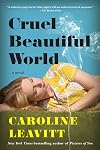
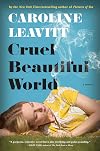
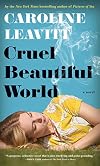
This review was written for LibraryThing Early Reviewers.Cruel Beautiful World has a cover showing feminine adolescent tranquility which is completely belied by its plot. True to its title, the book is full of cruelty but Leavitt's depiction of various narrative voices -- including notably the viewpoint of a human predator -- makes it something much more rare than a literary exploration of the darker side of human psychology. It is a first-rate thriller distinguished by its rare ambition in seeking a multi-dimensional depiction of its villain. I couldn't put this page-turner down, and with Leavitt's clean, cold, evocative prose I certainly didn't want to do so either!
Please be advised I received a free copy of this novel through the LibraryThing Early Reviewer Giveaway program in exchange for show more posting this honest review. show less
Please be advised I received a free copy of this novel through the LibraryThing Early Reviewer Giveaway program in exchange for show more posting this honest review. show less
This review was written for LibraryThing Early Reviewers.I picked up this book blind on someone else's recommendation, and it just swept me away. I love it when that happens. Set in 1969, the story opens with Lucy, a high school sophomore, running away with her English teacher. Her older sister and adoptive mother are left to grapple with her disappearance, while Lucy herself discovers her new life was not the fantasy she'd envisioned. All of the characters became so real to me as the story unfolded, especially the girls' guardian, Iris, who is also coping with getting older and losing her independence. This is a bittersweet story that rings absolutely true.
Cruel Beautiful World by Caroline Leavitt has been difficult for me to review. I finished it a few days ago, and since then, I’ve been ruminating on it.
In its essence, Cruel Beautiful World is a novel about family and love. But the horrible underside of humanity is afoot as well. Yes, it takes place during the same time as the Manson murders, but that isn’t the true specter that hangs over the characters’ psyches. The true roots of the novel’s conflict lie in the question: How well can we really know the ones we love?
The climax and denouement of Cruel Beautiful World answer this question two ways. Without giving you any spoilers, I’ll say that one represents the beautiful and one represents the cruel.
Plot-wise, Cruel show more Beautiful World kept me guessing, but it also made me think. The prose is full of detail and texture. Leavitt uses concrete imagery to convey a strong sense of time period and setting.
Check out this section of character description to see how Leavitt deftly weaves history into the narrative:
“Not only did he support the antiwar movement, but he’d marched in Boston a few months ago and even got to talk to Abbie Hoffman, who was there giving a speech. William wore a Not-So-Silent Spring button on his jacket lapel, a dot of yellow imprinted with an upraised red fist that held a sprig of greenery. ‘Hey, hey, LBJ. How many kids did you kill today?’ he chanted, and then he told them the answer, writing on the board the Vietnam death toll for 1968—16,899—a number so staggeringly high that the kids shifted uneasily in their seats, because they knew there was a draft. The boys could be called up one day. Their lives could end, just like that. ‘Not if you resist the draft,’ William assured them. He draw a map of Canada on the blackboard and tapped the chalk on it. ‘Or go here,’” (Leavitt).
Holy characterization, Batman!
Over all, Cruel Beautiful World is not a book of easy answers. There is no good without the bad (and sometimes vice versa?). I recommend this book to readers who enjoy family novels with a tinge of darkness. Cruel Beautiful World is full of emotion. I think I cried at least twice, and my heart is as black as my coffee.
Disclaimer: I received a digital ARC copy from Netgalley in exchange for an honest review. show less
In its essence, Cruel Beautiful World is a novel about family and love. But the horrible underside of humanity is afoot as well. Yes, it takes place during the same time as the Manson murders, but that isn’t the true specter that hangs over the characters’ psyches. The true roots of the novel’s conflict lie in the question: How well can we really know the ones we love?
The climax and denouement of Cruel Beautiful World answer this question two ways. Without giving you any spoilers, I’ll say that one represents the beautiful and one represents the cruel.
Plot-wise, Cruel show more Beautiful World kept me guessing, but it also made me think. The prose is full of detail and texture. Leavitt uses concrete imagery to convey a strong sense of time period and setting.
Check out this section of character description to see how Leavitt deftly weaves history into the narrative:
“Not only did he support the antiwar movement, but he’d marched in Boston a few months ago and even got to talk to Abbie Hoffman, who was there giving a speech. William wore a Not-So-Silent Spring button on his jacket lapel, a dot of yellow imprinted with an upraised red fist that held a sprig of greenery. ‘Hey, hey, LBJ. How many kids did you kill today?’ he chanted, and then he told them the answer, writing on the board the Vietnam death toll for 1968—16,899—a number so staggeringly high that the kids shifted uneasily in their seats, because they knew there was a draft. The boys could be called up one day. Their lives could end, just like that. ‘Not if you resist the draft,’ William assured them. He draw a map of Canada on the blackboard and tapped the chalk on it. ‘Or go here,’” (Leavitt).
Holy characterization, Batman!
Over all, Cruel Beautiful World is not a book of easy answers. There is no good without the bad (and sometimes vice versa?). I recommend this book to readers who enjoy family novels with a tinge of darkness. Cruel Beautiful World is full of emotion. I think I cried at least twice, and my heart is as black as my coffee.
Disclaimer: I received a digital ARC copy from Netgalley in exchange for an honest review. show less
I've been a fan of Caroline Leavitt for years, and am happy to see that her writing has become more accessible and popular with each book.
I would classify this book as a domestic drama, except the skillful way Leavitt ratchets up the tension throughout gives the book strong elements of a thriller as well.
The book is strongly plot driven, but all of the characters are beautifully and thoroughly developed. Taking place in the 70s, the book, though evocative of the time, also has a timeless air.
Heartwarming and horrifying at the same time, the novel brings the reader along to the strange places that love leads the characters. The love between sisters, mothers and children, and lovers is explored in both their bright and dark sides.
A show more page-turner that deserves best-selling status, I would recommend this book for all readers. show less
I would classify this book as a domestic drama, except the skillful way Leavitt ratchets up the tension throughout gives the book strong elements of a thriller as well.
The book is strongly plot driven, but all of the characters are beautifully and thoroughly developed. Taking place in the 70s, the book, though evocative of the time, also has a timeless air.
Heartwarming and horrifying at the same time, the novel brings the reader along to the strange places that love leads the characters. The love between sisters, mothers and children, and lovers is explored in both their bright and dark sides.
A show more page-turner that deserves best-selling status, I would recommend this book for all readers. show less
This review was written for LibraryThing Early Reviewers.Cruel Beautiful World by Caroline Leavitt has been difficult for me to review. I finished it a few days ago, and since then, I’ve been ruminating on it.
In its essence, Cruel Beautiful World is a novel about family and love. But the horrible underside of humanity is afoot as well. Yes, it takes place during the same time as the Manson murders, but that isn’t the true specter that hangs over the characters’ psyches. The true roots of the novel’s conflict lie in the question: How well can we really know the ones we love?
The climax and denouement of Cruel Beautiful World answer this question two ways. Without giving you any spoilers, I’ll say that one represents the beautiful and one represents the cruel.
Plot-wise, Cruel show more Beautiful World kept me guessing, but it also made me think. The prose is full of detail and texture. Leavitt uses concrete imagery to convey a strong sense of time period and setting.
Check out this section of character description to see how Leavitt deftly weaves history into the narrative:
“Not only did he support the antiwar movement, but he’d marched in Boston a few months ago and even got to talk to Abbie Hoffman, who was there giving a speech. William wore a Not-So-Silent Spring button on his jacket lapel, a dot of yellow imprinted with an upraised red fist that held a sprig of greenery. ‘Hey, hey, LBJ. How many kids did you kill today?’ he chanted, and then he told them the answer, writing on the board the Vietnam death toll for 1968—16,899—a number so staggeringly high that the kids shifted uneasily in their seats, because they knew there was a draft. The boys could be called up one day. Their lives could end, just like that. ‘Not if you resist the draft,’ William assured them. He draw a map of Canada on the blackboard and tapped the chalk on it. ‘Or go here,’” (Leavitt).
Holy characterization, Batman!
Over all, Cruel Beautiful World is not a book of easy answers. There is no good without the bad (and sometimes vice versa?). I recommend this book to readers who enjoy family novels with a tinge of darkness. Cruel Beautiful World is full of emotion. I think I cried at least twice, and my heart is as black as my coffee.
Disclaimer: I received a digital ARC copy from Netgalley in exchange for an honest review. show less
In its essence, Cruel Beautiful World is a novel about family and love. But the horrible underside of humanity is afoot as well. Yes, it takes place during the same time as the Manson murders, but that isn’t the true specter that hangs over the characters’ psyches. The true roots of the novel’s conflict lie in the question: How well can we really know the ones we love?
The climax and denouement of Cruel Beautiful World answer this question two ways. Without giving you any spoilers, I’ll say that one represents the beautiful and one represents the cruel.
Plot-wise, Cruel show more Beautiful World kept me guessing, but it also made me think. The prose is full of detail and texture. Leavitt uses concrete imagery to convey a strong sense of time period and setting.
Check out this section of character description to see how Leavitt deftly weaves history into the narrative:
“Not only did he support the antiwar movement, but he’d marched in Boston a few months ago and even got to talk to Abbie Hoffman, who was there giving a speech. William wore a Not-So-Silent Spring button on his jacket lapel, a dot of yellow imprinted with an upraised red fist that held a sprig of greenery. ‘Hey, hey, LBJ. How many kids did you kill today?’ he chanted, and then he told them the answer, writing on the board the Vietnam death toll for 1968—16,899—a number so staggeringly high that the kids shifted uneasily in their seats, because they knew there was a draft. The boys could be called up one day. Their lives could end, just like that. ‘Not if you resist the draft,’ William assured them. He draw a map of Canada on the blackboard and tapped the chalk on it. ‘Or go here,’” (Leavitt).
Holy characterization, Batman!
Over all, Cruel Beautiful World is not a book of easy answers. There is no good without the bad (and sometimes vice versa?). I recommend this book to readers who enjoy family novels with a tinge of darkness. Cruel Beautiful World is full of emotion. I think I cried at least twice, and my heart is as black as my coffee.
Disclaimer: I received a digital ARC copy from Netgalley in exchange for an honest review. show less
Members
- Recently Added By
Lists

Best Contemporary Literary Fiction (Around the Last 30 Years)
388 works; 124 members

Best 21st Century Books (So Far)
670 works; 85 members

Best Books With Sisters
130 works; 30 members

Pleasant Surprises: Books That Exceeded Our Expectations
418 works; 142 members

Female Protagonist
1,056 works; 57 members

Top Five Books of 2019
387 works; 111 members

Novels featuring siblings
133 works; 8 members

Literature About Women and Girls
394 works; 39 members

Books Set in Pennsylvania
17 works; 5 members

Books Read in 2019
4,052 works; 108 members

Books About Older People
50 works; 11 members
Author Information

24+ Works 3,023 Members
Caroline Leavitt has written several books including Girls in Trouble, Coming Back to Me, Living Other Lives, Family, Jealousies, Lifelines and Pictures of You. She won First Prize in Redbook Magazine's Young Writers Contest for her short story, Meeting Rozzy Halfway, which grew into the novel and the 1990 New York Foundation of the Arts Award for show more Fiction for Into Thin Air. Her essays, stories, and articles have appeared in numerous publications including New York magazine, Psychology Today, Parenting, The San Francisco Chronicle, The Chicago Tribune, and The Washington Post. She is a book critic for The Boston Globe and People and a writing instructor at UCLA online. Leavitt is the author of the bestseller, It this Tomorrow. (Bowker Author Biography) show less
Awards and Honors
Notable Lists
RUSA CODES Listen List (Listen-Alike – Listen-Alike to “My Dark Vanessa: A Novel” by Kate Elizabeth Russell – 2021)
Common Knowledge
- Canonical title
- Cruel Beautiful World
- Original publication date
- 2016
- Dedication
- For Jeff and Max.
You made my heart grow nine sizes. - First words
- Lucy runs away with her high school teacher, William, on a Friday, the last day of school, a June morning shiny with heat.
- Quotations
- Lucy knows that anything can happen and age is the hand at your back, giving you an extra push toward the abyss.
- Last words
- (Click to show. Warning: May contain spoilers.)She started the car again taking one last look back, where Lucy had been, and then she turned her focus to the road stretching ahead of her, shining in the moonlight.
Classifications
Statistics
- Members
- 285
- Popularity
- 112,968
- Reviews
- 76
- Rating
- (4.09)
- Languages
- English
- Media
- Paper, Audiobook, Ebook
- ISBNs
- 7
- ASINs
- 1