Quicksand
by Jun'ichirō Tanizaki
On This Page
Description
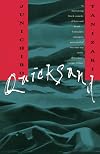
Sonoko Kakiuchi is a cultured Osaka lady, unfortunately widowed young. But her story is unsettlingly at odds with her image. it is a tale of infatuation and deceit, of eliberate evil. Its theme is humiliation, its victim Sonoko's mild-mannered husband. At is centre - seductive, manipulating, enslaving - is one of Tanizaki's most extraordinary characters, the beautiful and corrupt art student Mitsuko.Tags
Recommendations





Member Reviews
A wonderful, completely twisted, often times very funny tale about paranoia. Tanizaki's characters live in a world of lies, and I've rarely encountered a book better at making the reader as suspicious of everything as the characters are. Every relationship in the novel is defined in terms of who is the liar and who is the one being taken in. Eventually, all the characters, and I was too, begin to become completely paranoid and convinced they are the ones being lied to while everybody else knows the truth. The last 1/10th or so of the book is especially insane, with the characters descending into full blown madness. I know Tanizaki had to have had a good laugh when he ends the novel with another heavy dose of paranoia for the reader to show more drink. show less
This is a mind-blowing novel and one I found mesmerizing. It's the story of the love relationship between Sonoko Kakiuchi, a married woman, and Mitsuko, a beautiful young woman in Sonoko's art class. As the plot develops, things get very complicated as the women try to hide their love from their families and from the handsome man who is in love with Mitsuko.
The beauty of this novel is in its psychological suspense as one does not know the motives of the characters in the story from moment to moment, other than those of Sonoko the narrator. There is love, dependence, humiliation, jealousy, anger, eroticism, secrecy, and more! All the chapters are short with breaks which you'll need to ponder what just happened.
I love novels like this! show more This was the first novel I read by this famous Japanese author who died in 1965. I'm looking for more of his works right away. I hope they're all as good as this novel was! show less
The beauty of this novel is in its psychological suspense as one does not know the motives of the characters in the story from moment to moment, other than those of Sonoko the narrator. There is love, dependence, humiliation, jealousy, anger, eroticism, secrecy, and more! All the chapters are short with breaks which you'll need to ponder what just happened.
I love novels like this! show more This was the first novel I read by this famous Japanese author who died in 1965. I'm looking for more of his works right away. I hope they're all as good as this novel was! show less
Até essa altura o Tanizaki nunca me decepcionou e é fácil ver o porquê Eliane Brum escolheu tal obra na sua curadoria para a TAG, a narrativa é cheia de ambiguidades, nunca fica claro qual é o verdadeiro caráter das personagens envolvidas e o texto é justamente construído a partir dessas artimanhas dando a possibilidade de inúmeras leituras, o que passa para a narrativa a questão do ideograma japonês ser dessa mesma natureza em essência - é uma novela sobre a linguagem.
Aesthetically perverse in the way only the Japanese can be, this precision-tooled psychological thriller published in 1929 would have benefitted from more explicit lesbian sexual description, admittedly impossible at the time. The story really boils down to an attempt by a married couple and a hot beauty insinuating herself into their life to work out a polyamorous arrangement which they and Japanese society generally were far from conceptually ready for. The result instead was pretty grim.
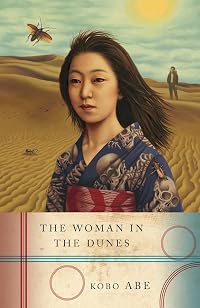
A condensed, swirling, heated storm of a novel. A beautiful accomplishment, a masterpiece. I loved this book, I would read it again, I will read it again. I’ve read several books by Tanizaki, and while he sticks pretty consistently to one theme, that is, the destructive power of love, this novel may be one of his most poignant expressions. Tanizaki is both a bold and a boring writer. He seemed to not care what people think, to write about dark obsessions no one talks about and he shied away from nothing. He wasn’t squeamish, you’d probably have to tear off the covers if you were a contemporary reader in Japan, reading his book on the train. But my goodness, the story was captivating. It was a steamy black-and-white film, nearly as show more soft and succulent as Kobo Abe’s Woman in the Dunes, but more down-to-earth, even more sensual, and quiet and easy. A satisfying one-day read. show less
While Quicksand is a fast read with Tanizaki’s smooth prose and intense descriptions of erotic obsession, the plot is way too ridiculous to stand up to scrutiny. I’d recommend another Tanizaki instead, but if you are going to read it, the best way would be to finish it in one sitting (not too hard as it’s a short book) which would prevent you from thinking about the plot absurdities. I would read a lot in one sitting, but then was a bit reluctant to pick it up again because I’d be thinking, ugh, what will they do next?
Sonoko Kakiuchi, a seemingly intelligent and respectable Osaka woman, is the narrator. It sounds like she is telling her story to Tanizaki (or at least a well-known author). Although the narrator is well-off and show more married to a tolerant man, she is unsatisfied. She doesn’t love her husband so to combat boredom she enrolls in a college art class. At school, she becomes entangled with another student, the beautiful and manipulative Mitsuko. Although Mitsuko is a consummate liar, Sonoko also shares responsibility for their relationship. She claims that Mitsuko was the one who initiated and intensified their friendship, but there are several signs that Sonoko is lying to us (her familiarity with Mitsuko when she claims she’d never noticed her for example). Her actions also put her in Mitsuko’s way and she becomes clingy soon into the relationship. The possible unreliable narrator bit is interesting at first but is soon overshadowed by unbelievable plot twists. Sonoko is deeply unsympathetic in the way she treats her husband – she could be another Naomi. She learns that Mitsuko has been cheating on her with a man and angrily decides to break it off. Mitsuko tries to regain her love in a ridiculously pathetic, melodramatic, over-the-top fashion and Sonoko accepts her explanation and pretends to be deceived about Mitsuko’s fake crisis – another example of her culpability.
However, the story starts to go off the rails here. Mitsuko’s boyfriend Watanuki is jealous of her lesbian relationship and begins to act in crazy ways. His psychological issues are interesting and Tanizaki skillfully portrays the reasons for his instability. However, though he might be excused for acting in a ridiculous manner, Sonoko and her husband go along with it. There is further unbelievable drama and mentions of suicide are casually thrown around at every turn. At one point, Mitsuko is compared to some soul-sucking demon but I don’t think Tanizaki’s story can be taken as allegorical, what with the verisimilitude of someone telling the story and the initial realistic details. Not his best, though I’ll be reading more by Tanizaki. show less
Sonoko Kakiuchi, a seemingly intelligent and respectable Osaka woman, is the narrator. It sounds like she is telling her story to Tanizaki (or at least a well-known author). Although the narrator is well-off and show more married to a tolerant man, she is unsatisfied. She doesn’t love her husband so to combat boredom she enrolls in a college art class. At school, she becomes entangled with another student, the beautiful and manipulative Mitsuko. Although Mitsuko is a consummate liar, Sonoko also shares responsibility for their relationship. She claims that Mitsuko was the one who initiated and intensified their friendship, but there are several signs that Sonoko is lying to us (her familiarity with Mitsuko when she claims she’d never noticed her for example). Her actions also put her in Mitsuko’s way and she becomes clingy soon into the relationship. The possible unreliable narrator bit is interesting at first but is soon overshadowed by unbelievable plot twists. Sonoko is deeply unsympathetic in the way she treats her husband – she could be another Naomi. She learns that Mitsuko has been cheating on her with a man and angrily decides to break it off. Mitsuko tries to regain her love in a ridiculously pathetic, melodramatic, over-the-top fashion and Sonoko accepts her explanation and pretends to be deceived about Mitsuko’s fake crisis – another example of her culpability.
However, the story starts to go off the rails here. Mitsuko’s boyfriend Watanuki is jealous of her lesbian relationship and begins to act in crazy ways. His psychological issues are interesting and Tanizaki skillfully portrays the reasons for his instability. However, though he might be excused for acting in a ridiculous manner, Sonoko and her husband go along with it. There is further unbelievable drama and mentions of suicide are casually thrown around at every turn. At one point, Mitsuko is compared to some soul-sucking demon but I don’t think Tanizaki’s story can be taken as allegorical, what with the verisimilitude of someone telling the story and the initial realistic details. Not his best, though I’ll be reading more by Tanizaki. show less
The manipulation and deceit in Tanizaki's Quicksand is so exaggerated that it is almost irritating. However, by the end of the work, one can see that this was the author's intent. Tanizaki illustrates the enslaving power of erotic obsession through a shifting and discordant love triangle. The characters are strong, vivid, and disturbing. Though a weaker effort from Tanizaki, it is by no means poor.
Members
- Recently Added By
Published Reviews
Howard Hibbett, the translator of "Quicksand," once wrote in a Japanese journal that Tanizaki's constant themes were self-destructive sexuality and the double image of woman, as goddess and demon. Here, wrote Mr. Hibbett, we find "psychological truths that transcend cultural differences." It is a tribute to Tanizaki as a writer, and to Mr. Hibbett as a translator, that enough of these truths show more remain to make "Quicksand" a fascinating read, despite the fact that its unique tone is utterly lost in translation. show less
added by mimiphantomofliberty
Lists

Japanese Literature
230 works; 40 members

Top Five Books of 2019
387 works; 111 members

Best LGBT Fiction
144 works; 25 members

Books Read in 2022
5,166 works; 114 members

Good LGBT fiction for LGBT folk and friends
537 works; 54 members
Author Information

194+ Works 12,649 Members
Some Editions
Series
Belongs to Publisher Series
Work Relationships
Is contained in
Has the adaptation
Common Knowledge
- Canonical title
- Quicksand
- Original title
- 卍 (Manji) (Manji)
- Original publication date
- 1930
- People/Characters
- Sonoko Kakiuchi; Mitsuko Tokumitsu; Watanuki Eijiro; Kotaro Kakiuchi; Ume
- Important places
- Osaka, Japan
- First words
- Do forgive me for bothering you again, but I simply had to see you today--I want you to hear my side of the story, from beginning to end.
- Last words
- (Click to show. Warning: May contain spoilers.)...Oh, please, forgive me all these tears....
- Original language
- Japanese
Classifications
- Genres
- General Fiction, Fiction and Literature
- DDC/MDS
- 895.6344 — Literature & rhetoric Asian Literature Literatures of East and Southeast Asia Japanese Japanese fiction Meiji/Taishō periods 1868–1945 1912–1945
- LCC
- PL839 .A7 .M3613 — Language and Literature Languages and literatures of Eastern Asia, Africa, Oceania Languages of Eastern Asia, Africa, Oceania Japanese language and literature Japanese literature Individual authors and works
- BISAC
Statistics
- Members
- 581
- Popularity
- 50,480
- Reviews
- 16
- Rating
- (3.63)
- Languages
- 8 — Dutch, English, French, Greek, Italian, Japanese, Portuguese, Spanish
- Media
- Paper, Ebook
- ISBNs
- 24
- ASINs
- 3