
Lady of Quality
by Georgette Heyer
On This Page
Description
Georgette Heyer's Regency romance novels have charmed and delighted millions of readers. Her smart, independent heroines and dashing heroes brilliantly illuminate one of the most exciting and fascinating eras of English history, when drawing rooms sparkled with well-dressed nobility, and romantic intrigues ruled the day.The spirited and independent Miss Annis Wychwood is twenty-nine and well past the age for falling in love. But when Annis embroils herself in the affairs of a pretty runaway show more heiress, Miss Lucilla Carleton, she is destined to see a great deal of her fugitive's uncivil and high-handed guardian, Mr. Oliver Carleton. Befriending the wayward girl brings unexpected consequences, among them the conflicting emotions aroused by her guardian, who is quite the rudest man Annis has ever met...
Praise for Georgette Heyer and Lady of Quality:
"In this delectable Georgette Heyer novel, the lady of quality and her bit-of-a-rake swain are the ones on whom our eyes are fixed. They don't play us false. Miss Heyer is in top form...romantic, amusing, and full of tart-tongued comment on the mores of the time."—Publishers Weekly
"A writer of great wit and style...I've read her books to ragged shreds."—Kate Fenton, Daily Telegraph
"Set in Bath in the last years of the Regency, it has the authentic Heyer sparkle."—Woman's Journal
. show less
Tags
Recommendations












Member Reviews
Although Georgette Heyer has used this type of formula several times, meaning I guessed certain outcomes in advance and there were few surprises, I nevertheless loved the story.
The comedy is top notch. The best of the humour comes through dialogue exchanges, which I feel is the author’s greatest strength. I love the arguments, especially between Annis – the heroine of the piece – and the rude-mannered Oliver Carleton.
While the plot isn’t very substantial, the characters make this novel great fun. Even the secondary and incidental characters are memorable. Annis and Oliver are both brilliant. Ninian Elmore is a likeable lad and amusing when he gets annoyed.
Maria Farlow sets everyone on edge without her relentless waffle and is show more the sort of person I avoid in real life, but as a fictitious character she’s great entertainment, making me laugh often.
Lucilla Carleton takes the prize of being my favourite. She’s likeable, naive, and funny. Ms Heyer is at her best with this type of character.
Having read all this author’s historical novels except “The Spanish Bride” (which I gave up on), I place “Lady of Quality” as my third favourite Heyer novel. show less
The comedy is top notch. The best of the humour comes through dialogue exchanges, which I feel is the author’s greatest strength. I love the arguments, especially between Annis – the heroine of the piece – and the rude-mannered Oliver Carleton.
While the plot isn’t very substantial, the characters make this novel great fun. Even the secondary and incidental characters are memorable. Annis and Oliver are both brilliant. Ninian Elmore is a likeable lad and amusing when he gets annoyed.
Maria Farlow sets everyone on edge without her relentless waffle and is show more the sort of person I avoid in real life, but as a fictitious character she’s great entertainment, making me laugh often.
Lucilla Carleton takes the prize of being my favourite. She’s likeable, naive, and funny. Ms Heyer is at her best with this type of character.
Having read all this author’s historical novels except “The Spanish Bride” (which I gave up on), I place “Lady of Quality” as my third favourite Heyer novel. show less
A frothy read by Heyer, a woman who wrote her historical fiction so well that I thought she was writing a hundred years earlier than when she actually lived. Heyer's research and attention to detail is impressive, even if the plots of her stories are one-dimensional. They are about love and relationships, with a few well-rounded characters and a larger host of undeveloped minor characters, all set in a fully realized Regency England. Dense and crafted literature this is not, but then I read her books for the romance, and I need a light and swift read every now and then (okay, probably a good deal more than that).
The story here begins with Miss Annis Wynchwood, a single woman in possession of a fortune and independence. She is beautiful show more and intelligent, and has received several proposals of marriage, all turned down. She has no interest in accepting any man who doesn't inspire love in her, and is equally adverse to living as the spinster aunt in her brother's home. As she travels back to her home in Bath, free from brother and suitors, she stumbles upon a young girl and boy, their carriage wrecked by the side of the road. She offers them a ride into town, is amused by their naivete and bickering, and decides to step in when she hears their story. Miss Lucilla and Mr. Elmore are old friends, raised together, with slightly foolish parents who want them to be wed. Lucilla was feeling intense pressure to accept Elmore's proposal (only given to appease his parents) and decided to run away. Ninian Elmore saw her sneaking out, felt obliged to protect, and so accompanied her on her trip into Bath.
Following a few twists and turns of fate, Miss Annis becomes the unofficial guardian of Miss Lucilla, at least until a suitable substitute can be found. As such, she comes into contact with Mr. Carleton, Lucilla's rude and aloof uncle. Carleton has no interest in being the actual guardian of his niece just out of the school room, but he does seem interested in Miss Annis. Her caustic tongue is quite the match to his, and she knows about his reputation as a rake and a thoroughly uncivil man and is not scared off. They frequently meet, ostensibly to work out the details concerning Lucilla's future, but the flirtation and growing tension is obvious.
I read through this, one of Heyer's smaller novels that I own, in short order. The witty dialogue and various social scenarios allow for a swift reading pace, and the romance always urges me to read faster and see how the two leads finally come together. Miss Wynchwood is a strong woman, independent and outspoken, and I liked her. Mr. Carleton was too harsh for my tastes, although I enjoyed the repartee between him and Annis - he's a character I would not like to meet in reality, but is fun to read about in a book. This novel offers a pleasant past time for whiling away a few afternoons, an activity with which the characters in the book would certainly approve. show less
The story here begins with Miss Annis Wynchwood, a single woman in possession of a fortune and independence. She is beautiful show more and intelligent, and has received several proposals of marriage, all turned down. She has no interest in accepting any man who doesn't inspire love in her, and is equally adverse to living as the spinster aunt in her brother's home. As she travels back to her home in Bath, free from brother and suitors, she stumbles upon a young girl and boy, their carriage wrecked by the side of the road. She offers them a ride into town, is amused by their naivete and bickering, and decides to step in when she hears their story. Miss Lucilla and Mr. Elmore are old friends, raised together, with slightly foolish parents who want them to be wed. Lucilla was feeling intense pressure to accept Elmore's proposal (only given to appease his parents) and decided to run away. Ninian Elmore saw her sneaking out, felt obliged to protect, and so accompanied her on her trip into Bath.
Following a few twists and turns of fate, Miss Annis becomes the unofficial guardian of Miss Lucilla, at least until a suitable substitute can be found. As such, she comes into contact with Mr. Carleton, Lucilla's rude and aloof uncle. Carleton has no interest in being the actual guardian of his niece just out of the school room, but he does seem interested in Miss Annis. Her caustic tongue is quite the match to his, and she knows about his reputation as a rake and a thoroughly uncivil man and is not scared off. They frequently meet, ostensibly to work out the details concerning Lucilla's future, but the flirtation and growing tension is obvious.
I read through this, one of Heyer's smaller novels that I own, in short order. The witty dialogue and various social scenarios allow for a swift reading pace, and the romance always urges me to read faster and see how the two leads finally come together. Miss Wynchwood is a strong woman, independent and outspoken, and I liked her. Mr. Carleton was too harsh for my tastes, although I enjoyed the repartee between him and Annis - he's a character I would not like to meet in reality, but is fun to read about in a book. This novel offers a pleasant past time for whiling away a few afternoons, an activity with which the characters in the book would certainly approve. show less
Rating: 3.25* of five
Heyer's last book. It was published in 1972, before a series of strokes and a fatal bout with lung cancer (80 cigarettes a day will do that to one) carried her off in 1974. Definitely not the best work she did.
Interestingly, Dame Agatha Christie's last book came out in 1972, the absolutely execrable [Elephants Can Remember], and Dame Ags died in 1975. These ladies were contemporaries, though I know of no evidence showing that they ever met; I'd've paid top dollar to be present when they did! Your attention please, time-travel agencies, I want a cut of the bucks from that alternate-timeline tour.
The books were not the finest in the respective authors' ouevres. Heyer's not-best, however, was about as far from her show more normal output as any other author's not-best; as Christie was suffering from dementia, she headed a great deal farther down from her own peak. In this book, Heyer's accustomed subtlety and witty misdirection are entirely absent. There are pleasant passages of smile-inducing drolerie, but few standout moments and then almost always deeply familiar from past works. Ninian, the very-recent schoolboy whose arc to maturity resembles that of Nicky Carlyon from [The Reluctant Widow], has probably the most memorable humorous lines in the book:
Nicky's boyish enthusiasm for espionage in that earlier work contrast tellingly with Ninian's fuddled motivations and interest in this story. Ninian, graduated from Oxford as opposed to Nicky's rustication therefrom, is as bumptiously energetic as Nicky though considerably less interesting. He's a Regency dudebro, out with the boys and making light work of his childhood friend Lucilla's Bath coming-out sort of season. He is no patch on the juvenile leads from earlier Heyers, but he is energetically amusing whenever he's in the frame.
Miss Annis Wychwood and Mr Oliver Carleton are peas in a pod; they recognize kindred free spirits in each other from the first. Neither of them was much given to conformity; each has economic independence; both are older and wiser than all of the conventional folk around them, regardless of calendar age. Does this sound familiar, Heyerites? [Black Sheep], anyone? (I should probably review that one one day soon.) They are crashed into each others' spheres of influence and, as a result of their shared indifference to Society (within the bounds of propriety in Annis's case! can't go too far from reality) discover they will do nicely as spouses to each other. (In a tellingly complete rundown of his character flaws at the end of his proposal to Annis, Oliver fails to promise Happily-Ever-After and Annis accepts him with clear eyes and a happy heart. I can but hope that represents Heyer's own marriage to George Rougier.)
Here's the thing: None of this is accomplished with the subtlety and panache of previous iterations. It's just out there from the first, and so there's no tension or conflict to resolve that's worthy of the name. This book is a canter down the bridle path on your oldest horse, a treat for the old creature and for you, a visit to the site of many familiar pleasures.
But how man and beast long for the fences and the hedges of steeplechasing youth. show less
Heyer's last book. It was published in 1972, before a series of strokes and a fatal bout with lung cancer (80 cigarettes a day will do that to one) carried her off in 1974. Definitely not the best work she did.
Interestingly, Dame Agatha Christie's last book came out in 1972, the absolutely execrable [Elephants Can Remember], and Dame Ags died in 1975. These ladies were contemporaries, though I know of no evidence showing that they ever met; I'd've paid top dollar to be present when they did! Your attention please, time-travel agencies, I want a cut of the bucks from that alternate-timeline tour.
The books were not the finest in the respective authors' ouevres. Heyer's not-best, however, was about as far from her show more normal output as any other author's not-best; as Christie was suffering from dementia, she headed a great deal farther down from her own peak. In this book, Heyer's accustomed subtlety and witty misdirection are entirely absent. There are pleasant passages of smile-inducing drolerie, but few standout moments and then almost always deeply familiar from past works. Ninian, the very-recent schoolboy whose arc to maturity resembles that of Nicky Carlyon from [The Reluctant Widow], has probably the most memorable humorous lines in the book:
"Well, I don't scruple to say that I never had the least turn for scholarship," Ninian somewhat unnecessarily disclosed. He added a handsome rider to this statement, saying, with a beaming smile: "And I promise you, ma'am, no one would ever suspect you of being bookish!"
Overwhelmed by this tribute, Miss Wychwood uttered in a shaken voice: "How kind of you, Ninian, to say so!"
Nicky's boyish enthusiasm for espionage in that earlier work contrast tellingly with Ninian's fuddled motivations and interest in this story. Ninian, graduated from Oxford as opposed to Nicky's rustication therefrom, is as bumptiously energetic as Nicky though considerably less interesting. He's a Regency dudebro, out with the boys and making light work of his childhood friend Lucilla's Bath coming-out sort of season. He is no patch on the juvenile leads from earlier Heyers, but he is energetically amusing whenever he's in the frame.
Miss Annis Wychwood and Mr Oliver Carleton are peas in a pod; they recognize kindred free spirits in each other from the first. Neither of them was much given to conformity; each has economic independence; both are older and wiser than all of the conventional folk around them, regardless of calendar age. Does this sound familiar, Heyerites? [Black Sheep], anyone? (I should probably review that one one day soon.) They are crashed into each others' spheres of influence and, as a result of their shared indifference to Society (within the bounds of propriety in Annis's case! can't go too far from reality) discover they will do nicely as spouses to each other. (In a tellingly complete rundown of his character flaws at the end of his proposal to Annis, Oliver fails to promise Happily-Ever-After and Annis accepts him with clear eyes and a happy heart. I can but hope that represents Heyer's own marriage to George Rougier.)
Here's the thing: None of this is accomplished with the subtlety and panache of previous iterations. It's just out there from the first, and so there's no tension or conflict to resolve that's worthy of the name. This book is a canter down the bridle path on your oldest horse, a treat for the old creature and for you, a visit to the site of many familiar pleasures.
But how man and beast long for the fences and the hedges of steeplechasing youth. show less
Wealthy, beautiful and unmarried, Miss Annis Wychwood had grown bored with her sedate suitors, her prosy "companion" Miss Farlow, and her boring life in Bath. Considered quite mature at the ripe old age of twenty-nine, Annis had no intention of surrendering her hard-won independence, nor any expectation of falling in love. Until, that is, a chance encounter with runaway heiress Lucilla Carleton forced her into the company of one of England's most notorious bachelors, and she discovered that she was no longer bored...
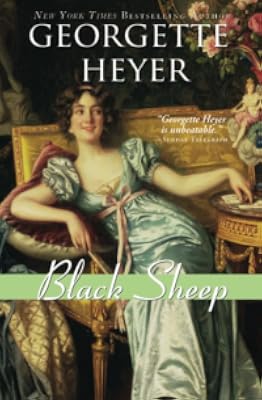
While fully aware that A Lady of Quality is not one of Georgette Heyer's most original novels, bearing as it does such a close resemblance to the author's earlier Black Sheep, I was still able to enjoy reading it. The show more "older" Annis Wychwood may have strongly resembled Black Sheep's Abigail Wendover, just as the rude Oliver Carleton must surely have sprung from the same prototype as the outrageous Miles Calverleigh, but this story of two people who finally find love had a modest charm of its own. show less
While fully aware that A Lady of Quality is not one of Georgette Heyer's most original novels, bearing as it does such a close resemblance to the author's earlier Black Sheep, I was still able to enjoy reading it. The show more "older" Annis Wychwood may have strongly resembled Black Sheep's Abigail Wendover, just as the rude Oliver Carleton must surely have sprung from the same prototype as the outrageous Miles Calverleigh, but this story of two people who finally find love had a modest charm of its own. show less
I love Georgette Heyer's books--the characters are quirky and totally unique, her storylines are always fresh, and her use of Regency slang makes me want to toss around terms like "ape-leader", "blue devil", "wet goose", and "cock up one's toes" in my everyday conversation. I don't usually, but I'm tempted. Lady of Quality is a prime example of Heyer at her best.
At twenty-nine, Annis Wynchwood is considered firmly on the shelf. Strong-minded and independent, she's set up her own establishment in Bath to avoid being the "maiden aunt" in her brother's home. In Bath she enjoys making her own decisions, running her own household, and deciding how and with whom she will spend her time. Well, there is one exception--her cousin, Maria, who her show more brother suggested she engage as her companion to lend her respectability, and who also tends to drive Annis (and anyone else who spends five minutes with her) completely crazy. Other than that, though, Annis is fairly content with the life she's made for herself.
At least she thinks she is--until the day she encounters a broken-down carriage on the road. Annis meets Lucilla Carelton, a young girl who has escaped her aunt's house and the pressure to marry her childhood friend Ninian (who, incidentially, doesn't want to marry her either, and is actually helping her to escape). Annis takes the young girl under her wing and manages to become her temporary chaperone, much to the annnoyance of her brother, her companion Maria, and Lucilla's co-guardian, Oliver Carelton, the "rudest man in England." Mr. Carelton is so put out with Annis's presumption that he travels to Bath to determine just what Miss Wychwood's motives could possibly be. He stays in town, much to Annis's annoyance, since the two are constantly at loggerheads. Or are they? Mr. Carelton admits almost at once to Annis that he finds her both beautiful and fascinating. Annis, though exasperated beyond belief every time she encounters Lucilla's ward, can't help being fascinated by him. She is constantly torn--does she want to see him or avoid him? Encourage him or push him away? Does she loathe him, or love him? You can pretty much figure out where the story will end up from these two characters' first scene together, but as always, the journey Heyer takes us on to get them there is a whole lot of fun! show less
At twenty-nine, Annis Wynchwood is considered firmly on the shelf. Strong-minded and independent, she's set up her own establishment in Bath to avoid being the "maiden aunt" in her brother's home. In Bath she enjoys making her own decisions, running her own household, and deciding how and with whom she will spend her time. Well, there is one exception--her cousin, Maria, who her show more brother suggested she engage as her companion to lend her respectability, and who also tends to drive Annis (and anyone else who spends five minutes with her) completely crazy. Other than that, though, Annis is fairly content with the life she's made for herself.
At least she thinks she is--until the day she encounters a broken-down carriage on the road. Annis meets Lucilla Carelton, a young girl who has escaped her aunt's house and the pressure to marry her childhood friend Ninian (who, incidentially, doesn't want to marry her either, and is actually helping her to escape). Annis takes the young girl under her wing and manages to become her temporary chaperone, much to the annnoyance of her brother, her companion Maria, and Lucilla's co-guardian, Oliver Carelton, the "rudest man in England." Mr. Carelton is so put out with Annis's presumption that he travels to Bath to determine just what Miss Wychwood's motives could possibly be. He stays in town, much to Annis's annoyance, since the two are constantly at loggerheads. Or are they? Mr. Carelton admits almost at once to Annis that he finds her both beautiful and fascinating. Annis, though exasperated beyond belief every time she encounters Lucilla's ward, can't help being fascinated by him. She is constantly torn--does she want to see him or avoid him? Encourage him or push him away? Does she loathe him, or love him? You can pretty much figure out where the story will end up from these two characters' first scene together, but as always, the journey Heyer takes us on to get them there is a whole lot of fun! show less
When I first discovered Georgette Heyer and her brilliant novel Cotillion, I was absolutely thrilled. I love Jane Austen, but by then I had read all of her six major novels and was looking for something more. While I would never equate the quality of these two authors’ works, at their best they do seem to satisfy the same basic impulses in me as a reader.
But this is not Heyer at her best. And as I made my way through the book (rather languidly at places) I couldn’t help but think that perhaps we are lucky to have only six brilliant novels from Austen, rather than the mercurial body of work we get from her later imitator.
The “lady of quality” of the title is a Miss Annis Wychwood, rich, beautiful, unmarried and, at twenty-nine show more years of age, recently moved to Bath. On her way to her new home, she encounters an overturned carriage, and makes the acquaintance of the young heiress Lucilla Carleton and her childhood friend Ninian Elmore. Lucilla is fleeing from an arranged marriage to Ninian, but the latter does not feel she can go out into the world alone. Annis obligingly offers her a place in her house at Camden Place for the time being. This action brings upon her the censure of most everyone she knows, including her brother Lord Geoffrey Wychwood, her companion Maria Farlow, her suitor Lord Blackenham, and Lucilla’s own uncle, the infamously wicked Oliver Carleton.
Unfortunately very few of these characters reached out and grabbed me in the way that the cast of Cotillion did; even the more important ones strike me as quite unoriginal. Annis is rather like an Emma Woodhouse who has matured and partially outgrown her meddling ways, and without any Knightley in view it is up to her brother to try to keep her in line, a role he proves inept at fulfilling. At first I termed Mr. Carleton a Stock Regency Hunk, but on further thought I suppose it is abnormal for a Regency Hunk to be rude, ugly, ironic, and sexually vagrant—all qualities, of course, that he shares with Charlotte Brontë’s Mr. Rochester. Unlike Rochester, however, he convinces neither in his shady past nor in his repentance. Yet for all their lack of originality, these two are by far the most appealing characters in the piece, and whenever they are not sparring with each other, things become decidedly duller. Ninian and Lucilla, whose story is left open-ended, are rather uninteresting, and none of Annis’ suitors provide credible competition for our leading man. Also, though Miss Farlow’s insipid chattering was doubtlessly supposed to provide some comic relief, she succeeded only in frustrating and boring me. There are a few strong women here, including Annis’ abigail and sister-in-law, both of whom prove their worth in the final act … but they belong in a better book.
The plot is thin, containing little more than one very odd courtship; one is left wishing for more. As always, Heyer’s attention to historical detail is incredible, and her dialogue superb, but there is something so very detached about the way in which the story is told (or maybe it was merely my reading of it that was detached). Even the names, while quite fanciful, seem aloofly formal compared to those in Cotillion.
I do not recommend this book. It is a strictly by-the-numbers Regency romance, which gives one the impression of Heyer going through a list of necessary components and checking them off dispassionately. Then again, she was very old when she wrote this, the last of her novels to be published during her lifetime. Sometimes it’s best to stop when you’re ahead. show less
But this is not Heyer at her best. And as I made my way through the book (rather languidly at places) I couldn’t help but think that perhaps we are lucky to have only six brilliant novels from Austen, rather than the mercurial body of work we get from her later imitator.
The “lady of quality” of the title is a Miss Annis Wychwood, rich, beautiful, unmarried and, at twenty-nine show more years of age, recently moved to Bath. On her way to her new home, she encounters an overturned carriage, and makes the acquaintance of the young heiress Lucilla Carleton and her childhood friend Ninian Elmore. Lucilla is fleeing from an arranged marriage to Ninian, but the latter does not feel she can go out into the world alone. Annis obligingly offers her a place in her house at Camden Place for the time being. This action brings upon her the censure of most everyone she knows, including her brother Lord Geoffrey Wychwood, her companion Maria Farlow, her suitor Lord Blackenham, and Lucilla’s own uncle, the infamously wicked Oliver Carleton.
Unfortunately very few of these characters reached out and grabbed me in the way that the cast of Cotillion did; even the more important ones strike me as quite unoriginal. Annis is rather like an Emma Woodhouse who has matured and partially outgrown her meddling ways, and without any Knightley in view it is up to her brother to try to keep her in line, a role he proves inept at fulfilling. At first I termed Mr. Carleton a Stock Regency Hunk, but on further thought I suppose it is abnormal for a Regency Hunk to be rude, ugly, ironic, and sexually vagrant—all qualities, of course, that he shares with Charlotte Brontë’s Mr. Rochester. Unlike Rochester, however, he convinces neither in his shady past nor in his repentance. Yet for all their lack of originality, these two are by far the most appealing characters in the piece, and whenever they are not sparring with each other, things become decidedly duller. Ninian and Lucilla, whose story is left open-ended, are rather uninteresting, and none of Annis’ suitors provide credible competition for our leading man. Also, though Miss Farlow’s insipid chattering was doubtlessly supposed to provide some comic relief, she succeeded only in frustrating and boring me. There are a few strong women here, including Annis’ abigail and sister-in-law, both of whom prove their worth in the final act … but they belong in a better book.
The plot is thin, containing little more than one very odd courtship; one is left wishing for more. As always, Heyer’s attention to historical detail is incredible, and her dialogue superb, but there is something so very detached about the way in which the story is told (or maybe it was merely my reading of it that was detached). Even the names, while quite fanciful, seem aloofly formal compared to those in Cotillion.
I do not recommend this book. It is a strictly by-the-numbers Regency romance, which gives one the impression of Heyer going through a list of necessary components and checking them off dispassionately. Then again, she was very old when she wrote this, the last of her novels to be published during her lifetime. Sometimes it’s best to stop when you’re ahead. show less
When you consider that Heyer wrote this as she was dying and all the wonderful books she wrote in her career one looks at this as a fond remembrance of a women who gave us such enjoyment from both her mysteries and her better known historical romances. It's nothing new or uniquely brilliant but it is a reminder of what we love about Heyer - an accurate portrayal of the time period she writes about, characters that you can love and hate and a solid romance without having to explicitly spell it out for her readers.
Lady Annis is twenty-nine years old woman of means who doesn't want to be relegated to the role of "Auntie". So she does something impulsive and brings in a young woman, Lucilla she doesn't even know. There she meets her uncle show more and guardian, Oliver Carleton.
The best part of this book is the relationship Lucilla and her childhood friend and between Annis and Oliver. Oliver really carries this book. show less
Lady Annis is twenty-nine years old woman of means who doesn't want to be relegated to the role of "Auntie". So she does something impulsive and brings in a young woman, Lucilla she doesn't even know. There she meets her uncle show more and guardian, Oliver Carleton.
The best part of this book is the relationship Lucilla and her childhood friend and between Annis and Oliver. Oliver really carries this book. show less
Members
- Recently Added By
Lists

Favorite Georgette Heyer Novels, Ranked
49 works; 29 members

Comfort Reads
221 works; 39 members

Books about characters you'd like to know
34 works; 13 members

Books with Noble Titles
179 works; 11 members

Books Read in 2019
4,052 works; 108 members

Books that are a victim of Cancel Culture
46 works; 3 members

Books Read in 2022
5,226 works; 115 members

Books Read in 2023
5,638 works; 147 members

Books Read in 2024
4,727 works; 128 members
Author Information

125+ Works 78,314 Members
Georgette Heyer was born on August 16, 1902 at Wimbledon, London. She wrote The Black Moth as a story for her brother Boris. Her father, impressed with his daughter's imagination, suggested that she prepare it to be published, which it was by Constable in 1921. Having scored an instant success with The Black Moth at the age of nineteen under her show more own name, Georgette Heyer, she experimented with a pseudonym, Stella Martin, for her third book, published by Mills & Boon. She continued writing and in 1925 she married Ronald Rougier, a mining engineer. After reasonable but not spectacular sales from her first few books the instant success of These Old Shades in 1926 brought her a solid source of income which was very necessary at the time since the family relied to a large extent on the income from Georgette Heyer's writing. She wrote over fifty books during her lifetime and created the Regency England genre of romance novels. She died on July 4, 1974 at the age of 71. (Bowker Author Biography) show less
Some Editions
Series
Belongs to Publisher Series
Work Relationships
Is contained in
Common Knowledge
- Canonical title*
- En dam av börd
- Original title
- Lady of Quality
- Original publication date
- 1972
- People/Characters
- Oliver Carleton; Annis Wychwood; Lucilla Carleton; Ninian Elmore; Maria Farlow; Lord Beckenham (show all 8); Harry Beckenham; Geoffrey Wychwood
- Important places
- Bath, Somerset, England, UK
- First words
- The elegant travelling carriage which bore Miss Wychwood from her birthplace, on the border of Somerset and Wiltshire, to her home in Bath, proceeded on its way at a decorous pace.
- Quotations
- "I lied when I said I like you! I do not like you! I am very nearly sure that I dislike you excessively."
- Last words
- (Click to show. Warning: May contain spoilers.)"You will, of course, do what you think is right, but do, pray, come and eat your baked egg before it is quite spoilt!"
- Original language
- English
- Disambiguation notice*
- * Dit boek is ook uitgegeven onder de titel: De Liefde van een Lady..
*Some information comes from Common Knowledge in other languages. Click "Edit" for more information.
Classifications
Statistics
- Members
- 1,837
- Popularity
- 11,891
- Reviews
- 53
- Rating
- (3.79)
- Languages
- 6 — Dutch, English, Estonian, German, Italian, Swedish
- Media
- Paper, Audiobook, Ebook
- ISBNs
- 43
- UPCs
- 1
- ASINs
- 28