
On This Page
Description
Among P.G. Wodehouse's most beloved recurring characters is the dandy, wit, cricketer, and sometimes banker Rupert Psmith (the 'P' is silent). Psmith in the City follows the lead character's misfortunes as a banker, part-time cricket enthusiast, and fast friend to another recurring Wodehouse character, Mike Jackson..
Tags
Recommendations




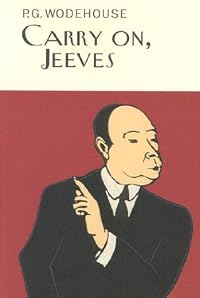




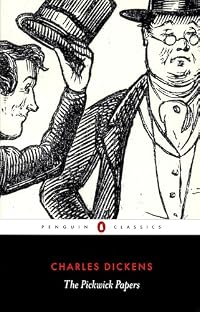
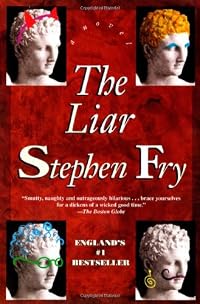
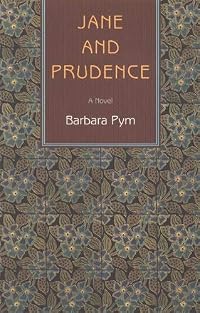
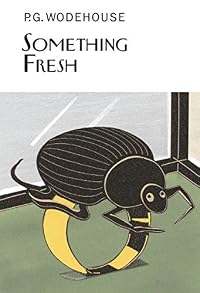
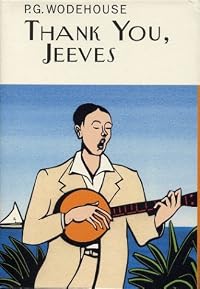
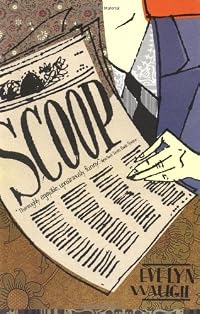




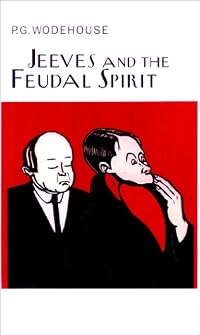
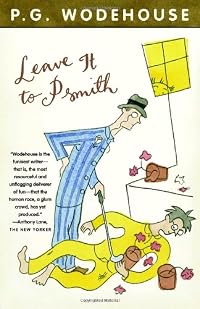








Member Recommendations

thorold Irresponsible agents of chaos let loose in South London
Member Reviews
Psmith in the City is a humorous look at office life long before there was a TV show to make it funny. Technologies change, business practices evolve, but people in the office environment apparently haven't changed much. And P. G. Wodehouse is just the writer to take a stroll through the various departments and find the humor we might have been missing.
I was not surprised to see Wodehouse paying homage to that little gem of British humor, Jerome K. Jerome's Three Men in a Boat. Besides the characters talking about a scene from that book, there are other similarities. For one thing, this story is not nearly so laugh-out-loud funny as most of Wodehouse's other works. Maybe it's because the story deals with real issues... people stuck in show more the daily grind of a job they dislike; people having to give up their dreams in order to make a living; people dealing with unpleasant supervisors and co-workers. Oh, most of it is given with an eye to the humor of the situation, but sometimes it's not funny, and not intended to be. Consider this:
Life in a bank is at its pleasantest in the winter. When all the world outside is dark and damp and cold, the light and warmth of the place are comforting... And, the outside world offering so few attractions, the worker, perched on his stool, feels that he is not so badly off after all. It is when the days are long and the sun beats hot on the pavement, and everything shouts to him how splendid it is out in the country, that he begins to grow restless. (102)
After all, most people look on the cashier of a bank as a sort of human slot-machine. You put in your cheque, and out comes money. It is no affair of yours whether life is treating the machine well or ill that day. (106)
I worked as a bank teller a few years ago and the truth of this cannot be denied. Everyone should work in retail at some point in life, just to learn what it's like! Anyways, these and other contemplative passages made me think of Three Men, in its more thoughtful moods.
There are some trademark Wodehouse moments, such as the political rally turning into a brawl and Psmith's lovely speech to Mr. Bickersdyke announcing his and Mike's resignation. I adore Psmith's daily trials of being confronted with a co-worker's gaudy apparel. Psmith has decided to help this hapless man, but he has no luck. "The moment I concentrate myself on Comrade Bickersdyke for a brief spell, and seem to be doing him a bit of good, what happens? Why, Comrade Bristow sneaks off and buys a sort of woollen sunset. I saw the thing unexpectedly. I tell you I was shaken. It is the suddenness of that waistcoat which hits you. It's discouraging, this sort of thing" (77).
Oh dear, all I want to do is quote the book in this review. I guess that means Wodehouse is more amusing than I am! Recommended reading for anyone who has ever worked in an office and gazed longingly at the sunshine outside. show less
I was not surprised to see Wodehouse paying homage to that little gem of British humor, Jerome K. Jerome's Three Men in a Boat. Besides the characters talking about a scene from that book, there are other similarities. For one thing, this story is not nearly so laugh-out-loud funny as most of Wodehouse's other works. Maybe it's because the story deals with real issues... people stuck in show more the daily grind of a job they dislike; people having to give up their dreams in order to make a living; people dealing with unpleasant supervisors and co-workers. Oh, most of it is given with an eye to the humor of the situation, but sometimes it's not funny, and not intended to be. Consider this:
Life in a bank is at its pleasantest in the winter. When all the world outside is dark and damp and cold, the light and warmth of the place are comforting... And, the outside world offering so few attractions, the worker, perched on his stool, feels that he is not so badly off after all. It is when the days are long and the sun beats hot on the pavement, and everything shouts to him how splendid it is out in the country, that he begins to grow restless. (102)
After all, most people look on the cashier of a bank as a sort of human slot-machine. You put in your cheque, and out comes money. It is no affair of yours whether life is treating the machine well or ill that day. (106)
I worked as a bank teller a few years ago and the truth of this cannot be denied. Everyone should work in retail at some point in life, just to learn what it's like! Anyways, these and other contemplative passages made me think of Three Men, in its more thoughtful moods.
There are some trademark Wodehouse moments, such as the political rally turning into a brawl and Psmith's lovely speech to Mr. Bickersdyke announcing his and Mike's resignation. I adore Psmith's daily trials of being confronted with a co-worker's gaudy apparel. Psmith has decided to help this hapless man, but he has no luck. "The moment I concentrate myself on Comrade Bickersdyke for a brief spell, and seem to be doing him a bit of good, what happens? Why, Comrade Bristow sneaks off and buys a sort of woollen sunset. I saw the thing unexpectedly. I tell you I was shaken. It is the suddenness of that waistcoat which hits you. It's discouraging, this sort of thing" (77).
Oh dear, all I want to do is quote the book in this review. I guess that means Wodehouse is more amusing than I am! Recommended reading for anyone who has ever worked in an office and gazed longingly at the sunshine outside. show less
After some effortful reading, I was of a mind to enjoy a light and easy novel. What better author that P.G. Wodehouse for this purpose, and what better series than the adventures of Mike & Psmith. I read a great deal of Wodehouse more than ten years ago, so a re-read feels fresh and new. I’ve always been especially fond of this minor Wodehouse series, as the pair are so charming. Psmith, with his languid manner, pronounced sense of style, insistence on referring to all men as ‘Comrade’, and incredible ability to be so polite that it circles back around to rudeness. He consistently declares himself a Socialist, yet in this book expresses horror at taking a tram and spends a good amount of time at the Conservative Club. (That show more incongruity tells you a lot about the British class system.) Mike, meanwhile, is a quiet and stoic fellow of many feelings, most of them about cricket. He lacks Psmith’s gift of volubility, but is always willing to back him up. In this installment, the pair would like to go to Cambridge and are instead sent to London by their fathers in order to earn a living at the New Asiatic Bank.
Wodehouse clearly has little fondness for banks in general and the managers that run them in particular. Although I largely took ‘Psmith in the City’ at face value and enjoyed it greatly on that basis, I couldn’t help noting some interesting matters of class politics. Mike and Psmith repeatedly clash with the unpleasant Mr. Bickersdyke, who it becomes clear is a self-made man. Whereas he was formerly an enthusiastic Socialist, he is subsequently elected MP on a Unionist platform. This shift in allegiance is depicted as hypocritical and used by Psmith to elegantly manipulate the man. Indeed, Bickersdyke is clearly not entirely comfortable in the upper class circles that he has worked his way into, something that Psmith unerringly hones in on. Psmith and Mike are both firmly of the landed aristocracy, although Mike’s family are experiencing some financial difficulty. The subtext is clear - toil and effort can never be a substitute for good breeding. Indeed, Wodehouse heavily implies that there is something undignified about hard work per se; cricket and witty remarks are more suitable employment for a gentleman. Yet Psmith and Mike are not mere caricatures and the insight into class dynamics was, to me, more entertaining than maddening. After all, Bickersdyke may have rings run around him by Psmith, but ultimately he ends up in a better position than before. He’s still bank manager, has become an MP, and has divested himself of two very annoying employees who did hardly any work. Everyone wins!
Analysis aside, Wodehouse has an absolutely wonderful turn of phrase and yen for the absurd. Examples abound, I will provide only a brief sampling.
(I believe that the above is as true now as it was in 1910, probably more so.)
If you like the above passage, you will likely enjoy the whole novel very much.
Given the complete absence of female characters (even the lone landlady who receives an early cameo is referred to as a ‘pantomime dame’), there is a somewhat homoerotic air about this sort of thing:
The fussiness of Wodehouse characters with regards to dress is a great joy to me, exemplified in this extract from a Psmith monologue.
And I must conclude with a few of Wodehouse’s delightfully memorable one-liners.
It’s a pity that Wodehouse never wrote a whole novel of Mike & Psmith’s adventures at Cambridge, that would be just the thing at the moment. show less
Wodehouse clearly has little fondness for banks in general and the managers that run them in particular. Although I largely took ‘Psmith in the City’ at face value and enjoyed it greatly on that basis, I couldn’t help noting some interesting matters of class politics. Mike and Psmith repeatedly clash with the unpleasant Mr. Bickersdyke, who it becomes clear is a self-made man. Whereas he was formerly an enthusiastic Socialist, he is subsequently elected MP on a Unionist platform. This shift in allegiance is depicted as hypocritical and used by Psmith to elegantly manipulate the man. Indeed, Bickersdyke is clearly not entirely comfortable in the upper class circles that he has worked his way into, something that Psmith unerringly hones in on. Psmith and Mike are both firmly of the landed aristocracy, although Mike’s family are experiencing some financial difficulty. The subtext is clear - toil and effort can never be a substitute for good breeding. Indeed, Wodehouse heavily implies that there is something undignified about hard work per se; cricket and witty remarks are more suitable employment for a gentleman. Yet Psmith and Mike are not mere caricatures and the insight into class dynamics was, to me, more entertaining than maddening. After all, Bickersdyke may have rings run around him by Psmith, but ultimately he ends up in a better position than before. He’s still bank manager, has become an MP, and has divested himself of two very annoying employees who did hardly any work. Everyone wins!
Analysis aside, Wodehouse has an absolutely wonderful turn of phrase and yen for the absurd. Examples abound, I will provide only a brief sampling.
That is the peculiarity of London. There is a sort of cold unfriendliness about it. A city like New York makes the new arrival feel at home in half an hour; but London is a specialist in what Psmith called in his letter the Distant Stare. You have to buy London’s good will.
(I believe that the above is as true now as it was in 1910, probably more so.)
Mr Rossiter had discovered Psmith’s and Mike’s absence about five minutes after they had left the building. Ever since then, he had been popping out of his lair at intervals of three minutes, to see whether they had returned. Constant disappointment in this respect had rendered him decidedly jumpy. When Psmith and Mike reached the desk, he as a kind of human soda-water bottle. He fizzed over with questions, reproofs, and warnings.
“What does it mean? What does it mean?” he cried. “Where have you been? Where have you been?”
“Poetry,” said Psmith approvingly.
If you like the above passage, you will likely enjoy the whole novel very much.
Given the complete absence of female characters (even the lone landlady who receives an early cameo is referred to as a ‘pantomime dame’), there is a somewhat homoerotic air about this sort of thing:
“I need you, Comrade Jackson,” [Psmith] said, when Mike lodged a protest on finding himself bound for the stalls for the second night in succession. “We must stick together. As my confidential secretary and adviser, your place is by my side. Who knows but that between the acts tonight I might not be seized with some luminous thought? Could I utter this to my next-door neighbour or the programme girl? Stand by me, Comrade Jackson, or we are undone.”
So Mike stood by him.
The fussiness of Wodehouse characters with regards to dress is a great joy to me, exemplified in this extract from a Psmith monologue.
”...The moment I concentrate myself on Comrade Bickersdyke for a brief spell, and seem to be doing him a bit of good, what happens? Why, Comrade Bristow sneaks off and buys a sort of woolen sunset. I saw the thing unexpectedly. I tell you I was shaken. It is the suddenness of that waistcoat that hits you. It’s discouraging, this sort of thing. I try always to think well of my fellow man. As an energetic Socialist, I do my best to see the good that is in him, but it’s hard. Comrade Bristow’s the most striking argument against the equality of man I’ve ever come across.”
And I must conclude with a few of Wodehouse’s delightfully memorable one-liners.
Mike proceeded to the meeting with the air of an about-to-be-washed dog.
“...We were legging it with the infuriated mob on our heels. An ignominious position for a Shropshire Psmith but, after all, Napoleon did the same.”
He looked at Psmith with what was intended to be a dignified stare. But dignity is hard to achieve in a couple of parti-coloured towels.
“The rain keeps off,” said Psmith.
Mr Bickersdyke looked as if he wished his employee would imitate the rain, but made no reply.
It’s a pity that Wodehouse never wrote a whole novel of Mike & Psmith’s adventures at Cambridge, that would be just the thing at the moment. show less
Early Plum. Psmith in the City is light on plot but replete with deliciously witty sentences. It’s a balance which is just fine by me. When it comes to Wodehouse style is the thing. The convoluted plots of the later books were merely a convenient peg on which he hung his verbal brilliance.
This is not, perhaps, the master at full throttle, but even a slightly underpowered Plum is more entertaining than most. His benign spirit evokes a world in which it is forever the weekend. And always remember: ‘life can never be quite the same after you have upset a water jug into an open jam tart at the table of a comparative stranger’. Words to live by.
This is not, perhaps, the master at full throttle, but even a slightly underpowered Plum is more entertaining than most. His benign spirit evokes a world in which it is forever the weekend. And always remember: ‘life can never be quite the same after you have upset a water jug into an open jam tart at the table of a comparative stranger’. Words to live by.
Psmith was the character who set Wodehouse free from tongue tied schoolboy heroics to float like a particularly elegant butterfly around the absurdities of life - Comrade Bickersdyke leading to Bertie's dastardly Spodes and Bassetts; Mike becomes the supporting foil and Psmith's wit sparkles unmistakably through the delights of the period detail of imperial banking, country house cricket and the first days of football fandom...
I have been a die hard Wooster fan, and remain one to this day. After I read all the Bertie Wooster stories, I decided to read PSmith.
Psmith in the city leaves off where the first book ended, and the two are thrown together to work in a bank. Psmith continues to save the day, and to confuse all who confront him. It takes a bit of effort to realise that this is a 19 year old boy as the hero!
The character of Psmith slowly starts to emerge, and I am sure that in future Psmith books, this will be further fleshed out.
To be, the book does not have the delightful goofiness of the Jeeves stories, nor their charm. Still, lets see!
Psmith in the city leaves off where the first book ended, and the two are thrown together to work in a bank. Psmith continues to save the day, and to confuse all who confront him. It takes a bit of effort to realise that this is a 19 year old boy as the hero!
The character of Psmith slowly starts to emerge, and I am sure that in future Psmith books, this will be further fleshed out.
To be, the book does not have the delightful goofiness of the Jeeves stories, nor their charm. Still, lets see!
This is the first Psmith novel I've read—actually, I think, the first Wodehouse novel I've read that hasn't been about Jeeves and Wooster. The prose was smoothly funny—though I have to admit that my eyes glazed over during the cricket match parts—but apart from that, it was very obvious that this is was an early work. Psmith is an early version of Jeeves in some respects—particularly his placid, adept methods of problem solving—but he's a bit too much of an arrogant asshole for me to have warmed to him.
I've listened to this book many times, and I have gone back and forth on how much I like it. But upon this listen, I enjoyed it not a little! Its plot is refreshingly different from Wodehouse's Jeeves and Blandings series. It's just a story about 2 recently graduated boys working in a bank with an antagonistic boss. There's a ton of great scenarios and it rarely gets particularly stressful, especially when you've been through it multiple times.
Members
- Recently Added By
Lists

1910s
90 works; 16 members

Best Workplace Fiction
47 works; 17 members

stories at work
43 works; 7 members
Author Information

657+ Works 110,510 Members
P. G. Wodehouse was born in Guildford, United Kingdom on October 15, 1881. After completing school, he spent two years as a banker at the Hong Kong and Shanghai Bank in London and then took a job as a sports reporter and columnist for the Globe newspaper. His first novel, The Pothunters, was published in 1902. He wrote over 100 novels and short show more story collections during his lifetime including A Perfect Uncle, Love Among the Chickens, The Swoop, P. Smith in the City, Meet Mr. Milliner, Doctor Sally, Quick Service, The Old Reliable, Uneasy Money, A Damsel in Distress, Jill the Reckless, The Adventures of Sally, A Pelican at Blandings, The Girl in Blue, and Aunts Aren't Gentlemen. His most famous characters, Bertie Wooster and his manservant, Jeeves, appeared in books such as Much Obliged, Jeeves. He also wrote lyrics for musical comedies and worked as screenwriter in Hollywood in the 1930s. In 1939, he bought a villa in Le Touquet on the coast of France. He remained there when World War II started in 1939. The following year, the Germans appropriated the villa, confiscated property, and arrested him. He was detained in various German camps for almost one year before being released in 1941. He went to Berlin and spoke of his experience in five radio talks to be broadcast to America and England. The talks themselves were completely innocuous, but he was charged with treason in England. He was cleared, but settled permanently in the United States. He became a citizen in 1955. He was made a Knight Commander of the Order of the British Empire in 1975. He died from a heart attack after a long illness on February 14, 1975 at the age of 93. (Bowker Author Biography) show less
Some Editions
Series

Belongs to Publisher Series
Work Relationships
Is contained in
Has the adaptation
Common Knowledge
- Canonical title*
- Psmith in banca
- Original title
- Psmith in the City
- Original publication date
- 1910
- People/Characters
- Ronald Psmith; Michael Jackson; Bickersdycke; Waller; Gregory
- Important places
- London, England, UK
- Dedication
- to Lesley Havergal Bradshaw
- First words
- Considering what a prominent figure Mr John Bickersdyke was to be in Mike Jackson's life, it was only appropriate that he should make a dramatic entry into it.
- Quotations
- He examined the future, and found it good.
- Last words
- (Click to show. Warning: May contain spoilers.)'I should jolly well think,' he said simply, 'that we might.'
*Some information comes from Common Knowledge in other languages. Click "Edit" for more information.
Classifications
Statistics
- Members
- 1,067
- Popularity
- 23,915
- Reviews
- 28
- Rating
- (4.06)
- Languages
- English, Hungarian, Italian
- Media
- Paper, Audiobook, Ebook
- ISBNs
- 76
- ASINs
- 34