On This Page
Description
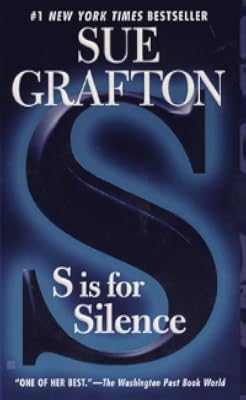
Thirty-four years ago, Violet Sullivan put on her party finery and left for the annual Fourth of July fireworks display. She was never seen again. In the small California town of Serena Station, tongues wagged. Some said she'd run off with a lover. Some said she was murdered by her husband. But for the not-quite-seven-year-old daughter Daisy that she left behind, her absence has never been explained or forgotten. Now, thirty-four years later, she wants the solace of closure.Tags
Recommendations














Member Recommendations

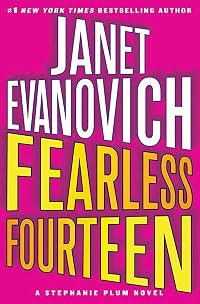
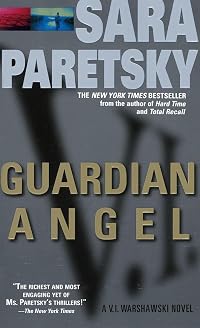
christiguc Hannah Wolfe is a tough, intelligent PI like Kinsey Millhone. The mysteries are enjoyable.

readafew Lola is a cross between Kinsey Milhone and Stephanie Plum
readafew Laugh out loud funny book. Lola is a PI as well in Southern California
Member Reviews
A solid entry in the series, and, surprisingly, more standalone than most. There's no series backstory required, just a few inconsequential references to Henry the landlord and Dietz the occasional love interest. A first-time reader would have no trouble following the story. They might confuse all those detailed observations about people and places as clues or red herrings in some kind of Knives Out puzzle, but that's true of all of the books.
A first-time reader would miss how radical it is to have chapters that are not first-person Kinsey Millhone. Exactly how these chapters come to be in what until now has been one long diary is unclear, but they serve a useful narrative function. This is a cold case involving the unexplained show more disappearance 34 years ago in 1953 of Violet Sullivan. None of the chapters give clues to what happened to Violet, and none are from Violet's perspective. Instead, these chapters reveal the mixture of good and bad in everyone and the complexity of their interrelationships.
There are two weaknesses in my mind. First, the resolution of what happened and who was responsible seems almost like an appendix entry, mostly irrelevant, picked using eeny, meeny, miny, moe. Second, yet again, the last chapter has Kinsey in mortal danger, in a scene very close to a previous book. show less
A first-time reader would miss how radical it is to have chapters that are not first-person Kinsey Millhone. Exactly how these chapters come to be in what until now has been one long diary is unclear, but they serve a useful narrative function. This is a cold case involving the unexplained show more disappearance 34 years ago in 1953 of Violet Sullivan. None of the chapters give clues to what happened to Violet, and none are from Violet's perspective. Instead, these chapters reveal the mixture of good and bad in everyone and the complexity of their interrelationships.
There are two weaknesses in my mind. First, the resolution of what happened and who was responsible seems almost like an appendix entry, mostly irrelevant, picked using eeny, meeny, miny, moe. Second, yet again, the last chapter has Kinsey in mortal danger, in a scene very close to a previous book. show less
First Line: When Liza Mellincamp thinks about the last time she ever saw Violet Sullivan, what comes most vividly to mind is the color of Violet's Japanese silk kimono, a shade of blue that Liza later learned was called "cerulean," a word that wasn't even in her vocabulary when she was fourteen years old.
On Saturday, July 4, 1953, most people in Serena Station, California, planned to spend at least part of their evening watching the fireworks display. Violet Sullivan was not one of them. She made arrangements for her usual babysitter, got dressed up, loaded her three-month-old Pomeranian puppy into her purse, and drove off in a cloud of dust in her brand-new Bel Air. She never came back.
Although they did search for her, most people show more assumed that the vivacious Violet had run off with the latest man who'd caught her fancy. Trouble is, she left a young daughter behind who grew up with a lot of problems due to her mother's disappearance. Reluctantly, Kinsey Millhone agrees to work for Daisy, even though she privately thinks she's not going to get anywhere with the 34-year-old cold case.
Of course we know that once Kinsey starts investigating, she's going to get somewhere. Grafton veers away from Kinsey's usual first person narrative to intersperse flashbacks from the various people in town who knew the missing woman. As the story progresses, the reader begins to understand that all these people have their own reasons for wanting Violet dead.
Hopefully I won't be tarred and feathered by the legions of Millhone fans when I say that previously the only book in the series I'd read was A is for Alibi. For some reason that I can't remember, Kinsey and I didn't really hit it off, but I'm happy to say that I appreciate her a lot more now that I've read S is for Silence. Did I feel as though I was missing a lot of detail, not having read B through R? No. I fell right in step with her as she began digging away at the facts in this case.
The flashbacks populated the town for me and gave me a real sense of the way Violet interacted with everyone. Without those glimpses into 1953, the story would have been skeletal indeed. As it was, I became quite caught up in the book and its characters. I was able to narrow down the field of those who wished Violet ill, but never got around to choosing my chief suspect.
Many times in reading crime fiction, it's not just about whodunit. Sometimes the how and the why are even more important, and once in a while the characters make a reader forget everything else. Where S is for Silence is concerned, the who led to the how and then to the why, and then I just concentrated on a private investigator who doesn't know how to quit... and the daughter, abandoned so long ago, who deserved truth and justice. show less
On Saturday, July 4, 1953, most people in Serena Station, California, planned to spend at least part of their evening watching the fireworks display. Violet Sullivan was not one of them. She made arrangements for her usual babysitter, got dressed up, loaded her three-month-old Pomeranian puppy into her purse, and drove off in a cloud of dust in her brand-new Bel Air. She never came back.
Although they did search for her, most people show more assumed that the vivacious Violet had run off with the latest man who'd caught her fancy. Trouble is, she left a young daughter behind who grew up with a lot of problems due to her mother's disappearance. Reluctantly, Kinsey Millhone agrees to work for Daisy, even though she privately thinks she's not going to get anywhere with the 34-year-old cold case.
Of course we know that once Kinsey starts investigating, she's going to get somewhere. Grafton veers away from Kinsey's usual first person narrative to intersperse flashbacks from the various people in town who knew the missing woman. As the story progresses, the reader begins to understand that all these people have their own reasons for wanting Violet dead.
Hopefully I won't be tarred and feathered by the legions of Millhone fans when I say that previously the only book in the series I'd read was A is for Alibi. For some reason that I can't remember, Kinsey and I didn't really hit it off, but I'm happy to say that I appreciate her a lot more now that I've read S is for Silence. Did I feel as though I was missing a lot of detail, not having read B through R? No. I fell right in step with her as she began digging away at the facts in this case.
The flashbacks populated the town for me and gave me a real sense of the way Violet interacted with everyone. Without those glimpses into 1953, the story would have been skeletal indeed. As it was, I became quite caught up in the book and its characters. I was able to narrow down the field of those who wished Violet ill, but never got around to choosing my chief suspect.
Many times in reading crime fiction, it's not just about whodunit. Sometimes the how and the why are even more important, and once in a while the characters make a reader forget everything else. Where S is for Silence is concerned, the who led to the how and then to the why, and then I just concentrated on a private investigator who doesn't know how to quit... and the daughter, abandoned so long ago, who deserved truth and justice. show less
I love Kinsey Millhone. But she's not everyone's cup of tea. I started reading the Alphabet series a few years ago - I think at the time it was up to O is for Outlaw. The idea of a mystery series each title beginning with a new letter amused me. I don't know why. I don't think it's particularly original. At least - I've seen a few others since. At the time though it was new to me and it just struck me as perfect. I flew through the series. Kinsey is riveting. She's brash and harsh and charming. She's fierce and flawed. She gets scared. She holds her own. She pushes herself to run often and tackles cases without judgement and with an open mind. Rosie and Henry are brilliant and I love the little family she builds around her.
But Kinsey show more Millhone isn't Jack Reacher - her speed is more Tracy Crosswhite. [book:My Sister's Grave|22341263] Her cases aren't full of action and high speed chases - they're slowly nitpicking away until something clicks into place. She writes down all her thoughts and places her facts and ideas on 3x5 index cards - which she often shuffles and rearranges to help her solve her case. And I love it. Kinsey Millhone is great - but she's not for everyone.
For some reason I've seen reviewers compare this to Stephanie Plum - I don't know why - this is absolutely NOTHING like that. Stephanie Plum is a very different character and an extremely different type of book. That's more fluff. Kinsey Millhone is more procedural mysteries. And this series isn't current - it was first published in the 80's - there's not really technology. Messages were relayed by calling the landlines. Paper files were still the main form of storage. Not everyone will enjoy reading this. But if you like your mysteries to be more like procedurals with a determined and fierce character - Kinsey Millhone is for you.
For the most part I enjoyed this. And then there was the ending. I didn't get it. It made no real sense. Was he sleeping with her? Why did he kill her? There was no real motive. Sure he got her the dog but all the other guys she was sleeping with had way more motive than Tom Padgett. Why did she steal the jewels from her mum? Were they found in the car? And the extra money she borrowed? Where was she headed? Was she leaving? By herself? There was just lots of loose ends. Too many loose ends to rate better than 3.5 stars.
3.5 stars. show less
But Kinsey show more Millhone isn't Jack Reacher - her speed is more Tracy Crosswhite. [book:My Sister's Grave|22341263] Her cases aren't full of action and high speed chases - they're slowly nitpicking away until something clicks into place. She writes down all her thoughts and places her facts and ideas on 3x5 index cards - which she often shuffles and rearranges to help her solve her case. And I love it. Kinsey Millhone is great - but she's not for everyone.
For some reason I've seen reviewers compare this to Stephanie Plum - I don't know why - this is absolutely NOTHING like that. Stephanie Plum is a very different character and an extremely different type of book. That's more fluff. Kinsey Millhone is more procedural mysteries. And this series isn't current - it was first published in the 80's - there's not really technology. Messages were relayed by calling the landlines. Paper files were still the main form of storage. Not everyone will enjoy reading this. But if you like your mysteries to be more like procedurals with a determined and fierce character - Kinsey Millhone is for you.
For the most part I enjoyed this. And then there was the ending. I didn't get it. It made no real sense. Was he sleeping with her? Why did he kill her? There was no real motive. Sure he got her the dog but all the other guys she was sleeping with had way more motive than
3.5 stars. show less
This I have to say was one of the better Kinsey books. I liked the mystery and found myself having a hard time trying to decide which of 3 suspects was really the killer. This was a cold case, someone hired Kinsey to find out what happened to her mom when she disappeared 30+ years previously.
Turns out there were quite a few people who didn't really want anyone looking to hard at what happened back then, lots of secrets to keep hidden.
And once again when Kinsey gets close to the killer, she almost bites it. I liked how this time it wasn't because she was being naive or too curious for her own good, she was just a little to slow for the masterful planning of the person with the biggest secret to hide.
Turns out there were quite a few people who didn't really want anyone looking to hard at what happened back then, lots of secrets to keep hidden.
And once again when Kinsey gets close to the killer, she almost bites it. I liked how this time it wasn't because she was being naive or too curious for her own good, she was just a little to slow for the masterful planning of the person with the biggest secret to hide.
The note at the front re the artistic license taken with road layouts and house positions made me laugh as I imagined a big pile of letters starting “did you know...” or “ I’d like to point out that...”.
I will have to stop reading these before I start a Maccas habit! These books are like an advert for quarter pounders, KM will have arteries that make her doctors weep.
The story is yet again a completely different format - this series has been great for not being stale. KM is looking into an ancient cold case, and the book style changed quite dramatically with the timeline going back and forth a little. I liked it, and felt I got to know Violet as a person much more as a result.
I will have to stop reading these before I start a Maccas habit! These books are like an advert for quarter pounders, KM will have arteries that make her doctors weep.
The story is yet again a completely different format - this series has been great for not being stale. KM is looking into an ancient cold case, and the book style changed quite dramatically with the timeline going back and forth a little. I liked it, and felt I got to know Violet as a person much more as a result.
I enjoy Kinsey when she's working on long-unsolved cases, and this book takes us back to 1954, when a wild young wife and mother disappeared. Excellent writing, and I loved the addition of flashbacks to the days before the woman's disappearance. My only complaint is that the book seemed to end too abruptly. I wanted more of an epilogue, wanted to see how the resolution affected all the players in the novel.
Finally! Sue Grafton is back on track with her long, long, loooooong-running Kinsey Millhone series. After a string of disappointing entries, in S is for Silence Grafton jettisons the now-over-developed backstory tropes that have been weighing her down (e.g. all the old people love affairs) and gets back down to the roots of an old missing persons case -- i.e. a small town's resident hussy -- that's full of filthy, gossipy detail. The flashbacks to the 1950s work very well. Recommended.
Members
- Recently Added By
Lists

Books Read in 2006
422 works; 8 members

Books Read in 2020
4,379 works; 123 members

Llibres que he llegit el 2021
54 works; 1 member

The Complete Rory Gilmore Reading List
506 works; 5 members
Author Information

118+ Works 104,040 Members
Sue Grafton was born in Louisville, Kentucky on April 24, 1940. She received a bachelor's degree in English literature from the University of Louisville in 1961. Her first novel Keziah Dane was published in 1967. Her second novel, The Lolly-Madonna War, was published in 1969 and she adapted it into a screenplay. After that movie was released in show more 1973, she worked intermittently writing for television. A series she created, Nurse, ran for two seasons on CBS in the early 1980s. Her writing career took off when A Is for Alibi was published in 1982 and received the Mysterious Stranger Award. This was the beginning of the Kinsey Millhone Mystery series. B Is for Burglar won the Shamus and Anthony Awards and C Is for Corpse won the Anthony Award. She also received the Cartier Diamond Dagger, the Mystery Writers of America Grand Master Award, a Lifetime Achievement Award from Bouchercon, and the Ross Macdonald Literary Award. She died from cancer on December 28, 2017 at the age of 77. (Bowker Author Biography) show less
Some Editions
Awards and Honors
Distinctions
Notable Lists
Series

Work Relationships
Common Knowledge
- Canonical title
- S is for Silence
- Original title
- S Is for Silence
- Original publication date
- 2005
- People/Characters
- Kinsey Millhone; Violet Sullivan; Daisy Sullivan; Philemon "Foley" Sullivan; Chet Cramer; Kathy Cramer (show all 31); Tannie Ottweiler; Tom Padgett; Pete Ottweiler; Cheney Phillips; Liza Mellincamp; Baby (dog); Winston Smith; Sgt. Timothy Schaefer; Henry Pitts; Calvin Wilcox; Jake Ottweiler; Mary Hairl Ottweiler; B.W. McPhee; Tom Padgett; Cora Padgett; Maxi Bonnet; Steve Ottweiler; Ken Rice; Hairl Tanner; Herbert Greer; Anna Erickson; Ty Eddings; Dahlia York; Millicent Wyrick; Livia Cramer
- Important places
- Serena Station, California, USA; Santa Teresa, California, USA; Tullis, California, USA; Cromwell, California, USA
- Dedication
- For my granddaughter, Addison, with a heart full of love.
- First words
- When Liza Mellincamp thinks about the last time she ever saw Violet Sullivan, what comes most vividly to mind is the color of Violet's Japanese silk kimono, a shade of blue that Liza later learned was called "cerulean," a wor... (show all)d that wasn't even in her vocabulary when she was fourteen years old.
- Last words
- (Click to show. Warning: May contain spoilers.)And that didn't seem like a bad way to have the matter end.
- Original language
- English US
Classifications
Statistics
- Members
- 4,641
- Popularity
- 3,122
- Reviews
- 90
- Rating
- (3.69)
- Languages
- 11 — Catalan, Czech, Dutch, English, Finnish, French, Korean, Norwegian (Bokmål), Norwegian, Spanish, Swedish
- Media
- Paper, Audiobook, Ebook
- ISBNs
- 54
- UPCs
- 1
- ASINs
- 20