On This Page
Description
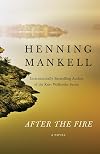
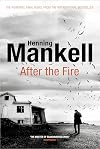
Henning Mankell's last novel about an aging man whose quiet, solitary life on an isolated island off the coast of Sweden is turned upside down when his house catches fire.Fredrik Welin is a former surgeon who retired in disgrace decades earlier to a tiny island on which he is the only resident. He has a daughter he rarely sees and his mailman Jansson is the closest thing he has to a friend, and to an adversary. He is perfectly content to live out his days in quiet solitude.
One autumn show more evening, he is startled awake by a blinding light—only to discover that his house is on fire. With the help of Jansson, he escapes the flames just in time wearing two left boots. Dawn reveals that everything he owns is now a smoldering pile of ash and his house is destroyed—forcing him to move into an abandoned trailer on his island. A local journalist, Lisa Modin, who wants to write a story about the fire, comes into his life. In doing so, she awakens in him something that he thought was long dead. Soon after, his daughter comes to the island with surprising news of her own. Meanwhile, the police suspect Fredrik of arson because he had a sizable insurance claim on his house. When Fredrik is away from the archipelago, another house goes up in flames and the community realizes they have an arsonist in their midst. After the Fire is an intimate portrait of an elderly recluse who is forced to open himself up to a world he'd left behind. show less
Tags
Recommendations

























Member Reviews
This is Mankell's last novel, and it's full of lovely meditations on aging and death. Frederik, an elderly doctor, lives alone on an island in the Swedish archipelago with very little human contact other than the postman Jonasson. Late one autumn night, he awakens to find his house engulfed in flames. He barely escapes with his life, his possessions reduced to the clothes he was wearing, including two left boots. In short order, it is discovered that the fire was deliberately set, and when Frederik is suspected of being the arsonist, his life begins to change in ways big and small.
However, this is not a crime novel, and the discovery of who set the fire is only the background to the more important story. This is an exploration of aging show more and loneliness and how we meet the end of our days, with hope or not. It's an absolutely lovely book.
4 stars
(During the course of reading this, I learned that the main character Frederik was the subject of ab earlier Mankell book, Italian Shoes, and I gather it's a sequel of sorts. I've checked Italian Shoes out of the library and should get to it soon show less
However, this is not a crime novel, and the discovery of who set the fire is only the background to the more important story. This is an exploration of aging show more and loneliness and how we meet the end of our days, with hope or not. It's an absolutely lovely book.
4 stars
(During the course of reading this, I learned that the main character Frederik was the subject of ab earlier Mankell book, Italian Shoes, and I gather it's a sequel of sorts. I've checked Italian Shoes out of the library and should get to it soon show less
Fredrik Welin, the first-person narrator of After the Fire, is sort of like the anti-Ove. An aging, cranky Swedish surgeon who was forced to retire after a botched operation, he lives alone on in his ancestral residence, a beautiful nineteenth-century house, and interacts only grudgingly with the other residents of the archipelago. When the house burns to the ground, the main suspect is Fredrik himself, despite the fact that he barely escaped the flames. The fire marks a turning point in Fredrik's life, as he reconnects with his adult daughter and forms a bond with a female journalist who is covering the story.
Once the reader gets used to Fredrik's relentlessly declarative, sometimes unlikable, narrative voice, the character has much show more to to say about life and death, even though, as he admits, he has a tendency to lie. But he's not the only one on the archipelago who lies.
This novel would make a good, perhaps divisive, book club pick. Recommended. show less
Once the reader gets used to Fredrik's relentlessly declarative, sometimes unlikable, narrative voice, the character has much show more to to say about life and death, even though, as he admits, he has a tendency to lie. But he's not the only one on the archipelago who lies.
This novel would make a good, perhaps divisive, book club pick. Recommended. show less
Seventy-year-old Fredrik Welin is woken up suddenly and, realizing something is wrong, he dashes outside, rescuing only a few items on the way out the door. His house is on fire. Help arrives fairly quickly given that the house is situated on a private island in a Swedish archipelago. But it is too late and the house is destroyed. When an investigation reveals arson, Fredrik wonders who of his neighbours could have done this. The local police, however, consider him the main suspect and, until he is exonerated, the insurance company will not pay out. Fredrick is also worried about how to tell his daughter what has happened to her inheritance but when she arrives to see for herself, it becomes clear that she has secrets of her own.
After show more the Fire is Henning Mankell's last novel published posthumously. It is very well-written, less a mystery than an examination of life, death, and memory as Fredrick tries to deal with his past, his present, and the fast-approaching end of his life. He is a very complex character and not a particularly likeable one and nor are most of the other characters here. Of all the characters, the island itself may be the most fascinating - rocky, remote, isolated, lonely. This is a very dark, bleak but, at the same time, completely engrossing look at human relationships. Not an easy read but a very compelling one.
Thanks to Netgalley and Knopf Doubleday Publishing Group for the opportunity to read this book in exchange for an honest review show less
After show more the Fire is Henning Mankell's last novel published posthumously. It is very well-written, less a mystery than an examination of life, death, and memory as Fredrick tries to deal with his past, his present, and the fast-approaching end of his life. He is a very complex character and not a particularly likeable one and nor are most of the other characters here. Of all the characters, the island itself may be the most fascinating - rocky, remote, isolated, lonely. This is a very dark, bleak but, at the same time, completely engrossing look at human relationships. Not an easy read but a very compelling one.
Thanks to Netgalley and Knopf Doubleday Publishing Group for the opportunity to read this book in exchange for an honest review show less
This is very unlike the series of Mankell books about Wallander and police investigations. There is an investigation into a series of arson of homes on islands in a Swedish archipelago, where retired surgeon, Frederik Welin, lives. However, Welin is not a policeman and spends most of his time dwelling on his age and the mystery of the relationships (or lack of them) with his neighbors and family. The recurring ruminations about death felt overwhelming at times, but Mankell had been diagnosed with cancer just before the book came out, and it seems like he was working through his own feelings about his future. I was fascinated by the beautiful descriptions of a beloved landscape and growing understanding of interpersonal relationships.
An absorbing character study of not only the main character, a disgraced old doctor living alone on a small Swedish island, but of the small community of mainlanders and islanders in which he lives. When his house burns down one night, the doctor is thrown into a future for which his circumstances don't bode well. He's insured, so the cops think he's an arsonist. His daughter, to whom he was introduced when she was already 30, is distant emotionally, although they do keep in touch sporadically. The few shops at the village on shore are peopled by old shopkeepers who have welcomed the doctor but not really made them one of their own. A young reporter comes to the island to interview the doctor, and they start a prickly friendship. And show more then there's the mailman, a hypochondriac who comes to the doctor regularly for various aches and pains, even though the doctor has instructed that he not deliver the mail. So, a true bunch of misfits who knock about against each other, needing each other but not wanting closeness.
I loved the majority of the book, which takes place in the village and on the island. When the doctor goes to Paris to answer a distress call from his daughter the tale gets somewhat flat. However, it picks up again when he returns home, discovers who the arsonist is, and picks up the threads of his life. show less
I loved the majority of the book, which takes place in the village and on the island. When the doctor goes to Paris to answer a distress call from his daughter the tale gets somewhat flat. However, it picks up again when he returns home, discovers who the arsonist is, and picks up the threads of his life. show less
I wanted to read this book because I have been a fan of the Wallender novels for many years. I knew this was going to be different in tone and style from those earlier works but my expectations were still high.
The book not only lived up to my expectations it exceeded them. Although there is a mystery to be solved within the story it is not the front and central aspect of this book. It is more about an elderly man coming to terms with the fact that his life is reaching its conclusion and reminiscing about all the events that have led to him living out his last days isolated on a small island.
The writing is tight, ascetic and profound with an insightfulness that only comes with age and experience.
The book not only lived up to my expectations it exceeded them. Although there is a mystery to be solved within the story it is not the front and central aspect of this book. It is more about an elderly man coming to terms with the fact that his life is reaching its conclusion and reminiscing about all the events that have led to him living out his last days isolated on a small island.
The writing is tight, ascetic and profound with an insightfulness that only comes with age and experience.
Coming into this book, I am already familiar with Henning Mankell as the creator of Kurt Wallander but I am not sure that, despite having seen two television series based on those books, I have read many of them.
I am reading this book for discussion with my U3A Crime Fiction Reading Group.
I wasn't aware that this book was the second in a series, but the first was written 8 years earlier. What I have noticed is that his most recent book was written 3 years prior to this one, and that Mankell died from cancer in 2015 and this one was published posthumously two years after his death.
While I was reading this book, prior to knowing all of the above, I was constantly wondering why Mankell had written it. It is not really crime fiction show more although at least one crime had been committed. Fredrik Welin's house was burnt down and he escaped death narrowly. Later it seems that there is an arsonist at work, as other houses are also burnt down, The puzzle of who the arsonist is is eventually solved.
But there are other issues too: his relationship with those around him, how he survives now his house has gone, why he stopped practicing as a doctor, his strange relationship with his daughter.
If I was answering my own question, what is on the author's mind? I would answer that Welin is approaching 70, and he is thinking about life, death, effects of age, love and relationships, and I think Mankell is facing the same issues himself, but we now know that he was dying of cancer.
It is far from Henning Mankell's best book but it certainly make you think. Read more about him on Wikipedia. show less
I am reading this book for discussion with my U3A Crime Fiction Reading Group.
I wasn't aware that this book was the second in a series, but the first was written 8 years earlier. What I have noticed is that his most recent book was written 3 years prior to this one, and that Mankell died from cancer in 2015 and this one was published posthumously two years after his death.
While I was reading this book, prior to knowing all of the above, I was constantly wondering why Mankell had written it. It is not really crime fiction show more although at least one crime had been committed. Fredrik Welin's house was burnt down and he escaped death narrowly. Later it seems that there is an arsonist at work, as other houses are also burnt down, The puzzle of who the arsonist is is eventually solved.
But there are other issues too: his relationship with those around him, how he survives now his house has gone, why he stopped practicing as a doctor, his strange relationship with his daughter.
If I was answering my own question, what is on the author's mind? I would answer that Welin is approaching 70, and he is thinking about life, death, effects of age, love and relationships, and I think Mankell is facing the same issues himself, but we now know that he was dying of cancer.
It is far from Henning Mankell's best book but it certainly make you think. Read more about him on Wikipedia. show less
Members
- Recently Added By
Lists

Books Read in 2020
4,379 works; 124 members
Author Information

146+ Works 54,077 Members
Henning Mankell was born in Stockholm, Sweden on February 3, 1948. He left secondary school at the age of 16 and worked as a merchant seaman. While working as a stagehand, he wrote his first play, The Amusement Park. His first novel, The Stone Blaster, was released in 1973. His other works included The Prison Colony that Disappeared, Daisy show more Sisters, The Eye of the Leopard, The Man from Beijing, Secrets in the Fire, The Chronicler of the Wind, Depths, and I Die, But My Memory Lives On. He also wrote the Kurt Wallander series, which have been adapted for film and television, and the Joel Gustafson Stories series. A Bridge to the Stars won the Rabén and Sjögren award for best children's book of the year. He was committed to the fight against AIDS. He helped build a village for orphaned children and devoted much of his spare time to his "memory books" project, where parents dying from AIDS are encouraged to record their life stories in words and pictures. He was also among the activists who were attacked and arrested by Israeli forces as they tried to sail to the Gaza strip with humanitarian supplies in June 2010. He died from cancer on October 5, 2015 at the age of 67. (Bowker Author Biography) show less
Some Editions
Awards and Honors
Awards
Distinctions
The Guardian Book of the Day (2017-10-13)
Series

Belongs to Publisher Series
Work Relationships
Is a (non-series) sequel to
Common Knowledge
- Canonical title*
- Les bottes suédoises
- Original title
- Svenska gummistövlar
- Original publication date
- 2015 (1e édition originale suédoise, Leopard Förlag, Stockholm) (1e é | dition originale sué | doise, Leopard Fö | rlag, Stockholm); 2016-08-18 (1e traduction et édition française, Cadre vert, Seuil) (1e traduction et é | dition franç | aise, Cadre vert, Seuil)
- Epigraph
- Much he has learned who knows sorrow. --The Song of Roland
- Dedication
- To Elise
- First words
- My house burned down on an autumn night almost a year ago.
- Last words
- (Click to show. Warning: May contain spoilers.)But the darkness no longer frightened me.
- Publisher's editor*
- Freyer-Mauthner, Anne
- Original language
- Zweeds; Swedish
*Some information comes from Common Knowledge in other languages. Click "Edit" for more information.
Classifications
- Genres
- Fiction and Literature, Mystery
- DDC/MDS
- 839.73 — Literature & rhetoric German & related literatures Other Germanic literatures Swedish literature Swedish fiction
- LCC
- PT9876.23 .A49 .S9413 — Language and Literature German, Dutch and Scandinavian literatures Swedish literature Individual authors or works 1961-2000
- BISAC
Statistics
- Members
- 475
- Popularity
- 64,006
- Reviews
- 25
- Rating
- (3.75)
- Languages
- 13 — Catalan, Czech, Danish, Dutch, English, Finnish, French, German, Italian, Norwegian (Bokmål), Polish, Spanish, Swedish
- Media
- Paper, Audiobook, Ebook
- ISBNs
- 53
- ASINs
- 14