On This Page
Description
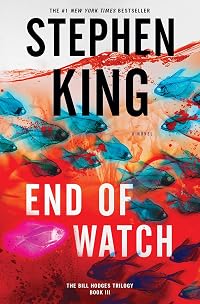
"The spectacular finale to the New York Times bestselling trilogy that began with Mr. Mercedes (winner of the Edgar Award) and Finders Keepers--In End of Watch, the diabolical "Mercedes Killer" drives his enemies to suicide, and if Bill Hodges and Holly Gibney don't figure out a way to stop him, they'll be victims themselves. In Room 217 of the Lakes Region Traumatic Brain Injury Clinic, something has awakened. Something evil. Brady Hartsfield, perpetrator of the Mercedes Massacre, where show more eight people were killed and many more were badly injured, has been in the clinic for five years, in a vegetative state. According to his doctors, anything approaching a complete recovery is unlikely. But behind the drool and stare, Brady is awake, and in possession of deadly new powers that allow him to wreak unimaginable havoc without ever leaving his hospital room. Retired police detective Bill Hodges, the unlikely hero of Mr. Mercedes and Finders Keepers, now runs an investigation agency with his partner, Holly Gibney--the woman who delivered the blow to Hartsfield's head that put him on the brain injury ward. When Bill and Holly are called to a suicide scene with ties to the Mercedes Massacre, they find themselves pulled into their most dangerous case yet, one that will put their lives at risk, as well as those of Bill's heroic young friend Jerome Robinson and his teenage sister, Barbara. Brady Hartsfield is back, and planning revenge not just on Hodges and his friends, but on an entire city. In End of Watch, Stephen King brings the Hodges trilogy to a sublimely terrifying conclusion, combining the detective fiction of Mr. Mercedes and Finders Keepers with the heart-pounding, supernatural suspense that has been his bestselling trademark. The result is an unnerving look at human vulnerability and chilling suspense. No one does it better than King"-- "A fabulously suspenseful closing volume--Brady Hartsfield, the Mercedes killer Stephen King introduced in his Edgar award winning first book in the trilogy, returns to diabolically drive his victims to suicide in this last, masterful installment starring the ever more winning Bill Hodges and Holly Gibney"-- show lessTags
Recommendations





Member Recommendations
Member Reviews
End of Watch is a very fitting conclusion to Stephen King's masterful Bill Hodges trilogy. I enjoyed every single page of all three books. Super villain Brady Hartsfield is pumped full of pills, he's pumped full of hate, and he's pumped full of powers that he's never had before. If someone doesn't catch on quick, the damage he could do is well beyond all imagining. Who can possibly fight him? One rundown, old ex-cop named Bill Hodges who's just about reached the end of his trail.
I don't think anyone can write about the fight between extraordinary evil and ordinary good better than King. For decades, this man has made us believe in the unbelievable. He's scared us spitless. He's made us cheer on his ordinary heroes. He's made us laugh. show more He's made us cry. He's made us want to join in the fight. End of Watch-- and the entire Hodges trilogy-- had me hook, line, and sinker. If you haven't read them, pick up Mr. Mercedes and board the Stephen King Rollercoaster. You'll be in for the ride of your life. show less
I don't think anyone can write about the fight between extraordinary evil and ordinary good better than King. For decades, this man has made us believe in the unbelievable. He's scared us spitless. He's made us cheer on his ordinary heroes. He's made us laugh. show more He's made us cry. He's made us want to join in the fight. End of Watch-- and the entire Hodges trilogy-- had me hook, line, and sinker. If you haven't read them, pick up Mr. Mercedes and board the Stephen King Rollercoaster. You'll be in for the ride of your life. show less
5/5
This book is just great, both as a standalone story and as an ending to King's Bill Hodges Trilogy. It completely picks up the small flaws of the last book and offers a thrilling detective story with a hunt for a monstruous criminal.
Let's start talking about the villain. Brady Hartsfield may be human, but he is also another terrifying monster created by King. Just a man raised to be almost pure hatred, despising everything and everyone. And even worse, willing to act on this despise to cause innocent people pain. In almost a similar manner to Pennywise, he feeds off other people's misery. He doesn't want to kill people, he wants to lead people to suicide.
And opposing him is a sickly, retired detective with very few resources. show more Hodges is a refreshing change for a crime thriller detective: he is quick, but most of it comes from experience, he listen to other people and, above it all, he is a nice person. Hodges is absolutely not perfect, but he serves as a great rival to Harsfield's pure monstrosity.
And Holly Gibney shy and scared of the world, a unlikely person to be chosen to defend it, but she is driven to do it for her own personal moral. Simply because she can't let someone like Hartsfield get away with that. She is also clearly one of King's favorite characters in the last few years and you can notice that by how often he uses her.
My review focuses on the characters, which I love, because I think going into the plot too much might ruin things. So, I'll conclude by saying: this book is great, showing most of what I love in King's most recent works and is a damn good finale for a damn good trilogy. show less
This book is just great, both as a standalone story and as an ending to King's Bill Hodges Trilogy. It completely picks up the small flaws of the last book and offers a thrilling detective story with a hunt for a monstruous criminal.
Let's start talking about the villain. Brady Hartsfield may be human, but he is also another terrifying monster created by King. Just a man raised to be almost pure hatred, despising everything and everyone. And even worse, willing to act on this despise to cause innocent people pain. In almost a similar manner to Pennywise, he feeds off other people's misery. He doesn't want to kill people, he wants to lead people to suicide.
And opposing him is a sickly, retired detective with very few resources. show more Hodges is a refreshing change for a crime thriller detective: he is quick, but most of it comes from experience, he listen to other people and, above it all, he is a nice person. Hodges is absolutely not perfect, but he serves as a great rival to Harsfield's pure monstrosity.
And Holly Gibney shy and scared of the world, a unlikely person to be chosen to defend it, but she is driven to do it for her own personal moral. Simply because she can't let someone like Hartsfield get away with that. She is also clearly one of King's favorite characters in the last few years and you can notice that by how often he uses her.
My review focuses on the characters, which I love, because I think going into the plot too much might ruin things. So, I'll conclude by saying: this book is great, showing most of what I love in King's most recent works and is a damn good finale for a damn good trilogy. show less
A bland ending to a bland trilogy, though Stephen King almost manages to make it all passably readable,
I think the biggest problem is that King went all in on a villain who, in the end, is not particularly interesting. He's just a creepy little racist, homophobic, and nihilistic white guy. He worked well enough in the first book of the series, but he just wasn't worth bringing back and spending so much time laying out ever detail of his dumb, sadistic plan. He did little more than serve up a couple of triggering scenes busting on gay and fat people. And, really, since the whole novel is built around suicidal ideation, it is probably more triggering than entertaining for a lot of potential readers.
And is the Sno-Cat in the finale show more supposed to be King setting right the ending of The Shining film vis a vis-à-vis Dick Hallorann? Anti-climactic as hell. show less
I think the biggest problem is that King went all in on a villain who, in the end, is not particularly interesting. He's just a creepy little racist, homophobic, and nihilistic white guy. He worked well enough in the first book of the series, but he just wasn't worth bringing back and spending so much time laying out ever detail of his dumb, sadistic plan. He did little more than serve up a couple of triggering scenes busting on gay and fat people. And, really, since the whole novel is built around suicidal ideation, it is probably more triggering than entertaining for a lot of potential readers.
And is the Sno-Cat in the finale show more supposed to be King setting right the ending of The Shining film vis a vis-à-vis Dick Hallorann? Anti-climactic as hell. show less
End of Watch, Stephen King, author; Will Patton, narrator
This book is quintessential King. He marries the bizarre with the ordinary, revenge with retribution, horror with wonder, credibility with implausibility, reality with fantasy, nightmares with dreams, wickedness with goodness, and all the while he keeps you on the edge of your seat captivated by this creative novel. While you may not like the content, and it often veers off into brutally descriptive, savage detail, it is tightly knit, fast paced and gripping. Moments of humor, with witty comments, sometimes lighten the steadier tension created by King.
This book is the third and final novel in a series which began with “The Mercedes Man” and was followed by “Finders show more Keepers”. In “End of Watch”, some of the same major characters are brought to life. Bill Hodges is the elderly retired cop, now private investigator, working with Holly Gibney in their firm called Finders Keepers. Jerome Robinson is a young black man, exceptionally likeable for his compassion, who attends Harvard University. He and computers are well acquainted. Holly is open and honest to a fault because of an emotional problem. She is a computer genius. She and Jerome are good buddies. Kermit William Hodges starts out seeming like a curmudgeon, but he is really a teddy bear who has a very positive influence on both Holly and Jerome. The three care deeply for each other and have a long history, in the previous books, which binds them. When the book ends, the reader may wonder if Holly will soon be the star of her own future series of novels.
In this book, Brady Hartsfield, the killer from the first book in the series, is in the Kiner Memorial Hospital in their Brain Injury Clinic, supposedly languishing away from a serious brain injury inflicted upon him by Holly Gibney when she foiled his attempt to blow up a packed concert hall. He is under the care of a neurologist, Dr. Felix Babineau. In secret, Dr. Babineau has been using an experimental drug on Brady, although he pretends he is only administering vitamins to him. Brady has made some minimal improvement, physically and mentally. When strange things begin to happen in his hospital room with things seemingly moving about on their own, the hospital staff becomes spooked. Then some hospital employees begin to act strangely as well, and suddenly, murders and suicides start piling up.
Hodges used to visit Brady in the hospital. He had no love for this man and was happy to see him suffering. He and Holly were called to the scene of what is supposed to be a murder/suicide. It is very suspicious, however. One of the dead was a paralyzed victim of Brady’s first horrific attempted murders at the City Center Job Fair. He used a Mercedes to brutally run down, severely injure and murder innocent people waiting on line to get inside. Isabelle Jaynes does not want him involved. She is the police officer who works with his former partner, Pete Huntley. Izzy is more interested in her career than in getting at the truth, but soon, Pete begins to feed Holly and Bill information secretly. When they are at the crime scene, Holly discovers the Zappit and surreptitiously removes it. Holly is now very skeptical about the possibility of this being an ordinary murder/suicide, and so is Bill. Soon, there are other suicide victims who have Zappits. When Barbara Robinson, Jerome’s sister, becomes involved in these bizarre happenings after an attempted suicide, he returns home to help Holly and Hodges. As the story develops, it turns out that a retro computer game called The Zappit Commander has resurfaced in spite of the fact that it was taken off the market because it had a mildly hypnotic effect on some users. One of the games on this gadget, “the fishing hole”, seems to have a strange effect on the users.
Hartsfield, seems to have an unusual, newly developed and enhanced brain function, perhaps due to Babineau’s experiments or perhaps due to the injury. Now he has devised a diabolical plan to hurt as many of the would-be attendees to that cancelled concert by giving away the Zappits. Somehow, he has reprogrammed them, with the help of a woman who once worked with him. How he is able to accomplish this will astonish most readers.
The reader knows that Brady is a sick puppy, and there seems to be no end to his sadistic need. Brady is not likeable. The constant over the top barbarism is very disturbing, yet the story remains very compelling. I can’t even imagine how King thinks up such awful things, but I know that his fans will love this series. I liked former Detective Hodges, a man of courage and strong convictions who displayed heart in spite of his seemingly coarse crust and the difficult future road he will be forced to travel. I loved Holly because of what seems like her total lack of guile coupled with genius. Her penchant for total honesty is heartwarming. Then there is Jerome, who isn’t a major part of this story, but he is a young black man possessing all the values necessary to make him successful in life. He attends Harvard University and does construction work when he is not studying and going to classes. He is upwardly mobile but acutely aware of the who he is and the problems of society. He adds humor and tenderness which is a quality he displays often, especially, with Holly.
King injects moments from each of the two previous books into this novel so that the reader is never at a loss to understand the story as it relates to the past. Although it gets repetitive, at times, it is always tense and gripping. Perhaps, when completed, one will wonder as I did, if Dr. Babineau experimented on Brady or Brady experimented on him? How could Brady have realistically accomplished what he did? Was the ending satisfying? Did it signify another series coming?I bet a lot of readers and fans will be eagerly awaiting the next novel that possibly features Holly and Jerome working together with Pete Huntley. show less
This book is quintessential King. He marries the bizarre with the ordinary, revenge with retribution, horror with wonder, credibility with implausibility, reality with fantasy, nightmares with dreams, wickedness with goodness, and all the while he keeps you on the edge of your seat captivated by this creative novel. While you may not like the content, and it often veers off into brutally descriptive, savage detail, it is tightly knit, fast paced and gripping. Moments of humor, with witty comments, sometimes lighten the steadier tension created by King.
This book is the third and final novel in a series which began with “The Mercedes Man” and was followed by “Finders show more Keepers”. In “End of Watch”, some of the same major characters are brought to life. Bill Hodges is the elderly retired cop, now private investigator, working with Holly Gibney in their firm called Finders Keepers. Jerome Robinson is a young black man, exceptionally likeable for his compassion, who attends Harvard University. He and computers are well acquainted. Holly is open and honest to a fault because of an emotional problem. She is a computer genius. She and Jerome are good buddies. Kermit William Hodges starts out seeming like a curmudgeon, but he is really a teddy bear who has a very positive influence on both Holly and Jerome. The three care deeply for each other and have a long history, in the previous books, which binds them. When the book ends, the reader may wonder if Holly will soon be the star of her own future series of novels.
In this book, Brady Hartsfield, the killer from the first book in the series, is in the Kiner Memorial Hospital in their Brain Injury Clinic, supposedly languishing away from a serious brain injury inflicted upon him by Holly Gibney when she foiled his attempt to blow up a packed concert hall. He is under the care of a neurologist, Dr. Felix Babineau. In secret, Dr. Babineau has been using an experimental drug on Brady, although he pretends he is only administering vitamins to him. Brady has made some minimal improvement, physically and mentally. When strange things begin to happen in his hospital room with things seemingly moving about on their own, the hospital staff becomes spooked. Then some hospital employees begin to act strangely as well, and suddenly, murders and suicides start piling up.
Hodges used to visit Brady in the hospital. He had no love for this man and was happy to see him suffering. He and Holly were called to the scene of what is supposed to be a murder/suicide. It is very suspicious, however. One of the dead was a paralyzed victim of Brady’s first horrific attempted murders at the City Center Job Fair. He used a Mercedes to brutally run down, severely injure and murder innocent people waiting on line to get inside. Isabelle Jaynes does not want him involved. She is the police officer who works with his former partner, Pete Huntley. Izzy is more interested in her career than in getting at the truth, but soon, Pete begins to feed Holly and Bill information secretly. When they are at the crime scene, Holly discovers the Zappit and surreptitiously removes it. Holly is now very skeptical about the possibility of this being an ordinary murder/suicide, and so is Bill. Soon, there are other suicide victims who have Zappits. When Barbara Robinson, Jerome’s sister, becomes involved in these bizarre happenings after an attempted suicide, he returns home to help Holly and Hodges. As the story develops, it turns out that a retro computer game called The Zappit Commander has resurfaced in spite of the fact that it was taken off the market because it had a mildly hypnotic effect on some users. One of the games on this gadget, “the fishing hole”, seems to have a strange effect on the users.
Hartsfield, seems to have an unusual, newly developed and enhanced brain function, perhaps due to Babineau’s experiments or perhaps due to the injury. Now he has devised a diabolical plan to hurt as many of the would-be attendees to that cancelled concert by giving away the Zappits. Somehow, he has reprogrammed them, with the help of a woman who once worked with him. How he is able to accomplish this will astonish most readers.
The reader knows that Brady is a sick puppy, and there seems to be no end to his sadistic need. Brady is not likeable. The constant over the top barbarism is very disturbing, yet the story remains very compelling. I can’t even imagine how King thinks up such awful things, but I know that his fans will love this series. I liked former Detective Hodges, a man of courage and strong convictions who displayed heart in spite of his seemingly coarse crust and the difficult future road he will be forced to travel. I loved Holly because of what seems like her total lack of guile coupled with genius. Her penchant for total honesty is heartwarming. Then there is Jerome, who isn’t a major part of this story, but he is a young black man possessing all the values necessary to make him successful in life. He attends Harvard University and does construction work when he is not studying and going to classes. He is upwardly mobile but acutely aware of the who he is and the problems of society. He adds humor and tenderness which is a quality he displays often, especially, with Holly.
King injects moments from each of the two previous books into this novel so that the reader is never at a loss to understand the story as it relates to the past. Although it gets repetitive, at times, it is always tense and gripping. Perhaps, when completed, one will wonder as I did, if Dr. Babineau experimented on Brady or Brady experimented on him? How could Brady have realistically accomplished what he did? Was the ending satisfying? Did it signify another series coming?I bet a lot of readers and fans will be eagerly awaiting the next novel that possibly features Holly and Jerome working together with Pete Huntley. show less
A satisfying and inventive conclusion to the Bill Hodges trilogy. Brady Hartsfield (our villain from the first in the series, Mr. Mercedes) isn't completely braindead. Thanks to some highly illegal drugs provided by an overzealous doctor, Brady is coming to. His body will remain broken but he's discovered telekinesis and the ability to enter into other people's minds. Over the years he has been honing his talents in order to exact vengeance on Bill Hodges for thwarting his master plan. Brady finds a way to manipulate a hand held game to make it a hypnotic entrance into unsuspecting minds. His sinister pleasure is convincing them to kill themselves. No one could ever believe what he is capable of, perhaps not even Bill Hodges; it's an show more evil so deep that it almost escapes detection, almost. A sad, but believable ending. Stephen King at his best! show less
Is Stephen King a flawless writer? Nah. Does his dialog skew toward the cheesy? Oh yeah, all the time. Does he create characters that crawl under the reader's skin? Without fail. Does he then kill those characters right in front of your face? Usually.
I have been reading Stephen King since I was 12 years-old, starting with Carrie. He is known as the King of Horror, but honestly, his best work is done in psychological thrillers. The Bill Hodges series, in my opinion, ranks up there as some of King's best work, and, until the very last book, there was really nothing supernatural in these stories.
I'm sad that this trilogy is over. Bill and Holly feel like my friends, and I will miss them.
I partook in the audio version of this book, and I show more must say, Will Patton is one of the greatest audio book narrators working today. show less
I have been reading Stephen King since I was 12 years-old, starting with Carrie. He is known as the King of Horror, but honestly, his best work is done in psychological thrillers. The Bill Hodges series, in my opinion, ranks up there as some of King's best work, and, until the very last book, there was really nothing supernatural in these stories.
I'm sad that this trilogy is over. Bill and Holly feel like my friends, and I will miss them.
I partook in the audio version of this book, and I show more must say, Will Patton is one of the greatest audio book narrators working today. show less
While I enjoyed the two previous books in this series, where Stephen King explores the terrain of crime fiction rather than his trademark horror, I did feel that something was missing - i.e. the supernatural element for which this author is famous. It’s possible, as I surmised in my review of the previous installment, that King himself might have felt the need to go back to his narrative roots, because toward the end of Finders Keepers he prepared the ground for this return.
Brady Hartsfield, the deranged individual also known as the Mercedes Killer, has languished in a mental hospital for several years, reduced to a catatonic state by a traumatic head injury inflicted by Holly Gibney - Bill Hodges’ assistant - to stop him from show more detonating a bomb in a crowded auditorium. But Brady - either thanks to some unforeseeable recuperative powers, or to seedy Dr. Babineau’s experimental therapy - has regained control of his mind, if not of his body, and shown some telekinetic abilities that allow him to set in motion a chain of terrifying events, including the ability to seize control of other people’s minds through an apparently inoffensive game console.
Hodges, now retired and managing an investigative agency with his friends Holly and Jerome, never believed that Brady was as harmless as he looked, and when a series of strange suicides targets people who survived Hartsfield’s road carnage, he is more determined than ever to get to the truth, further motivated by the discovery that his time is running out, due to a diagnosis of terminal pancreatic cancer.
As I said, End of Watch sees the return of the supernatural elements that King’s readers have come to expect from his works and where, as it so often happens in his stories, the most innocent-looking objects can turn into powerful instruments of mayhem and devastation: in this case the Zappit - the game console from a now-failed firm that Brady’s minions are offering for free to potential victims - becomes the conduit for Hartsfield’s mind-control thanks to an unforeseen, hypnosis-inducing feature in one of the game demos. Mr. Mercedes, the first book in the series, introduced us to this utterly despicable individual, one totally devoid of any moral compass, whose desire to emerge from anonymity is mated with a deep, unfocused rage toward the world and a desire for revenge, which is here compounded by the long years spent as a virtual vegetable in the hospital.
As we follow Brady’s steps in extending his influence beyond the walls of his prison, carefully plotting his scheme and taking gleeful satisfaction in the first “field tests”, it’s impossible not to be affected by the sense of impending doom and by the fear that Hodges & Co. might not manage to collect all the clues into a complete picture and stop Hartsfield’s plans. The added element of Hodges’ impending death adds a further emotional layer to the mix, particularly where the distressed reactions of Holly and Jerome are concerned: the three of them have become as close as family, and in the case of Holly and Hodges the only family they can count on for affection and support, making their interactions quite poignant, and a necessary balance to the spreading evil orchestrated by Hartsfield.
One of the themes that can be often found in King’s novels is that of the hurt visited on young people, on the loss of the innocence that should be their armor, and End of Watch is no exception: Brady’s mind control exerted through the Zappits tends to push the teenagers who received them toward suicide, working on their insecurities and vulnerabilities. There are some heart-wrenching sequences in which we are made privy to these young people’s inner turmoil, and seeing the way in which Brady exploits them brings the true horror of this story to the surface: the supernatural element of the novel allowed him to connect with these troubled minds, but what he does to them to ensnare them in his “suicide ring” is as real as it is loathsome and for me it rekindled the all-encompassing hate I felt for this character and his utterly unredeemable inclinations.
For this reason, the sense of family that comes from Hodges & Co. feels even more important than ever, and leaves room for some character evolution that I felt was somewhat missing from the previous novel: Hodges himself has come a long way from the man we saw at the start of the series, when he was depressed and despondent - even the awareness of his approaching end does not generate any bitterness, but rather the knowledge that he’s ultimately led a good life, and that he’s leaving an important legacy through Holly and Jerome. And Holly herself - a character I have come to be very fond of - might still be battling her profound insecurities, but you can see how Hodges’ and Jerome’s support set her on a path of independence and self-assurance that can teach her to make a positive use of what others might perceive as obsessive behavior.
As a series ender, this third novel leads us through a breath-stopping chase that kept me on the edge of my seat, but what’s more important here is the sense of a closing circle, of wrapping up the events started by Brady’s road-rage killing spree in the first book: the mass murder at the job fair constantly informs the narrative throughout the series, and we are shown how it affected both individuals and the community as a whole, so it’s important to have closure in this final book, particularly where Brady Hartsfield is concerned, because the poetic justice inherent in his end feels not only satisfying, but also quite right.
The Bill Hodges trilogy was indeed a different reading experience for me, as far as Stephen King’s works are concerned, but also an intriguing one, and it helped to rekindle my interest in this author after a long hiatus. I guess more optimism for future reads is quite justified… show less
Brady Hartsfield, the deranged individual also known as the Mercedes Killer, has languished in a mental hospital for several years, reduced to a catatonic state by a traumatic head injury inflicted by Holly Gibney - Bill Hodges’ assistant - to stop him from show more detonating a bomb in a crowded auditorium. But Brady - either thanks to some unforeseeable recuperative powers, or to seedy Dr. Babineau’s experimental therapy - has regained control of his mind, if not of his body, and shown some telekinetic abilities that allow him to set in motion a chain of terrifying events, including the ability to seize control of other people’s minds through an apparently inoffensive game console.
Hodges, now retired and managing an investigative agency with his friends Holly and Jerome, never believed that Brady was as harmless as he looked, and when a series of strange suicides targets people who survived Hartsfield’s road carnage, he is more determined than ever to get to the truth, further motivated by the discovery that his time is running out, due to a diagnosis of terminal pancreatic cancer.
As I said, End of Watch sees the return of the supernatural elements that King’s readers have come to expect from his works and where, as it so often happens in his stories, the most innocent-looking objects can turn into powerful instruments of mayhem and devastation: in this case the Zappit - the game console from a now-failed firm that Brady’s minions are offering for free to potential victims - becomes the conduit for Hartsfield’s mind-control thanks to an unforeseen, hypnosis-inducing feature in one of the game demos. Mr. Mercedes, the first book in the series, introduced us to this utterly despicable individual, one totally devoid of any moral compass, whose desire to emerge from anonymity is mated with a deep, unfocused rage toward the world and a desire for revenge, which is here compounded by the long years spent as a virtual vegetable in the hospital.
As we follow Brady’s steps in extending his influence beyond the walls of his prison, carefully plotting his scheme and taking gleeful satisfaction in the first “field tests”, it’s impossible not to be affected by the sense of impending doom and by the fear that Hodges & Co. might not manage to collect all the clues into a complete picture and stop Hartsfield’s plans. The added element of Hodges’ impending death adds a further emotional layer to the mix, particularly where the distressed reactions of Holly and Jerome are concerned: the three of them have become as close as family, and in the case of Holly and Hodges the only family they can count on for affection and support, making their interactions quite poignant, and a necessary balance to the spreading evil orchestrated by Hartsfield.
One of the themes that can be often found in King’s novels is that of the hurt visited on young people, on the loss of the innocence that should be their armor, and End of Watch is no exception: Brady’s mind control exerted through the Zappits tends to push the teenagers who received them toward suicide, working on their insecurities and vulnerabilities. There are some heart-wrenching sequences in which we are made privy to these young people’s inner turmoil, and seeing the way in which Brady exploits them brings the true horror of this story to the surface: the supernatural element of the novel allowed him to connect with these troubled minds, but what he does to them to ensnare them in his “suicide ring” is as real as it is loathsome and for me it rekindled the all-encompassing hate I felt for this character and his utterly unredeemable inclinations.
For this reason, the sense of family that comes from Hodges & Co. feels even more important than ever, and leaves room for some character evolution that I felt was somewhat missing from the previous novel: Hodges himself has come a long way from the man we saw at the start of the series, when he was depressed and despondent - even the awareness of his approaching end does not generate any bitterness, but rather the knowledge that he’s ultimately led a good life, and that he’s leaving an important legacy through Holly and Jerome. And Holly herself - a character I have come to be very fond of - might still be battling her profound insecurities, but you can see how Hodges’ and Jerome’s support set her on a path of independence and self-assurance that can teach her to make a positive use of what others might perceive as obsessive behavior.
As a series ender, this third novel leads us through a breath-stopping chase that kept me on the edge of my seat, but what’s more important here is the sense of a closing circle, of wrapping up the events started by Brady’s road-rage killing spree in the first book: the mass murder at the job fair constantly informs the narrative throughout the series, and we are shown how it affected both individuals and the community as a whole, so it’s important to have closure in this final book, particularly where Brady Hartsfield is concerned, because the poetic justice inherent in his end feels not only satisfying, but also quite right.
The Bill Hodges trilogy was indeed a different reading experience for me, as far as Stephen King’s works are concerned, but also an intriguing one, and it helped to rekindle my interest in this author after a long hiatus. I guess more optimism for future reads is quite justified… show less
Members
- Recently Added By
Lists

Books That Will Keep You on the Edge of Your Seat
73 works; 20 members

Stephen King Bibliography
77 works; 3 members

Books About Murder
313 works; 7 members

Bustle: 10 Addictive Book Trilogies To Read This Year
10 works; 1 member

READ in 2023
244 works; 1 member

Detective Stories
343 works; 5 members

Everand 2023
53 works; 1 member

Books Read 2025
70 works; 2 members

Eerie eTales
192 works; 3 members

2023
32 works; 1 member

Books With Time Words in the Title
160 works; 4 members

Biggest Disappointments
606 works; 168 members

Books Read in 2016
4,666 works; 197 members

Top Five Books of 2016
795 works; 229 members

Literature About Suicide
24 works; 4 members

To Read
617 works; 7 members

Stephen King books
81 works; 1 member
Author Information

966+ Works 867,771 Members
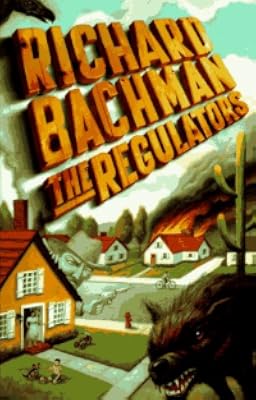
Stephen King was born in Portland, Maine, on September 21, 1947. After graduating with a Bachelor's degree in English from the University of Maine at Orono in 1970, he became a teacher. His spare time was spent writing short stories and novels. King's first novel would never have been published if not for his wife. She removed the first few show more chapters from the garbage after King had thrown them away in frustration. Three months later, he received a $2,500 advance from Doubleday Publishing for the book that went on to sell a modest 13,000 hardcover copies. That book, Carrie, was about a girl with telekinetic powers who is tormented by bullies at school. She uses her power, in turn, to torment and eventually destroy her mean-spirited classmates. When United Artists released the film version in 1976, it was a critical and commercial success. The paperback version of the book, released after the movie, went on to sell more than two-and-a-half million copies. Many of King's other horror novels have been adapted into movies, including The Shining, Firestarter, Pet Semetary, Cujo, Misery, The Stand, and The Tommyknockers. Under the pseudonym Richard Bachman, King has written the books The Running Man, The Regulators, Thinner, The Long Walk, Roadwork, Rage, and It. He is number 2 on the Hollywood Reporter's '25 Most Powerful Authors' 2016 list. King is one of the world's most successful writers, with more than 100 million copies of his works in print. Many of his books have been translated into foreign languages, and he writes new books at a rate of about one per year. In 2003, he received the National Book Foundation Medal for Distinguished Contribution to American Letters. In 2012 his title, The Wind Through the Keyhole made The New York Times Best Seller List. King's title's Mr. Mercedes and Revival made The New York Times Best Seller List in 2014. He won the Edgar Allan Poe Award in 2015 for Best Novel with Mr. Mercedes. King's title Finders Keepers made the New York Times bestseller list in 2015. Sleeping Beauties is his latest 2017 New York Times bestseller. (Bowker Author Biography) Stephen King is the author of more than thirty books, all of them worldwide bestsellers. Among his most recent are "Hearts in Atlantis", "The Girl Who Loved Tom Gordon", "Bag of Bones", & "The Green Mile". "On Writing" is his first book of nonfiction since "Danse Macabre", published in 1981. He served as a judge for Prize Stories: The Best of 1999, The O. Henry Awards. He lives in Bangor, Maine with his wife, novelist Tabitha King. King's book, The Bazaar of Bad Dreams: Stories, made the 2015 New York Times bestseller list. (Publisher Provided) show less
Some Editions
Awards and Honors
Awards
Series


Work Relationships
Common Knowledge
- Canonical title
- End of Watch
- Original title
- End of Watch
- Original publication date
- 2016-06-07
- People/Characters
- Kermit William "Bill" Hodges; Holly Gibney; Brady Hartsfield; Jerome Robinson; Barbara Robinson (Barbara Rosellen Robinson); Peter "Pete" Huntley (show all 32); Isabelle "Izzy" Jaynes; Alvin "Bibli Al" Brooks ("Library Al"); Anthony Frobisher; Cora Babineau; Deborah Ann Hartsfield; Dereece Neville; Dinah Scott; Felix Babineau; Freddi Linklatter (Frederica Bimmel Linklatter); Jim Robinson; Norma Wilmer; Ruth Scapelli (nurse); Tanya Robinson; Thomas "Tom" Saubers; Rob Martin; Jason "Jace" Rapsis; Martine Stover (daughter of Janice Ellerton); Janice Ellerton (mother of Martine Stover); Nancy Alderson (housekeeper); Selma Valdez (nurse); Wendell Stamos (doctor); Cynthia Scapelli Robinson (daughter of Ruth Scapelli); Becky Helmington (nurse); Sadie MacDonald (nurse); Cassandra Sheen (police detective); Ellen Murphy
- Important places
- City Center
- Epigraph
- Get me a gun
Go back into my room
I'm gonna get me a gun
One with a barrel or two
You know I'm better off dead than
Singing these suicide blues.
--Cross Canadian Ragweed - Dedication
- For Thomas Harris
- First words
- It's always darkest before the dawn.
- Quotations*
- Et savoir que quelqu'un a besoin de nous est une chose merveilleuse. Peut-être la chose la plus merveilleuse.
- Last words
- (Click to show. Warning: May contain spoilers.)They leave Fairlawn and walk back out into the world together.
- Original language
- English
*Some information comes from Common Knowledge in other languages. Click "Edit" for more information.
Classifications
Statistics
- Members
- 4,698
- Popularity
- 3,059
- Reviews
- 160
- Rating
- (3.93)
- Languages
- 18 — Danish, Dutch, English, Estonian, Finnish, French, German, Greek, Hungarian, Italian, Polish, Portuguese, Slovak, Slovenian, Spanish, Swedish, Turkish, Ukrainian
- Media
- Paper, Audiobook, Ebook
- ISBNs
- 76
- UPCs
- 1
- ASINs
- 19