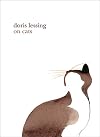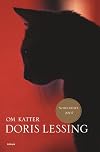
On Cats
by Doris Lessing
On This Page
Description
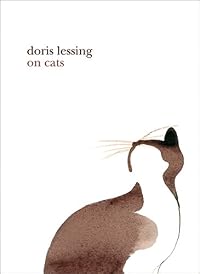
Doris Lessing's love affair with cats began at a young age, when she became intrigued with the semi-feral creatures on the African farm where she grew up. Her fascination remained undiminished by the handsome domesticated creatures who shared her flats and her life in London and grew into real love with El Magnifico, the awkwardly lovable cat who in his later years suffered the great indignity of becoming a three legged beast. Consisting of Doris Lessing's collection of stories, Particularly show more Cats and Rufus, and the poignant memoir, The Old Age of El Magnifico, this book evokes a sense of feline existence. show lessTags
Recommendations



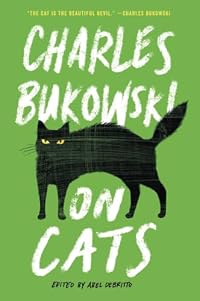


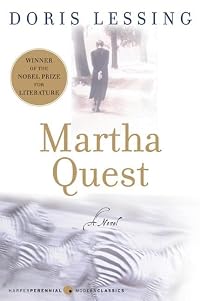

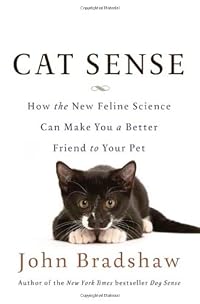

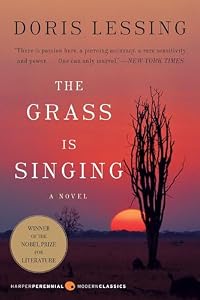









Member Recommendations

Member Reviews
I suppose if you had to hear an author go on about their cats for two hundred or so pages, you could choose a worse author than Doris Lessing, whose meticulous but never fussy prose is always a joy to read. We hear about her childhood in Rhodesia — now Zimbabwe — which was full of cats, but also of much more dangerous animals. The chapters that describe this stage of her life are certainly this collection's most shocking, and perhaps its most important. The Lessing family seems not to have farmed as much as been at constant war with nature, always surrounded by snakes, deadly microbes and cats, both wild and domesticated. The line between the last two does not seem to have always been terribly solid: Lessing remembers many of her show more former pets leaving the family homestead and, heartbreakingly, going feral.
The rest of "On Cats" is more sedate, and, truth be told, crosses over into the realm of the boring once in a while. Even so, these sections confirm that Lessing was, as well as a terrific writer, a terrific noticer. She records everything from the texture of her cats' irises to their vocalizations to their facial expressions with admirable precision. Along the way, she speculates on what it might mean to share space with , neuter, to understand, and to love domesticated felines. Refreshingly, Lessing carefully avoids anthropomorphizing her cats:there is little of today's "cat parent" in her. She more often sees them as explorers or even pirates, roaming freely around her neighborhood and developing relationships she knows little to nothing about. And, as in her childhood home, cats come in and out of her lives: strays, neighborhood cats, rescues, foundlings. One wonders if the author's comings and goings with friends and colleagues were all that different than her coming and going with cats. Whether or not they were, Lessing presents her life in cats — if that's the term — with great care and obvious affection.
Of course, even though I'm something of a crazy cat man myself, I'll have to admit that writing about cats can only take you so far, so this book rather hits a wall, perhaps by necessity. It's good in places, rather meh in others, but I can't quite bring myself to believe that it's a significant work — or even one that really needed to exist — by any stretch of the imagination. But that's okay. If anyone has earned the right to publish a literary plaything like this one, it's Doris Lessing. show less
The rest of "On Cats" is more sedate, and, truth be told, crosses over into the realm of the boring once in a while. Even so, these sections confirm that Lessing was, as well as a terrific writer, a terrific noticer. She records everything from the texture of her cats' irises to their vocalizations to their facial expressions with admirable precision. Along the way, she speculates on what it might mean to share space with , neuter, to understand, and to love domesticated felines. Refreshingly, Lessing carefully avoids anthropomorphizing her cats:there is little of today's "cat parent" in her. She more often sees them as explorers or even pirates, roaming freely around her neighborhood and developing relationships she knows little to nothing about. And, as in her childhood home, cats come in and out of her lives: strays, neighborhood cats, rescues, foundlings. One wonders if the author's comings and goings with friends and colleagues were all that different than her coming and going with cats. Whether or not they were, Lessing presents her life in cats — if that's the term — with great care and obvious affection.
Of course, even though I'm something of a crazy cat man myself, I'll have to admit that writing about cats can only take you so far, so this book rather hits a wall, perhaps by necessity. It's good in places, rather meh in others, but I can't quite bring myself to believe that it's a significant work — or even one that really needed to exist — by any stretch of the imagination. But that's okay. If anyone has earned the right to publish a literary plaything like this one, it's Doris Lessing. show less
By the time I finished this little novel—which I took many weeks to slowly peruse while I had other things going on—I was quite sorry I had come to the last page, as the final story was both sublime and heartbreaking; an ode to a cat who had clearly taken a special place in Dorris Lessing's heart and who was beyond a doubt still missed when she wrote the book. When I purchased this book charming little book, which fits in the palm of the hand, I wondered how it could be that a book on cats written by a Nobel Prize laureate wasn't more popular, but then the first few pages gave me the answer. Lessing's recollections about cats begin with those that lived in and out of their family farmhouse in Africa when she was a child. As they show more multiplied exponentially, with many of them going wild and then attacking the fowls, Lessing's mother was assigned to kill a great number of them, which makes for some gruesome and sad anecdotes—hard to take for an animal lover. By chapter 3, things become much more tolerable, even quite enchanting, with the hard living of Africa now forgotten, as we're introduced to a beautiful new arrival in the author's London flat:
Only a true cat lover could have written those lines, and we discover all the wonders of grey cat (mentioned above), and her standoff with black cat, most of which is quite charming and amusing, if you ignore the bits about kittens having to be gotten rid of, since apparently in these bygone days people didn't believe in getting cats spayed. But when we reach the last story "The Old Age of El Magnifico", we're willing to forgive Lessing for taking us through the painful bits—this is a true love letter to a cat dearly beloved, which pulls at the heartstrings and might make the reader, if he or she is a cad lover shed a tear or two, as I did. show less
"The kitten was six weeks old. It was enchanting, a delicate fairy-tale cat, whose Siamese genes showed in the shape of her face, ears, tail, and the subtle lines of its body. Her back was tabby: from above or the back, she was a pretty tabby kitten, in grey and cream, But her front and stomach were a smoky-gold, Siamese cream, with half-bars of black at the neck. Her face was pencilled with black—fine dark rings around the eyes, fine dark streaks on her cheeks, a tiny cream-coloured nose with a pink tip, outlined in black. From the front, sitting with her slender paws straight, she was an exotically beautiful beast. She sat, a tiny thing, in the middle of a yellow carpet, surrounded by five worshippers, not at all afraid of us. Then she stalked around the floor of the house, inspecting every inch of it, climbed up on to my bed, crept under the fold of a sheet, and was at home."
Only a true cat lover could have written those lines, and we discover all the wonders of grey cat (mentioned above), and her standoff with black cat, most of which is quite charming and amusing, if you ignore the bits about kittens having to be gotten rid of, since apparently in these bygone days people didn't believe in getting cats spayed. But when we reach the last story "The Old Age of El Magnifico", we're willing to forgive Lessing for taking us through the painful bits—this is a true love letter to a cat dearly beloved, which pulls at the heartstrings and might make the reader, if he or she is a cad lover shed a tear or two, as I did. show less
Tremendo livro para os amantes de gatos, Lessing não procura subterfúgios para mostrar o âmago da convivência com gatos, na morte, na doença, nos pequenos atos desses felinos com que dividiu anos ou horas, ela desbrava um universo quente de que também me orgulho de fazer parte.
Though a dog lover, I absolutely loved this book. The insight that Doris has about her cats is so easily transcribed to the pages of this book. You can feel the love that exists between her and her cats.
Her descriptions at times brought tears to my eyes. I will never look at a cat again without stopping to think that here lies a very special being.
Read this book, you will love her stories.
Her descriptions at times brought tears to my eyes. I will never look at a cat again without stopping to think that here lies a very special being.
Read this book, you will love her stories.
Some dark material (many dead kittens), but some wonderful insight and beautiful writing about the cats in her life.
A fascinating book on the author's lifelong companionship with cats. A sort of autobiography that focuses only on the lives of the cats she has owned or encountered. This book, which humorously and creatively depicts the personalities of different cats that can end up being devoted friends for a very long time, was enjoyable to read.
This is a book by Doris Lessing and her life with cats, the book is based on her love of the feline creatures that habitats her life, included in the book are two chapters on two cats she was particularly fond off, Rufus and El Magnifico.
This book is a lovely read, the style of writing is exquisite and she describes all manner of the cat’s personality and their traits. I wouldn’t say she has a particular love of cats but she sees certain qualities in them that draws them too her affectionately, referring to some cats at the beginning of the book as grey cat or second cat and not by name. Lessing chronicles all the feline’s behaviour from their fussy habits, who is the top cat to the way they move, the descriptions are show more exceptional.
I didn’t think I would enjoy this being a dog lover but it was a fab book, I’ll look at cats differently from now on. If your a lover of cats then I recommend this book to you. show less
This book is a lovely read, the style of writing is exquisite and she describes all manner of the cat’s personality and their traits. I wouldn’t say she has a particular love of cats but she sees certain qualities in them that draws them too her affectionately, referring to some cats at the beginning of the book as grey cat or second cat and not by name. Lessing chronicles all the feline’s behaviour from their fussy habits, who is the top cat to the way they move, the descriptions are show more exceptional.
I didn’t think I would enjoy this being a dog lover but it was a fab book, I’ll look at cats differently from now on. If your a lover of cats then I recommend this book to you. show less
Members
- Recently Added By
Lists

Cats in Fiction
209 works; 9 members

Favorite Animal Non-Fiction
293 works; 144 members
Author Information

260+ Works 37,018 Members
Doris Lessing was born in Kermanshah, Persia (later Iran) on October 22, 1919 and grew up in Rhodesia (the present-day Zimbabwe). During her two marriages, she submitted short fiction and poetry for publication. After moving to London in 1949, she published her first novel, The Grass Is Singing, in 1950. She is best known for her 1954 Somerset show more Maugham Award-winning experimental novel The Golden Notebook. Her other works include This Was the Old Chief's Country, the Children of Violence series, the Canopus in Argos - Archives series, and Alfred and Emily. She has received numerous awards for her work including the 2001 Prince of Asturias Prize in Literature, the David Cohen British Literature Prize, and the 2007 Nobel Prize for Literature. She died on November 17, 2013 at the age of 94. (Bowker Author Biography) show less
Common Knowledge
- Original title
- On Cats
Classifications
Statistics
- Members
- 332
- Popularity
- 95,241
- Reviews
- 12
- Rating
- (3.84)
- Languages
- 7 — Dutch, English, Finnish, Polish, Portuguese, Swedish, Turkish
- Media
- Paper, Ebook
- ISBNs
- 15
- ASINs
- 4