
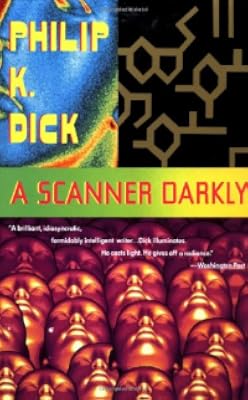
A Scanner Darkly [Novel]
by Philip K. Dick
On This Page
Description
Scanner Darkly is a semi-autobiographical novel of drug addiction set in a future American dystopia and the basis for the Hugo Award finalist film starring Keanu Reeves, Winona Ryder, and Robert Downey, Jr. Bob Arctor is a junkie and a drug dealer, both using and selling the mind-altering Substance D. Fred is a law enforcement agent, tasked with bringing Bob down. It sounds like a standard case. The only problem is that Bob and Fred are the same person. Substance D doesn't just alter the show more mind, it splits it in two, and neither side knows what the other is doing or that it even exists. Now, both sides are growing increasingly paranoid as Bob tries to evade Fred while Fred tries to evade his suspicious bosses. In this dystopian future, friends can become enemies, good trips can turn terrifying, and cops and criminals are two sides of the same coin. Caustically funny and somberly contemplative, Dick fashions a novel that is as unnerving as it is enthralling. show lessTags
Recommendations
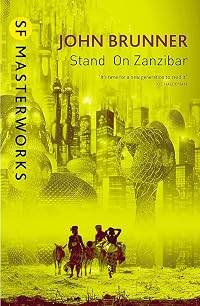

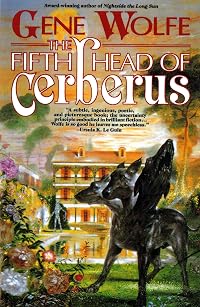
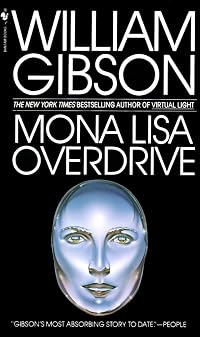

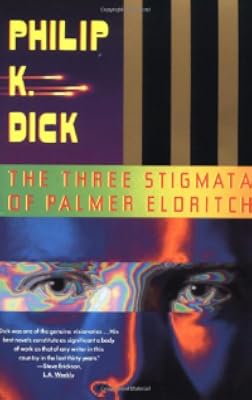
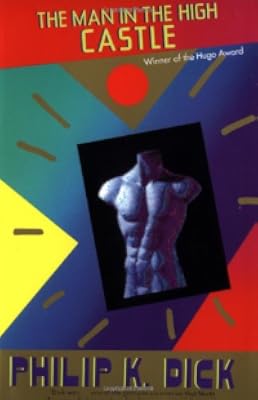
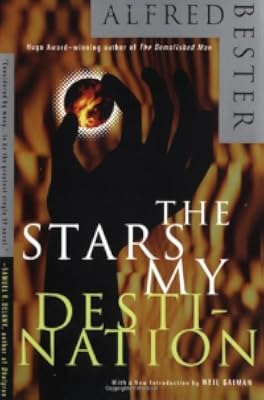
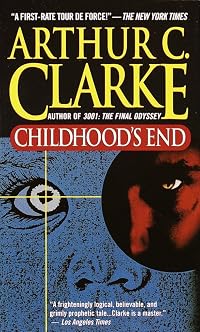
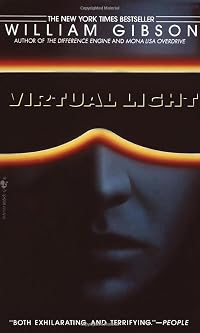
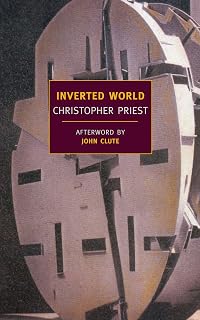
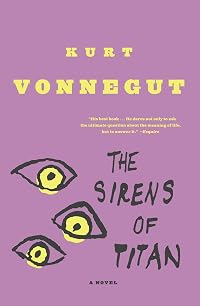
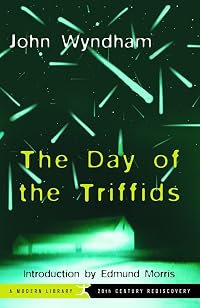
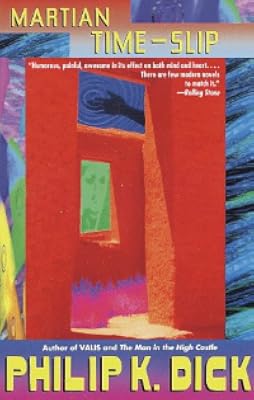
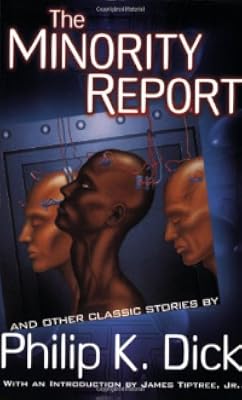
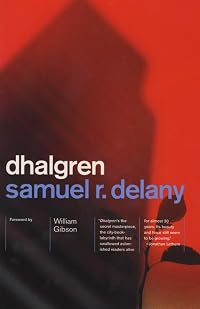
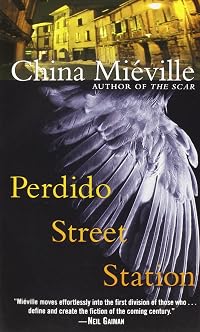
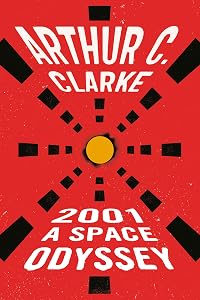

Member Recommendations

Aeryion The world of Rubicon Harvest seems to be a mixed homage to both Scanner Darkly and A Clockwork Orange in the way the sub-culture of designer drugs are used and abused and how their importance interplay with the expression of self and the experience of perception on reality. The synthetic neurocotic Symphony makes Substance D look like Tic-Tacs. Rubicon Harvest deserves it's place among the medicated plots of these other great postmodern works of spec-fiction!
10
Member Reviews
This is Dick's masterpiece for good reason, the first of his books I've read that successfully melds the question of identity with a complex, surprisingly coherent plot.
Read as an anti-drug narrative, it is less than effective because it never quite puts forward the idea that drug use is bad (particularly in the closing paragraphs) though it clearly wants the reader to recognize that it's damaging.
The intricacies of the plot eventually reveal themselves with surprising clarity, unveiling a theme of police-criminal interdependence that's easy to miss. And the kicker of the whole novel is its spot-on, pitch-perfect dialogue, which relentlessly provides the sense (and senselessness) of addiction.
An absolute stunner, and a must-read.
Read as an anti-drug narrative, it is less than effective because it never quite puts forward the idea that drug use is bad (particularly in the closing paragraphs) though it clearly wants the reader to recognize that it's damaging.
The intricacies of the plot eventually reveal themselves with surprising clarity, unveiling a theme of police-criminal interdependence that's easy to miss. And the kicker of the whole novel is its spot-on, pitch-perfect dialogue, which relentlessly provides the sense (and senselessness) of addiction.
An absolute stunner, and a must-read.
This book, published in 1977 but set in an early 1990s California, falls into the SF category because of some of its trappings which, even now, have not come about, such as scramble suits which allow undercover agents to report to their bosses in person with both participants unable to see the true appearance of the wearer. This leads to an almost laughable situation in which the main character, Bob Arctor, who works for an anti-narcotics unit in Orange County is ordered to keep himself under recorded surveillance, evoking shades of Kafka. And the air of paranoia increases as it becomes clear that someone close to him is trying to assassinate him or cause brain damage. The scramble suits are necessary because law enforcement agencies show more have been compromised as is clear from the prevalence of a new, highly addictive drug, called Substance D and nicknamed 'death'. The drug is being supplied in vast quantities and seems to have a single source - it is derived from an organic material, not synthetic - and yet whatever it is grown from appears to be widely available.
In this imagined 'future' drug taking is almost universal among the have-nots in society, people who don't have credit cards or live in gated communities. Those who have such privileges are termed straights and they view the rest of society as druggies and criminals who deserve what they get. Those whom Bob lives and moves among - he shares a house with two other men and has a girlfriend who takes cocaine, but also pushes the even more destructive Substance D - are suffering increasingly mental confusion, and increasing braindamage from the cocktail of drugs they are taking. The story actually begins with one character who suffers a permanent hallucination of being bitten by aphids - he goes to extreme measures such as standing under a hot shower for hours at a time to combat the pain - which are actually a product of the brain damage caused by Substance D and other illegal substances.
Bob is not immune from this either: it becomes clear that he is slowly suffering a meltdown in which his sense of identity is destroyed, because Substance D eats away at the connections within the brain which allow a sense of one identity despite the different functions carried out in the two brain hemispheres. Extracts from research publications available in the 1970s emphasise that without those connections, there are in effect two 'voices' within the head, and it is this confusion which makes Bob, in his 'Fred' guise - which is the name he uses to report to his employers - view Bob Arctor as possibly being one of the higher level dealers of Substance D whom he has been trying to locate.
The question of identity and of the nature of reality is a theme that comes up in quite a few of the author's novels; here it is put in question by drug taking rather than a breakdown of one reality into another. The book conveys well the mad logic of drugged up people, with disjointed and rambling conversations that lead to nonsensical decisions. His afterword makes it clear that it is based upon his own experiences and people he knew and on whom some of the characters are based: the role call of those left in permanent psychosis and/or brain damaged or dead is sobering reading. Interestingly, he calls drug taking a choice, though this is contradicted by the novel itself, where quite a few of the women talked about have been tricked or forcibly abused into taking D. show less
In this imagined 'future' drug taking is almost universal among the have-nots in society, people who don't have credit cards or live in gated communities. Those who have such privileges are termed straights and they view the rest of society as druggies and criminals who deserve what they get. Those whom Bob lives and moves among - he shares a house with two other men and has a girlfriend who takes cocaine, but also pushes the even more destructive Substance D - are suffering increasingly mental confusion, and increasing braindamage from the cocktail of drugs they are taking. The story actually begins with one character who suffers a permanent hallucination of being bitten by aphids - he goes to extreme measures such as standing under a hot shower for hours at a time to combat the pain - which are actually a product of the brain damage caused by Substance D and other illegal substances.
Bob is not immune from this either: it becomes clear that he is slowly suffering a meltdown in which his sense of identity is destroyed, because Substance D eats away at the connections within the brain which allow a sense of one identity despite the different functions carried out in the two brain hemispheres. Extracts from research publications available in the 1970s emphasise that without those connections, there are in effect two 'voices' within the head, and it is this confusion which makes Bob, in his 'Fred' guise - which is the name he uses to report to his employers - view Bob Arctor as possibly being one of the higher level dealers of Substance D whom he has been trying to locate.
The question of identity and of the nature of reality is a theme that comes up in quite a few of the author's novels; here it is put in question by drug taking rather than a breakdown of one reality into another. The book conveys well the mad logic of drugged up people, with disjointed and rambling conversations that lead to nonsensical decisions. His afterword makes it clear that it is based upon his own experiences and people he knew and on whom some of the characters are based: the role call of those left in permanent psychosis and/or brain damaged or dead is sobering reading. Interestingly, he calls drug taking a choice, though this is contradicted by the novel itself, where quite a few of the women talked about have been tricked or forcibly abused into taking D. show less
4.25 / 5
This is a total mindfuck of a book. I also hadn't realized that PKD had been a drug addict...don't know how I missed that one...and that this novel draws heavily on PKD's life. Yikes!
He's kind of all over the map in this story and it can be tough to follow who's who, but that's certainly intentional (and I was reading it on audiobook, which could certainly affect that) as it's about that thin line between reality and drug-induced "reality" and how fluid that line can be. Actually, it's also about the thin line between the many facets of ourselves as well, and how the boundaries there are fluid as well.
In all honesty, this book is probably more of a 3.75, but there are some true emotional moments in the book, and that in itself show more bumps the rating up.
Definitely worth the read, but don't read it for a "feelin' down and need a pick me up" kind of book, or a "I'd like a straightforward, linear novel with clear characters" kind of story, cause you ain't getting it here. show less
This is a total mindfuck of a book. I also hadn't realized that PKD had been a drug addict...don't know how I missed that one...and that this novel draws heavily on PKD's life. Yikes!
He's kind of all over the map in this story and it can be tough to follow who's who, but that's certainly intentional (and I was reading it on audiobook, which could certainly affect that) as it's about that thin line between reality and drug-induced "reality" and how fluid that line can be. Actually, it's also about the thin line between the many facets of ourselves as well, and how the boundaries there are fluid as well.
In all honesty, this book is probably more of a 3.75, but there are some true emotional moments in the book, and that in itself show more bumps the rating up.
Definitely worth the read, but don't read it for a "feelin' down and need a pick me up" kind of book, or a "I'd like a straightforward, linear novel with clear characters" kind of story, cause you ain't getting it here. show less
When Drugs and Prisons Become State Business
Philip K. Dick merges two things he experienced personally—the drug culture of the late 1960s and 1970s and paranoia about being watched by various policing organizations, particularly the FBI and CIA— into a novel about a cop whose personality splits in half by living in two states: watcher and watched. The novel breaks down into three acts: Robert/Fred as a cop working undercover to ferret out drug kingpins; Robert/Fred in full blown confusion about his identity and paranoid over his safety; Robert/Bruce in a rehab facility that works to keep his blind to his identity while pushing him ever closer to being a walking vegetable. It’s enough to make you run away from your own medicine show more cabinet screaming, constantly looking over your shoulder to see who might be watching you.
Robert Arctor is an undercover narcotics cop in the future (1990s in the novel). He lives in a house he owns with two roomers, both notorious dopeheads. All of them think about narcotics incessantly, obsess on getting high, staying high, and worrying about getting drugs, especially deadly D, a synthetic concoction that produces neurological disorder in users. He's mad for Donna Hawthorne, a woman he can get near and be friends with but can’t have in the way he desires. In his role as Fred, the narc, he wears a scrambler suit when at police HQ, as do his fellow narcs, so as to preserve their anonymity. Soon enough, we see paranoia taking over Robert/Fred to the point where he believes someone is out to get him, possibly his roomers. He has scanners installed in his house to watch their, and his, every move, resulting in a distinct split in his personality. Operating as two people can be quite taxing, to put it mildly. In the end, due to his own heavy use of D, his mind fails him. Worse, unbeknownst to him, he has been a pawn in a much larger game orchestrated by the Feds and betrayed by his greatest desire. In the end, he finds, or more appropriately, loses himself in a rehabilitation home and camp designed to do the exact opposite.
Few have captured what it’s like to be addled by drugs as Dick in this novel. The conversations among the roommates border on lunacy. And they are funny much of the time. Less so is the deception and manipulation in the rehab home, particularly when we realize the goal of rehab is mental destruction.
A Scanner Darkly isn’t really science fiction, certainly not like his novels Martian Time-Slip, The Man in the High Castle, Do Androids Dream of Electric Sheep?, and others. It more captures a moment of his life in California when he was raging on drugs and in and out of mental institutions. You might consider it Exhibit A in why you want to avoid drugs: for your personal mental health and to avoid a quasi police state intent on tossing the afflicted into private prisons. show less
Philip K. Dick merges two things he experienced personally—the drug culture of the late 1960s and 1970s and paranoia about being watched by various policing organizations, particularly the FBI and CIA— into a novel about a cop whose personality splits in half by living in two states: watcher and watched. The novel breaks down into three acts: Robert/Fred as a cop working undercover to ferret out drug kingpins; Robert/Fred in full blown confusion about his identity and paranoid over his safety; Robert/Bruce in a rehab facility that works to keep his blind to his identity while pushing him ever closer to being a walking vegetable. It’s enough to make you run away from your own medicine show more cabinet screaming, constantly looking over your shoulder to see who might be watching you.
Robert Arctor is an undercover narcotics cop in the future (1990s in the novel). He lives in a house he owns with two roomers, both notorious dopeheads. All of them think about narcotics incessantly, obsess on getting high, staying high, and worrying about getting drugs, especially deadly D, a synthetic concoction that produces neurological disorder in users. He's mad for Donna Hawthorne, a woman he can get near and be friends with but can’t have in the way he desires. In his role as Fred, the narc, he wears a scrambler suit when at police HQ, as do his fellow narcs, so as to preserve their anonymity. Soon enough, we see paranoia taking over Robert/Fred to the point where he believes someone is out to get him, possibly his roomers. He has scanners installed in his house to watch their, and his, every move, resulting in a distinct split in his personality. Operating as two people can be quite taxing, to put it mildly. In the end, due to his own heavy use of D, his mind fails him. Worse, unbeknownst to him, he has been a pawn in a much larger game orchestrated by the Feds and betrayed by his greatest desire. In the end, he finds, or more appropriately, loses himself in a rehabilitation home and camp designed to do the exact opposite.
Few have captured what it’s like to be addled by drugs as Dick in this novel. The conversations among the roommates border on lunacy. And they are funny much of the time. Less so is the deception and manipulation in the rehab home, particularly when we realize the goal of rehab is mental destruction.
A Scanner Darkly isn’t really science fiction, certainly not like his novels Martian Time-Slip, The Man in the High Castle, Do Androids Dream of Electric Sheep?, and others. It more captures a moment of his life in California when he was raging on drugs and in and out of mental institutions. You might consider it Exhibit A in why you want to avoid drugs: for your personal mental health and to avoid a quasi police state intent on tossing the afflicted into private prisons. show less
I'm a huge fan of both PKD and Richard Linklater, so after seeing the latter's brilliant film adaptation of the former's novel "A Scanner Darkly", I knew I'd have to go back and read the source material as soon as possible. That 'as soon as possible' turned out to be quite a few years but hopefully later is still a bit better than never.
Before diving into the story proper let me just say I love and respect PKD's writing style. He blends the earnestness of a Hunter S. Thompson with the fiery, even prophetic vision of a slightly more restrained William Blake. This ability to restrain himself is what gives PKD such power to describe worlds and zeitgeists only barely removed from our own making him both applicable and unsettling to read. I show more found evidence of all this when I read, years ago, one of those American library collected editions of his work (which included, I think, Do Androids Dream of Electric Sheep, Ubik, the Three Stigmata of Palmer Eldritch and The Man in the High Castle") and felt myself both bombarded and mystified by PKD's prose...both in the sense that a cursory first reading was not enough and that a second, deeper and more concentrated, reading would be necessary and that I truly felt I was within the verbiage of something akin to a sage or an oracle. High praise? Definitely, but PKD is one of the view deserving of the 'oracular' title outside of a Kafka (and like Franz, PKD by many accounts also lost his mind).
So, read this and see the movie both are well worth your time and though the pain of PKD's visions might not always be initially salubrious, they will always leave you wondering how you could've seen or comprehended the world without them. show less
Before diving into the story proper let me just say I love and respect PKD's writing style. He blends the earnestness of a Hunter S. Thompson with the fiery, even prophetic vision of a slightly more restrained William Blake. This ability to restrain himself is what gives PKD such power to describe worlds and zeitgeists only barely removed from our own making him both applicable and unsettling to read. I show more found evidence of all this when I read, years ago, one of those American library collected editions of his work (which included, I think, Do Androids Dream of Electric Sheep, Ubik, the Three Stigmata of Palmer Eldritch and The Man in the High Castle") and felt myself both bombarded and mystified by PKD's prose...both in the sense that a cursory first reading was not enough and that a second, deeper and more concentrated, reading would be necessary and that I truly felt I was within the verbiage of something akin to a sage or an oracle. High praise? Definitely, but PKD is one of the view deserving of the 'oracular' title outside of a Kafka (and like Franz, PKD by many accounts also lost his mind).
So, read this and see the movie both are well worth your time and though the pain of PKD's visions might not always be initially salubrious, they will always leave you wondering how you could've seen or comprehended the world without them. show less
Re-read 5/15/19:
I'm continually surprised, now with my third read, how much fun I have with this novel. How much fun I have with the bugs. Or how much fun I have with the missing gears on the bike. Or how much fun I have with Bob, Fred, or whoever the hell the main character is. :) By the end, he is entirely nameless.
Freaky cool.
I think, more than anything, I love the philosophy that is snuck in at random moments or explored in long stretches without a direct reference. PKD's afterward is very nice and also very sad, but the core idea is not lost.
We were all just kids not wanting to grow up, but the punishment was entirely out of scope with that crime.
This is, ostensibly, a novel about drugs, but it is also something much deeper.
It show more is a novel about ennui, confusion, paranoia, and the senseless horror of living a world that cannot know what it wants, or if it does, refuses to give an inch when it comes to forgiving itself. You might say it is a hell of our own creation. Deep? Not really. Kinda obvious. But so obvious that we continually forget the fact and get caught up in our continual confusion until we utterly forget it. And then, when we have someone pipe up with the pithy observation that we're living in a hell of our own creation, we laugh and get a hammer and kill the poor fool or get him hooked on drugs or send him to a mental institution or we follow him around like some guru and shave our heads and no one pays him any mind anyway.
Hello, Phil! Oh wait, you died right after you FINALLY got out of poverty when they made Blade Runner. You lived in abject poverty all your life... and now we have movie after movie after movie made from your legacy.
Yep. Sounds about right. Welcome to the Empire. It never ended.
Original Review:
This is my second time reading this wonderful novel, and I see no reason to revise any of my initial impressions. It's still very enjoyable... Again. Maybe I have a soft spot in my heart for all those wonderful novels that either deal with the nature of reality, of conscious identity, of drug use, or just plain consequences of one's actions.
Fortunately for me, I've got so many of my favorite themes in one novel. To me, it builds on the success of [b:Fear and Loathing in Las Vegas|7745|Fear and Loathing in Las Vegas|Hunter S. Thompson|https://images.gr-assets.com/books/1394204569s/7745.jpg|1309111] and only mildly resonates with any overt SF gadgethood. Instead, it speculates wildly about the people who use and the people who suffer, showing us all how much worse the punishment is for what is, in effect, a victimless crime.
A discussion about Pot? If so, it is rather early in the turning of the wheel. We're shown people having fun despite the darkness of their lives and despite the heavy consequences, whether by huge mental instability, outright madness, incarceration, brainwashing, and last but not least, inequity of justice.
Maybe the last isn't as obvious until you read the author's afterward, or maybe it'll bash you over the head as you roam the fields. Either way, Death is only an inversion of self, and the faster a person runs toward fulfilling themselves through drugs or hedonism, the faster they lose everything that matters in their lives.
PKD's dark universe and exploration of the mind falling apart, of draconian measures tearing harmless people apart, of the absolute irony of the end of the novel... all of it is a testimony of heartbreak in the midst of humor.
I happen to know a bit about PKD's life. He wasn't the drug fiend that people made him out to be. He smoked some pot and dropped a few tabs of acid in his life, but he was also a man of his times. He WROTE as a man of his time. He was more interested in philosophy and the nature of reality, religion, and the mind that most writers, but that's not to say he was anything other than paranoid. He was. And that was the main feature of most of his great novels. Counterculture was his passion. So was questioning the fabric of reality.
Some of his last novels exemplify this. A later brain tumor cannot explain away the devotion to these threads of themes, although I think we can all agree that it did make him a bit obsessive about it.
Regardless, this was first and foremost a deliberate novel set out to deliberately show the blurred definitions between the norms and the abnorms, the crazies and the sane, the users and the clean. Everything was merely a reversal in the glass. Narcs and pushers were practically the same, and the funniest bits of the book had to be either the antics of the friends or the deliciousness of having our MC ironically persecute himself every step of the way.
What a beautiful novel. Not my absolute favorite of his works, but it is crazy good.
Now, off to re-watch the great Linklater film! show less
I'm continually surprised, now with my third read, how much fun I have with this novel. How much fun I have with the bugs. Or how much fun I have with the missing gears on the bike. Or how much fun I have with Bob, Fred, or whoever the hell the main character is. :) By the end, he is entirely nameless.
Freaky cool.
I think, more than anything, I love the philosophy that is snuck in at random moments or explored in long stretches without a direct reference. PKD's afterward is very nice and also very sad, but the core idea is not lost.
We were all just kids not wanting to grow up, but the punishment was entirely out of scope with that crime.
This is, ostensibly, a novel about drugs, but it is also something much deeper.
It show more is a novel about ennui, confusion, paranoia, and the senseless horror of living a world that cannot know what it wants, or if it does, refuses to give an inch when it comes to forgiving itself. You might say it is a hell of our own creation. Deep? Not really. Kinda obvious. But so obvious that we continually forget the fact and get caught up in our continual confusion until we utterly forget it. And then, when we have someone pipe up with the pithy observation that we're living in a hell of our own creation, we laugh and get a hammer and kill the poor fool or get him hooked on drugs or send him to a mental institution or we follow him around like some guru and shave our heads and no one pays him any mind anyway.
Hello, Phil! Oh wait, you died right after you FINALLY got out of poverty when they made Blade Runner. You lived in abject poverty all your life... and now we have movie after movie after movie made from your legacy.
Yep. Sounds about right. Welcome to the Empire. It never ended.
Original Review:
This is my second time reading this wonderful novel, and I see no reason to revise any of my initial impressions. It's still very enjoyable... Again. Maybe I have a soft spot in my heart for all those wonderful novels that either deal with the nature of reality, of conscious identity, of drug use, or just plain consequences of one's actions.
Fortunately for me, I've got so many of my favorite themes in one novel. To me, it builds on the success of [b:Fear and Loathing in Las Vegas|7745|Fear and Loathing in Las Vegas|Hunter S. Thompson|https://images.gr-assets.com/books/1394204569s/7745.jpg|1309111] and only mildly resonates with any overt SF gadgethood. Instead, it speculates wildly about the people who use and the people who suffer, showing us all how much worse the punishment is for what is, in effect, a victimless crime.
A discussion about Pot? If so, it is rather early in the turning of the wheel. We're shown people having fun despite the darkness of their lives and despite the heavy consequences, whether by huge mental instability, outright madness, incarceration, brainwashing, and last but not least, inequity of justice.
Maybe the last isn't as obvious until you read the author's afterward, or maybe it'll bash you over the head as you roam the fields. Either way, Death is only an inversion of self, and the faster a person runs toward fulfilling themselves through drugs or hedonism, the faster they lose everything that matters in their lives.
PKD's dark universe and exploration of the mind falling apart, of draconian measures tearing harmless people apart, of the absolute irony of the end of the novel... all of it is a testimony of heartbreak in the midst of humor.
I happen to know a bit about PKD's life. He wasn't the drug fiend that people made him out to be. He smoked some pot and dropped a few tabs of acid in his life, but he was also a man of his times. He WROTE as a man of his time. He was more interested in philosophy and the nature of reality, religion, and the mind that most writers, but that's not to say he was anything other than paranoid. He was. And that was the main feature of most of his great novels. Counterculture was his passion. So was questioning the fabric of reality.
Some of his last novels exemplify this. A later brain tumor cannot explain away the devotion to these threads of themes, although I think we can all agree that it did make him a bit obsessive about it.
Regardless, this was first and foremost a deliberate novel set out to deliberately show the blurred definitions between the norms and the abnorms, the crazies and the sane, the users and the clean. Everything was merely a reversal in the glass. Narcs and pushers were practically the same, and the funniest bits of the book had to be either the antics of the friends or the deliciousness of having our MC ironically persecute himself every step of the way.
What a beautiful novel. Not my absolute favorite of his works, but it is crazy good.
Now, off to re-watch the great Linklater film! show less
This is Dick's best novel. A drug novel, yes, but there is no glorification or moralizing here, just cause and effect and the high price paid for some good times, compassion and tenderness as well as stoner humor and paranoia. And it's the ultimate paranoia of fearing and doubting yourself that gets Dick's best novel length treatment here. Special Agent Fred eventually forgets the man he is watching on surveillance tapes is his undercover ego Bob. It's a conceit successfully pulled off starting with metaphorical alienation, to the disguises Fred's work requires, to the literal brain damage rationalized by quotes from scientific articles on split-brain research.
And there are the usual Dick motifs: God in the gutter and trash of our show more world, the insect as metaphor for the spiritually dead, the ethical dilemmas, and the religious allusions -- not the least being the title which echoes Saint Paul.
And, unlike many of his novels, Dick maintains control of his plot to the end. One senses this novel was plotted start to finish and not ad hoc like some of his work seems to be. And that ending is a strange mixture of cynicism, vague utopianism, and a contemplation of human loss and sacrifice. As usual with Dick, even the villains have our understanding if not sympathy.
This remembrance of his friends and younger days has Dick's blackest humor. And the friend's touch Arctor remembers to his dying day is at the center of this novel. show less
And there are the usual Dick motifs: God in the gutter and trash of our show more world, the insect as metaphor for the spiritually dead, the ethical dilemmas, and the religious allusions -- not the least being the title which echoes Saint Paul.
And, unlike many of his novels, Dick maintains control of his plot to the end. One senses this novel was plotted start to finish and not ad hoc like some of his work seems to be. And that ending is a strange mixture of cynicism, vague utopianism, and a contemplation of human loss and sacrifice. As usual with Dick, even the villains have our understanding if not sympathy.
This remembrance of his friends and younger days has Dick's blackest humor. And the friend's touch Arctor remembers to his dying day is at the center of this novel. show less
Members
- Recently Added By
Published Reviews
ThingScore 100
Einer der eigenständigsten amerikanischen Autoren ..., der das meiste der europäischen Avantgarde wie Nabelschau in einer Sackgasse erscheinen läßt.
added by rat_in_a_cage
Lists

Best Science Fiction Novels
816 works; 430 members
Survey of Classic Science Fiction
171 works; 47 members

Best Dystopias
280 works; 271 members

S.F. Masterworks (Complete)
229 works; 15 members

Recommend the 20 best books you've read in the last five years
2,168 works; 606 members

SF Masterworks
193 works; 8 members

New wave science fiction
23 works; 2 members

Recommended Philosophic Novels
26 works; 1 member
Genre Benders: Comic Science Fiction
37 works; 5 members

Books Read in 2026
1,850 works; 65 members

Books Read in 2025
4,091 works; 97 members

TBR - Older Books
92 works; 1 member

Leídos en 2024 por primera vez: Magistrales (R. D.)
22 works; 1 member

Unread books
1,063 works; 87 members

1970s
657 works; 23 members

Favourite Books
1,817 works; 316 members
Read These Too
458 works; 9 members

madness prompts and reason writes, says Gide
26 works; 2 members

Best Noir Fiction
160 works; 14 members
Favorite Science Fiction
454 works; 217 members
Talk Discussions
Past Discussions
Found: Futuristic undercover cop in Name that Book (September 2021)
Author Information

669+ Works 146,653 Members
Phillip Kindred Dick was an American science fiction writer best known for his psychological portrayals of characters trapped in illusory environments. Born in Chicago, Illinois, on December 16, 1928, Dick worked in radio and studied briefly at the University of California at Berkeley before embarking on his writing career. His first novel, Solar show more Lottery, was published in 1955. In 1963, Dick won the Hugo Award for his novel, The Man in the High Castle. He also wrote a series of futuristic tales about artificial creatures on the loose; notable of these was Do Androids Dream of Electric Sheep?, which was later adapted into film as Blade Runner. Dick also published several collections of short stories. He died of a stroke in Santa Ana, California, in 1982. (Bowker Author Biography) show less
Some Editions
Awards and Honors
Awards
Series
Belongs to Publisher Series
SF Masterworks (20)
Gallimard, Folio SF (25)
PKD composition order (1973)
Science Fiction Book Club (1550)
Bastei Science Fiction-Special (24123)
Colecção Argonauta (316)
Distorsions (99)
ハヤカワ文庫 SF (1538)
Présence du futur (252)
DAW Book Collectors (575)
Work Relationships
Common Knowledge
- Canonical title
- A Scanner Darkly [Novel]
- Original title
- A Scanner Darkly
- Original publication date
- 1977-01
- People/Characters
- Bob Arctor; Jim Barris; Fred; Donna Hawthorne; Jerry Fabin; Charles B. Freck (show all 21); Hank; Doug "Spade" Weeks; Dan Mancher; Kimberly Hawkins; Mike Westaway; Donald Abrahams; Ernie Luckman; Beth; Thelma Kornford; Thelma; Connie; Carl Englesohn; Ellen; George; Earl
- Important places
- Los Angeles, California, USA; Orange County, California, USA; California, USA; USA; Anaheim, California, USA; Napa Valley, California, USA (show all 7); Santa Ana, California, USA
- Related movies
- A Scanner Darkly (2006 | IMDb)
- First words
- Once a guy stood all day shaking bugs from his hair.
Era uma vez um tipo que passava todo o dia a catar piolhos. O médico disse-lhe que não tinha piolhos. - Quotations
- Robert Arctor halted. Stared at them, at the straights in their fat suits, their fat ties, their fat shoes, and he thought, Substance D can't destroy their brains; they have none.
- Last words
- (Click to show. Warning: May contain spoilers.)A present for my friends, he thought, and looked forward inside his mind, where no one could see, to Thanksgiving. [Chapter 17]
(Click to show. Warning: May contain spoilers.)Let them all play again, in some other way, and let them be happy. [Afterword] - Blurbers
- Erickson, Steve; Silverberg, Robert
- Original language
- English
Classifications
Statistics
- Members
- 8,424
- Popularity
- 1,310
- Reviews
- 150
- Rating
- (3.96)
- Languages
- 20 — Catalan, Czech, Dutch, English, Finnish, French, German, Hebrew, Hungarian, Italian, Japanese, Norwegian (Bokmål), Polish, Romanian, Russian, Spanish, Swedish, Turkish, Ukrainian, Portuguese (Portugal)
- Media
- Paper, Audiobook, Ebook
- ISBNs
- 84
- ASINs
- 41