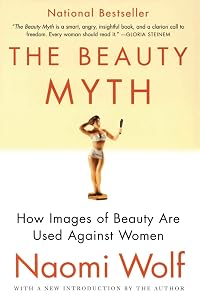
The Beauty Myth: How Images of Beauty Are Used Against Women
by Naomi Wolf 
On This Page
Description
The bestselling classic that redefined our view of the relationship between beauty and female identity. In today's world, women have more power, legal recognition, and professional success than ever before. Alongside the evident progress of the women's movement, however, writer and journalist Naomi Wolf is troubled by a different kind of social control, which, she argues, may prove just as restrictive as the traditional image of homemaker and wife. It's the beauty myth, an obsession with show more physical perfection that traps the modern woman in an endless spiral of hope, self-consciousness, and self-hatred as she tries to fulfill society's impossible definition of "the flawless beauty.". show lessTags
Recommendations



















Member Recommendations


Member Reviews
Décimo terceiro livro do clube do livro feminista da Emma Watson
Os livros escolhidos por Emma Watson nos últimos meses vem sendo exemplares, com O Conto da Aia e O Mito da Beleza, de livrinhos meia boca ela passou para tiro-porrada-e-bomba. Ainda bem, pois finalmente fui incitada a ler este clássico da Naomi Wolf que toda mulher REALMENTE deveria ler.
O Mito da Beleza: neste primeiro capítulo a autora mostra que depois da segunda onda feminista que tirara a aura doméstica da mulher, o mercado teve que criar o mito da beleza para que a mulher gastasse em cirurgias plásticas, cosméticos e dietas.
O segundo capítulo, Trabalho, busca enfatizar o quanto é cobrada a aparência na mulher num ambiente de trabalho, sempre com a dualidade show more se você se arruma está pronta para ser assediada e se você está casual os clientes masculinos não te aceitarão, colocando a situação num beco sem saída e te condenando apenas por ser mulher. Há citação de vários casos jurídicos cuja decisão sempre foram contra as mulheres e a favor dos homens, por mais absurdas que sejam as situações.
O terceiro capítulo, Cultura, explana as consequências do mito da beleza na midia, desde a prevalência da manipulação da indústria de cosméticos em revistas femininas, passando pela indústria da pornografia e a hoje já defasada "concorrência" feminina.
O quarto capítulo, Religião, discorre como as mulheres quase se libertaram do dogmatismo inferiorizante das religiões patriarcais para deslocarem sua subserviência nas seitas do vigilantes do peso, produtos para a pele e cirurgias estéticas. Se eu ainda não estava apaixonada pela Naomi Wolf até então, foi a partir deste capítulo que me entreguei.
O quinto capítulo, Sexo, trata da cultura de estupro, da indústria pornográfica, e como o mito da beleza, a donzela de ferro, impede o desenrolar sexual das mulheres, evidenciado que somos criadas para sermos desejadas, mas nunca nos ensinam a desejar.
O sexto capítulo, Fome, dá ênfase de como a anorexia e bulimia cresceram a medida que as mulheres foram conquistando seu espaço além do lar, a autora denuncia a forma de uma escravidão doméstica sendo trocada pela escravidão da beleza e como com o passar das décadas desde os anos 20 a massa corpórea das mulheres vem diminuindo exponencialmente - isso porque ela escreveu esse livro no auge das supermodels como Cindy Crawford e Claudia Schiffer que eram magras mas muito mais voluptuosas do que veio a seguir com modelos fazendo da esqualidez um ícone da beleza digno de campo de concentração.
O sétimo capítulo, Violência, trata das intervenções cirúrgicas invasivas como lifting, lipoaspiração, rinoplastia e principalmente cirurgia nos seios com as mulheres encontrando problemas em seus corpos que na realidade não possuem problema algum, a autora chega a comparar tais rituais impostos pela indústria da beleza às mulheres aos conceitos eugenistas, onde uma pessoa normal é tida como um desvio.
O capítulo conclusivo, Para além do mito da beleza, discorre sobre métodos de resistência à indústria da beleza institucionalizada e o quanto nos longínquos anos 90 os homens estavam sendo enveredados pelo mesmo caminho.
Livrão, hein. show less
Os livros escolhidos por Emma Watson nos últimos meses vem sendo exemplares, com O Conto da Aia e O Mito da Beleza, de livrinhos meia boca ela passou para tiro-porrada-e-bomba. Ainda bem, pois finalmente fui incitada a ler este clássico da Naomi Wolf que toda mulher REALMENTE deveria ler.
O Mito da Beleza: neste primeiro capítulo a autora mostra que depois da segunda onda feminista que tirara a aura doméstica da mulher, o mercado teve que criar o mito da beleza para que a mulher gastasse em cirurgias plásticas, cosméticos e dietas.
O segundo capítulo, Trabalho, busca enfatizar o quanto é cobrada a aparência na mulher num ambiente de trabalho, sempre com a dualidade show more se você se arruma está pronta para ser assediada e se você está casual os clientes masculinos não te aceitarão, colocando a situação num beco sem saída e te condenando apenas por ser mulher. Há citação de vários casos jurídicos cuja decisão sempre foram contra as mulheres e a favor dos homens, por mais absurdas que sejam as situações.
O terceiro capítulo, Cultura, explana as consequências do mito da beleza na midia, desde a prevalência da manipulação da indústria de cosméticos em revistas femininas, passando pela indústria da pornografia e a hoje já defasada "concorrência" feminina.
O quarto capítulo, Religião, discorre como as mulheres quase se libertaram do dogmatismo inferiorizante das religiões patriarcais para deslocarem sua subserviência nas seitas do vigilantes do peso, produtos para a pele e cirurgias estéticas. Se eu ainda não estava apaixonada pela Naomi Wolf até então, foi a partir deste capítulo que me entreguei.
O quinto capítulo, Sexo, trata da cultura de estupro, da indústria pornográfica, e como o mito da beleza, a donzela de ferro, impede o desenrolar sexual das mulheres, evidenciado que somos criadas para sermos desejadas, mas nunca nos ensinam a desejar.
O sexto capítulo, Fome, dá ênfase de como a anorexia e bulimia cresceram a medida que as mulheres foram conquistando seu espaço além do lar, a autora denuncia a forma de uma escravidão doméstica sendo trocada pela escravidão da beleza e como com o passar das décadas desde os anos 20 a massa corpórea das mulheres vem diminuindo exponencialmente - isso porque ela escreveu esse livro no auge das supermodels como Cindy Crawford e Claudia Schiffer que eram magras mas muito mais voluptuosas do que veio a seguir com modelos fazendo da esqualidez um ícone da beleza digno de campo de concentração.
O sétimo capítulo, Violência, trata das intervenções cirúrgicas invasivas como lifting, lipoaspiração, rinoplastia e principalmente cirurgia nos seios com as mulheres encontrando problemas em seus corpos que na realidade não possuem problema algum, a autora chega a comparar tais rituais impostos pela indústria da beleza às mulheres aos conceitos eugenistas, onde uma pessoa normal é tida como um desvio.
O capítulo conclusivo, Para além do mito da beleza, discorre sobre métodos de resistência à indústria da beleza institucionalizada e o quanto nos longínquos anos 90 os homens estavam sendo enveredados pelo mesmo caminho.
Livrão, hein. show less
This book is a masterpiece that deserves to be savored. It's a collection of writing aimed at dissecting Western society's obsession with female beauty and the way this has been used to counter increasing female emancipation following universal suffrage. The author covers every conceivable topic from fashion to health issues - too many to name here. The essays are gorgeously constructed with truly lyrical prose. This woman's writing is beautiful and the ideas she covers are so complex that I think, for me at least, multiple readings will be required. It's a lot to digest, but even if I don't comprehend it all this time, it's certainly given me much to contemplate.
I have taken a long two months to read this book mainly because I was re-reading portions from it to understand this concept of beauty centralised in our lives. This word 'beauty' itself is so overused and abused in terms of describing women, almost caricaturing them to a term, superficially by means of their physical appearances.
So what makes BEAUTY such a constant hot topic among women and men alike? Men admire, adore, fall for beautiful women and women keep trying to control, preserve and look consistent with their beautiful faces and bodies. How is a writer from a western country tackling notions of beauty and how are they relevant to women from the East? For one, The beauty myth is a global phenomena that is surprisingly quite show more established in women’s psyche since centuries. To put it in a better way, its a myth that found its way throughout different ages, civilizations as a means of sexual attraction for reproduction. In a far away place, men liked their women to paint their faces or sculpt their bodies so that it could titillate them. Women’s bodies were enjoyed as objects because of the supremacy of male hierarchy. The connotations of weak, slender, fragile were associated with women since they were engaged in child rearing and motherhood. The male domination came from the fact that the one who provided for food was the one who had more natural superiority and this drew a fine, invisible, unspoken line between the two genders.
This book by Wolf looks at women in work culture where their beauty is often propagated as an essential means of their performance. Beautiful faces get more respect than plain, unpainted faces. Attractive women are seen as spokeswomen, receptionists, airline crew, secretaries, recreation staff. Their pleasant faces and radiant smiles are supposed to drive your exhaustion away. The prettier you are, more social circles will willingly take you in. What happens to women with not-so-pretty faces? They live sometimes visible, sometimes invisible lives. The book talks about sexuality and because it's not easily co-related to with the women from East, one would think it's not an important issue for women all over the world. Because this book was written in 1990, we would have thought times have changed, that after 25 odd years, women and beauty won’t be given much thought to. We are wrong. Women still get judged on parameters of beauty. There is always the perfect hair, perfect height, perfect body, perfect waistlines, perfect calves. What part of women’s bodies have not gone through a sceptic’s eye? Every inch of women’s bodies is supposed to be perfect, down to a number published by some cynic that got global recognition and due. All civilizations lapped it. Women everywhere long for images that are bombarded through media, advertisements, cinema, art and all sorts of propaganda machinery available to the big bosses that run the beauty business.
The book takes on even more powerful and raw challenges on women and culture, their images and stand in religion everywhere, and ultimately on violence. This is one book that ought to bring out all the subsided anger within women and men who think pro-actively for women. When men talk ignorantly about the need for feminism, give them this book to read and think, if they can, on the superficial world they have created by and large for themselves. Not any more. To women, I say, READ this book. A 25 year time gap has not changed anything about the perceived status and images of women, worldwide. Feminist or not-feminist, we need such texts to keep hammering our selves with the right questions and hopefully find their answers too. show less
So what makes BEAUTY such a constant hot topic among women and men alike? Men admire, adore, fall for beautiful women and women keep trying to control, preserve and look consistent with their beautiful faces and bodies. How is a writer from a western country tackling notions of beauty and how are they relevant to women from the East? For one, The beauty myth is a global phenomena that is surprisingly quite show more established in women’s psyche since centuries. To put it in a better way, its a myth that found its way throughout different ages, civilizations as a means of sexual attraction for reproduction. In a far away place, men liked their women to paint their faces or sculpt their bodies so that it could titillate them. Women’s bodies were enjoyed as objects because of the supremacy of male hierarchy. The connotations of weak, slender, fragile were associated with women since they were engaged in child rearing and motherhood. The male domination came from the fact that the one who provided for food was the one who had more natural superiority and this drew a fine, invisible, unspoken line between the two genders.
This book by Wolf looks at women in work culture where their beauty is often propagated as an essential means of their performance. Beautiful faces get more respect than plain, unpainted faces. Attractive women are seen as spokeswomen, receptionists, airline crew, secretaries, recreation staff. Their pleasant faces and radiant smiles are supposed to drive your exhaustion away. The prettier you are, more social circles will willingly take you in. What happens to women with not-so-pretty faces? They live sometimes visible, sometimes invisible lives. The book talks about sexuality and because it's not easily co-related to with the women from East, one would think it's not an important issue for women all over the world. Because this book was written in 1990, we would have thought times have changed, that after 25 odd years, women and beauty won’t be given much thought to. We are wrong. Women still get judged on parameters of beauty. There is always the perfect hair, perfect height, perfect body, perfect waistlines, perfect calves. What part of women’s bodies have not gone through a sceptic’s eye? Every inch of women’s bodies is supposed to be perfect, down to a number published by some cynic that got global recognition and due. All civilizations lapped it. Women everywhere long for images that are bombarded through media, advertisements, cinema, art and all sorts of propaganda machinery available to the big bosses that run the beauty business.
The book takes on even more powerful and raw challenges on women and culture, their images and stand in religion everywhere, and ultimately on violence. This is one book that ought to bring out all the subsided anger within women and men who think pro-actively for women. When men talk ignorantly about the need for feminism, give them this book to read and think, if they can, on the superficial world they have created by and large for themselves. Not any more. To women, I say, READ this book. A 25 year time gap has not changed anything about the perceived status and images of women, worldwide. Feminist or not-feminist, we need such texts to keep hammering our selves with the right questions and hopefully find their answers too. show less
The book The Beauty Myth by Naomi Wolf is split off into chapters which depict how beauty images are used against women in different sectors of life.The first chapter speaks about religion.This section of the the book was very interesting to me. It definitely made me question the the beliefs that I have been raised with. I like that the book made me reflect and wonder about how these religious norms that have been drilled into my head, are really affecting my thoughts of myself. Naomi Wolf talks about how young girls become concerned with their appearance at an early age and how their upbringing may affect this. I agree with a lot of the points that Wolf brings up in this section. I believe in god but the points brought up by the author show more forced me to question my beliefs, and I believe that questioning is always necessary. The book gave me a new perspective on religion and made me realize that some factors of fit may affect society today and in the past.Naomi Wolf’s next topic is how images of beauty are used against women in our culture. In many books and romance novels, the hero is always the man, the woman is often depicted as a damsel in distress who needs saving. These books are directed towards a female audience, subliminally changing their images of themselves.I have never really thought about the gender roles that often times go into novels of today’s day and age, and of novels of the past.A girl’s early education often consists of reading books like these, making her susceptible to the effects of perceived gender roles. This book opened my eyes to the idea of beauty being used against women in various sectors of life. After reading it I felt like my mind was enriched and like I had gained new insight about the world around me. show less
An interesting and insightful look at the way modern society uses beauty ideals to undermine women socially and psychologically, in order to keep its politics and economy in order. The book covers various aspects of this repression, including sex, work, surgery and dieting. It occasionally veers into slightly OTT territory near the beginning, but by the final section, 'Beyond the Beauty Myth', I was rooting for the achievable vision Wolf presents of a united womanhood in which competition and striving for acceptance via beauty is replaced with sisterhood, freedom and confident sexuality. Thought-provoking and very relevant in today's image-obsessed culture.
The Beauty Myth is a good intro to women's studies and how women are trapped by conflicting expectations of their gender. Naomi Wolf argues that post-second wave feminism (the 1970s), women were put under greater pressure by gender expectations - because we still have to be beautiful and defer to men and have families as before, but now a career and independence and strength are expected too. We have built a society in which women are told to be both confident and submissive.
Wolf discusses our unattainably narrow standard of "beauty," which shames women into thinking that they're deficient and barely able, out of pity, to creep about in society. There are images of physical violence and self-loathing in advertisements, mainstream media, show more and pornography - created by men, internalized by women. One of the best statements that Wolf makes is "A misogynist culture has succeeded in making women hate what misogynists hate."
Wolf is careful to stress, both in the introduction and conclusion, that this book is not "anti-beauty." Women ought to be free to wear lipstick or overalls or both, without people "reading" their appearances as anything. But we live in an overwhelmingly visual society, with all of these connotations, expectations, and biases firmly in place already. The Beauty Myth raises our awareness of the absolutely unhealthy, hateful ways in which women are put down, and of the fabricated gender expectations that our society wrongly fosters. show less
Wolf discusses our unattainably narrow standard of "beauty," which shames women into thinking that they're deficient and barely able, out of pity, to creep about in society. There are images of physical violence and self-loathing in advertisements, mainstream media, show more and pornography - created by men, internalized by women. One of the best statements that Wolf makes is "A misogynist culture has succeeded in making women hate what misogynists hate."
Wolf is careful to stress, both in the introduction and conclusion, that this book is not "anti-beauty." Women ought to be free to wear lipstick or overalls or both, without people "reading" their appearances as anything. But we live in an overwhelmingly visual society, with all of these connotations, expectations, and biases firmly in place already. The Beauty Myth raises our awareness of the absolutely unhealthy, hateful ways in which women are put down, and of the fabricated gender expectations that our society wrongly fosters. show less
What is the Beauty Myth? I've read a lot of discussion about body image, beauty standards, and objectification, and this book comes up often, but I didn't know what the central "myth" was. Now I think it's more of a network of myths, a Gordian knot that Naomi Wolf tries to slice through here. The Beauty Myth might be expressed:
1. The beauty standard is objective and immutable (often, "based in inescapable biological fact") rather than cultural.
2. Women's value is determined by their beauty. (value to society, partners, even themselves.)
3. While beauty standards are "immutable", women are not, and they have a duty to "better themselves" through beauty processes. (Pulling yourself up by your bootstraps, with all the messy virtue/hard show more work/obligation baggage that idea brings.)
This is only part of it, but it's a good start, I hope.
When I first started reading this book (originally published in 1991), I wasn't sure it had aged well. The frantic world of 1980's business Naomi Wolf describes in the Employment section has shifted (though not for female broadcasters, as a local news retrospective spot I saw today, with images of the same anchorman with a different anchorwoman in each decade, attests). The stranglehold of women's magazines on women's dialogue that Wolf discusses is almost hilarious to someone whose reading on feminism and body image largely comes from blogs!
However, I soon began to find material that was more resonant with the present day. The dissections of language in advertising -- the spiritual, the martial -- were enlightening. The chapters on "Hunger" and "Sex" made the whole book for me. The section on the author's own experience with teen anorexia was poignant and added depth, but the entire section was chilling, and sadly, still extremely relevant. I have long found the pseudo-Puritan language of "virtue" around self-denial of food noticeable and creepy, so Wolf's detailed attention to this and other metaphors was really interesting to me. I found her discussion of the psychological and political implications of female hunger/dieting disturbing, provoking, amazing. "Dieting is the most potent political sedative in women's history; a quietly mad population is a tractable one."
The questions raised in the "Sex" section about the construction of desire and difference in heterosexual relationships were interesting and sharp as well. Finally, the closing sections, which call for change through creativity and positivity, were a pleasant dose of hope and encouragement after the depressing realities discussed throughout the book.
I wish I could say that this book hadn't aged well, but it has. While the web may have connected women with each other and given them chances to subvert, support, and connect across generational lines, it's also given an organizing boost to eating disorders, and added more channels for images of "beauty" and "sex" to enter our lives. I don't agree with everything in the book (and I'd love to read an updated version with new data and more focus on the beauty myths' effects on women of color) but the book is thought-provoking, pithy, and incisive. show less
1. The beauty standard is objective and immutable (often, "based in inescapable biological fact") rather than cultural.
2. Women's value is determined by their beauty. (value to society, partners, even themselves.)
3. While beauty standards are "immutable", women are not, and they have a duty to "better themselves" through beauty processes. (Pulling yourself up by your bootstraps, with all the messy virtue/hard show more work/obligation baggage that idea brings.)
This is only part of it, but it's a good start, I hope.
When I first started reading this book (originally published in 1991), I wasn't sure it had aged well. The frantic world of 1980's business Naomi Wolf describes in the Employment section has shifted (though not for female broadcasters, as a local news retrospective spot I saw today, with images of the same anchorman with a different anchorwoman in each decade, attests). The stranglehold of women's magazines on women's dialogue that Wolf discusses is almost hilarious to someone whose reading on feminism and body image largely comes from blogs!
However, I soon began to find material that was more resonant with the present day. The dissections of language in advertising -- the spiritual, the martial -- were enlightening. The chapters on "Hunger" and "Sex" made the whole book for me. The section on the author's own experience with teen anorexia was poignant and added depth, but the entire section was chilling, and sadly, still extremely relevant. I have long found the pseudo-Puritan language of "virtue" around self-denial of food noticeable and creepy, so Wolf's detailed attention to this and other metaphors was really interesting to me. I found her discussion of the psychological and political implications of female hunger/dieting disturbing, provoking, amazing. "Dieting is the most potent political sedative in women's history; a quietly mad population is a tractable one."
The questions raised in the "Sex" section about the construction of desire and difference in heterosexual relationships were interesting and sharp as well. Finally, the closing sections, which call for change through creativity and positivity, were a pleasant dose of hope and encouragement after the depressing realities discussed throughout the book.
I wish I could say that this book hadn't aged well, but it has. While the web may have connected women with each other and given them chances to subvert, support, and connect across generational lines, it's also given an organizing boost to eating disorders, and added more channels for images of "beauty" and "sex" to enter our lives. I don't agree with everything in the book (and I'd love to read an updated version with new data and more focus on the beauty myths' effects on women of color) but the book is thought-provoking, pithy, and incisive. show less
Members
- Recently Added By
Lists

The Telegraph's 110 Best Books: The Perfect Library
101 works; 18 members

books to check out in 2014
9 works; 1 member

Review 3
41 works; 1 member

Read These Too
458 works; 9 members

Bibliography for How to be a Heroine
148 works; 12 members

HarperCollins Publishers
144 works; 3 members

The Joe Rogan Experience Library
254 works; 3 members

Books Read in 2010
631 works; 11 members

How to date men when you hate men
12 works; 1 member

3rd wave feminism
8 works; 1 member
Author Information

16+ Works 7,468 Members
Dr. Naomi Wolf's books include the New York Times bestsellers Vagina, Give Me Liberty, and The End of America, as well as the landmark bestseller The Beauty Myth. She lives in the Hudson River Valley.
Naomi Wolf is a LibraryThing Author, an author who lists their personal library on LibraryThing.
Some Editions
Awards and Honors
Distinctions
Notable Lists
Common Knowledge
- Canonical title
- The Beauty Myth: How Images of Beauty Are Used Against Women
- Original publication date
- 1991
- Epigraph
- It is far more difficult to murder a phantom than a reality.
--Virginia Woolf - Dedication
- For my parents, Deborah and Leonard Wolf
- First words
- At last, after a long silence, women took to the streets.
- Quotations
- Dieting is the most potent political sedative in women's history; a quietly mad population is a tractable one.
- Last words
- (Click to show. Warning: May contain spoilers.)What will we see?
Classifications
- Genres
- Sexuality and Gender Studies, Sociology, General Nonfiction, Nonfiction
- DDC/MDS
- 305.42 — Society, government, & culture Social sciences, sociology & anthropology Social group - Age, Gender, Ethnicity Women Social role and status of women
- LCC
- HQ1219 .W65 — Social sciences The family. Marriage, Women and Sexuality The Family. Marriage. Women Women. Feminism
- BISAC
Statistics
- Members
- 3,753
- Popularity
- 4,291
- Reviews
- 33
- Rating
- (3.77)
- Languages
- 15 — Czech, Dutch, English, Finnish, German, Hebrew, Italian, Norwegian (Bokmål), Norwegian, Polish, Portuguese, Croatian, Slovak, Spanish, Swedish
- Media
- Paper, Audiobook, Ebook
- ISBNs
- 43
- ASINs
- 23