In Our Control: The Complete Guide to Contraceptive Choices for Women
by Laura Eldridge
On This Page
Description
Reviews the history of contraceptives before the twenty-first century, and discusses the pros and cons of contraceptive choices for women, including birth control pills, natural birth control, nonhormonal contraceptive options, menstrual suppression drugs, and others.Tags
Recommendations
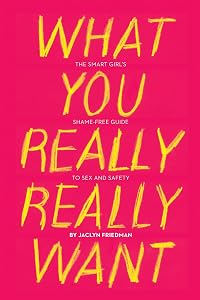
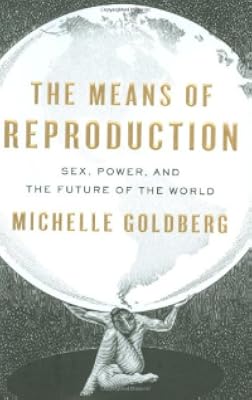

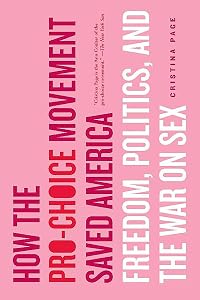
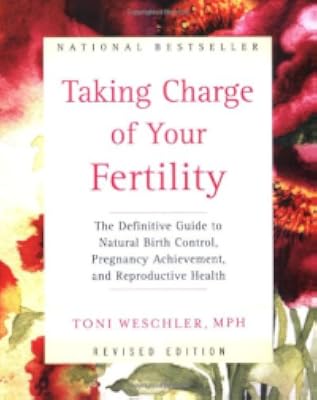
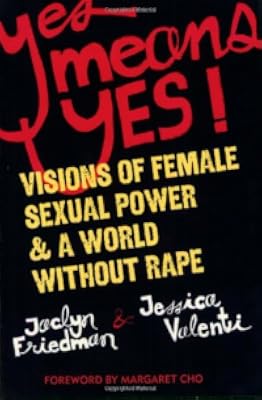
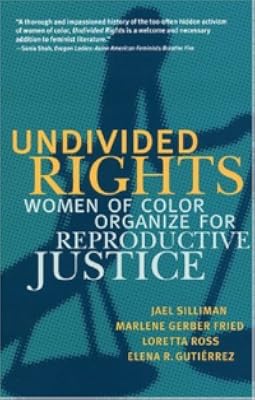
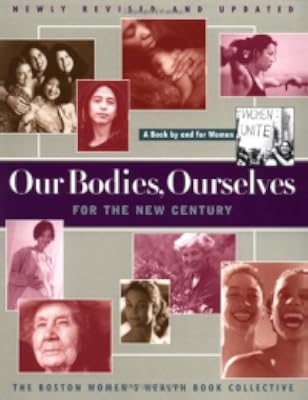
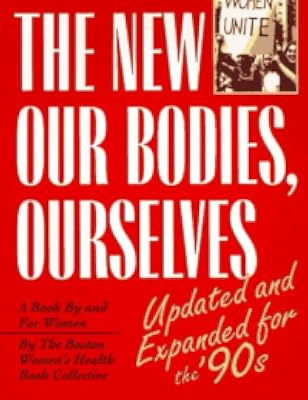














Member Recommendations

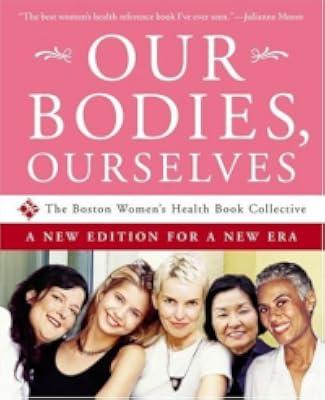
lemontwist A bit more of an unbiased look at birth control options, but not as comprehensive as In Our Control. It also provides TONS of information on womens health in general and is a must read for any woman.
11
lemontwist Eldridge refers to this book a few times in the text, and it does provide an in-depth look at reproductive health movements world-wide.
Member Reviews
In Our Control covers everything from the history and myths surrounding menstruation to the pros and cons of various contraceptive methods to the politics of the attempts to control reproduction.
Regarding menstruation: “both the medical and pharmaceutical communities have tended to gloss bodily processes that are distinctly female as equivalent with illness. In the early 20th century feminist activists rejected the idea that menstruation was 'mentally and physically debilitating' and that menstruating women were out of control and needed men to manage them.” In the 21st century pharmaceutical companies are proposing the idea that menstruation is “unnatural” and that menstrual suppression will bring women back to their show more “normal” prehistoric state in which women didn't menstruate but rather were pregnant continuously until they died. Advertisers of “menstrual suppression drugs seek to convince women...”that they should cede control of their bodily functions to a drug company.”
Eldridge discusses all forms of contraceptives from the Fertility Awareness Method to barrier methods (I was surprised to read that the diaphragm is more comfortable for both the woman and her partner than the smaller cervical cap) to pills. She's not a big fan of hormonal contraception, but she gives the pros and cons so that women can make informed decisions for themselves. There's even a section on the "male pill" (which has been 5 years away for several decades). My favorite, if it could ever be developed, would regulate calcium so that sperm couldn't swim, leaving the man temporarily sterile. It is thought if such a pill could be developed it could be a form of "morning after" pill for women as well as a temporary pill for men. Among the many side effects of hormonal contraception, Eldridge cites the feminization of aquatic animals from residual hormones discarded or urinated into the water system.
There's also an in depth discussion of the HPV vaccines Gardisil and Cervarix. Aside from being expensive, there's a chance that the protection they offer is not only short lived but may be delivered at a time when the young woman's own immune system is strong enough to reject HPV infection leaving her extra vulnerable later in life when she is more in need of protection.
The last chapter covers the politics of reproduction and the fact that economists have finally realized that improving women's lives can improve the economy of her country - which realization is in direct opposition to the push by conservatives in all cultures to suppress the rights of individual women in order to maintain traditional religious and social power structures.
The only topic not discussed in depth is various means of abortion, which I think would add to the completion of the topic of contraception.
I would recommend this book to any woman of any age wanting to know more about her own body and her place in society. show less
Regarding menstruation: “both the medical and pharmaceutical communities have tended to gloss bodily processes that are distinctly female as equivalent with illness. In the early 20th century feminist activists rejected the idea that menstruation was 'mentally and physically debilitating' and that menstruating women were out of control and needed men to manage them.” In the 21st century pharmaceutical companies are proposing the idea that menstruation is “unnatural” and that menstrual suppression will bring women back to their show more “normal” prehistoric state in which women didn't menstruate but rather were pregnant continuously until they died. Advertisers of “menstrual suppression drugs seek to convince women...”that they should cede control of their bodily functions to a drug company.”
Eldridge discusses all forms of contraceptives from the Fertility Awareness Method to barrier methods (I was surprised to read that the diaphragm is more comfortable for both the woman and her partner than the smaller cervical cap) to pills. She's not a big fan of hormonal contraception, but she gives the pros and cons so that women can make informed decisions for themselves. There's even a section on the "male pill" (which has been 5 years away for several decades). My favorite, if it could ever be developed, would regulate calcium so that sperm couldn't swim, leaving the man temporarily sterile. It is thought if such a pill could be developed it could be a form of "morning after" pill for women as well as a temporary pill for men. Among the many side effects of hormonal contraception, Eldridge cites the feminization of aquatic animals from residual hormones discarded or urinated into the water system.
There's also an in depth discussion of the HPV vaccines Gardisil and Cervarix. Aside from being expensive, there's a chance that the protection they offer is not only short lived but may be delivered at a time when the young woman's own immune system is strong enough to reject HPV infection leaving her extra vulnerable later in life when she is more in need of protection.
The last chapter covers the politics of reproduction and the fact that economists have finally realized that improving women's lives can improve the economy of her country - which realization is in direct opposition to the push by conservatives in all cultures to suppress the rights of individual women in order to maintain traditional religious and social power structures.
The only topic not discussed in depth is various means of abortion, which I think would add to the completion of the topic of contraception.
I would recommend this book to any woman of any age wanting to know more about her own body and her place in society. show less
 This review was written for LibraryThing Early Reviewers.
This book was wonderful. It throughly investigated the topic of contraceptives, and from many angles not often considered when choosing a method for oneself, such as the history of and environmental impact of contraceptive options.
I wish I had read this book, or one like it, as a teenager. I think this book is appropriate for people of all sexes, genders, and ages. Even if a reader has no interest in reproduction or contraception, In Our Control covers many social trends that effect everyone. This book reminded me of Naomi Wolf's _The Beauty Myth_ in that it talked about female bodies truthfully and fairly. There are a lot of politicians, advertisers, religious leaders, and drug company executives I wish I could force to read this show more book.
Some non-fiction books err in their tone, either swinging too far to the conversational and flippant or too far the other way, resulting in a dry, boring book. Eldridge hit the sweet spot, and In Our Control is written in language both precise and readable.
Some other reviewers described Eldridge as having a bias against hormonal contraceptives. I didn't see it this way. She was critical, but she turned this investigative eye towards all methods. The author seemed frustrated with the limited options available to women, and she didn't set out to suggest one over another. Every option has pros and cons, side effects and benefits, and each woman needs to choose the option which best fits her needs and situation. If Eldridge spent more pages on hormonal methods, it was because there was more information to share and examine. show less
I wish I had read this book, or one like it, as a teenager. I think this book is appropriate for people of all sexes, genders, and ages. Even if a reader has no interest in reproduction or contraception, In Our Control covers many social trends that effect everyone. This book reminded me of Naomi Wolf's _The Beauty Myth_ in that it talked about female bodies truthfully and fairly. There are a lot of politicians, advertisers, religious leaders, and drug company executives I wish I could force to read this show more book.
Some non-fiction books err in their tone, either swinging too far to the conversational and flippant or too far the other way, resulting in a dry, boring book. Eldridge hit the sweet spot, and In Our Control is written in language both precise and readable.
Some other reviewers described Eldridge as having a bias against hormonal contraceptives. I didn't see it this way. She was critical, but she turned this investigative eye towards all methods. The author seemed frustrated with the limited options available to women, and she didn't set out to suggest one over another. Every option has pros and cons, side effects and benefits, and each woman needs to choose the option which best fits her needs and situation. If Eldridge spent more pages on hormonal methods, it was because there was more information to share and examine. show less
This review was written for LibraryThing Early Reviewers.this is a phenomenal read. but it won't be the next our bodies, ourselves.
eldridge explores women's health and contraceptive options in a book that combines facts, figures, history, medical, and anecdotal information. this combined approach helps keep the book from getting too academic and mired in theories, such that the layperson could easily understand the book and the implications of eldridge's research. of which she presents a staggering amount.
as a woman who was actually in search of new birth control when i received this book, it was highly relevant.
although the author shows bias against hormonal birth control, she lays out the case against hormonal birth control in a way that doesn't bespeak fanaticism, only a very healthy dose show more of skepticism. if you've never learned very much about hormonal contraceptives such as the pill (in its varied forms) and some of the new menstrual suppressants on the market, it is an educational, eyes-wide-open view that reader's should appreciate.
in addition to women's contraception options, the author explores the ethics of new HPV vaccinations, boys' and men's responsibilities towards contraception, and a framework that ties together all the issues and includes a global perspective for what contraception and reproductive health mean to different women in different cultures and circumstances past those of women living in industrialized countries. show less
eldridge explores women's health and contraceptive options in a book that combines facts, figures, history, medical, and anecdotal information. this combined approach helps keep the book from getting too academic and mired in theories, such that the layperson could easily understand the book and the implications of eldridge's research. of which she presents a staggering amount.
as a woman who was actually in search of new birth control when i received this book, it was highly relevant.
although the author shows bias against hormonal birth control, she lays out the case against hormonal birth control in a way that doesn't bespeak fanaticism, only a very healthy dose show more of skepticism. if you've never learned very much about hormonal contraceptives such as the pill (in its varied forms) and some of the new menstrual suppressants on the market, it is an educational, eyes-wide-open view that reader's should appreciate.
in addition to women's contraception options, the author explores the ethics of new HPV vaccinations, boys' and men's responsibilities towards contraception, and a framework that ties together all the issues and includes a global perspective for what contraception and reproductive health mean to different women in different cultures and circumstances past those of women living in industrialized countries. show less
This review was written for LibraryThing Early Reviewers.In Our Control is purported to be a non-biased review of various contraceptive, but the author is clearly not a fan of hormonal options. As someone who has had to use hormonal contraceptives for health reasons, this made me uncomfortable - and since I was considering switching contraceptives at the time I read this, I found that bias decidedly unhelpful.
This review was written for LibraryThing Early Reviewers.Eldridge's In our Control does an excellent job of bridging the multiple disciplines of feminist theory, feminist history, women's health, and far-ranging debates regarding healthcare and contraception. Like much excellent feminist scholarship, her work is both accessible for readers of multiple backgrounds while grounded in an essential combination of lived experience and academic resources. Eldridge does an excellent job of providing comprehensive information about various methods of contraception, including information regarding menstrual suppression drugs and the HPV vaccine. Eldridge also draws on Dorothy Roberts' (Killing the Black Body; Shattered Bonds) exceptional womanist scholarship and brings to light the history of show more involuntary sterilization and government survellience of low-income women of color. Together, this proves to be a monmumental task, but Eldridge's text remains readable throughout. Eldridge's book also opens up room within the women's studies classroom, health classes, and medical schools to address issues of the impact of the health insurance industry on accessibility of birth control, and for ongoing analysis of socioeconomic, racial, and gendered factors regarding contraception. While her book addresses the question of "Why there is still no pill for men" (recalling an early Steinmen article "If Men Could Menstrate'), her book trends toward biological/essentialist definitions of gender, rarely mentioning the needs of LGBTQ individuals and access to reproductive technology. This subject is largely beyond the scope of her work, and Eldridge does make multiple efforts to demonstrate how the rationing and marketing of contraception since the Comstock laws have served the social construction of gender. Nonetheless, there is still more work to be done on this issue. However, Eldridge's book takes important steps in making information accessible and opening up deeper conversations about access to care and the impact of social location. show less
This review was written for LibraryThing Early Reviewers.In Our Control is easily the most comprehensive book about contraception that I've read, with the exception of possibly Our Bodies, Ourselves. However, this book is not free of biases, and I can tell that Eldrige is not a fan of hormonal contraception and prefers diaphragms and methods like natural family planning. I would have liked a little more un-sensational information about menstrual suppression drugs, but really I got a lot of scare mongering about untested hormones (even though they're the same hormones as in "regular" oral contraceptives). For a very comprehensive book about contraceptives, I did not learn much about the method that I use. I would still recommend it to anybody who is interested in learning a lot about show more non-popular methods such as diaphragms, cervical caps, IUDs, and even natural family planning. show less
This review was written for LibraryThing Early Reviewers.Greatly informative, interesting, and well written. Impossible to not learn something new.
This review was written for LibraryThing Early Reviewers.Members
- Recently Added By
Published Reviews
added by lemontwist
Lists

Seven Stories Press
18 works; 1 member
Author Information

1 Work 48 Members
Laura Eldridge is a women's health writer and activist. Her latest books are The No-Nonsense Guide to Menopause and Body Politic: Dispatches from the Women's Health Revolution, both authored with women's health pioneer Barbara Seaman. In Our Control is her first book as a solo author.
Common Knowledge
- Original publication date
- 2010
- Dedication
- To Barbara Seaman (1935-2008)
A true heroine, a great activist, a fearless writer, a generous guide,
a wonderful teacher, and an even better friend. - First words
- Three years ago, at twenty-seven, I ended my long-term relationship with the Pill.
- Last words
- (Click to show. Warning: May contain spoilers.)As we move toward the problems of the future, let's hope that we can apply the lessons of the past half century without having to painfully relearn them.
Classifications
- Genres
- Nonfiction, Sexuality and Gender Studies, General Nonfiction, Health & Wellness
- DDC/MDS
- 613.943 — Applied science & technology Medicine & health Personal health and Fitness Birth control, reproductive technology, sex hygiene, sexual techniques Birth control and reproductive technology Chemical, natural, mechanical methods of birth control
- LCC
- RG137 .E43 — Medicine Gynecology and Obstetrics Gynecology and obstetrics Conception. Artificial insemination. Contraception
- BISAC
Statistics
- Members
- 48
- Popularity
- 627,103
- Reviews
- 9
- Rating
- (4.09)
- Languages
- English
- Media
- Paper, Ebook
- ISBNs
- 2
- ASINs
- 2