On This Page
Description
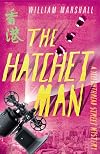
Inspector Harry Feiffer and his disorganized, but earnest crew try to figure out the identity of the Hatchet Man. He could be any Chinese male between the ages of forty-five and fifty and his motive is anyone's guess. Feiffer and the Yellowthread Street cops remain one step behind their maniacal quarry until his altruistic mission of ridding the world of rude people provides the motive they need to catch him.Tags
Recommendations


















Member Reviews
2nd in the Yellowthread Street series.
A serial killer is methodically working his way through the cinemas in the sleazier parts of Hong Bay (which is sleazy enough to begin with), and Chief Inspector Harry Feiffer is at a loss—there are no leads, no obvious connections between the victims. There is pressure from “above”, since the murders are affecting Hong Kong’s image and thus the tourist trade.
Set in the (still) British colony of Hong Kong at the fictional police station at Hong Bay on Yellowthread Street, this installment is nowhere near so funny as the first one (Yellowthread Street) but is instead a solid police procedural with traces of the humor among the detectives and uniformed officers that made the first book so show more memorable. Still, it’s solidly written. The reader doesn’t know exactly who the killer is, but in a subthread, we get glimpses of the way he thinks and acts; as the book proceeds, those brief looks at his behavior expand. The resolution of the plot brings the subthread and the main story together in a truly satisfactory fashion.
The book was published in 1979. Evidently the term “serial killer” was not in wide use, and Marshall never uses it in the book. The attitude towards serial killers is also much different from what we see in today’s police procedurals, with profiling and other means of detecting and arresting the killer. In 1979, at least in this book, this kind of murder was considered so random as being nearly impossible to resolve. The eventual apprehension of the killer is due to dogged police work. That aspect of the story makes it even more intriguing to today’s reader.
What is particularly good about Marshall’s writing is the way he weaves into the story the “almost” events—a number of times when a member of the Yellowthread Street force unwittingly passes by the killer, a Keystone Kops occurrence when the killer gets away from a combined force of detectives and uniformed officers. It’s simultaneously both funny and not-so-funny, which I consider an outstanding piece of writing.
Though 30 years old, the book does not feel outdated; as a matter of fact, it stands head and shoulders above those written by far more popular modern authors. While Marshall is not at the same level as Michael Connolly or Dennis Lehane, he’s still a superior writer in the genre with a unique sense of humor.
Highly recommended. show less
A serial killer is methodically working his way through the cinemas in the sleazier parts of Hong Bay (which is sleazy enough to begin with), and Chief Inspector Harry Feiffer is at a loss—there are no leads, no obvious connections between the victims. There is pressure from “above”, since the murders are affecting Hong Kong’s image and thus the tourist trade.
Set in the (still) British colony of Hong Kong at the fictional police station at Hong Bay on Yellowthread Street, this installment is nowhere near so funny as the first one (Yellowthread Street) but is instead a solid police procedural with traces of the humor among the detectives and uniformed officers that made the first book so show more memorable. Still, it’s solidly written. The reader doesn’t know exactly who the killer is, but in a subthread, we get glimpses of the way he thinks and acts; as the book proceeds, those brief looks at his behavior expand. The resolution of the plot brings the subthread and the main story together in a truly satisfactory fashion.
The book was published in 1979. Evidently the term “serial killer” was not in wide use, and Marshall never uses it in the book. The attitude towards serial killers is also much different from what we see in today’s police procedurals, with profiling and other means of detecting and arresting the killer. In 1979, at least in this book, this kind of murder was considered so random as being nearly impossible to resolve. The eventual apprehension of the killer is due to dogged police work. That aspect of the story makes it even more intriguing to today’s reader.
What is particularly good about Marshall’s writing is the way he weaves into the story the “almost” events—a number of times when a member of the Yellowthread Street force unwittingly passes by the killer, a Keystone Kops occurrence when the killer gets away from a combined force of detectives and uniformed officers. It’s simultaneously both funny and not-so-funny, which I consider an outstanding piece of writing.
Though 30 years old, the book does not feel outdated; as a matter of fact, it stands head and shoulders above those written by far more popular modern authors. While Marshall is not at the same level as Michael Connolly or Dennis Lehane, he’s still a superior writer in the genre with a unique sense of humor.
Highly recommended. show less
Secondo volume della serie "Yellowthread Street", vede i poliziotti della più malfamata stazione di polizia di Hong Kong alle prese con un misterioso assassino, che uccide in modo del tutto casuale, nel buio di una sala cinematografica. Non ci sono testimoni, non ci sono indizi, finché, quasi per caso, il cerchio comincia a stringersi ed emerge il ritratto di un uomo che passa talmente inosservato da sfuggire persino a se stesso, così inosservato da essere lui stesso una vittima.
Il romanzo inizia in modo un po' confuso, un po' sottotono, poi ingrana e torna ai consueti livello di pirotecnica assurdità linguistica.
Ringrazio Prelude Books e Netgalley per avermi fornito una copia gratuita in cambio di una recensione onesta.
Second show more volume of the 'Yellowthread Street' serie, it sees the policemen of the most infamous police station in Hong Kong dealing with a mysterious murderer who kills completely random, in the darkness of a movie theater. There are no witnesses, no clues, until, almost by accident, the circle begins to narrow and comes to light the portrait of a man who goes so unnoticed that slips away even to himself, so unnoticed to be himself a victim.
The beginning of the novel is somewhat a little confused, a little off, then engages and returns to the usual level of pyrotechnic linguistic absurdity.
Thanks Prelude Books and Netgalley for giving me a free copy in exchange for an honest review. show less
Il romanzo inizia in modo un po' confuso, un po' sottotono, poi ingrana e torna ai consueti livello di pirotecnica assurdità linguistica.
Ringrazio Prelude Books e Netgalley per avermi fornito una copia gratuita in cambio di una recensione onesta.
Second show more volume of the 'Yellowthread Street' serie, it sees the policemen of the most infamous police station in Hong Kong dealing with a mysterious murderer who kills completely random, in the darkness of a movie theater. There are no witnesses, no clues, until, almost by accident, the circle begins to narrow and comes to light the portrait of a man who goes so unnoticed that slips away even to himself, so unnoticed to be himself a victim.
The beginning of the novel is somewhat a little confused, a little off, then engages and returns to the usual level of pyrotechnic linguistic absurdity.
Thanks Prelude Books and Netgalley for giving me a free copy in exchange for an honest review. show less
Ratings
Members
- Recently Added By
Author Information
24+ Works 882 Members
Series

Common Knowledge
- Original title
- The hatchet man
- Original publication date
- 1976
- People/Characters
- Harry Feiffer (Chief Inspector)
Classifications
Statistics
- Members
- 71
- Popularity
- 443,307
- Reviews
- 2
- Rating
- (4.00)
- Languages
- Danish, English, Swedish
- Media
- Paper, Ebook
- ISBNs
- 12
- ASINs
- 2