On This Page
Description
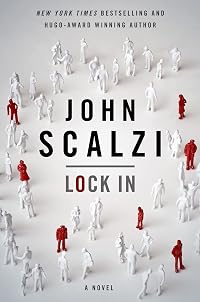
"Fifteen years from now, a new virus sweeps the globe. 95% of those afflicted experience nothing worse than fever and headaches. Four percent suffer acute meningitis, creating the largest medical crisis in history. And one percent find themselves "locked in"--fully awake and aware, but unable to move or respond to stimulus. One per cent doesn't seem like a lot. But in the United States, that's 1.7 million people "locked in"...including the President's wife and daughter. Spurred by grief and show more the sheer magnitude of the suffering, America undertakes a massive scientific initiative. Nothing can restore the ability to control their own bodies to the locked in. But then two new technologies emerge. One is a virtual-reality environment, "The Agora," in which the locked-in can interact with other humans, both locked-in and not. The other is the discovery that a few rare individuals have brains that are receptive to being controlled by others, meaning that from time to time, those who are locked in can "ride" these people and use their bodies as if they were their own. This skill is quickly regulated, licensed, bonded, and controlled. Nothing can go wrong. Certainly nobody would be tempted to misuse it, for murder, for political power, or worse....John Scalzi's Lock In is a novel of our near future, from one of the most popular authors in modern science fiction"-- show lessTags
Recommendations



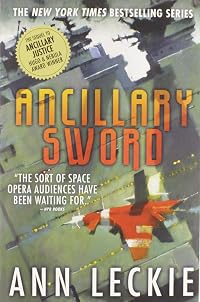
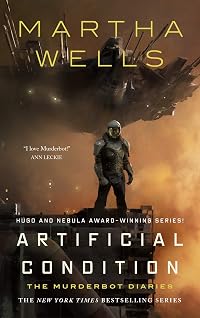
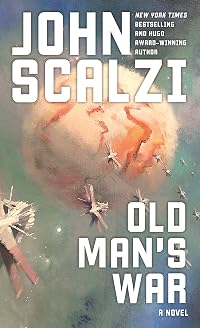

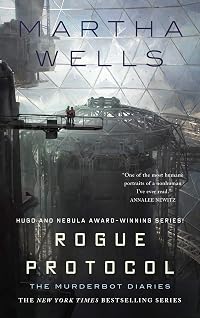
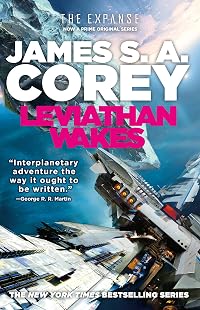
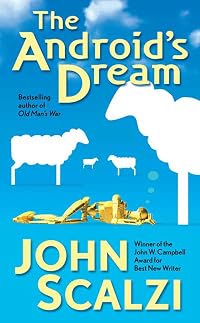
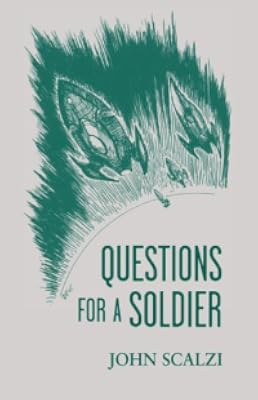
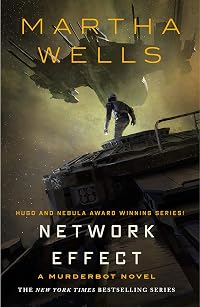






Member Recommendations
g33kgrrl Lock In deals with humans using adaptive technology and what that means; A Closed and Common Orbit deals with humans and AIs and AIs using adaptive technology and what that means.
Member Reviews
Lock In - John Scalzi
5 stars
This book surprised me. I didn’t expect to like it, but I did. In a way, it was just good, solid entertainment, a police procedural with great technology. That would have been enough. But, the story is set in a not too distant future with similar social and political conflicts. It gave me food for thought.
The setup for this story involves the flu-like Hayden virus that has devastated the planet. In addition to millions of deaths, a significant portion of the population survives in a state of ‘lock in’. These people are conscious, totally aware, but incapable of any voluntary motor activity. Another, smaller group of survivors is able to ‘integrate’ with locked in victims, allowing them to inhabit show more an integrator’s brain and body for limited periods of time. The crimes in this book take place twenty-five years after the first Hayden epidemic. An amazing technological culture has developed to assist the locked in. In addition to the human integrators, there are ‘threeps’, a kind of robotic personal transport allowing the locked in to participate in all forms of daily life; including holding down the job of an FBI agent.
Rookie FBI Agent, Chris Shane, has a challenging first week. He works out the the Washington,D.C. division. His first day on the job is also the first day of a massive walkout and protest march being staged by the Hayden community. New legislation will cut major funds that support much of the technology required by those who are locked in. Then there’s a murder involving an integrator. And, that is only the beginning.
What follows is in many ways just like any good cop show. Two cops battle the forces of evil. But one of them looks like C-P30 and he leaves his immobile human body at home with a caretaker. There are chase scenes and gun fights. Agent Shane destroys a shocking number of ‘threeps’ before he unravels the complications of who has committed the crimes and who was a helpless participant. There’s suspense, some witty commentary, bad guys to hate, and a complicated puzzle to solve. That’s the entertaining part.
There’s more to it than simple entertainment because Scalzi has created a very complex backstory filled with all the ethical and political human complications that are the common afflictions of the real world. (Some of this backstory comes in the form of a prequel called Unlocked: An Oral History of Haden's Syndrome) Agent Shane has a complicated relationship with his very famous father. It made me think, often, of Andrew Solomon’s discussions of vertical and horizontal identity in his book Far from the Tree: Parents, Children, and the Search for Identity. There’s even a character in the book’s oral history prequel who compares the Hayden community to deaf culture. The story also deals with the medical manipulation of individual brains, including individual memories. It’s a very scary concept, and one that medical science is already addressing with drugs for memory loss and PTSD. That aspect of this mystery-thriller had me thinking of the creepy premise for the title story of Doerr’s Memory Wall. I like books that are fun while giving me much to think about. It’s pushing this one to 5 stars.
I started out listening to this one, but Wil Wheaton disappointed me. As much as I liked him reading Ready Player One, he failed to bring this one to life. There wasn’t enough distinction in the character voices. I couldn’t tell who was speaking. It doesn't help that this book, which I enjoyed so much, has terrible dialog. I do sort of expect that in a police procedural or a space opera, and this was a bit of both. My library copy of the audio CD’s did include the oral history. It was read by multiple performers and helped a great deal with my book hangover when I was wanting more at the end of the book. There’s a good set-up here for sequels. I hope to read more about Agent Shane. show less
5 stars
This book surprised me. I didn’t expect to like it, but I did. In a way, it was just good, solid entertainment, a police procedural with great technology. That would have been enough. But, the story is set in a not too distant future with similar social and political conflicts. It gave me food for thought.
The setup for this story involves the flu-like Hayden virus that has devastated the planet. In addition to millions of deaths, a significant portion of the population survives in a state of ‘lock in’. These people are conscious, totally aware, but incapable of any voluntary motor activity. Another, smaller group of survivors is able to ‘integrate’ with locked in victims, allowing them to inhabit show more an integrator’s brain and body for limited periods of time. The crimes in this book take place twenty-five years after the first Hayden epidemic. An amazing technological culture has developed to assist the locked in. In addition to the human integrators, there are ‘threeps’, a kind of robotic personal transport allowing the locked in to participate in all forms of daily life; including holding down the job of an FBI agent.
Rookie FBI Agent, Chris Shane, has a challenging first week. He works out the the Washington,D.C. division. His first day on the job is also the first day of a massive walkout and protest march being staged by the Hayden community. New legislation will cut major funds that support much of the technology required by those who are locked in. Then there’s a murder involving an integrator. And, that is only the beginning.
What follows is in many ways just like any good cop show. Two cops battle the forces of evil. But one of them looks like C-P30 and he leaves his immobile human body at home with a caretaker. There are chase scenes and gun fights. Agent Shane destroys a shocking number of ‘threeps’ before he unravels the complications of who has committed the crimes and who was a helpless participant. There’s suspense, some witty commentary, bad guys to hate, and a complicated puzzle to solve. That’s the entertaining part.
There’s more to it than simple entertainment because Scalzi has created a very complex backstory filled with all the ethical and political human complications that are the common afflictions of the real world. (Some of this backstory comes in the form of a prequel called Unlocked: An Oral History of Haden's Syndrome) Agent Shane has a complicated relationship with his very famous father. It made me think, often, of Andrew Solomon’s discussions of vertical and horizontal identity in his book Far from the Tree: Parents, Children, and the Search for Identity. There’s even a character in the book’s oral history prequel who compares the Hayden community to deaf culture. The story also deals with the medical manipulation of individual brains, including individual memories. It’s a very scary concept, and one that medical science is already addressing with drugs for memory loss and PTSD. That aspect of this mystery-thriller had me thinking of the creepy premise for the title story of Doerr’s Memory Wall. I like books that are fun while giving me much to think about. It’s pushing this one to 5 stars.
I started out listening to this one, but Wil Wheaton disappointed me. As much as I liked him reading Ready Player One, he failed to bring this one to life. There wasn’t enough distinction in the character voices. I couldn’t tell who was speaking. It doesn't help that this book, which I enjoyed so much, has terrible dialog. I do sort of expect that in a police procedural or a space opera, and this was a bit of both. My library copy of the audio CD’s did include the oral history. It was read by multiple performers and helped a great deal with my book hangover when I was wanting more at the end of the book. There’s a good set-up here for sequels. I hope to read more about Agent Shane. show less
I knew it was going to be a good science fiction novel, after all, this is a John Scalzi book, but, I was surprised that it was a pretty good mystery too.
The central plot point of the story is a disease called Haden's Syndrome (named after a first lady who had it). It starts with a horrible sickness. Some live, some die, but it's the third group of people inflicted with Haden's that the book revolves around, those who suffer from a form of Locked In syndrome. Their brains are in perfect working order, but their body is entirely shut off from the brain.
The two main characters are Agent Vann, a senior, non-Haden FBI agent and her brand new partner. Chris Shane. Chris has Haden's. And like others who have the Syndrome Chris uses a robot show more like contraption, called a threep by most people, to get around and interact with non-Haden people. Even while Chris' body is safe somewhere else.
Chris and Vann catch a murder that's possibly been committed by a Haden sufferer on Shane's second day as an FBI agent, and from there they get pulled into a mystery that has some twists and turns they didn't see coming.
I have to say, as a life long mystery reader (from Encyclopedia Brown and Cam Jensen onward) that was one of the teensy tiny things that I didn't absolutely love about this book. The twists and turns didn't really surprise me personally. Then again, as I said, if you're a Sci Fi lover instead of a Mystery and Sci Fi lover like myself, the turns may be more surprising.
Here's the thing though, I can write about how the mystery was great, the world building was outstanding, how everything fit together so so well. But, honestly, if there's one thing that I took away from reading this book it was this. Who is Chris. Is Chris male or female (or perhaps neither or both)? And what does it tell us about each of us who have read the book. Do we assume Chris is a he, he did this, he did that. Do we assume Chris is a she, she did this, she did that. Or Chris is a they, they did this, they did that?
And, as much at first I thought I was reading too much into this, then I found out that on the Audiobook version there isn't one, there are two, one voiced by Amber Benson, one by Wil Wheaton. So, once you've read this book, I suggest thinking, did you assume the pronouns of one gender or the other, or non-binary pronouns? And what does that say about each of us. I know that I will never read a book again where pronouns aren't used in the same way (and I'm glad of that).
As you can read, I really did love the novel on all levels. It was different, and eerily creepy (because I could see how our world could easily turn into this one, and on a metaphorical level perhaps it already has). The characters were oh so unique, and hilarious and easy to like (or hate depending on the character). And I'm so glad that Scalzi chose to make this more than just a one off, but write at least one more book in the series. Because, this world is just awesome. show less
The central plot point of the story is a disease called Haden's Syndrome (named after a first lady who had it). It starts with a horrible sickness. Some live, some die, but it's the third group of people inflicted with Haden's that the book revolves around, those who suffer from a form of Locked In syndrome. Their brains are in perfect working order, but their body is entirely shut off from the brain.
The two main characters are Agent Vann, a senior, non-Haden FBI agent and her brand new partner. Chris Shane. Chris has Haden's. And like others who have the Syndrome Chris uses a robot show more like contraption, called a threep by most people, to get around and interact with non-Haden people. Even while Chris' body is safe somewhere else.
Chris and Vann catch a murder that's possibly been committed by a Haden sufferer on Shane's second day as an FBI agent, and from there they get pulled into a mystery that has some twists and turns they didn't see coming.
I have to say, as a life long mystery reader (from Encyclopedia Brown and Cam Jensen onward) that was one of the teensy tiny things that I didn't absolutely love about this book. The twists and turns didn't really surprise me personally. Then again, as I said, if you're a Sci Fi lover instead of a Mystery and Sci Fi lover like myself, the turns may be more surprising.
Here's the thing though, I can write about how the mystery was great, the world building was outstanding, how everything fit together so so well. But, honestly, if there's one thing that I took away from reading this book it was this. Who is Chris. Is Chris male or female (or perhaps neither or both)? And what does it tell us about each of us who have read the book. Do we assume Chris is a he, he did this, he did that. Do we assume Chris is a she, she did this, she did that. Or Chris is a they, they did this, they did that?
And, as much at first I thought I was reading too much into this, then I found out that on the Audiobook version there isn't one, there are two, one voiced by Amber Benson, one by Wil Wheaton. So, once you've read this book, I suggest thinking, did you assume the pronouns of one gender or the other, or non-binary pronouns? And what does that say about each of us. I know that I will never read a book again where pronouns aren't used in the same way (and I'm glad of that).
As you can read, I really did love the novel on all levels. It was different, and eerily creepy (because I could see how our world could easily turn into this one, and on a metaphorical level perhaps it already has). The characters were oh so unique, and hilarious and easy to like (or hate depending on the character). And I'm so glad that Scalzi chose to make this more than just a one off, but write at least one more book in the series. Because, this world is just awesome. show less
LOCK IN is a near future novel set after a disease known as Haden’s syndrome left millions of people across the world “locked in” – unable to control their bodies but fully conscious. High-profile patients spurred the accelerated development of technology to allow these “Hadens” to participate in life again though neural implants, virtual reality, and robot bodies, among other things. It’s been a while since that all happened, and the government benefits that many Hadens relied on is about to be repealed, and it is an uncertain time.
This is all just background for the story, though – the actual story begins when rookie FBI agent Chris Shane is assigned to investigate a murder where the prime suspect is an Integrator (a show more regular human who allows Hadens to rent their body.) It stays a pretty solid mystery/thriller type novel throughout, and usually I don’t care that much about that genre, but the worldbuilding and slowly unfolding plot kept me hooked. Scalzi takes the premise and runs with it, exploring how a disease like Haden’s would affect society in both big and small ways. I felt like I identified with the main character a little more than most people because I work remotely and haven’t met many of my coworkers in person.
If you’d like to find out more about the world, Tor.com has a novella that explores the history of Haden’s (search for "Unlocked: An Oral History of Haden’s Syndrome"). I think this is one of Scalzi’s better books, even though the content was pretty different, it reminded me a lot of the thoughtfulness of OLD MAN'S WAR. I can’t wait to read the follow up, HEAD ON. show less
This is all just background for the story, though – the actual story begins when rookie FBI agent Chris Shane is assigned to investigate a murder where the prime suspect is an Integrator (a show more regular human who allows Hadens to rent their body.) It stays a pretty solid mystery/thriller type novel throughout, and usually I don’t care that much about that genre, but the worldbuilding and slowly unfolding plot kept me hooked. Scalzi takes the premise and runs with it, exploring how a disease like Haden’s would affect society in both big and small ways. I felt like I identified with the main character a little more than most people because I work remotely and haven’t met many of my coworkers in person.
If you’d like to find out more about the world, Tor.com has a novella that explores the history of Haden’s (search for "Unlocked: An Oral History of Haden’s Syndrome"). I think this is one of Scalzi’s better books, even though the content was pretty different, it reminded me a lot of the thoughtfulness of OLD MAN'S WAR. I can’t wait to read the follow up, HEAD ON. show less
Wow. There was so much in this book. It's suspense--people are being murdered and the FBI is investigating. It's speculative fiction--one of the FBI agents is a "Haden," a person with Haden's syndrome whose body is in a medical cradle at his home while his mind inhabits a robotic body (threepio--so perfect). It's about disability and disability rights and it is very, very good at that, in my opinion. The book gets five stars because it combines speculative fiction with suspense/thriller and because it made me think.
What would I do, were I a Haden? Would I use a threepio and interact with the physical world? Would I never use one and interact only in the Agora (a virtual world that is utterly real to the Hadens)? Would I mix both? There show more was a minor incident mentioned about threepios not being allowed to use chairs in coffee shops if those chairs were needed by those without Haden's. The particular threepio relating it doesn't mind, but I'd mind. Oh, would I mind. There are great things like that which call into question the humanity of a Haden while in their threepio. Then there's the housing which tends to be small and cramped for Haden's because they are, after all, bedridden and don't actually need space. But do they deserve it? Does it benefit them?
Oh, and the whodunnit? A wonderful mix of plots and schemes with the technology available to them. Very clever.
I could go on. I'm going to be revisiting this book many times. show less
What would I do, were I a Haden? Would I use a threepio and interact with the physical world? Would I never use one and interact only in the Agora (a virtual world that is utterly real to the Hadens)? Would I mix both? There show more was a minor incident mentioned about threepios not being allowed to use chairs in coffee shops if those chairs were needed by those without Haden's. The particular threepio relating it doesn't mind, but I'd mind. Oh, would I mind. There are great things like that which call into question the humanity of a Haden while in their threepio. Then there's the housing which tends to be small and cramped for Haden's because they are, after all, bedridden and don't actually need space. But do they deserve it? Does it benefit them?
Oh, and the whodunnit? A wonderful mix of plots and schemes with the technology available to them. Very clever.
I could go on. I'm going to be revisiting this book many times. show less
The Short of It:
Interesting concept.
The Rest of It:
Not too long from today, a new, highly contagious virus makes its way across the globe. Most who get sick experience nothing worse than flu, fever and headaches. But for the unlucky one percent – and nearly five million souls in the United States alone – the disease causes “Lock In”: Victims fully awake and aware, but unable to move or respond to stimulus. The disease affects young, old, rich, poor, people of every color and creed. The world changes to meet the challenge. ~ the publisher
I went into this book club pick completely blind, with no idea what to expect, and it ended up being exactly the kind of read I needed. It’s a little strange, a little unsettling, and perfectly show more suited to a mood-driven reading experience, which honestly feels essential these days.
What really hooked me was the central concept: a virus that leaves people fully conscious but unable to move, forcing them to live their lives through “threeps,” robotic, humanoid bodies that act as their physical stand-ins while their real bodies remain safely tucked away. It’s a fascinating idea, but the story quickly makes it clear that “safe” is relative. Those affected by the syndrome are being targeted, and what once seemed like a solution to a global crisis becomes a new kind of vulnerability. These people are still here, still aware, and still at risk.
The narrative follows police detectives, including one who has Haden’s, which adds a compelling layer to how the world and its biases are portrayed. Society has already started deciding what’s acceptable and what isn’t, and the lines get murkier as the story unfolds. The fact that “threeps” can be damaged or destroyed, often at great personal cost to their users, raises the stakes in a way that feels both practical and deeply human.
What starts as a straightforward murder investigation expands into something much bigger, blending speculative sci-fi with a grounded, procedural feel.
I’m always drawn to stories that explore where we might be headed when things start to fall apart, and this one hits that note without feeling too far removed from reality. Maybe a little too close, at times.
Overall, it’s an engaging, thought-provoking read, and I’m looking forward to seeing what everyone else in book club takes away from it.
For more reviews, visit my blog: Book Chatter. show less
Interesting concept.
The Rest of It:
Not too long from today, a new, highly contagious virus makes its way across the globe. Most who get sick experience nothing worse than flu, fever and headaches. But for the unlucky one percent – and nearly five million souls in the United States alone – the disease causes “Lock In”: Victims fully awake and aware, but unable to move or respond to stimulus. The disease affects young, old, rich, poor, people of every color and creed. The world changes to meet the challenge. ~ the publisher
I went into this book club pick completely blind, with no idea what to expect, and it ended up being exactly the kind of read I needed. It’s a little strange, a little unsettling, and perfectly show more suited to a mood-driven reading experience, which honestly feels essential these days.
What really hooked me was the central concept: a virus that leaves people fully conscious but unable to move, forcing them to live their lives through “threeps,” robotic, humanoid bodies that act as their physical stand-ins while their real bodies remain safely tucked away. It’s a fascinating idea, but the story quickly makes it clear that “safe” is relative. Those affected by the syndrome are being targeted, and what once seemed like a solution to a global crisis becomes a new kind of vulnerability. These people are still here, still aware, and still at risk.
The narrative follows police detectives, including one who has Haden’s, which adds a compelling layer to how the world and its biases are portrayed. Society has already started deciding what’s acceptable and what isn’t, and the lines get murkier as the story unfolds. The fact that “threeps” can be damaged or destroyed, often at great personal cost to their users, raises the stakes in a way that feels both practical and deeply human.
What starts as a straightforward murder investigation expands into something much bigger, blending speculative sci-fi with a grounded, procedural feel.
I’m always drawn to stories that explore where we might be headed when things start to fall apart, and this one hits that note without feeling too far removed from reality. Maybe a little too close, at times.
Overall, it’s an engaging, thought-provoking read, and I’m looking forward to seeing what everyone else in book club takes away from it.
For more reviews, visit my blog: Book Chatter. show less
"No. Making people change because you can't deal with who they are isn't how it's supposed to be done. What needs to be done is for people to pull their heads out of their asses. You say 'cure.' I hear 'you're not human enough.'"
Content warnings:
Suicide mention cw
In the near future, a virus spreads throughout the world. Called Haden's, it can cause fever, meningitis, or a "locked in" state, where the person cannot move, but is fully conscious. These people are called Hadens, or clanks, when their minds use an android-like body to experience the world outside their bedridden bodies. The MC, Shane, the poster child for Haden's, is now grown up and an FBI agent for cases involving Hadens, and he gets involved in one heck of a mess.
This show more book is basically a discussion on capitalism and how it affects people with disabilities (and how, if a virus affected people worldwide, making a significant amount of the world's population disabled, big businesses in America would find more ways to capitalize on them). It also mentions classicism and disability, which pleasantly surprised me, especially since the MC comes from a very privileged background. All in all, this book has the most sensitive treatment of disabled characters that I've ever read.
It took me a little while to get used to the style, but once I did, the book hooked me in, and it became very difficult to stop reading. Of course, this book is written in about 90% dialogue (which is probably his greatest strength, since when he does manage to slip some prose in, it's not all that great), which accounts for the speedy pacing. There's also some mighty cliche dialogue ("Cut the suspense, Diaz. Get to it."), but I found it was easily overlooked for reasons described above.
All in all, I didn't expect to like this book as much as I did. show less
Content warnings:
Suicide mention cw
In the near future, a virus spreads throughout the world. Called Haden's, it can cause fever, meningitis, or a "locked in" state, where the person cannot move, but is fully conscious. These people are called Hadens, or clanks, when their minds use an android-like body to experience the world outside their bedridden bodies. The MC, Shane, the poster child for Haden's, is now grown up and an FBI agent for cases involving Hadens, and he gets involved in one heck of a mess.
This show more book is basically a discussion on capitalism and how it affects people with disabilities (and how, if a virus affected people worldwide, making a significant amount of the world's population disabled, big businesses in America would find more ways to capitalize on them). It also mentions classicism and disability, which pleasantly surprised me, especially since the MC comes from a very privileged background. All in all, this book has the most sensitive treatment of disabled characters that I've ever read.
It took me a little while to get used to the style, but once I did, the book hooked me in, and it became very difficult to stop reading. Of course, this book is written in about 90% dialogue (which is probably his greatest strength, since when he does manage to slip some prose in, it's not all that great), which accounts for the speedy pacing. There's also some mighty cliche dialogue ("Cut the suspense, Diaz. Get to it."), but I found it was easily overlooked for reasons described above.
All in all, I didn't expect to like this book as much as I did. show less
Lock In by John Scalzi is the author's latest book and the third of his that I've read. Last year, I read and very much enjoyed Redshirts, which won a Hugo. Lock In drew my attention because of an excerpt I was able to read before requesting the ARC. And once I started reading it properly, I found it rather difficult to put down. (And it has a very long blurb, but it's a useful one so I'm not going to trim it.)
Fifteen years from now, a new virus sweeps the globe. 95% of those afflicted experience nothing worse than fever and headaches. Four percent suffer acute meningitis, creating the largest medical crisis in history. And one percent find themselves “locked in”—fully awake and aware, but unable to move or respond to stimulus.
show more One per cent doesn't seem like a lot. But in the United States, that's 1.7 million people “locked in”...including the President's wife and daughter.
Spurred by grief and the sheer magnitude of the suffering, America undertakes a massive scientific initiative. Nothing can restore the ability to control their own bodies to the locked in. But then two new technologies emerge. One is a virtual-reality environment, “The Agora,” in which the locked-in can interact with other humans, both locked-in and not. The other is the discovery that a few rare individuals have brains that are receptive to being controlled by others, meaning that from time to time, those who are locked in can “ride” these people and use their bodies as if they were their own.
This skill is quickly regulated, licensed, bonded, and controlled. Nothing can go wrong. Certainly nobody would be tempted to misuse it, for murder, for political power, or worse...
The main thrust of the plot of Lock In is Chris the new FBI agent's first case, which turns out to be more exciting than usual. Chris is a Haden's sufferer who generally gets around in a threep (robot body), The case is related to Haden's, which is the focus of the FBI unit Chris is assigned to. There's murder, explosions and corporate bad guys; it's an exciting plot. It's also a plot tied very closely to the worldbuilding, which is where the most interesting stuff is.
I'll discuss the more minor thing first because it will facilitate later discussion. This could be construed as a minor spoiler and if that bothers you, you should jump to the next paragraph. With Lock In written in first person, Scalzi has been very careful to not to indicate a gender for Chris, the protagonist. Haden's sufferers can live their entire lives online or inside threeps (which are usually androgynous, was my impression, but I may be wrong), which lifts most of the constraints on gender presentation. It's an interesting point to make but I have to say I found Chris came across as male. And I'm usually one to assume first person characters are female until some jarring pronoun/name corrects me. Your mileage may vary. In any case, it's interesting to note the extent to which the protagonist's gender doesn't change the story at all. (And if you're wondering, there was no romantic component to the plot, which I'm a little disappointed about because I think romance between Haden's sufferers would have been an interesting point to explore further.) But since I thought Chris sounded male, I'm going to cave and use male pronouns in the remainder of the review.
My favourite thing about Lock In was the background commentary on disability rights and treatment of people with disabilities. It is depressing, but not implausible, that a very specific subset of disabled people — locked in Haden's sufferers — are given access to the technology and medical treatments developed for them. This may sound obvious until you realise that other types of disabled people — quadriplegics, people locked in for other reasons and people with other mobility restrictions — aren't allowed to use threeps or the Agora. Not even an matter of the technology not being subsidised, just plain not allowed by the FDA.
In fact, the only reason so much money was ever thrown at Haden's is because a) the president's wife and daughter got sick and b) such a large number of Americans were affected. (The rest of the world successfully exists in this book, but we don't hear much about it other than that it also has Haden's and deals with them similarly.) It doesn't seem implausible to think that without a), b) would not have made as much of an impact. Indeed, the next president is about to reduce a lot of funding and subsidies for Haden's, which is a part of the background that's crucial to the plot.
The other disability-related thing I appreciated in Lock In was the way the Haden's community had developed in its own virtual space. And especially for people who were young when they caught Haden's, the virtual world can feel more like their natural habitat than the physical world which they are forced to use if they want to communicate (outside of email) with non-Haden's people.
So basically Lock In is a surprisingly good exploration of what happens when a plague causes severe disability in a large number of people. I think it deals with various issues well and I found the premise believable. It's also an FBI procedural tied closely to the worldbuilding. If near future SF and/or crime SF and/or medical SF is your sort of thing, then I highly recommend Lock In. Aside from all the stuff I've discussed above, it was a fun read.
4.5 / 5 stars
You can read more of my reviews on my blog. show less
Fifteen years from now, a new virus sweeps the globe. 95% of those afflicted experience nothing worse than fever and headaches. Four percent suffer acute meningitis, creating the largest medical crisis in history. And one percent find themselves “locked in”—fully awake and aware, but unable to move or respond to stimulus.
show more One per cent doesn't seem like a lot. But in the United States, that's 1.7 million people “locked in”...including the President's wife and daughter.
Spurred by grief and the sheer magnitude of the suffering, America undertakes a massive scientific initiative. Nothing can restore the ability to control their own bodies to the locked in. But then two new technologies emerge. One is a virtual-reality environment, “The Agora,” in which the locked-in can interact with other humans, both locked-in and not. The other is the discovery that a few rare individuals have brains that are receptive to being controlled by others, meaning that from time to time, those who are locked in can “ride” these people and use their bodies as if they were their own.
This skill is quickly regulated, licensed, bonded, and controlled. Nothing can go wrong. Certainly nobody would be tempted to misuse it, for murder, for political power, or worse...
The main thrust of the plot of Lock In is Chris the new FBI agent's first case, which turns out to be more exciting than usual. Chris is a Haden's sufferer who generally gets around in a threep (robot body), The case is related to Haden's, which is the focus of the FBI unit Chris is assigned to. There's murder, explosions and corporate bad guys; it's an exciting plot. It's also a plot tied very closely to the worldbuilding, which is where the most interesting stuff is.
I'll discuss the more minor thing first because it will facilitate later discussion. This could be construed as a minor spoiler and if that bothers you, you should jump to the next paragraph. With Lock In written in first person, Scalzi has been very careful to not to indicate a gender for Chris, the protagonist. Haden's sufferers can live their entire lives online or inside threeps (which are usually androgynous, was my impression, but I may be wrong), which lifts most of the constraints on gender presentation. It's an interesting point to make but I have to say I found Chris came across as male. And I'm usually one to assume first person characters are female until some jarring pronoun/name corrects me. Your mileage may vary. In any case, it's interesting to note the extent to which the protagonist's gender doesn't change the story at all. (And if you're wondering, there was no romantic component to the plot, which I'm a little disappointed about because I think romance between Haden's sufferers would have been an interesting point to explore further.) But since I thought Chris sounded male, I'm going to cave and use male pronouns in the remainder of the review.
My favourite thing about Lock In was the background commentary on disability rights and treatment of people with disabilities. It is depressing, but not implausible, that a very specific subset of disabled people — locked in Haden's sufferers — are given access to the technology and medical treatments developed for them. This may sound obvious until you realise that other types of disabled people — quadriplegics, people locked in for other reasons and people with other mobility restrictions — aren't allowed to use threeps or the Agora. Not even an matter of the technology not being subsidised, just plain not allowed by the FDA.
In fact, the only reason so much money was ever thrown at Haden's is because a) the president's wife and daughter got sick and b) such a large number of Americans were affected. (The rest of the world successfully exists in this book, but we don't hear much about it other than that it also has Haden's and deals with them similarly.) It doesn't seem implausible to think that without a), b) would not have made as much of an impact. Indeed, the next president is about to reduce a lot of funding and subsidies for Haden's, which is a part of the background that's crucial to the plot.
The other disability-related thing I appreciated in Lock In was the way the Haden's community had developed in its own virtual space. And especially for people who were young when they caught Haden's, the virtual world can feel more like their natural habitat than the physical world which they are forced to use if they want to communicate (outside of email) with non-Haden's people.
So basically Lock In is a surprisingly good exploration of what happens when a plague causes severe disability in a large number of people. I think it deals with various issues well and I found the premise believable. It's also an FBI procedural tied closely to the worldbuilding. If near future SF and/or crime SF and/or medical SF is your sort of thing, then I highly recommend Lock In. Aside from all the stuff I've discussed above, it was a fun read.
4.5 / 5 stars
You can read more of my reviews on my blog. show less
Members
- Recently Added By
Lists

Best Science Fiction Novels
816 works; 430 members

ALA The Reading List
490 works; 28 members

Best 21st Century Books (So Far)
670 works; 85 members

Top Five Books of 2014
1,064 works; 398 members

Speculative Fiction to Read
706 works; 32 members

Kirkus Reviews Best Fiction of 2014
100 works; 7 members

Viral Outbreaks and Pandemics
82 works; 8 members
Books We Couldn't Put Down
443 works; 197 members

Paranormal investigators and space detectives
274 works; 9 members

Best Audiobooks
240 works; 114 members

Books Read in 2021
5,361 works; 114 members

Simulated Reality in Fiction
124 works; 7 members

Books Read in 2020
4,379 works; 124 members

Books Read in 2018
4,360 works; 110 members

Books Read in 2017
4,249 works; 129 members

Books Read in 2016
4,666 works; 197 members

Dublin Literary Award Longlist 2016
148 works; 4 members
Books Read in 2015
3,299 works; 126 members

KayStJ's to-read list
1,616 works; 11 members
Favorite Science Fiction
456 works; 218 members
Author Information

137+ Works 67,624 Members
John Michael Scalzi was born May 10, 1969 in California. He attended the University of Chicago. During his 1989 -1990 school year he was the editor-in-chief of The Chicago Maroon. After graduating in 1991, Scalzi took a job as the film critic for the Fresno Bee newspaper, eventually also becoming a humor columnist. In 1996 he was hired as the show more in-house writer and editor at America Online. When he was laid off in 1998, he decided to become a full-time freelance writer and author. His first published novel was Old Man's War. His other works include Agent to the Stars, The Ghosts Brigades, The Androids Team, The Sagan Diary, The Last Colony, and Redshirts: A Novel with Three Codas. In 2014 his title, Locked In, made The New York Times Best Seller List. (Bowker Author Biography) show less
Some Editions
Awards and Honors
Awards
Distinctions
Series

Belongs to Publisher Series
Work Relationships
Common Knowledge
- Canonical title
- Lock In
- Original title
- Lock In
- Original publication date
- 2014-08-26
- People/Characters
- Chris Shane; Leslie Vann; Samuel Schwartz; Lucas Hubbard; Nicholas Bell; Marcus Shane (show all 9); Tony Wilton; Klah Redhouse; Cassandra Bell
- Important places
- Washington, D.C., USA; Navajo Reservation, Arizona, USA
- Dedication
- To Joe Hill, I told you I was going to do this.
And to Daniel Mainz, my very dear friend. - First words
- Haden's syndrome is the name given to a set of continuing physical and mental conditions and disabilities initially brought on by "the Great Flu," the influenza-like global pandemic that resulted in the deaths of more than 40... (show all)0 million people worldwide, either through the initial flu-like symptoms, the secondary stage of meningitis-like cerebral and spinal inflammation, or through complications arising due to the third stage of the disease, which typically caused complete paralysis of the voluntary nervous system, resulting in "lock in" for its victims.
- Last words
- (Click to show. Warning: May contain spoilers.)"Now. Everyone say 'cheese.'"
- Publisher's editor
- Nielsen Hayden, Patrick
- Blurbers
- Preston, Douglas; Doctorow, Cory
- Original language
- English US
- Canonical DDC/MDS
- 813.6
- Canonical LCC
- PS3619.C256
Classifications
Statistics
- Members
- 3,503
- Popularity
- 4,714
- Reviews
- 223
- Rating
- (3.92)
- Languages
- 6 — English, French, German, Italian, Portuguese, Turkish
- Media
- Paper, Audiobook, Ebook
- ISBNs
- 22
- UPCs
- 1
- ASINs
- 17