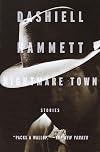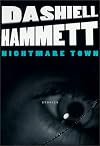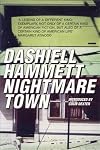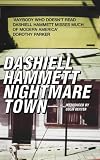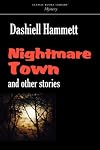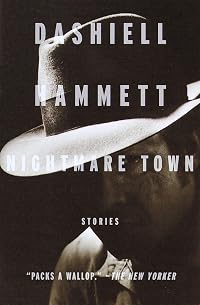
Nightmare Town: Stories
by Dashiell Hammett
Sam Spade (Collections and Selections — ), The Continental Op (Collections and Selections — short stories)
On This Page
Description
A collection of some of the finest stories from Dashiell Hammett, author of The Maltese Falcon.Tags
Recommendations
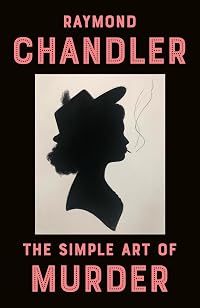
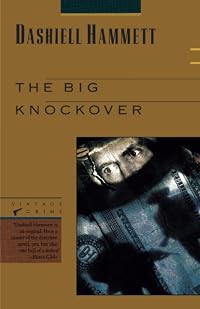
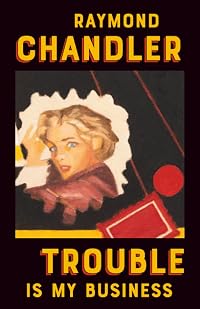
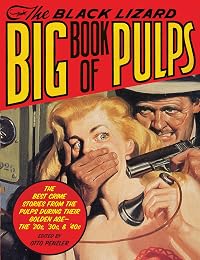
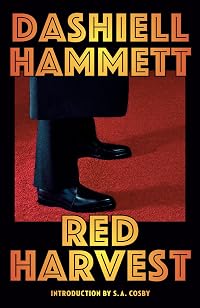
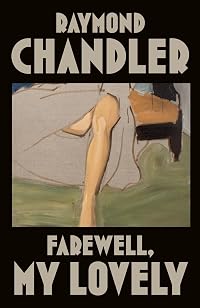
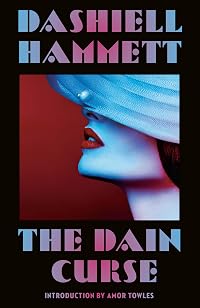
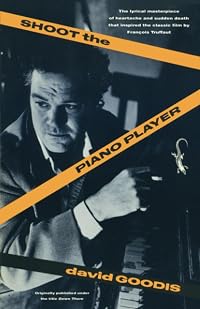
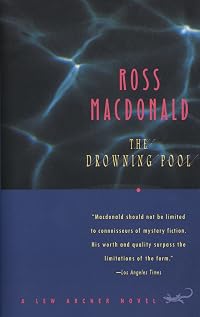
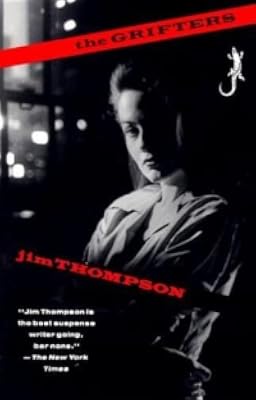
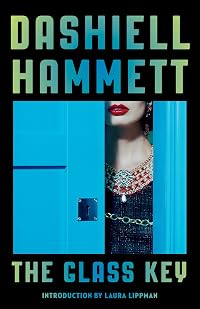
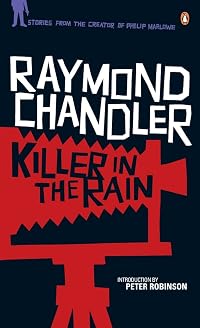
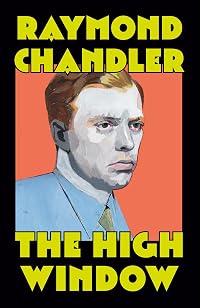
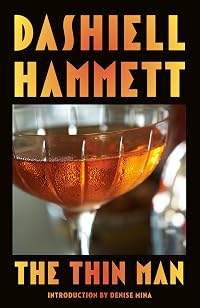
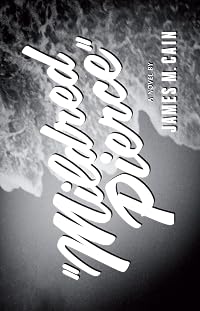


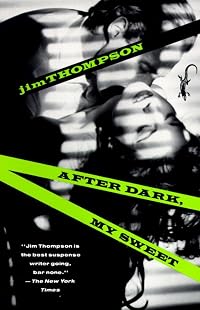
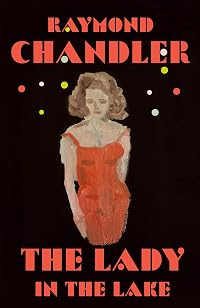
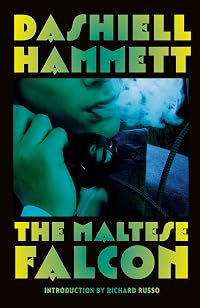
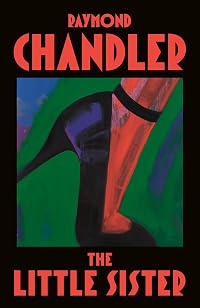
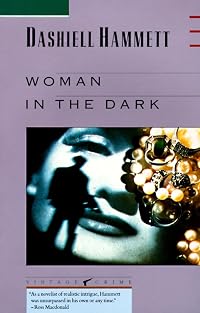
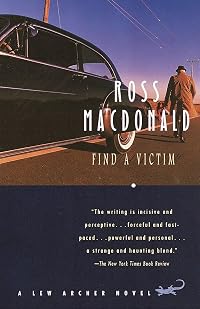

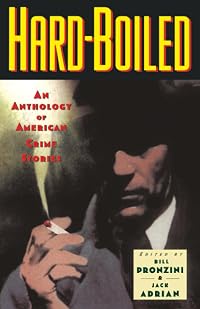
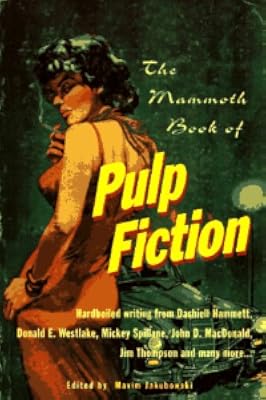





Member Recommendations
uncultured In the 1930’s, Frederick Nebel was just as big a draw as Dashiell Hammett and Raymond Chandler—but because he never transitioned to novels, his works were lost to history...until Altus Press came along. And even if his prose doesn’t quite reach the heights of Hammett’s best work, he does, over the course of this series starrring hard-boiled police captain MacBride and hard-drinking newshound Kennedy, prove himself a worthy competitor.
Member Reviews
(Original Review, 1999-12-10)
When one wants to elect the best of Dashiell Hammet, one invariably chooses “The Maltese Falcon”, Classic that it is, but instead I would go for Dashiell Hammett’s short novel, “Nightmare Town” as one of my favourites. The set up is brilliant and the wider issues - American criminality, capitalism, the mirage of consumption - is all combined with some brilliant intrigue, weird characters, and clean hard boiled prose. Unlike the Sam Spade novels, though, “Nightmare Town” has kind of palpable energy and ambition that gives it greater flavor as well as substance. Also don’t agree with what I read objecting to classifying “Lolita” [2018 EDIT: Link added in 2018] as Crime Fiction. Clare Quilty show more is nothing but a criminal, although he ends up pursuing and tormenting Humbert. And the way they both victimize Lolita, not to mention her mum - who Humbert cruelly delights in branding “the Haze woman”. It is a novel about America, and desire, and kitsch, and bourgeois depravity, and it comes suffused in a kind of blowsy desperation - but let’s not forget it is also about a serial paedophile who competes with another man for the attentions of an only just pubescent girl who ends up being sex trafficked to a porn studio/cult across the Mexican border. And if the Haze Woman hadn’t snuffed it by fluke, Humbert would almost certainly have murdered her. The fact that these 2 men are urbane sufficient to impress the drab suburbanites around them does not make their desires less violent or the lengths they go to satisfy them less monstrous - quite the reverse, in fact! Hammett, in a way, reminds me of the way Lee Child goes about his business by using the elaborateness of pushing a sharpened pin punch into somebody's head and what it does to their brain, just before he pushes a sharpened wire cutter into somebody's head and brain. In Reacher's case, it's all about the violence and I just wonder if that's what Hammett is trying to do here, seeing as he was writing with a commercial eye - trying to describe it so that the reader can imagine punching somebody like that themselves and how it would feel to crack someone's jaw and lay them out cold...Maybe that’s why I like Lee Child’s Reacher. Whenever there is a layer two under a person’s persona of what they present to society as being normal, it reminds me of how the clothes of people mask who they truly are. In this regard, Hammett beats Child easily. show less
When one wants to elect the best of Dashiell Hammet, one invariably chooses “The Maltese Falcon”, Classic that it is, but instead I would go for Dashiell Hammett’s short novel, “Nightmare Town” as one of my favourites. The set up is brilliant and the wider issues - American criminality, capitalism, the mirage of consumption - is all combined with some brilliant intrigue, weird characters, and clean hard boiled prose. Unlike the Sam Spade novels, though, “Nightmare Town” has kind of palpable energy and ambition that gives it greater flavor as well as substance. Also don’t agree with what I read objecting to classifying “Lolita” [2018 EDIT: Link added in 2018] as Crime Fiction. Clare Quilty show more is nothing but a criminal, although he ends up pursuing and tormenting Humbert. And the way they both victimize Lolita, not to mention her mum - who Humbert cruelly delights in branding “the Haze woman”. It is a novel about America, and desire, and kitsch, and bourgeois depravity, and it comes suffused in a kind of blowsy desperation - but let’s not forget it is also about a serial paedophile who competes with another man for the attentions of an only just pubescent girl who ends up being sex trafficked to a porn studio/cult across the Mexican border. And if the Haze Woman hadn’t snuffed it by fluke, Humbert would almost certainly have murdered her. The fact that these 2 men are urbane sufficient to impress the drab suburbanites around them does not make their desires less violent or the lengths they go to satisfy them less monstrous - quite the reverse, in fact! Hammett, in a way, reminds me of the way Lee Child goes about his business by using the elaborateness of pushing a sharpened pin punch into somebody's head and what it does to their brain, just before he pushes a sharpened wire cutter into somebody's head and brain. In Reacher's case, it's all about the violence and I just wonder if that's what Hammett is trying to do here, seeing as he was writing with a commercial eye - trying to describe it so that the reader can imagine punching somebody like that themselves and how it would feel to crack someone's jaw and lay them out cold...Maybe that’s why I like Lee Child’s Reacher. Whenever there is a layer two under a person’s persona of what they present to society as being normal, it reminds me of how the clothes of people mask who they truly are. In this regard, Hammett beats Child easily. show less
Short stories have always been my favorite form of fiction. There is something about a well-crafted story – the ability of the author, in a condensed format, to bring to life interesting characters, locations, and stories – that has always attracted me. I’m sure part of the reason is that my first serious reading (science fiction) was in short story form. But, even today, while I appreciate and greatly enjoy the novel form, I’ll take short stories any day.
However, that being said, I’m wondering if there is a genre-specific impact to that appreciation of short stories that I have not understood. As I noted, I cut my teeth on science fiction and, as I have broadened beyond that reading, primarily in the non-genre type fiction show more – short stories still hold up. However, as I have gotten into other genres, I am finding I am nowhere near as enthralled.
And this collection proves the point.
This is a collection of Dashiell Hammett’s short stories. First, let me say that I have read and greatly enjoyed some of his novels. I’m not sure how you can read The Maltese Falcon and not want to read more of his work. So, my displeasure is not a function of Hammett’s writing.
The second point I should make is that I am unclear on what the editors were trying to accomplish. I assumed this would be a “best of”. However, there is no indication of that in the introduction. In fact, while not specifically stated, it appears the editors were trying to provide a spectrum of his style and history.
So, with all that out of the way, I will say that these stories are perfectly fine. They contain the tight writing that is the Hammett trademark, and they tell stories with verisimilitude. However, after a while I got tired of an approach that I can only assume is inherent to the genre. (Again, I have not read many mystery or detective short stories, so I can only generalize.) Quite simply, story after story laid out a crime, then laid out the puzzle, and then, after some exploration, laid out the solution.
Again, good characterization, good description, good basic plots. But, in so short a time, Hammett was unable to really build suspense or mystery or much else than to tell the story.
Again, I cannot say if this is his fault or the fault of the genre, but I just couldn’t get excited about what was contained in this book.
And now to the fatal flaw with this book. The final entry in the collection is “The First Thin Man”, an uncompleted novel. Yes, you heard me write…an incomplete story. Again, what is the point of this collection. If it isn’t meant to be everything written, why is this included? If it was meant to be a “best of”, why include something that wasn’t finished?
I was particularly galled by this because I was truly enjoying the story. More proof that the genre works better in a larger format.
I can recommend Hammett’s writing. And, perhaps, a best of short story collection would be better. But this collection, because there seems to be no clear direction on what it is trying to achieve and because of that final entry, should be avoided. show less
However, that being said, I’m wondering if there is a genre-specific impact to that appreciation of short stories that I have not understood. As I noted, I cut my teeth on science fiction and, as I have broadened beyond that reading, primarily in the non-genre type fiction show more – short stories still hold up. However, as I have gotten into other genres, I am finding I am nowhere near as enthralled.
And this collection proves the point.
This is a collection of Dashiell Hammett’s short stories. First, let me say that I have read and greatly enjoyed some of his novels. I’m not sure how you can read The Maltese Falcon and not want to read more of his work. So, my displeasure is not a function of Hammett’s writing.
The second point I should make is that I am unclear on what the editors were trying to accomplish. I assumed this would be a “best of”. However, there is no indication of that in the introduction. In fact, while not specifically stated, it appears the editors were trying to provide a spectrum of his style and history.
So, with all that out of the way, I will say that these stories are perfectly fine. They contain the tight writing that is the Hammett trademark, and they tell stories with verisimilitude. However, after a while I got tired of an approach that I can only assume is inherent to the genre. (Again, I have not read many mystery or detective short stories, so I can only generalize.) Quite simply, story after story laid out a crime, then laid out the puzzle, and then, after some exploration, laid out the solution.
Again, good characterization, good description, good basic plots. But, in so short a time, Hammett was unable to really build suspense or mystery or much else than to tell the story.
Again, I cannot say if this is his fault or the fault of the genre, but I just couldn’t get excited about what was contained in this book.
And now to the fatal flaw with this book. The final entry in the collection is “The First Thin Man”, an uncompleted novel. Yes, you heard me write…an incomplete story. Again, what is the point of this collection. If it isn’t meant to be everything written, why is this included? If it was meant to be a “best of”, why include something that wasn’t finished?
I was particularly galled by this because I was truly enjoying the story. More proof that the genre works better in a larger format.
I can recommend Hammett’s writing. And, perhaps, a best of short story collection would be better. But this collection, because there seems to be no clear direction on what it is trying to achieve and because of that final entry, should be avoided. show less
The stories in the first half of this book are the best. They lead the reader through a labyrinth where you never see what's coming. Second half of the book... not so much. I did enjoy"The Ruffian's Wife," where the infatuated wife of a thug has her eyes suddenly opened to what a pendejo she's married to. Hammett's lexicon include amusing words used to denote the events and people that populate the world of con-men, crooks, cops, and detectives in 1920s San Francisco. His characters call their cars "machines," and women are always called"girls," as long as they're attractive to"boys."
My first encounter with Hammett was The Maltese Falcon and I was excited to see that this volume contained other stories featuring the character Sam Spade. Unfortunately I was terribly bored with these pieces. During the first hundred pages I seriously considered putting the book aside. But I wanted to like it so I kept on reading and it did improve somewhat. But I never felt that I was enjoying it and I probably won't reread it.
Over all, I felt I liked this collection even better than The BIg Knockover, though I like them both. Ironically, the one tiry I don't much care for the the title story, which is not about the Continental Op but about an innocent man who finds himself trapped in a strange and hostile town; even though he ultimately survives, the early part is quite unpleasant. Many of the later stories are Continental Op stories, which are my favorites of Hammett's work.
I found this book an improvement over the Continental Op, thw riting overall much stronger, and the stories were drawn from more diverse selection. This is a 3 and a half star book for me. Though like the Continental Op, when you read a large batch of stories in such a short period of time, the conventions really get hammered into your head. Consequently, this was a solid bathroom book for moi, but not something I would curl up with in bed and indulge with midnight hours. Overall, I think I much preferred Hammett's full length features more.
Good read. His detectives can solve cases quite well even without modern forensic science. The stories hold up well despite their age.
Members
- Recently Added By
Lists

Books Read in 2020
4,379 works; 123 members
Author Information

365+ Works 32,399 Members
Samuel Dashiell Hammett was born on May 27, 1894 in St Mary's County, Maryland. Raised in Baltimore and Philadelphia, he attended Baltimore Polytechnic until he was 13 years old, but was forced to drop out and work a series of jobs to help support his family. At the age of 21 Hammett was hired by the Pinkerton National Detective Agency as an show more operative. After a stint in the United States Army during World War II, he married a nurse named Josephine Annas Dolan, whom he met when he fell ill with tuberculosis. In 1922, Hammett began writing for Black Mask magazine. Using his background in detective work, he created the tough guy detective characters Sam Spade and the Continental Op, as well as debonair sleuths Nick and Nora Charles. By 1927, Hammett had written the Poisonville series, which later became the novel Red Harvest. He wrote more than 85 short stories and five novels during his lifetime. The novels include The Dain Curse, The Glass Key, The Thin Man, and The Maltese Falcon, which was later adapted into a classic movie starring Humphrey Bogart. He also wrote an autobiography entitled Beams Falling: The Art of Dashiell Hammett. After his marriage faltered in the late 1920s, Hammett met Lillian Hellman, then a married 24-year-old aspiring playwright. In 1930, Hellman left her husband for Hammett. Eventually they both divorced their spouses and, although the two never married, they remained together until Hammett's death on January 10, 1961. (Bowker Author Biography) show less
All Editions
Some Editions
Series

Sam Spade
5 works (Collections and Selections — )

The Continental Op
40 works (Collections and Selections — short stories)
Belongs to Publisher Series
Work Relationships
Contains
Common Knowledge
- Canonical title
- Nightmare Town: Stories
- Original title
- Nightmare Town: Stories
- Original publication date
- 1999 (anthology) (anthology)
- People/Characters
- Sam Spade; Continental Op; Steve Threefall; Nova Vallance; Larry Ormsby; Grant Fernie (show all 120); David Brackett; Tobin Denvir; Conan Elder; Dick Foley; Ross Orrett; Guy Cudner (The Darkman); Margaret Tharp; Guy Tharp; Leonidas Doukas; Hilary Gallaway; Talbert Exon; Barbra Caywood; Mrs. Gallaway; Dr. Rench; Vance Richmond; Dr.Elstep; Lucy Coe; Edna Elstep; Stacey (Assistant Manager, Montgomery Hotel); Alexander Rush; Ralph Millar; Hubert Landow; Sara Landow; Polly Bangs; Scuttle Zeipp; Jerome Falsoner; Madeline Boudin; Eddie Bolan; Malone Bolan; Pete Gonzalez; Jake Schiff; Dick Cohen; Sailor Perelman; Scott Anderson; Wally Shane; Lester Furman; Hotcha Randall; Ethel Furman; Detective-Sergeant O'Gar; Bernard Gilmore; Cara Kenbrook; Mrs. Gilmore; Lina Best; Officer Kelly; Stanley Tennant; Lieutenant McTighe; Carter Webright Brigham; Angel Grace Cardigan; Detective-Sergeant Cassidy; Gerald Gulton; Harry Mack; John Deitch; Walton Dohlman; Owen Sack; Rip Yust; Frank Toplin; Phyllis Toplin; Mrs. Toplin; Blanche Eveleth; McBirney; Bill Garden (Detective); Jack Wagener; Chrosthwaite; Officer Coffee; Ben Soules; John Newhouse; Hendrick Van Pelt; Old Man (Continental Detective Agency); Bob Teal; Herbert Whitacre; Ogburn; George Dean (Detective); Mae Landis; Effie Perine; Max Bliss; Theodore Bliss; Elise Bliss; Tom Polhaus; Lieutenant Dundy; Phels; Mrs. Hooper; Miriam Bliss; Boris Smekalov; Gene Colyer; Eli Haven; Julia Haven; Roger Ferris; Tom Minera; Louis James; Conny Conrad; Wallace Binnett; Timothy Binnett; Joyce Court; Molly Binnett; Ira Binnett; Jarboe; Robin Thin, Jr.; Robin Thin; Florence Queenan; Detective-Sergeant Hooley; Detective Strong; Walter Irving Wynant; John Guild; Nick Peterson; Columbia Forrest; Ray Callaghan; Bruce Boyer; Willie Hopkins; Mrs. Hopkins; Charles Fremont; Elsa Fremont; Francis Kearny; Ross Lane; Ben Schumach
- Important places
- San Francisco, California, USA; Izzard, Nevada, USA; Jingo, Montana, USA; Knownburg, San Joaquin County, California, USA; Montgomery Hotel, San Francisco, California, USA; Baltimore, Maryland, USA (show all 12); Deerwood, Candle County, Pennsylvania, USA; New York, New York, USA; Cabinet Mountains, Idaho, USA; Dime, Idaho, USA; Mulford's Book Store, Post Street, San Francisco, California, USA; Hell Bend, Whitfield County, California, USA
- Important events
- Prohibition
- First words
- Although he lived into his sixties, Samuel Dashiell Hammett's prose-writing career encompassed just twelve short years, from 1922 into early 1934. [Introduction]
A Ford – whitened by desert travel until it was almost indistinguishable from the dust-clouds that swirled around it – came down Izzard's Main Street. [Nightmare Town] - Last words
- (Click to show. Warning: May contain spoilers.)"That don't make sense too." [The First Thin Man]
- Original language
- English
- Disambiguation notice
- Contains:
- Nightmare Town
- House Dick
- Ruffian's Wife
- The Man Who Killed Dan Odams
- Night Shots
- Zigzags of Treachery
- The Assistant Murderer
- His Brother's Keeper <... (show all)li>Two Sharp Knives
- Death on Pine Street
- The Second-Story Angel
- Afraid of a Gun
- Tom, Dick, or Harry
- One Hour
- Who Killed Bob Teal?
- A Man Called Spade
- Too Many Have Lived
- They Can Only Hang You Once
- A Man Named Thin
- The First Thin Man
Also: The Finnish translation Painajaiskaupunki only contains 15 of the 20 stories listed above, and is thus substantially different enough not to be combined here.
Classifications
Statistics
- Members
- 611
- Popularity
- 48,008
- Reviews
- 10
- Rating
- (3.90)
- Languages
- English, Finnish, Italian, Spanish
- Media
- Paper, Ebook
- ISBNs
- 16
- ASINs
- 5