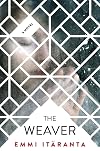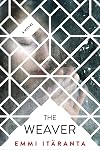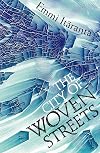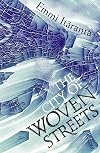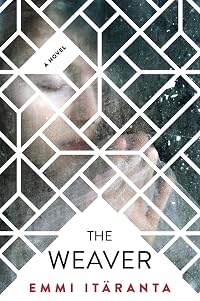
The Weaver
by Emmi Itäranta
On This Page
Description
The author of the critically acclaimed Memory of Water returns with this literary ecological tale in the vein of Ursula K. Le Guin and Sheri S. Tepper, in which an innocent young woman becomes entangled in a web of ancient secrets and deadly lies that lie at the dark center of her prosperous island world.Eliana is a model citizen of the island, a weaver in the prestigious House of Webs. She also harbors a dangerous secret--she can dream, an ability forbidden by the island's elusive council show more of elders. No one talks about the dreamers, the undesirables ostracized from society.But the web of protection Eliana has woven around herself begins to unravel when a young girl is found lying unconscious in a pool of blood on the stones outside the house. Robbed of speech by her attackers, the only clue to her identity is one word tattooed in invisible ink across her palm: Eliana. Why does this mysterious girl bear her name? What links her to the weaver--and could she hold Eliana's fate in her hand?As Eliana finds herself growing closer to this injured girl she is bound to in ways she doesn't understand, the enchanting lies of the island begin to crumble, revealing a deep and ancient corruption. Joining a band of brave rebels determined to expose the island's dark secrets, Eliana becomes a target of ruthless forces determined to destroy her. To save herself and those she loves, she must call on the power within her she thought was her greatest weakness: her dreams. show lessTags
Recommendations
















Member Recommendations

Member Reviews
''This night is different. Sleep is thin in the house, because strange blood is drying on the stones of the square.''
What is left when even the ability to dream (literally) is considered a crime? And even worse, when your dreams are nightmares for which you may be punished severely? You are marked by society, exiled to the House of the Tainted, the left-overs of the community.
I tend to approach every book that wishes to belong to the Dystopian genre with extreme cautiousness. First of all, when [b:1984|5470|1984|George Orwell|https://images.gr-assets.com/books/1348990566s/5470.jpg|153313] and [b:The Handmaid's Tale|38447|The Handmaid's Tale|Margaret Atwood|https://images.gr-assets.com/books/1498057733s/38447.jpg|1119185] grace my show more bookcase, there's bound to be a comparison. Secondly, everyone and their mother have decided to write a dystopian novel of late and I have always had a slight disliking for things that are en vogue. However, Emmi Itäranta comes from Finland and call me biased, but I would even read a phone book if it was written by an author from the Nordic lands. And thus, I ventured into The City of Woven Streets.
The title is extremely intriguing and the two themes on which the story is built are dreaming and isolation. This society isn't as bleak and dark as others we have come across. It is made beautiful by the intricate webs created in the House of Weavers. In this dystopia, governed by the Council, dreaming is not allowed. Dreaming equals Freedom, the Council cannot control the thoughts of the islanders and this is toxic to them and their regime. This is a very interesting premise on Itäranta's part. We've seen many kinds of totalitarian societies, but not one where occupation is so absolute, so extreme that stretches into the most private, personal, solitary activity of a human being, that of sleeping.
''First the monster swallows you, then it digests you and eventually you come out of the other end feeling filthy.''
The night terrors can be quite a shocking experience. I used to suffer from sleep paralysis during my university years when my anxiety level was sky-high. Naturally, we know that science has explained this weird phenomenon to the point of exhaustion, but still, I cannot avoid thinking how its traces approach the thin line between the Natural and the Supernatural worlds. In the novel, the writer makes good use of the myth of the night-maere (as is the original spelling), the Old Hag as it is also called. In Greece, we call it ''Mora'' and the people of the past used to believe that it was a demon, visiting those who were ''unclean'', targeted by the devil. Not unsimilar to the belief of the Council in the story. Here, the dominant religion is organised around a mysterious figure of many faces called Our Lady of Weaving, a combination of many goddesses of the European pantheons, and a divinity we never come to know much about.
''A wind does not rise. A rain does not come. The dead stay dead, and do not respond.''
''Do you look at this island and believe you see the truth?''
Placing a dystopian community within the narrow space of an island makes the feeling of isolation and enclosure tense and atmospheric. The mists arising from the waters cover the city and the characters' actions. There is no contact between Eliana and her brother, except for the times when he comes to visit her.
All these must sound very interesting and, believe me they are, but there are a few weaknesses as well. The plot becomes tedious after a point. All the talk and the details about the different kinds of ink and their ingredients become boring and slow down the narration. Around the 60% mark, it became too wordy, with long descriptions that offer nothing new and I began to lose interest. Worse, I started feeling confused, losing touch with the plot and this doesn't happen often. The characters are nothing to write home about, to be honest. Eliana is a nice, sympathetic heroine, clever, loyal, developing an interesting relationship with Valeria- a rather mysterious presence- but nothing we haven't seen before.
I don't know if it is considered a YA novel as I am not familiar with the category, but I can say that it is an interesting book, a nice addition to the Dystopia genre and I definitely intend to read [b:Memory of Water|18505844|Memory of Water|Emmi Itäranta|https://images.gr-assets.com/books/1389990493s/18505844.jpg|18908129] by the same author. However, The City of Woven Streets, as well-written as it may be, is not [b:The Handmaid's Tale|38447|The Handmaid's Tale|Margaret Atwood|https://images.gr-assets.com/books/1498057733s/38447.jpg|1119185] for the younger generation. show less
What is left when even the ability to dream (literally) is considered a crime? And even worse, when your dreams are nightmares for which you may be punished severely? You are marked by society, exiled to the House of the Tainted, the left-overs of the community.
I tend to approach every book that wishes to belong to the Dystopian genre with extreme cautiousness. First of all, when [b:1984|5470|1984|George Orwell|https://images.gr-assets.com/books/1348990566s/5470.jpg|153313] and [b:The Handmaid's Tale|38447|The Handmaid's Tale|Margaret Atwood|https://images.gr-assets.com/books/1498057733s/38447.jpg|1119185] grace my show more bookcase, there's bound to be a comparison. Secondly, everyone and their mother have decided to write a dystopian novel of late and I have always had a slight disliking for things that are en vogue. However, Emmi Itäranta comes from Finland and call me biased, but I would even read a phone book if it was written by an author from the Nordic lands. And thus, I ventured into The City of Woven Streets.
The title is extremely intriguing and the two themes on which the story is built are dreaming and isolation. This society isn't as bleak and dark as others we have come across. It is made beautiful by the intricate webs created in the House of Weavers. In this dystopia, governed by the Council, dreaming is not allowed. Dreaming equals Freedom, the Council cannot control the thoughts of the islanders and this is toxic to them and their regime. This is a very interesting premise on Itäranta's part. We've seen many kinds of totalitarian societies, but not one where occupation is so absolute, so extreme that stretches into the most private, personal, solitary activity of a human being, that of sleeping.
''First the monster swallows you, then it digests you and eventually you come out of the other end feeling filthy.''
The night terrors can be quite a shocking experience. I used to suffer from sleep paralysis during my university years when my anxiety level was sky-high. Naturally, we know that science has explained this weird phenomenon to the point of exhaustion, but still, I cannot avoid thinking how its traces approach the thin line between the Natural and the Supernatural worlds. In the novel, the writer makes good use of the myth of the night-maere (as is the original spelling), the Old Hag as it is also called. In Greece, we call it ''Mora'' and the people of the past used to believe that it was a demon, visiting those who were ''unclean'', targeted by the devil. Not unsimilar to the belief of the Council in the story. Here, the dominant religion is organised around a mysterious figure of many faces called Our Lady of Weaving, a combination of many goddesses of the European pantheons, and a divinity we never come to know much about.
''A wind does not rise. A rain does not come. The dead stay dead, and do not respond.''
''Do you look at this island and believe you see the truth?''
Placing a dystopian community within the narrow space of an island makes the feeling of isolation and enclosure tense and atmospheric. The mists arising from the waters cover the city and the characters' actions. There is no contact between Eliana and her brother, except for the times when he comes to visit her.
All these must sound very interesting and, believe me they are, but there are a few weaknesses as well. The plot becomes tedious after a point. All the talk and the details about the different kinds of ink and their ingredients become boring and slow down the narration. Around the 60% mark, it became too wordy, with long descriptions that offer nothing new and I began to lose interest. Worse, I started feeling confused, losing touch with the plot and this doesn't happen often. The characters are nothing to write home about, to be honest. Eliana is a nice, sympathetic heroine, clever, loyal, developing an interesting relationship with Valeria- a rather mysterious presence- but nothing we haven't seen before.
I don't know if it is considered a YA novel as I am not familiar with the category, but I can say that it is an interesting book, a nice addition to the Dystopia genre and I definitely intend to read [b:Memory of Water|18505844|Memory of Water|Emmi Itäranta|https://images.gr-assets.com/books/1389990493s/18505844.jpg|18908129] by the same author. However, The City of Woven Streets, as well-written as it may be, is not [b:The Handmaid's Tale|38447|The Handmaid's Tale|Margaret Atwood|https://images.gr-assets.com/books/1498057733s/38447.jpg|1119185] for the younger generation. show less
While almost any book will suffer to some extent in translation, there are problems with this book that are not translation-related. The first being the doltishness of the protagonist. To wit:
Scene: you live in a semi-authoritarian state and the police have just shown up to take some of your coworker-roommates away, including at least one child of 10 or 12. You could of course attempt to stop the police from doing this, but any idiot could see that that's going to accomplish nothing beyond getting you carted off as well. It's also not unlikely it would earn both you and the people or person you were trying to rescue worse treatment.
Later on you are hauled off by the police and encounter the child who was taken earlier. The child show more upbraids you for not saving her, and you, in defiance of all sense, accept full responsibility for the child's situation. Apparently you have such an overdeveloped sense of guilt and have bought so fully into the aphorism that misery loves company that you feel guilty when you can't provide said company. You shouldn't be in prison, but you should seek psychological help (and you should have explain what an asinine attitude the kid was copping, if you ask me).
There are other instances of mental thickness that seem mainly to exist to eliminate any possibility that you, the reader, might in any way be confused. This consists of the main character being lead by the nose (sometimes by herself, other times by others) in steps so minuscule, you find it difficult to imagine that the author isn't deliberately trying to insult your intelligence--memory too, as on at least one occasions the super-obvious event which the main character has to have dissected in front of her happened only a few pages ago and was in no way minor, rather it was quite pivotal.
So, while I liked the setting and the plot, the being led around by the nose and the main character's tedious, overdeveloped senses of guilt and responsibility grated on my nerves. show less
Scene: you live in a semi-authoritarian state and the police have just shown up to take some of your coworker-roommates away, including at least one child of 10 or 12. You could of course attempt to stop the police from doing this, but any idiot could see that that's going to accomplish nothing beyond getting you carted off as well. It's also not unlikely it would earn both you and the people or person you were trying to rescue worse treatment.
Later on you are hauled off by the police and encounter the child who was taken earlier. The child show more upbraids you for not saving her, and you, in defiance of all sense, accept full responsibility for the child's situation. Apparently you have such an overdeveloped sense of guilt and have bought so fully into the aphorism that misery loves company that you feel guilty when you can't provide said company. You shouldn't be in prison, but you should seek psychological help (and you should have explain what an asinine attitude the kid was copping, if you ask me).
There are other instances of mental thickness that seem mainly to exist to eliminate any possibility that you, the reader, might in any way be confused. This consists of the main character being lead by the nose (sometimes by herself, other times by others) in steps so minuscule, you find it difficult to imagine that the author isn't deliberately trying to insult your intelligence--memory too, as on at least one occasions the super-obvious event which the main character has to have dissected in front of her happened only a few pages ago and was in no way minor, rather it was quite pivotal.
So, while I liked the setting and the plot, the being led around by the nose and the main character's tedious, overdeveloped senses of guilt and responsibility grated on my nerves. show less
I feel sorry for this book. It has some interesting ideas, and a lot of the writing is very good. I was frustrated with the author, or maybe her editor, for not paring some of the detail back. It felt at times as though she had left all her back story notes in the book, all the things she needed to write about the society she was creating in order to know how her characters would move around it in relation to each other but that I as a reader didn't need to get bogged down in. It could have been punchier.
The story is set on an unnamed island, similar to Venice in a way, but not based on Venice. The island is divided into sectors based on the equivalent of craft guilds. There are weavers in the House of Webs, writers in the House of show more Words and ink makers in the House of Inks. Then there is the House of the Tainted, where this society's untouchables are sent. Merchants come and go, but the inhabitants of the island rarely leave and new residents rarely arrive from outside. That is until a strange girl is found assaulted in the street. She bears a mysterious tattoo in invisible ink that connects her to one of the weavers.
The story reminded me of The Name of the Rose but with an added dose of climate change dystopia. There was a controlling Council who named dreaming as a heresy and sent out City Guards to purge society of Dreamers and there was an underground resistance. In the middle is the protagonist trying to get to the truth. The only draw back was the author forgetting to remove her book plan from the story. Too much detail drowned out the narrative. show less
The story is set on an unnamed island, similar to Venice in a way, but not based on Venice. The island is divided into sectors based on the equivalent of craft guilds. There are weavers in the House of Webs, writers in the House of show more Words and ink makers in the House of Inks. Then there is the House of the Tainted, where this society's untouchables are sent. Merchants come and go, but the inhabitants of the island rarely leave and new residents rarely arrive from outside. That is until a strange girl is found assaulted in the street. She bears a mysterious tattoo in invisible ink that connects her to one of the weavers.
The story reminded me of The Name of the Rose but with an added dose of climate change dystopia. There was a controlling Council who named dreaming as a heresy and sent out City Guards to purge society of Dreamers and there was an underground resistance. In the middle is the protagonist trying to get to the truth. The only draw back was the author forgetting to remove her book plan from the story. Too much detail drowned out the narrative. show less
I would prepare those readers expecting the stark, post-apocalyptic reality from Memory of Water; The Weaver is much more fantastical, mythical, dream-like. Its story a little denser, a little unfocused.
I loved the use of water in The Weaver -- in this case it is something to be feared, the potential ender of life instead of the giver as in Memory. I loved that Eliana had brown skinher girlfriend was pale-skinned, which, I assume, is who the publisher chose to feature on the book's US cover .
Emmi Itäranta writes such evocative prose! The entire waterworld felt alive - wet, cold, salt buildup - as if lying in wait to devour the island's inhabitants. This island's dystopia hinges on misinformation and control of information. Something show more I'm sure some of us can relate to.
3.5 stars
(and I look forward to Itäranta's next book) show less
I loved the use of water in The Weaver -- in this case it is something to be feared, the potential ender of life instead of the giver as in Memory. I loved that Eliana had brown skin
Emmi Itäranta writes such evocative prose! The entire waterworld felt alive - wet, cold, salt buildup - as if lying in wait to devour the island's inhabitants. This island's dystopia hinges on misinformation and control of information. Something show more I'm sure some of us can relate to.
3.5 stars
(and I look forward to Itäranta's next book) show less
In a society where dreams are forbidden Eliana experiences night-maeres, which she must keep hidden or suffer banishment. She lives in an island city, in the House of Webs, whose head is called the Weaver. All born on the island bear tattoos showing their citizenship with a mark added yearly to show age. The city is prone to flooding by the sea and there is an overhead transport system of gondolas travelling on suspended ropes, and rope bridges between buildings. One day a girl whose tongue has been cut out is brought in to the House. In a certain kind of light Eliana’s name can be seen to be tattooed on her hand. The mystery builds from that point as Eliana comes into contact with a resistance movement, is betrayed by the Weaver and show more banished to a punishment detachment diving for valuable red coral.
The normal text is interspersed at long intervals with passages rendered in italics and which, apart from starting and finishing partway on a page, have no punctuation to separate them from the rest.
The setting has similarities to Itäranta’s first novel Memory of Water in that there is an oppressive regime from whom secrets must be kept. The City of Woven Streets leans more towards fantasy than, and does not have the clarity nor focus of, that previous book. Eliana’s escape from servitude is fortuitous and the final confrontation seems a bit rushed. This may be due to the pressure of the deadline to which Itäranta refers in her Acknowledgements. show less
The normal text is interspersed at long intervals with passages rendered in italics and which, apart from starting and finishing partway on a page, have no punctuation to separate them from the rest.
The setting has similarities to Itäranta’s first novel Memory of Water in that there is an oppressive regime from whom secrets must be kept. The City of Woven Streets leans more towards fantasy than, and does not have the clarity nor focus of, that previous book. Eliana’s escape from servitude is fortuitous and the final confrontation seems a bit rushed. This may be due to the pressure of the deadline to which Itäranta refers in her Acknowledgements. show less
Reading is such a powerful tool to have. The concept of this story really got me excited. I picked it up ready to settle in for a good read. The beginning did start out good. Yet, it quickly became apparent to me that my joy was disappearing fast. The story moved slowly without a lot of details about the world that Eliana existed in or why her talents were so precious. In fact, after reading about a third of the way I put the book down for good. Yet, despite my lack of joy, I decided to come back to this book and give it a second chance. Only, this time I picked up the book and opened it to a random spot a little past the middle of the story and began to start reading. What I read then had me intrigued. Details about the world were more show more apparent. However, I still could not capture that emotional connection towards Eliana or anyone else in the story. I can see where the author was going with this book and I applaud the author but I needed that character connection, more details, and intensity earlier on. Sadly, this book was not for me (this time). show less
The writing is lovely and lyrical, but the story is so dull and makes so little progress that reading it is a slog.
But wow, the worldbuilding is fantastic.
But wow, the worldbuilding is fantastic.
Members
- Recently Added By
Lists

LGBTQ+ Speculative Fiction
821 works; 51 members
Books Read in 2018
4,360 works; 110 members

Global Reads: Books Set in Western Europe
186 works; 10 members

Speculative Fiction from around the World
610 works; 18 members
Author Information

6+ Works 1,117 Members
Emmi Elina Itäranta was born in 1976 in Finland. Itäranta holds a MA in Drama from the University of Tampere, and worked as a columnist, theatre critic, script writer and press officer after graduation. In 2007 she enrolled in the postgraduate program of University of Kent, where she began writing her debut novel as a part of her Creative show more Writing course work. Working simultaneously in English and her native Finnish, Itäranta completed both manuscripts, and in 2011 the Finnish version won the Fantasy and Sci-Fi Literary Fiction contest organised by the Finnish publishing house Teos.The novel was published by Teos in 2012 under the name Teemestarin kirja. The book won the Kalevi Jäntti Award in 2012, and the Nuori Aleksis Award in 2013. It was also shortlisted for the 2013 Tähtivaeltaja Award. The English version of the book, Memory of Water, was published by HarperCollins in 2014 in the United States, United Kingdom and Australia. It has been nominated for the 2014 Philip K. Dick Award, as well as the Golden Tentacle Award. It was also nominated for the Arthur C Clarke Award for science fiction in 2015. (Bowker Author Biography) show less
Awards and Honors
Common Knowledge
- Canonical title
- The Weaver
- Original title
- Kudottujen kujien kaupunki
- Alternate titles
- The City of Woven Streets
- Original publication date
- 2015
- First words
- I still dream of the island.
- Last words
- (Click to show. Warning: May contain spoilers.)For our hours are brief and our days are brittle, and the marks our hands leave on the world belong to use and yet are beyond our own limits.
- Original language
- English
Classifications
- Genres
- Fiction and Literature, Fantasy, Science Fiction
- DDC/MDS
- 894.54134 — Literature & rhetoric Literatures of other languages Literatures of Altaic, Uralic, Hyperborean, Dravidian languages; literatures of miscellaneous languages of south Asia Finno-Ugric languages Finnic languages Finnish Finnish fiction 2000–
- LCC
- PH356 .I78 .K8313 — Language and Literature Uralic languages. Basque language Uralic. Basque Finnish
- BISAC
Statistics
- Members
- 242
- Popularity
- 133,301
- Reviews
- 15
- Rating
- (3.50)
- Languages
- English, Finnish, French, German
- Media
- Paper, Audiobook, Ebook
- ISBNs
- 12
- ASINs
- 5