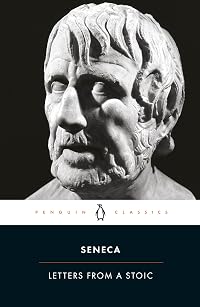
Letters from a Stoic
by Lucius Annaeus Seneca, the Younger
On This Page
Description
HarperCollins is proud to present its incredible range of best-loved, essential classics. No man can live a happy life, or even a supportable life, without the study of wisdom Lucius Annaeus Seneca (4 BC-AD 65) is one of the most famous Roman philosophers. Instrumental in guiding the Roman Empire under emperor Nero, Seneca influenced him from a young age with his Stoic principles. Later in life, he wrote Epistulae Morales ad Lucilium, or Letters from a Stoic, detailing these principles in show more full. Seneca's letters read like a diary, or a handbook of philosophical meditations. Often beginning with observations on daily life, the letters focus on many traditional themes of Stoic philosophy, such as the contempt of death, the value of friendship and virtue as the supreme good. Using Gummere's translation from the early twentieth century, this selection of Seneca's letters shows his belief in the austere, ethical ideals of Stoicism - teachings we can still learn from today. Competition: Discourses and Selected Writings;The Republic;Meditations. Cicero;Cornutus;Marcus Aurelius;Epictetus;Plato. show lessTags
Recommendations





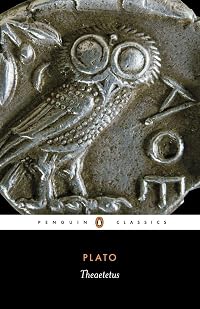
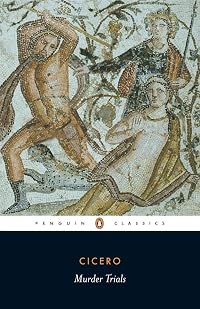
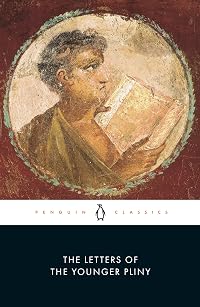
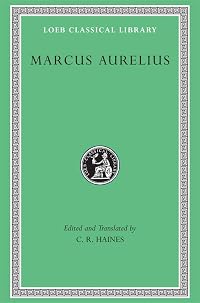




Member Reviews
I've deeply disliked modern philosophy. To me, it feels like the field comes up with theories about human life, happiness, behavior, ideals, but then brazenly refuses to put any of it to the test. It prefers the beauty of an idea to the reality of its implementation. It's kind of like fantasy-writing except the authors pretend it's an actual field of study instead of acknowledging what they're doing is just a fun mental exercise.
In the meantime, I've felt like there was something missing from human understanding. There's no one out there trying to create a philosophy and live it, see how it works in the real-world, modify it, and improve it. This field is absent from human life, even though, to me, it feels like this would be the most show more important thing humans could do.
This collection of letters is that missing field in action. These letters were only intended for 1 person (Lucilius), so there's a deep level of intimacy to them. We don't see Seneca as the public figure, but Seneca as the man, trying to live the good life, putting his ideals to the test every day as best he can, faltering along the way and being upfront about the faltering. Throughout, he tries to emphasize that philosophy-- all of this -- is only useful if it improves life.
He does go on random esoteric rants about abstract ideas (as all philosophers ultimately do) but that's not the core of these letters -- there is a small amount of intellectual debate between 2 people (where, unfortunately, we only get 1 side), but it's mostly "how are you, here's how I'm doing, here are some of the things I'm facing/have faced and here's how it interconnects to this philosophy I'm practicing".
What's also weird is how extremely apropos almost all of his advice is to our modern lives. Not just in a "timeless ideal" sense -- he complains about how noisy it is to have an apartment in the city, how sometimes we like to pretend to be too busy to respond to messages, he even complains about shops setting up for Christmas (Saturnalia) earlier and earlier every year! It really makes him feel relatable to me and my own world, which is why I think it also strikes such a strong chord with me.
It's also just so refreshing to see a person trying to merge their intellectual ideals with their real-life self, and exchanging tips and tricks to help do that, but also not getting lost in the abstract, and not beating themselves up too much when they slip up. I feel like I'm trying to do the same in my life, and reading these letters makes me feel like I'm not the only one doing that. I feel personally supported by this guy from 2000 years ago in a way I don't feel in the modern world.
I've never more desperately wanted to meet a person from history and sit and have a beer with them. show less
In the meantime, I've felt like there was something missing from human understanding. There's no one out there trying to create a philosophy and live it, see how it works in the real-world, modify it, and improve it. This field is absent from human life, even though, to me, it feels like this would be the most show more important thing humans could do.
This collection of letters is that missing field in action. These letters were only intended for 1 person (Lucilius), so there's a deep level of intimacy to them. We don't see Seneca as the public figure, but Seneca as the man, trying to live the good life, putting his ideals to the test every day as best he can, faltering along the way and being upfront about the faltering. Throughout, he tries to emphasize that philosophy-- all of this -- is only useful if it improves life.
He does go on random esoteric rants about abstract ideas (as all philosophers ultimately do) but that's not the core of these letters -- there is a small amount of intellectual debate between 2 people (where, unfortunately, we only get 1 side), but it's mostly "how are you, here's how I'm doing, here are some of the things I'm facing/have faced and here's how it interconnects to this philosophy I'm practicing".
What's also weird is how extremely apropos almost all of his advice is to our modern lives. Not just in a "timeless ideal" sense -- he complains about how noisy it is to have an apartment in the city, how sometimes we like to pretend to be too busy to respond to messages, he even complains about shops setting up for Christmas (Saturnalia) earlier and earlier every year! It really makes him feel relatable to me and my own world, which is why I think it also strikes such a strong chord with me.
It's also just so refreshing to see a person trying to merge their intellectual ideals with their real-life self, and exchanging tips and tricks to help do that, but also not getting lost in the abstract, and not beating themselves up too much when they slip up. I feel like I'm trying to do the same in my life, and reading these letters makes me feel like I'm not the only one doing that. I feel personally supported by this guy from 2000 years ago in a way I don't feel in the modern world.
I've never more desperately wanted to meet a person from history and sit and have a beer with them. show less
CCXXIII: “[W]e are attracted by wealth, pleasures, good looks, political advancement and various other welcoming and enticing prospects: we are repelled by exertion, death, pain, disgrace, and limited means. It follows that we need to train ourselves not to crave the former and not to be afraid of the latter. Let us fight the battle the other way round — retreat from the things that attract us and rouse ourselves to meet the things that actually attack us” (230)
What a thing to be Lucilius, the addressee of these letters from a stoic. If this Lucilius was, as speculated, the procurator of Sicily, receiving correspondence from a man of standing such as Seneca may not have been out of the ordinary. But these are remarkable letters show more that are friendly and full of depth. I would love such correspondence, but I fear that letter writing like this is long a thing of the past. Today, we have neither the occasion nor, often, the skill or attention to write letters like these.
In the letters you read the voice of one who never lost the ethos of a teacher. The letters are full of observations, questions, provocations, admonitions, and corrections. Seneca covers a range of topics from friends, happiness, the liberal arts, diet, vices, virtues, death, old age, habits, and noise. These are letters of a person who is living out his old age, experiencing life, and framing it through the wisdom of a stoic philosophy that has been developed outside the pages of these letters but that comes through in tight, shareable adages about cultivating wisdom through philosophy, and developing and practicing temperance in our appetites and desires.
In later letters, Seneca touches on fears of death, infirmity, pain, and disgrace. He advocates the courage to face these fears because we are going to face our share of them in life regardless. There is no sense in fearing what we cannot control. The only thing we can control is our reactions, an ability that we cultivate through philosophy. And if there is one thing that about stoicism that people seem to remember and carry forward to our modern age, it’s this.
Where we seem to get stoicism wrong in popular adaption is in thinking about stoicism as detachment, a stony demeanor or a lone person (a man, usually!) who faces the world dispassionately. This person is a boulder in the middle of a river, unaffected by the rushing waters around them. He is an emotionless, distant, inscrutable, reasoning being. I can see how one arrives at that version of Bro-Stoicism (Bro-icism, maybe?) but this overlooks the fourth virtue of stoicism in addition to wisdom, temperance, and courage: justice. Justice is about doing good and right for others as is their due. And at the very least we can see the correspondence between Seneca and Lucilius as a manifestation of justice, sharing wisdom not as a set of dictums (well, not always) but as a set of habits of mind to practice, through which one may flourish.
Amusingly, Seneca is not always good at following his own advice. Although he generally seems to keep his appetites under control there is a bit of crabbiness when his dinner is not prepared, or his apartments are not made ready for his arrival after travel, or people make too much noise outside, etc. This is not the cheerful acceptance that he advocates but I suppose that it is a way of dealing with and making the best of things.
There are many meditative passages in these letters and some that I have flagged to come back to because they seem to offer perspective that I find personally valuable in addressing my own personal and professional fears. There are also passages in these letters that seem to offer perspective that is problematic.
Personally, I have a difficult time understanding Seneca’s critique of the liberal arts or of eclectic reading and learning because it is unfocused. Or maybe I’m just a little sensitive because I feel a little called out here. I get that there is a lack of depth with learning that is too diffuse, but the world and its people are full of diverse experience and there is little chance that we can engage with that diversity of experience if we choose a narrow path.
I also have difficulty accepting Seneca’s view of nature. There is something appealing about saying that our habits and approach to life should be in alignment with nature: rise when the sun comes up, eat when we are hungry, drink when we are thirsty, welcome good fortune when it comes to us, accept ill fortune when it comes as well. But what is nature? How can one be in harmony with nature in, say, one’s professional life where you can be taken advantage of? Where your job might be exploitative by design? Where good fortune comes not to everyone at some point but to those who compete best for it? Is nature in that sense not a State of Nature but rather the system one finds oneself in? If so, is the wisdom one needs the wisdom about how to live and work in that state of nature? I think that this is the way to read Seneca’s view of nature. However, in that kind of setting it seems that people vary greatly in terms of their agency or the ability to control things about their situation. Seneca can’t possibly mean that control of one’s situation means abdicating duties or even getting out of exploitative situations. Certainly not in a republic where one’s role IS one’s duty. Perhaps instead, the lesson is more modest that we can at least control our reactions to those situations. That is at least some kind of control, paltry as it seems. show less
What a thing to be Lucilius, the addressee of these letters from a stoic. If this Lucilius was, as speculated, the procurator of Sicily, receiving correspondence from a man of standing such as Seneca may not have been out of the ordinary. But these are remarkable letters show more that are friendly and full of depth. I would love such correspondence, but I fear that letter writing like this is long a thing of the past. Today, we have neither the occasion nor, often, the skill or attention to write letters like these.
In the letters you read the voice of one who never lost the ethos of a teacher. The letters are full of observations, questions, provocations, admonitions, and corrections. Seneca covers a range of topics from friends, happiness, the liberal arts, diet, vices, virtues, death, old age, habits, and noise. These are letters of a person who is living out his old age, experiencing life, and framing it through the wisdom of a stoic philosophy that has been developed outside the pages of these letters but that comes through in tight, shareable adages about cultivating wisdom through philosophy, and developing and practicing temperance in our appetites and desires.
In later letters, Seneca touches on fears of death, infirmity, pain, and disgrace. He advocates the courage to face these fears because we are going to face our share of them in life regardless. There is no sense in fearing what we cannot control. The only thing we can control is our reactions, an ability that we cultivate through philosophy. And if there is one thing that about stoicism that people seem to remember and carry forward to our modern age, it’s this.
Where we seem to get stoicism wrong in popular adaption is in thinking about stoicism as detachment, a stony demeanor or a lone person (a man, usually!) who faces the world dispassionately. This person is a boulder in the middle of a river, unaffected by the rushing waters around them. He is an emotionless, distant, inscrutable, reasoning being. I can see how one arrives at that version of Bro-Stoicism (Bro-icism, maybe?) but this overlooks the fourth virtue of stoicism in addition to wisdom, temperance, and courage: justice. Justice is about doing good and right for others as is their due. And at the very least we can see the correspondence between Seneca and Lucilius as a manifestation of justice, sharing wisdom not as a set of dictums (well, not always) but as a set of habits of mind to practice, through which one may flourish.
Amusingly, Seneca is not always good at following his own advice. Although he generally seems to keep his appetites under control there is a bit of crabbiness when his dinner is not prepared, or his apartments are not made ready for his arrival after travel, or people make too much noise outside, etc. This is not the cheerful acceptance that he advocates but I suppose that it is a way of dealing with and making the best of things.
There are many meditative passages in these letters and some that I have flagged to come back to because they seem to offer perspective that I find personally valuable in addressing my own personal and professional fears. There are also passages in these letters that seem to offer perspective that is problematic.
Personally, I have a difficult time understanding Seneca’s critique of the liberal arts or of eclectic reading and learning because it is unfocused. Or maybe I’m just a little sensitive because I feel a little called out here. I get that there is a lack of depth with learning that is too diffuse, but the world and its people are full of diverse experience and there is little chance that we can engage with that diversity of experience if we choose a narrow path.
I also have difficulty accepting Seneca’s view of nature. There is something appealing about saying that our habits and approach to life should be in alignment with nature: rise when the sun comes up, eat when we are hungry, drink when we are thirsty, welcome good fortune when it comes to us, accept ill fortune when it comes as well. But what is nature? How can one be in harmony with nature in, say, one’s professional life where you can be taken advantage of? Where your job might be exploitative by design? Where good fortune comes not to everyone at some point but to those who compete best for it? Is nature in that sense not a State of Nature but rather the system one finds oneself in? If so, is the wisdom one needs the wisdom about how to live and work in that state of nature? I think that this is the way to read Seneca’s view of nature. However, in that kind of setting it seems that people vary greatly in terms of their agency or the ability to control things about their situation. Seneca can’t possibly mean that control of one’s situation means abdicating duties or even getting out of exploitative situations. Certainly not in a republic where one’s role IS one’s duty. Perhaps instead, the lesson is more modest that we can at least control our reactions to those situations. That is at least some kind of control, paltry as it seems. show less
While there were a lot of points that I disagreed with, for the most part there were lots of insights that I will try taking with me. There were a couple funny letters, I liked letter 88 when he was just clowning Liberal Arts lol. A couple of my other favorites were 90, 65, and 78. The introduction was also very interesting it’s funny how he preached all these stoic values but didn’t practice it. He definitely led a really crazy life with lots of ups and downs. It is interesting to see how people wrote to each other back then, and how his writing changed over time. It is interesting how much he quoted Epicurious in his earlier letters and how he changed it views to be that one should not just spout quotes.
This is my first foray into Greek philosophy as an adult. Bits of Stoic philosophy seem absorbed into modern culture, so few of the adages and admonitions are "brand new" to me. The human faults he addresses at length, mostly to do with excess and lack of self control, are as relevant today as they were two thousand years ago. Buckle up, Seneca has strong opinions on just about every facet of the human experience.
Much of the first few letters discusses becoming happy with oneself, to the point of needing nothing else, riches or home or possessions or companionship. This is more or less tempered by the contention that you should want friends and family, and riches only in proportion as is needed to service those people and the public show more good, but that you should be equally comfortable with none of it.
Probably the single most relatable anecdote is Seneca's complaint that people prepared for Saturnalia earlier each year such that December "used to be a month but is now a year". Halloween, Christmas, anyone?
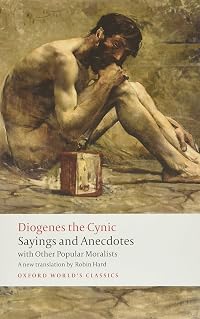
Here I also found my new favorite Diogenes anecdote: Upon observing a child drinking from a stream with his hands, Diogenes immediately his cup and chastises himself for foolishly carrying around extra luggage.
A few segments that stood out to me:
- In Letter LXIII (probably the best to me,) Seneca discusses the death of a friend. He gives some admonition that one should not grieve overlong because it's basically done to prove to ourselves or others that we loved the deceased, and that we'll stop grieving when it's "convenient" anyway. This is probably a massive oversimplification of grief in the modern day, but I'm sympathetic to it. Commenting on one who has no other friends he calls this self-injury: "[fortune] has deprived us of a single friend but we have deprived ourselves of every friend we have failed to make."
- Letter LIV: Talking about the fear of death, Seneca asserts that the time before one is born is more or less equivalent: "If there is any torment [after I die], there must also have been torment in the period before we saw the light of day."
- In Letter LVI Seneca discusses occasionally working above the din of a bath house rather than in seclusion, and amongst this I mostly enjoy some commentary about how an anxious person's mind will be more (or merely differently) anxious during the supposed "peaceful stillness" of night.
- In letter CXXIII he addresses the distortive and destructive impact of vice and how it pushes our limits and expectations further as we indulge. He discusses the idea that absurd vices infect society because "... our lives are guided by the example of others; instead of being set to rights by reason we're seduced by convention". Things that we wouldn't consider doing or owning if only a few people did them are seen as reasonable once they are ubiquitous. He gives some hilarious examples that are analogous to today's status-signal luxuries. Here too he addresses the need to stay away from people who indulge to excess or make mischievous, gossipy or otherwise destructive talk, as "once such talk has made its entry and been allowed inside, it becomes a good deal bolder."
Seneca rails at length about the supremacy of philosophy over all other fields of endeavor. He arbitrarily demarcates where prose is overly flowery (or 'effeminate') or where technology is too advanced to be good. This is actually pretty relatable, but it's hard to draw much value from it. He quotes the contemporary and wildly popular Virgil liberally and mostly refrains from chiding the poet for any literary excess while knocking down Gaius Maecenas, whose writing at least as translated here seems pretty natural. I'm sympathetic to his points, but this gets kind of old.
If you find your interest waning in the latter half of the collection, consider skipping ahead a bit, as some of the most substantial letters are the last few.
The Penguin Classics edition has an excellent biographical introduction to Seneca and useful footnotes. I wish I hadn't known that Seneca was fabulously wealthy before reading and had instead learned it afterwards, as I think my reading was a bit tainted by that. It's a little harder to buy the commentary about how noble it is to "do without" when the person telling you so is one of the richest people in the Roman empire.
There's a bunch of other random thoughts I have based on context but this review is already overlong. A lot of the commentary will at this point seem like "fluff" to most, but I take the (short) piece for what it is, enjoy what it offers that is novel to me and ignore the sillier bits. show less
Much of the first few letters discusses becoming happy with oneself, to the point of needing nothing else, riches or home or possessions or companionship. This is more or less tempered by the contention that you should want friends and family, and riches only in proportion as is needed to service those people and the public show more good, but that you should be equally comfortable with none of it.
Probably the single most relatable anecdote is Seneca's complaint that people prepared for Saturnalia earlier each year such that December "used to be a month but is now a year". Halloween, Christmas, anyone?
Here I also found my new favorite Diogenes anecdote: Upon observing a child drinking from a stream with his hands, Diogenes immediately his cup and chastises himself for foolishly carrying around extra luggage.
A few segments that stood out to me:
- In Letter LXIII (probably the best to me,) Seneca discusses the death of a friend. He gives some admonition that one should not grieve overlong because it's basically done to prove to ourselves or others that we loved the deceased, and that we'll stop grieving when it's "convenient" anyway. This is probably a massive oversimplification of grief in the modern day, but I'm sympathetic to it. Commenting on one who has no other friends he calls this self-injury: "[fortune] has deprived us of a single friend but we have deprived ourselves of every friend we have failed to make."
- Letter LIV: Talking about the fear of death, Seneca asserts that the time before one is born is more or less equivalent: "If there is any torment [after I die], there must also have been torment in the period before we saw the light of day."
- In Letter LVI Seneca discusses occasionally working above the din of a bath house rather than in seclusion, and amongst this I mostly enjoy some commentary about how an anxious person's mind will be more (or merely differently) anxious during the supposed "peaceful stillness" of night.
- In letter CXXIII he addresses the distortive and destructive impact of vice and how it pushes our limits and expectations further as we indulge. He discusses the idea that absurd vices infect society because "... our lives are guided by the example of others; instead of being set to rights by reason we're seduced by convention". Things that we wouldn't consider doing or owning if only a few people did them are seen as reasonable once they are ubiquitous. He gives some hilarious examples that are analogous to today's status-signal luxuries. Here too he addresses the need to stay away from people who indulge to excess or make mischievous, gossipy or otherwise destructive talk, as "once such talk has made its entry and been allowed inside, it becomes a good deal bolder."
Seneca rails at length about the supremacy of philosophy over all other fields of endeavor. He arbitrarily demarcates where prose is overly flowery (or 'effeminate') or where technology is too advanced to be good. This is actually pretty relatable, but it's hard to draw much value from it. He quotes the contemporary and wildly popular Virgil liberally and mostly refrains from chiding the poet for any literary excess while knocking down Gaius Maecenas, whose writing at least as translated here seems pretty natural. I'm sympathetic to his points, but this gets kind of old.
If you find your interest waning in the latter half of the collection, consider skipping ahead a bit, as some of the most substantial letters are the last few.
The Penguin Classics edition has an excellent biographical introduction to Seneca and useful footnotes. I wish I hadn't known that Seneca was fabulously wealthy before reading and had instead learned it afterwards, as I think my reading was a bit tainted by that. It's a little harder to buy the commentary about how noble it is to "do without" when the person telling you so is one of the richest people in the Roman empire.
There's a bunch of other random thoughts I have based on context but this review is already overlong. A lot of the commentary will at this point seem like "fluff" to most, but I take the (short) piece for what it is, enjoy what it offers that is novel to me and ignore the sillier bits. show less
At times Seneca just sounds silly - there are passages where he waxes nostalgic about the era before daily bathing, or rails against people who don’t get up early enough. At other times he promises too much from philosophy, writing as if the wise person can reach a point where they are not susceptible to serious suffering. But he also gives thoughtful and eloquent advice towards the goals of continual self-improvement and steeling oneself against misfortune.
Non est beatus, esse se qui non putat.
Rating: 4/5 – Ancient advice for the good life
There’s a lot of fantastic stuff in this book. Though most the wisdom within isn’t new to me, it was incredible to see how enduring some of the ideas have been throughout human history.
What’s truly remarkable about this book is how relatable it was, millenia later. It’s comforting to know that for at least 2000 years humans have been struggling with vanity, excess, and pride. So much of what feels like a modern struggle has been persisting for likely as long as we’ve had civilization.
There’s a tremendous comfort in learning that your struggles are not new. There’s inspiration in learning that the ancients were seeking the same wisdom as show more yourself.
https://www.timothyrice.org/stoicletters/ show less
Rating: 4/5 – Ancient advice for the good life
There’s a lot of fantastic stuff in this book. Though most the wisdom within isn’t new to me, it was incredible to see how enduring some of the ideas have been throughout human history.
What’s truly remarkable about this book is how relatable it was, millenia later. It’s comforting to know that for at least 2000 years humans have been struggling with vanity, excess, and pride. So much of what feels like a modern struggle has been persisting for likely as long as we’ve had civilization.
There’s a tremendous comfort in learning that your struggles are not new. There’s inspiration in learning that the ancients were seeking the same wisdom as show more yourself.
https://www.timothyrice.org/stoicletters/ show less
What does my head in, is that here am I in 2024 reading letters that were penned some 2000 years ago. Not only that the issues being discussed we are still ruminating over today. Letters from a Stoic, is a collection of Seneca’s work and read like observations of daily life. It those parts I enjoyed the most as Seneca describes the seemingly mundane but these snippets give the most insight. It is easy to go through and tab/highlight slabs of text as there are some absolute corkers in there.
Like all works of philosophy, you will find what is relevant to you and what you think is absolute rubbish. However, 2000 years on Seneca remains relevant as you question and think about what he has put on the page.
Like all works of philosophy, you will find what is relevant to you and what you think is absolute rubbish. However, 2000 years on Seneca remains relevant as you question and think about what he has put on the page.
Members
- Recently Added By
Lists

Philip Ward's Lifetime Reading Plan
592 works; 22 members

Truly old classics
63 works; 6 members

Epistolary Non-Fiction (Letters and Correspondence)
99 works; 5 members

Ryan Holiday's Books To Base Your Life On
97 works; 2 members

el
1,139 works; 1 member
Author Information

1,195+ Works 17,828 Members
Seneca was born in Spain of a wealthy Italian family. His father, Lucius Annaeus Seneca (see Vol. 4), wrote the well-known Controversaie (Controversies) and Suasoriae (Persuasions), which are collections of arguments used in rhetorical training, and his nephew Lucan was the epic poet of the civil war. Educated in rhetoric and philosophy in Rome, show more he found the Stoic doctrine especially compatible. The younger Seneca became famous as an orator but was exiled by the Emperor Claudius. He was recalled by the Empress Agrippina to become the tutor of her son, the young Nero. After the first five years of Nero's reign, Agrippina was murdered and three years later Octavia, Nero's wife, was exiled. Seneca retired as much as possible from public life and devoted himself to philosophy, writing many treatises at this time. But in 65 he was accused of conspiracy and, by imperial order, committed suicide by opening his veins. He was a Stoic philosopher and met his death with Stoic calm. Seneca's grisly tragedies fascinated the Renaissance and have been successfully performed in recent years. All ten tragedies are believed genuine, with the exception of Octavia, which is now considered to be by a later writer. Translations of the tragedies influenced English dramatists such as Jonson (see Vol. 1), Marlowe (see Vol. 1), and Shakespeare (see Vol. 1), who all imitated Seneca's scenes of horror and his characters---the ghost, nurse, and villain. (Bowker Author Biography) show less
Some Editions
Awards and Honors
Series
Belongs to Publisher Series
Penguin Classics (L210)
Work Relationships
Common Knowledge
- Canonical title
- Letters from a Stoic
- Original publication date
- 65 CE
- Important places
- Ancient Rome
- First words
- Judging from what you tell me and from what I hear, I feel that you show great promise.
- Quotations
- Are you really surprised, as if it were something unprecedented, that so long a tour and such diversity of scene have not enabled you to throw off this melancholy and this feeling of depression? A change of character, not a c... (show all)hange of air, is what you need.
Letter XXVIII
I have been speaking about liberal studies. Yet look at the amount of useless and superfluous matter to be found in the philosophers. Even they have descended to the level of drawing distinctions between the uses of different... (show all) syllables and discussing the proper meanings of prepositions and conjunctions. They have come to envy the philologist and the mathematician, and they have taken over all the inessential elements in those studies -- with the result that they know more about devoting care and attention to their speech than about devoting such attention to their lives. Letter LXXXVIII
A gem cannot be polished without friction, nor a man without trials. - Last words
- (Click to show. Warning: May contain spoilers.)Philosophy has no business to supply vice with excuses; a sick man who is encouraged to live in a reckless manner by his doctor has not a hope of getting well.
- Original language
- Latin
- Disambiguation notice
- Selected letters from Seneca's epistles to Lucilius. Please do not combine with complete editions of the letters, with different selections, or with classical language versions.
Classifications
Statistics
- Members
- 3,197
- Popularity
- 5,428
- Reviews
- 26
- Rating
- (4.10)
- Languages
- English, German, Latin
- Media
- Paper, Audiobook, Ebook
- ISBNs
- 39
- UPCs
- 3
- ASINs
- 27