On This Page
Description
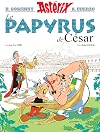
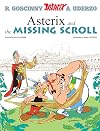
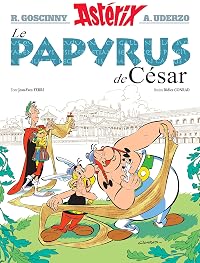
Asterix and the Missing Scroll is the brand new book featuring the further adventures of the ever-popular Asterix and Obelix.Tags
Recommendations










Member Reviews
A charming Asterix adventure, this new album is a worthy addition to the long-running French comic series. It addresses a question which is crucial for the authenticity of the series: why did Julius Caesar never mention in his histories his failure to defeat the Gauls of Asterix's village? Asterix and the Missing Scroll answers that he chose to cover it up in a whitewash of history – not so much history being written by the victors as a case of history being written by those who can write. The authors, writer Jean-Yves Ferri and illustrator Didier Conrad, spruce up this compelling theme with clear contemporary references to Julian Assange and the Wikileaks scandal that might go over the heads of young readers, but will be show more recognisable to older children (and nostalgic adults picking up the new Asterix out of curiosity – guilty as charged).
I wasn't quite sure where Ferri and Conrad wanted to take this theme – the plot loses its way in the shouting match at the end, with the message rather muddled – but the attempt to provide more than just a nuts-and-bolts story like their previous offering, the limited Asterix and the Picts, is very welcome. This is a bona fide, intelligent Asterix adventure that does the legacy of Goscinny and Uderzo proud (the two creators are even referenced in a nice little homage at the very end of the book). Whilst the odd joke does fall flat (there's a running joke about grass that I don't get, though it's probably staring me in the face), I was very impressed by Asterix and the Missing Scroll. Contrary to how I felt after reading Picts, I'm now looking forward to the next Ferri/Conrad addition to this eternal series. show less
I wasn't quite sure where Ferri and Conrad wanted to take this theme – the plot loses its way in the shouting match at the end, with the message rather muddled – but the attempt to provide more than just a nuts-and-bolts story like their previous offering, the limited Asterix and the Picts, is very welcome. This is a bona fide, intelligent Asterix adventure that does the legacy of Goscinny and Uderzo proud (the two creators are even referenced in a nice little homage at the very end of the book). Whilst the odd joke does fall flat (there's a running joke about grass that I don't get, though it's probably staring me in the face), I was very impressed by Asterix and the Missing Scroll. Contrary to how I felt after reading Picts, I'm now looking forward to the next Ferri/Conrad addition to this eternal series. show less
The only real questions with this book are "is it a travesty" and "is it amusing". No to the first and yes to the second.
Ferri and Conrad have now entrenched themselves as successors to Goscinny and Uderzo in chronicling the exploits of Asterix and his pals. Asterix and the Missing Scroll is a satire on media and publishing. Caesar's advisor counsels him to cut the chapter on his losses to the indomitable Gauls from his memoirs so that the world will believe that he conquered all Gaul. Caesar does so, but the excised scroll is stolen and finds its way to the Gaulish village.
One of the hallmarks of the Asterix series is the clever puns in the names, and Ferri does well here. He also updates the series a bit with names like Bigdhata, show more Ipsos and Wifix. Names like Pridanprejudis and Confoundtheirpolitix are less successful, seeming a bit forced and struggling for relevance.
The book has a very neat coda with a tribute to the original authors, which I really liked. show less
Ferri and Conrad have now entrenched themselves as successors to Goscinny and Uderzo in chronicling the exploits of Asterix and his pals. Asterix and the Missing Scroll is a satire on media and publishing. Caesar's advisor counsels him to cut the chapter on his losses to the indomitable Gauls from his memoirs so that the world will believe that he conquered all Gaul. Caesar does so, but the excised scroll is stolen and finds its way to the Gaulish village.
One of the hallmarks of the Asterix series is the clever puns in the names, and Ferri does well here. He also updates the series a bit with names like Bigdhata, show more Ipsos and Wifix. Names like Pridanprejudis and Confoundtheirpolitix are less successful, seeming a bit forced and struggling for relevance.
The book has a very neat coda with a tribute to the original authors, which I really liked. show less
This is the first new Asterix book I've bought in decades, and marks a return in form to the golden age of the 1970's adventures. I've been pretty much out of the loop of Asterix since childhood, although have an awareness of a decline as the original writer passed away, and it was only by chance browsing in my local independent bookshop that I picked this up -- but isn't that how all the best discoveries are made?
As an adult, I'm a little uncomfortable with the Asterix In Country X adventures which enforce, though affectionately, outdated stereotypes of nations. This adventure is different, satirising government leaks, cover-ups, journalism, and new technologies. In this respect it is much more in the territory of "and the Roman Agent" show more or "and Caesar's gifts". As well as this, favourite characters and running jokes are present, up-to-date on references.
What sets Asterix aside for me, other than nostalgia, is the layering of the story, from slapstick violence up to subtle satire in the naming of the characters which may completely pass you by on first reading, but doesn't detract from the flow of the story. And I'm delighted to see that the English translator is still the Goddess Anthea Bell, whose touch in reversion-ing or adding humour is undiminished. There is a nice post-modern touch in the post-script which pays tribute to the original authors -- in Ferri and Conrad Goscinny and Oderzo have found the successors they needed and deserve. I'll be following the publication of new books much more closely in the future! show less
As an adult, I'm a little uncomfortable with the Asterix In Country X adventures which enforce, though affectionately, outdated stereotypes of nations. This adventure is different, satirising government leaks, cover-ups, journalism, and new technologies. In this respect it is much more in the territory of "and the Roman Agent" show more or "and Caesar's gifts". As well as this, favourite characters and running jokes are present, up-to-date on references.
What sets Asterix aside for me, other than nostalgia, is the layering of the story, from slapstick violence up to subtle satire in the naming of the characters which may completely pass you by on first reading, but doesn't detract from the flow of the story. And I'm delighted to see that the English translator is still the Goddess Anthea Bell, whose touch in reversion-ing or adding humour is undiminished. There is a nice post-modern touch in the post-script which pays tribute to the original authors -- in Ferri and Conrad Goscinny and Oderzo have found the successors they needed and deserve. I'll be following the publication of new books much more closely in the future! show less
The new Asterix title was received well in the press. Personally, I found it very wanting. The original art is not very good and many panels are "quotes/tributes", clearly lifted from earlier titles. One of the joys of Asterix is that it was often true to historical facts about Rome. This one tries to apply the current affair of Wikileaks into a Roman context which doesn't work as Ancient Rome did not have newspapers and whistleblowers. It did have tribunes, though. Ninety percent of the Romans could not read. Even if one accepts the story's premises, it seems to see the whistleblower/reporter's main motivation to be vanity instead of affecting and changing the political system.
In sum, it is not very good artistically; the plot is weak show more and without historical backup. Asterix and Obelix are only tangentially involved in the plot. Their part could be cut without changing the outcome at all - which is not a good sign regarding the competence of the author. Old school Asterix, this ain't! By Toutatis! show less
In sum, it is not very good artistically; the plot is weak show more and without historical backup. Asterix and Obelix are only tangentially involved in the plot. Their part could be cut without changing the outcome at all - which is not a good sign regarding the competence of the author. Old school Asterix, this ain't! By Toutatis! show less
The second outing for the Ferri/Conrad partnership sees Julius Caeser write his famous book about the Gallic Wars! However, he's told to edit out the part about the Village of Indomitable Gauls and instead claim he conquered all of Gaul...certain parties are keen to preserve the real story. Typical shennanigans ensue, complete with long-suffering legionaries, arguments between villagers, pirates, violence, puns, irony and irreverence. The whimsy is dialled down compared even to its immediate predecessor, let alone the extravagances of Uderzo's authorial efforts but for me the best Asterix books take our heroes to a foreign country and take the mick out of the cultural stereo-types. Here the Gauls never leave, well, Gaul. Still, it's an show more at least averagely good entry in the series and that average is pretty high quality! show less
Una historia amena, con buenos momentos de sátira y un dibujo excelente.
A comic which satirizes the successful Julius Caesar against Gaul.
Members
- Recently Added By
Lists

Books Read in 2023
5,638 works; 147 members
Author Information


Series

Belongs to Publisher Series
Work Relationships
Is contained in
Has the adaptation
Common Knowledge
- Canonical title
- Asterix and The Missing Scroll
- Original title
- Le Papyrus de César
- Alternate titles*
- Astérix : Le papyrus de César
- Original publication date
- 2015
- People/Characters*
- Asterix; Obelix
- Important places
- Roman Empire; Gaul; Indomitable Village
- Important events
- Roman Empire; 1st century BCE
- Original language*
- Français
*Some information comes from Common Knowledge in other languages. Click "Edit" for more information.
Classifications
- Genre
- Graphic Novels & Comics
- DDC/MDS
- 741.5 — Arts & recreation Drawing & decorative arts Drawing Comic books, graphic novels, fotonovelas, cartoons, caricatures, comic strips
- LCC
- PN6748 .A8 — Language and Literature Literature (General) Literature (General) Collections of general literature Comic books, strips, etc.
- BISAC
Statistics
- Members
- 749
- Popularity
- 37,753
- Reviews
- 12
- Rating
- (3.77)
- Languages
- 18 — Bable, Basque, Catalan, Czech, Danish, Dutch, English, Finnish, French, German, Greek, Italian, Norwegian (Bokmål), Polish, Portuguese, Russian, Spanish, Swedish
- Media
- Paper, Ebook
- ISBNs
- 33
- UPCs
- 1
- ASINs
- 10