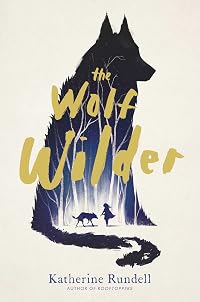
The Wolf Wilder
by Katherine Rundell
On This Page
Description
In the days before the Russian Revolution, twelve-year-old Feodora sets out to rescue her mother when the Tsar's Imperial Army imprisons her for teaching tamed wolves to fend for themselves.Tags
Recommendations


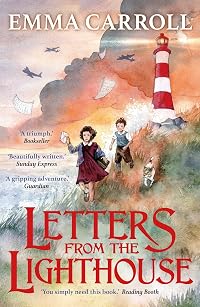
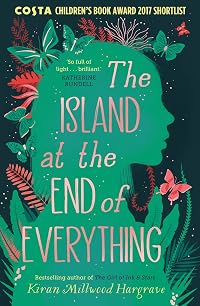
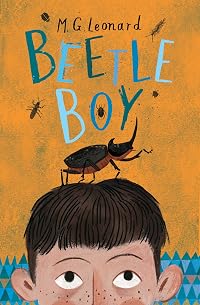

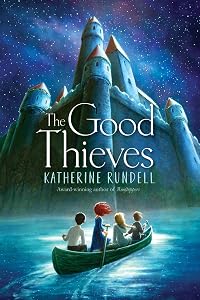

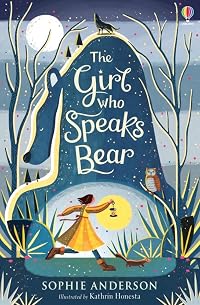
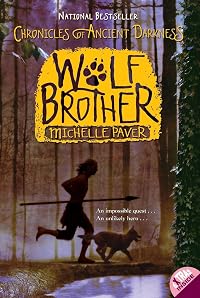
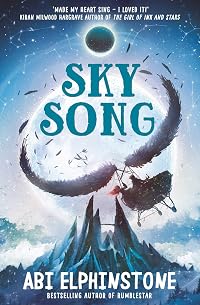
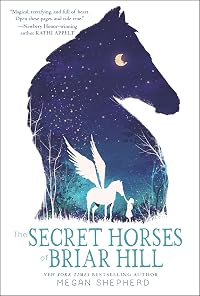
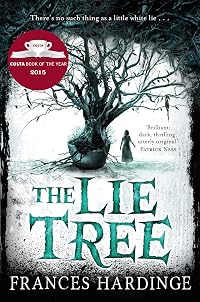
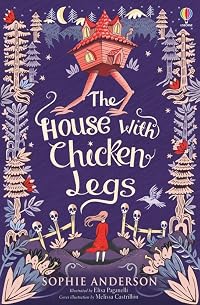
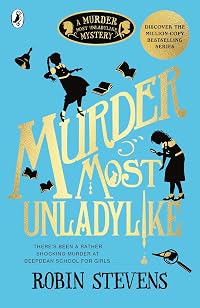
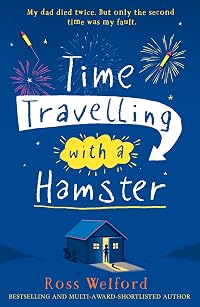



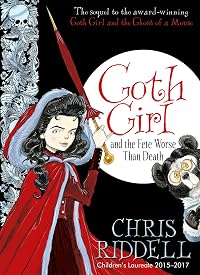

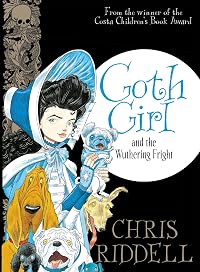

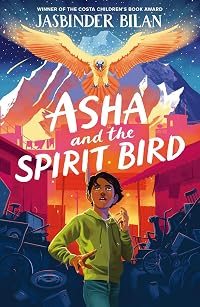

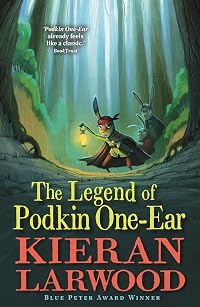



Member Recommendations

Member Reviews
"Stories can start revolutions."
(Full disclosure: I received a free electronic ARC for review through Edelweiss. Mild trigger warning for sexual harassment of a minor.)
"Humans, on the whole, Feo could take or leave; there was only one person she loved properly, with the sort of fierce pride that gets people into trouble, or prison, or history books."
"[A] wolf who cannot howl is like a human who cannot laugh."
Once upon a time, a hundred years ago, there lived a dark and stormy girl. She was wild in spirit and loved fiercely; and no wonder, for she was raised in the company not of humans, but of wolves. They were her friends, her teachers, her pupils, her family - her (almost) everything. And, at the tender age of twelve, this girl and show more her half-tame friends would go on to lead a revolution.
Feodora Petrovich and her mother Marina live in the Russian wilderness, not too far from Saint Petersburg. Though they're the only humans for miles, they're hardly alone - not exactly. The Petrovich family has been wilding wolves for centuries - since the days of Peter the Great, in fact.
Wolf wilding is the exact opposite of wolf taming (not that you can ever truly tame a wolf, mind you): training captive wolves to survive in the wild, without any human interference. Feo and Marina take in wolves who were kidnapped as pups, sold as pets, and subsequently - unsurprisingly - became "dangerous" or "nuisance" animals as they aged. Many of "their" wolves left with a piece of their former owners, literally: fingers, ears, noses, or a pound of random flesh.
Wolves aren't just status symbols in Russia, but also good luck charms; conversely, it's considered bad luck to kill a wolf. Thus, unwanted wolves become problems, foisted onto wolf wilders by the rich.
Not that Feo would ever describe her wolf friends as such: aside from Marina, the wolves are the only family Feo has ever known. So when the Tsar's favored General, Mikhail Rakov, orders that they stop wilding wolves - the same wolves who are killing "his" wild game - under penalty of imprisonment or death, Feo and Marina defy his command. Naturally. In retaliation, Rakov destroys their home, arrests Marina for treason, and vows to exterminate Feo and her wolves for good.
Now it's up to Feo to rescue her mom from Kresty Prison. Luckily, she has a little help in the form of Black, White, and Gray, her adopted wolf family. There's also Ilya, an unwilling child soldier gone AWOL; Alexei Gastevski, a fifteen-year-old agitator from a nearby village, ransacked by Ravok and his men just days before; and the village children, who have tired of their parents' deliberations and want nothing more than the chance to wreak a little mayhem.
The Wolf Wilder is a beautiful, magical, heartfelt fairy tale wrapped in a warm, furry package. Rundell's prose is simple yet stirring; The Wolf Wilder is filled with lovely, eminently quotable bits.
The wolves, of course, positively steal the show. The passages about the wolves - their mistreatment at the hands of humans, their indomitable spirits, Feo's interactions with (and love for) them - are among the most beautiful in the book.
Animal activists will note a clear parallel between the treatment of wolves in contemporary America and turn-of-the-century Russia: eschewing traditional superstitions surrounding wolves, Rakov instead sees them as vermin (and Feo, tellingly, is likewise vermin when she is with them; holy dehumanizing and othering, Batman!). When the wolves kill other free-living animals, such as elks, Rakov becomes enraged: in his speciesist worldview, all the animals of the world (or Russia, at least) belong to him, and as such the wolves are stealing his animals. Sentience be damned. This is also the same effed up logic that's led to the mass extermination of wolves in the U.S.: ranchers become positively murderous when wolves kill "their" cows, pigs, chickens - farmed animals who were destined for the dinner table one way or another.
That said, the kids are pretty awesome too. This is a story populated largely by children; save for Marina, the adults are mostly villainous or indifferent. Or scared to act - that is, until their children show them the way.
Feo is ... well, Feo. I suspect that I feel the same way about dogs that she does wolves - I have five rescues and also foster - and I could relate to her on so many levels. Her friendships with Black, White, Gray, Tenderfoot, and the pup were a pleasure to witness, and I'm not ashamed to admit that I cried more than once. ("More than once"? I went through half a box of Kleenex, dammit!) Socially awkward due to her limited interactions with humans, it was also nice to watch her cultivate relationships with teenagers Ilya and Alexei. Likewise, I loved watching Ilya overcome his fear of wolves.
And can we talk about Ilya for a moment? A sensitive and artistic boy, Ilya's father made him join the tsar's Imperial Army after the death of his mother. When he first meets Feo, it's to carry out Rakov's order to KILL ALL THE WOLVES! In this case, a very pregnant, about-to-give-birth Tenderfoot. He doesn't particularly want to, which is perhaps why Feo is able to scare/persuade him into dropping his gun. Once he meets Tenderfoot's unnamed pup - one of two, the first of which was stillborn - his heart slowly starts to warm to this vilified species. (I also appreciate how Rundell employs the power of baby animals to break down barriers.) Thus begins a friendship to last a lifetime.
Rundell drops small hints that Ilya might be gay; so small, in fact, that I initially thought I was imagining things. For example, Ilya always seems to turn beet red in Alexei's presence, and manifests a strong desire to impress the older boy.
Ilya loves to dance (not that challenging gender roles makes you gay, fyi) and never misses an opportunity to dazzle. Feo describes his dancing "like a lost boy foun: like a victory parade." When the famed Igor Darikev comes to recruit Ilya as a student, he cautions the boy that such a decision is not to be taken lightly: the life of a dancer is a hard one, filled with strenuous work, long days, and a lonely social life. The exchange that follows pretty much sealed the deal for me:
"Dancers - they are not always respected. They often find it hard to marry."
Ilya fiddled with his lip. "That's not a problem, for me," he said.
While it's clearly geared toward younger readers, The Wolf Wilder is an enchanting fairy tale for those of all ages.
Read it: During the next snow storm; from the bottom of a dog pile; to your kids, no matter their age.
http://www.easyvegan.info/2015/08/26/the-wolf-wilder-by-katherine-rundell/ show less
(Full disclosure: I received a free electronic ARC for review through Edelweiss. Mild trigger warning for sexual harassment of a minor.)
"Humans, on the whole, Feo could take or leave; there was only one person she loved properly, with the sort of fierce pride that gets people into trouble, or prison, or history books."
"[A] wolf who cannot howl is like a human who cannot laugh."
Once upon a time, a hundred years ago, there lived a dark and stormy girl. She was wild in spirit and loved fiercely; and no wonder, for she was raised in the company not of humans, but of wolves. They were her friends, her teachers, her pupils, her family - her (almost) everything. And, at the tender age of twelve, this girl and show more her half-tame friends would go on to lead a revolution.
Feodora Petrovich and her mother Marina live in the Russian wilderness, not too far from Saint Petersburg. Though they're the only humans for miles, they're hardly alone - not exactly. The Petrovich family has been wilding wolves for centuries - since the days of Peter the Great, in fact.
Wolf wilding is the exact opposite of wolf taming (not that you can ever truly tame a wolf, mind you): training captive wolves to survive in the wild, without any human interference. Feo and Marina take in wolves who were kidnapped as pups, sold as pets, and subsequently - unsurprisingly - became "dangerous" or "nuisance" animals as they aged. Many of "their" wolves left with a piece of their former owners, literally: fingers, ears, noses, or a pound of random flesh.
Wolves aren't just status symbols in Russia, but also good luck charms; conversely, it's considered bad luck to kill a wolf. Thus, unwanted wolves become problems, foisted onto wolf wilders by the rich.
Not that Feo would ever describe her wolf friends as such: aside from Marina, the wolves are the only family Feo has ever known. So when the Tsar's favored General, Mikhail Rakov, orders that they stop wilding wolves - the same wolves who are killing "his" wild game - under penalty of imprisonment or death, Feo and Marina defy his command. Naturally. In retaliation, Rakov destroys their home, arrests Marina for treason, and vows to exterminate Feo and her wolves for good.
Now it's up to Feo to rescue her mom from Kresty Prison. Luckily, she has a little help in the form of Black, White, and Gray, her adopted wolf family. There's also Ilya, an unwilling child soldier gone AWOL; Alexei Gastevski, a fifteen-year-old agitator from a nearby village, ransacked by Ravok and his men just days before; and the village children, who have tired of their parents' deliberations and want nothing more than the chance to wreak a little mayhem.
The Wolf Wilder is a beautiful, magical, heartfelt fairy tale wrapped in a warm, furry package. Rundell's prose is simple yet stirring; The Wolf Wilder is filled with lovely, eminently quotable bits.
The wolves, of course, positively steal the show. The passages about the wolves - their mistreatment at the hands of humans, their indomitable spirits, Feo's interactions with (and love for) them - are among the most beautiful in the book.
Animal activists will note a clear parallel between the treatment of wolves in contemporary America and turn-of-the-century Russia: eschewing traditional superstitions surrounding wolves, Rakov instead sees them as vermin (and Feo, tellingly, is likewise vermin when she is with them; holy dehumanizing and othering, Batman!). When the wolves kill other free-living animals, such as elks, Rakov becomes enraged: in his speciesist worldview, all the animals of the world (or Russia, at least) belong to him, and as such the wolves are stealing his animals. Sentience be damned. This is also the same effed up logic that's led to the mass extermination of wolves in the U.S.: ranchers become positively murderous when wolves kill "their" cows, pigs, chickens - farmed animals who were destined for the dinner table one way or another.
That said, the kids are pretty awesome too. This is a story populated largely by children; save for Marina, the adults are mostly villainous or indifferent. Or scared to act - that is, until their children show them the way.
Feo is ... well, Feo. I suspect that I feel the same way about dogs that she does wolves - I have five rescues and also foster - and I could relate to her on so many levels. Her friendships with Black, White, Gray, Tenderfoot, and the pup were a pleasure to witness, and I'm not ashamed to admit that I cried more than once. ("More than once"? I went through half a box of Kleenex, dammit!) Socially awkward due to her limited interactions with humans, it was also nice to watch her cultivate relationships with teenagers Ilya and Alexei. Likewise, I loved watching Ilya overcome his fear of wolves.
And can we talk about Ilya for a moment? A sensitive and artistic boy, Ilya's father made him join the tsar's Imperial Army after the death of his mother. When he first meets Feo, it's to carry out Rakov's order to KILL ALL THE WOLVES! In this case, a very pregnant, about-to-give-birth Tenderfoot. He doesn't particularly want to, which is perhaps why Feo is able to scare/persuade him into dropping his gun. Once he meets Tenderfoot's unnamed pup - one of two, the first of which was stillborn - his heart slowly starts to warm to this vilified species. (I also appreciate how Rundell employs the power of baby animals to break down barriers.) Thus begins a friendship to last a lifetime.
Rundell drops small hints that Ilya might be gay; so small, in fact, that I initially thought I was imagining things. For example, Ilya always seems to turn beet red in Alexei's presence, and manifests a strong desire to impress the older boy.
Ilya loves to dance (not that challenging gender roles makes you gay, fyi) and never misses an opportunity to dazzle. Feo describes his dancing "like a lost boy foun: like a victory parade." When the famed Igor Darikev comes to recruit Ilya as a student, he cautions the boy that such a decision is not to be taken lightly: the life of a dancer is a hard one, filled with strenuous work, long days, and a lonely social life. The exchange that follows pretty much sealed the deal for me:
"Dancers - they are not always respected. They often find it hard to marry."
Ilya fiddled with his lip. "That's not a problem, for me," he said.
While it's clearly geared toward younger readers, The Wolf Wilder is an enchanting fairy tale for those of all ages.
Read it: During the next snow storm; from the bottom of a dog pile; to your kids, no matter their age.
http://www.easyvegan.info/2015/08/26/the-wolf-wilder-by-katherine-rundell/ show less
"Once upon a time there was a dark and stormy girl..." Feo is fierce and impetuous and I love this girl so much. This is little red ridinghood needed: the wolves are on her side. Like Lyra Silvertongue she can be a bit much, but that's because I was brought up be a good girl, and much harm it has done me.
Library copy
Library copy
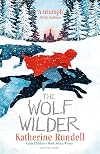
Feo has a strong voice in this fairy-tale like novel by Katherine Rundell set during the early years of the Russian Revolution. Beauty abounds in the relationships - between Feo and the wolves she rehabilitates and Feo and the other children she meets in her travels - and in the spare descriptions of the Russian landscape in winter. Feo experiences five kinds of cold - wind, snow, ice, hard, blind - and Rundell makes these visceral with her writing: "Blind cold smelled of metal and granite. It took all the sense out of your brain ..." Humor and pathos are juxtaposed as in real life. Feo's mother, Marina, teaches her more than wolf wildling, she teaches her life wisdom: "Cowardice is for cowards. Fear is for people with brains and eyes show more and functioning nerve endings." Much is lost, which may be difficult for sensitive readers, but more is gained. One of my favorite parts is the transformation of a young soldier who never wanted to be a soldier. The cover image brings the story to life. show less
This is the story of Feo, a near feral child who lives in the back-of-beyond in pre-revolutionary Russia with her mother. They 'wild' domesticated wolves that have grown up to be utterly unsuitable as pets. When her mother defies the evil General Rakov from the Imperial Army, she is whisked away to prison, and it falls to Feo and Ilya, who deserts from the army, to save her. Theirs is a savage and difficult life. Russian snow is cold, Russian forests are dangerous. Wolves are dangerous - unless you know how to handle them, as Feo does. This is a rattling good yarn, in the tradition of all good fairy tales. Children and animals can outwit adults, Good Will Prevail, and the innocent will get to live happily ever after. Deliciously, show more wittily written, this would make a perfect present for a 10 year old and the 10 year old's parents. I hope so. I know a 10 year old who'll be getting this for Christmas. show less
To the wealthy elite of St. Petersburg, wolves are good luck. To General Rakov, commander of the Tsar's armies, wolves are vermin. To Feo and her mother, however, wolves are family. And when the wolves of the wealthy turn on their owners, those wolves are sent to Feo and her mother, who return them to the wild. When General Rakov imprisons Feo's mother, Feo determines to break her mother out of prison. She and her wolves make their way to the city, but along the way, they pick up Ilya, a former child soldier who dreams of being a dancer, Alexei, a teenage revolutionary, and a band of children, all of whom have seen first-hand the devastation wrought by Rakov. Feo's rescue attempt is starting to look more like a revolution!
This is a show more lovely and atmospheric tale. The writing style will be immediately recognizable to readers who have enjoyed Rundell's other works. I had a little trouble staying engaged in the story, but I think I was just not in the mood; I don't think the book was at fault. The characters and setting are exceptionally strong, and the emotions run deep in this book. Readers who love Russia, wolves, or good writing should pick this one up. show less
This is a show more lovely and atmospheric tale. The writing style will be immediately recognizable to readers who have enjoyed Rundell's other works. I had a little trouble staying engaged in the story, but I think I was just not in the mood; I don't think the book was at fault. The characters and setting are exceptionally strong, and the emotions run deep in this book. Readers who love Russia, wolves, or good writing should pick this one up. show less
OK, let me say upfront that I really like Katherine Rundell's writing. This novel, set in the frozen woods of Russia, pits a mother (Marina) and her daughter (Feo) against a sociopathic general (Rakov), who steals and kills at the supposed behest of the Tsar. Mother and daughter work to return "domesticated" wolves to the wild when their inherent nature overcomes their training since killing wolves is bad luck. When Rakov starts persecuting them due to a slaughtered elk, Feo fights back, partially blinding the General, who imprisons the mother. Feo escapes with a few wolves, and starts planning the rescue of her mother. Befriended by a young soldier, together they find unexpected allies and mount a daring rescue. A little slow at times, show more this is about the human spirit, battling oppression, bonding with wild animals, and friendship. 4.25 stars. show less
A compelling story of courage, nature and revolution. Twelve-year-old Feodora is a wolf wilder, teaching captive wolves to become wild again. When a corrupt general threatens her family (including her wolf friends), she sets off to rescue her mother and exact her revenge. She is aided by a growing group of other children, who come with her to fight while the adults discuss whether they should fight back or do nothing and hope to avoid further angering the general.
Beautifully written. I loved the friendship between Feodora and the wolves, who protect her and welcome Ilya into their pack.
Beautifully written. I loved the friendship between Feodora and the wolves, who protect her and welcome Ilya into their pack.
Members
- Recently Added By
Lists

Books Read in 2019
4,052 works; 110 members

Favorite Kids Books (chapter, middle grade)
168 works; 4 members
Author Information

25+ Works 5,945 Members
Katherine Rundell was born in 1987. She is a Fellow of All Souls College, Oxford. Her books include The Girl Savage and The Wolf Wilder. She received several awards including the Waterstones Children's Book Prize and the Blue Peter Award in 2014 for Rooftoppers, the Boston Globe-Horn Book Award for Cartwheeling in Thunderstorms, and the Costa show more Award for Children's book in 2017 for The Explorers. (Bowker Author Biography) show less
Some Editions
Awards and Honors
Awards
Work Relationships
Common Knowledge
- Canonical title*
- Feo en de wolven
- Original title
- The wolf wilder
- Original publication date
- 2015
- People/Characters
- Feo; Ilya; Black (wolf); White (wolf); Gray (wolf)
- Important places
- Russia
- Dedication
- To my grandmother Pauline Blanchard-Sims, whose flair and courage are unrivaled
- First words
- Once upon a time, a hundred years ago, there was a dark and stormy girl.
- Quotations
- Feo wished she could explain - that the beauty of the world is itself a kind of company, and they lived in one of the most beautiful spots in the world. "You can make the snow a kind of friend, if you know how."
- Last words
- (Click to show. Warning: May contain spoilers.)And in the ballroom of the castle there lived three wolves. One was white, one was black, adn the third, much smaller than the other two, had patches of both colors; his chest, where his heart lay, was gray.
- Original language*
- Engels
*Some information comes from Common Knowledge in other languages. Click "Edit" for more information.
Classifications
- Genres
- Fiction and Literature, Kids, Tween, Children's Books
- DDC/MDS
- 823.92 — Literature & rhetoric English & Old English literatures English fiction 1900- 2000-
- LCC
- PZ7 .R88827 .W — Language and Literature Fiction and juvenile belles lettres Fiction and juvenile belles lettres Juvenile belles lettres
- BISAC
Statistics
- Members
- 580
- Popularity
- 50,762
- Reviews
- 23
- Rating
- (4.05)
- Languages
- 7 — Chinese, Dutch, English, French, German, Italian, Portuguese
- Media
- Paper, Audiobook, Ebook
- ISBNs
- 24
- ASINs
- 6