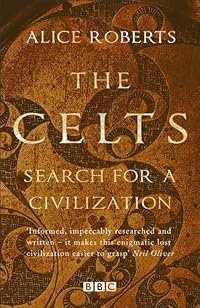
The Celts: Search for a Civilization
by Alice Roberts
On This Page
Description
'Informed, impeccably researched and written' Neil Oliver 'A masterpiece of evocative scientific storytelling' Brian Cox The Celts are one of the world's most mysterious ancient people. In this compelling account, Alice Roberts takes us on a journey across Europe, uncovering the truth about this engimatic tribe: their origins, their treasure and their enduring legacy today. What emerges is not a wild people, but a highly sophisticated tribal culture that influenced the ancient world - and show more even Rome. It is the story of a multicultural civilization, linked by a common language. It is the story of how ideas travelled in prehistory, how technology and art spread across the continent. It is the story of a five-hundred year fight between two civilizations that came to define the world we live in today. It is the story of a culture that changed Europe forever. 'Roberts's lightness of touch is joyous, and celebratory' Observer 'Clear-spoken and enthusiastic' Telegraph show lessTags
Recommendations









Member Reviews
Who were the Celts? I had a sort of confused image between the Welsh/Scots ...but ancient Europeans too (recalled Celtic settlements in Croatia).
This was a BRILLIANT book, trying to get true facts rather than blindly going along with traditional narratives ("waves of immigration from Central Europe".) Looking at the often very different tribes of Bromze/Iron Age Europe, there's often no certainty that there was much of a link. Miss Roberts observes that foreign artefacts can be due to trade or an exchange of ideas/ tastes...not necessarily immigration. And likewise, Celtic ideas cancome to permeate the lives of non-Celtic tribes. She's loth to put a romantic interpretation on "ritual buials" without definitive proof. Or to necessarily show more take the Romans' writings on the Celts as gospel truth.
And the final twist is that latest findings suggest the Celts first emerged in the Iberian peninsula..
Despite leaving us with many unanswered questions, it's a fascinating look at ancient history. Superb. show less
This was a BRILLIANT book, trying to get true facts rather than blindly going along with traditional narratives ("waves of immigration from Central Europe".) Looking at the often very different tribes of Bromze/Iron Age Europe, there's often no certainty that there was much of a link. Miss Roberts observes that foreign artefacts can be due to trade or an exchange of ideas/ tastes...not necessarily immigration. And likewise, Celtic ideas cancome to permeate the lives of non-Celtic tribes. She's loth to put a romantic interpretation on "ritual buials" without definitive proof. Or to necessarily show more take the Romans' writings on the Celts as gospel truth.
And the final twist is that latest findings suggest the Celts first emerged in the Iberian peninsula..
Despite leaving us with many unanswered questions, it's a fascinating look at ancient history. Superb. show less
I originally came across this book via a recommendation in "Ancient Paths" by Graham Robb (Which falls into the circular argument trap that Alice Roberts describes about looking for confirming evidence for a theory). But I've found Robert's book to be vaguely dissatisfying. She simply leaves a lot out. Quite a lot. For example, there is no discussion of the ancient paths that Robb talks about in great depth. And, whilst, I think he exaggerates the ubiquity of the paths...there does seem to be some significance to the location of religious sites etc which is based on ancient astronomy. And no coverage of Astronomy and the ancient sites like Stonehenge....which appear to have been used by the Celts...if not actually created by them,. And show more there is virtually no coverage of the Druids and their religious activities and their coordinating influence across Europe. (Well a little but it's very little). Roberts seems to be very hung-up on linguistic clues to the origins of the Celts and to the longevity of values, customs and myths...which even current experience (with "fake news" and language morphing for example) is demonstrably very plastic and, I think, unreliable.
A basic theme of the book is to dispel the idea that the Celts originated in central Europe...near the source of the Danube and spread by a series of migrations from here...both westwards and eastwards and to the south. I'm reasonably happy with the approach which she seems to adopt from Barry Cunliffe that this approach is wrong. That culture and language was transmitted quite effectively by individuals (such as miners and traders ) moving between countries with small scale migration. The DNA evidence (which Roberts doesn't really give enough attention to) indicates that in Britain, anyway, the influx of relatively recent genes from Europe is small and most of the ancestors were already in place. In fact, I guess, that the whole area was inhabited originally by the neanderthals who were then displaced (and interbred) by the later migrations of homo sapiens. And changes that were wrought upon these early settlers came about through some invasions and migrations but also via the mechanisms that Roberts describes...getting together for feasts and exchange of marriage partners, trade, movement of priests and "missionaries" who spread ideas and maybe new technology. As she says in the Epilogue: "I've travelled right across Europe, trying to grasp these people, and they just keep on slipping through my fingers. But I've realized that's because we need to make up our minds about who they are. Is it a biological definition, a genetic definition, or a definition based on language, on art, or some other aspect of culture?"
Do you think part of the problem is that we've always been taught that the Celts appeared from somewhere - almost as if through a trapdoor in history - when in fact the truth is that they were the descendants of people that had been there all along?
Think we've been totally hoodwinked by this nineteenth-century idea that there was an Iron Age invasion of Britain and Ireland that brought Celtic language and culture with it.
There were some people who came to Britain and Ireland - not so much in the iron Age, probably in the bronze Age - bringing the Celtic language with them. But they didn't wipe out the people that were there before. They introduced the language and that language took root, and people still speak it here - which is wonderful........The Romans were the people who wrote about the Celts, and we turn to them again and again to try to understand who the Celts were. But then we have that Roman veneer - they dumped their civilization over the Celts. It's because of the Romans that we can't see the Celts". A big part of the problem was that the Celts scarcely wrote anything down, So no written records.
The book is especially interesting in that it describes the clear lack of agreement by archeologists on their methodology. I was fascinated by the revelation that the Germans resolutely rejected any hypothesis that the Celts had Iberian origins....yet this was welcomed by the Spanish. So modern politics and "My team" first seems to prevail even in the (supposedly) scientific world for Archeology.
To my mind, the same sort of "My team first" thinking rather pervades Roberts whole book...where she seems to take a position of an overly strong role for Britain in the Celtic story. though finally, it is a story of the movement of ideas rather than people that brought about the Celtic people. Oh, one further thought, and this relates to a book I read about the role of mercenary forces in the Ancient world and especially the importation of the Galatians into (modern day) Turkey. They became a thorn in the side of many rulers in subsequent centuries and hired themselves out to many different and opposing sides over the subsequent years.....including a big contingent who settled in Egypt. (Though the evidence from Egypt is that though they were supposed to be a force who were ready, at a moment's notice, to leap to arms....the reality was that they became a bit soft and within one generation were paying more attention to their farms than the defence of the current Ptolemy.
An interesting read but vaguely superficial. I give it four stars. show less
A basic theme of the book is to dispel the idea that the Celts originated in central Europe...near the source of the Danube and spread by a series of migrations from here...both westwards and eastwards and to the south. I'm reasonably happy with the approach which she seems to adopt from Barry Cunliffe that this approach is wrong. That culture and language was transmitted quite effectively by individuals (such as miners and traders ) moving between countries with small scale migration. The DNA evidence (which Roberts doesn't really give enough attention to) indicates that in Britain, anyway, the influx of relatively recent genes from Europe is small and most of the ancestors were already in place. In fact, I guess, that the whole area was inhabited originally by the neanderthals who were then displaced (and interbred) by the later migrations of homo sapiens. And changes that were wrought upon these early settlers came about through some invasions and migrations but also via the mechanisms that Roberts describes...getting together for feasts and exchange of marriage partners, trade, movement of priests and "missionaries" who spread ideas and maybe new technology. As she says in the Epilogue: "I've travelled right across Europe, trying to grasp these people, and they just keep on slipping through my fingers. But I've realized that's because we need to make up our minds about who they are. Is it a biological definition, a genetic definition, or a definition based on language, on art, or some other aspect of culture?"
Do you think part of the problem is that we've always been taught that the Celts appeared from somewhere - almost as if through a trapdoor in history - when in fact the truth is that they were the descendants of people that had been there all along?
Think we've been totally hoodwinked by this nineteenth-century idea that there was an Iron Age invasion of Britain and Ireland that brought Celtic language and culture with it.
There were some people who came to Britain and Ireland - not so much in the iron Age, probably in the bronze Age - bringing the Celtic language with them. But they didn't wipe out the people that were there before. They introduced the language and that language took root, and people still speak it here - which is wonderful........The Romans were the people who wrote about the Celts, and we turn to them again and again to try to understand who the Celts were. But then we have that Roman veneer - they dumped their civilization over the Celts. It's because of the Romans that we can't see the Celts". A big part of the problem was that the Celts scarcely wrote anything down, So no written records.
The book is especially interesting in that it describes the clear lack of agreement by archeologists on their methodology. I was fascinated by the revelation that the Germans resolutely rejected any hypothesis that the Celts had Iberian origins....yet this was welcomed by the Spanish. So modern politics and "My team" first seems to prevail even in the (supposedly) scientific world for Archeology.
To my mind, the same sort of "My team first" thinking rather pervades Roberts whole book...where she seems to take a position of an overly strong role for Britain in the Celtic story. though finally, it is a story of the movement of ideas rather than people that brought about the Celtic people. Oh, one further thought, and this relates to a book I read about the role of mercenary forces in the Ancient world and especially the importation of the Galatians into (modern day) Turkey. They became a thorn in the side of many rulers in subsequent centuries and hired themselves out to many different and opposing sides over the subsequent years.....including a big contingent who settled in Egypt. (Though the evidence from Egypt is that though they were supposed to be a force who were ready, at a moment's notice, to leap to arms....the reality was that they became a bit soft and within one generation were paying more attention to their farms than the defence of the current Ptolemy.
An interesting read but vaguely superficial. I give it four stars. show less
TL/DR: Roberts writes well and draws us into the stories of ancient Europe, and the stories themselves are pretty fascinating. But the fragments of pre-history aren’t conclusive enough to piece together into a fuller understanding of “the Celts”, and in the end there’s a bit of a letdown realizing how much is really unknown. The framing of the book seems to me to be aimed at a UK and Irish audience who may be invested in the notion of their Celtic heritage. For other readers the book provides a fascinating tour of the highlights of what is known about prehistoric Europe.
************
In the early 1700’s Welch linguist Edward Lhuyd identified similarities between the native languages of Ireland, Wales, Cornwall and Brittany show more (northwestern France). He called this grouping of languages “Celtic”, drawing a connection to the Celts identified in ancient Greek and Roman stories. Lhuyd speculated that the variations in the local languages may represent waves of invasion from eastward in Europe and into the British Isles and Ireland. His work helped spark a modern interest in Celtic history, Celtic ancestry and also Celtic pride within the UK and Ireland.
In the mid-1800s archeologists in Austria began to study bodies being uncovered in and around the ancient salt mines near Hallstatt. Some amazing finds were made indicating that a relatively advanced culture had occupied the area in the early Iron Age, bringing wealth to the area through the mining and trading of salt. This culture was identified by archeologists as “Celtic”. Soon archeologists were affirming the theory of “waves of invasion” of peoples from the “Halstatt culture” westward across Europe.
Much of what is known about Europe before the Romans is fragmentary. The peoples who lived in Europe prior to Roman expansion left little in the way of written records. The Greeks and the Romans who encountered native European populations found their cultures strange, and in the Roman telling “barbaric”. The Romans themselves recorded an invasion in 390 BC of Rome itself by an army of Celts, before these barbarians were driven off again.
These are some of the fragments that Alice Roberts draws on in her journey across Europe in search of answers to the enigma of who exactly these ancient people were. Her book, published ten years ago, was a companion to a BBC series called “The Celts: Blood, Iron and Sacrifice”.
What you get from this book is a look at many of these fragments, which in and off themselves are really interesting, but which are very difficult to put into context or into anything we could think of as a history of the Celts.
The Celts as a tribe of people were identified by the Greeks as far back as the sixth century BC, but the extent of their lands is somewhat of a puzzle. The Greeks seem to believe they occupied a “wide expanse” across Europe. Celtic place names are found in many places across Europe, which may lend credence to that interpretation of the Greek accounts.
But whether a single people who called themselves Celts occupied a wide range of Europe, or whether a language spread among different peoples of different cultures as trade and technology spread across Europe is something we cannot know for sure.
Recent theories from linguistics suggest that Celtic as a language actually first arose among seafaring people along the western, Atlantic, coast of Europe, spreading from Portugal through Ireland and Great Britain, and later westward across Europe. This all seems to have happened as early as the Bronze Age. And yet, Celtic is considered an Indo-European language, related to Greek and Sanskrit, so how does an Indo-European language start so far west and then move back east?
Art tells another story. There are disconnects between the crafts and artwork found among early people identified by archeologists as “Celts”. Do these indicate different cultures speaking a common language? Or a common culture with regional differences? Do these people think of themselves as “Celts”?
The next to the last chapter of the book look at the myths we now think of as “Celtic” and relate to stories written down in the early medieval times (1000 years ago or more) documenting previously oral traditional stories of the Irish, Welsh, Scottish and Cornish. Among those are the stories of The Mabinogion, the earliest known Welch stories - a modern translation of which I reviewed here. I found this chapter a bit out of place - it didn’t seem to relate to the other parts of the book that focused on linguistics and archeology.
In the end, we don’t really have definitive answers to the enigma of the Celts. Different views of the limited evidence seem to point in different directions. Meanwhile, “Celtic” as an ancestry has become a source of pride among many modern Irish and UK residents, so that any new interpretation of that evidence about early Europe has ramifications not only for archeology and linguistics but for politics too. show less
************
In the early 1700’s Welch linguist Edward Lhuyd identified similarities between the native languages of Ireland, Wales, Cornwall and Brittany show more (northwestern France). He called this grouping of languages “Celtic”, drawing a connection to the Celts identified in ancient Greek and Roman stories. Lhuyd speculated that the variations in the local languages may represent waves of invasion from eastward in Europe and into the British Isles and Ireland. His work helped spark a modern interest in Celtic history, Celtic ancestry and also Celtic pride within the UK and Ireland.
In the mid-1800s archeologists in Austria began to study bodies being uncovered in and around the ancient salt mines near Hallstatt. Some amazing finds were made indicating that a relatively advanced culture had occupied the area in the early Iron Age, bringing wealth to the area through the mining and trading of salt. This culture was identified by archeologists as “Celtic”. Soon archeologists were affirming the theory of “waves of invasion” of peoples from the “Halstatt culture” westward across Europe.
Much of what is known about Europe before the Romans is fragmentary. The peoples who lived in Europe prior to Roman expansion left little in the way of written records. The Greeks and the Romans who encountered native European populations found their cultures strange, and in the Roman telling “barbaric”. The Romans themselves recorded an invasion in 390 BC of Rome itself by an army of Celts, before these barbarians were driven off again.
These are some of the fragments that Alice Roberts draws on in her journey across Europe in search of answers to the enigma of who exactly these ancient people were. Her book, published ten years ago, was a companion to a BBC series called “The Celts: Blood, Iron and Sacrifice”.
What you get from this book is a look at many of these fragments, which in and off themselves are really interesting, but which are very difficult to put into context or into anything we could think of as a history of the Celts.
The Celts as a tribe of people were identified by the Greeks as far back as the sixth century BC, but the extent of their lands is somewhat of a puzzle. The Greeks seem to believe they occupied a “wide expanse” across Europe. Celtic place names are found in many places across Europe, which may lend credence to that interpretation of the Greek accounts.
But whether a single people who called themselves Celts occupied a wide range of Europe, or whether a language spread among different peoples of different cultures as trade and technology spread across Europe is something we cannot know for sure.
Recent theories from linguistics suggest that Celtic as a language actually first arose among seafaring people along the western, Atlantic, coast of Europe, spreading from Portugal through Ireland and Great Britain, and later westward across Europe. This all seems to have happened as early as the Bronze Age. And yet, Celtic is considered an Indo-European language, related to Greek and Sanskrit, so how does an Indo-European language start so far west and then move back east?
Art tells another story. There are disconnects between the crafts and artwork found among early people identified by archeologists as “Celts”. Do these indicate different cultures speaking a common language? Or a common culture with regional differences? Do these people think of themselves as “Celts”?
The next to the last chapter of the book look at the myths we now think of as “Celtic” and relate to stories written down in the early medieval times (1000 years ago or more) documenting previously oral traditional stories of the Irish, Welsh, Scottish and Cornish. Among those are the stories of The Mabinogion, the earliest known Welch stories - a modern translation of which I reviewed here. I found this chapter a bit out of place - it didn’t seem to relate to the other parts of the book that focused on linguistics and archeology.
In the end, we don’t really have definitive answers to the enigma of the Celts. Different views of the limited evidence seem to point in different directions. Meanwhile, “Celtic” as an ancestry has become a source of pride among many modern Irish and UK residents, so that any new interpretation of that evidence about early Europe has ramifications not only for archeology and linguistics but for politics too. show less
If you have Western European ancestry, odds are strong that you have some Celtic ancestry in there. Who are the Celts? What can we know about them?
Alice Roberts wrote The Celts: Search for a Civilization as a companion book to her BBC2 television three-part series The Celts: Blood, Iron, and Sacrifice (https://youtu.be/zA-itb5NwDU?si=gTOPnkXeqObpdt4g ; not the greatest quality, caveat emptor). I read the book and then watched the series, and feel as if both prove helpful and beneficial, and in that order.
The reason why the television series proves important involves the Celts and the nature of the evidence: they did not leave us with a collection of texts. We have some stories and myths from the British and Irish Isles which were show more written down far later but seem to preserve some of the Celtic stories, and that which was written about the Celts, primarily by the Greeks and Romans who encountered them. Most of what we know from the Celts themselves comes as a result of archaeological explorations: sites and burials. Thus, the visual medium proves very helpful in getting a good mental picture of what we can know about the Celts.
The television series, understandably according to the nature of the medium, is more straightforward in its presentation. Each episode is framed by one of the three great battles between Rome and Celtic people: Brennus and the Celtic defeat and destruction of Rome in 387 BCE; Julius Caesar defeating Vercingetorix at Alesia in modern-day France in 52 BCE; Boudica’s revolt and its violent suppression in Britain in 60 or 61 CE. All of the various sites and discoveries which are profiled in the book are presented, although in different orders: the Hallstatt salt mines, the fort at Heuneburg, the Hochdorf Prince, torcs of the Snettisham Hoard, evidence of La Tène and the La Tène culture, the Tartessian inscriptions of the 8th century BCE, the Celtic dispersion into Galatia and the evidence at Gordion, the “Dying Gaul” and the Vachères Warrior, the Gunderstrup Cauldron, the Glauberg Warrior, the Bettebühl Princess, bog people and possible sacrifice of kings by the Druids, and the like.
The show presents all of this data and these discoveries and suggests almost a seamless whole: the Celts as people sharing a language family spread across Portugal, Spain, France, Great Britain, Ireland, the Alpine regions of Switzerland, Italy, and Austria, and parts of southern Germany at least, from at least 800 BCE and the end of the European Bronze Age and enduring, at least in Ireland, Scotland, Wales, Cornwall, and Brittany, until modern times.
What seems confidently set forth in the television series is presented with a lot more apprehension and many more questions in the book. The same evidence is there: Greek and Roman narratives; archaeological discoveries; linguistic data; myths and stories which likely reflect at least some authentic Celtic memory.
The basic claim seems pretty audacious: since archaeological and DNA data do not suggest anything like the major disruptions in Western Europe as took place with the Yamnaya and the Corded Ware Culture of the early 3rd millennium BCE, and the Germanic and various steppe people migrations of the 1st millennium CE, most of what we understand as Western Europe was therefore populated by various tribes of people known to the Greeks and Romans as the Celts. Evidence of a Celtic language can be perceived in Tartessian inscriptions ca. 800 BCE in Portugal; Celtic languages persist in Brittany and the British and Irish Isles; and Celtic aspects of names can still be discerned in place names in Western Europe. To this end, whatever material culture remains are discovered in Western Europe from the Bronze and Iron Ages are thus associated with the Celts and as Celtic.
The Tartessian inscription evidence is fascinating and begs the question: if some people of Celtic heritage around 2700 years ago perceived some benefit in the idea of writing, and even worked to modify Phoenician to add vowels and suit their purposes, what happened? People deemed Celtic by the Greeks and Romans manifestly had interactions with Phoenicians, Greeks, and Romans; the fort at Heuneburg featured a Phoenician style not otherwise in evidence in Western Europe. Thus they associated, to some degree, with people who wrote and had writing, and some of them even tinkered with writing. So why did they not develop their own writing system and write things down?
The question is live and active because these questions which arise about who the Celts are and how they would understand themselves will be nearly impossible to answer because we have so little evidence of anything in their own voice. We can note points of cultural and linguistic connections between the Iberian Peninsula and the British and Irish Isles; we can see the archaeological evidence from France and the Alpine regions of central Europe which come from places which will have people deemed Celtic. They all probably did speak an Indo-European language, and their languages might all have been in what we deem the Celtic family. We do know they lived in various tribes, and so ostensibly would have some points of cultural continuity but also discontinuity.
The book and the television series do well at presenting what evidence we have for the people who inhabited what we know as Western Europe from around 1000 BCE until the Roman conquest, and in many respects beyond. We know they were called the Celts, a term which seems to refer to “warriors,” and had tribal names and associations. They likely spoke languages in the same language family and perhaps remained mostly mutually intelligible. We know there were religious figures known as Druids but can only speculate about much of what “Celtic religion” would have been. We see significant material remains demanding significant cultural complexity, presenting undeniable evidence of civilization. But our understanding remains limited, and questions will remain live and open. show less
Alice Roberts wrote The Celts: Search for a Civilization as a companion book to her BBC2 television three-part series The Celts: Blood, Iron, and Sacrifice (https://youtu.be/zA-itb5NwDU?si=gTOPnkXeqObpdt4g ; not the greatest quality, caveat emptor). I read the book and then watched the series, and feel as if both prove helpful and beneficial, and in that order.
The reason why the television series proves important involves the Celts and the nature of the evidence: they did not leave us with a collection of texts. We have some stories and myths from the British and Irish Isles which were show more written down far later but seem to preserve some of the Celtic stories, and that which was written about the Celts, primarily by the Greeks and Romans who encountered them. Most of what we know from the Celts themselves comes as a result of archaeological explorations: sites and burials. Thus, the visual medium proves very helpful in getting a good mental picture of what we can know about the Celts.
The television series, understandably according to the nature of the medium, is more straightforward in its presentation. Each episode is framed by one of the three great battles between Rome and Celtic people: Brennus and the Celtic defeat and destruction of Rome in 387 BCE; Julius Caesar defeating Vercingetorix at Alesia in modern-day France in 52 BCE; Boudica’s revolt and its violent suppression in Britain in 60 or 61 CE. All of the various sites and discoveries which are profiled in the book are presented, although in different orders: the Hallstatt salt mines, the fort at Heuneburg, the Hochdorf Prince, torcs of the Snettisham Hoard, evidence of La Tène and the La Tène culture, the Tartessian inscriptions of the 8th century BCE, the Celtic dispersion into Galatia and the evidence at Gordion, the “Dying Gaul” and the Vachères Warrior, the Gunderstrup Cauldron, the Glauberg Warrior, the Bettebühl Princess, bog people and possible sacrifice of kings by the Druids, and the like.
The show presents all of this data and these discoveries and suggests almost a seamless whole: the Celts as people sharing a language family spread across Portugal, Spain, France, Great Britain, Ireland, the Alpine regions of Switzerland, Italy, and Austria, and parts of southern Germany at least, from at least 800 BCE and the end of the European Bronze Age and enduring, at least in Ireland, Scotland, Wales, Cornwall, and Brittany, until modern times.
What seems confidently set forth in the television series is presented with a lot more apprehension and many more questions in the book. The same evidence is there: Greek and Roman narratives; archaeological discoveries; linguistic data; myths and stories which likely reflect at least some authentic Celtic memory.
The basic claim seems pretty audacious: since archaeological and DNA data do not suggest anything like the major disruptions in Western Europe as took place with the Yamnaya and the Corded Ware Culture of the early 3rd millennium BCE, and the Germanic and various steppe people migrations of the 1st millennium CE, most of what we understand as Western Europe was therefore populated by various tribes of people known to the Greeks and Romans as the Celts. Evidence of a Celtic language can be perceived in Tartessian inscriptions ca. 800 BCE in Portugal; Celtic languages persist in Brittany and the British and Irish Isles; and Celtic aspects of names can still be discerned in place names in Western Europe. To this end, whatever material culture remains are discovered in Western Europe from the Bronze and Iron Ages are thus associated with the Celts and as Celtic.
The Tartessian inscription evidence is fascinating and begs the question: if some people of Celtic heritage around 2700 years ago perceived some benefit in the idea of writing, and even worked to modify Phoenician to add vowels and suit their purposes, what happened? People deemed Celtic by the Greeks and Romans manifestly had interactions with Phoenicians, Greeks, and Romans; the fort at Heuneburg featured a Phoenician style not otherwise in evidence in Western Europe. Thus they associated, to some degree, with people who wrote and had writing, and some of them even tinkered with writing. So why did they not develop their own writing system and write things down?
The question is live and active because these questions which arise about who the Celts are and how they would understand themselves will be nearly impossible to answer because we have so little evidence of anything in their own voice. We can note points of cultural and linguistic connections between the Iberian Peninsula and the British and Irish Isles; we can see the archaeological evidence from France and the Alpine regions of central Europe which come from places which will have people deemed Celtic. They all probably did speak an Indo-European language, and their languages might all have been in what we deem the Celtic family. We do know they lived in various tribes, and so ostensibly would have some points of cultural continuity but also discontinuity.
The book and the television series do well at presenting what evidence we have for the people who inhabited what we know as Western Europe from around 1000 BCE until the Roman conquest, and in many respects beyond. We know they were called the Celts, a term which seems to refer to “warriors,” and had tribal names and associations. They likely spoke languages in the same language family and perhaps remained mostly mutually intelligible. We know there were religious figures known as Druids but can only speculate about much of what “Celtic religion” would have been. We see significant material remains demanding significant cultural complexity, presenting undeniable evidence of civilization. But our understanding remains limited, and questions will remain live and open. show less
It’s a book to accompany a television series, and it reads like that, with the author/presenter speaking to the reader/audience and quoting/interviewing experts. Provided that you can get over this gushing style, then the book is very readable and discusses the (2015) current theories in reasonable terms.
It includes some interesting “case studies” and a good concluding chapter, but I otherwise found that it jumped a bit between chapters, reflecting its televisual origins. However it’s an easy and accessible read.
About ten years ago I read Barry Cunliffe’s Britain Begins (2012) and The Celts: A Very Short Introduction (2003), which are both very good and which are probably better introductions.
It includes some interesting “case studies” and a good concluding chapter, but I otherwise found that it jumped a bit between chapters, reflecting its televisual origins. However it’s an easy and accessible read.
About ten years ago I read Barry Cunliffe’s Britain Begins (2012) and The Celts: A Very Short Introduction (2003), which are both very good and which are probably better introductions.
The Celts and a mysterious people. You either think of a woad daubed, near naked warrior, screaming at the top of his voice, or see them as a hugely artistic people who produced the most exquisite gold jewellery. These images have been elicited from Roman literature and from burial sites and finds in fields. Unlike the Romans and Normans who left vast swathes of solid architectural evidence and literature for us to understand them, the Celts touched the earth lightly leaving traces only of their existence. The artefacts that we do find though are quite beautiful; the tales that history whispers are strange; so who are these people?
But the evidence is there; provided you know where to look. In this companion book to the BBC series, show more Roberts takes us from Northern Europe and right down to the Mediterranean to speak to those who are investigating these people, to see the latest evidence and touch the few possessions that have survived across the ages. It is an interesting journey as the people are so elusive, partly as they left precious little traces of their homes and lifestyle. There are some interesting theories as to the roots of Celts, how they influenced European language and culture and how the echoes of their legacy still reverberate even today. Good stuff, now to watch the TV series. show less
But the evidence is there; provided you know where to look. In this companion book to the BBC series, show more Roberts takes us from Northern Europe and right down to the Mediterranean to speak to those who are investigating these people, to see the latest evidence and touch the few possessions that have survived across the ages. It is an interesting journey as the people are so elusive, partly as they left precious little traces of their homes and lifestyle. There are some interesting theories as to the roots of Celts, how they influenced European language and culture and how the echoes of their legacy still reverberate even today. Good stuff, now to watch the TV series. show less
This book is about Alice Robert's search for the Celts - who they were, their history, their culture, their art and technology. The author also takes a look at how much the current understanding of the Celtic World has changed in the past decade. For us to understand why our views of the Celts have changed so drastically, Roberts explores the archaeological discoveries, the ancient histories and new linguistic evidence.
Roberts traces the movement of Celtic tribes in central Europe, Asia Minor, and the western Atlantic fringe of Europe, Britain, Ireland, France and Iberia. The author starts her search for the Celts in central Europe with the discovery of the "Hochdorf Prince' in south-west Germany. The grave goods of this discovery are show more examined in light of the local and Mediterranean trade networks and an examination of the relevant ancient texts. The author then moves on to the archaeological discoveries of the Halstatt salt mines near Saltzbug, Austria and then onto the Celtic city of Heuneburg and the discovery of the "Bettelbuhl Princess" in southern Germany. (Who knew the Celts had large cities!!) These finds suggests that large, complex societies with a need for international resources were flourishing in central Europe during the Bronze and Iron Age. This is in contradiction to the usual assessment of impoverished barbarians eecking out a living beyond the Roman borders. The evidence of large population movements of people (or lack thereof) and ideas in Iron Age Europe is assessed. The book includes a brief history of the clashes that occur between the Celts and the Romans. The Urnfield, Halstatt and La Tene cultures are examined in light of new archaeological and linguistic evidence that has been discovered on the Iberian Peninsula. A relatively new hypothesis suggests that the Celtic language might have developed from a branch of Indo-European in the western Mediterranean, flowed north into the Atlantic zone (western sea board and the British Isles) and later spreading back east into central Europe (via traders, metal-smiths and other craftspeople). While this hypothesis is still disputed, it does make for interesting reading and an update to the previous books I've read on the subject.
Alice Roberts takes a brief look at the myths and religious practices of the Celts as illustrated by archaeological findings (e.g. bog bodies, possible human sacrifices, druids), but this is not covered in any depth. The author made much of the fancy jewelry found in archaeological sites, but I was rather disappointed that the author didn't mention anything about Celtic technology, except a few comments about metal-smithing. There was no mention of such things as:
their farming methods, especially their harvesting machine (http://www.gnrtr.com/Generator.html?pi=208&cp=3); or
their road building (http://www.ancestraljourneys.org/earlyroads.shtml); or
the Celtic Coligny calendar (http://www.ancient-origins.net/artifacts-other-artifacts/coligny-calendar-1800-year-old-lunisolar-calendar-banned-romans-002429).
The author provides books and articles for further reading, but there is no extensive reference list/bibliography which is unusual and rather annoying in a non-fiction book. This lack of proper referencing and tying the text to a reference seems to be a bad habit that has appeared in the latest batch of popular non-fiction. I sincerely hope this erratic referencing fad has a short life.
The book is a well written, current and interesting examination of who the Celts were, how they lived, and their interaction with the rest of the world. The book includes maps were relevant and two sections of colour photographs. Alice Roberts differentiates between fact and speculation, and also keeps all personal anecdotes to a minimum. I would recommend this book to anyone who is interested in the Celts. This book would also work very well as an introductory text to the subject, as it is neither complicated or boring, and has something of the flavour of a detective novel. show less
Roberts traces the movement of Celtic tribes in central Europe, Asia Minor, and the western Atlantic fringe of Europe, Britain, Ireland, France and Iberia. The author starts her search for the Celts in central Europe with the discovery of the "Hochdorf Prince' in south-west Germany. The grave goods of this discovery are show more examined in light of the local and Mediterranean trade networks and an examination of the relevant ancient texts. The author then moves on to the archaeological discoveries of the Halstatt salt mines near Saltzbug, Austria and then onto the Celtic city of Heuneburg and the discovery of the "Bettelbuhl Princess" in southern Germany. (Who knew the Celts had large cities!!) These finds suggests that large, complex societies with a need for international resources were flourishing in central Europe during the Bronze and Iron Age. This is in contradiction to the usual assessment of impoverished barbarians eecking out a living beyond the Roman borders. The evidence of large population movements of people (or lack thereof) and ideas in Iron Age Europe is assessed. The book includes a brief history of the clashes that occur between the Celts and the Romans. The Urnfield, Halstatt and La Tene cultures are examined in light of new archaeological and linguistic evidence that has been discovered on the Iberian Peninsula. A relatively new hypothesis suggests that the Celtic language might have developed from a branch of Indo-European in the western Mediterranean, flowed north into the Atlantic zone (western sea board and the British Isles) and later spreading back east into central Europe (via traders, metal-smiths and other craftspeople). While this hypothesis is still disputed, it does make for interesting reading and an update to the previous books I've read on the subject.
Alice Roberts takes a brief look at the myths and religious practices of the Celts as illustrated by archaeological findings (e.g. bog bodies, possible human sacrifices, druids), but this is not covered in any depth. The author made much of the fancy jewelry found in archaeological sites, but I was rather disappointed that the author didn't mention anything about Celtic technology, except a few comments about metal-smithing. There was no mention of such things as:
their farming methods, especially their harvesting machine (http://www.gnrtr.com/Generator.html?pi=208&cp=3); or
their road building (http://www.ancestraljourneys.org/earlyroads.shtml); or
the Celtic Coligny calendar (http://www.ancient-origins.net/artifacts-other-artifacts/coligny-calendar-1800-year-old-lunisolar-calendar-banned-romans-002429).
The author provides books and articles for further reading, but there is no extensive reference list/bibliography which is unusual and rather annoying in a non-fiction book. This lack of proper referencing and tying the text to a reference seems to be a bad habit that has appeared in the latest batch of popular non-fiction. I sincerely hope this erratic referencing fad has a short life.
The book is a well written, current and interesting examination of who the Celts were, how they lived, and their interaction with the rest of the world. The book includes maps were relevant and two sections of colour photographs. Alice Roberts differentiates between fact and speculation, and also keeps all personal anecdotes to a minimum. I would recommend this book to anyone who is interested in the Celts. This book would also work very well as an introductory text to the subject, as it is neither complicated or boring, and has something of the flavour of a detective novel. show less
Members
- Recently Added By
Lists

Sandra's Wishlist
56 works; 1 member
Author Information

33+ Works 2,507 Members
Alice Roberts is an anthropologist, writer and broadcaster and has presented several landmark BBC series including The Incredible Human Journey, Origins of Us and Coast.
Some Editions
Work Relationships
Is contained in
Is an adaptation of
Common Knowledge
- Canonical title
- The Celts: Search for a Civilization
- Original publication date
- 2015-10-05
- Epigraph
- The ocean is in flood, the sea is full, delightful is the home of ships,
The wind whirls the sand around the estuary,
Swiftly the rudder cleaves the broad sea.
Extract from an early Celtic poem
Song of the ... (show all)Sea - First words
- A few years ago, while filming an item for the BBC television series Coast, I spent some time on the enigmatic tidal island of St. Michael's Mount, in Cornwall.
- Last words
- (Click to show. Warning: May contain spoilers.)"But the Celts are still out there, to be heard."
- Blurbers
- Oliver, Neil; Jones, Steve; Rutherford, Adam
Classifications
- Genres
- Anthropology, History, Nonfiction, General Nonfiction
- DDC/MDS
- 936.4 — History & geography History of ancient world (to ca. 499) Europe north and west of Italian Peninsula to ca. 499 Celtic Regions to 486
- LCC
- D70 .R647 — History of Europe, Asia, Africa and Oceania History (General) Ancient history
- BISAC
Statistics
- Members
- 254
- Popularity
- 125,672
- Reviews
- 8
- Rating
- (3.80)
- Languages
- English
- Media
- Paper, Ebook
- ISBNs
- 5
- ASINs
- 3