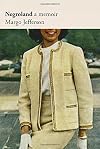
Negroland: A Memoir
by Margo Jefferson
On This Page
Description
"At once incendiary and icy, mischievous, and provocative, celebratory and elegiac, a deeply felt meditation on race, sex, and American culture through the prism of the author's rarefied upbringing and education among a black elite concerned to distance itself from whites and the black generality, while tirelessly measuring itself against both. Born in 1947 in upper-crust black Chicago--her father was for years head of pediatrics at Provident, at the time the nation's oldest black hospital; show more her mother was a socialite-- Margo Jefferson has spent most of her life among (call them what you will) the colored aristocracy, the colored elite, the blue-vein society. Since the nineteenth century they have stood apart, these inhabitants of Negroland, "a small region of Negro America where residents were sheltered by a certain amount of privilege and plenty." Reckoning with the strictures and demands of Negroland at crucial historical moments-- the civil rights movement, the dawn of feminism, the fallacy of post-racial America-- Jefferson brilliantly charts the twists and turns of a life informed by psychological and moral contradictions. Aware as it is of heart-wrenching despair and depression, this book is a triumphant paean to the grace of perseverance. (With 8 pages of black-and-white illustrations.)"-- show lessTags
Recommendations


Member Reviews
Jefferson was born into a privileged family in Chicago; her father was head of paediatrics at a famous local hospital and her mother was a well-known socialite. Even though she had a rarefied upbringing and decent education in 1950’s America and could be considered part of the local elite, she was never going to be accepted by society in general, because she was black.
“I call it Negroland because I still find “Negro” a word of wonders, glorious and terrible. A word for runaway slave posters and civil rights proclamations; for social constructs and street corner flaunts. A tonal-language word whose meaning shifts as setting and context shift, as history twists, lurches, advances, and stagnates. As capital letters appear to show more enhance its dignity; as other nomenclatures”
Jefferson’s family were members of what she describes as Negroland, an exclusive club of privileged blacks or what her mother calls, “upper-class Negroes and upper-middle-class Americans”. They were excluded from the very high society of Chicago because of their colour whilst never managing to integrate themselves fully in the black community there. Through her eyes, we see American societies crucial turning points in the late 20th century; civil rights, gender awareness and prejudice.
“Privilege is provisional. Privilege can be denied, withheld, offered grudgingly and summarily withdrawn. Entitlement is impervious to the kinds of verbs that modify privilege. Our people have had to work, scrape for privilege, gobble it down when those who would snatch it away weren’t looking. Keep a close watch.”
The writing is conversational and at times chatty, but most importantly it is full of wry commentary, provocative observations and melancholic musings. She shows perseverance in trying to make her way in a country that has made real progression with regards to race, but still has so far to go. Worth reading for an insight into a culture and a country so very different to mine. show less
“I call it Negroland because I still find “Negro” a word of wonders, glorious and terrible. A word for runaway slave posters and civil rights proclamations; for social constructs and street corner flaunts. A tonal-language word whose meaning shifts as setting and context shift, as history twists, lurches, advances, and stagnates. As capital letters appear to show more enhance its dignity; as other nomenclatures”
Jefferson’s family were members of what she describes as Negroland, an exclusive club of privileged blacks or what her mother calls, “upper-class Negroes and upper-middle-class Americans”. They were excluded from the very high society of Chicago because of their colour whilst never managing to integrate themselves fully in the black community there. Through her eyes, we see American societies crucial turning points in the late 20th century; civil rights, gender awareness and prejudice.
“Privilege is provisional. Privilege can be denied, withheld, offered grudgingly and summarily withdrawn. Entitlement is impervious to the kinds of verbs that modify privilege. Our people have had to work, scrape for privilege, gobble it down when those who would snatch it away weren’t looking. Keep a close watch.”
The writing is conversational and at times chatty, but most importantly it is full of wry commentary, provocative observations and melancholic musings. She shows perseverance in trying to make her way in a country that has made real progression with regards to race, but still has so far to go. Worth reading for an insight into a culture and a country so very different to mine. show less
Margo Jefferson's Negroland is a memoir of growing up in 1950s Chicago as a member of the "Talented Tenth" or the "Third Race"—upper-middle-class Black people whose very successes made them all the more conscious of race, class, and the visible performance of respectability. Jefferson's prose is cool and crisp and consciously analytical, sometimes wry, sometimes rueful; she shies away from the more lurid sharing of intimacies that characterises other memoirs. Yet despite that there is something vulnerable and raw in this book, as Jefferson lays out the mental burden imposed on her and other Black people by constantly reckoning with racial injustice, with class issues, with gender roles. An engrossing read.
This book is marketed as a memoir but I'd maybe describe it more as an observed history or the psychological unpacking of one woman's black identity. I loved Jefferson's writing style from the jump. She is so clearly smarter than me, more well read and more cultured than me. I love the flexing. I love that when I give this a closer second read, I'll have a long list of writers and musicians and historical figures to check out. Jefferson is writing about a history that she has a personal vested interest in, she has a point to make and her use of language is so intentional and pointed. When she simply described a historical event as "white people instigated riots," I knew I'd rate this highly. On top of the intellectual flexing and the show more pointed language, Jefferson is also hella funny. Sometimes she does these asides, these dramatic reenactments that I found hilarious. But again, sometimes its just her use of language, her quippy expressions of thought that had me laughing out loud and rewinding the audiobook to play back. Her writing actually reminded me if Cristina Rivera Garza's writing in Grieving. Garza's writing lacked this level of humor though.
As for content...this book honestly felt like it was written for black audiences, which I appreciate, because its talking about complex issues in the black community. A super simplified summary is that Negroland was/is a class of people who believed in exceptionalism as a solution to most of the racial woes they experienced from being black in America. Jefferson describes what it was like growing up in that environment and the sort of residue it left on her psyche as she matured.
As a lower middle class black kid who went to predominantly white schools in the 90s and early 00s, Negroland is still incredibly relatable. As a child growing up in that environment there is just a lot you're learning on your own, that your parents are teaching you, and that your parents are trying to protect you from racially. Every kid who grows up in a similar situation probably has a memoir's worth of stuff to unpack, so it was nice seeing Jefferson unpack it, acknowledging her flaws and the mistakes she made along the way, and then finally releasing it and moving on.
From a historical/social commentary perspective, I think this provides a treasure trove of unsung heroes, stories, and insight. While more of this generation sees the problems with exceptionalism as a solution, the core issues that supported that idea are why there are still so many conversations about the success of white mediocrity. Like the core issue of the oppression of black has never disappeared in America and Jefferson's story represents one segment of a generation's attempt to solve it. I also think as my own generation has moved away from this idea, its been easy for us to forget just how hard our parents and grandparents were grinding to make this a tolerable country to live in for us. Even if this group was wrong in wanting to be "better" than the average black person, the good they did can't be dismissed. They were the politicians, they were on the different boards, they were integrating neighborhoods. They were living up to whatever white standard was in place so they could get their foot in the door. U.S. culture has changed so much in the last eighty years, and we owe at least part of that to them.
So, yeah, absolutely loved this. Its the history of one segment of a black generation that we don't have enough stories about. show less
As for content...this book honestly felt like it was written for black audiences, which I appreciate, because its talking about complex issues in the black community. A super simplified summary is that Negroland was/is a class of people who believed in exceptionalism as a solution to most of the racial woes they experienced from being black in America. Jefferson describes what it was like growing up in that environment and the sort of residue it left on her psyche as she matured.
As a lower middle class black kid who went to predominantly white schools in the 90s and early 00s, Negroland is still incredibly relatable. As a child growing up in that environment there is just a lot you're learning on your own, that your parents are teaching you, and that your parents are trying to protect you from racially. Every kid who grows up in a similar situation probably has a memoir's worth of stuff to unpack, so it was nice seeing Jefferson unpack it, acknowledging her flaws and the mistakes she made along the way, and then finally releasing it and moving on.
From a historical/social commentary perspective, I think this provides a treasure trove of unsung heroes, stories, and insight. While more of this generation sees the problems with exceptionalism as a solution, the core issues that supported that idea are why there are still so many conversations about the success of white mediocrity. Like the core issue of the oppression of black has never disappeared in America and Jefferson's story represents one segment of a generation's attempt to solve it. I also think as my own generation has moved away from this idea, its been easy for us to forget just how hard our parents and grandparents were grinding to make this a tolerable country to live in for us. Even if this group was wrong in wanting to be "better" than the average black person, the good they did can't be dismissed. They were the politicians, they were on the different boards, they were integrating neighborhoods. They were living up to whatever white standard was in place so they could get their foot in the door. U.S. culture has changed so much in the last eighty years, and we owe at least part of that to them.
So, yeah, absolutely loved this. Its the history of one segment of a black generation that we don't have enough stories about. show less
My interest in this audiobook waxed and waned but, by the end, I was sure glad I listened. It was such an eye-opening look at middle- and upper-middle class African Americans, many who could pass or almost pass for white, from the POV of one who lived it.
This apparent need for human hierarchies reminded me of an incident at my all-white elementary school in the late 50s. In first grade, when my blond hair turned brown, I was no longer allowed to be an angel in the Christmas play. That role was reserved for blonds. But since my eyes were blue, I could be a runner-up angel. I didn't think much about it then but I sure do now.
My mother passed for white, despite her dark hair and eyes and olive skin. As did her mother, who had lighter skin show more than her own daughter and married a white man. Genetics can throw surprises. But my mom still passed. My great-grandmother couldn't pass, not on the street or in the census, though she illegally married the white man she lived with after they had two daughters. And they stayed married for life.
So this book brought up a lot of my own family issues. I never knew of my African roots till DNA tests in middle age and, later, genealogy records. I never lived the life of Margo Jefferson as I was raised white in a white world. By the time of the DNA tests, both my parents were long gone. Did my mom harbor a secret? Or my grandmother? Did they ever live in "Negroland"? I'll never know.
My mom was in the WWII generation when it was important to be white. Too bad for her. My sister and I, who did the DNA tests, came of age in the civil rights era of the 60s and we thought the test results were very cool. No secret here. I tell people all the time -- probably too many as I won't shut up! -- including my own adopted brown daughters. Who wants to be boring and white? Knowing, of course, that I enjoy all the fun and none of the discrimination. So please forgive my hypocrisy.
Thanks to Margo for bringing up all these issues. It seemed like she and her family were trapped between two worlds and didn't fit into either. The book was a huge contribution to my increasing education about the Black experience.
Recommended to all, regardless of your roots! show less
This apparent need for human hierarchies reminded me of an incident at my all-white elementary school in the late 50s. In first grade, when my blond hair turned brown, I was no longer allowed to be an angel in the Christmas play. That role was reserved for blonds. But since my eyes were blue, I could be a runner-up angel. I didn't think much about it then but I sure do now.
My mother passed for white, despite her dark hair and eyes and olive skin. As did her mother, who had lighter skin show more than her own daughter and married a white man. Genetics can throw surprises. But my mom still passed. My great-grandmother couldn't pass, not on the street or in the census, though she illegally married the white man she lived with after they had two daughters. And they stayed married for life.
So this book brought up a lot of my own family issues. I never knew of my African roots till DNA tests in middle age and, later, genealogy records. I never lived the life of Margo Jefferson as I was raised white in a white world. By the time of the DNA tests, both my parents were long gone. Did my mom harbor a secret? Or my grandmother? Did they ever live in "Negroland"? I'll never know.
My mom was in the WWII generation when it was important to be white. Too bad for her. My sister and I, who did the DNA tests, came of age in the civil rights era of the 60s and we thought the test results were very cool. No secret here. I tell people all the time -- probably too many as I won't shut up! -- including my own adopted brown daughters. Who wants to be boring and white? Knowing, of course, that I enjoy all the fun and none of the discrimination. So please forgive my hypocrisy.
Thanks to Margo for bringing up all these issues. It seemed like she and her family were trapped between two worlds and didn't fit into either. The book was a huge contribution to my increasing education about the Black experience.
Recommended to all, regardless of your roots! show less
As I grew, I learned that in the world beyond family and family friends, your mistakes - bad manners, poor taste, an excess of high spirits - could put you, your parents, and your people at risk. All of you could be designated, at a stroke and for life, vulgar, coarse, and inferior.
Privilege has become quite the buzzword these days. An abstract concept with far-reaching, concrete consequences. People are acknowledging their privileges, checking their privileges, arguing that to discourse about the experiences of some oppressed group is off-limit to the ones who possess some extra privileges.
After all, what can an affluent upper-class African-American tell us about growing up black in mid-century America that we haven't heard or seen show more from countless media? What hardships could they have possibly experienced when the privileges of money have probably shielded them from the worst of the collective black experiences? Sure, a slur here, or perhaps a chance phrase or act there from a particular ignorant acquaintance or authority figure, some minor moment which you tell your friends later as a can-you-believe-it anecdote quickly followed with an eyeroll and a laugh, but really just tiny blips in the grand scheme of their otherwise privileged life.
But here, Jefferson shows just how these small everyday aggravations are part of a larger ingrained system of racism which no amount of privilege can shelter you from. To grow up as a member group who has been or is oppressed is to have the weight and expectation of everyone - supporters and oppressors - on you. To fail or fall to any stereotypes is to reaffirm the prejudices of your oppressors. To succeed is to be a symbol of hope and pride to your group.
You walk the tightrope of suppressing any personality that can be perceived as a negative of your entire group and conforming to the ideal of the unobtrusive success (but not TOO successful) story which is then held up as proof of some post-racial society - after all, how can race be an issue when someone from the race can succeed!
Being black/American is not a prerequisite to reading this book. Many aspects of the book regarding discrimination (be it race or gender) still resonated with me and it made me privy to some private black American experiences that I have never considered before. I highly recommend this book to all human beings. show less
Privilege has become quite the buzzword these days. An abstract concept with far-reaching, concrete consequences. People are acknowledging their privileges, checking their privileges, arguing that to discourse about the experiences of some oppressed group is off-limit to the ones who possess some extra privileges.
After all, what can an affluent upper-class African-American tell us about growing up black in mid-century America that we haven't heard or seen show more from countless media? What hardships could they have possibly experienced when the privileges of money have probably shielded them from the worst of the collective black experiences? Sure, a slur here, or perhaps a chance phrase or act there from a particular ignorant acquaintance or authority figure, some minor moment which you tell your friends later as a can-you-believe-it anecdote quickly followed with an eyeroll and a laugh, but really just tiny blips in the grand scheme of their otherwise privileged life.
But here, Jefferson shows just how these small everyday aggravations are part of a larger ingrained system of racism which no amount of privilege can shelter you from. To grow up as a member group who has been or is oppressed is to have the weight and expectation of everyone - supporters and oppressors - on you. To fail or fall to any stereotypes is to reaffirm the prejudices of your oppressors. To succeed is to be a symbol of hope and pride to your group.
You walk the tightrope of suppressing any personality that can be perceived as a negative of your entire group and conforming to the ideal of the unobtrusive success (but not TOO successful) story which is then held up as proof of some post-racial society - after all, how can race be an issue when someone from the race can succeed!
Being black/American is not a prerequisite to reading this book. Many aspects of the book regarding discrimination (be it race or gender) still resonated with me and it made me privy to some private black American experiences that I have never considered before. I highly recommend this book to all human beings. show less
"Negroland children were warned by their parents that few Negroes enjoyed their privilege or plenty; that most non-Negro Americans would be glad to see their kind of Negro returned to indigence, deference, and subservience."
Between the late 1940s and the early 1960s, Good Negro Girls mastered the rigorous vocabulary of femininity. Gloves, handkerchiefs, pocketbooks for each occasion. Good diction for all occasions; skin care (no ashy knees or elbows); hair cultivation (a ceaseless round of treatments to eradicate the bushy and the nappy). Manners to please grandparents and quell the doubts of any white strangers loitering to observe your behavior in schools, stores, and restaurants."
Margo Jefferson was born in 1947 to upper middle show more class African American parents. Living near (and later in) the Hyde Park neighborhood in Chicago, Margo and her sister Denise had access to education, lessons, and social promotion. Her memoir examines the cost associated with living in this segment of society, knowing that her deportment reflected on far more than her family (though certainly that) and that the intersection of race and class provided for a dizzyingly complex social terrain in which to come of age.
Despite a bit of choppiness in the early going, this memoir is poignant and insightful. Jefferson's shifting sense of self in context as the civil rights, feminist, and gay rights movements of the late 1960s and 1970s is particularly evocative. She authentically shares her struggles with belonging, boys, thoughts of suicide, and finding her place as a writer and cultural critic. Definitely recommended. show less
Between the late 1940s and the early 1960s, Good Negro Girls mastered the rigorous vocabulary of femininity. Gloves, handkerchiefs, pocketbooks for each occasion. Good diction for all occasions; skin care (no ashy knees or elbows); hair cultivation (a ceaseless round of treatments to eradicate the bushy and the nappy). Manners to please grandparents and quell the doubts of any white strangers loitering to observe your behavior in schools, stores, and restaurants."
Margo Jefferson was born in 1947 to upper middle show more class African American parents. Living near (and later in) the Hyde Park neighborhood in Chicago, Margo and her sister Denise had access to education, lessons, and social promotion. Her memoir examines the cost associated with living in this segment of society, knowing that her deportment reflected on far more than her family (though certainly that) and that the intersection of race and class provided for a dizzyingly complex social terrain in which to come of age.
Despite a bit of choppiness in the early going, this memoir is poignant and insightful. Jefferson's shifting sense of self in context as the civil rights, feminist, and gay rights movements of the late 1960s and 1970s is particularly evocative. She authentically shares her struggles with belonging, boys, thoughts of suicide, and finding her place as a writer and cultural critic. Definitely recommended. show less
An exceptional account of growing up in an African-American community where education and financial security is more important than skin colour, and the effect that has on the author. Jefferson talks about the in-betweenness of black Americans who grow up in what she calls Negroland, educating themselves to be the equals of affluent white Americans but not accepted as such by white society, and considered traitors to their wider community by black Americans who don't share their privilege.
Members
- Recently Added By
Lists

Must-Read Books by Black Authors
114 works; 92 members

Black Authors
384 works; 32 members

Books Read in 2015
3,299 works; 129 members
Books Read in 2016
4,666 works; 197 members

Penguin Random House
458 works; 4 members

Books Read in 2018
4,360 works; 110 members

Women's History Month: Suggested Reads
63 works; 6 members

Books Read in 2022
5,166 works; 112 members

Biographies: Women
112 works; 1 member
Author Information

6+ Works 1,118 Members
Margo Jefferson was a theater and book critic for Newsweek and The New York Times. She won a Pulitzer Prize for criticism. Her writing has appeared in several publications including Vogue, New York magazine, and The New Republic. Her books include On Michael Jackson and Negroland: A Memior. She is a professor of writing at Columbia University show more School of the Arts. (Bowker Author Biography) show less
Awards and Honors
Awards
Distinctions
Series
Belongs to Publisher Series
Privé-domein (297)
Common Knowledge
- Original publication date
- 2015
- People/Characters
- Margo Jefferson
- Important places
- Chicago, Illinois, USA
- Original language
- English US
- Canonical DDC/MDS
- 305.8960730773110904
- Canonical LCC
- F548.9.N4
Classifications
- Genres
- Biography & Memoir, Nonfiction, General Nonfiction, History
- DDC/MDS
- 305.8960730773110904 — Society, government, & culture Social sciences, sociology & anthropology Social group - Age, Gender, Ethnicity Ethnic and national groups Other ethnic and national groups Africans and people of African descent; Blacks of African origin standard subdivisions / located in North America African Americans {United States Blacks}
- LCC
- F548.9 .N4 — Local History of the United States, Canada and Latin America United States local history Illinois
- BISAC
Statistics
- Members
- 820
- Popularity
- 33,663
- Reviews
- 33
- Rating
- (3.57)
- Languages
- Dutch, English, Italian
- Media
- Paper, Audiobook, Ebook
- ISBNs
- 22
- ASINs
- 6