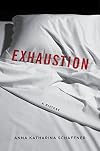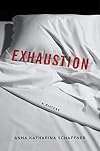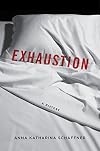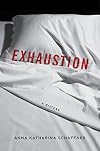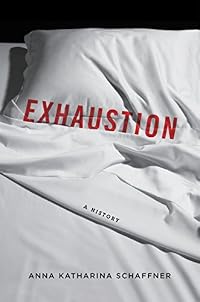
Exhaustion: A History
by Anna K. Schaffner
On This Page
Description
Today our fatigue feels chronic; our anxieties, amplified. Proliferating technologies command our attention. Many people complain of burnout, and economic instability and the threat of ecological catastrophe fill us with dread. We look to the past, imagining life to have once been simpler and slower, but extreme mental and physical stress is not a modern syndrome. Beginning in classical antiquity, this book demonstrates how exhaustion has always been with us and helps us evaluate more show more critically the narratives we tell ourselves about the phenomenon.Medical, cultural, literary, and biographical sources have cast exhaustion as a biochemical imbalance, a somatic ailment, a viral disease, and a spiritual failing. It has been linked to loss, the alignment of the planets, a perverse desire for death, and social and economic disruption. Pathologized, demonized, sexualized, and even weaponized, exhaustion unites the mind with the body and society in such a way that we attach larger questions of agency, willpower, and well-being to its symptoms. Mapping these political, ideological, and creative currents across centuries of human development, Exhaustion finds in our struggle to overcome weariness a more significant effort to master ourselves. show lessTags
Recommendations
































Member Reviews
This book combines a number of my interests, including psychology, the history of medicine, and literature. The text focuses on the history of depression, neurasthenia, acedia, or melancholy, as it has been called throughout the ages. It covers some of the same ground as Scott Stossel's [b:My Age of Anxiety: Fear, Hope, Dread, and the Search for Peace of Mind|17737025|My Age of Anxiety Fear, Hope, Dread, and the Search for Peace of Mind|Scott Stossel|https://images.gr-assets.com/books/1367929729s/17737025.jpg|24906873], only with literary allusions instead of personal anecdotes.
I appreciated the discussion of exhaustion in a historical and literary context, and was going to give this book five stars, until the part about ME. I'm no show more expert on the illness, but I felt that it was discussed in a rather dismissive tone. The stated purpose of the author was to describe types of exhaustion that aren't caused by a specific physical health issue, so the inclusion of chronic fatigue syndrome had problematic implications.
While there were many allusions to classic literature and philosophy, the book lacked the voices of contemporary suffers of conditions that can cause exhaustion. There was no mention of spoon theory, a concept which is surprisingly similar to Beard's nervous bankruptcy. I've often thought that there is nothing intuitive about using spoons as a measure of energy as opposed to say, batteries, but it's relatively timeless compared to the specific metaphors used in other eras.
Overall, I think this book would have been an excellent cultural history of exhaustion and depression up until the mid-twentieth century. The discussion of current manifestations of those conditions would have been better expanded or omitted. show less
I appreciated the discussion of exhaustion in a historical and literary context, and was going to give this book five stars, until the part about ME. I'm no show more expert on the illness, but I felt that it was discussed in a rather dismissive tone. The stated purpose of the author was to describe types of exhaustion that aren't caused by a specific physical health issue, so the inclusion of chronic fatigue syndrome had problematic implications.
While there were many allusions to classic literature and philosophy, the book lacked the voices of contemporary suffers of conditions that can cause exhaustion. There was no mention of spoon theory, a concept which is surprisingly similar to Beard's nervous bankruptcy. I've often thought that there is nothing intuitive about using spoons as a measure of energy as opposed to say, batteries, but it's relatively timeless compared to the specific metaphors used in other eras.
Overall, I think this book would have been an excellent cultural history of exhaustion and depression up until the mid-twentieth century. The discussion of current manifestations of those conditions would have been better expanded or omitted. show less
Ratings
Members
- Recently Added By
Lists

Books in the Bibliography of Digital Lethargy by Tung-Hui Hu
151 works; 3 members
Author Information
5 Works 67 Members
Anna Katharina Schaffner teaches comparative literature and is Co-Director of the Centre for Modern European Literature at the University of Kent, UK. Her publications include Sprachzerlegung in historischer Avantgardetyrik und konkreter poesie (2007) and articles on Dada, David Lynch, Franz Kafka, Frank Schulz, Richard von Krafft-Ebing and Thomas show more Mann. show less
Awards and Honors
Notable Lists
Classifications
Statistics
- Members
- 33
- Popularity
- 815,290
- Reviews
- 1
- Rating
- (4.33)
- Languages
- English
- Media
- Paper, Ebook
- ISBNs
- 3
- ASINs
- 1