On This Page
Description
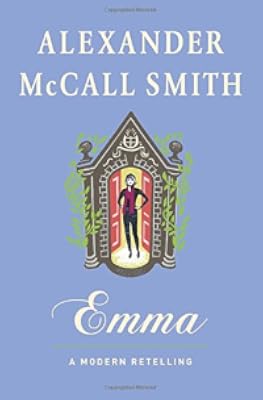
"The summer after university, Emma Woodhouse returns home to the village of Highbury, where she will live with her health-conscious father until she is ready to launch her interior-design business and strike out on her own. In the meantime, she will do what she does best: offer guidance to those less wise in the ways of the world than herself. Happily, this summer brings many new faces to Highbury and into the sphere of Emma's not always perfectly felicitous council: Harriet Smith, a naive show more teacher's assistant at the ESL school run by the hippie-ish Mrs. Goddard; Frank Churchill, the attractive stepson of Emma's former governess; and, of course, the perfect Jane Fairfax. This Emma is wise, witty, and totally enchanting, and will appeal equally to Sandy's multitude of fans and the enormous community of wildly enthusiastic Austen aficionados"-- show lessTags
Recommendations




Member Reviews
The Jane Austen Project is what I like to think of as 'car crash fiction' - you know you should avert your eyes from the suffering of others, but sometimes you just can't help staring. Even an early glimpse at the horrific smash-up that is Alexander McCall Smith's modern retelling of Emma didn't put me off (but I did wait for a library copy - no way in hell was I paying £10 for the dubious dishonour!) Reader, take heed - the low star reviews of this disastrous reworking are there to spare future pain!
Oh, where to start. I think the basic problem with McCall Smith's Emma is that old balancing act of trying to stay rigidly true to the original while creating a fresh twist on two hundred year old characters. The interwoven threads of show more Austen's plot have undergone the 'jigsaw puzzle in a charity shop' treatment, with too many missing pieces to recreate the picture on the box. Emma, for instance, no longer has the excuse of a sheltered upbringing amongst doting family to excuse her behaviour - having been to school, and university, McCall's Emma is basically just an acid-tongued bitch. George Knightley still lives next door, but although we are told how pally he and Emma have become since she returned home (to Norfolk!), there is little evidence and even less chemistry. Emma tries to foist Harriet on Elton, but Elton drunkenly rejects her friend, then crashes into a ditch on his way home. (I was actually dreading the modern take on Elton 'making violent love' to Emma!) And Jane and Frank need not have bothered attending - I got the distinct impression that the author's notes ran as follows: 'Jane F. - orphan, Campbells, blah blah - PIANO!'
McCall Smith also spends far too much time wandering off on tangents - we learn more about the previous owner of Randalls and the solar panel installer called Ronnie who runs off with Knightley's one and only girlfriend - and attempting Austen-style 'social commentary' - religion, international adoption and historical guilt - than developing the characters or the plot. I love Austen's novel so much because the characters come alive for me, and even though nothing seems to happen on the surface, the reader cares so much for the everyday lives of Highbury that even a cancelled ball and an outing to Box Hill are worth reading about. Not so here. The characters are off-kilter, the dialogue is stilted, and Alexander McCall Smith is obviously struggling - and failing - to understand the heroine throughout. Is she a closet lesbian ('I am not interested in girls. I'm just not') or just generally sex-obsessed ('Emma beamed with pleasure. Sex. Miss Taylor and James Weston')? Either the author was inspired by Emma Tennant, or Emma's situation does not translate well to the modern day.
What I imagine was supposed to be a wry parody of Austen's longest and cleverest novel - McCall Smith is very fond of poking fun at 'old fashioned' references to governesses, gentlemen farmers and making up numbers at dinner parties - has actually turned into more of a haphazard York Notes summary of the source material. Reading this revised edition, however, would likely only confuse any lazy first-time readers - even more than watching the 1996 film adaptation! - and any lover of Austen (and Emma in particular) should keep their distance. Revisit the original characters instead! show less
Oh, where to start. I think the basic problem with McCall Smith's Emma is that old balancing act of trying to stay rigidly true to the original while creating a fresh twist on two hundred year old characters. The interwoven threads of show more Austen's plot have undergone the 'jigsaw puzzle in a charity shop' treatment, with too many missing pieces to recreate the picture on the box. Emma, for instance, no longer has the excuse of a sheltered upbringing amongst doting family to excuse her behaviour - having been to school, and university, McCall's Emma is basically just an acid-tongued bitch. George Knightley still lives next door, but although we are told how pally he and Emma have become since she returned home (to Norfolk!), there is little evidence and even less chemistry. Emma tries to foist Harriet on Elton, but Elton drunkenly rejects her friend, then crashes into a ditch on his way home. (I was actually dreading the modern take on Elton 'making violent love' to Emma!) And Jane and Frank need not have bothered attending - I got the distinct impression that the author's notes ran as follows: 'Jane F. - orphan, Campbells, blah blah - PIANO!'
McCall Smith also spends far too much time wandering off on tangents - we learn more about the previous owner of Randalls and the solar panel installer called Ronnie who runs off with Knightley's one and only girlfriend - and attempting Austen-style 'social commentary' - religion, international adoption and historical guilt - than developing the characters or the plot. I love Austen's novel so much because the characters come alive for me, and even though nothing seems to happen on the surface, the reader cares so much for the everyday lives of Highbury that even a cancelled ball and an outing to Box Hill are worth reading about. Not so here. The characters are off-kilter, the dialogue is stilted, and Alexander McCall Smith is obviously struggling - and failing - to understand the heroine throughout. Is she a closet lesbian ('I am not interested in girls. I'm just not') or just generally sex-obsessed ('Emma beamed with pleasure. Sex. Miss Taylor and James Weston')? Either the author was inspired by Emma Tennant, or Emma's situation does not translate well to the modern day.
What I imagine was supposed to be a wry parody of Austen's longest and cleverest novel - McCall Smith is very fond of poking fun at 'old fashioned' references to governesses, gentlemen farmers and making up numbers at dinner parties - has actually turned into more of a haphazard York Notes summary of the source material. Reading this revised edition, however, would likely only confuse any lazy first-time readers - even more than watching the 1996 film adaptation! - and any lover of Austen (and Emma in particular) should keep their distance. Revisit the original characters instead! show less
In this updated version of Jane Austen's Emma, Emma Woodhouse has come home to Highbury for the summer after completing her degree. While she plans to start her own interior design business in the fall, Emma's summer is free to use as she likes. And, of course, there is nothing Emma wants more than to arrange the lives of the people around her to what she perceives to be the best advantage.
For fans of Austen's original novel, McCall Smith's retelling will be delight. Interestingly, the novel spends a great deal more time developing the back story of the original novel. However, this means that readers spend more time with Mr. Woodhouse, who remains hysterical in his anxieties. I found it surprising how much more I was affronted by show more Emma's meddling in the modern context than in the classic novel. Perhaps there's something about Austen's language that makes Emma's foibles more endearing than being able to view her as entirely snobbish and flawed in the 21st century setting. That being said, any Austen fan will utterly enjoy this updated version. show less
For fans of Austen's original novel, McCall Smith's retelling will be delight. Interestingly, the novel spends a great deal more time developing the back story of the original novel. However, this means that readers spend more time with Mr. Woodhouse, who remains hysterical in his anxieties. I found it surprising how much more I was affronted by show more Emma's meddling in the modern context than in the classic novel. Perhaps there's something about Austen's language that makes Emma's foibles more endearing than being able to view her as entirely snobbish and flawed in the 21st century setting. That being said, any Austen fan will utterly enjoy this updated version. show less
I really like all Jane Austen's books... except Emma. I dislike the eponymous character and all her works and all her empty promises... oops, wrong allusion. So it was with curiosity and mild trepidation that I approached this book. Alexander McCall Smith, however, has done the impossible and given us an Emma whom I can like. Emma-the-rewrite is written in much the same style as the Scotland Street series. We flit from the mind of one character to another, privy to their reflections and interior monologues. Since AMS is an unusually kind and compassionate person, more so than many of us such as (for instance) Jane Austen, this approach gives us a very compassionate look at Emma's motivations and foibles and I found myself, if not show more totally in sympathy, at least more so than before. He also gives a great deal of backstory to Mr Woodhouse and again, I liked the character better for it. To understand all is to forgive all, or at least to forgive nearly all. show less
Pretty, clever, and rich Emma Woodhouse meddles in the lives of those around her in the small town of Highbury, with sometimes disastrous results.
This novel is among the legions of Jane Austen-inspired books that have emerged over the past couple of decades. In this case, McCall Smith tackles updating the story of Emma to a modern setting, with less than stellar success. I'm not an Austen purist per se and I've liked other works by McCall Smith, so I was curious about this one. Buyer beware this book is not at all a pastiche and is much more McCall Smith than it is Austen. That means it has some of McCall Smith's more charming literary quirks, like digressing into philosophical ramblings at random times throughout the story. It also show more means that it has some of McCall Smith's more annoying literary habits like repeating a joke to the point of beating it to death (e.g., in this book the "BMW something-something" and the "way to the railway station" were way past amusing after the tenth or so mention).
As for the modernization, things get a little murky. Yes, obviously some things are clearly very different from Jane Austen's day, like women going to college and everybody motoring about in their cars. But other things are left oddly old-fashioned, such as Mr. Woodhouse seeking to "marry off" Isabella by featuring her photograph in a Country Life magazine, a still rather significant age gap between Emma and Mr. Knightley, the idea that Harriet can't provide for herself with her job but must find a wealthy man to pamper her, that Miss Taylor is still known as a "governess" to the young Woodhouse girls, and parental figures dying off rather than divorcing, moving, or some other way of removing them from the picture. Somehow it all just doesn't mesh well as a "modernization," although past examples of this done well indicate that Austen's novels can transcend time ... but usually only if each individual element isn't followed quite strictly but the story is simply kept in the right spirit.
Speaking of spirit, the character of Emma is rather different here, in my opinion. In Austen's novel, Emma is snobbish and naïve but rather clueless about both of those traits. She's ultimately likable, even if she does some pretty stupid things. This Emma is deceptive and down-right mean-spirited at times. She's really not a likable person at the end of the day and her plans often don't seem to have anyone's best interests at heart. Some characters seem fairly true to the original, like the hypochondriac Mr. Woodhouse and the unworldly Harriet, while others are unlike their original counterparts, such as Miss Taylor, who comes across as rather stern here. Small oddities are given to certain characters, like Mrs. Goddard baking pot brownies and Mr. Weston being a gym rat, which are neither improvements nor detractions in and of themselves.
Charlotte Bronte famously hated Austen's novels for lacking "passion," and that criticism could fairly be laid at the feet of this modernization. Despite Emma's various schemes (and later regrets over what she's done), there's not much feeling that her matchmaking plans had any effect. For example, Phillip Elton does not do anything that seems to indicate he has romantic interest in Harriet; Harriet does not seem in the least bit affected to learn that he was seeking to impress Emma rather than her. Likewise, there is zero chemistry between Emma and George Knightley, who rarely even share scenes together, and it honestly seemed at times that Emma was more attracted to Harriet than anyone else .
There is a fun twist at the end in which the reader learns thatHarriet has been secretly -- and successfully -- matchmaking herself , but the reader has to plough through the rest of the book to finally reach that one interesting tweak to Austen's framework. One other significant change to Austen's original work is that we see a lot more of other characters' perspectives, most particularly that of Mr. Woodhouse, and there is a great deal of the beginning part of the book devoted to Mr. Woodhouse as a young widow raising his small children, the securing of Miss Taylor as governess, Isabella finding a husband, etc. While I enjoyed this to some degree, it seems like the problem I mentioned above of the lack of passion and real connection between characters is a result of so much of the book focusing on early life and not the "main" action of the plot.
On the plus side, Susan Lyons was a great narrator for the audiobook version and did an excellent job differentiating all the characters and using the appropriate accents as needed.
Overall, I was entertained by this novel but didn't think it was anything of real substance and found some of the character/plot changes (or lack thereof as the case may be) to be odd and ineffective. I'd much prefer the real deal of Austen's original novels any day or even any of McCall Smith's own works. show less
This novel is among the legions of Jane Austen-inspired books that have emerged over the past couple of decades. In this case, McCall Smith tackles updating the story of Emma to a modern setting, with less than stellar success. I'm not an Austen purist per se and I've liked other works by McCall Smith, so I was curious about this one. Buyer beware this book is not at all a pastiche and is much more McCall Smith than it is Austen. That means it has some of McCall Smith's more charming literary quirks, like digressing into philosophical ramblings at random times throughout the story. It also show more means that it has some of McCall Smith's more annoying literary habits like repeating a joke to the point of beating it to death (e.g., in this book the "BMW something-something" and the "way to the railway station" were way past amusing after the tenth or so mention).
As for the modernization, things get a little murky. Yes, obviously some things are clearly very different from Jane Austen's day, like women going to college and everybody motoring about in their cars. But other things are left oddly old-fashioned, such as Mr. Woodhouse seeking to "marry off" Isabella by featuring her photograph in a Country Life magazine, a still rather significant age gap between Emma and Mr. Knightley, the idea that Harriet can't provide for herself with her job but must find a wealthy man to pamper her, that Miss Taylor is still known as a "governess" to the young Woodhouse girls, and parental figures dying off rather than divorcing, moving, or some other way of removing them from the picture. Somehow it all just doesn't mesh well as a "modernization," although past examples of this done well indicate that Austen's novels can transcend time ... but usually only if each individual element isn't followed quite strictly but the story is simply kept in the right spirit.
Speaking of spirit, the character of Emma is rather different here, in my opinion. In Austen's novel, Emma is snobbish and naïve but rather clueless about both of those traits. She's ultimately likable, even if she does some pretty stupid things. This Emma is deceptive and down-right mean-spirited at times. She's really not a likable person at the end of the day and her plans often don't seem to have anyone's best interests at heart. Some characters seem fairly true to the original, like the hypochondriac Mr. Woodhouse and the unworldly Harriet, while others are unlike their original counterparts, such as Miss Taylor, who comes across as rather stern here. Small oddities are given to certain characters, like Mrs. Goddard baking pot brownies and Mr. Weston being a gym rat, which are neither improvements nor detractions in and of themselves.
Charlotte Bronte famously hated Austen's novels for lacking "passion," and that criticism could fairly be laid at the feet of this modernization. Despite Emma's various schemes (and later regrets over what she's done), there's not much feeling that her matchmaking plans had any effect. For example, Phillip Elton does not do anything that seems to indicate he has romantic interest in Harriet; Harriet does not seem in the least bit affected to learn that he was seeking to impress Emma rather than her. Likewise,
There is a fun twist at the end in which the reader learns that
On the plus side, Susan Lyons was a great narrator for the audiobook version and did an excellent job differentiating all the characters and using the appropriate accents as needed.
Overall, I was entertained by this novel but didn't think it was anything of real substance and found some of the character/plot changes (or lack thereof as the case may be) to be odd and ineffective. I'd much prefer the real deal of Austen's original novels any day or even any of McCall Smith's own works. show less
While this is a re-telling of ‘Emma’, you wouldn’t have had to read Jane Austen’s classic or remember it to enjoy this version. A. McCall Smith is delightful in exploring the characters and updating the story to the present, and there are several characters and scenes that are quite funny. Some examples that come to mind are Mr. Woodhouse’s hypochondria and irrational fears, Miss Bates’s silly and scatterbrained verbal meandering, and Mr. Woodhouse watching impotently as his older daughter goes off on a motorcycle with a young man he’s hired to take her picture. We also of course have Emma and her endless scheming, ultimately leading to her own enlightenment and a very strong ending. For who hasn’t had the painful show more realization that he or she is not as good a person as they’ve always believed themselves to be? It makes me want to go back and re-read the original, and yet stands on its own. Well done.
Quotes:
On happiness (and art):
“Emma was happy. She realized that happiness is something that springs from the generous treatment of others, and that until one makes that connection, happiness may prove elusive. In Italy with George, that thought came even more forcefully to her when, in a small art gallery in an obscure provincial town well off the beaten track, she saw a seventeenth-century picture of a young man giving his hand to a young woman. And the young woman takes it and holds it, cherishing it, as one might cherish something that is fragile and vulnerable, and very precious. The eyes of the woman are not on the young man, nor upon the hand that she holds, but fixed on the one who views the painting, and they convey, as do so many of the figures in art that would say anything to us, this message: You do it too.”
On kindness:
“…she had been able to make that sudden imaginative leap that lies at the heart of our moral lives: the ability to see, even for a brief moment, the world as it is seen by the other person. It is this understanding that lies behind all kindness to others, all attempts to ameliorate the situation of those who suffer, all those acts of charity by which we make our lives something more than the pursuit of the goals of the unruly ego.”
On love:
“…love was as powerful as the ocean itself, as embracing, as strong as the sea is. Love. She was like a child playing with a newly learned word; there was the same sense of delight, of discovery. She was astonished by its force, and was struck by the insight that it seemed to bring with it. It was as if a great searchlight had been switched on in the darkness and was bathing all before it with its light, its warmth. Now the world made sense because she could see it. Now she knew why she should cherish what she saw about her: other people, the world itself, everything. Embarrassment had stopped her saying it, but now she saw that embarrassment for what it was, and it lay dismantled before her, the ruins of selfishness, of pride, of insensitivity.” show less
Quotes:
On happiness (and art):
“Emma was happy. She realized that happiness is something that springs from the generous treatment of others, and that until one makes that connection, happiness may prove elusive. In Italy with George, that thought came even more forcefully to her when, in a small art gallery in an obscure provincial town well off the beaten track, she saw a seventeenth-century picture of a young man giving his hand to a young woman. And the young woman takes it and holds it, cherishing it, as one might cherish something that is fragile and vulnerable, and very precious. The eyes of the woman are not on the young man, nor upon the hand that she holds, but fixed on the one who views the painting, and they convey, as do so many of the figures in art that would say anything to us, this message: You do it too.”
On kindness:
“…she had been able to make that sudden imaginative leap that lies at the heart of our moral lives: the ability to see, even for a brief moment, the world as it is seen by the other person. It is this understanding that lies behind all kindness to others, all attempts to ameliorate the situation of those who suffer, all those acts of charity by which we make our lives something more than the pursuit of the goals of the unruly ego.”
On love:
“…love was as powerful as the ocean itself, as embracing, as strong as the sea is. Love. She was like a child playing with a newly learned word; there was the same sense of delight, of discovery. She was astonished by its force, and was struck by the insight that it seemed to bring with it. It was as if a great searchlight had been switched on in the darkness and was bathing all before it with its light, its warmth. Now the world made sense because she could see it. Now she knew why she should cherish what she saw about her: other people, the world itself, everything. Embarrassment had stopped her saying it, but now she saw that embarrassment for what it was, and it lay dismantled before her, the ruins of selfishness, of pride, of insensitivity.” show less
Audio performed by Susan Lyons
This is book 3 in the Austen Project series, wherein authors take on Austen’s classic novels, reimagining the scenarios in contemporary times. In this outing, Mini Coopers replace carriages, and cappuccinos take the place of tea, but the characters, relationships and basic scenarios remain the same.
21st century Emma is still a wealthy, exasperatingly obtuse young woman with too much time on her hands and no real job to keep her mind engaged. Harriet Smith is her friend and pet project.
If you’ve read the original you’ll find yourself anticipating certain scenes – When does Emma meet Frank Churchill? When will Mr Elton get his signals crossed? When will the picnic happen? I actually found this a show more little distracting because I was looking forward to what might happen instead of paying attention to what was going on. That’s my failing, not the author’s.
I enjoyed this light romantic comedy, but it is not as good as the original. That is probably entirely to do with the time frame. Austen’s Emma was exasperating as she meddled in others' affairs and acted on the basis of misread social cues. However, I could understand her in the time frame of the Regency period. She was merely a product of her situation and social class; and her final realizations, however slow to come about, were all the more rewarding. But the modern Emma just has no such excuse for her superior manner. I cannot imagine how a college-educated young woman (even one from such a high social standing) would be so blind to the differences in people, and so clueless as to how snobbish she was being. I just could not like her at all.
Also, while Alexander McCall Smith included all the characters of Austen’s original – Vicar Elton, George Knightly, Isabella & John Knightly, Miss Taylor and Captain Westin, Miss Bates, Frank Churchill, and Jane Fairfax – he didn’t give them as much page time as Austen gave them. This modern Emma focused much more on the title character, and I missed those other people and their interactions.
The audio version is capably performed by Susan Lyons. She has good pacing and sufficient skill as a voice artist to differentiate the various characters. This is particularly helpful in the many scenes where two (or more) women are speaking. show less
This is book 3 in the Austen Project series, wherein authors take on Austen’s classic novels, reimagining the scenarios in contemporary times. In this outing, Mini Coopers replace carriages, and cappuccinos take the place of tea, but the characters, relationships and basic scenarios remain the same.
21st century Emma is still a wealthy, exasperatingly obtuse young woman with too much time on her hands and no real job to keep her mind engaged. Harriet Smith is her friend and pet project.
If you’ve read the original you’ll find yourself anticipating certain scenes – When does Emma meet Frank Churchill? When will Mr Elton get his signals crossed? When will the picnic happen? I actually found this a show more little distracting because I was looking forward to what might happen instead of paying attention to what was going on. That’s my failing, not the author’s.
I enjoyed this light romantic comedy, but it is not as good as the original. That is probably entirely to do with the time frame. Austen’s Emma was exasperating as she meddled in others' affairs and acted on the basis of misread social cues. However, I could understand her in the time frame of the Regency period. She was merely a product of her situation and social class; and her final realizations, however slow to come about, were all the more rewarding. But the modern Emma just has no such excuse for her superior manner. I cannot imagine how a college-educated young woman (even one from such a high social standing) would be so blind to the differences in people, and so clueless as to how snobbish she was being. I just could not like her at all.
Also, while Alexander McCall Smith included all the characters of Austen’s original – Vicar Elton, George Knightly, Isabella & John Knightly, Miss Taylor and Captain Westin, Miss Bates, Frank Churchill, and Jane Fairfax – he didn’t give them as much page time as Austen gave them. This modern Emma focused much more on the title character, and I missed those other people and their interactions.
The audio version is capably performed by Susan Lyons. She has good pacing and sufficient skill as a voice artist to differentiate the various characters. This is particularly helpful in the many scenes where two (or more) women are speaking. show less
My book club tries to read a classic every year. And I love Jane Austen. So you'd have thought I'd be thrilled to re-read Emma, wouldn't you? In fact I tend to dislike Emma the character rather a lot. Having read it multiple times already in my life, and disliking her more each time I read it, I decided that discretion was the better part of valor and opted to skip it this go-round. Instead, I picked up this modern retelling of the tale by Alexander McCall Smith to see if I could muster up more sympathy for her in a more modern setting. And I did, at least to an extent. McCall Smith does a good job of capturing and updating Austen's Emma without entirely losing the things that made the plot run.
Starting back with Mr. Woodhouse's birth show more and early life, McCall Smith fleshes out what makes the distracted, hypochondriacal man tick. Once that is established, he moves on to Emma's childhood and upbringing, explaining satisfactorily how two young girls in the present day would end up with such an old fashioned thing as a governess. The back story that doesn't come with Austen's Emma is actually rather protracted here but since the characters have already been rounded out by Austen, having more history on them, explaining how they came to be who Austen made them is rather nice. The plot, an immature and meddling young woman trying to pair up all the wrong people because of her own unintentional snobbishness and preconceived notions, is maintained and there are certainly moments of humor. Because the focus on adult Emma, recently finished with her interior design degree at university, and her matchmaking doesn't happen quite as early as in the original, the secondary characters are not nearly as full and integral to the story here, leaving the focus on Emma's unchecked unkindnesses to those she professes to love and her unasked for interference in their lives. McCall Smith's Emma seems to have a dawning self-awareness sooner than Austen's Emma though, which is not a bad thing. In contrast, Mr. Knightley is far less present in this novel than he was in the original. The courtship is foreshortened and the ending is speedily dispensed with in about two pages.
Although I've focused on the differences between the Austen and the McCall Smith, this is easily read by those who have never read the original. In fact, people looking for a one to one concordance between the books will be disappointed. Some situations have been left out and others elaborated on in ways that Austen could never have imagined two hundred some years ago. But this isn't Austen; it's McCall Smith and reads like it. McCall Smith is a charming writer and his version of Emma is a satisfying one. He has modernized it but not beyond all recognition. There are still some small threads that are oddly old fashioned but readers familiar with his gentle, courtly manner of writing will not be surprised. Not a bad re-telling over all and one that many Austen fans will appreciate, as will those folks coming to the story for the first time. show less
Starting back with Mr. Woodhouse's birth show more and early life, McCall Smith fleshes out what makes the distracted, hypochondriacal man tick. Once that is established, he moves on to Emma's childhood and upbringing, explaining satisfactorily how two young girls in the present day would end up with such an old fashioned thing as a governess. The back story that doesn't come with Austen's Emma is actually rather protracted here but since the characters have already been rounded out by Austen, having more history on them, explaining how they came to be who Austen made them is rather nice. The plot, an immature and meddling young woman trying to pair up all the wrong people because of her own unintentional snobbishness and preconceived notions, is maintained and there are certainly moments of humor. Because the focus on adult Emma, recently finished with her interior design degree at university, and her matchmaking doesn't happen quite as early as in the original, the secondary characters are not nearly as full and integral to the story here, leaving the focus on Emma's unchecked unkindnesses to those she professes to love and her unasked for interference in their lives. McCall Smith's Emma seems to have a dawning self-awareness sooner than Austen's Emma though, which is not a bad thing. In contrast, Mr. Knightley is far less present in this novel than he was in the original. The courtship is foreshortened and the ending is speedily dispensed with in about two pages.
Although I've focused on the differences between the Austen and the McCall Smith, this is easily read by those who have never read the original. In fact, people looking for a one to one concordance between the books will be disappointed. Some situations have been left out and others elaborated on in ways that Austen could never have imagined two hundred some years ago. But this isn't Austen; it's McCall Smith and reads like it. McCall Smith is a charming writer and his version of Emma is a satisfying one. He has modernized it but not beyond all recognition. There are still some small threads that are oddly old fashioned but readers familiar with his gentle, courtly manner of writing will not be surprised. Not a bad re-telling over all and one that many Austen fans will appreciate, as will those folks coming to the story for the first time. show less
Members
- Recently Added By
Lists

Stories Inspired by Other Fiction
127 works; 24 members
Talk Discussions
Past Discussions
Anyone Read Alexander McCall Smith's Emma? in I Love Jane Austen (October 2015)
Author Information

310+ Works 125,260 Members
Alexander McCall Smith was born on August 24, 1948 in Zimbabwe. He was a professor of medical law at the University of Edinburgh, but he left in 2005 to focus on his writing. He has written over 60 books, including specialist academic titles including Forensic Aspects of Sleep and The Criminal Law of Botswana, short story collections including show more Portuguese Irregular Verbs, and children's books including The Perfect Hamburger. He is best known for the No. 1 Ladies' Detective Agency series. He also writes the Corduroy Mansions, Isabel Dalhousie and 44 Scotland Street series. He has received numerous awards, including The Crime Writers' Association Dagger in the Library Award and the 2004 United Kingdom's Author of the Year Award. His book, The Full Cupboard of Life, received the Saga Award for Wit in the United Kingdom. In 2007, he received a CBE for his services in literature. (Bowker Author Biography) show less
Some Editions
Series

Work Relationships
Is a retelling of
Emma by Jane Austen
Is abridged in
Common Knowledge
- Canonical title
- Emma
- Original publication date
- 2014
- People/Characters
- Emma Woodhouse; Harriet Smith; George Knightley; Jane Fairfax; Frank Churchill
- Important places*
- Highbury Norfolk England
- Dedication
- For my daughters, Lucy and Emily
- First words
- Emma Woodhouse's father was brought into this world, blinking and confused, on one of those final nail-biting days of the Cuban Missile Crisis.
- Quotations
- Was there something about her—some vaguely fragile quality—that made men fear that if they got too close to her, if they actually touched her, she would break? There were some people who gave one that impression: they wer... (show all)e not made for the rough and tumble of ordinary life.
Disinclination to discuss a subject that needs to be discussed is never a solution: the topic merely assumes increasing prominence the longer it remains untouched.
She had felt it during their sparring, but now she felt the rawness that followed from the argument. Disagreements, even with people she knew, made her feel like that—shocked, perhaps, at the animus that can lie behind mere... (show all) words.
Why should she care what he thought? Why should she bother if she had somehow fallen short of whatever standards he had mentally created for her?
"That's nothing to do with education, Pops. It's the culture. That's what happens. Isabella herself is losing her h's. When she comes here for the weekend, I find them all over the place once she leaves. Loads of them. Droppe... (show all)d with utter abandon."
People suited themselves; more and more that was the lesson she was learning.
These conflicting answers came from somewhere within her, from some hidden centre of self-knowledge.
"I don't know what to think," said Harriet. ¶ Emma took command of herself once more. "Actually," she said, "I don't think models think very much."
He agreed that Emma was trouble, but he rather liked the idea of young women larking about, as he put it, in a state of undress.
But of course he could not say that; there were many things that Bert Firhill thought but could not say, and this was one of them.
The awfulness of the situation seemed to have constricted her throat. It was hard enough to breathe, let alone to speak.
She felt her confidence grow; he sounded like a business letter.
There was no point in arguing with her father, who would always produce some good reason not to do anything. The only way to proceed was to proceed. - Last words
- (Click to show. Warning: May contain spoilers.)The eyes of the woman are not on the young man, nor upon the hand that she holds, but fixed on the one who views the painting, and they convey, as do so many of the figures in art that would say anything to us, this message: You do it too.
*Some information comes from Common Knowledge in other languages. Click "Edit" for more information.
Classifications
Statistics
- Members
- 944
- Popularity
- 28,113
- Reviews
- 60
- Rating
- (3.14)
- Languages
- English, French
- Media
- Paper, Audiobook, Ebook
- ISBNs
- 31
- ASINs
- 13