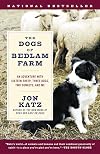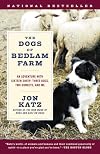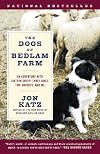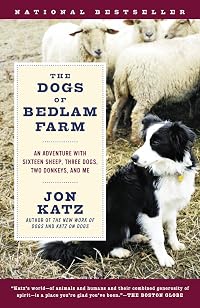
The Dogs of Bedlam Farm: An Adventure with Sixteen Sheep, Three Dogs, Two Donkeys, and Me
by Jon Katz
Bedlam Farm (2)
On This Page
Description
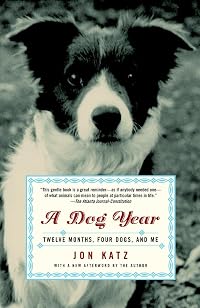
"Dogs are blameless, devoid of calculation, neither blessed nor cursed with human motives. They can't really be held responsible for what they do. But we can." -from The Dogs of Bedlam Farm When Jon Katz adopted a border collie named Orson, his whole world changed. Gone were the two yellow Labs he wrote about in A Dog Year, as was the mountaintop cabin they loved. Katz moved into an old farmhouse on forty-two acres of pasture and woods with a menagerie: a ram named Nesbitt, fifteen ewes, a show more lonely donkey named Carol, a baby donkey named Fanny, and three border collies. Training Orson was a demanding project. But a perceptive dog trainer and friend told Katz: "If you want to have a better dog, you will just have to be a better goddamned human." It was a lesson Katz took to heart. He now sees his dogs as a reflection of his willingness to improve, as well as a critical reminder of his shortcomings. Katz shows us that dogs are often what we make them: They may have their own traits and personalities, but in the end, they are mirrors of our own lives-living, breathing testaments to our strengths and frustrations, our families and our pasts. The Dogs of Bedlam Farm recounts a harrowing winter Katz spent on a remote, windswept hillside in upstate New York with a few life-saving friends, ugly ghosts from the past, and more livestock than any novice should attempt to manage. Heartwarming, and full of drama, insight, and hard-won wisdom, it is the story of his several dogs forced Katz to confront his sense of humanity, and how he learned the places a dog could lead him and the ways a doge could change him. show lessTags
Recommendations



Member Reviews
“Dogs are blameless, devoid of calculation, neither blessed nor cursed with human motives. They can’t really be held responsible for what they do. But we can.”–from The Dogs of Bedlam FarmWhen Jon Katz adopted a border collie named Orson, his whole world changed. Gone were the two yellow Labs he wrote about in A Dog Year, as was the mountaintop cabin they loved. Katz moved into an old farmhouse on forty-two acres of pasture and woods with a menagerie: a ram named Nesbitt, fifteen ewes, a lonely donkey named Carol, a baby donkey named Fanny, and three border collies. Training Orson was a demanding project. But a perceptive dog trainer and friend told Katz: “If you want to have a better dog, you will just have to be a better show more goddamned human.” It was a lesson Katz took to heart. He now sees his dogs as a reflection of his willingness to improve, as well as a critical reminder of his shortcomings. Katz shows us that dogs are often what we make them: They may have their own traits and personalities, but in the end, they are mirrors of our own lives–living, breathing testaments to our strengths and frustrations, our families and our pasts. The Dogs of Bedlam Farm recounts a harrowing winter Katz spent on a remote, windswept hillside in upstate New York with a few life-saving friends, ugly ghosts from the past, and more livestock than any novice should attempt to manage. Heartwarming, and full of drama, insight, and hard-won wisdom, it is the story of his several dogs forced Katz to confront his sense of humanity, and how he learned the places a dog could lead him and the ways a dog could change him. From the Hardcover edition. show less
You don't have to be a dog lover to appreciate this book by Jon Katrz. Because although this is a book about the dogs in Jon's life, it is also about his life and his search for a means of becoming the person he wants to be. Katz's search for insight gives the reader perspective into what is required of us as we attempt to become a useful player, participating in our own lives. Many of his moments of awareness begin when he is working with one of his beloved Border Collies, but he also benefits from relationships with his helpful neighbors and his sister, who he sees for the first time in years in the course of writing this book.
I enjoyed reading this book so much I plan to read the others he has written. His need to become the best show more person he can be is given a jump-start in the course of caring for his dogs. He recognizes that in order to help them he needs to develop patience, tolerance, and understanding. The dogs don't respond in positive ways when he is impatient with them. He feels responsible not only for their physical welfare but also for their lives as well-adjusted dogs, capable of enjoying purpose in their lives, and returning the love they are given. Border Collies have a high work drive and when kept as pets they often become destructive. Jon not only sees the benefit in working his Border Collies for their sake, but learns how to take care of his farm for his own sake also. As a reader, you will enjoy the ups and downs of Katzs' life as he tries to give his dogs the best possible lives and at the same time run a farm. What he learns from his dogs helps him to run his farm and maintain decent relationships with his neighbors. HIghly recommended. show less
I enjoyed reading this book so much I plan to read the others he has written. His need to become the best show more person he can be is given a jump-start in the course of caring for his dogs. He recognizes that in order to help them he needs to develop patience, tolerance, and understanding. The dogs don't respond in positive ways when he is impatient with them. He feels responsible not only for their physical welfare but also for their lives as well-adjusted dogs, capable of enjoying purpose in their lives, and returning the love they are given. Border Collies have a high work drive and when kept as pets they often become destructive. Jon not only sees the benefit in working his Border Collies for their sake, but learns how to take care of his farm for his own sake also. As a reader, you will enjoy the ups and downs of Katzs' life as he tries to give his dogs the best possible lives and at the same time run a farm. What he learns from his dogs helps him to run his farm and maintain decent relationships with his neighbors. HIghly recommended. show less
Reminding me a bit of [a:Michael Perry|2772479|Michael Perry|https://images.gr-assets.com/authors/1231631186p2/2772479.jpg]. But so far it seems that Katz is focused on the small, w/ forays to the more universal. His navel is the center of his gaze, his dogs, his farm, his community. Whereas Perry (whom I prefer) either starts with or goes immediately to the bigger or more universal questions, using the small to illustrate, to clarify.
It's still early... we'll see.
---
Ok done. I like that Katz seems fairly clear-headed. He understands that he's a Flatlander, and even though he has some financial challenges he has backup, unlike some of his neighbors, for example. He's spiritual, but not religious, and definitely not woo-woo crystals & show more shamans.
I'd like more photos. Or more un-interpreted reports of the dogs' behaviors... though he does try to help us get to know the dogs, he does get in between us and them. I'd like more about the donkeys. I'm glad he and his wife have worked out an arrangement where they have each other, and also where they both have what they need even though their needs are so diverse.
But still - it's a memoir, not a work of philosophy. And even before Perry wrote [b:Montaigne in Barn Boots: An Amateur Ambles Through Philosophy|34217513|Montaigne in Barn Boots An Amateur Ambles Through Philosophy|Michael Perry|https://i.gr-assets.com/images/S/compressed.photo.goodreads.com/books/1491691011l/34217513._SY75_.jpg|55268410] his work was primarily philosophical, and I much prefer that. I have no interest in reading anything more by Katz. show less
It's still early... we'll see.
---
Ok done. I like that Katz seems fairly clear-headed. He understands that he's a Flatlander, and even though he has some financial challenges he has backup, unlike some of his neighbors, for example. He's spiritual, but not religious, and definitely not woo-woo crystals & show more shamans.
I'd like more photos. Or more un-interpreted reports of the dogs' behaviors... though he does try to help us get to know the dogs, he does get in between us and them. I'd like more about the donkeys. I'm glad he and his wife have worked out an arrangement where they have each other, and also where they both have what they need even though their needs are so diverse.
But still - it's a memoir, not a work of philosophy. And even before Perry wrote [b:Montaigne in Barn Boots: An Amateur Ambles Through Philosophy|34217513|Montaigne in Barn Boots An Amateur Ambles Through Philosophy|Michael Perry|https://i.gr-assets.com/images/S/compressed.photo.goodreads.com/books/1491691011l/34217513._SY75_.jpg|55268410] his work was primarily philosophical, and I much prefer that. I have no interest in reading anything more by Katz. show less
Katz’s story is interesting, but not as good as some of the “dog stories” I have read. For example: “At some point I’d begun to enter the murky area where the boundary between the human’s issues and dog’s trouble blurs” (120). Maybe it’s just me, but I hate the kind of repetition in this sentence. If an area is already “murky,” how could you see something “blurry”?
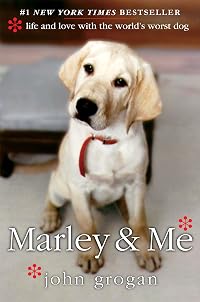
The story is amusing (they are making a movie of his life), but it simply did not affect me as much as the recent Marley & Me by John Grogan. Katz focuses on the one-way relationship between him and his dogs, and does not look too deeply into the actions of the dogs and the motivation of their relationships with owners and other animals. Worth a show more read.
--Chiron, 7/8/07, Three stars show less
The story is amusing (they are making a movie of his life), but it simply did not affect me as much as the recent Marley & Me by John Grogan. Katz focuses on the one-way relationship between him and his dogs, and does not look too deeply into the actions of the dogs and the motivation of their relationships with owners and other animals. Worth a show more read.
--Chiron, 7/8/07, Three stars show less
I will re-read this one. A wry and wise meditation on how dogs help us shape, or reveal, the people we really are.
I had just finished the previous book of his about Devon/Orson and his two labs. I really enjoyed it and was looking forward to the follow up. Unfortunately I didn't enjoy this one at all. First of all, the first 50 pages or so made little to no mention of the dogs and was primarily about his move to the farm and the new town he's living in. I was giving the book about 50 pages or so and I was going to not finish it if he never came back to the animals. Just about that time he focused back on the dogs. He talks quite a bit about how much his dogs mean to him, how he loves the sheep he brought to the farm (even at one point about how he had a vet perform surgery on an injured sheep when others in the community told him he should have show more just put it down) and how he's so attached to Carol the donkey. Yet then I came to the chapter about a cat that was on the property and the bottom line is he shot the cat with a rifle because it had tangled with the dogs one time too many. At that point I put the book down immediately, because as a cat lover I don't think that was at all necessary. I'm sure there are people who could justify his actions but I think there other options that could have been looked at without having to resort to killing that poor animal. show less
Being a sheep farmer and the 'mother' of two border collies, I'm afraid I'm going to be too critical of this book. The author "gives up everything" to go be a sheep 'farmer'. Well, sixteen sheep do NOT make you a true sheep farmer. And, I could only wish that I had a vet who would just stop by to check in on me and neighbors who drop everything to come do my chores for me. It just wasn't really a 'true' sheep farming experience. At least, not to someone who has a flock of 200 sheep and is having more than that many lambs during a lambing season. It was a 'fun' read but not a realistic read for anyone who farms for a living.
Members
- Recently Added By
Lists

Nonhuman Protagonists
235 works; 34 members

Best Dog Stories
109 works; 13 members
Author Information

42+ Works 4,957 Members
Series

Common Knowledge
- Dedication
- To Anthony Armstrong
"A friend may well be reckoned the masterpiece of nature."
Ralph Waldo Emerson - First words
- Far in the distance, as the morning mists began to clear, I could see a livestock trailer heading west on Route 30 from Salem toward the hamlet of West Hebron.
- Last words
- (Click to show. Warning: May contain spoilers.)We have more distance to travel together, I'm sure, before we are through.
Classifications
Statistics
- Members
- 505
- Popularity
- 59,513
- Reviews
- 16
- Rating
- (3.80)
- Languages
- English
- Media
- Paper, Ebook
- ISBNs
- 5
- ASINs
- 2