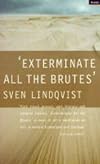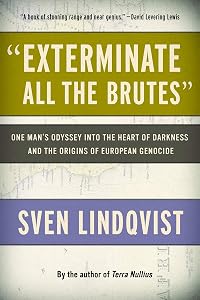
Exterminate All the Brutes
by Sven Lindqvist
On This Page
Description
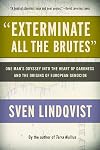
Now part of the eponymous HBO docuseries written and directed by Raoul Peck, "Exterminate All the Brutes" is a brilliant intellectual history of Europe's genocidal colonization of Africa-and the terrible myths and lies that it spawned "A book of stunning range and near genius. . . . The catastrophic consequences of European imperialism are made palpable in the personal progress of the author, a late-twentieth-century pilgrim in Africa. Lindqvist's astonishing connections across time and show more cultures, combined with a marvelous economy of prose, leave the reader appalled, reflective, and grateful." -David Levering Lewis "Exterminate All the Brutes," Sven Lindqvist's widely acclaimed masterpiece, is a searching examination of Europe's dark history in Africa and the origins of genocide. Using Joseph Conrad's Heart of Darkness as his point of departure, the award-winning Swedish author takes us on a haunting tour through the colonial past, interwoven with a modern-day travelogue. Retracing the steps of European explorers, missionaries, politicians, and historians in Africa from the late eighteenth century onward, "Exterminate All the Brutes" exposes the roots of genocide in Africa through Lindqvist's own journey through the Saharan desert. As he shows, fantasies not merely of white superiority but of actual extermination-"cleansing" the earth of the so-called lesser races-deeply informed the colonialism and racist ideology that ultimately culminated in Europe's own Holocaust. Conquerors' stories are the ones that inform the self-mythology of the West-whereas the lives and stories of those displaced, enslaved, or killed are too often ignored and forgotten. "Exterminate All the Brutes" forces a crucial reckoning with a past that still echoes in our collective psyche-a reckoning that compels us to acknowledge the exploitation and brutality at the heart of our modern, globalized society. As Adam Hochschild has written, "Lindqvist's work leaves you changed.". show lessTags
Recommendations
























Member Recommendations
Member Reviews
Sven Lindqvist, Swedish writer, delivers here an original and remarkable little book putting into a new perspective the idea of genocide.
Half travel account and half historical essay, he journeys through the Sahara by bus, accompanied only by his laptop and 'exterminate all the brutes!', the infamous sentence taken from 'Heart of Darkness' by Joseph Conrad. This 'exterminate all the brutes!' is for him far more than a blunt summary of colonial policies. It's the foundation of a whole mindset that will, ultimately, render possible the genocides of the 20th century - including the Shoah.
Without denying the unique character of the Shoah (an extermination perpetrated industrially) he focuses here indeed in demonstrating that such a massacre show more of a whole people would have never been conceivable had it not been for colonialism, which prepared the mentalities for such endeavour and so facilitated its application. To illustrate his point, travelling across the north African desert he refers to African examples. He retells the abject behaviours of the Europeans (eg from the Ashanti king Prempeh forced to kiss the feet of British officers to the sacking and burning of entire villages across the continent). He shows, above all, that when such attitude was coupled with the racial theories then in full bloom (from the seriously distorted work of Darwin to the work of a Robert Knox) the idea of extermination in the name of a selection (that is, genocide) became pervasive. It's then that Imperialism started to be seen as a necessary biological process, according to which 'inferior races' could only be eliminated. The fate of the Herero in South Africa, or, again, the atrocities perpetrated in the Congo under Leopold II are witnesses to such banalisation of mass murders.
The Shoah, then, shouldn't surprise us. It sure was unique by the way it was accomplished, but, the mindset that had led to it had been fermenting from long before. The destruction of people deemed 'inferior' had indeed been accepted as normal by many long before the 1940s. 'Genocide' didn't appear out of the blue under the Nazis: it came straight out of the racist and violent colonial era. The author, brilliantly and shockingly, here shows such historical continuity. A short read, but how compelling! show less
Half travel account and half historical essay, he journeys through the Sahara by bus, accompanied only by his laptop and 'exterminate all the brutes!', the infamous sentence taken from 'Heart of Darkness' by Joseph Conrad. This 'exterminate all the brutes!' is for him far more than a blunt summary of colonial policies. It's the foundation of a whole mindset that will, ultimately, render possible the genocides of the 20th century - including the Shoah.
Without denying the unique character of the Shoah (an extermination perpetrated industrially) he focuses here indeed in demonstrating that such a massacre show more of a whole people would have never been conceivable had it not been for colonialism, which prepared the mentalities for such endeavour and so facilitated its application. To illustrate his point, travelling across the north African desert he refers to African examples. He retells the abject behaviours of the Europeans (eg from the Ashanti king Prempeh forced to kiss the feet of British officers to the sacking and burning of entire villages across the continent). He shows, above all, that when such attitude was coupled with the racial theories then in full bloom (from the seriously distorted work of Darwin to the work of a Robert Knox) the idea of extermination in the name of a selection (that is, genocide) became pervasive. It's then that Imperialism started to be seen as a necessary biological process, according to which 'inferior races' could only be eliminated. The fate of the Herero in South Africa, or, again, the atrocities perpetrated in the Congo under Leopold II are witnesses to such banalisation of mass murders.
The Shoah, then, shouldn't surprise us. It sure was unique by the way it was accomplished, but, the mindset that had led to it had been fermenting from long before. The destruction of people deemed 'inferior' had indeed been accepted as normal by many long before the 1940s. 'Genocide' didn't appear out of the blue under the Nazis: it came straight out of the racist and violent colonial era. The author, brilliantly and shockingly, here shows such historical continuity. A short read, but how compelling! show less
Damning counterargument first to those who suggest that the Holocaust was unique. In fact, all the European imperial powers had a long and well-developed pattern of exterminating the "lower" races that stood in their way of appropriating new lands and resources. What was new in WWII was "that what had been done in the heart of darkness was repeated in the heart of Europe." Despite being closer to home, the Germans were able to invoke the same reasons that had been used to justify without serious objection the extermination of the native Americans, innumerable African societies, and indigenous peoples throughout the globe.
Today, the lesson has new importance because it possibly suggests a lens through which we should understand the rise show more of a militant Islamic extremism from just those societies that have experienced the brunt of European and American imperialist adventuring. In the previous century it was argued that extinction or at least subjugation of lesser peoples was inevitable, indeed, "it was a philanthropic principle to kill natives; there was," [Captain Gordon Pim] said, "mercy in a massacre." Now, though, the intended victims are able to fight back in order to defend their ways of living. If they fight us here, now, it is only because we attacked them there, first, both militarily and then culturally. One can argue that such reaction is unwise, unproductive, and doomed to failure, but we should not pretend to be puzzled by why it is happening. show less
Today, the lesson has new importance because it possibly suggests a lens through which we should understand the rise show more of a militant Islamic extremism from just those societies that have experienced the brunt of European and American imperialist adventuring. In the previous century it was argued that extinction or at least subjugation of lesser peoples was inevitable, indeed, "it was a philanthropic principle to kill natives; there was," [Captain Gordon Pim] said, "mercy in a massacre." Now, though, the intended victims are able to fight back in order to defend their ways of living. If they fight us here, now, it is only because we attacked them there, first, both militarily and then culturally. One can argue that such reaction is unwise, unproductive, and doomed to failure, but we should not pretend to be puzzled by why it is happening. show less
Conrad’s Heart of Darkness has Kurtz at his end exclaim “The horror! The horror!” but the real horror is finding out how much of Conrad’s novella is based on real events. Real events that Lundqvist brings to light, lifting his title from Kurtz’s scrawled note on his beloved pamphlet - “Exterminate All The Brutes!”
How does genocide become “to be regarded as the as the inevitable by-product of progress?” (115)
And Lundqvist has certainly heightened my view of multiple H.G. Wells’ works (see notes added to War of the Worlds)
Some reviews point to other atrocities in an attempt to show Lundqvist’s book as one-sided, but many of those examples are internecine or nearly so, not one nation reaching halfway around the globe show more to subjugate or exterminate another peoples.
I’m not so sure I completely buy into Lundqvist’s wrapping up in stating the Nazis “lebensraum” was their attempt at colonialism. But I do agree with his idea that the Germans got into the colonizing game later than other nations, and his parallel that as such they didn’t get a prime spot at the watering hole like the early arrival animals did.
And I agree with his idea that the Nazis studied how other nations had gone about conducting their genocides to use as a model to cleanse Europe (see notes on Bury My Heart at Wounded Knee). As well as his contention that “We want genocide to have begun and ended with Nazism. That is what is most comforting.”
I also find the current uproar about CRT (critical race theory) curiously interesting as though it’s something new. Read Lundqvist’s book and it’s apparent that much of what CRT speaks to was around a century ago. show less
How does genocide become “to be regarded as the as the inevitable by-product of progress?” (115)
And Lundqvist has certainly heightened my view of multiple H.G. Wells’ works (see notes added to War of the Worlds)
Some reviews point to other atrocities in an attempt to show Lundqvist’s book as one-sided, but many of those examples are internecine or nearly so, not one nation reaching halfway around the globe show more to subjugate or exterminate another peoples.
I’m not so sure I completely buy into Lundqvist’s wrapping up in stating the Nazis “lebensraum” was their attempt at colonialism. But I do agree with his idea that the Germans got into the colonizing game later than other nations, and his parallel that as such they didn’t get a prime spot at the watering hole like the early arrival animals did.
And I agree with his idea that the Nazis studied how other nations had gone about conducting their genocides to use as a model to cleanse Europe (see notes on Bury My Heart at Wounded Knee). As well as his contention that “We want genocide to have begun and ended with Nazism. That is what is most comforting.”
I also find the current uproar about CRT (critical race theory) curiously interesting as though it’s something new. Read Lundqvist’s book and it’s apparent that much of what CRT speaks to was around a century ago. show less
This short book combines a memoir of the author's travels through the Sahara (in both his waking and dreaming lives), a literary journey into Conrad's Heart of Darkness, and an exploration of the political and intellectual Zeitgeist of European imperialism. Its theses are crushing: Lindqvist claims genocide as an integral part of the Western cultural inheritance, and situates the Holocaust not as a merely German phenomenon, nor among a few twentieth-century Eastern genocides, but as the legitimate child of Western European history.
This book is important for anyone who is trying to put together puzzle pieces about the origins of racism and the global history of the nineteenth century. Works written at the time often cannot bear down on show more definitions and causes because they are too close to the quick; works written in our time may be operating with more of the picture, but too many modern thinkers persuade themselves that we live in a post-racist world, and shy away from recognizing the fullness of a horror that has not yet died.
Lindqvist stumbles through the nightmare to offer us this final statement (p. 172):
"Everywhere in the world where knowledge is being suppressed, knowledge that, if it were made known, would shatter our image of the world and force us to question ourselves--everywhere there, Heart of Darkness is being enacted.
"You already know that. So do I. It is not knowledge we lack. What is missing is the courage to understand what we know and draw conclusions." show less
This book is important for anyone who is trying to put together puzzle pieces about the origins of racism and the global history of the nineteenth century. Works written at the time often cannot bear down on show more definitions and causes because they are too close to the quick; works written in our time may be operating with more of the picture, but too many modern thinkers persuade themselves that we live in a post-racist world, and shy away from recognizing the fullness of a horror that has not yet died.
Lindqvist stumbles through the nightmare to offer us this final statement (p. 172):
"Everywhere in the world where knowledge is being suppressed, knowledge that, if it were made known, would shatter our image of the world and force us to question ourselves--everywhere there, Heart of Darkness is being enacted.
"You already know that. So do I. It is not knowledge we lack. What is missing is the courage to understand what we know and draw conclusions." show less
I was reading Norman Davies's book, "Europe," recently when I saw a quote from Hitler about the concentration camps he was planning. Talking about the historical ramifications of genocide on such a massive scale, he simply asked, "Who remembers the Armenians?"
Certainly, that is a question that the likes of Orhan Pamuk have been asking about Turkey's effected genocide of its Armenian population a couple of decades before Hitler.
Here, Lindqvist, by all accounts a marvellous writer and historian, traces the issue even further back, to Africa at the time of colonies and empire, and suggests that genocide is, whilst definitely abhorrent, not a new phenomenon. He gives countless examples of how the local African population was cleansed show more whenever the Europeans arrived, and how modern arms were developed to kill the tribesmen more quickly and efficiently. And because it is all true, Lindqvist's is one of the most compelling books going. show less
Certainly, that is a question that the likes of Orhan Pamuk have been asking about Turkey's effected genocide of its Armenian population a couple of decades before Hitler.
Here, Lindqvist, by all accounts a marvellous writer and historian, traces the issue even further back, to Africa at the time of colonies and empire, and suggests that genocide is, whilst definitely abhorrent, not a new phenomenon. He gives countless examples of how the local African population was cleansed show more whenever the Europeans arrived, and how modern arms were developed to kill the tribesmen more quickly and efficiently. And because it is all true, Lindqvist's is one of the most compelling books going. show less
A fierce, if meandering, set of miniature essays revolving around a trip through the Sahara, a biography of Joseph Conrad and his [b:Heart of Darkness|4900|Heart of Darkness |Joseph Conrad|http://d.gr-assets.com/books/1328698658s/4900.jpg|2877220], and the history of race and genocide.
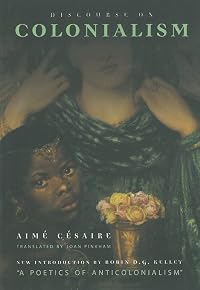
Slaughter and tribalism are not unique in history, of course. Lindqvist's main thesis is similar to Aime Cesaire's in [b:Discourse on Colonialism|86598|Discourse on Colonialism|Aimé Césaire|http://d.gr-assets.com/books/1343231830s/86598.jpg|83580] - the origins of the Holocaust are rooted in the techniques of war and technology of exploitation and 'murder from a distance' which were developed in the colonial empires of the 19th century.
The show more Enlightenment ideal of the perfectibility of humankind, combined with imperial greed and Spencer's Social Darwinism, led to the belief that the extermination of human populations is a natural, and even beneficial part of life, and one to be embraced whole-heartedly. That those who are inferior are to be civilized, that they are life unworthy of life, that they are to be slaughtered.
"Exterminate all the brutes." This is far from over. show less
Slaughter and tribalism are not unique in history, of course. Lindqvist's main thesis is similar to Aime Cesaire's in [b:Discourse on Colonialism|86598|Discourse on Colonialism|Aimé Césaire|http://d.gr-assets.com/books/1343231830s/86598.jpg|83580] - the origins of the Holocaust are rooted in the techniques of war and technology of exploitation and 'murder from a distance' which were developed in the colonial empires of the 19th century.
The show more Enlightenment ideal of the perfectibility of humankind, combined with imperial greed and Spencer's Social Darwinism, led to the belief that the extermination of human populations is a natural, and even beneficial part of life, and one to be embraced whole-heartedly. That those who are inferior are to be civilized, that they are life unworthy of life, that they are to be slaughtered.
"Exterminate all the brutes." This is far from over. show less
I originally read this as a companion to The Heart of Darkness. It blew me away. I finally felt like I had a big piece to the puzzle of why the Holocaust happened. It focuses on colonization and how imperial attitudes from the 19th century influenced the Nazis.
Members
- Recently Added By
Lists

Non-Fiction Worth Reading
1,015 works; 254 members

History: Africa & Latin America
38 works; 1 member

Schwob Nederland
207 works; 2 members
Author Information

36+ Works 2,011 Members
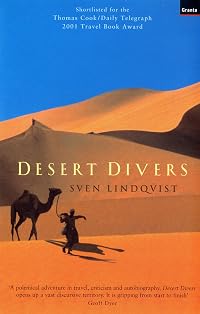
Sven Lindqvist was born in Stockholm, Sweden on March 28, 1932. He wrote for the newspaper Dagens Nyheter before becoming a cultural attaché to the Swedish embassy in Beijing. He received a Ph.D. from Stockholm University in 1966. He wrote more than 30 books including A Proposal, Advertising Is Lethal, The Myth of Wu Tao-tzu, The Shadow, Land and show more Power in South America, Diary of a Lover, Diary of a Married Man, Bench Press, Desert Divers, Exterminate All the Brutes, Terra Nullius: A Journey Through No One's Land, and A History of Bombing. In 2012, he received the Lenin Prize. He died on May 14, 2019 at the age of 87. (Bowker Author Biography) show less
Some Editions
Awards and Honors
Awards
Distinctions
Notable Lists
Work Relationships
Common Knowledge
- Canonical title
- Exterminate All the Brutes
- Original title
- Utrota varenda jävel
- Original publication date
- 1992-04
- Important places*
- Àfrica
- Epigraph
- Egentligen borde man utrota all judar och negrer. – Vi kommer att segra. De andra raserna kommer att försvinna och dö ut. – Vitt ariskt motstånd, Sverige 1991
Ni kan utrota oss. Men stjärnornas barn blir aldrig hundar. – Somabulano, Rhodesia 1896 - Dedication
- Till Olof Lagercrantz som färdades med "Mörkrets hjärta" och Etienne Glaser som var Adolf i "Hitlers barndom"
- First words
- Du vet redan tillräckligt. Det gör jag också. Det är inte kunskap vi saknar. Vad som fattas oss är modet att inse vad vi vet och dra slutsatserna.
- Last words
- (Click to show. Warning: May contain spoilers.)Du vet det. Jag också. Det är inte kunskap vi saknar. Vad som fattas oss är modet att inse vad vi vet och dra slutsatserna.
- Original language
- Swedish
*Some information comes from Common Knowledge in other languages. Click "Edit" for more information.
Classifications
- Genres
- Nonfiction, History, General Nonfiction, Travel, Literature Studies and Criticism
- DDC/MDS
- 305.5 — Society, government, & culture Social sciences, sociology & anthropology Social group - Age, Gender, Ethnicity People by social and economic levels
- LCC
- HT1521 .L4713 — Social sciences Communities. Classes. Races Communities. Classes. Races Races
- BISAC
Statistics
- Members
- 749
- Popularity
- 37,521
- Reviews
- 16
- Rating
- (4.23)
- Languages
- 14 — Danish, Dutch, English, Finnish, French, German, Italian, Norwegian (Bokmål), Norwegian, Polish, Portuguese, Slovenian, Spanish, Swedish
- Media
- Paper, Ebook
- ISBNs
- 39
- ASINs
- 3