On This Page
Description
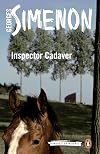
When a friend's brother-in-law is accused of murdering his daughter's lover, Maigret arrives in a small French town to help and is plunged into an atmosphere of animosity. He soon finds himself tangled up in a case that may ruin the very people whom he has come to aid and must face an old enemy--an ex-police officer nicknamed "Inspector Cadaver"--who seems to be doing everything in his power to obstruct Maigret's investigations.Tags
Recommendations













































Member Reviews
An examining magistrate in Paris asks a favor of Chief Inspector Maigret: unofficially look into the death of a youth in an extremely provincial village in western France. Rumors have emerged that blame the magistrate’s brother-in-law, although the magistrate is certain there’s nothing to them.
But on the train to Saint-Aubin-les-Marais, Maigret catches sight of a onetime colleague: Justin Cavre – a sullen, supercilious thin man nicknamed Old Cadaver, who served with Maigret for 20 years before being forced out over an impropriety. Soon Maigret realizes that both of them are looking into the same case.
There’s no way to explain how deftly author Georges Simenon crafted this gem of a novel without spoiling it.I was shocked by — show more and disappointed in — Maigret. Like the young Louis Fillou, I know that things will never change in backwaters like Saint-Aubin-les-Marais, and with the overpowering sense of entitlement of the “good families,” until they are held accountable. In the end, Maigret took the easy way out, as much a sell-out as the hatchet-faced Madame Fillou. Was Simenon’s message that even Maigret has his shortcomings? Or was Simenon saying that — the Jacquerie, the French Revolution, and the June Rebellion notwithstanding — the paysannes can never get real justice? I don’t know which is the correct interpretation; however, I like debating it in my head. Another five-star novel featuring a gruff hero with feet of clay. show less
But on the train to Saint-Aubin-les-Marais, Maigret catches sight of a onetime colleague: Justin Cavre – a sullen, supercilious thin man nicknamed Old Cadaver, who served with Maigret for 20 years before being forced out over an impropriety. Soon Maigret realizes that both of them are looking into the same case.
There’s no way to explain how deftly author Georges Simenon crafted this gem of a novel without spoiling it.
Maigret undertakes an unofficial mission at the request of a judge-friend, whose brother-in-law — a landowner in the marshes of the Vendée — has been the victim of a campaign of anonymous letters accusing him of murder. When Maigret gets to Saint-Aubin-les-Marais he is surprised to find his ex-colleague "Cadavre," now a private eye, getting off the same train and pretending not to see him. Moreover, his hosts don't seem to be exactly happy with the judge's helpful intervention, and are acting very much like a family with something to hide.
As usual, Simenon enjoys the moral ambiguities opened up by taking Maigret out of the official world of regular police work, and he has fun exploring the feuds and power-struggles lurking below show more the surface of a tranquil agricultural community. Whilst ports are obviously what he does best, his villages are always interesting too, so this is an enjoyable read, even if the actual case is fairly straightforward.
As usual, this wartime publication is set in a kind of generic thirties peacetime, with no mention of current events at all. show less
As usual, Simenon enjoys the moral ambiguities opened up by taking Maigret out of the official world of regular police work, and he has fun exploring the feuds and power-struggles lurking below show more the surface of a tranquil agricultural community. Whilst ports are obviously what he does best, his villages are always interesting too, so this is an enjoyable read, even if the actual case is fairly straightforward.
As usual, this wartime publication is set in a kind of generic thirties peacetime, with no mention of current events at all. show less
I had not read a Maigret novel since my teens - not because I decided not to but because I had not seen any of them. So when I saw this in the library, I decided it is time to get back to the good old inspector.
It is one of the unusual books - it is not set in Paris - instead Maigret is asked for a favor and goes to a small village where the a man had died a few weeks before. It had been ruled as an incident but now rumors are everywhere that it was actually a murder. It would have been an easy enough investigation except that in the train Maigret sees and old colleague, now a PI, that had been kicked off by the police and who had always been a rival of Maigret.
Things do not go exactly as expected, it seems like noone cares about the show more truth and if his adversary was not there, Maigret probably would have left. But with him there, he pushes to find the truth and we see the life in a small village in France in the 40s - split between the rich and the poor and with more secrets than you would expect in a small village like that one (but then most of the classic mystery novels are like that).
Penguin seems to be publishing the full series in new translations so I think I am going to catch up with the ones they already did and then follow them. Even though they are publishing them in some weird order. show less
It is one of the unusual books - it is not set in Paris - instead Maigret is asked for a favor and goes to a small village where the a man had died a few weeks before. It had been ruled as an incident but now rumors are everywhere that it was actually a murder. It would have been an easy enough investigation except that in the train Maigret sees and old colleague, now a PI, that had been kicked off by the police and who had always been a rival of Maigret.
Things do not go exactly as expected, it seems like noone cares about the show more truth and if his adversary was not there, Maigret probably would have left. But with him there, he pushes to find the truth and we see the life in a small village in France in the 40s - split between the rich and the poor and with more secrets than you would expect in a small village like that one (but then most of the classic mystery novels are like that).
Penguin seems to be publishing the full series in new translations so I think I am going to catch up with the ones they already did and then follow them. Even though they are publishing them in some weird order. show less
The quintessential Maigret. Setting, pace, characters, dialogue, phone conversations (which is one of my very favorite things in any Maigret), people falling due to passions and money, the whole shebang. Missing only one of his usual bagman sidekicks, but he picks a new one up along the way.
Maigret investigates what appears to be an accidental death but turns out to be a lot more complicated and messier than first glimpse would have it. Inspector Cadaver is someone that Maigret once worked with but he's now a private detective and his presence makes Maigret question what went on.
Interesting but I occasionally lost interest.
Interesting but I occasionally lost interest.
Maigret is asked as a favor to look into rumors about a death in a small town. He encounters a former colleague who is working as a private investigator and solves the case but realizes that there is no evidence
Listening to Maigret stories on podcast led me to getting a few of Simenon's books. Enjoyable, quick read.
Members
- Recently Added By
Lists

Reading LIst
648 works; 1 member
Author Information

1,331+ Works 63,057 Members
The prolific Belgian-born writer Georges Simenon produced hundreds of fictional works under his own name and 17 pseudonyms, in addition to more than 70 books about Inspector Maigret, long "the favorite sleuth of highbrow detective-story readers" (SR). More than 50 "Simenons" have been made into films. In addition to his mystery stories, he wrote show more what he called "hard" books, the serious psychological novels numbering well over 100. The autobiographical Pedigree, set in his native town of Liege, is perhaps his finest work. The publication of Simenon's intimate memoirs also attracted considerable attention. Simenon himself once said that he would never write a "great novel." Yet Gide called him "a great novelist, perhaps the greatest and truest novelist we have in French literature today," and Thornton Wilder (see Vol. 1) found that Simenon's narrative gift extends "to the tips of his fingers." The following are some of Simenon's novels, exclusive of the Maigret detective stories, that are in print. (Bowker Author Biography) Georges Simenon was born on February 13, 1903 in Liege, Belgium. He wrote more than 200 fiction works under 16 different pseudonyms. His first book, The Case of Peter the Lent led to 80 more of the like including the main character, Inspector Maigret. He published over 400 books that were translated into 50 different languages and sold by the millions. He also wrote psychological novels, including The Man Who Watched the Train Go By. He died on September 4, 1989 in Lausanne. (Bowker Author Biography) show less
Some Editions
Series

Belongs to Publisher Series
Work Relationships
Common Knowledge
- Canonical title
- Maigret's Rival
- Original title
- L'inspecteur Cadavre
- Alternate titles
- Inspector Cadaver
- Original publication date
- 1941
- Important places*
- Saint-Aubin-les-Marais, Francia (fictional); Francia
- Related movies*
- L'inspecteur cadavre (1968 | IMDb); Maigret et l'inspecteur Cadavre (1998 | IMDb)
- First words
- Maigret watched the world go by with large, sullen eyes, unintentionally giving himself that air of self-importance, that contrived dignity people tend to affect after hours spent sitting blankly in a train carriage.
- Last words
- (Click to show. Warning: May contain spoilers.)"There's always got to be some poor fellow who carries the can for everyone else!"
- Original language
- French
- Disambiguation notice
- In the French original, L'inspecteur Cadavre (1944).
Variously published in English as:
(i) Maigret's Rival (1979) (tr. Helen Thomson) and:
(ii) Inspector Cadaver (2015)... (show all) (tr. William Hobson).
*Some information comes from Common Knowledge in other languages. Click "Edit" for more information.
Classifications
Statistics
- Members
- 420
- Popularity
- 73,755
- Reviews
- 19
- Rating
- (3.56)
- Languages
- 8 — Danish, Dutch, English, French, German, Italian, Portuguese, Spanish
- Media
- Paper, Audiobook, Ebook
- ISBNs
- 32
- ASINs
- 13