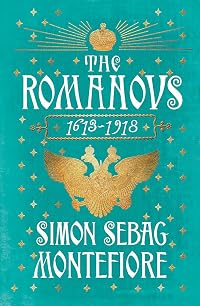
The Romanovs: 1613-1918
by Simon Sebag-Montefiore
On This Page
Description
The Romanovs were the most successful dynasty of modern times, ruling a sixth of the world’s surface for three centuries. How did one family turn a war-ruined principality into the world’s greatest empire? And how did they lose it all?This is the intimate story of twenty tsars and tsarinas, some touched by genius, some by madness, but all inspired by holy autocracy and imperial ambition. Simon Sebag Montefiore’s gripping chronicle reveals their secret world of unlimited power and show more ruthless empire-building, overshadowed by palace conspiracy, family rivalries, sexual decadence and wild extravagance, with a global cast of adventurers, courtesans, revolutionaries and poets, from Ivan the Terrible to Tolstoy and Pushkin, to Bismarck, Lincoln, Queen Victoria and Lenin.
To rule Russia was both imperial-sacred mission and poisoned chalice: six of the last twelve tsars were murdered. Peter the Great tortured his own son to death while making Russia an empire, and dominated his court with a dining club notable for compulsory drunkenness, naked dwarfs and fancy dress. Catherine the Great overthrew her own husband (who was murdered soon afterward), enjoyed affairs with a series of young male favorites, conquered Ukraine and fascinated Europe. Paul I was strangled by courtiers backed by his own son, Alexander I, who in turn faced Napoleon’s invasion and the burning of Moscow, then went on to take Paris. Alexander II liberated the serfs, survived five assassination attempts and wrote perhaps the most explicit love letters ever composed by a ruler. The Romanovs climaxes with a fresh, unforgettable portrayal of Nicholas II and Alexandra, the rise and murder of Rasputin, war and revolution—and the harrowing massacre of the entire family.
Dazzlingly entertaining and beautifully written from start to finish, The Romanovs brings these monarchs—male and female, great and flawed, their families and courts—blazingly to life. Drawing on new archival research, Montefiore delivers an enthralling epic of triumph and tragedy, love and murder, encompassing the seminal years 1812, 1914 and 1917, that is both a universal study of power and a portrait of empire that helps define Russia today.
. show less
Tags
Recommendations
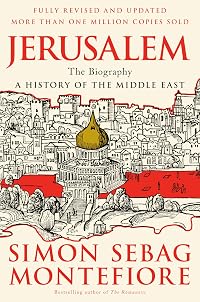
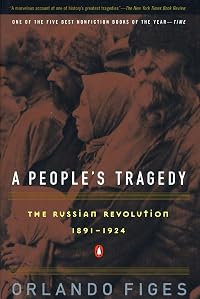
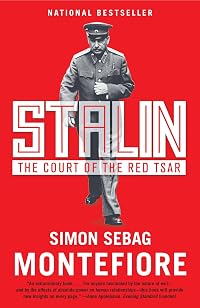
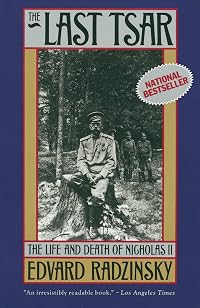




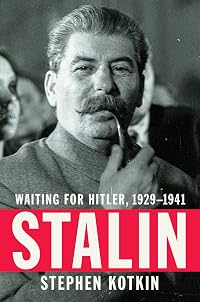
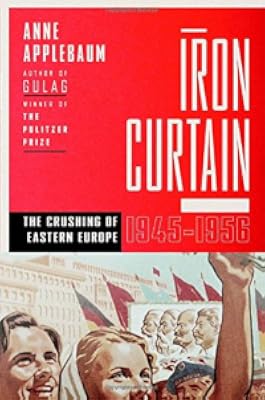
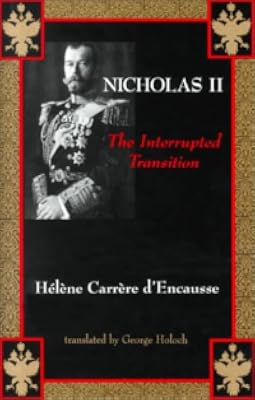
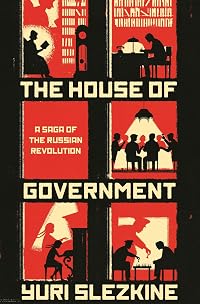
Member Recommendations
Member Reviews
An absorbing account, beautifully written, of the series of rulers of Russia known as the Romanov dynasty. This account explains many of the peculiarities of the Russian situation even today, and the misfortune of not modernizing in step with the rest of Europe, and even of Asia. This is also a lesson in the pitfalls of depending for leadership on some sort of mystical god-granted power of one dynasty, and not developing a broader idea of the nation that would enroll talented persons from all sections. Finally, it brings out starkly the enormous failure of a particularly weak and domesticated, but obstinately strong-willed, tsar at the end of the lineage, when he forces of revolution were gathering an unstoppable momentum. So deficient show more was the thinking that Tsar and Tsarina did not even take the opportunity of sending at least their innocent children to safety in Europe, even if they themselves wanted to die with the old regime. show less
I admit, my knowledge of pre-revolutionary Russia was a bit sketchy before reading this: Rasputin was bad, Catherine was a shagger, Anna Karenina... wasn't real...?
But Simon Sebag Montefiore's blockbuster history of the country's last dynasty has pushed the frontier of my knowledge back, well, at least a hundred years.
Because while it notionally covers the full three centuries of the Romanovs' reign (with a bonus bit either side for context) more than half the book is given over to the last hundred years or so.
And that's absolutely fine; failure is more interesting than success. Montefiore (Sebag Montefiore? Not sure where names end and begin there) impresses on you how the Russian monarchy wasn't overthrown in one great workers' show more uprising, but fell apart over a prolonged period of instability; like a car with a dodgy wheel that only throws you into the ditch after a 20 miles of rough riding.
In large part the end of the Romanovs was the result of their own refusal to properly loosen their grip on power. Eventually, through decades of often reticent reform and continued suffering on the part of their people, their entire claim to power was poisoned and it didn't matter what they offered; the Russian people no longer wanted a reformist Tsar, they just didn't want a Tsar.
Like so much in this book, it's a story that's been echoed in Russian history since and I fear may be so again. Even if you're more interested in Soviet pogroms than Tsarist ones, The Romanovs offers an insight into Russian history far beyond the dates on the cover. show less
But Simon Sebag Montefiore's blockbuster history of the country's last dynasty has pushed the frontier of my knowledge back, well, at least a hundred years.
Because while it notionally covers the full three centuries of the Romanovs' reign (with a bonus bit either side for context) more than half the book is given over to the last hundred years or so.
And that's absolutely fine; failure is more interesting than success. Montefiore (Sebag Montefiore? Not sure where names end and begin there) impresses on you how the Russian monarchy wasn't overthrown in one great workers' show more uprising, but fell apart over a prolonged period of instability; like a car with a dodgy wheel that only throws you into the ditch after a 20 miles of rough riding.
In large part the end of the Romanovs was the result of their own refusal to properly loosen their grip on power. Eventually, through decades of often reticent reform and continued suffering on the part of their people, their entire claim to power was poisoned and it didn't matter what they offered; the Russian people no longer wanted a reformist Tsar, they just didn't want a Tsar.
Like so much in this book, it's a story that's been echoed in Russian history since and I fear may be so again. Even if you're more interested in Soviet pogroms than Tsarist ones, The Romanovs offers an insight into Russian history far beyond the dates on the cover. show less
This is an ambitious book, chronicling over 300 years of the Romanov dynasty in Russia. Mr. Montefiore is a great writer, with a novelist's ability to draw his characters and bring them to life. In spite of that, I found the book a bit hard to read because, while heavy on facts, there is little analysis and a lack of context to situate the life of the Tsars in broader Russian life, or in wider world events.
It struck me how the Romanov family never seemed to learn from their history, with each generation making the same kind of mistakes. And, with Mr. Putin currently in power, I wonder if Russia has yet to shed its tendency towards autocracy??
It struck me how the Romanov family never seemed to learn from their history, with each generation making the same kind of mistakes. And, with Mr. Putin currently in power, I wonder if Russia has yet to shed its tendency towards autocracy??
Simon Sebag Montefiore's blockbuster history of the Romanov dynasty was a great choice for me to read prior to my much anticipated trip to St. Petersburg next month. I had been looking for a book on the Romanov dynasty and this was exactly what I was looking for. It's a unique and compelling read and quite a shocking insight into all twenty of the Romanov tsars and tsarinas.
Some books especially non fiction need to be read in good old fashioned paperback in order to get the best out of them and the Romanoves is a prime example.
I originally purchased this on Audio but very quickly realized this was a mistake and switched to the hardback edition. I was so glad I did as each chapter is prefaced with a cast list and I found this extremely show more helpful as there is a vast amount of characters in each chapter and I found myself consulting the Cast List on numerous occasions to remind myself of who was who and I think this is reflected in the length of time it took me to complete this book. I also enjoyed the inclusion of the Family tree, maps and illustrations which really added to the enjoyment of the book and are so important additions for the reader.
From the first paragraph of the Introduction I was hooked...........
" It was hard to be a tsar. Russia is not an easy country to rule. Twenty sovereigns of the Romanov dynasty reigned for 304 years, from 1613 until tsardom's destruction. by the revolution in 1917" The Romanovs were actually the most spectacularly successful empire builders since the Mongols",
This is an epic history of The House of Romanov which was the second dynasty, after the Rurik dynasty, to rule over Russia, and ruled from 1613 until the abdication of Czar Nicholas II on March 15, 1917, as a result of the February Revolution. its packed full of facts and intrigue and details that any reader who enjoys reading about the Romanov family from its begining until its shocking massacare of the entile family in 1918 may well find this a very interesting read. Its also a story of power, love, lust sex and violence and greed and I was at times quite shocked by the debauchery and cruelty of the time although I had come accross it in other accounts of the Romanov family its seems more highlighted in this account and may not be for the feint hearted.
A very comprehensive and detailed book and therefore a slow but extremely satisfying read for me. Its perfectly paced and meticulously researched and while it could have been a slog with such a vast amount of information and details to pack in, the author manages to bring Russian Histroy and the house of Romanov to life in a most unique and modern way and I found myself engrossed throughout.
Delighted I had the opportunity to read this before my visit to St. Petersburg and looking forward to visiting a number of places mentioned in the book. show less
Some books especially non fiction need to be read in good old fashioned paperback in order to get the best out of them and the Romanoves is a prime example.
I originally purchased this on Audio but very quickly realized this was a mistake and switched to the hardback edition. I was so glad I did as each chapter is prefaced with a cast list and I found this extremely show more helpful as there is a vast amount of characters in each chapter and I found myself consulting the Cast List on numerous occasions to remind myself of who was who and I think this is reflected in the length of time it took me to complete this book. I also enjoyed the inclusion of the Family tree, maps and illustrations which really added to the enjoyment of the book and are so important additions for the reader.
From the first paragraph of the Introduction I was hooked...........
" It was hard to be a tsar. Russia is not an easy country to rule. Twenty sovereigns of the Romanov dynasty reigned for 304 years, from 1613 until tsardom's destruction. by the revolution in 1917" The Romanovs were actually the most spectacularly successful empire builders since the Mongols",
This is an epic history of The House of Romanov which was the second dynasty, after the Rurik dynasty, to rule over Russia, and ruled from 1613 until the abdication of Czar Nicholas II on March 15, 1917, as a result of the February Revolution. its packed full of facts and intrigue and details that any reader who enjoys reading about the Romanov family from its begining until its shocking massacare of the entile family in 1918 may well find this a very interesting read. Its also a story of power, love, lust sex and violence and greed and I was at times quite shocked by the debauchery and cruelty of the time although I had come accross it in other accounts of the Romanov family its seems more highlighted in this account and may not be for the feint hearted.
A very comprehensive and detailed book and therefore a slow but extremely satisfying read for me. Its perfectly paced and meticulously researched and while it could have been a slog with such a vast amount of information and details to pack in, the author manages to bring Russian Histroy and the house of Romanov to life in a most unique and modern way and I found myself engrossed throughout.
Delighted I had the opportunity to read this before my visit to St. Petersburg and looking forward to visiting a number of places mentioned in the book. show less
Russian history has increasingly interested me of late. Hitler and Stalin by Alan Bullock gave greater insights into the struggles and cruelty of Stalin’s regime, and the revolution has fascinated me even more since reading Fall of Giants by Ken Follett (a book that generates polarised opinions, I enjoyed it!). The Romanovs seemed like a good choice to get the backstory. In some respects it fulfilled this purpose, in other aspects I was left wanting more.
Firstly let me say that the book delivers exactly what it says on the tin. The label promises The Romanovs 1613 - 1918 with the family crest of the double headed golden eagle resplendent on the cover. The book provides the whole narrative sweep of the royal family, beautifully written show more with a range of sources, both primary and secondary. The book is clearly the story of the cream on the cheesecake of Russian history during the period, focusing specifically on the royal family and to some extend on the surrounding court and ministers. Simon Sebag-Montefiore promises that his book is the first to combine the whole history of the Romanovs with a “blend of the personal and the political”. This he does, but I often felt mystified that such debauched individuals could have retained their legitimacy, and sustained their autocracy. Many of the answers are there, but I was left a bit hungry for a bit more about society and the economic context, and how the Romanovs maintained their power.
They certainly were remarkable - few dynasties have lasted as long and to maintain an autocratic agriculture based land empire into the twentieth century was no mean feat. The relationship with the army seems to have been an important factor throughout the story. The assent of the nobility was the other inter playing factor, vital to the Romanovs coming to power. One of the remarkable facts is the continuing lack of assemblies of nobles - the creme-da-la-creme at court seem to have had almost exclusive influence. Montefiore describes how “the court was the entrepôt of power where the nobles offered their recognition and service to the monarch, who in response distributed jobs, land, power, titles and marriages and in turn expected them to help command his armies and organize the mobilization of his resources.”
The main preoccupations of the Tsars seem to have been with finding wives, having children and military prowess. The book recounts the changing priorities - establishing the rituals of the monarchy early on, and the continuing pendulum swing of modernity (usually equivalent to Europeanisation) such as that seen in the time of Peter the Great, and reaction, usually expressed as a retreat to mysticism and reaction (and in Peter III, a not untypical case, often accompanied by an excessive fascination with Prussian style militarism). These retreats from modernity did not always immediately compromise the success of their rule however. Nicholas I would probably be described as fairly conservative, but managed to rule for almost three decades. Montefiore writes that “Nicholas was convinced that ‘Our Russia was entrusted to us by God,’ once praying aloud at a parade: ‘O God, I thank Thee for having made me so powerful.’ The result of Nicholas’ successful autocracy, however, was a Russian increasingly left behind by a modernising Europe. Although Nicholas’ success concealed the growing distortions, they became apparent during the Crimean War in the 1850s where Russia’s deficiencies were obvious.
Thinking about these issues and Nicholas I’s legacy clarifies one of the difficulties with this book, but also perhaps with narrative history as a form. The role of the historian has long been debated. Christopher Hill wrote iin the early 1950s that one of the few things the contributors to the journal Past and Present would probably agree on was that “it is the duty of the historian to explain, not merely to record.” I think one of the frustrations of The Romanovs is that it records. We find few pithy judgements. To take the example of Nicholas I’ legacy, J M Roberts in [b:The Penguin History of Europe|55835|The Penguin History of Europe|J.M. Roberts|http://images.gr-assets.com/books/1388183525s/55835.jpg|49570751] writes that “because of the immobility which he imposed upon her, Nicholas' reign deeply and negatively influenced Russia's destiny … there were also great challenges to be met, and for the most part Nicholas' reign was a sterile but immediately effective response to them.” We don’t find many passages in this book that give such a useful feel for the importance of the events and personalities described so well. I don’t think that this is purely a problem with narrative history as a form. A story can be told with a beginning, middle and end (i.e. without the sometimes tedious academic mores of thematic theoretically grounded approaches) whilst still providing some understanding and interpretation. The Romanovs just needed a little more of Montefiore’s own voice, his judgement as a historian to really give the story he is telling greater meaning.
It is a fascinating tale, well told with a plethora of sources, and it has certainly left me reflecting on the legacy of decisions made by powerful men, and curious to learn more about the layers of Russian society beneath them. Montefiore does provide some reflection. His recount of the outbreak of World War 1 is good. He describes Nicholas’ decision to mobilise as “a decision of honour in an age of honour taken by a patriot steeped in the overlapping missions of Romanov autocracy, Russian nationalism and Slavophile solidarity. Then there was expediency – this might be Russia’s last chance to seize the Straits.” It would have been nice though to have a few more signposts to follow in understanding the tsar’s legacy, powerbase and the reasons for their rise and eventual fall. show less
Firstly let me say that the book delivers exactly what it says on the tin. The label promises The Romanovs 1613 - 1918 with the family crest of the double headed golden eagle resplendent on the cover. The book provides the whole narrative sweep of the royal family, beautifully written show more with a range of sources, both primary and secondary. The book is clearly the story of the cream on the cheesecake of Russian history during the period, focusing specifically on the royal family and to some extend on the surrounding court and ministers. Simon Sebag-Montefiore promises that his book is the first to combine the whole history of the Romanovs with a “blend of the personal and the political”. This he does, but I often felt mystified that such debauched individuals could have retained their legitimacy, and sustained their autocracy. Many of the answers are there, but I was left a bit hungry for a bit more about society and the economic context, and how the Romanovs maintained their power.
They certainly were remarkable - few dynasties have lasted as long and to maintain an autocratic agriculture based land empire into the twentieth century was no mean feat. The relationship with the army seems to have been an important factor throughout the story. The assent of the nobility was the other inter playing factor, vital to the Romanovs coming to power. One of the remarkable facts is the continuing lack of assemblies of nobles - the creme-da-la-creme at court seem to have had almost exclusive influence. Montefiore describes how “the court was the entrepôt of power where the nobles offered their recognition and service to the monarch, who in response distributed jobs, land, power, titles and marriages and in turn expected them to help command his armies and organize the mobilization of his resources.”
The main preoccupations of the Tsars seem to have been with finding wives, having children and military prowess. The book recounts the changing priorities - establishing the rituals of the monarchy early on, and the continuing pendulum swing of modernity (usually equivalent to Europeanisation) such as that seen in the time of Peter the Great, and reaction, usually expressed as a retreat to mysticism and reaction (and in Peter III, a not untypical case, often accompanied by an excessive fascination with Prussian style militarism). These retreats from modernity did not always immediately compromise the success of their rule however. Nicholas I would probably be described as fairly conservative, but managed to rule for almost three decades. Montefiore writes that “Nicholas was convinced that ‘Our Russia was entrusted to us by God,’ once praying aloud at a parade: ‘O God, I thank Thee for having made me so powerful.’ The result of Nicholas’ successful autocracy, however, was a Russian increasingly left behind by a modernising Europe. Although Nicholas’ success concealed the growing distortions, they became apparent during the Crimean War in the 1850s where Russia’s deficiencies were obvious.
Thinking about these issues and Nicholas I’s legacy clarifies one of the difficulties with this book, but also perhaps with narrative history as a form. The role of the historian has long been debated. Christopher Hill wrote iin the early 1950s that one of the few things the contributors to the journal Past and Present would probably agree on was that “it is the duty of the historian to explain, not merely to record.” I think one of the frustrations of The Romanovs is that it records. We find few pithy judgements. To take the example of Nicholas I’ legacy, J M Roberts in [b:The Penguin History of Europe|55835|The Penguin History of Europe|J.M. Roberts|http://images.gr-assets.com/books/1388183525s/55835.jpg|49570751] writes that “because of the immobility which he imposed upon her, Nicholas' reign deeply and negatively influenced Russia's destiny … there were also great challenges to be met, and for the most part Nicholas' reign was a sterile but immediately effective response to them.” We don’t find many passages in this book that give such a useful feel for the importance of the events and personalities described so well. I don’t think that this is purely a problem with narrative history as a form. A story can be told with a beginning, middle and end (i.e. without the sometimes tedious academic mores of thematic theoretically grounded approaches) whilst still providing some understanding and interpretation. The Romanovs just needed a little more of Montefiore’s own voice, his judgement as a historian to really give the story he is telling greater meaning.
It is a fascinating tale, well told with a plethora of sources, and it has certainly left me reflecting on the legacy of decisions made by powerful men, and curious to learn more about the layers of Russian society beneath them. Montefiore does provide some reflection. His recount of the outbreak of World War 1 is good. He describes Nicholas’ decision to mobilise as “a decision of honour in an age of honour taken by a patriot steeped in the overlapping missions of Romanov autocracy, Russian nationalism and Slavophile solidarity. Then there was expediency – this might be Russia’s last chance to seize the Straits.” It would have been nice though to have a few more signposts to follow in understanding the tsar’s legacy, powerbase and the reasons for their rise and eventual fall. show less
This was an excellent overview of the Romanov dynasty. It didn't quite rate 4 stars for me as it got a bit slow in places and, well. I think too that, like many overviews of this sort it suffers for not consistently finding the middle course between trying to cover things well and not getting bogged down.
Not being well-informed about Russian history (reading this is part of my attempt to fix said lack), I can't speak to its historical accuracy, but it's gotten good reviews from people and places that are, so there's that.
I think I enjoyed the section on the 18th century the best. It was particularly nice to get a sensible picture of Catherine the Great, whose popular image... well, is preposterous. I read [b:Peter the Great: His Life show more and World|130363|Peter the Great His Life and World|Robert K. Massie|https://i.gr-assets.com/images/S/compressed.photo.goodreads.com/books/1171992814l/130363._SY75_.jpg|2731382] (which was great) a couple years ago and I enjoyed revisiting him. He's certainly the most colorful of the dynasty!
The ending, as it were, is sad and frustrating. Nicholas II was stubborn, reactionary, deluded, and, frankly, not very bright. He makes a rather pathetic figure against the likes of Peter and Catherine. show less
Not being well-informed about Russian history (reading this is part of my attempt to fix said lack), I can't speak to its historical accuracy, but it's gotten good reviews from people and places that are, so there's that.
I think I enjoyed the section on the 18th century the best. It was particularly nice to get a sensible picture of Catherine the Great, whose popular image... well, is preposterous. I read [b:Peter the Great: His Life show more and World|130363|Peter the Great His Life and World|Robert K. Massie|https://i.gr-assets.com/images/S/compressed.photo.goodreads.com/books/1171992814l/130363._SY75_.jpg|2731382] (which was great) a couple years ago and I enjoyed revisiting him. He's certainly the most colorful of the dynasty!
The ending, as it were, is sad and frustrating. Nicholas II was stubborn, reactionary, deluded, and, frankly, not very bright. He makes a rather pathetic figure against the likes of Peter and Catherine. show less
The writing is fantastic. The story telling excellent for history. The opening scenes are amazing. The middle section gets long in the tooth and I found myself asking "why do I care?"
But, given our attention on Russia as of late, this is an important retelling of their history, which tells us a lot about current behaviors.
... also DNF
But, given our attention on Russia as of late, this is an important retelling of their history, which tells us a lot about current behaviors.
... also DNF
Members
- Recently Added By
Lists

History: Eastern Europe
97 works; 2 members
Author Information

62+ Works 12,967 Members
Simon Jonathan Sebag Montefiore was born on June 27, 1965 in London. He is a British historian, award winning author of history books and novels and television presenter. He was educated at Ludgrove School and Harrow School. He read history at Gonville and Caius College, Cambridge where he received his Doctorate of Philosophy (PhD). He won an show more Exhibition to Caius College. He went on to work as a banker, a foreign affairs journalist, and a war correspondent. Montefiore's first book Catherine the Great & Potemkin. Stalin: The Court of the Red Tsar won History Book of the Year at the 2004 British Book Awards. Young Stalin won the LA Times Book Prize for Best Biography, the Costa Book Award, the Bruno Kreisky Award for Political Literature, and Le Grand Prix de la Biographie Politique. Jerusalem: The Biography was a global bestseller and won The Book of the Year Prize from the Jewish Book Council. His latest history is The Romanovs: 1613-1918. He is also the author of the acclaimed novels Sashenka and One Night in Winter. One Night in Winter won the Political Novel of the Year Prize. (Bowker Author Biography) show less
Some Editions
Awards and Honors
Awards
Distinctions
The Guardian Book of the Day (2016-01-25)
Common Knowledge
- Canonical title*
- Les Romanov, 1613-1918
- Original title
- The Romanovs: 1613-1918
- Original publication date
- 2016 (1e édition originale anglaise) (1e édition originale anglaise); 2016-10-26 (1e traduction et édition française, Calmann-Lév) (1e traduction et édition française, Calmann-Lév)
- People/Characters
- Ivan IV; Anastasia Romanovna Zakharina-Yurieva, 1st consort of Ivan the Terrible; Boris Godunov; Fyodor Romanov; Michael Romanov; Ivan Susanin (show all 145); Constantine Monomakh; Dmitri Pozharsky; Mikhail Saltykov-Shchedrin; Ivan Cherkassky; Alexei Mikhailovich Romanov; Stenka Razin; Vasily Golitsyn; Alexander Mentschikoff, Prince; Peter the Great; Fyodor Romodanovsky; Nikita Zotov; Patrick Gordon; Franz Lefort; Charles XII, King of Sweden; Ivan Mazeppa; Adam Petrovich Hannibal; Ahmet III; Baltaci Mehmet Pasha; Peter Shafirov; Pavel Iaguzinsky; Peter Tolstoy; Alexander Kikin; Vasily Vladimirovich Dolgoruky; James Bruce; Ernst Biron; Ivan Dolgoruky; Alexander Buturlin; Andrei Osterman; Burkhard Christoph von Münni; Dmitri Golitsyn; Ivan VI of Russia; Anna of Brunswick; Julie von Mengden; Nadir Shah; Elizaveta; Andrei Ushakov; Alexei Razumovsky; Ivan Shuvalov; Alexander Shuvalov; Peter III, Emperor of Russia; Sergei Saltykov; Lev Naryshkin; Frederick the Great, King of Prussia; Grigory Orlov; Wilhelm von der Goltz; Grigory Potemkin; Catherine the Great; Pyotr Rumiantsev-Zaduraisky; Ivan Rimsky-Korsakov; Fyodor Rostopchin; John Paul Jones; Platon Zubov; Alexander Suvorov; William Pitt; Aga Mohammed Khan; Paul I of Russia (Emperor); Ivan Kutaisov; Napoleon Bonaparte; Peter von der Pahlen; Levin Bennigsen; Alexei Arakcheev; Mikhail Kutuzov; Charles Maurice de Talleyrand-Périgord; Alexander Golitsyn; Klemens Wenzel, Prince von Metternich; Louis XVIII, King of France; Alexander Pushkin; Karl von Nesselrode; Peter Volkonsky; Alexander Benckendorff; Ivan Paskevish; Mahmud II; Mehmet Ali; Nicholas I, Emperor of Russia; Michael Vorontsov; Imam Shamyl; Jemal-Edda Shamyl; Sergei Uvarov; Sir Moses Montefiore; Fyodor Dostoevsky; Napoleon III; Alexander Menshikov; Nikolai Pirigov; Alexander II, Emperor of Russia; Alexander Gorchakov; Alexander Bariatinsky; Nikolai Miliutin; Alexandra Dolgorukaya; Daniel Dunglas Home; Nikolai Chernyshevsky; Otto von Bismarck; Dmitri Karakazov; Abraham Lincoln; Dmitri Tolstoy; Peter Shuvalov; Sergei Nechaev; Ekaterina Dolgorukaya; Harriet Blackford; Alexander Potapov; Benjamin Disraeli, 1st Earl of Beaconsfield; William Ewart Gladstone; Vera Zasulich; Sofia Petrovskaya; Stepan Khalturin; Mikhail Loris Melikov; Alexander III, Emperor of Russia; Sergei Dagaev; Mikhail Katkov; Alexander Ulyanov; Sergei Witte; Ivan Durnovo; Kaiser Wilhelm II; Yakov Yurovsky; Alexander Mikhailovich Romanov; Nicholas II, Emperor of Russia; Nizier Anthelme Philippe; Alexander Bezobrazov; Karl Marx; Vladimir Lenin; Julius Martov; Vyacheslav Plehve; Dmitri Trepov; Theodore Roosevelt; Grigori Rasputin; Peter Durnovo; Leon Trotsky; Alexander Dubrovin; Vladimir Purishkevich; Peter Stolypin; Anna Vyrubova; Gavrilo Princip; Paul von Hindenburg; Erich Ludendorff; Alexei Khrostov; Alexander Protopopov; Spiridon Putin; Michael II; Alexendar Kerensky; Peter Ermakov
- Important places
- Moscow, Russia; St Petersburg, Russia; Russia; Paris, France; France; Manchuria
- Important events
- Napoleonic Wars (1803 | 1815); Russo-Japanese War (1904 | 1905); 1905 Russian Revolution; World War I (1914 | 1918); Russian Revolution (1917)
- Dedication*
- À ma fille chérie
Lily Bathsheba
In Memoriam
Stephen Sebag-Montefiore
1926-2014
Isabel de Madariaga
1919-2014 - First words
- Two teenaged boys, both fragile, innocent and ailing, open and close the story of the dynasty.
- Original language
- English
- Canonical DDC/MDS
- 947.099
- Canonical LCC
- DK37.8.R6
*Some information comes from Common Knowledge in other languages. Click "Edit" for more information.
Classifications
- Genres
- History, General Nonfiction, Biography & Memoir, Nonfiction
- DDC/MDS
- 947.099 — History & geography History of Europe Eastern European Counties and Russia Russian & Slavic History by Period
- LCC
- DK37.8 .R6 — History of Europe, Asia, Africa and Oceania Russia. Soviet Union. Former Soviet Republics – Poland History of Russia. Soviet Union. Former Soviet Republics History
- BISAC
Statistics
- Members
- 1,827
- Popularity
- 11,901
- Reviews
- 20
- Rating
- (3.85)
- Languages
- 13 — Czech, Danish, Dutch, English, Estonian, Finnish, French, German, Italian, Norwegian (Bokmål), Portuguese, Spanish, Swedish
- Media
- Paper, Audiobook, Ebook
- ISBNs
- 45
- ASINs
- 10