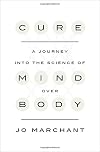
Cure: A Journey into the Science of Mind Over Body
by Jo Marchant
On This Page
Description
"A rigorous, skeptical, deeply reported look at the new science behind the mind's extraordinary ability to heal the body Have you ever felt a surge of adrenaline after narrowly avoiding an accident? Salivated at the sight (or thought) of a sour lemon? Felt turned on just from hearing your partner's voice? If so, then you've experienced how dramatically the workings of your mind can affect your body. Yet while we accept that stress or anxiety can damage our health, the idea of "healing show more thoughts" was long ago hijacked by New Age gurus and spiritual healers. Recently, however, serious scientists from a range of fields have been uncovering evidence that our thoughts, emotions, and beliefs can ease pain, heal wounds, fend off infection and heart disease, even slow the progression of AIDS and some cancers. In Cure, award-winning science writer Jo Marchant travels the world to meet the physicians, patients, and researchers on the cutting edge of this new world of medicine. We learn how meditation protects against depression and dementia, how social connections increase life expectancy, and how patients who feel cared for recover from surgery faster. We meet Iraq war veterans who are using a virtual arctic world to treat their burns and children whose ADHD is kept under control with half the normal dose of medication. We watch as a transplant patient uses the smell of lavender to calm his hostile immune system and an Olympic runner shaves vital seconds off his time through mind-power alone. Drawing on the very latest research, Marchant explores the vast potential of the mind's ability to heal, acknowledges its limitations, and explains how we can make use of the findings in our own lives"-- show lessTags
Recommendations



Member Reviews
Reading Jo Marchant’s Cure: A Journey into the Science of Mind over Body, I found religion. Well, to qualify that a bit, I felt as if I wanted to convert others to the good news Cure offered. I couldn’t help but make a mental list of those who needed this book. Topping that list were some of the doctors I’ve seen across the years, including the hot-shot specialist who asked me if I wanted to play 21 questions when I asked about a drug’s side effects. Unfortunately, those doctors are the least likely to take my advice.
Almost every other page in my copy has margins highlighted or marked NB. The amazing findings keep coming at you. It is impossible to remember them all in detail. What you do take away is rekindled respect for show more researchers working with scant resources and even scantier respect from their peer-reviewing scientific community. This diverse group includes, among others, neuroscientists, anthropologists, surgeons, and anethesiologists.
Marchant explores the latest research into the mind-body relationship keeping her style straightforward and brisk rather than arcane and dense or its opposite, moonstruck and fawning. With a doctorate in genetic and medical microbiology from St. Bartholomew’s Hospital Medical College in London and an MSc in Science Communication from Imperial College London, she previously edited the New Scientist and Nature.
Her background as a scientist suggests she is likely to be a skeptic of grand schemes and unsubstantiated claims. Though she is indeed a skeptic, she is also open-minded and willing to follow the evidence. There is quite a lot of it showing the interplay between mind and body. Although it might not convince the powers that be (practicing clinicians, research funding sources, health insurance plans, pharmaceutical companies), it may persuade patients to apply pressure to them by asking questions. Begin by asking one simple question: is there another way to affect my health positively without harm. Marchant says a lot of evidence suggests there is. Isn’t that what the scientific community says it relies on.
Modern western medicine is built on a foundation of physical findings which can be detected and diagnosed. Long gone is the physician’s attention to or even recognition of the patient’s own subjective experience.
Marchant begins by examining the work of several researchers working with placebo effects. By now many of us have heard that our understanding of placebos is more complicated than previously thought. The old story was that placebos were worthless and harmless, but the newer view is that placebos can positively affect a patient’s well-being as well and sometimes better than some treatment drugs. Research is moving beyond studying placebo’s role in improving symptoms to treating the disease itself.
There are informed doctors who do acknowledge the research showing placebos’ positive effect on a patient’s health. But they have steered clear of using them because it is deemed unethical to mislead or deceive a patient into thinking they are receiving a “real” treatment when they are not. Recent research shows that it is possible to inform a patient that they are receiving a placebo and still have a positive outcome. The ethical issue can now be reframed to ask whether it is ethical to withhold the use of a placebo that research has shown positively affects how a patient feels, especially when that information is provided in advance.
The power of positive thinking has been a popular one for many years and is associated with science’s polar opposites. Faith and prayer, Oprah, and Norman Vincent Peale come to mind. We may be dismissive of their value and regard them as little more than mental sleights of hand, and yet studies are showing that such things serve to make many of us feel better. Marchant finds that a growing body of research suggests that believing we are about to get better can have the power to heal.
The research is sometimes based on subjective feedback from patients but it is also increasingly based on the kind of evidence scientists prefer, such as brain scans. Researchers are tracking evidence of biochemical or neural pathways, somehow triggered by our beliefs, to explain placebo effects.
One researcher, neurologist Joe Stoessel, used brain scans to show that dopamine levels tripled after patients thought they’d taken their real medication, amphetamine. Neuroscientist Fabrizio Benedetti has demonstrated that motor neurons fire more slowly after injecting a placebo in Parkinson patients. Marchant cites many other studies.
Conversely, nocebo effects can be triggered when we anticipate receiving bad side effects. Research on Chronic Fatigue Syndrome has found that patients who feel their condition is untreatable and that engaging in any activity is harmful are less likely to recover.
The use of positive thought can be as simple as thinking positive thoughts when taking medications. One researcher, anthropologist Dan Moerman, “talks” to his pills to enhance their affect and reduce their number. Positive associations with treatments include the doctor’s attitude towards patients. This seems so obvious as to not even be worth mentioning and yet how many patients would report a warm or positive rapport with their doctors.
We are in the early stages of recognizing that we have partially understood what placebos offered. While much of the placebo research looks at how patients feel, there is a newer aspect to this research in the field of immunology involving the treatment of the disease itself. Researchers, such as David Felten, a neuroscientist at the Indiana University School of Medicine, are finding evidence of connections between the immune system and the brain, a previously denied possibility. The bulk of immunologists do not recognize this.
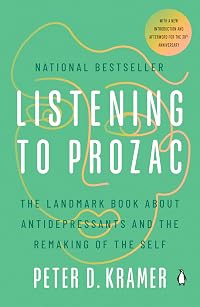
While placebo research continues, albeit with scarce funding sources and amounts, we learn that antidepressant drugs such as Prozac are little better than placebo effects. This information was pried out of the hands of drug companies when Irving Kirsch, an associate director at Harvard’s placebo studies program, used the Freedom of Information Act to force the FDA to release their clinical trial data.
Placebo is a powerful tool in healing, but there are others such as meditation and hypnotherapy. Hypnotherapy, unfortunately, has associations with some questionable practices, such as past life regression. Again, however, neuroimaging is showing changes affected by hypnotherapy. IBS and Chronic Fatigue Syndrome patients, for example, can benefit when hypnotherapy is added. Marchant’s account of patients reducing excrutiating pain from burn and trauma with the use of hypnotherapy is an argument in favor of trying it in skilled hands.
Virtual reality (VR) hypnosis is being studied on a small scale, but the preliminary results have been so promising that the gaming industry, not pharmaceuticals, is paying close attention.
Then there is just plain old fashioned talking and nurturing. Such fundamentals of caring when applied in childbirth, certain outpatient surgeries or palliative care result in more positive patient outcomes. These common sense approaches have fallen by the wayside as financial pressures stress quick patient encounters over patient outcome.
While old fundamentals of patient engagement are being reclaimed, research has uncovered a new amazing world of telomeres. It has caught on in a big way as we hear more about telomere length, stress and aging. Whether shorter telomeres contribute to illness or are harmless side effects is unclear.
Although telomere’s role remains to be determined, the relationship between poverty and stress and illness and premature death is far from vague. Our psychological response to stressors may also directly affect our health. People who are chronically stressed may experience reshaping their brains resulting in an enlarged amygdala and shrunken hippocampus and prefontal cortex, parts of the brain which help us stay calm and in control.
A companion piece to Marchant’s thorough examination of these fascinating and compelling new studies is Ivan Illych’s Medical Nemesis: The Expropriation of Health, written in 1975. Conventional medicine may drag its heels at recognizing the merits of placebos, hypnotherapy, and other approaches, but it cannot deny its responsibility for significant harmful practices and outcomes. Illych introduced the notion of iatrogenic medicine at a time when no one else dared. But he was on to something. An Institute of Medicine study in 1999 found a huge number of medical errors. Only a few months ago a major meta-analysis published in the British Medical Journal found medical errors represent the third leading cause of death.
Surely the sobering finding that iatrogenic medicine is widespread should encourage conventional medicine to take a hard look at its methods and how it can reduce harm. As Marchant concludes,
“My hope, then, is that this book might help to overcome some of the prejudice against mind-body approaches, and to raise awareness that taking account of the mind in health is actually a MORE scientific and evidence based approach than relying ever more heavily on physical interventions and drugs. show less
Almost every other page in my copy has margins highlighted or marked NB. The amazing findings keep coming at you. It is impossible to remember them all in detail. What you do take away is rekindled respect for show more researchers working with scant resources and even scantier respect from their peer-reviewing scientific community. This diverse group includes, among others, neuroscientists, anthropologists, surgeons, and anethesiologists.
Marchant explores the latest research into the mind-body relationship keeping her style straightforward and brisk rather than arcane and dense or its opposite, moonstruck and fawning. With a doctorate in genetic and medical microbiology from St. Bartholomew’s Hospital Medical College in London and an MSc in Science Communication from Imperial College London, she previously edited the New Scientist and Nature.
Her background as a scientist suggests she is likely to be a skeptic of grand schemes and unsubstantiated claims. Though she is indeed a skeptic, she is also open-minded and willing to follow the evidence. There is quite a lot of it showing the interplay between mind and body. Although it might not convince the powers that be (practicing clinicians, research funding sources, health insurance plans, pharmaceutical companies), it may persuade patients to apply pressure to them by asking questions. Begin by asking one simple question: is there another way to affect my health positively without harm. Marchant says a lot of evidence suggests there is. Isn’t that what the scientific community says it relies on.
Modern western medicine is built on a foundation of physical findings which can be detected and diagnosed. Long gone is the physician’s attention to or even recognition of the patient’s own subjective experience.
Marchant begins by examining the work of several researchers working with placebo effects. By now many of us have heard that our understanding of placebos is more complicated than previously thought. The old story was that placebos were worthless and harmless, but the newer view is that placebos can positively affect a patient’s well-being as well and sometimes better than some treatment drugs. Research is moving beyond studying placebo’s role in improving symptoms to treating the disease itself.
There are informed doctors who do acknowledge the research showing placebos’ positive effect on a patient’s health. But they have steered clear of using them because it is deemed unethical to mislead or deceive a patient into thinking they are receiving a “real” treatment when they are not. Recent research shows that it is possible to inform a patient that they are receiving a placebo and still have a positive outcome. The ethical issue can now be reframed to ask whether it is ethical to withhold the use of a placebo that research has shown positively affects how a patient feels, especially when that information is provided in advance.
The power of positive thinking has been a popular one for many years and is associated with science’s polar opposites. Faith and prayer, Oprah, and Norman Vincent Peale come to mind. We may be dismissive of their value and regard them as little more than mental sleights of hand, and yet studies are showing that such things serve to make many of us feel better. Marchant finds that a growing body of research suggests that believing we are about to get better can have the power to heal.
The research is sometimes based on subjective feedback from patients but it is also increasingly based on the kind of evidence scientists prefer, such as brain scans. Researchers are tracking evidence of biochemical or neural pathways, somehow triggered by our beliefs, to explain placebo effects.
One researcher, neurologist Joe Stoessel, used brain scans to show that dopamine levels tripled after patients thought they’d taken their real medication, amphetamine. Neuroscientist Fabrizio Benedetti has demonstrated that motor neurons fire more slowly after injecting a placebo in Parkinson patients. Marchant cites many other studies.
Conversely, nocebo effects can be triggered when we anticipate receiving bad side effects. Research on Chronic Fatigue Syndrome has found that patients who feel their condition is untreatable and that engaging in any activity is harmful are less likely to recover.
The use of positive thought can be as simple as thinking positive thoughts when taking medications. One researcher, anthropologist Dan Moerman, “talks” to his pills to enhance their affect and reduce their number. Positive associations with treatments include the doctor’s attitude towards patients. This seems so obvious as to not even be worth mentioning and yet how many patients would report a warm or positive rapport with their doctors.
We are in the early stages of recognizing that we have partially understood what placebos offered. While much of the placebo research looks at how patients feel, there is a newer aspect to this research in the field of immunology involving the treatment of the disease itself. Researchers, such as David Felten, a neuroscientist at the Indiana University School of Medicine, are finding evidence of connections between the immune system and the brain, a previously denied possibility. The bulk of immunologists do not recognize this.
While placebo research continues, albeit with scarce funding sources and amounts, we learn that antidepressant drugs such as Prozac are little better than placebo effects. This information was pried out of the hands of drug companies when Irving Kirsch, an associate director at Harvard’s placebo studies program, used the Freedom of Information Act to force the FDA to release their clinical trial data.
Placebo is a powerful tool in healing, but there are others such as meditation and hypnotherapy. Hypnotherapy, unfortunately, has associations with some questionable practices, such as past life regression. Again, however, neuroimaging is showing changes affected by hypnotherapy. IBS and Chronic Fatigue Syndrome patients, for example, can benefit when hypnotherapy is added. Marchant’s account of patients reducing excrutiating pain from burn and trauma with the use of hypnotherapy is an argument in favor of trying it in skilled hands.
Virtual reality (VR) hypnosis is being studied on a small scale, but the preliminary results have been so promising that the gaming industry, not pharmaceuticals, is paying close attention.
Then there is just plain old fashioned talking and nurturing. Such fundamentals of caring when applied in childbirth, certain outpatient surgeries or palliative care result in more positive patient outcomes. These common sense approaches have fallen by the wayside as financial pressures stress quick patient encounters over patient outcome.
While old fundamentals of patient engagement are being reclaimed, research has uncovered a new amazing world of telomeres. It has caught on in a big way as we hear more about telomere length, stress and aging. Whether shorter telomeres contribute to illness or are harmless side effects is unclear.
Although telomere’s role remains to be determined, the relationship between poverty and stress and illness and premature death is far from vague. Our psychological response to stressors may also directly affect our health. People who are chronically stressed may experience reshaping their brains resulting in an enlarged amygdala and shrunken hippocampus and prefontal cortex, parts of the brain which help us stay calm and in control.
A companion piece to Marchant’s thorough examination of these fascinating and compelling new studies is Ivan Illych’s Medical Nemesis: The Expropriation of Health, written in 1975. Conventional medicine may drag its heels at recognizing the merits of placebos, hypnotherapy, and other approaches, but it cannot deny its responsibility for significant harmful practices and outcomes. Illych introduced the notion of iatrogenic medicine at a time when no one else dared. But he was on to something. An Institute of Medicine study in 1999 found a huge number of medical errors. Only a few months ago a major meta-analysis published in the British Medical Journal found medical errors represent the third leading cause of death.
Surely the sobering finding that iatrogenic medicine is widespread should encourage conventional medicine to take a hard look at its methods and how it can reduce harm. As Marchant concludes,
“My hope, then, is that this book might help to overcome some of the prejudice against mind-body approaches, and to raise awareness that taking account of the mind in health is actually a MORE scientific and evidence based approach than relying ever more heavily on physical interventions and drugs. show less
 This review was written for LibraryThing Early Reviewers.
(Reprinted from the Chicago Center for Literature and Photography [cclapcenter.com]. I am the original author of this essay, as well as the owner of CCLaP; it is not being reprinted illegally.)
As a middle-aged guy with barely any health insurance and who is officially now pushing 50, I find myself more and more interested in lively NPR-style nonfiction guides to taking your health into your own hands; and that subject doesn't get much more dramatic than Jo Marchant's brand-new Cure, instantly controversial for its main message, that traditional science is starting to more and more prove something that the New Agers have been saying for decades, that your thoughts and attitudes can and do have a direct influence over such physiological, show more biological traits like your mood, pain levels, even the way your autoimmune system works. Although let's be clear -- the PhD holder Marchant says right in the introduction that New Age BS is still New Age BS, that it's simply impossible to do things like "wish away cancer" or trick a diabetic body into thinking it's getting insulin when it's not, and that the vast majority of new discoveries about this subject have mostly to do with things that the brain and the brain alone controls in our bodies, things like our heartrate and the amount of hormones that get released into our bloodstream, the amount of pain we perceive, even such things like how tired or alert we feel when fighting off the flu.
That said, however, this book is a real revelation, especially mind-blowing because of all of it being based on actual Western-type scientifically rigorous testing going on around the world, showing through lab-based control-tested experiments such things as that placebo pills can often work just as well as "real" medicine in certain cases (even when the patient knows they're taking a placebo), that you can train your body like a Pavlovian dog to get a full effect out of half-doses of medicine, that a 99-cent iPhone app can let regular schmoes regulate things like their heartbeat in a way traditionally reserved for yogis who practice for decades, and that such seemingly innocuous things like meditation and having friends who take care of you when sick have an actual, quantifiable effect on the biological processes that go into recovering from illness. As Marchant says throughout this eye-opening tome, you need to take all of these things with a grain of salt (and in fact this is a big running theme throughout, that all of these findings need much more official studies before we can start taking them for granted, which are nearly impossible to get funded because 95 percent of the medical experiments done in this country are sponsored by drug companies, who have no interest in funding experiments that prove that people need less drugs and not more); but certainly this book has given me a brand-new way to look at the subject of illness and just how much control I actually have over it, an illuminating read that is worth your time regardless of what kinds of conclusions you come to by the end. Strongly recommended to one and all.
Out of 10: 9.3 show less
As a middle-aged guy with barely any health insurance and who is officially now pushing 50, I find myself more and more interested in lively NPR-style nonfiction guides to taking your health into your own hands; and that subject doesn't get much more dramatic than Jo Marchant's brand-new Cure, instantly controversial for its main message, that traditional science is starting to more and more prove something that the New Agers have been saying for decades, that your thoughts and attitudes can and do have a direct influence over such physiological, show more biological traits like your mood, pain levels, even the way your autoimmune system works. Although let's be clear -- the PhD holder Marchant says right in the introduction that New Age BS is still New Age BS, that it's simply impossible to do things like "wish away cancer" or trick a diabetic body into thinking it's getting insulin when it's not, and that the vast majority of new discoveries about this subject have mostly to do with things that the brain and the brain alone controls in our bodies, things like our heartrate and the amount of hormones that get released into our bloodstream, the amount of pain we perceive, even such things like how tired or alert we feel when fighting off the flu.
That said, however, this book is a real revelation, especially mind-blowing because of all of it being based on actual Western-type scientifically rigorous testing going on around the world, showing through lab-based control-tested experiments such things as that placebo pills can often work just as well as "real" medicine in certain cases (even when the patient knows they're taking a placebo), that you can train your body like a Pavlovian dog to get a full effect out of half-doses of medicine, that a 99-cent iPhone app can let regular schmoes regulate things like their heartbeat in a way traditionally reserved for yogis who practice for decades, and that such seemingly innocuous things like meditation and having friends who take care of you when sick have an actual, quantifiable effect on the biological processes that go into recovering from illness. As Marchant says throughout this eye-opening tome, you need to take all of these things with a grain of salt (and in fact this is a big running theme throughout, that all of these findings need much more official studies before we can start taking them for granted, which are nearly impossible to get funded because 95 percent of the medical experiments done in this country are sponsored by drug companies, who have no interest in funding experiments that prove that people need less drugs and not more); but certainly this book has given me a brand-new way to look at the subject of illness and just how much control I actually have over it, an illuminating read that is worth your time regardless of what kinds of conclusions you come to by the end. Strongly recommended to one and all.
Out of 10: 9.3 show less
"Adeptly weaving research and individual’s stories together, Marchant has created a fascinating exploration of how our mind affects our body and how our body affects our mind. Beautifully written, Marchant explores a wide range of mind-body issues with a healthy skepticism, profound respect, and delightful curiosity. With a light touch, she points out how research into this area is stymied by the way most medical research is funded, and the current medical research model. Along the way, she raises a number of important questions, including things like if the placebo effect is real and helps people in a measurable way, why should things that create it be discounted?" -eachurch, LibraryThing early reviewer
"This book is a great show more introduction to mind/body phenomena in medicine, because it approaches the topic from a rigorously scientific, evidence-based standpoint. Ms. Marchant is a science and history journalist with a doctorate in microbiology, and without any touch of New Agey credulity. She looks at the ways in which the mind can affect the body's ability to cure itself, looking at individual case histories and at studies of many cases. Much of the evidence she cites is compelling...Beyond convincing arguments and evidence, Ms. Marchant has written an eminently readable and engrossing book. She makes one thing very clear: the antipathy of the current medical establishment to non-traditional medicine, even when it is shown to be helpful. This is based on the sad fact that it is at present very difficult to make money from an approach that leans to fewer pills, less intervention, and more human contact. Perhaps efforts at cost saving will bring this approach more into the limelight. In the meantime, this book is well worth reading, particularly for those with intractable medical issues."-annbury early reviewer LibraryThing show less
"This book is a great show more introduction to mind/body phenomena in medicine, because it approaches the topic from a rigorously scientific, evidence-based standpoint. Ms. Marchant is a science and history journalist with a doctorate in microbiology, and without any touch of New Agey credulity. She looks at the ways in which the mind can affect the body's ability to cure itself, looking at individual case histories and at studies of many cases. Much of the evidence she cites is compelling...Beyond convincing arguments and evidence, Ms. Marchant has written an eminently readable and engrossing book. She makes one thing very clear: the antipathy of the current medical establishment to non-traditional medicine, even when it is shown to be helpful. This is based on the sad fact that it is at present very difficult to make money from an approach that leans to fewer pills, less intervention, and more human contact. Perhaps efforts at cost saving will bring this approach more into the limelight. In the meantime, this book is well worth reading, particularly for those with intractable medical issues."-annbury early reviewer LibraryThing show less
I expected this book to be much more of an exposé, but Marchant does a really good job of reporting the ways in which placebo treatment, mental distraction, and emotional support effect health outcomes, without ever going along with any actual "mind-over-body" claims. And she has plenty of stories of people who blame themselves for their diseases and try to cure them with diet, homeopathic remedies, and "positive thinking", and how tragic the results inevitably are in such cases. The conclusion, with which I agree: pseudoscience is pseudoscience and hurts people. The science of integrated (emotional and physical) healthcare can help people.
This review was written for LibraryThing Early Reviewers.Non-fiction in which Jo Marchant takes a scientific approach to recounting the latest research on the mind-body connection. She undertook this effort to find out the latest on what the mind can and cannot do to assist in achievement of overall better health and quality of life. Topics include the placebo effect, mindfulness meditation, the immune system, virtual reality, pain management, social connection, kindness in caregiving, stress, aging, depression, hypnosis, electrical impulses, and much more.
A self-professed skeptic and advocate for the scientific method, she systematically explores each topic and examines results of recent research. She brings a human component to these findings by providing case studies of people currently show more going through treatment. For the most part, these are people she has met, and she tells their stories in an empathetic way. The scientific jargon is kept to a minimum, and the concepts are explained in a straightforward manner. She is careful to cite areas where more research is needed, and documents dissenting opinions. Unfortunately, the pharmaceutical companies, which sponsor a vast amount of current research, are not motivated to spend money to support experiments that may reduce the need for their products.
In the author’s words:
”I am not advocating relying solely on the mind to heal us; but denying its role in medicine surely isn't the answer either. My hope, then, is that this book might help to overcome some of the prejudice against mind-body approaches, and to raise awareness that taking account of the mind in health is actually a more scientific and evidence-based approach than relying ever more heavily on physical interventions and drugs.”
Recommended to those interested in health and brain-related science. Those with current health issues may discover some helpful coping strategies. show less
A self-professed skeptic and advocate for the scientific method, she systematically explores each topic and examines results of recent research. She brings a human component to these findings by providing case studies of people currently show more going through treatment. For the most part, these are people she has met, and she tells their stories in an empathetic way. The scientific jargon is kept to a minimum, and the concepts are explained in a straightforward manner. She is careful to cite areas where more research is needed, and documents dissenting opinions. Unfortunately, the pharmaceutical companies, which sponsor a vast amount of current research, are not motivated to spend money to support experiments that may reduce the need for their products.
In the author’s words:
”I am not advocating relying solely on the mind to heal us; but denying its role in medicine surely isn't the answer either. My hope, then, is that this book might help to overcome some of the prejudice against mind-body approaches, and to raise awareness that taking account of the mind in health is actually a more scientific and evidence-based approach than relying ever more heavily on physical interventions and drugs.”
Recommended to those interested in health and brain-related science. Those with current health issues may discover some helpful coping strategies. show less
This book is so amazing I immediately wanted to share it with all my friends! Sure, we are surrounded with claims of the powers of “natural” treatments for medical conditions: reiki, acupuncture, holistic cures, and the like. Yet, author Jo Marchant sorts through it all to present scientific evidence of the actual affect of thoughts, emotions, and beliefs over the physical functions of the body. She sorts through Hoodoo and woo-woo to demonstrate the proven value of placebos, conditioning, emotional and sensation training. In other words, the brain can be used to lesson pain, improve ailments and disabilities, and reduce the need for risky, powerful medications.
Patients recovering from surgery who received painkillers administered show more by an informative physician received up to 50% more pain relief than those receiving the same drugs via a computer-controlled intravenous drip received. Irritable bowel syndrom sufferers taking placebos received relief from the condition from placebos, even when they knew they were taking placebos.
Marchant supports the potential of the mind’s ability to heal and to improve the body function with 28 pages of footnotes. As a PhD in genetics and medical microbiology, Marchant approached this investigation as a scientist, yet she could not be dismissive of research-supported results.
I highly recommend “Cure: a Journey into the Science of Mind over Body” for anyone faced with chronic or disabling medical conditions or people interested in pushing their bodies to extremes. It is foolish to discount the interplay of psychology with medical treatment, and this book demonstrates why. show less
Patients recovering from surgery who received painkillers administered show more by an informative physician received up to 50% more pain relief than those receiving the same drugs via a computer-controlled intravenous drip received. Irritable bowel syndrom sufferers taking placebos received relief from the condition from placebos, even when they knew they were taking placebos.
Marchant supports the potential of the mind’s ability to heal and to improve the body function with 28 pages of footnotes. As a PhD in genetics and medical microbiology, Marchant approached this investigation as a scientist, yet she could not be dismissive of research-supported results.
I highly recommend “Cure: a Journey into the Science of Mind over Body” for anyone faced with chronic or disabling medical conditions or people interested in pushing their bodies to extremes. It is foolish to discount the interplay of psychology with medical treatment, and this book demonstrates why. show less
Adeptly weaving research and individual’s stories together, Marchant has created a fascinating exploration of how our mind affects our body and how our body affects our mind. Beautifully written, Marchant explores a wide range of mind-body issues with a healthy skepticism, profound respect, and delightful curiosity. With a light touch, she points out how research into this area is stymied by the way most medical research is funded, and the current medical research model. Along the way, she raises a number of important questions, including things like if the placebo effect is real and helps people in a measurable way, why should things that create it be discounted?
This review was written for LibraryThing Early Reviewers.Members
- Recently Added By
Published Reviews
ThingScore 75
This deceptively simple idea is one of the most powerful in the book: Sometimes the difference between feeling well and feeling awful is simply a matter of where we direct our attention.
added by private library
Lists

Science: Health & Medical
100 works; 1 member

wish list
61 works; 3 members
Author Information

16+ Works 1,140 Members
Jo Marchant is an award winning science journalist. She has a PhD ingenetics and medical microbiology and an MSc in science communication. She is also the author of Decoding the Heavens and Cure, both of which were short-listed for the Royal Society Prize for Science Books.
Awards and Honors
Common Knowledge
- Dedication
- To my parents, Jim and Diana Marchant,
Thank you for teaching me to think, question, and explore. - Original language
- English US
Classifications
- Genres
- Nonfiction, General Nonfiction, Science & Nature
- DDC/MDS
- 616.89 — Applied science & technology Medicine & health Diseases, Allergies, Skin Conditions Nervous Disorders: Autism, Anorexia, OCD Mental disorders: bi-polar/schizophrenia
- LCC
- RC489 .M53 .M36 — Medicine Internal medicine Internal medicine Neurosciences. Biological psychiatry. Neuropsychiatry Psychiatry Therapeutics. Psychotherapy
- BISAC
Statistics
- Members
- 439
- Popularity
- 69,966
- Reviews
- 48
- Rating
- (4.09)
- Languages
- 8 — Catalan, Dutch, English, Finnish, Polish, Portuguese, Spanish, Turkish
- Media
- Paper, Audiobook, Ebook
- ISBNs
- 26
- UPCs
- 2
- ASINs
- 3