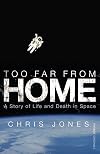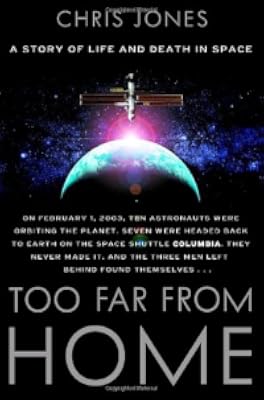
Too Far From Home: A Story of Life and Death in Space
by Chris Jones
On This Page
Description
Every time an astronaut makes the trip into space, he faces the risk of death from the slightest mechanical error or instance of bad luck. In February 2003, American astronauts Donald Pettit and Kenneth Bowersox and Russian flight engineer Nikolai Budarin were on what was to be a routine fourteen-week mission maintaining the International Space Station. But then the shuttle Columbia exploded beneath them. With the launch program suspended indefinitely, these astronauts had suddenly lost show more their ride back to earth. This book offers a detailed portrait of the odd life of the people who live in zero gravity, as it chronicles the efforts of the beleaguered mission controls in Houston and Moscow working frantically to bring their men home--ultimately settling on a plan that felt, at best, like a long shot.--From publisher description. show lessTags
Recommendations




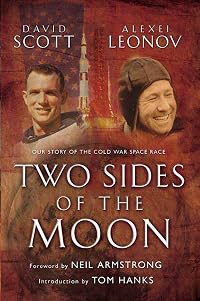
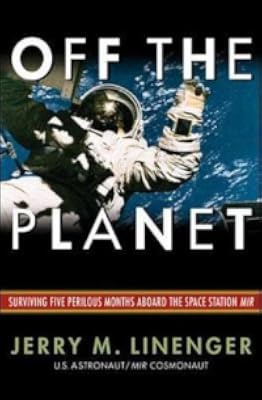
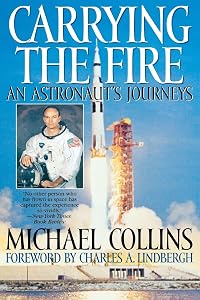
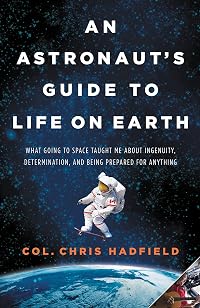




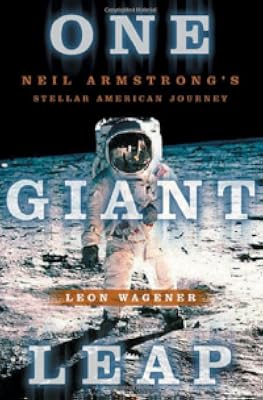
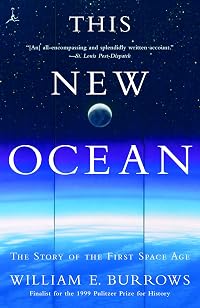

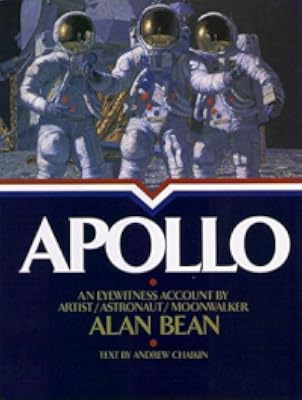
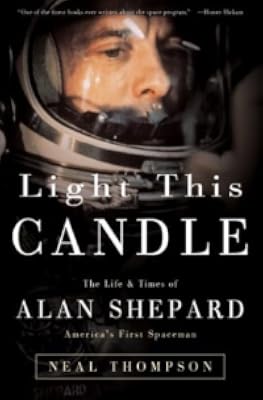
Member Recommendations
by anonymous user
by Scotland
Member Reviews
"Foam had often fallen from the tank (during Expedition Six's own launch, fragments had peppered Endeavour's belly hard enough to crack it's heat-resistant ceramic tiles), but it had never wielded the heft to damage the shuttle fatally. Now, although there were still engineers and technicians within NASA who continued to dismiss the theory, it looked more and more plausible. It was finally confirmed when a piece of foam was fired out of a gun at a reinforced carbon-carbon panel, replicating the collision, and it made like a cannonball. Looking at the entrance wound gave every astronaut the feeling that they had cheated death only because the aim of their own lost foam had been less true. It was as though they had each been lucky enough show more to duck bullets, but their friends had not.
For the men up on station, having survived the trip up and having yet to make the trip down, the realization left them swallowing a hot, sick feeling. They suffered from the sweats that follow catastrophe averted, the closest of calls. "
Too Far from Home is the story of Expedition Six, the Russian and two Americans living on board the International Space Station when the Columbia disintegrated over the Southwest United States. When the all-stop was placed on Shuttle flights, they were stranded in Space with no one in Mission Control willing to venture a return date. It took two years after the Challenger disaster for the program to recover and they didn't know if it would be that long again. The unease of the crew was compounded by their grief for their friends and colleagues. At first they stayed busy, approaching the situation logically. They knew they had to stay healthy and strong so they exercised longer, they stretched their food rations and began to be even more diligent about the maintenance tasks on the ISS.
After several months their attitude about space and about the Station shifted. It wasn't just a temporary hotel room now, it had become their true home. They became so familiar with it and comfortable with their routines that when NASA found a way to bring them back to Earth, it caused them grief all over again. Six was just further evidence of how Space leaves its mark on those who encounter it. A great read.
I enjoyed Jones' storytelling. He gives you background on both the US and USSR's space programs and backgrounds on each man, easing you into the situation. You really come along side them as they founder and then find themselves again and you feel like you know these men personally. Highly recommended for those who enjoy Astronaut biographies and Space history. show less
For the men up on station, having survived the trip up and having yet to make the trip down, the realization left them swallowing a hot, sick feeling. They suffered from the sweats that follow catastrophe averted, the closest of calls. "
Too Far from Home is the story of Expedition Six, the Russian and two Americans living on board the International Space Station when the Columbia disintegrated over the Southwest United States. When the all-stop was placed on Shuttle flights, they were stranded in Space with no one in Mission Control willing to venture a return date. It took two years after the Challenger disaster for the program to recover and they didn't know if it would be that long again. The unease of the crew was compounded by their grief for their friends and colleagues. At first they stayed busy, approaching the situation logically. They knew they had to stay healthy and strong so they exercised longer, they stretched their food rations and began to be even more diligent about the maintenance tasks on the ISS.
After several months their attitude about space and about the Station shifted. It wasn't just a temporary hotel room now, it had become their true home. They became so familiar with it and comfortable with their routines that when NASA found a way to bring them back to Earth, it caused them grief all over again. Six was just further evidence of how Space leaves its mark on those who encounter it. A great read.
I enjoyed Jones' storytelling. He gives you background on both the US and USSR's space programs and backgrounds on each man, easing you into the situation. You really come along side them as they founder and then find themselves again and you feel like you know these men personally. Highly recommended for those who enjoy Astronaut biographies and Space history. show less
How come I never knew about this story? Why didn't the press cover it at all? Probably because a deft hand like the author's wasn't available to tell it. The narrative is almost dreamlike, from a complete trance-induced point of view, which makes it a worthy way of relaying this incredible story, plucked from the galaxy of incredible stories that comprise the amazing space program that awestruck me in my youth. I learned things about the program I never knew, and the author really gets into the heart of the technical details and the human emotions of success and failure. Never wavering, all tangents lead back to the story at hand. A marvelous storytelling achievement.
When space shuttle Columbia broke up over Texas on its return to Earth, the shuttle program was temporarily halted leaving three astronauts stranded on the International Space Station. This is the story of how they eventually got home. Told with wonder, and nearly poetically, the author also provides a fascinating background and history of the shuttle program, Mir, and the space station, as well as many of the early and current astronauts and scientists - both U.S. and Soviet. The author takes four pages to give a you-are-there feeling of what it's like to experience a take-off, minute-by-minute, second-by-countdown-second. The drama, danger, and lure of space is evident in this true story.
Note: This review is of the book as presented on the CBC podcast "Between the Covers", starting the week of May 18, 2010.
A highly informative look at the story of Expedition 6, a three-man mission to the International Space Station that was stranded temporarily in space when their ride home, the space shuttle Columbia, suffered the tragic accident in 2003. This book was a departure from the Between the Covers podcast's usual fare (Canadian novels, generally contemporary), but it was an excellent read all the same.
I learned a lot about the space program and astronauts' day-to-day lives from this book. For example, a space suit weighs 86 pounds BEFORE the helmet, and food tastes blander in space than it does on Earth, because astronauts' show more faces and sinuses get swollen (probably from the lack of gravity). One of the astronauts in the book sprinkled green chilies on everything he ate, and the sinus thing is probably why. Actually, the parts about the effects of space on the human body were very interesting in a gross kind of way. The author's description of the astronauts' insides floating around was rather nausea-inducing, and the thought that 8 Gs will almost pinch your lungs shut is terrifying. Vivid details like these really capture the reader's interest. The book was also amusing in places, with quotes such as "weightlessness makes for some terrific air guitar", and the astronaut's prayer of sorts: "God help you if you screw up." (That one was more funny in an only-half-joking kind of way.)
William B. Davis, aka "The Smoking Man" from The X-Files, narrates the 15-minute episodes very well, speaking at a natural pace and adding some emotion where warranted, especially when the book uses direct speech. He also got me all choked up when the book discussed the history of manned space missions and in particular the Challenger disaster. That was a terrible tragedy, as was Columbia. Space travel is a very dangerous job!
Overall I would definitely recommend this book to people interested in Columbia and the space shuttle program in general. The part where the author discusses the history of manned space missions kind of lags, but the rest of the book is very interesting and may inspire you to do further research on the subject. show less
A highly informative look at the story of Expedition 6, a three-man mission to the International Space Station that was stranded temporarily in space when their ride home, the space shuttle Columbia, suffered the tragic accident in 2003. This book was a departure from the Between the Covers podcast's usual fare (Canadian novels, generally contemporary), but it was an excellent read all the same.
I learned a lot about the space program and astronauts' day-to-day lives from this book. For example, a space suit weighs 86 pounds BEFORE the helmet, and food tastes blander in space than it does on Earth, because astronauts' show more faces and sinuses get swollen (probably from the lack of gravity). One of the astronauts in the book sprinkled green chilies on everything he ate, and the sinus thing is probably why. Actually, the parts about the effects of space on the human body were very interesting in a gross kind of way. The author's description of the astronauts' insides floating around was rather nausea-inducing, and the thought that 8 Gs will almost pinch your lungs shut is terrifying. Vivid details like these really capture the reader's interest. The book was also amusing in places, with quotes such as "weightlessness makes for some terrific air guitar", and the astronaut's prayer of sorts: "God help you if you screw up." (That one was more funny in an only-half-joking kind of way.)
William B. Davis, aka "The Smoking Man" from The X-Files, narrates the 15-minute episodes very well, speaking at a natural pace and adding some emotion where warranted, especially when the book uses direct speech. He also got me all choked up when the book discussed the history of manned space missions and in particular the Challenger disaster. That was a terrible tragedy, as was Columbia. Space travel is a very dangerous job!
Overall I would definitely recommend this book to people interested in Columbia and the space shuttle program in general. The part where the author discusses the history of manned space missions kind of lags, but the rest of the book is very interesting and may inspire you to do further research on the subject. show less
Too Far From Home was a gripping story that served as an ideal primer for someone (me) who has an interest in scientific/space reading but has very little history to serve as a background. The book is written in the style of a nonfiction novel with plenty of tangential stories that build a good foundation. I found it truly riveting. It's the rare book that manages to prevent me from sleeping but this one did it.
So why only 4* and not 4.5 or 5? It's because I felt that the book did the old bait and switch. The cover and notes suggest that these astronauts on the International Space Station were stranded after the explosion of Space Shuttle Columbia and that it's going to be a real nail biter as to whether or not they'll make it out of show more there alive. In fact, that is the core story that the book follows but its real merit lies in the total package which includes a history of the US and Russian space race and the details for each of these two space programs. Those details flow into the timeline and characters of this core story to fill it out into a great book. Whether or not it's a nail biter, I'll let you decide. I'm not even going to put any spoilers for you to cheat. Read it. It's excellent.
It made me want to break out a giant telescope and visit distant places. show less
So why only 4* and not 4.5 or 5? It's because I felt that the book did the old bait and switch. The cover and notes suggest that these astronauts on the International Space Station were stranded after the explosion of Space Shuttle Columbia and that it's going to be a real nail biter as to whether or not they'll make it out of show more there alive. In fact, that is the core story that the book follows but its real merit lies in the total package which includes a history of the US and Russian space race and the details for each of these two space programs. Those details flow into the timeline and characters of this core story to fill it out into a great book. Whether or not it's a nail biter, I'll let you decide. I'm not even going to put any spoilers for you to cheat. Read it. It's excellent.
It made me want to break out a giant telescope and visit distant places. show less
Merely in terms of insider astronaut/cosmonaut history, gossip, and lore (did you know Tank Girl is the cult film of the American female astronaut corps?), Chris Jones’ book would be a great read, but add the true story of the American-Russian space station crew left stranded in orbit after the Colombia space shuttle burned up on re-entry, and it’s . . . forgive me . . . an out-of-this-world read.
Jones does a fine job bringing together the broad, sweeping history of the space program with emphasis on the individual human beings who have taken part in mankind's greatest endeavor. The book gives the reader an experience that most would ever have: space flight. It does this through gritty (perhaps gory) descriptions of weightlessness, isolation, and possible and real disaster in space. While it is slightly juvenile at times in expression and exuberance (I'll give Jones a break since he is a sports writer), it is, never the less, a cracking good read. Jones brings a passion to what might be considered a very dull subject.
Funny enough I heard an interview with Jones on the Canadian Broadcasting System's "Quirks and Quarks" in which show more he stated that after completing the book he had absolutely no desire to go to outer-space. I think he might have cured me of that desire too. show less
Funny enough I heard an interview with Jones on the Canadian Broadcasting System's "Quirks and Quarks" in which show more he stated that after completing the book he had absolutely no desire to go to outer-space. I think he might have cured me of that desire too. show less
Members
- Recently Added By
Author Information

3+ Works 247 Members
Chris Jones was born in London's East End in 1973. He has been a sports writer since 1998 and won the Edward Goff Penny Memorial Prize for outstanding young journalists. He lives in Toronto
Some Editions
Work Relationships
Common Knowledge
- Original title
- Too Far From Home: A Story of Life and Death in Space
- Alternate titles
- Out of Orbit: The Incredible True Story of Three Astronauts Who Were Hundreds of Miles Above Earth When They Lost Their Ride Home
- Original publication date
- 2007-02-23
- Dedication
- For Lee, who always brings me back.
- First words
- Only minutes earlier, they had been something else - something big enough to be held in the hearts of millions - and soon they would be that big again, but now they were just three men in a bucket floating on the ocean, still... (show all) far from home.
- Last words
- (Click to show. Warning: May contain spoilers.)Even when he checks his watch, sneaks through his front door late at night, sets up his telescope on his lawn, and follows the space station on its long journey through the universe, he can feel cut off from his home as if by a wall, a wall as thin as a single sheet of glass.
Classifications
- Genres
- Nonfiction, Science & Nature, General Nonfiction, History, Biography & Memoir
- DDC/MDS
- 629.45 — Applied science & technology Engineering Transportation Vehicles Spacecraft & Vehicles Manned space flight
- LCC
- TL867 .J66 — Technology Motor vehicles. Aeronautics. Astronautics Motor vehicles. Aeronautics. Astronautics Astronautics. Space travel
- BISAC
Statistics
- Members
- 238
- Popularity
- 137,456
- Reviews
- 14
- Rating
- (3.69)
- Languages
- English
- Media
- Paper, Audiobook, Ebook
- ISBNs
- 11
- ASINs
- 3