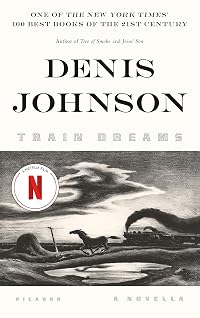
Train Dreams
by Denis Johnson
On This Page
Description
Robert Grainer is a day laborer in the American West at the start of the twentieth century, an ordinary man in extraordinary times. Buffeted by the loss of his family, Grainer struggles to make sense of this strange new world. As his story unfolds, listeners witness both his shocking personal defeats and the radical changes that transform America in his lifetime.Tags
Recommendations







































Member Recommendations

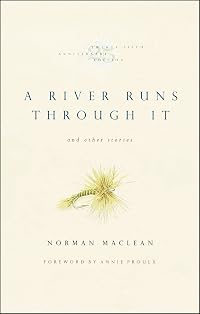
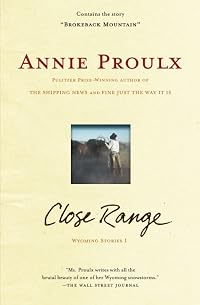
zhejw Both short books are set in rural country in the early 20th century and involve a fire, a widower, and mysterious relationships with animals.


Member Reviews
My dream of perfection.
This exquisite novella fulfills my reading dreams, the kind of fiction I love best, done with exquisite subtlety and a pitch-perfect union of form and function.
The story is that of Robert Grainier, a manual laborer working and living in the American Northwest from the early 1900s until his death in the late 1960s. He marries and has a daughter. One day just a few years after marrying, while he is away at a logging camp working, a terrifying forest fire ravages their family home and the lives of his wife and toddler daughter. Thereafter, Grainier prefers a life of solitude and minimal society.
Like Grainier the man, the novella is stoic and taciturn. The backdrop of his life, told from birth to death in just 116 show more pages, is rough and fleeting beauty, matching that of the pristine Northwest forests as they were being logged and cleared for trains and the march of the twentieth century.
Grainier is no philosopher, no Thoreau; he's just a man making his living during his times. He is neither saint nor sinner. He will, though, sometimes reflect on certain regrets of his behavior. Sometimes he is inwardly awkward when dealing with others or with novel experiences. Not an especially self-reflecting man, but he is self-aware
Throughout, he has encounters with men and women, types typical of that period in the Northwest. After his wife's death, Grainier is not much interested in women and those encounters are infrequent and brief, almost anomalies that reflect the demographics of that time and place and reflecting Grainier's own hermit-like preference. Most of his interactions are with men, simple laborers similar to himself but far more gregarious and outlandish. They tell the tales of that era: the tall tales, the violent and often funny tales, the lively tales and the persistent rumors that chatty workmen tell to pass the time.
Living in the cabin he built for himself on a his few acres deep in the forest, Grainier is alert to his surroundings, its changes, its sights and sounds, and is, sometimes, awed by the magnificence. Alone, he is prone to spectral visions of his wife. He even sees his daughter once more in an unfathomable, troubling way. But none of these things especially alarm him—not the natural nor the supernatural—he accepts all things equally as part of the experiences of his life. He is effected but not alarmed.
In a review somewhere, I read Johnson's style compared as similar to Hemmingway. Since I don't much care for Hemmingway myself, I want to say a few things in case others might find that comparison a reason to not pick up Train Dreams.
Train Dreams is that of a humble life told humbly, an approach I've not found in Hemmingway tales, not even in Old Man and the Sea, although I suppose that might be the closest comparison. The life of Johnson's Grainer, equally physical and masculine as any Hemmingway protagonist, is that of an American in America during a specific time of change and challenges, unlike Hemmingway's heroes who travel the world looking for excitement and meaning. Grainier, too, endures trials but they are the universal kind. Nor does Grainer die young and heroically. His death, around age 70, comes inexorably in a body worn out by living and labor. Again, not a Hemmingway tale. I'll concede that Johnson also uses sparse so-called masculine language. If I must compare, then I say, "Imagine a Hemmingway story with less bravado and more sublimity."
My admiring review pales pitifully to convey the power of the original work. But isn't that the inescapable nature of encounters with art? There are the masterpieces and there are the admirers moved by it.
If American society reaches the book burning dystopia foretold in Fahrenheit 451, a direction that doesn't seem as far-fetched as it once did, I readily volunteer to be this book. show less
This exquisite novella fulfills my reading dreams, the kind of fiction I love best, done with exquisite subtlety and a pitch-perfect union of form and function.
The story is that of Robert Grainier, a manual laborer working and living in the American Northwest from the early 1900s until his death in the late 1960s. He marries and has a daughter. One day just a few years after marrying, while he is away at a logging camp working, a terrifying forest fire ravages their family home and the lives of his wife and toddler daughter. Thereafter, Grainier prefers a life of solitude and minimal society.
Like Grainier the man, the novella is stoic and taciturn. The backdrop of his life, told from birth to death in just 116 show more pages, is rough and fleeting beauty, matching that of the pristine Northwest forests as they were being logged and cleared for trains and the march of the twentieth century.
Grainier is no philosopher, no Thoreau; he's just a man making his living during his times. He is neither saint nor sinner. He will, though, sometimes reflect on certain regrets of his behavior. Sometimes he is inwardly awkward when dealing with others or with novel experiences. Not an especially self-reflecting man, but he is self-aware
Throughout, he has encounters with men and women, types typical of that period in the Northwest. After his wife's death, Grainier is not much interested in women and those encounters are infrequent and brief, almost anomalies that reflect the demographics of that time and place and reflecting Grainier's own hermit-like preference. Most of his interactions are with men, simple laborers similar to himself but far more gregarious and outlandish. They tell the tales of that era: the tall tales, the violent and often funny tales, the lively tales and the persistent rumors that chatty workmen tell to pass the time.
Living in the cabin he built for himself on a his few acres deep in the forest, Grainier is alert to his surroundings, its changes, its sights and sounds, and is, sometimes, awed by the magnificence. Alone, he is prone to spectral visions of his wife. He even sees his daughter once more in an unfathomable, troubling way. But none of these things especially alarm him—not the natural nor the supernatural—he accepts all things equally as part of the experiences of his life. He is effected but not alarmed.
In a review somewhere, I read Johnson's style compared as similar to Hemmingway. Since I don't much care for Hemmingway myself, I want to say a few things in case others might find that comparison a reason to not pick up Train Dreams.
Train Dreams is that of a humble life told humbly, an approach I've not found in Hemmingway tales, not even in Old Man and the Sea, although I suppose that might be the closest comparison. The life of Johnson's Grainer, equally physical and masculine as any Hemmingway protagonist, is that of an American in America during a specific time of change and challenges, unlike Hemmingway's heroes who travel the world looking for excitement and meaning. Grainier, too, endures trials but they are the universal kind. Nor does Grainer die young and heroically. His death, around age 70, comes inexorably in a body worn out by living and labor. Again, not a Hemmingway tale. I'll concede that Johnson also uses sparse so-called masculine language. If I must compare, then I say, "Imagine a Hemmingway story with less bravado and more sublimity."
My admiring review pales pitifully to convey the power of the original work. But isn't that the inescapable nature of encounters with art? There are the masterpieces and there are the admirers moved by it.
If American society reaches the book burning dystopia foretold in Fahrenheit 451, a direction that doesn't seem as far-fetched as it once did, I readily volunteer to be this book. show less
I couldn’t bring myself to spend £12.99 on the hardback of this novella, but now it is out in paperback I snapped it up as I’d heard great things about it – and wilderness novels always seem to appeal to me.
Train Dreams tells the life story of Robert Grainier, who as a child arrives in Idaho on the train in the 1880s to live with his uncle having lost his parents – we never learn how. Robert becomes a hard worker, on the railroads and in the forests in the northern tip of the state close to the Canadian border. He marries relatively late, in his thirties, and after his wife and child are presumed dead in forest fire, lives on his own for the rest of his days into his eighties.
As the novel opens, Grainier is working on a show more railroad bridge across a gorge, and lends a hand to colleagues who are planning to throw a supposedly thieving Chinaman off the bridge. The Chinaman escaped, but Grainier feels cursed by having taken part in the shameful exploit…
"Walking home in the falling dark, Grainier almost met the Chinaman everywhere. Chinaman in the road. Chinaman in the woods. Chinaman walking softly, dangling his hands on arms like ropes. Chinaman dancing up out of the creek like a spider…
Now Grainier stood by the table in the single-room cabin and worried. The Chinaman, he was sure, had cursed them powerfully while they dragged him along, and any bad thing might come of it. Though astonished now at the frenzy of the afternoon, baffled by the violence, and how it had carried him away like a seed in a wind, young Grainier still wished they’d gone head and killed that Chinaman before he’d cursed them."
He feels the Chinaman’s curse is responsible for the presumed death of his wife and daughter when a terrible forest fire burns everything in the whole valley where their homestead was built. He will eventually return there and rebuild the cabin, living a near hermit life with just his dog for company for half of each year, working the other months. Once his ageing joints are no longer any good for logging work, he becomes a haulier for hire with horses and wagon. He makes enough to get by, but it is a hard life.
I’m not generally comfortable with short stories, which often feel as if they’re over before they’ve started for me. However, I am happy with the novella / short novel form which has enough length to tell a good story, but in keeping it short makes every sentence count. This is the case with Train Dreams. Johnson manages to compress eighty years into not many more pages, but also to encompass all that was important in Grainier’s life within that constraint, always with the railroad somewhere in the distance or in his dreams. We appreciate Grainier’s sheer hard work and pioneer spirit, we’re sad with him for the loss of his wife and child, and feel his loneliness when he returns to his backwoods cabin where he is left to commune with nature.
Grainier’s life in the cabin brings to mind another book rich with the pioneer spirit – Eowyn Ivey’s wonderful novel The Snow Child. There is more than that point of similarity, but I won’t expound for fear of spoiling, suffice to say that magic plays no part in Grainier’s life, except in his dreams and grief.
What is amazing about this short novel is that, despite its condensed nature, like Doctor Who’s TARDIS, it is bigger on the inside. Every sentence does indeed count. Its beginning featuring the episode with the Chinaman may not initially endear you to Grainier, but his strength of character will get you as you read on. This was my first experience of reading Denis Johnson, I’m sure it won’t be my last. (9/10) show less
Train Dreams tells the life story of Robert Grainier, who as a child arrives in Idaho on the train in the 1880s to live with his uncle having lost his parents – we never learn how. Robert becomes a hard worker, on the railroads and in the forests in the northern tip of the state close to the Canadian border. He marries relatively late, in his thirties, and after his wife and child are presumed dead in forest fire, lives on his own for the rest of his days into his eighties.
As the novel opens, Grainier is working on a show more railroad bridge across a gorge, and lends a hand to colleagues who are planning to throw a supposedly thieving Chinaman off the bridge. The Chinaman escaped, but Grainier feels cursed by having taken part in the shameful exploit…
"Walking home in the falling dark, Grainier almost met the Chinaman everywhere. Chinaman in the road. Chinaman in the woods. Chinaman walking softly, dangling his hands on arms like ropes. Chinaman dancing up out of the creek like a spider…
Now Grainier stood by the table in the single-room cabin and worried. The Chinaman, he was sure, had cursed them powerfully while they dragged him along, and any bad thing might come of it. Though astonished now at the frenzy of the afternoon, baffled by the violence, and how it had carried him away like a seed in a wind, young Grainier still wished they’d gone head and killed that Chinaman before he’d cursed them."
He feels the Chinaman’s curse is responsible for the presumed death of his wife and daughter when a terrible forest fire burns everything in the whole valley where their homestead was built. He will eventually return there and rebuild the cabin, living a near hermit life with just his dog for company for half of each year, working the other months. Once his ageing joints are no longer any good for logging work, he becomes a haulier for hire with horses and wagon. He makes enough to get by, but it is a hard life.
I’m not generally comfortable with short stories, which often feel as if they’re over before they’ve started for me. However, I am happy with the novella / short novel form which has enough length to tell a good story, but in keeping it short makes every sentence count. This is the case with Train Dreams. Johnson manages to compress eighty years into not many more pages, but also to encompass all that was important in Grainier’s life within that constraint, always with the railroad somewhere in the distance or in his dreams. We appreciate Grainier’s sheer hard work and pioneer spirit, we’re sad with him for the loss of his wife and child, and feel his loneliness when he returns to his backwoods cabin where he is left to commune with nature.
Grainier’s life in the cabin brings to mind another book rich with the pioneer spirit – Eowyn Ivey’s wonderful novel The Snow Child. There is more than that point of similarity, but I won’t expound for fear of spoiling, suffice to say that magic plays no part in Grainier’s life, except in his dreams and grief.
What is amazing about this short novel is that, despite its condensed nature, like Doctor Who’s TARDIS, it is bigger on the inside. Every sentence does indeed count. Its beginning featuring the episode with the Chinaman may not initially endear you to Grainier, but his strength of character will get you as you read on. This was my first experience of reading Denis Johnson, I’m sure it won’t be my last. (9/10) show less
This is a wonderful novella that enchanted me. It was reminiscent of Robert Seethaler's A Whole Life and in many ways is an American version of that wonderful book. Robert Grainer is a labourer, moving around to different jobs and unsure of his origins or his birthday, he lives a sparse and poor life. The descriptions are concise and beautifully evocative of the late 19th and early 20th century. Through Robert Grainer's eyes we see railways, airplanes and then TV appear. He finds happiness with a wife and daughter but, as in A Whole Life, you can feel the impending tragedy crushingly. As the title suggests there are dreams in this book, vivid dreams of the past. Rebuilding his home among the charred ruins is painful and there is a lot show more of sadness, as well as beauty, in this short book. show less
Every wolf's and lion's howl
Raises from hell a human soul
~ William Blake, from "Auguries of Innocence"
A novella scarcely 100 pages on half-sized leaves, finished in little more than an hour, Train Dreams hauls boxcars of story that could fully load the most epic of tomes. Train Dreams is an epic yet terse tome tracking the eccentric lifetime of Robert Grainier from rustic outpost to wilderness depot. The cadence of Train Dreams over precipitous trestles and into tunnels keeps time to the timelessness of Grainier's memories and not the predictability of clocks, so that we know Grainier the railroad builder before we know him as an orphan; know the happy short-lived family man after the long-time hermit. We see the caboose quite often show more before the engine. Grainier's jobs seem to converge and become the singular preoccupations in his life, be it freight carrier or logger, salvager or log cabin architect, and memories (or were they dreams?) lingered in Grainier's consciousness. Despite its brevity, Train Dreams is no bullion cube of a book. It's chateaubriand. It communicates more not because of but in spite of conveying less. So maybe it is the microscopic mass of William Blake's "grain of sand"—so what?—watch Denis Johnson see in it a world.
Credit Denis Johnson's nonchalant style, his miniaturist's skills (he is also a poet, and it shows), who wrought each day of Grainier's life to make them count. Made each day count the way the best poetry makes each phoneme count. Frugal, but not poor man's prose. Granted, Johnson chose but a baker's dozen or so of Grainier's days to illuminate, but he chose the most poignant of his days. Milestone days or crossroad days when Grainier, a wanderer of the Pacific Northwest, understandably let his losses determine course. Unimaginably hard cargo he carried, not easily swayed. Grief, brutal unbearable grief, haunted him, hounded him, but he kept it at bay, busy in his solitude (not discounting his nightly howling ritual with packs of wolves) deep in the lonesome woods, and it helped him maintain some contact with other living creatures, helped him maintain some hard to come by levity, kept him sane, commiserating his pain—the gaping hole ripped out of reality where his daughter fell and disappeared after the rug of her existence was ruthlessly pulled out from under her—with those faithful wolves. Grainier pretended not to notice that omnipresent heartache of loss constantly gnawing away at him, eroding his identity day by day. Train Dreams avoids the tragic melodrama of a made-for-TV-train-wreck because it's as tranquil as it is painful, and it doesn't blow smoke up your ass, nary a fetid whiff of decomp sentiment.
There's one day in Train Dreams that's stuck with me the most. The day in 1917 when Robert Grainier, after nearly helping hurl a thieving "Chinaman" off a railroad bridge fifty feet above the Moyea River in Idaho's panhandle just south of the Canadian border, walked two miles out of his way on his commute home from hard labor, to buy a bottle of Hood's Sarsaparilla for his wife, Gladys, whom he'd not seen in weeks. She was home in their idyllic meadow cabin nursing their four-month-old baby girl Kate. Idyllic until Grainier's baby girl "did not seem to recognize him." As that ominous day lapsed seamlessly through seasons, and the random conflagrations of fate seared a bewildering estrangement between daughter and father, the fault of neither, an indefatigable divide, likely worse than death, enter the unexpected forepaws of a fable and hind feet of a myth, that, thanks to Johnson's imaginative gifts, made Train Dreams levitate off the tracks. show less
Raises from hell a human soul
~ William Blake, from "Auguries of Innocence"
A novella scarcely 100 pages on half-sized leaves, finished in little more than an hour, Train Dreams hauls boxcars of story that could fully load the most epic of tomes. Train Dreams is an epic yet terse tome tracking the eccentric lifetime of Robert Grainier from rustic outpost to wilderness depot. The cadence of Train Dreams over precipitous trestles and into tunnels keeps time to the timelessness of Grainier's memories and not the predictability of clocks, so that we know Grainier the railroad builder before we know him as an orphan; know the happy short-lived family man after the long-time hermit. We see the caboose quite often show more before the engine. Grainier's jobs seem to converge and become the singular preoccupations in his life, be it freight carrier or logger, salvager or log cabin architect, and memories (or were they dreams?) lingered in Grainier's consciousness. Despite its brevity, Train Dreams is no bullion cube of a book. It's chateaubriand. It communicates more not because of but in spite of conveying less. So maybe it is the microscopic mass of William Blake's "grain of sand"—so what?—watch Denis Johnson see in it a world.
Credit Denis Johnson's nonchalant style, his miniaturist's skills (he is also a poet, and it shows), who wrought each day of Grainier's life to make them count. Made each day count the way the best poetry makes each phoneme count. Frugal, but not poor man's prose. Granted, Johnson chose but a baker's dozen or so of Grainier's days to illuminate, but he chose the most poignant of his days. Milestone days or crossroad days when Grainier, a wanderer of the Pacific Northwest, understandably let his losses determine course. Unimaginably hard cargo he carried, not easily swayed. Grief, brutal unbearable grief, haunted him, hounded him, but he kept it at bay, busy in his solitude (not discounting his nightly howling ritual with packs of wolves) deep in the lonesome woods, and it helped him maintain some contact with other living creatures, helped him maintain some hard to come by levity, kept him sane, commiserating his pain—the gaping hole ripped out of reality where his daughter fell and disappeared after the rug of her existence was ruthlessly pulled out from under her—with those faithful wolves. Grainier pretended not to notice that omnipresent heartache of loss constantly gnawing away at him, eroding his identity day by day. Train Dreams avoids the tragic melodrama of a made-for-TV-train-wreck because it's as tranquil as it is painful, and it doesn't blow smoke up your ass, nary a fetid whiff of decomp sentiment.
There's one day in Train Dreams that's stuck with me the most. The day in 1917 when Robert Grainier, after nearly helping hurl a thieving "Chinaman" off a railroad bridge fifty feet above the Moyea River in Idaho's panhandle just south of the Canadian border, walked two miles out of his way on his commute home from hard labor, to buy a bottle of Hood's Sarsaparilla for his wife, Gladys, whom he'd not seen in weeks. She was home in their idyllic meadow cabin nursing their four-month-old baby girl Kate. Idyllic until Grainier's baby girl "did not seem to recognize him." As that ominous day lapsed seamlessly through seasons, and the random conflagrations of fate seared a bewildering estrangement between daughter and father, the fault of neither, an indefatigable divide, likely worse than death, enter the unexpected forepaws of a fable and hind feet of a myth, that, thanks to Johnson's imaginative gifts, made Train Dreams levitate off the tracks. show less
Train Dreams by Denis Johnson is a novella that packs quite a punch. It is the life story of Robert Grainier, an American railroad laborer and captures both a specific time in American history and paints a vivid description of this small corner of the United States where it is set. The time period is the early 20th century and the place is the northern panhandle of Idaho. The building of the railroad and the trains that travelled through are the stepping stones that this story is built upon.
Robert comes to northern Idaho on the train in 1886, a foundling sent to be raised by his aunt and uncle. He works on the railroad and even after marriage, he travels the railroad seeking work. He arrives home after an absence of some months in 1920, show more only to find that a huge fire has consumed the valley and his home destroyed. He finds no trace of his wife or small daughter. He eventually rebuilds his cabin and remains on the property until his death in 1968. By the end of his life, he had never travelled very far from his home and what travelling he did, was done by train.
This is a deceptively simple story. It details the life of one man who lives a quiet life, but has suffered a huge tragedy. Set in rural Idaho and Washington, this portrait allows us to feel the depth of emotion that is hovering just under the surface. For such a short book it is packed with events from Grainer’s life and always in the background is the mythology of the railroad which anchors the story and supplies pictures of the slow progression of history. Written in sparse but beautifully descriptive prose, Train Dreams is a small gem of a book. show less
Robert comes to northern Idaho on the train in 1886, a foundling sent to be raised by his aunt and uncle. He works on the railroad and even after marriage, he travels the railroad seeking work. He arrives home after an absence of some months in 1920, show more only to find that a huge fire has consumed the valley and his home destroyed. He finds no trace of his wife or small daughter. He eventually rebuilds his cabin and remains on the property until his death in 1968. By the end of his life, he had never travelled very far from his home and what travelling he did, was done by train.
This is a deceptively simple story. It details the life of one man who lives a quiet life, but has suffered a huge tragedy. Set in rural Idaho and Washington, this portrait allows us to feel the depth of emotion that is hovering just under the surface. For such a short book it is packed with events from Grainer’s life and always in the background is the mythology of the railroad which anchors the story and supplies pictures of the slow progression of history. Written in sparse but beautifully descriptive prose, Train Dreams is a small gem of a book. show less
I found Train Dreams to be immediately readable and hypnotic. The depiction of a man’s life of early 1900’s living and logging and losing loved ones. “He’d had one lover—his wife, Gladys—owned one acre of property, two horses, and a wagon. He’d never been drunk. “
The writing is descriptive and raw and this man’s life is as enigmatic as it is honorable . It’s bit of historical fiction, providing an amazing portrait of what our settlers went through in the Pacific Northwest. I need to read more Dennis Johnson.
Lines:
In the dark he felt his daughter’s eyes turned on him like a cornered brute’s. It was only his thoughts tricking him, but it poured something cold down his spine. He shuddered and pulled the quilt up to show more his neck. All of his life Robert Grainier was able to recall this very moment on this very night.
It was only when you left it alone that a tree might treat you as a friend. After the blade bit in, you had yourself a war.
The first kiss plummeted him down a hole and popped him out into a world he thought he could get along in—as if he’d been pulling hard the wrong way and was now turned around headed downstream. They spent the whole afternoon among the daisies kissing. He felt glorious and full of more blood than he was supposed to have in him.
All his life Robert Grainier would remember vividly the burned valley at sundown, the most dreamlike business he’d ever witnessed waking—the brilliant pastels of the last light overhead, some clouds high and white, catching daylight from beyond the valley, others ribbed and gray and pink, the lowest of them rubbing the peaks of Bussard and Queen mountains; and beneath this wondrous sky the black valley, utterly still, the train moving through it making a great noise but unable to wake this dead world.
Grainier hadn’t thought he’d try it himself, but in May he camped alongside the river, fishing for speckled trout and hunting for a rare and very flavorful mushroom the Canadians called morel, which sprang up on ground disturbed by fire.
But often, thereafter, when Grainier heard the wolves at dusk, he laid his head back and howled for all he was worth, because it did him good. It flushed out something heavy that tended to collect in his heart, and after an evening’s program with his choir of British Columbian wolves he felt warm and buoyant.
He’d had one lover—his wife, Gladys—owned one acre of property, two horses, and a wagon. He’d never been drunk. show less
The writing is descriptive and raw and this man’s life is as enigmatic as it is honorable . It’s bit of historical fiction, providing an amazing portrait of what our settlers went through in the Pacific Northwest. I need to read more Dennis Johnson.
Lines:
In the dark he felt his daughter’s eyes turned on him like a cornered brute’s. It was only his thoughts tricking him, but it poured something cold down his spine. He shuddered and pulled the quilt up to show more his neck. All of his life Robert Grainier was able to recall this very moment on this very night.
It was only when you left it alone that a tree might treat you as a friend. After the blade bit in, you had yourself a war.
The first kiss plummeted him down a hole and popped him out into a world he thought he could get along in—as if he’d been pulling hard the wrong way and was now turned around headed downstream. They spent the whole afternoon among the daisies kissing. He felt glorious and full of more blood than he was supposed to have in him.
All his life Robert Grainier would remember vividly the burned valley at sundown, the most dreamlike business he’d ever witnessed waking—the brilliant pastels of the last light overhead, some clouds high and white, catching daylight from beyond the valley, others ribbed and gray and pink, the lowest of them rubbing the peaks of Bussard and Queen mountains; and beneath this wondrous sky the black valley, utterly still, the train moving through it making a great noise but unable to wake this dead world.
Grainier hadn’t thought he’d try it himself, but in May he camped alongside the river, fishing for speckled trout and hunting for a rare and very flavorful mushroom the Canadians called morel, which sprang up on ground disturbed by fire.
But often, thereafter, when Grainier heard the wolves at dusk, he laid his head back and howled for all he was worth, because it did him good. It flushed out something heavy that tended to collect in his heart, and after an evening’s program with his choir of British Columbian wolves he felt warm and buoyant.
He’d had one lover—his wife, Gladys—owned one acre of property, two horses, and a wagon. He’d never been drunk. show less
I have loved every Denis Johnson book I've read. TRAIN DREAMS is my sixth, and yes, I was immediately caught up in this deceptively simple story of the life of orphaned Robert Grainier in frontier Idaho. It is a story filled with loneliness, sadness, humor, tragic events, and, finally, acceptance. I was reminded of a few other books I've read in recent years - by Amanda Coplin (THE ORCHARDIST), Molly Gloss (THE JUMP-OFF CREEK and THE HEARTS OF HORSES), Shann Ray (AMERICAN COPPER) and Gil Adamson (THE OUTLANDER). But Johnson's unique accomplishment is that he manages to create his own magically realistic world in barely a hundred pages. An entire long life is compressed into this shining gem of frontier fiction. I can't figure out how he show more does it, but I'm still thinking about it. This is simply a beautiful little book. My highest recommendation.
- Tim Bazzett, author of the memoir, BOOKLOVER show less
- Tim Bazzett, author of the memoir, BOOKLOVER show less
Members
- Recently Added By
Published Reviews
ThingScore 100
Wie Treindromen leest, kan maar één reden bedenken - een armzalige - waarom dit boek geen prijs waardig werd geacht: de Pulitzerdames en -heren zullen het wel te dun hebben bevonden. Het beslaat inderdaad nog geen honderd pagina's. Maar in die beperkte ruimte presenteert Jonhson de rijkdom van een vuistdikke roman.
Treindromen is op een wonderlijke, knarsende manier zowel meedogenloos als vol show more compassie, een werk waarin Johnson zich een rauwe poëet en een meester van de suggestie betoont. Je moet wel een motherfucker zijn om zo'n boek geen Pulitzer Prize te gunnen. show less
Treindromen is op een wonderlijke, knarsende manier zowel meedogenloos als vol show more compassie, een werk waarin Johnson zich een rauwe poëet en een meester van de suggestie betoont. Je moet wel een motherfucker zijn om zo'n boek geen Pulitzer Prize te gunnen. show less
added by sneuper
The denouement of Train Dreams is so tragic and surreal that the reader at first denies its grisly approach: yet when it comes, it is written with such credibility that it fulfils the book's theme, the collapse of the rational world for a decent man. Softly and beautifully, this novel asks a profound question of human life: is the cost of human society and so-called civilisation perhaps just show more too high?
The board of the Pulitzer prize for fiction failed to award it to the shortlisted Train Dreams – or to any work. Poor souls, cowering from the howls of the old American mountains. show less
The board of the Pulitzer prize for fiction failed to award it to the shortlisted Train Dreams – or to any work. Poor souls, cowering from the howls of the old American mountains. show less
added by sneuper
What Johnson builds from the ashes of Grainier’s life is a tender, lonesome and riveting story, an American epic writ small, in which Grainier drives a horse cart, flies in a biplane, takes part in occasionally hilarious exchanges and goes maybe 42 percent crazy.
It’s a love story, a hermit’s story and a refashioning of age-old wolf-based folklore like “Little Red Cap.” It’s also a show more small masterpiece. You look up from the thing dazed, slightly changed. show less
It’s a love story, a hermit’s story and a refashioning of age-old wolf-based folklore like “Little Red Cap.” It’s also a show more small masterpiece. You look up from the thing dazed, slightly changed. show less
added by zhejw
Lists

Pulitzer Prize for Fiction - Finalists
88 works; 9 members

Lithub: The 50 Best Contemporary Novels Under 200 Pages
50 works; 4 members

Best public-transport fiction
72 works; 17 members

Books Read in 2023
5,547 works; 145 members

Books Set in Idaho
11 works; 5 members

The American novels that should have won the Booker prize
16 works; 3 members

Literary Travelogue of the United States Challenge
133 works; 6 members

Recommendations for Ezra
12 works; 1 member

Books Read in 2021
5,361 works; 114 members

LitHub's Best Novels of the Decade 2010-2019
39 works; 1 member

NYT 100 best books of 21st C
100 works; 31 members

Totally Biased List of Tookie’s Favorite Books: Short Perfect Novels
13 works; 1 member

Best Books of the 2010s
20 works; 1 member

.
184 works; 1 member

Books Read in 2026
1,891 works; 66 members

Books Featured on Readers' Review of the Diane Rehm Show
161 works; 8 members
Author Information

36+ Works 14,404 Members
Denis Johnson was born in Munich, Germany on July 1, 1949. He received a bachelor's degree and a master's degree from the University of Iowa. He published his first book of poetry, The Man Among the Seals, at the age of 19. However, addictions to alcohol and drugs derailed him and he was in a psychiatric ward at the age of 21. He was sober by the show more early 1980s. Along with writing several volumes of poetry, Johnson wrote short stories for The New Yorker, Atlantic Monthly, Esquire, Paris Review, and Best American Short Stories. His novels included Angels, Jesus' Son, Resuscitation of a Hanged Man, Already Dead, Nobody Move, Train Dreams, and The Laughing Monsters. He won the National Book Award in 2007 for Tree of Smoke. He also received the Award for Literature from the American Academy of Arts, the Robert Frost Award, and the Library of Congress Prize for American Fiction. He died of liver cancer on May 24, 2017 at the age of 67. (Bowker Author Biography) show less
Some Editions
Awards and Honors
Awards
Distinctions
Series
Belongs to Publisher Series
Work Relationships
Is contained in
Common Knowledge
- Canonical title
- Train Dreams
- Original title
- Train Dreams
- Original publication date
- 2002
- People/Characters
- Robert Grainier; Mr. Sears; Jel Toomer; Arn Peoples; Billy; Big-Ear Al (show all 7); William Coswell Haley
- Important places
- American West; Bonner's Ferry, Idaho, USA; Idaho, USA; Meadow Creek; Kootenai; Kootenai River (show all 8); Troy; British Columbia, Canada
- Related movies
- Train Dreams (2025 | IMDb)
- Dedication
- for Cindy Lee forever
- First words
- In de zomer van 1917 nam Robert Grainier deel aan een aanslag op het leven van een Chinese arbeider die betrapt was op diefstal, of daar in ieder geval van beschuldigd werd, uit het bedrijfsmagazijn van de Spokane Internation... (show all)al Railway in de noordelijkste punt van Idaho.
In the summer of 1917 Robert Grainier took part in an attempt on the life of a Chinese laborer caught, or anyway accused of, stealing from the company stories of the Spokane International Railway in the Idaho Panhandle. -Chap... (show all)ter 1 - Last words*
- (Click to show. Warning: May contain spoilers.)En plotseling werd het allemaal zwart, en was dat moment voorgoed voorbij.
- Blurbers
- Thompson, Rupert; Ondaatje, Michael; Bezmozgis, David
- Original language*
- Engels
- Canonical DDC/MDS
- 813.54
- Canonical LCC
- PS3560.O3745
*Some information comes from Common Knowledge in other languages. Click "Edit" for more information.
Classifications
Statistics
- Members
- 2,273
- Popularity
- 8,776
- Reviews
- 129
- Rating
- (3.92)
- Languages
- 10 — Catalan, Dutch, English, French, German, Italian, Polish, Portuguese, Spanish, Turkish
- Media
- Paper, Audiobook, Ebook
- ISBNs
- 32
- ASINs
- 11