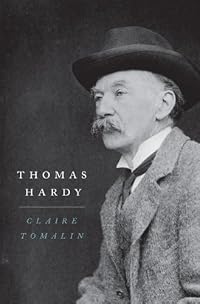
Thomas Hardy
by Claire Tomalin
On This Page
Description
A portrait of the enigmatic nineteenth-century novelist and poet discusses his humble origins, rise through the London literary scene, and efforts to challenge the sexual and religious conventions of his time.Tags
Recommendations














Member Reviews
As is usual with Claire Tomalin biographies this is a wonderful evocation of a life. She deals with Hardy's complexity both as a man and a writer without ever being judgemental. It is hard to reconcile the man who wrote to Rider Haggard, 'sympathy with you both in your bereavement. Though, to be candid, I think the death of a child is never to be regretted, when one reflects on what he has escaped.' with the man who wrote such wonderful poetry in mourning of his first wife. Emma Hardy is a fascinating character in her own right and one who it seems has been unfairly demonised throughout the years, Tomalin writes that 'she had many faults, but her courage was unflinching and she remained stoic.' I love how Tomalin has used his great show more poetry throughout her text and I shall be searching out my collection of Hardy's poetry for a reread. show less
I read this now because at the end of Streets of Laredo, one of the characters picks up a copy of Tess of the D'Urbervilles at a railway station bookstore because of her adopted daughter Tess. I've read a lot of Hardy, though not recently, and like him a lot - his descriptions of rural life are so striking and his characters so compelling. This book is quite interesting, with a lot about his first marriage, which started out happily. Emma Hardy was an aspiring writer and helped him with copying and so forth, but as the years went by he turned to her less, which she deeply resented. They became estranged to the point where she had moved to an attic bedroom at the time she died. He had flirtations during this period, and married again, show more but that marriage doesn't seem to have been satisfying either. There’s a lot of good stuff about his rise in class and how that affected his writing and relationships, with his family and with other writers.
As other reviewers have noted, the copy editing in the edition I was reading was terrible. show less
As other reviewers have noted, the copy editing in the edition I was reading was terrible. show less
Thomas Hardy was an early obsession of mine and I'm not ashamed to admit that it all began with the 1967 John Schlesinger film of Far From the Madding Crowd with Julie Christie, Alan Bates, Terence Stamp and Peter Finch. Much as I loved the movie, I found I loved the book even more and I went on to read all the major novels and a fair amount of the poetry as well. I think Hardy was the first writer who made me want to read absolutely everything he wrote, though I still haven't met that goal. The project was abandoned shortly after finishing Jude the Obscure for reasons which will probably be obvious to anyone who has read this masterpiece of gloom and doom.
I can't say I've followed Claire Tomalin's writing with the same sort of show more devotion but I have really enjoyed almost everything I've read by her, beginning with the wonderful Mrs. Jordan's Profession and, most especially The Invisible Woman: The Story of Nelly Ternan and Charles Dickens, which is as much literary detective story as biography. Her Samuel Pepys: The Unequaled Self is also terrific.
So, as you can imagine, my expectations were rather high when I began Claire Tomalin's Thomas Hardy. For that reason I feel I need to be somewhat forgiving in my assessment of the biography for, as I've often said, the secret to happiness in life is to keep one's expectations in check. Be that as it may, I was disappointed and I'm hard pressed to say exactly why. It's a good biography. It's thorough, well-researched, economical and covers just about everything that needs to be covered. But it just sort of plods along and rarely leaps to the level of insight and empathy I've come to expect from this author. Had I no prior interest in either the subject or the writer I'm not sure I would have continued with this. However, she does manage to bring it all home in fine style with this wonderful summation:
"He knew the past like a man who has lived more than one span of life, and he understood how difficult it is to cast aside the beliefs of your forebears. At the same time he faced his own extinction with no wish to be comforted and no hope of immortality. He wrote honest poems, almost every one shaped and structured with its own thoughts and its own music. They remind us that he was a fiddler's son, with music in his blood and bone, who danced to his father's playing before he learnt to write. This is how I like to think of him, a boy dancing on the stone cottage floor, outside time, oblivious, ecstatic, with his future greatness as unimaginable as the sorrows that came with it."
Reading that made me glad I had persevered.
I'm glad to see, from LyzzyBee's review, that, apparently, the UK edition is well edited. Sadly, this is not the case with the American edition. But, happily, that means this volume, for whatever else one may think of it, contains one of the best typos I've ever run across. On page 177, we read about Hardy and Tennyson spending a jolly afternoon together wherein the latter "told him stories about misprints in his own work, 'airy' changed to 'hairy' pleasing him particularly." I wonder what the great men would have thought of the misprint that appears two pages later, on 179. In the midst of a paragraph about problems in the Hardy marriage, the word "entertain" is split due to a line break and the last syllable, clearly intended to be included, is not, so that we get a rather different reading of the situation, best appreciated by including the sentence that precedes the sentence with the omission. I'll attempt to preserve the layout on the page (pun only slightly intended.)
"Emma still
had nothing to do except embroidery, keeping a cat, ordering
about a servant or two and shopping. Hardy did his best to enter-
her, escorting her to the Lord Mayor's show …" show less
I can't say I've followed Claire Tomalin's writing with the same sort of show more devotion but I have really enjoyed almost everything I've read by her, beginning with the wonderful Mrs. Jordan's Profession and, most especially The Invisible Woman: The Story of Nelly Ternan and Charles Dickens, which is as much literary detective story as biography. Her Samuel Pepys: The Unequaled Self is also terrific.
So, as you can imagine, my expectations were rather high when I began Claire Tomalin's Thomas Hardy. For that reason I feel I need to be somewhat forgiving in my assessment of the biography for, as I've often said, the secret to happiness in life is to keep one's expectations in check. Be that as it may, I was disappointed and I'm hard pressed to say exactly why. It's a good biography. It's thorough, well-researched, economical and covers just about everything that needs to be covered. But it just sort of plods along and rarely leaps to the level of insight and empathy I've come to expect from this author. Had I no prior interest in either the subject or the writer I'm not sure I would have continued with this. However, she does manage to bring it all home in fine style with this wonderful summation:
"He knew the past like a man who has lived more than one span of life, and he understood how difficult it is to cast aside the beliefs of your forebears. At the same time he faced his own extinction with no wish to be comforted and no hope of immortality. He wrote honest poems, almost every one shaped and structured with its own thoughts and its own music. They remind us that he was a fiddler's son, with music in his blood and bone, who danced to his father's playing before he learnt to write. This is how I like to think of him, a boy dancing on the stone cottage floor, outside time, oblivious, ecstatic, with his future greatness as unimaginable as the sorrows that came with it."
Reading that made me glad I had persevered.
I'm glad to see, from LyzzyBee's review, that, apparently, the UK edition is well edited. Sadly, this is not the case with the American edition. But, happily, that means this volume, for whatever else one may think of it, contains one of the best typos I've ever run across. On page 177, we read about Hardy and Tennyson spending a jolly afternoon together wherein the latter "told him stories about misprints in his own work, 'airy' changed to 'hairy' pleasing him particularly." I wonder what the great men would have thought of the misprint that appears two pages later, on 179. In the midst of a paragraph about problems in the Hardy marriage, the word "entertain" is split due to a line break and the last syllable, clearly intended to be included, is not, so that we get a rather different reading of the situation, best appreciated by including the sentence that precedes the sentence with the omission. I'll attempt to preserve the layout on the page (pun only slightly intended.)
"Emma still
had nothing to do except embroidery, keeping a cat, ordering
about a servant or two and shopping. Hardy did his best to enter-
her, escorting her to the Lord Mayor's show …" show less
I loved this biography of one of my favourite writers. Claire Tomalin has done a marvelous job of showing us both Hardy the man and Hardy the writer. It appears she appreciates him slightly more as a poet than a novelist - but her insight into both his novels and his poetry is affectionate and fascinating and may help me better understand his work from now on.
I found the story of the young Hardy growing up in quite poor and difficult circumstances in Bockhampton really fascinating - I suppose I had assumed he had come from a more middle class background but within a rural community - I was wrong. Tomalin gives great insight into Hardy's relationship with his friend Horace Moule and his first wife Emma. Moule was his only real great show more friend, and died by suicide trgically young. His wife Emma came from a higher social standing, he courted her over more than 4 years and they were both well into their thirties when they married. Tomalin's recreation of the Hardy's marriage feels accurate - and is all the sadder for that. The book opens with Emma's death in 1912 and Hardy's great grief for the loss of his wife - whom he knew he hadn't treated well, and who had slept in the attic for sometime. Her death serving to remind Hardy of their beginning and how he had felt then, and which inspired some wonderful poetry about her.
I also found the picture of the "old man of letters" that Hardy had become by the time of the first world war - terribly poignant. His marriage to Florence, their life togther in the house he shared for so long with Emma, and the strange friendship with Cockerell who became joint literary executor with Florence Hardy.
This is definitely a book for anyone with a liking for Thomas Hardy - and it is likely to reawaken a love of his work. show less
I found the story of the young Hardy growing up in quite poor and difficult circumstances in Bockhampton really fascinating - I suppose I had assumed he had come from a more middle class background but within a rural community - I was wrong. Tomalin gives great insight into Hardy's relationship with his friend Horace Moule and his first wife Emma. Moule was his only real great show more friend, and died by suicide trgically young. His wife Emma came from a higher social standing, he courted her over more than 4 years and they were both well into their thirties when they married. Tomalin's recreation of the Hardy's marriage feels accurate - and is all the sadder for that. The book opens with Emma's death in 1912 and Hardy's great grief for the loss of his wife - whom he knew he hadn't treated well, and who had slept in the attic for sometime. Her death serving to remind Hardy of their beginning and how he had felt then, and which inspired some wonderful poetry about her.
I also found the picture of the "old man of letters" that Hardy had become by the time of the first world war - terribly poignant. His marriage to Florence, their life togther in the house he shared for so long with Emma, and the strange friendship with Cockerell who became joint literary executor with Florence Hardy.
This is definitely a book for anyone with a liking for Thomas Hardy - and it is likely to reawaken a love of his work. show less
A wonderfully informative and readable biography of one of my favourite writers. It was so well-done that I didn't want the book to end and I am today in mourning for Hardy, though he died nearly a century ago. This American edition was beautifully designed by The Penguin Press, including a reference map of the area around Dorchester by Andrew Farmer.
A well-done, competent biography, well-researched and obviously with the connection with her subject that good biography demands. Tomalin admits that Hardy quite obviously wanted to keep his life private, but she does fall prey a little bit to reading maybe too much about his personal thoughts and life into his poetry, and there are some moments of what appear to be pure conjecture, if you follow the footnotes through. Still, a good read (and well copy-edited!) on perhaps a particularly difficult subject, and it certainly made me a) want to go back to the novels and b) realised how many more of his poems I know than I thought I knew.
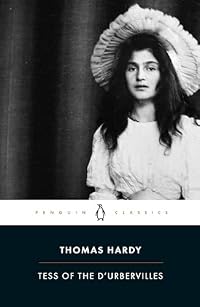
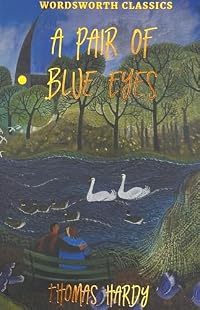
4396. Thomas Hardy, by Claire Tomalin (read 25 Dec 2007) Because of the great satisfaction I derived from reading Claire Tomalin's biography of Pepys and despite the fact that I have read at least three other biographies of Hardy, when I heard of this work I wanted to read it. It is masterfully done, and reads very easily. Hardy's life is amazingly interesting, and one gets the idea that Tomalin has recorded it with good insight. This work pays more attention to his poetry than some others, and I was fortunate to have a volume of all his poems at hand as I read, so I could read any poem mentioned if it seemed I should. And I have decided I will read at least one Hardy novel I have not read; I believe A Pair of Blue Eyes, published in 1873.
Members
- Recently Added By
Published Reviews
ThingScore 75
Claire Tomalin's biography, admirable particularly in filling in the separate settings of Dorset and London, allows the curious reader to muse for many hours on the relationship between life and fiction, between poetry and the novel. One returns to Thomas Hardy with renewed pleasure and surprise.
added by jburlinson
Lists

BBC Radio 4 Bookclub
340 works; 13 members

Used books to buy next
565 works; 1 member
Author Information

18+ Works 7,490 Members
Awards and Honors
Awards
Distinctions
Work Relationships
Common Knowledge
- Alternate titles
- Thomas Hardy: The Time-Torn Man
- Original publication date
- 2006
- People/Characters
- Thomas Hardy; Emma Gifford
- Important places
- England, UK; Dorset, England, UK
- First words
- Prologue: In November of 1912 an ageing writer lost his wife.
- Last words
- (Click to show. Warning: May contain spoilers.)His long life, which had begun early on a June morning, ended in the darkness of midwinter, when it is easiest to die.
- Blurbers
- Yardley, Jonathan; Helfand, Michael
Classifications
Statistics
- Members
- 770
- Popularity
- 36,175
- Reviews
- 12
- Rating
- (3.99)
- Languages
- English
- Media
- Paper, Audiobook, Ebook
- ISBNs
- 21
- ASINs
- 9