
Literary Theory: An Introduction
by Terry Eagleton
On This Page
Description
Terry Eagleton is John Edward Taylor Professor of English Literature at the University of Manchester. His recent publications include How to Read a Poem (2006), The English Novel (2004), Sweet Violence: The Idea of the Tragic (2003), The Idea of Culture (2000), Scholars and Rebels in Nineteenth-Century Ireland (1999), and The Illusions of Postmodernism (1996), all published by Blackwell Publishing.Tags
Recommendations

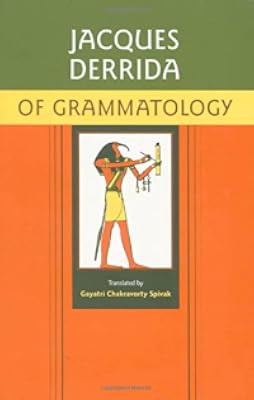

Member Reviews
This book is labeled an Introduction but is more polemical and opinionated than most books of that genre. Eagleton’s discussion of the various isms describes the “felt difficulties” each was intended to solve and points out what each contributed, then turns to the limitations and failures of each. When I leafed ahead and found that the final chapter was entitled Conclusion: Political Criticism, I suspected that each had been tried and found wanting to make way for the author’s own brand of Christian Marxism, but I was in for a surprise; the point of that title was to emphasize that every brand of literary theory was political, though in most cases this is unacknowledged.
Nevertheless, Eagleton does have an approach to recommend: show more a return to rhetoric, which examines any communication (not just literature in the narrow sense) to ask what it aims to do and what means it employs to accomplish that. Rhetoric (or, for those who don’t want to sound traditionalist, discourse theory) would correspondingly ask itself why it is interested in examining a given work. One could then use the method and theory best suited.
This ties in with Eagleton’s provocative contention that literature is not a distinct, bounded object of knowledge with a fixed canon. One can imagine, he writes, a world in which Shakespeare is no longer enjoyed. If literature is an illusion, then literary theory is as well. Eagleton admits, “This book is less an introduction than an obituary.”
When Eagleton published the first edition of this book in 1983, theory was a hot topic. The interested reader was confronted by a bewildering array of approaches. Eagleton’s handy overview was and remains a helpful resource for disentangling Formalism, the New Criticism (the prevailing orthodoxy when I studied), Structuralism, Poststructuralism, and the rest. When he prepared a second edition, he added a lengthy Afterword to cover Postmodernism and other developments. Yet the heyday of literary theory had passed, as Eagleton tells it. “Theory, it seemed, having deconstructed just about everything else, had now finally succeeded in deconstructing itself.”
This is not to say that Eagleton sees no point in the study of literature or, to consider it more broadly, culture. He remains convinced that it can help identify common values while we strive to create the material conditions that might allow these values to flourish. show less
Nevertheless, Eagleton does have an approach to recommend: show more a return to rhetoric, which examines any communication (not just literature in the narrow sense) to ask what it aims to do and what means it employs to accomplish that. Rhetoric (or, for those who don’t want to sound traditionalist, discourse theory) would correspondingly ask itself why it is interested in examining a given work. One could then use the method and theory best suited.
This ties in with Eagleton’s provocative contention that literature is not a distinct, bounded object of knowledge with a fixed canon. One can imagine, he writes, a world in which Shakespeare is no longer enjoyed. If literature is an illusion, then literary theory is as well. Eagleton admits, “This book is less an introduction than an obituary.”
When Eagleton published the first edition of this book in 1983, theory was a hot topic. The interested reader was confronted by a bewildering array of approaches. Eagleton’s handy overview was and remains a helpful resource for disentangling Formalism, the New Criticism (the prevailing orthodoxy when I studied), Structuralism, Poststructuralism, and the rest. When he prepared a second edition, he added a lengthy Afterword to cover Postmodernism and other developments. Yet the heyday of literary theory had passed, as Eagleton tells it. “Theory, it seemed, having deconstructed just about everything else, had now finally succeeded in deconstructing itself.”
This is not to say that Eagleton sees no point in the study of literature or, to consider it more broadly, culture. He remains convinced that it can help identify common values while we strive to create the material conditions that might allow these values to flourish. show less
Here's a straightforward introduction to literary criticism and literary theories. It's a short book for such a vast topic (barely 200 pages) yet the author manages to introduce us to key trends, summing up to his best the main contributions of some of their most important theoreticians. If he knows how to point to some of the weaknesses of each such trends, what interest him above all is not to reject them, but, to put them all in perspectives against each others. As such, he reveals here an interesting history of what purports to be a set of critical outlooks upon literature as a subject.
From Formalism to psychoanalysis, New Criticism, structuralism and poststructuralism, and from the influence of philosophy (Husserl, Heidegger) to show more that of linguistic (Saussure) we discover various approaches when it comes to analyse literary texts, focusing, depending on the trend being dealt with, upon the texts themselves, their authors, their readers, or, again, the socio-cultural context within which they were written.
Of course, Terry Eagleton is known for his Marxist approaches. Yet, he never defends a theory over another, but, on the contrary, just retells their history to question the relevance of the topic itself For instance: how to define principles to establish a theorisation of literature, when literature itself is a concept open to debates?
It's a necessary topic to know for anyone even vaguely interested in literature, and Terry Eagleton, although tackling a challenging subject, nevertheless remains accessible throughout. However, I found such introduction quite pompous. It's not the author's fault, but due to my own prejudice and attitude towards literary criticism in the first place. Not only a gibberish jargon is unavoidable when tackling some trends (e.g postmodernism, for which I have zero patience and respect...) but, I also could not but question all these interpretations, which I personally find silly, mostly irrelevant, self-centred, and intellectually vain. To me (but it's my personal opinion, no matter how harsh) literary criticism indeed is, most often than not, just pompous and academic wank#ng. There.
If you want an overview of the topic, though, here's a great read. show less
From Formalism to psychoanalysis, New Criticism, structuralism and poststructuralism, and from the influence of philosophy (Husserl, Heidegger) to show more that of linguistic (Saussure) we discover various approaches when it comes to analyse literary texts, focusing, depending on the trend being dealt with, upon the texts themselves, their authors, their readers, or, again, the socio-cultural context within which they were written.
Of course, Terry Eagleton is known for his Marxist approaches. Yet, he never defends a theory over another, but, on the contrary, just retells their history to question the relevance of the topic itself For instance: how to define principles to establish a theorisation of literature, when literature itself is a concept open to debates?
It's a necessary topic to know for anyone even vaguely interested in literature, and Terry Eagleton, although tackling a challenging subject, nevertheless remains accessible throughout. However, I found such introduction quite pompous. It's not the author's fault, but due to my own prejudice and attitude towards literary criticism in the first place. Not only a gibberish jargon is unavoidable when tackling some trends (e.g postmodernism, for which I have zero patience and respect...) but, I also could not but question all these interpretations, which I personally find silly, mostly irrelevant, self-centred, and intellectually vain. To me (but it's my personal opinion, no matter how harsh) literary criticism indeed is, most often than not, just pompous and academic wank#ng. There.
If you want an overview of the topic, though, here's a great read. show less
Okay so as An Historian, I don’t think I need to be convinced hugely of the major interventions here about identifying these literary theory movements as being historically grounded and appearing at specific times with specific politics—and that they are in fact deeply imbued with politics. But I do think that Eagleton does so clearly and convincingly. It was also very useful to have these movements described to me, a person who is not at all familiar with most of them except maybe post-structuralism very loosely. The psychoanalysis chapter in particular I think takes Freud seriously in a way that almost no one seems to (for better or for worse.)
The one flaw I would really highlight is that Eagleton references the Russian show more Formalists a LOT and I don’t think ever explains Formalism? (I really only noticed this because he DOES spend an entire chapter doing so in How to Read a Poem, and I realized that I finally understood what he was talking about.) And again, maybe that’s something that you have a better understanding of if you’re like a student of Literature and not just an idiot off the street like me.
The conclusion of the book really was what made me stand up and applaud, even if, of course, the afterword to the edition I read explains why perhaps some of the things he called for in that conclusion didn’t play out as he had maybe wanted or hoped. But I found the book on the whole to be really valuable if not as immediately delightful as his other works that I’ve read. show less
The one flaw I would really highlight is that Eagleton references the Russian show more Formalists a LOT and I don’t think ever explains Formalism? (I really only noticed this because he DOES spend an entire chapter doing so in How to Read a Poem, and I realized that I finally understood what he was talking about.) And again, maybe that’s something that you have a better understanding of if you’re like a student of Literature and not just an idiot off the street like me.
The conclusion of the book really was what made me stand up and applaud, even if, of course, the afterword to the edition I read explains why perhaps some of the things he called for in that conclusion didn’t play out as he had maybe wanted or hoped. But I found the book on the whole to be really valuable if not as immediately delightful as his other works that I’ve read. show less
With great insight and a dynamic approach, Eagleton traces the progression of literary theory by grounding it firmly in the history of its intellectual development and the interplay and contrasts between different schools of thought. His ultimate conclusion that theory move beyond the literary to the cultural, though more commonplace today, is still shocking to some intellectuals and critics. Though this book is now a couple decades old, it provides a well-rounded understanding of the foundations and development of literary theory in the twentieth century. It does not address, for example, queer theory, but it gives the reader a basis from where they could read a piece of criticism that utilizes queer theory and easily understand its show more methods.
I read this book while a junior at University and wish I would have read it sooner. I now feel like I can approach works by thinkers such as Barthes, Bakhtin, or Lacan without hesitation. This should be read by all English majors, and sooner rather than later. Theory gives us the tools to talk about and analyze texts in order to fully investigate their cultural implications, and this book is a vital tool in beginning to understand what theory is. show less
I read this book while a junior at University and wish I would have read it sooner. I now feel like I can approach works by thinkers such as Barthes, Bakhtin, or Lacan without hesitation. This should be read by all English majors, and sooner rather than later. Theory gives us the tools to talk about and analyze texts in order to fully investigate their cultural implications, and this book is a vital tool in beginning to understand what theory is. show less
Just as you don't have to be a Marxist to appreciate how insightful Marxist economists can be... in the same way, Terry Eagleton manages to cut through centuries of assumptions in literary criticism to reveal some startling home truths about the role books play in society. Don't be a smarmy Martin Amis type and ignore what this guy has to say.
If you only read one book about literary theory...well, who would blame you? Still, the educated layperson who wants to bump their understanding of contemporary literary criticism up to a respectable cocktail party level probably can't do much better than Eagleton's slim, thoroughly accessible introduction to the subject. Literary Theory traces the history of literature as an academic discipline from English Romanticism, through Saussure and semiotics, all the way to the fashionable heavy-hitters of postmodernism. Neither an acolyte nor a debunker, Eagleton gives each theory a clear explanation and a fair shake in crisp, jargon-free prose. He is up front about his own ideological slants (feminist, Marxist), and although the last of show more these can at times make him sound quaintly Cold War, at no point does he drop into didacticism. This is a book that truly lives up to its subtitle. show less
Literary Theory is closely aligned with Political Theory. This is what I have taken away from this book and also understood from other theory books that I have read. The mindset of the day, the views on women, labor, ethnic groups, God, etc. all played a part in how literature was viewed and dissected and analysed throughout the years.
It was an entertaining ride, to say the least. I learned early on that Terry Eagleton is not a capitalist. He goes through the various theories from the 19th century on and critiques each of them harshly. He's not as harsh on deconstuctionism and Derrida as he is on some of the other theorists. For a non-fiction book, this was certainly fast paced and very interesting.
I did not expect it to be as show more politically charged as it was. I enjoyed it immensely. I may have ended the book thinking "Is it all pointless or what?" but I still gave the book 4 stars because I had a hard time putting it down. I'm not well versed in literary theories myself to even begin to formulate a personal opinion on this subject, but I liked this book. I admit I agreed with a lot of what Eagleton had to say about our society. show less
It was an entertaining ride, to say the least. I learned early on that Terry Eagleton is not a capitalist. He goes through the various theories from the 19th century on and critiques each of them harshly. He's not as harsh on deconstuctionism and Derrida as he is on some of the other theorists. For a non-fiction book, this was certainly fast paced and very interesting.
I did not expect it to be as show more politically charged as it was. I enjoyed it immensely. I may have ended the book thinking "Is it all pointless or what?" but I still gave the book 4 stars because I had a hard time putting it down. I'm not well versed in literary theories myself to even begin to formulate a personal opinion on this subject, but I liked this book. I admit I agreed with a lot of what Eagleton had to say about our society. show less
Members
- Recently Added By
Lists

Literary Theory and Criticism: What Happens and Why
37 works; 5 members
Oxford Online: Literary Theory Recommended Reading
35 works; 2 members

Top Five Books of 2013
1,562 works; 715 members

Authors from England
147 works; 4 members

2021 - List of books read
53 works; 1 member

Recommendations by Tim Keller
50 works; 1 member

Literature and Criticism
12 works; 1 member
Author Information

111+ Works 12,036 Members
Terry Eagleton received a Ph.D from Cambridge University. He is a literary critic and a writer. He has written about 50 books including Shakespeare and Society, Criticism and Ideology, The Ideology of the Aesthetic, Literary Theory, The Illusions of Postmodernism, Why Marx Was Right, The Event of Literature, and Across the Pond: An Englishman's show more View of America. He wrote a novel entitled Saints and Scholars, several plays including Saint Oscar, and a memoir entitled The Gatekeeper. He is also the chair in English literature in Lancaster University's department of English and creative writing. (Bowker Author Biography) show less
Awards and Honors
Common Knowledge
- Original publication date
- 1983
- People/Characters
- Sigmund Freud
- Quotations
- If you want to know the meaning (or signified) of a signifier, you can look it up in the dictionary; but all you will find will be yet more signifiers, whose signifieds you can in turn look up, and so on. The process we are d... (show all)iscussing is not only in theory infinite but somehow circular...
Classifications
- Genres
- Literature Studies and Criticism, Nonfiction, Philosophy
- DDC/MDS
- 801.950904 — Literature & rhetoric Literature, rhetoric & criticism Philosophy and theory Nature and character Literary theory and criticism Biography And History By Period 20th Century
- LCC
- PN94 .E2 — Language and Literature Literature (General) Literature (General) Criticism
- BISAC
Statistics
- Members
- 2,610
- Popularity
- 7,238
- Reviews
- 23
- Rating
- (3.86)
- Languages
- 13 — Chinese, English, Finnish, French, German, Hungarian, Italian, Japanese, Lithuanian, Polish, Spanish, Turkish, Portuguese (Portugal)
- Media
- Paper, Ebook
- ISBNs
- 42
- ASINs
- 7