On This Page
Description
In the 1840s Charles Dickens wrote 5 short stories with strong social and moral messages. The Chimes: A Goblin Story of Some Bells that Rand an Old Year Out and a New Year In, is the second of these stories, whose predecessor was the famous A Christmas Carol. The Chimes focuses on Trotty, a poor elderly messenger who is filled with gloom over reports of crime and immorality in the newspapers. After losing faith in the society, Trotty follows a call to the church bell tower where he show more encounters Goblins that teach him, and listeners, lessons in the form of visions about the mistreatment of the lower class in society. This story of social awakening inspires listeners to treat everyone with fair kindness. show lessTags
Recommendations

















Member Reviews
This originally appeared at The Irresponsible Reader.
---
There are not many people—and as it is desirable that a story-teller and a story-reader should establish a mutual understanding as soon as possible, I beg it to be noticed that I confine this observation neither to young people nor to little people, but extend it to all conditions of people: little and big, young and old: yet growing up, or already growing down again—there are not, I say, many people who would care to sleep in a church. I don’t mean at sermon-time in warm weather (when the thing has actually been done, once or twice), but in the night, and alone.
WHAT'S THE CHIMES ABOUT?
Apparently, the original title of this was: The Chimes: A Goblin Story of Some Bells that show more Rang an Old Year Out and a New Year In. But for pretty obvious reasons, people shortened the name to The Chimes when talking about it, and this edition went with the short version, too.
The Chimes are the bells in a church steeple--powerful goblin spirits reside in them, (not everyone gets to see the goblins--or this'd be a very different kind of story). Our protagonist, Trotty, is summoned to the steeple by these bells. Bells he's lived under for years and has come to love their ringing. However, he's now called to account by them for...essentially losing faith in humanity and disparaging them. Particularly lower-class humanity--like he's part of.
Trotty is a ticket-porter, barely scraping by--but is a hearty, cheerful man. His daughter is in love with someone who hopes to marry her soon. But Trotty reads something in the news one day (inspired by a true story, incidentally) that makes him doubt people's goodness. This is followed by him being hired by/interacting with an Alderman and an MP who look down the poor, exacerbating Trotty's dismay.
These bells show Trotty a future in which he dies that night and how the ripples from his death impact the lives of several of his acquaintances. Very much in a Ghost of Christmas Future kind of way. But these are darker futures than anything Scrooge saw, if you ask me.
Trotty repents of his negative outlook and does something in this vision that proves his sincerity. He's brought back to the present and life is good--even better than it was thanks to his attitude adjustment.
Oversimplification, I know, but I'm still trying to stay away from details. It's only been in print for 179 years...
THESE GUYS ARE THE WORST
So this year I've read about misanthropes, mass murderers, people who kill without remorse, people who target minorities for fun, demons and other monsters, etc., but I'm honestly not sure that there were people who disgusted me and enraged me nearly as much as Alderman Cute and Sir Joseph Bowley.
Bowley loves to think of himself as a benefactor to the poor, a charitable soul...listen to him brag about it a bit (to an actual poor person),
Every New Year’s Day, myself and friends will drink his [a generic poor person's] health. Once every year, myself and friends will address him with the deepest feeling....‘I do my duty as the Poor Man’s Friend and Father; and I endeavour to educate his mind, by inculcating on all occasions the one great moral lesson which that class requires. That is, entire Dependence on myself. They have no business whatever with— with themselves.
He does (at least in the vision), bring poor people into a great New Year's feast with his guests so they can see he and his friends drink to their health and hear paternalistic (at best) speeches about how they need to better themselves, although they probably can't because if they could...well, they wouldn't be poor, after all.
Cute dissuades Trotty's daughter and her beloved from marrying because it's not like they'll be able to subsist on whatever money they can eke out--and they'll just end up having kids they can't afford to feed, and thereby expanding the need for welfare and whatnot.
Sure, Dickens was probably exaggerating for satirical purposes. But I doubt it was much. And it'd be really easy to imagine these despicable guys as contemporary figures.
DICKENS' WRITING
He saw the tower, whither his charmed footsteps had brought him, swarming with dwarf phantoms, spirits, elfin creatures of the Bells. He saw them leaping, flying, dropping, pouring from the Bells without a pause. He saw them, round him on the ground; above him, in the air; clambering from him, by the ropes below; looking down upon him, from the massive iron- girded beams; peeping in upon him, through the chinks and loopholes in the walls; spreading away and away from him in enlarging circles, as the water ripples give way to a huge stone that suddenly comes plashing in among them. He saw them, of all aspects and all shapes. He saw them ugly, handsome, crippled, exquisitely formed. He saw them young, he saw them old, he saw them kind, he saw...
When Dickens first introduced the goblins (and I only gave you a sample), I really enjoyed it. And was reminded that he typically got paid by the word. Not necessarily for this novella--but the impulse was still there. Because the man can go on...never using 5 words when 20 will do.
I have zero problems with it in this novella--but it jumps out at you occasionally.
A few other lines that jumped out at me that I want to bring up...they're so good.
‘There’s nothing,’ said Toby, ‘more regular in its coming round than dinner- time, and nothing less regular in its coming round than dinner. That’s the great difference between ’em. It’s took me a long time to find it out.'
This gentleman had a very red face, as if an undue proportion of the blood in his body were squeezed up into his head; which perhaps accounted for his having also the appearance of being rather cold about the heart.
‘The good old times, the good old times!’ The gentleman didn’t specify what particular times he alluded to; nor did he say whether he objected to the present times, from a disinterested consciousness that they had done nothing very remarkable in producing himself.
(I'm forever going to be thinking of this anytime I hear someone talk about the good old days)
SO, WHAT DID I THINK ABOUT THE CHIMES?
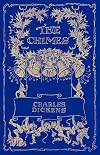
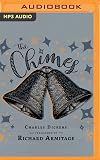
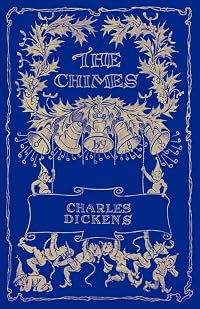
I'm told that the hardcover is gorgeous--I ordered this late, so I can't confirm (I'll try to remember to update this post when I get it). The cover looks pretty neat, though. I bring this up so you'll think about getting your hands on this hardcover edition for your own personal use/shelf decoration.
But what about the novella itself? I dug it. I know I don't read enough Dickens--and never have. But when I'm exposed to him, I regret many of my life choices that lead to this dearth (not so much regret that I see that I'll change that anytime soon). I really appreciated his writing, his characters (even the ones I spent time hating). I would've appreciated a little more time with some of the characters, but we didn't need it.
The way the bells show Trotty the future really did make me think of the Ghost of Christmas Future, I know they inspired It's a Wonderful Life, but I got more of the former vibe than the latter. I'd like for people to tell me what I'm missing, incidentally. Either way, I liked the way Dickens uses this tool to get people to change their way of thinking, even if he uses it too frequently.
The social commentary was well done (if heavy-handed), and probably needed as much then as now. And probably as effective then as now. Oh well, would be nice to think otherwise.
It's a quick read that packs a powerful punch with some clever writing. If you're like me, and have never heard of this novella before, take advantage of this opportunity to pick it up. If you're a better-educated reader and are familiar with it--isn't it about time to re-familiarize yourself? show less
---
There are not many people—and as it is desirable that a story-teller and a story-reader should establish a mutual understanding as soon as possible, I beg it to be noticed that I confine this observation neither to young people nor to little people, but extend it to all conditions of people: little and big, young and old: yet growing up, or already growing down again—there are not, I say, many people who would care to sleep in a church. I don’t mean at sermon-time in warm weather (when the thing has actually been done, once or twice), but in the night, and alone.
WHAT'S THE CHIMES ABOUT?
Apparently, the original title of this was: The Chimes: A Goblin Story of Some Bells that show more Rang an Old Year Out and a New Year In. But for pretty obvious reasons, people shortened the name to The Chimes when talking about it, and this edition went with the short version, too.
The Chimes are the bells in a church steeple--powerful goblin spirits reside in them, (not everyone gets to see the goblins--or this'd be a very different kind of story). Our protagonist, Trotty, is summoned to the steeple by these bells. Bells he's lived under for years and has come to love their ringing. However, he's now called to account by them for...essentially losing faith in humanity and disparaging them. Particularly lower-class humanity--like he's part of.
Trotty is a ticket-porter, barely scraping by--but is a hearty, cheerful man. His daughter is in love with someone who hopes to marry her soon. But Trotty reads something in the news one day (inspired by a true story, incidentally) that makes him doubt people's goodness. This is followed by him being hired by/interacting with an Alderman and an MP who look down the poor, exacerbating Trotty's dismay.
These bells show Trotty a future in which he dies that night and how the ripples from his death impact the lives of several of his acquaintances. Very much in a Ghost of Christmas Future kind of way. But these are darker futures than anything Scrooge saw, if you ask me.
Trotty repents of his negative outlook and does something in this vision that proves his sincerity. He's brought back to the present and life is good--even better than it was thanks to his attitude adjustment.
Oversimplification, I know, but I'm still trying to stay away from details. It's only been in print for 179 years...
THESE GUYS ARE THE WORST
So this year I've read about misanthropes, mass murderers, people who kill without remorse, people who target minorities for fun, demons and other monsters, etc., but I'm honestly not sure that there were people who disgusted me and enraged me nearly as much as Alderman Cute and Sir Joseph Bowley.
Bowley loves to think of himself as a benefactor to the poor, a charitable soul...listen to him brag about it a bit (to an actual poor person),
Every New Year’s Day, myself and friends will drink his [a generic poor person's] health. Once every year, myself and friends will address him with the deepest feeling....‘I do my duty as the Poor Man’s Friend and Father; and I endeavour to educate his mind, by inculcating on all occasions the one great moral lesson which that class requires. That is, entire Dependence on myself. They have no business whatever with— with themselves.
He does (at least in the vision), bring poor people into a great New Year's feast with his guests so they can see he and his friends drink to their health and hear paternalistic (at best) speeches about how they need to better themselves, although they probably can't because if they could...well, they wouldn't be poor, after all.
Cute dissuades Trotty's daughter and her beloved from marrying because it's not like they'll be able to subsist on whatever money they can eke out--and they'll just end up having kids they can't afford to feed, and thereby expanding the need for welfare and whatnot.
Sure, Dickens was probably exaggerating for satirical purposes. But I doubt it was much. And it'd be really easy to imagine these despicable guys as contemporary figures.
DICKENS' WRITING
He saw the tower, whither his charmed footsteps had brought him, swarming with dwarf phantoms, spirits, elfin creatures of the Bells. He saw them leaping, flying, dropping, pouring from the Bells without a pause. He saw them, round him on the ground; above him, in the air; clambering from him, by the ropes below; looking down upon him, from the massive iron- girded beams; peeping in upon him, through the chinks and loopholes in the walls; spreading away and away from him in enlarging circles, as the water ripples give way to a huge stone that suddenly comes plashing in among them. He saw them, of all aspects and all shapes. He saw them ugly, handsome, crippled, exquisitely formed. He saw them young, he saw them old, he saw them kind, he saw...
When Dickens first introduced the goblins (and I only gave you a sample), I really enjoyed it. And was reminded that he typically got paid by the word. Not necessarily for this novella--but the impulse was still there. Because the man can go on...never using 5 words when 20 will do.
I have zero problems with it in this novella--but it jumps out at you occasionally.
A few other lines that jumped out at me that I want to bring up...they're so good.
‘There’s nothing,’ said Toby, ‘more regular in its coming round than dinner- time, and nothing less regular in its coming round than dinner. That’s the great difference between ’em. It’s took me a long time to find it out.'
This gentleman had a very red face, as if an undue proportion of the blood in his body were squeezed up into his head; which perhaps accounted for his having also the appearance of being rather cold about the heart.
‘The good old times, the good old times!’ The gentleman didn’t specify what particular times he alluded to; nor did he say whether he objected to the present times, from a disinterested consciousness that they had done nothing very remarkable in producing himself.
(I'm forever going to be thinking of this anytime I hear someone talk about the good old days)
SO, WHAT DID I THINK ABOUT THE CHIMES?
I'm told that the hardcover is gorgeous--I ordered this late, so I can't confirm (I'll try to remember to update this post when I get it). The cover looks pretty neat, though. I bring this up so you'll think about getting your hands on this hardcover edition for your own personal use/shelf decoration.
But what about the novella itself? I dug it. I know I don't read enough Dickens--and never have. But when I'm exposed to him, I regret many of my life choices that lead to this dearth (not so much regret that I see that I'll change that anytime soon). I really appreciated his writing, his characters (even the ones I spent time hating). I would've appreciated a little more time with some of the characters, but we didn't need it.
The way the bells show Trotty the future really did make me think of the Ghost of Christmas Future, I know they inspired It's a Wonderful Life, but I got more of the former vibe than the latter. I'd like for people to tell me what I'm missing, incidentally. Either way, I liked the way Dickens uses this tool to get people to change their way of thinking, even if he uses it too frequently.
The social commentary was well done (if heavy-handed), and probably needed as much then as now. And probably as effective then as now. Oh well, would be nice to think otherwise.
It's a quick read that packs a powerful punch with some clever writing. If you're like me, and have never heard of this novella before, take advantage of this opportunity to pick it up. If you're a better-educated reader and are familiar with it--isn't it about time to re-familiarize yourself? show less
Read because we're apparently in Christmas season directly after Halloween.
The lesser known cousin of A Christmas Carol, only Scrooge is now Cratchit and is tormented by goblin spirits in bells rather than ghosts. And if Christmas Carol can be accused of being heavy handed with the social commentary it's nothing to this sack of hammers. There's something very inelegant when the same logline is shifted to someone (Trotter) who is himself poor, and essentially talked into hating his own class. The addition of the torment of spirits just seems like he's beset at all sides, instead of having some redemptive quality as they do for Scrooge. At the same time it's a lot more polemic than A Christmas Carol, and instead of Marley's chains, there show more are the chains holding the working class down. There's supposed to be sort of a rousing speech of resolve for the class struggle ahead to sweep away their oppressors but something about the darkness in which it is written leaves you with a bit of ash in the mouth rather than hope. Like Winston declaring "if there is hope it lies in the proles", juxtaposed with their actual portrayal. There's nothing to suggest the change is coming at the end. Despite the same tearful change of heart scenes with the family, it's just Trotter's own insecurity being undone. show less
The lesser known cousin of A Christmas Carol, only Scrooge is now Cratchit and is tormented by goblin spirits in bells rather than ghosts. And if Christmas Carol can be accused of being heavy handed with the social commentary it's nothing to this sack of hammers. There's something very inelegant when the same logline is shifted to someone (Trotter) who is himself poor, and essentially talked into hating his own class. The addition of the torment of spirits just seems like he's beset at all sides, instead of having some redemptive quality as they do for Scrooge. At the same time it's a lot more polemic than A Christmas Carol, and instead of Marley's chains, there show more are the chains holding the working class down. There's supposed to be sort of a rousing speech of resolve for the class struggle ahead to sweep away their oppressors but something about the darkness in which it is written leaves you with a bit of ash in the mouth rather than hope. Like Winston declaring "if there is hope it lies in the proles", juxtaposed with their actual portrayal. There's nothing to suggest the change is coming at the end. Despite the same tearful change of heart scenes with the family, it's just Trotter's own insecurity being undone. show less
Although the art-type J. G. Ferguson edition of Christmas Stories by Charles Dickens contains both 'The Chimes' and "A Christmas Carol,' I'm not going to bother to review the very famous latter. 'The Chimes: a Goblin Story of Some Bells That Rang an Old Year Out and a New Year In' is the story of a ticker-porter named Toby 'Trotty' Veck. He's poor, but honest. He waits around for someone to pay him to take items elsewhere. He is very familiar with a nearby church whose bells ring out the chimes of the title.
Trotty is hanging around, waiting, when his pretty young daughter, Meg, brings him a special treat: tripe for his dinner. Trotty is a widower and Meg is all he has. Meg and her blacksmith beloved, Richard, plan to marry on New Year's show more Day. Trotty has almost finished his meal when Alderman Cute, accompanied by a Mr. Filer and a red-faced gentleman whose name is never given. They are depressingly like some politicians today. Mr. Filer makes Trotty nervous by blathering about how uneconomical a dish tripe is. He actually claims that unboiled tripe of the number of animals butchered would feed a garrison of 500 men for five months of 31 days, including February. He has the gall to tell Trotty that he robs widows and orphans by eating tripe. The red-faced gentleman goes on and on about the good old days. These men even suggest that Meg and Richard had better not get married.
Trotty Veck is given a letter to take to a Member of Parliament, Sir Joseph Bowley. Sir Joseph likes to call himself the poor man's friend and father, but by listening to him the reader can tell he's no such thing. The letter is about a laboring man under suspicion named Will Fern. Alderman Cute thinks he should be put down. (I'm not sure if that means imprisoned or hanged.)
On his way home, Trotty happens to meet Will Fern, who is on his way to Alderman Cute. Trotty warns him off before inviting Will and his orphaned nine-year-old niece, Lillian, to his house to eat and rest. Lillian and Meg are very taken with each other. The reader will not be surprised to figure out that Will Fern is a good man, no matter what Alderman Cute thinks. Will is looking for Lillian's mother's friend to leave her with.
Trotty goes to check on the church's bell tower because the chimes are louder than they usually are. The door isn't locked. He goes up all the way to the bells and swoons. Then follow the goblins, which is a spooky enough sight.
The story takes a turn for the even more depressing and Trotty witnesses a bleak future for Meg, Richard, and Lillian. Richard and Meg haven't married. Richard is a drunkard. Meg makes a meager living embroidering. Lillian, it's hinted, has turned to prostitution. Will Fern, let out of jail after nine years, gives a heart-felt speech to the Sir Joseph & Lady Bowley, Alderman Cute, Mr. Filer, and the red-faced gentleman. There's also a scene about Trotty's grocer, Mrs. Chickenstalker, married to Sir Joseph's porter, Mr. Tugby.
This story is even darker than 'A Christmas Carol'. How is Dickens to bring some New Year hope into it all? show less
Trotty is hanging around, waiting, when his pretty young daughter, Meg, brings him a special treat: tripe for his dinner. Trotty is a widower and Meg is all he has. Meg and her blacksmith beloved, Richard, plan to marry on New Year's show more Day. Trotty has almost finished his meal when Alderman Cute, accompanied by a Mr. Filer and a red-faced gentleman whose name is never given. They are depressingly like some politicians today. Mr. Filer makes Trotty nervous by blathering about how uneconomical a dish tripe is. He actually claims that unboiled tripe of the number of animals butchered would feed a garrison of 500 men for five months of 31 days, including February. He has the gall to tell Trotty that he robs widows and orphans by eating tripe. The red-faced gentleman goes on and on about the good old days. These men even suggest that Meg and Richard had better not get married.
Trotty Veck is given a letter to take to a Member of Parliament, Sir Joseph Bowley. Sir Joseph likes to call himself the poor man's friend and father, but by listening to him the reader can tell he's no such thing. The letter is about a laboring man under suspicion named Will Fern. Alderman Cute thinks he should be put down. (I'm not sure if that means imprisoned or hanged.)
On his way home, Trotty happens to meet Will Fern, who is on his way to Alderman Cute. Trotty warns him off before inviting Will and his orphaned nine-year-old niece, Lillian, to his house to eat and rest. Lillian and Meg are very taken with each other. The reader will not be surprised to figure out that Will Fern is a good man, no matter what Alderman Cute thinks. Will is looking for Lillian's mother's friend to leave her with.
Trotty goes to check on the church's bell tower because the chimes are louder than they usually are. The door isn't locked. He goes up all the way to the bells and swoons. Then follow the goblins, which is a spooky enough sight.
The story takes a turn for the even more depressing and Trotty witnesses a bleak future for Meg, Richard, and Lillian. Richard and Meg haven't married. Richard is a drunkard. Meg makes a meager living embroidering. Lillian, it's hinted, has turned to prostitution. Will Fern, let out of jail after nine years, gives a heart-felt speech to the Sir Joseph & Lady Bowley, Alderman Cute, Mr. Filer, and the red-faced gentleman. There's also a scene about Trotty's grocer, Mrs. Chickenstalker, married to Sir Joseph's porter, Mr. Tugby.
This story is even darker than 'A Christmas Carol'. How is Dickens to bring some New Year hope into it all? show less
The second of Mr Dickens' Christmas Books. According to the introduction in my volume, following the huge success of A Christmas Carol Dickens wanted to write an even more savage attack on the political and economic theories of the day and I think he succeeded but, perhaps because of that, this short book is less fun to read than A Christmas Carol.
Toby Veck is a ticket-porter (a man employed to deliver articles on the London streets). He spends most of his days standing on the street waiting to be given a message. Due to the unreliable nature of his work he's not always able to pay his rent and grocery bills on time but despite this he is a relatively cheerful fellow who is very fond of his daughter, his only living relative.
In a way, show more The Chimes has a similar story to A Christmas Carol. There are some Scrooge-like characters who believe the poor are only poor because they are lazy and good for nothing and if they simply worked harder and were better people then they wouldn't be such a burden on society (sounds worryingly familiar to some modern day politicians). There are visitations by ghosts (in this case the spirits of the bells from the chapel close to where Toby stands all day) and then there is a happy ending.
The problem is that the spirits visit Toby, who has only been guilty of feeling discouraged about the state of the world after spending a day being told off by the clever sounding Scrooge-like gentlemen. As a result of this sound telling off, Toby has second thoughts about allowing his daughter to marry someone equally poor (one of the pet theories of these gentlemen is that the poor shouldn't be allowed to marry and have children who will also be poor). The spirits visit Toby and show him visions of what will become of his daughter and her fiancee if they don't marry. The visions are more harrowing than those in A Christmas Carol and the happy ending doesn't quite take away the sting of the visions as it seems to in A Christmas Carol. It feels monstrously unfair that poor Toby has to go through all this when all he has done is listened to people whom he will have been told to think of as his betters and I was never convinced that if the spirits hadn't intervened that Toby wouldn't have woken up the next morning to be his usual cheerful self and allowed his daughter to get married.
Apparently (and again, I've gleaned all this useful info from the introduction - aren't they marvellous things?) the Scrooge-like gentlemen in The Chimes were caricatures of specific politicians from Dickens' time and to have them reform in the book as Scrooge did would have softened his attack so poor old Toby had to take the fall. So, it's not a bad book by any means but at the end I was left feeling that it just didn't quite work. Perhaps one that is worth reading if you're after an insight into Dickens' political and sociological views than if you want a good story. show less
Toby Veck is a ticket-porter (a man employed to deliver articles on the London streets). He spends most of his days standing on the street waiting to be given a message. Due to the unreliable nature of his work he's not always able to pay his rent and grocery bills on time but despite this he is a relatively cheerful fellow who is very fond of his daughter, his only living relative.
In a way, show more The Chimes has a similar story to A Christmas Carol. There are some Scrooge-like characters who believe the poor are only poor because they are lazy and good for nothing and if they simply worked harder and were better people then they wouldn't be such a burden on society (sounds worryingly familiar to some modern day politicians). There are visitations by ghosts (in this case the spirits of the bells from the chapel close to where Toby stands all day) and then there is a happy ending.
The problem is that the spirits visit Toby, who has only been guilty of feeling discouraged about the state of the world after spending a day being told off by the clever sounding Scrooge-like gentlemen. As a result of this sound telling off, Toby has second thoughts about allowing his daughter to marry someone equally poor (one of the pet theories of these gentlemen is that the poor shouldn't be allowed to marry and have children who will also be poor). The spirits visit Toby and show him visions of what will become of his daughter and her fiancee if they don't marry. The visions are more harrowing than those in A Christmas Carol and the happy ending doesn't quite take away the sting of the visions as it seems to in A Christmas Carol. It feels monstrously unfair that poor Toby has to go through all this when all he has done is listened to people whom he will have been told to think of as his betters and I was never convinced that if the spirits hadn't intervened that Toby wouldn't have woken up the next morning to be his usual cheerful self and allowed his daughter to get married.
Apparently (and again, I've gleaned all this useful info from the introduction - aren't they marvellous things?) the Scrooge-like gentlemen in The Chimes were caricatures of specific politicians from Dickens' time and to have them reform in the book as Scrooge did would have softened his attack so poor old Toby had to take the fall. So, it's not a bad book by any means but at the end I was left feeling that it just didn't quite work. Perhaps one that is worth reading if you're after an insight into Dickens' political and sociological views than if you want a good story. show less
The second of his Christmas stories (though it's actually set on New Year's Eve), and a kind of follow up to A Christmas Carol. An absolutely brutal takedown of his society and it's treatment of the working class by Dickens, the fury erupts off nearly every page, even the satirical descriptions of the councillor and MP drip with venom. It doesn't have the cosiness of his more famous story, and it's not as good a story to be honest, but it is a bracingly angry read with a level of compassion for the victims of inequality that many people could do with taking on board even now.
Generosas doses de drama e crítica social e uma pitada de fantástico dividiram a recepção desse livro, lançado em 1844. Pela história de Trotty, homem que sobrevive como mensageiro, Dickens mais uma vez retrata o sofrimento das classes menos favorecidas durante uma onda de fome na Europa.
Os "chimes" do título original são os sinos da igreja onde Trotty costumava esperar por seus trabalhos. É lá, na torre, que habitam os seres fantásticos com quem o velho mensageiro entra em contato.
Os "chimes" do título original são os sinos da igreja onde Trotty costumava esperar por seus trabalhos. É lá, na torre, que habitam os seres fantásticos com quem o velho mensageiro entra em contato.
This is the second of Dickens' Christmas novellas, after A Christmas Carol. The Chimes takes the moral of the importance of generosity, charity, and goodwill from the first novella and extrapolates it from one individual (Scrooge) to all of society. This story, however, is much heavier on the moralizing than it is on plot, humor, or character, which makes for a much less enjoyable read than its better-known predecessor. It is also very very very bleak!
Trotty Veck is a poor porter in his 60s who waits at the base of a church steeple for folks to hire him to carry letters or packages. He loves the sound of the chiming bells, which cheer him through a hungry and rough life. His one joy, besides their ringing, is his daughter Meg, and when show more she brings him a rare dinner of tripe to eat on a stoop and tells him that she is to be married to her beau Richard, they are both overjoyed. Their joy is fleeting, though, as they are are interrupted in their dinner by Alderman Cute and his aristocratic friends who quickly use their dinner and joy as an illustration for their thoughts on the lives of the poor. Alderman Cute, in particular, wants to Put Down any kind of poor people hijinks, including the idea of getting married and having children. He tells Meg and Richard not to marry because they will only tire of each other and their children will suffer, because he, for one, certainly will not help them. As he steps into his carriage, he hires Trotty to carry a letter to another aristocrat who, after some speechifying, lets it be known that he agrees that another worker in the neighborhood should receive no mercy for a petty crime (committed out of hunger) and should be put in jail immediately. On his way back home, Trotty runs into that worker and his orphaned niece, warns him against showing up to court, and takes them in for a meager meal with him and Meg.
And then things get weird.
After everyone goes to bed, Trotty hears the bells calling to him. He goes to the steeple and finds that the door that is always closed is, on this night, wide open. He goes up the dark stairwell to the bell tower and has a wild vision. In what is probably the best scene in the novella, he sees that the bells are actually these weird giant gnome things, surrounded by wild fairies and goblins. The gnomes tell him to look out the window of the tower and he sees himself, dead on the ground. A spirit then leads him through the world after his death where he watches his daughter work herself to the bone, the worker's niece sell herself into prostitution, and her daughter's fiancée ruin himself with gambling and drink. In the end, when Richard and Meg do make a last ditch effort at saving each other and marrying and having a child, their happiness ends when Richard dies of a sudden illness, Meg can't support herself and her child, and the two of them walk off to drown themselves in the river.
And then Trotty wakes up! For you see, it was all a dream. OR WAS IT! This quick summary I have provided so that you do not have to read the novella yourself takes away the long speeches, dreary descriptions, and very very very heavy handed moralizing. Will the third novella perk things up a bit? I will report back! show less
Trotty Veck is a poor porter in his 60s who waits at the base of a church steeple for folks to hire him to carry letters or packages. He loves the sound of the chiming bells, which cheer him through a hungry and rough life. His one joy, besides their ringing, is his daughter Meg, and when show more she brings him a rare dinner of tripe to eat on a stoop and tells him that she is to be married to her beau Richard, they are both overjoyed. Their joy is fleeting, though, as they are are interrupted in their dinner by Alderman Cute and his aristocratic friends who quickly use their dinner and joy as an illustration for their thoughts on the lives of the poor. Alderman Cute, in particular, wants to Put Down any kind of poor people hijinks, including the idea of getting married and having children. He tells Meg and Richard not to marry because they will only tire of each other and their children will suffer, because he, for one, certainly will not help them. As he steps into his carriage, he hires Trotty to carry a letter to another aristocrat who, after some speechifying, lets it be known that he agrees that another worker in the neighborhood should receive no mercy for a petty crime (committed out of hunger) and should be put in jail immediately. On his way back home, Trotty runs into that worker and his orphaned niece, warns him against showing up to court, and takes them in for a meager meal with him and Meg.
And then things get weird.
After everyone goes to bed, Trotty hears the bells calling to him. He goes to the steeple and finds that the door that is always closed is, on this night, wide open. He goes up the dark stairwell to the bell tower and has a wild vision. In what is probably the best scene in the novella, he sees that the bells are actually these weird giant gnome things, surrounded by wild fairies and goblins. The gnomes tell him to look out the window of the tower and he sees himself, dead on the ground. A spirit then leads him through the world after his death where he watches his daughter work herself to the bone, the worker's niece sell herself into prostitution, and her daughter's fiancée ruin himself with gambling and drink. In the end, when Richard and Meg do make a last ditch effort at saving each other and marrying and having a child, their happiness ends when Richard dies of a sudden illness, Meg can't support herself and her child, and the two of them walk off to drown themselves in the river.
And then Trotty wakes up! For you see, it was all a dream. OR WAS IT! This quick summary I have provided so that you do not have to read the novella yourself takes away the long speeches, dreary descriptions, and very very very heavy handed moralizing. Will the third novella perk things up a bit? I will report back! show less
Members
- Recently Added By
Lists

Books Read in 2023
5,547 works; 145 members

Christmas Reading
142 works; 5 members

Books Read in 2021
5,361 works; 114 members

Leídos en 2024 por primera vez: Magistrales (R. D.)
22 works; 1 member
Author Information

2,578+ Works 313,139 Members
Charles Dickens, perhaps the best British novelist of the Victorian era, was born in Portsmouth, Hampshire, England on February 7, 1812. His happy early childhood was interrupted when his father was sent to debtors' prison, and young Dickens had to go to work in a factory at age twelve. Later, he took jobs as an office boy and journalist before show more publishing essays and stories in the 1830s. His first novel, The Pickwick Papers, made him a famous and popular author at the age of twenty-five. Subsequent works were published serially in periodicals and cemented his reputation as a master of colorful characterization, and as a harsh critic of social evils and corrupt institutions. His many books include Oliver Twist, David Copperfield, Bleak House, Great Expectations, Little Dorrit, A Christmas Carol, and A Tale of Two Cities. Dickens married Catherine Hogarth in 1836, and the couple had nine children before separating in 1858 when he began a long affair with Ellen Ternan, a young actress. Despite the scandal, Dickens remained a public figure, appearing often to read his fiction. He died in 1870, leaving his final novel, The Mystery of Edwin Drood, unfinished. (Bowker Author Biography) show less
Some Editions
Series

Belongs to Publisher Series
Work Relationships
Is contained in
Gesammelte Werke. Die Pickwickier, Nikals Nickleby, Martin Chuzzlewit, Oliver Twist, Weihnachtsgeschichten, Bleakhaus, David Copperfield by Charles Dickens
A Christmas Carol: and Other Stories (Oxford World's Classics Hardback Collection) by Charles Dickens
Has the adaptation
Is abridged in
Has as a student's study guide
Common Knowledge
- Canonical title
- The Chimes
- Original title
- The Chimes: A Goblin Story of Some Bells that Rang an Old Year Out and a New Year In
- Original publication date
- 1844
- People/Characters
- Toby 'Trotty' Veck; Margaret 'Meg' Veck; William 'Will' Fern; Lilian Fern; Alderman Cute; Richard (show all 12); Mr. Filer; Sir Joseph Bowley; Anne Chickenstalker; Mr. Tugby; Mr. Fish; Lady Bowley
- Important events
- Christmas
- Related movies
- Die Glocken von London (1965 | IMDb)
- First words
- There are not many people - and as it is desirable that a story-teller and a story-reader should establish a mutual understanding as soon as possible, I beg it to be noticed that I confine this observation neither to young pe... (show all)ople nor to little people, but extend it to all conditions of people: little and big, young and old: yet growing up, or already growing down again - there are not, I say, many people who would care to sleep in a church.
- Quotations
- ‘Toby Veck, Toby Veck, waiting for you Toby! Toby Veck, Toby Veck, waiting for you Toby! Come and see us, come and see us, Drag him to us, drag him to us, Haunt and hunt him, haunt and hunt him, Break his slumbers, break ... (show all)his slumbers! Toby Veck Toby Veck, door open wide Toby, Toby Veck Toby Veck, door open wide Toby—' then fiercely back to their impetuous strain again, and ringing in the very bricks and plaster on the walls.
A blast of air—how cold and shrill!—came moaning through the tower. As it died away, the Great Bell, or the Goblin of the Great Bell, spoke.
‘What visitor is this!' it said. The voice was low and deep, and Trot... (show all)ty fancied that it sounded in the other figures as well.
Lastly, and most of all,' pursued the Bell. ‘Who turns his back upon the fallen and disfigured of his kind; abandons them as vile; and does not trace and track with pitying eyes the unfenced precipice by which they fell from good—grasping in their fall some tufts and shreds of that lost soil, and clinging to them still when bruised and dying in the gulf below; does wrong to Heaven and man, to time and to eternity
‘I hadn't much schooling, myself, when I was young; and I can't make out whether we have any business on the face of the earth, or not. Sometimes I think we must have—a little; and sometimes I think we must be intruding. ... (show all)I get so puzzled sometimes that I am not even able to make up my mind whether there is any
tied the basin up in a pocket-handkerchief; and if I like to be proud for once, and spread that for a cloth, and call it a cloth, there's no law to prevent me; is there, father?'
‘Not that I know of, my dear,' said Toby.... (show all) ‘But they're always a-bringing up some new law or other.'
Where will you dine, father? On the Post, or on the Steps? Dear, dear, how grand we are. Two places to choose from!'
He saw the tower, whither his charmed footsteps had brought him, swarming with dwarf phantoms, spirits, elfin creatures of the Bells. He saw them leaping, flying, dropping, pouring from the Bells without a pause. He saw them,... (show all) round him on the ground; above him, in the air; clambering from him, by the ropes below; looking down upon him, from the massive iron-girded beams; peeping in upon him, enz. begin ch. 3
This is from A Christmas Carol:
“Spirit,” said Scrooge, after a moment's thought, “I wonder you, of all the beings in the many worlds about us, should desire to cramp these people's opportunities of innocent en... (show all)joyment.”
“I!” cried the Spirit.
“You would deprive them of their means of dining every seventh day, often the only day on which they can be said to dine at all,” said Scrooge. “Wouldn't you?”
“I!” cried the Spirit.
“You seek to close these places on the Seventh Day?” said Scrooge. “And it comes to the same thing.”
“I seek!” exclaimed the Spirit.
“Forgive me if I am wrong. It has been done in your name, or at least in that of your family,” said Scrooge.
“There are some upon this earth of yours,” returned the Spirit, “who lay claim to know us, and who do their deeds of passion, pride, ill-will, hatred, envy, bigotry, and selfishness in our name, who are as strange to us and all our kith and kin, as if they had never lived. Remember that, and charge their doings on themselves, not us.” - Last words
- (Click to show. Warning: May contain spoilers.)So may each year be happier than he last, and not the meanest of our brethren or sisterhood debarred their rightful share, in what our Great Creator formed them to enjoy.
- Original language
- English
Classifications
Statistics
- Members
- 815
- Popularity
- 33,883
- Reviews
- 50
- Rating
- (3.16)
- Languages
- 10 — Afrikaans, Dutch, English, French, German, Greek, Italian, Polish, Portuguese (Portugal), Spanish
- Media
- Paper, Audiobook, Ebook
- ISBNs
- 134
- UPCs
- 1
- ASINs
- 63