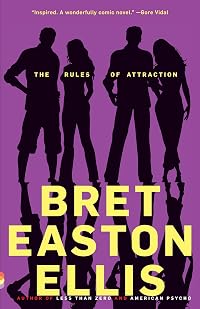
The Rules of Attraction
by Bret Easton Ellis
On This Page
Description
Set at a small, affluent liberal-arts college in New England at the height of the Reagan eighties, The Rules of Attraction is a startlingly funny, kaleidoscopic novel about three students with no plans for the future--or even the present--who become entangled in a curious romantic triangle. Bret Easton Ellis trains his incisive gaze on the kids at self-consciously bohemian Camden College and treats their sexual posturing and agonies with a mixture of acrid hilarity and compassion while show more exposing the moral vacuum at the center of their lives. Lauren changes boyfriends every time she changes majors and still pines for Victor, who split for Europe months ago, and she might or might not be writing anonymous love letters to ambivalent, hard-drinking Sean, a hopeless romantic who only has eyes for Lauren, even if he ends up in bed with half the campus and with Paul, Lauren's ex, who is forthrightly bisexual and whose passion masks a shrewd pragmatism. They waste time getting wasted and race from Thirsty Thursday Happy Hours to Dressed to Get Screwed parties to drinks at the End of the World. The Rules of Attraction is a poignant, hilarious take on the death of romance. show lessTags
Recommendations

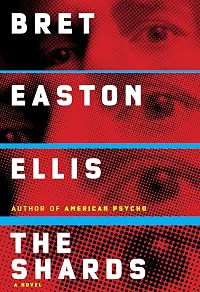
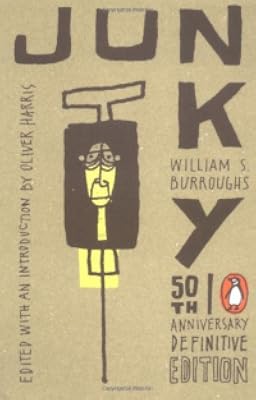
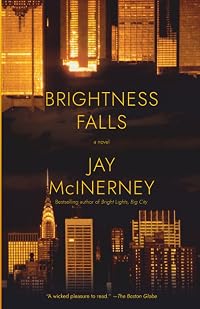
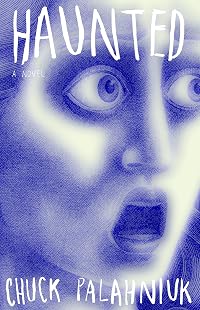



Member Recommendations
Member Reviews
Después del celebrado debut literario Menos que cero (1985), Bret Easton Ellis continuó explorando la pesadez de la juventud norteamericana de finales de los años ochenta con Las leyes de la atracción, una crónica explícita de la vida universitaria que el mismo Ellis experimentó en su alma mater: Bennington College. Los personajes narran en primera persona sus andanzas entre fiestas, sexo, drogas, infidelidades y depresión, al tiempo que asisten a un campus universitario en el que se hace de todo, menos estudiar. Sean, Lauren y Paul, son los protagonistas que además de formar un peculiar triángulo amoroso, atraviesan toda la narrativa con las detalladas descripciones de entornos y sentimientos que demuestran la poca empatía show more de una generación que sufre un síndrome vigente todavía: el egoísmo. Se trata de seres que se interesan por pasar periodos cortos de felicidad, gracias al sexo y las estupefacientes que van pescando en su día a día; Sean, Lauren y Paul, se sienten eternos y se debaten entre vivir despreocupadamente por ser privilegiados, o complicarse la existencia de forma innecesaria debido a sus acciones, siempre al límite. Bret Easton Ellis comienza y termina su relato a la mitad de una frase, alegoría de la pesadilla cíclica en la que viven atrapados los personajes, vorágine libertina donde todos se sienten atraídos por todos, lo que lleva al consecuente caos emocional. Adaptada al cine en 2002 por el director Roger Avary, (tremenda adaptación, tremenda secuencia inicial) Las leyes de la atracción es una sátira empapada de cinismo en la que su autor crea un estilo compulsivo cargado de crítica a la falsedad e insatisfacción del estilo de vida estadounidense. Los jóvenes que en esas páginas se drogan, se acuestan y pierden el tiempo entre decepciones amorosas, más tarde tendrán la responsabilidad de dirigir empresas y manejar al país; será entonces, cuando la barbarie emerja como un monstruo despiadado. Influencia definitiva en un sinfín de autores, Las leyes de la atracción y la literatura de Bret Easton Ellis ha tocado incluso a escritores nacionales como Daniel Krauze y su Fallas de origen (2012), el reflejo del malestar humano en la idiosincrasia mexicana privilegiada. show less
Just like the characters in the book present themselves, bored, intelligent and dozed-off with too much money, I think the content of this book is to be processed between the lines; as the pages drip with cynicism and glibness, the people behind the words develop and function. I'm glad to see Ellis' writing of collegial sex, drunkenness and drugs through the eyes of obviously intelligent creatures, as opposed to the common way of "politically correctly" finger-pointing at what's right and demonising what's wrong.
The three main characters intertwine, lock and disperse throughout, as people do, in a variety of ways. Their personalities are unveiled as I read on, and I actually got a lot through this book. In a way, it was like opening show more somebody's diary; thoughts never said, love unrequited and cheap thrills, it's all here. School daze. show less
The three main characters intertwine, lock and disperse throughout, as people do, in a variety of ways. Their personalities are unveiled as I read on, and I actually got a lot through this book. In a way, it was like opening show more somebody's diary; thoughts never said, love unrequited and cheap thrills, it's all here. School daze. show less
I saw the movie version of The Rules of Attraction many years ago, and really enjoyed it. I've also read American Psycho, which was fantastic and disturbing, a true modern classic, and Lunar Park, which was interesting but somewhat flawed. I was, therefore, ready to tackle the book version of The Rules of Attraction: that is to say, my mind was receptive to Ellis's work, but my expectations were not so sky-high that I would inevitably be disappointed.
What is startling about Ellis now is just how prophetic he is, particularly in the context of today's literature. The Rules of Attraction came out in 1987, but it bears comparison in both style and content to, say, Tao Lin's Taipei - bored young people with too much money who spend their show more time screwing and taking drugs. The only difference is that everyone has a smart phone now.
The Rules of Attraction describes a kind of love triangle between its three main characters: Lauren, Paul, and Sean (the latter being Sean Bateman, the brother of Patrick, the protagonist of American Psycho). This is no ordinary love triangle, however, for the object of each character's desire is in a constant state of slippage, so that they are always lusting after someone else. Ellis enhances this sense of misdirection by his use of fragmented narration, switching between the perspectives of his various characters in ways that show just how delusional, misguided, and narcissistic their actions often are.
Ellis's unvarnished view of 1980s youth culture is especially startling because this is not the view on that period that we are usually given. The vintage 1980s take on youth culture paints a picture of juvenile disaffection that is fueled by an agonized, naive sense of alienation the subtext of which is that teenagers would connect with their parents if only the older generation was not so stubbornly out of touch with their needs. This is the myth we are sold in everything from from Foxes, to the John Hughes movies, for instance, through to Pump Up the Volume: the outer layer of teenage rebellion is just a defense mechanism against an insensitive, uncaring adult world. Inside, the youth are longing to conform, if only they could be given a nurturing chance.
It is against such a mythical background that some of Ellis's best satirical blows in The Rules of Attraction land particularly hard. In one scene, for instance, Paul is watching three guys making a list of people who should be ostracized for various faux pas. One of them suggests that anyone who parents are still married should be excluded, the trauma of divorce being the new marker of social normality. Paul then informs the group that his parents are still married:
"“Excuse me,” I interrupted. “But my parents are still married.” They all looked up, their smiles fading quickly to deep concern. “What did you say?” one of them asked. I cleared my throat, paused dramatically and said, “My parents aren’t divorced.” There was a long silence and then they all screamed, a mixture of disappointment and disbelief and they threw their heads on the table, howling. “No way!” Raymond said, amazed, alarmed, looking up as if I had just admitted a devastating secret. Donald was gaping. “You are kidding, Paul.” He looked horrified and actually backed away as if I were a leper. Harry was too stunned to speak. “I’m not kidding, Donald,” I said. “My parents are too boring to get a divorce.”"
This hysterical reaction to Paul disclosure is a brilliant reversal of the former taboo against divorce, which in former times would have provoked the same horror, but is now worn by these students as an everyday badge of the trauma of modern life. Parents who don't get divorced, who don't inflict this emotional burden on their children, are now the perverse exception.
A different moment of satirical beauty occurs late in the novel, when Lauren accuses Sean of cheating on her with another girl. In a masterstroke of cognitive dissonance, Sean, after initially denying and then admitting the charge, lets fall this perverse jewel of modern logic:
"“Wait a minute,” he says. “Why should it matter how many I fucked? Or who I fucked? Since, like, when does having sex with someone else mean, like, I’m not faithful to you?”"
It is important to remember that Ellis's characters live in this Alice-in-Wonderland world in which all the usual values have been reversed, in which nothing means what it used to mean, and yet - especially in the 1980s - no one wanted to admit the distance between American social ideology and the way that people actually lived. Yet this disparity is precisely what Ellis so ruthlessly and brilliantly taps into. The only thing that lets The Rules of Attraction down somewhat is the looseness of its plot, which meanders too much to have provide of a sense of either crisis or its resolution (the movie version did a much better job with this). However, it is a good novel by an important novelist, the value of which only becomes clearer as time moves on. That is a rare quality in a work of art. show less
What is startling about Ellis now is just how prophetic he is, particularly in the context of today's literature. The Rules of Attraction came out in 1987, but it bears comparison in both style and content to, say, Tao Lin's Taipei - bored young people with too much money who spend their show more time screwing and taking drugs. The only difference is that everyone has a smart phone now.
The Rules of Attraction describes a kind of love triangle between its three main characters: Lauren, Paul, and Sean (the latter being Sean Bateman, the brother of Patrick, the protagonist of American Psycho). This is no ordinary love triangle, however, for the object of each character's desire is in a constant state of slippage, so that they are always lusting after someone else. Ellis enhances this sense of misdirection by his use of fragmented narration, switching between the perspectives of his various characters in ways that show just how delusional, misguided, and narcissistic their actions often are.
Ellis's unvarnished view of 1980s youth culture is especially startling because this is not the view on that period that we are usually given. The vintage 1980s take on youth culture paints a picture of juvenile disaffection that is fueled by an agonized, naive sense of alienation the subtext of which is that teenagers would connect with their parents if only the older generation was not so stubbornly out of touch with their needs. This is the myth we are sold in everything from from Foxes, to the John Hughes movies, for instance, through to Pump Up the Volume: the outer layer of teenage rebellion is just a defense mechanism against an insensitive, uncaring adult world. Inside, the youth are longing to conform, if only they could be given a nurturing chance.
It is against such a mythical background that some of Ellis's best satirical blows in The Rules of Attraction land particularly hard. In one scene, for instance, Paul is watching three guys making a list of people who should be ostracized for various faux pas. One of them suggests that anyone who parents are still married should be excluded, the trauma of divorce being the new marker of social normality. Paul then informs the group that his parents are still married:
"“Excuse me,” I interrupted. “But my parents are still married.” They all looked up, their smiles fading quickly to deep concern. “What did you say?” one of them asked. I cleared my throat, paused dramatically and said, “My parents aren’t divorced.” There was a long silence and then they all screamed, a mixture of disappointment and disbelief and they threw their heads on the table, howling. “No way!” Raymond said, amazed, alarmed, looking up as if I had just admitted a devastating secret. Donald was gaping. “You are kidding, Paul.” He looked horrified and actually backed away as if I were a leper. Harry was too stunned to speak. “I’m not kidding, Donald,” I said. “My parents are too boring to get a divorce.”"
This hysterical reaction to Paul disclosure is a brilliant reversal of the former taboo against divorce, which in former times would have provoked the same horror, but is now worn by these students as an everyday badge of the trauma of modern life. Parents who don't get divorced, who don't inflict this emotional burden on their children, are now the perverse exception.
A different moment of satirical beauty occurs late in the novel, when Lauren accuses Sean of cheating on her with another girl. In a masterstroke of cognitive dissonance, Sean, after initially denying and then admitting the charge, lets fall this perverse jewel of modern logic:
"“Wait a minute,” he says. “Why should it matter how many I fucked? Or who I fucked? Since, like, when does having sex with someone else mean, like, I’m not faithful to you?”"
It is important to remember that Ellis's characters live in this Alice-in-Wonderland world in which all the usual values have been reversed, in which nothing means what it used to mean, and yet - especially in the 1980s - no one wanted to admit the distance between American social ideology and the way that people actually lived. Yet this disparity is precisely what Ellis so ruthlessly and brilliantly taps into. The only thing that lets The Rules of Attraction down somewhat is the looseness of its plot, which meanders too much to have provide of a sense of either crisis or its resolution (the movie version did a much better job with this). However, it is a good novel by an important novelist, the value of which only becomes clearer as time moves on. That is a rare quality in a work of art. show less
Manic and not very likeable. It follows the love (though that is hardly the word) lives of a group of students at a New England university in 1985. It opens mid sentence and unfolds in frantic chunks, focusing on different characters. It's certainly frank about sex and drugs etc, but it's not as funny as it seems to think; my overriding impression is that of a precocious child trying to shock - so what? Still, an interesting contrast to the exaggerated naïveté of Starter for Ten A Novel.
In Ellis' defence, he does warn you. It opens with a Tim O'Brien quote which sums it up very well: "The facts, even when beaded on a chain, still did not have real order. Events did not flow. The facts were separate and haphazard and random even as show more they happened, episodic, broken, no smooth transitions, no sense of unfolding from prior events." show less
In Ellis' defence, he does warn you. It opens with a Tim O'Brien quote which sums it up very well: "The facts, even when beaded on a chain, still did not have real order. Events did not flow. The facts were separate and haphazard and random even as show more they happened, episodic, broken, no smooth transitions, no sense of unfolding from prior events." show less
The individual narratives drive this book off the edge of sobriety and into the world of laissez-faire sex, drugs and miscommunication of over-privledged college students.
This novel is an interesting study on how individual interpretation can at times make navigating personal relationships a hazardous endeavor, especially when alcohol, drugs and beautiful youth are all on deck. The themes are classic and will resonate with the college students of today just as much as those who attended college anytime in the last 60 years (though some of the music references may be lost). Worth reading and quite different from the movie, which is also recommended.
This novel is an interesting study on how individual interpretation can at times make navigating personal relationships a hazardous endeavor, especially when alcohol, drugs and beautiful youth are all on deck. The themes are classic and will resonate with the college students of today just as much as those who attended college anytime in the last 60 years (though some of the music references may be lost). Worth reading and quite different from the movie, which is also recommended.
In a fictional college, a bunch of complete brats are living. They're technically studying, but it's mostly happening just enough to be able to keep being there. Most of the time, there's a party to attend, a bed to discover with some other student or a hang over to sleep through. We follow a few of these students as they go through the daily life revolving around sex and parties. And man, is it a rough life.
Bret Easton Ellis' continue to awe me. I can never really figure out if I really like him or not, but I'm pretty sure I do. His books are often interesting and often discuss a rather grey set of morals which is interesting to follow. It's also interesting to see the characters' view of themselves as the only one with a personality show more while they are often seen by others as quite forgetable. I was snorted loud quite a few times as different characters' perspectives of exchanges and events very much did not match each other... at all. One perspective definitely included what felt like not just a hilarious do-you-want-to-go-on-a-date scene but one that felt like straight out of a fanfiction.
Okay. Yeah. I definitely like Bret Easton Ellis. Thank God he's got more books for me to explore. show less
Bret Easton Ellis' continue to awe me. I can never really figure out if I really like him or not, but I'm pretty sure I do. His books are often interesting and often discuss a rather grey set of morals which is interesting to follow. It's also interesting to see the characters' view of themselves as the only one with a personality show more while they are often seen by others as quite forgetable. I was snorted loud quite a few times as different characters' perspectives of exchanges and events very much did not match each other... at all. One perspective definitely included what felt like not just a hilarious do-you-want-to-go-on-a-date scene but one that felt like straight out of a fanfiction.
Okay. Yeah. I definitely like Bret Easton Ellis. Thank God he's got more books for me to explore. show less
It took me a long time to get through this book, but oddly it wasn't because it was bad. It was just intense. Every page was a new story, everything was direct and honest. While the book may have exaggerated a lot of college stereotypes, I think it said a lot of important things also. I empathized with Sean a lot more than I think people were supposed to. A lot of the time it seemed like he was the main character, which was a little strange, since I think there were really supposed to be 3 characters. Perhaps the only thing I didn't like about the book was the random sections written by unimportant side characters (like Victor), because it was hard to see how they fit in. Worth reading, but very very sexual.
Members
- Recently Added By
Lists

Read the book and saw the movie
1,170 works; 192 members

Best Campus Novels
99 works; 18 members

20th Century Literature
1,161 works; 55 members

1980s
356 works; 23 members

New England Books
101 works; 10 members

The American Experience
173 works; 18 members

One Book, Many Authors
441 works; 39 members

LibraryThingers' 1001 Books You Must Read Before You Die
442 works; 30 members
Best Books of the 20th Century
193 works; 5 members

Favorite Books from the 1980s
27 works; 3 members

Academia in Fiction
158 works; 23 members

Good LGBT fiction for LGBT folk and friends
553 works; 55 members
American Lit for Eng 11 Research Project
368 works; 6 members

Books Read in 2010
631 works; 11 members

living room bookshelf
150 works; 1 member

Gen X Library
245 works; 4 members
Author Information

26+ Works 38,129 Members
Bret Easton Ellis was born in Los Angeles, California on March 7, 1964. He attended Bennington College. In 1985, at the age of 23, his first novel, Less Than Zero, was published. His other works include The Rules of Attraction (1987), The Informers (1994), Glamorama (1998), Lunar Park (2005), and Imperial Bedrooms (2010). His most controversial show more book was American Psycho, a book for which he received an advance in the amount of $300,000 from Simon and Schuster, who then refused to publish the book while under attack from women's groups in regards to the content of the book. It was later made into a feature film. (Bowker Author Biography) show less
Some Editions
Work Relationships
Common Knowledge
- Canonical title
- The Rules of Attraction
- Original title
- The Rules of Attraction
- Original publication date
- 1987
- People/Characters
- Sean Bateman; Lauren Hynde; Paul Denton; Victor Johnson; Patrick Bateman; Mitchell Allen (show all 39); Marc; Deidre; Raymond; Donald; Harry; Roxanne Forest; Dean; Tim; Judy Holleran; Getch; Tony; Norris; Candice; Franklin; Bertrand; Stuart; Dennis; Conroy; Rupert Guest; Eve Denton; Mimi Jared; Richard Jared; Gina; Lila; Clay; Rip; Blair; Professor Vittorio; Gerald; Lizzie; Robert; Harold; Noel
- Important places
- Camden College; New Hampshire, USA; USA
- Important events
- End of the World Party; Dress to Get Screwed Party
- Related movies
- The Rules of Attraction (2002 | IMDb)
- Epigraph
- The facts even when beaded on a chain, still did not have real order. Events did not flow. The facts were separate and haphazard and random even as they happened, episodic, broken, no smooth transitions, no sense of events un... (show all)folding from prior events--
Tim O'Brien
Going After Cacciato - Dedication
- For Phil Holmes
- First words
- and it's a story that might bore you but you don't have to listen, she told me, because she always knew it was going to be like that, and it was, she thinks, her first year, or, actually weekend, really a Friday, in September... (show all), at Camden, and this was three or four years ago, and she got so drunk that she ended up in bed, lost her virginity (late, she was eighteen) in Lorna Slavin's room, because she was a Freshman and had a roommate and Lorna was, she remembers, a Senior or a Junior and usually sometimes at her boyfriend's place off-campus, to who she thought was a Sophomore Ceramics major but who was actually either some guy from N.Y.U., a film student, and up in New Hampshire just for The Dressed To Get Screwed party, or a townie.
- Last words
- (Click to show. Warning: May contain spoilers.)She started telling me her life story, which wasn't very interesting, and when Rockpile came on singing "Heart" I had to turn it up, drowning out her voice, but still I turned to her, my eyes interested, a serious smile, nodding, my hand squeezing her knee, and she
- Blurbers
- Vidal, Gore
Classifications
Statistics
- Members
- 3,931
- Popularity
- 4,020
- Reviews
- 40
- Rating
- (3.61)
- Languages
- 14 — Czech, Danish, Dutch, English, Finnish, French, German, Hungarian, Italian, Ottoman Turkish, Portuguese, Spanish, Swedish, Turkish
- Media
- Paper, Audiobook, Ebook
- ISBNs
- 53
- ASINs
- 15