On This Page
Description
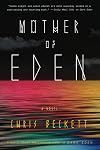
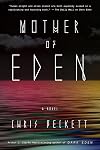
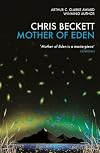
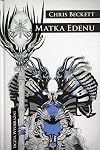
A tale set 150 years after the events of Dark Eden finds the world of John Redlantern and the Family transformed by a thriving civilization that hides underlying evils realized by young Starlight Brooking when she lands at the center of a power struggle. "Civilization has come to the alien, sunless planet its inhabitants call Eden. Just a generation ago, the planet's five hundred inhabitants huddled together in the light and warmth of the forest's lanterntrees, afraid to venture out into the show more cold darkness around them. Now, humanity has spread across Eden and two kingdoms have emerged. Both are sustained by violence and dominated by men- and both claim to be the favored children of Gela, the woman who came to Eden long ago on a boat that could cross the stars and became the mother of them all. When young Starlight Brooking meets a handsome and powerful man from across Worldpool, she believes he will offer an outlet for her ambition and energy. But she has no inkling that she will become a stand-in for Gela herself and wear Gela's fabled ring on her own finger- or that in this role, powerful and powerless all at once, she will try to change the course of Eden's history."-- back cover show lessTags
Recommendations













Member Reviews
I can't wrap my head around the fact that this is the sequel to a Clarke Award winner. "Mother of Eden" is embarrassing to read. Very short chapters are each narrated from different points of view, but the characters' voices are interchangeable and there is nothing unique in their perspectives. We're told that the protagonist, Starlight, is intelligent but she demonstrates no creative problem-solving and little meaningful reflection. (We're also told again and again that both she and her new husband Greenstone are very beautiful - their main defining feature.)
While the sunless planet of Eden is intriguing, the social world-building is implausible. The author attempts an evolution-of-language trope that falls flat - there's a handful of show more belabored new vocabulary, such as "plantstuff" for cloth and "slipping together" for sex, which seem selected at random. Eden-dwellers just repeat adjectives (Starlight is "smart smart!") instead of using "very." Why would language change this way? Why are half the characters named after the same handful of ancestors - including many with repeated names - while others are named for natural phenomena ("Quietstream," "Greenstone") or abstract poetry ("Bluesigh")? Much is made of the schism between the two main groups of Eden's inhabitants, and when Starlight travels to a new land the people living there remark on her strange speech. But in dialogue, characters from both sides of the divide use the same invented words and follow similar naming conventions.
"Mother of Eden" aspires to be a stirring tale of power, social control, gender roles and oppression. But its treatment of these topics is facile at best. It has nothing of substance to say, opting instead for flat characters undergoing manufactured drama in repetitive scenes, written in a juvenile style. Nothing to recommend this one.
I received this book for free from LibraryThing in exchange for an honest review. show less
While the sunless planet of Eden is intriguing, the social world-building is implausible. The author attempts an evolution-of-language trope that falls flat - there's a handful of show more belabored new vocabulary, such as "plantstuff" for cloth and "slipping together" for sex, which seem selected at random. Eden-dwellers just repeat adjectives (Starlight is "smart smart!") instead of using "very." Why would language change this way? Why are half the characters named after the same handful of ancestors - including many with repeated names - while others are named for natural phenomena ("Quietstream," "Greenstone") or abstract poetry ("Bluesigh")? Much is made of the schism between the two main groups of Eden's inhabitants, and when Starlight travels to a new land the people living there remark on her strange speech. But in dialogue, characters from both sides of the divide use the same invented words and follow similar naming conventions.
"Mother of Eden" aspires to be a stirring tale of power, social control, gender roles and oppression. But its treatment of these topics is facile at best. It has nothing of substance to say, opting instead for flat characters undergoing manufactured drama in repetitive scenes, written in a juvenile style. Nothing to recommend this one.
I received this book for free from LibraryThing in exchange for an honest review. show less
 This review was written for LibraryThing Early Reviewers.
Mother of Eden certainly wasn’t a bad book, not bad at all. Still, I have to say it’s a far cry from the first book, which I absolutely adored.
First, it’s important to know that Mother of Eden isn’t exactly a direct follow-up to Dark Eden, taking place roughly five or six generations in the future. Be aware that if you are thinking of reading it as a stand-alone though, you’ll miss out on a lot of the background information in the first book. Remember how I’d ended my review of Dark Eden with the theory that characters like John Redlantern, Tina, Gerry and Jeff would eventually become the stuff of legends to their descendants, much like how “First Couple” Angela and Tommy became revered by Family? Turns out that is show more exactly the case, so it wouldn’t hurt to be familiar with the events of book one.
Still, the world of Eden has changed a lot since John Redlantern first destroyed Circle of Stones and took his supporters away from Circle Valley and over Snowy Dark. There are now thousands of humans living across the planet, divided into two main groups: Johnfolk, those who were descended from John and his followers; and Davidfolk, descendants of those who remained with the original Family led by David, John’s greatest rival. There are quite a few offshoot populations as well, and our protagonist Starlight Brooking is a young woman from one such tribe, a member of the Kneetree Folk who live on a tiny island far away from the hustle and bustle of the rest of Eden.
But Starlight has always wanted something more out of her life than just catching fish and making boats. She convinces her uncle, brother and a couple friends one day to travel with her to Veeklehouse, a kind of trading port where many of Eden’s tribes converge to buy and sell their goods. There she meets handsome Greenstone Johnson, a Johnsfolk man from across Greatpool who came in his colorful wraps and mighty sail boats to trade his shiny metal. Greenstone is drawn to Starlight right away and asks her to return with him to his home of Edenheart, and sensing her chance for a great adventure, she agrees. After all, Greenstone isn’t just a descendent of John, he’s the great-great-grandson of John himself, and is a prince of sorts among his people. Starlight is even more excited when she discovers that as Greenstone’s “Housewoman”, she’ll get to wear the legendary Gela’s Ring and take on the mantle of Mother of Eden.
As she soon discovers though, living in Greenstone’s home of New Earth isn’t all it’s cracked up to be. In fact, life is downright unpleasant if you’re not one of the “Big People”, and even “Small People” make themselves feel bigger by pressing semi-sentient creatures into slave labor. If you’re a Batface or have any other type physical or mental deformity, you’re immediately relegated to the lowest rungs of society and it’s the metal digs for you! Greenstone himself isn’t a bad guy, but his father the Headman as well as Edenheart’s Chiefs and Teachers will throw you to the Fire if your beliefs deviate from the “correct” version of history, and if you’re a woman you’ll have no say in how Edenheart is run because your opinion means nothing.
This is how Starlight quickly realizes that even though she is the Ringwearer and the beloved Mother of Eden, she actually holds little to no power at all. And that is NOT all right with her, and neither is all of New Earth’s injustices. Starlight’s character is probably my favorite part of this book; she plays a similar role as John Redlantern from the first book, but for one key difference to me: while both John and Starlight are initiative-taking people who are constantly seeking something more, John sought glory only for himself, versus Starlight whose ultimate goal was to better the lives of others. Huge respect. I found myself rooting for her every step of the way.
Now for the book’s not-so-great parts. Like Dark Eden, it carries on its commentary on the evolution of civilization and culture, language, religion, etc. But whereas the social-fiction elements in the first book were more understated and deeply nuanced, Mother of Eden has a clear message and it is delivered with the subtlety and grace of a wrecking ball. Never mind that I agreed with and admired Starlight for everything she tries to do for New Earth, like fighting to give better quality-of-life for Small People and a voice to women, or the fact that I loved this book for its heartfelt attempt to honor the role of motherhood and the power of a mother’s love. All that’s fine and good but only if it doesn’t affect the quality of writing or give rise to frequent character actions and dialogue choices that feel incredibly awkward or out-of-place. Too bad that in this case, I felt it did.
My biggest problem with Mother of Eden though was the ending. Even if I hadn’t found it unsatisfying – and it really was off-putting – I still probably wouldn’t have enjoyed it. The thing is, “unsatisfying” endings I can live with, but “incomplete” is a whole other matter. Unfortunately, everything after the climax felt rushed and not entirely all there, with multiple skips of varying degrees in time and a lot of important events happening off the page. Up until that that point, the author had more or less kept us in the loop with what’s happening across multiple locations by giving us a wide range of character perspectives. When it came to the ending where that really mattered though, the scope narrows so that I was left wondering what happened to a major character, whose fate was only then mentioned in passing in one of the final chapters in Afterwords section (and I felt that character totally deserved to be handled better than that).
Maybe a sequel to Dark Eden really wasn’t needed, but nevertheless I’m not sorry I read the book. It was fascinating to see what Eden has become. If Chris Beckett were to write a third Eden book I would likely still read it. Hopefully it would redeem that disheartening ending. show less
First, it’s important to know that Mother of Eden isn’t exactly a direct follow-up to Dark Eden, taking place roughly five or six generations in the future. Be aware that if you are thinking of reading it as a stand-alone though, you’ll miss out on a lot of the background information in the first book. Remember how I’d ended my review of Dark Eden with the theory that characters like John Redlantern, Tina, Gerry and Jeff would eventually become the stuff of legends to their descendants, much like how “First Couple” Angela and Tommy became revered by Family? Turns out that is show more exactly the case, so it wouldn’t hurt to be familiar with the events of book one.
Still, the world of Eden has changed a lot since John Redlantern first destroyed Circle of Stones and took his supporters away from Circle Valley and over Snowy Dark. There are now thousands of humans living across the planet, divided into two main groups: Johnfolk, those who were descended from John and his followers; and Davidfolk, descendants of those who remained with the original Family led by David, John’s greatest rival. There are quite a few offshoot populations as well, and our protagonist Starlight Brooking is a young woman from one such tribe, a member of the Kneetree Folk who live on a tiny island far away from the hustle and bustle of the rest of Eden.
But Starlight has always wanted something more out of her life than just catching fish and making boats. She convinces her uncle, brother and a couple friends one day to travel with her to Veeklehouse, a kind of trading port where many of Eden’s tribes converge to buy and sell their goods. There she meets handsome Greenstone Johnson, a Johnsfolk man from across Greatpool who came in his colorful wraps and mighty sail boats to trade his shiny metal. Greenstone is drawn to Starlight right away and asks her to return with him to his home of Edenheart, and sensing her chance for a great adventure, she agrees. After all, Greenstone isn’t just a descendent of John, he’s the great-great-grandson of John himself, and is a prince of sorts among his people. Starlight is even more excited when she discovers that as Greenstone’s “Housewoman”, she’ll get to wear the legendary Gela’s Ring and take on the mantle of Mother of Eden.
As she soon discovers though, living in Greenstone’s home of New Earth isn’t all it’s cracked up to be. In fact, life is downright unpleasant if you’re not one of the “Big People”, and even “Small People” make themselves feel bigger by pressing semi-sentient creatures into slave labor. If you’re a Batface or have any other type physical or mental deformity, you’re immediately relegated to the lowest rungs of society and it’s the metal digs for you! Greenstone himself isn’t a bad guy, but his father the Headman as well as Edenheart’s Chiefs and Teachers will throw you to the Fire if your beliefs deviate from the “correct” version of history, and if you’re a woman you’ll have no say in how Edenheart is run because your opinion means nothing.
This is how Starlight quickly realizes that even though she is the Ringwearer and the beloved Mother of Eden, she actually holds little to no power at all. And that is NOT all right with her, and neither is all of New Earth’s injustices. Starlight’s character is probably my favorite part of this book; she plays a similar role as John Redlantern from the first book, but for one key difference to me: while both John and Starlight are initiative-taking people who are constantly seeking something more, John sought glory only for himself, versus Starlight whose ultimate goal was to better the lives of others. Huge respect. I found myself rooting for her every step of the way.
Now for the book’s not-so-great parts. Like Dark Eden, it carries on its commentary on the evolution of civilization and culture, language, religion, etc. But whereas the social-fiction elements in the first book were more understated and deeply nuanced, Mother of Eden has a clear message and it is delivered with the subtlety and grace of a wrecking ball. Never mind that I agreed with and admired Starlight for everything she tries to do for New Earth, like fighting to give better quality-of-life for Small People and a voice to women, or the fact that I loved this book for its heartfelt attempt to honor the role of motherhood and the power of a mother’s love. All that’s fine and good but only if it doesn’t affect the quality of writing or give rise to frequent character actions and dialogue choices that feel incredibly awkward or out-of-place. Too bad that in this case, I felt it did.
My biggest problem with Mother of Eden though was the ending. Even if I hadn’t found it unsatisfying – and it really was off-putting – I still probably wouldn’t have enjoyed it. The thing is, “unsatisfying” endings I can live with, but “incomplete” is a whole other matter. Unfortunately, everything after the climax felt rushed and not entirely all there, with multiple skips of varying degrees in time and a lot of important events happening off the page. Up until that that point, the author had more or less kept us in the loop with what’s happening across multiple locations by giving us a wide range of character perspectives. When it came to the ending where that really mattered though, the scope narrows so that I was left wondering what happened to a major character, whose fate was only then mentioned in passing in one of the final chapters in Afterwords section (and I felt that character totally deserved to be handled better than that).
Maybe a sequel to Dark Eden really wasn’t needed, but nevertheless I’m not sorry I read the book. It was fascinating to see what Eden has become. If Chris Beckett were to write a third Eden book I would likely still read it. Hopefully it would redeem that disheartening ending. show less
[edit]
Mother of Eden continues the story of the inhabitants of Eden. First explained in Dark Eden, it is the planet on which several humans crashed hundreds of years ago, a planet that has no sun but obtains its warmth and light from the plant and animal life that exists there. Taking place roughly three generations after the events in that first novel in the series, humanity is no longer bound by fear to one location but has spread out around the planet. Mother of Eden is the story of how these clusters of humanity differ and yet remain the same.
One of the things Mr. Beckett does so well is capture the evolution of language and society throughout the generations. He did this superbly in Dark Eden and takes it one step further in this show more second novel because now he gets to play with different locations and the changes they encourage. Because of that, the story becomes an anthropologist’s dream, as he details the subtle and not-so-subtle differences between the societies plus there ongoing evolution into patriarchal rule. In essence, Eden is a microcosm for Earth’s own history of civilization, bringing to life our own messy path throughout history. The best part is that he does not hit readers over their heads with obviousness. Instead, he incorporates the changes in such a way that they are a part of the descriptive narrative necessary for one to visualize this strange world. For readers to be able to recognize evolution in progress is as added bonus.
What Mother of Eden is, more than anything, is the story of the birth of a modern civilization. Human curiosity allowed the descendants of the original survivors to leave the protection and comfort of the familiar. Three generations later, there is a burgeoning monetary system, governments, caste systems, industry, and, of greatest importance to the story, violence. Just as he did in Dark Eden, Mr. Beckett draws on the recognizable to best explain the unrecognizable. This time, however, it is the planet itself which is familiar to readers, while the customs, rules, and language are yet again different. Starlight, coming from a group most like those original descendants, highlights these differences for readers and becomes the mouthpiece through which readers voice their concerns. Moreover, she proves to be an excellent foil for recognizing the inconsistencies among the different societies. Given her propensity for wisdom and rational thought, as well as her desire to make a difference, there is no doubt that her story is not quite at a close at the end of Mother of Eden. What role she will play, and just how much more change the inhabitants of this planet will incur, remains a tantalizing secret. show less
Mother of Eden continues the story of the inhabitants of Eden. First explained in Dark Eden, it is the planet on which several humans crashed hundreds of years ago, a planet that has no sun but obtains its warmth and light from the plant and animal life that exists there. Taking place roughly three generations after the events in that first novel in the series, humanity is no longer bound by fear to one location but has spread out around the planet. Mother of Eden is the story of how these clusters of humanity differ and yet remain the same.
One of the things Mr. Beckett does so well is capture the evolution of language and society throughout the generations. He did this superbly in Dark Eden and takes it one step further in this show more second novel because now he gets to play with different locations and the changes they encourage. Because of that, the story becomes an anthropologist’s dream, as he details the subtle and not-so-subtle differences between the societies plus there ongoing evolution into patriarchal rule. In essence, Eden is a microcosm for Earth’s own history of civilization, bringing to life our own messy path throughout history. The best part is that he does not hit readers over their heads with obviousness. Instead, he incorporates the changes in such a way that they are a part of the descriptive narrative necessary for one to visualize this strange world. For readers to be able to recognize evolution in progress is as added bonus.
What Mother of Eden is, more than anything, is the story of the birth of a modern civilization. Human curiosity allowed the descendants of the original survivors to leave the protection and comfort of the familiar. Three generations later, there is a burgeoning monetary system, governments, caste systems, industry, and, of greatest importance to the story, violence. Just as he did in Dark Eden, Mr. Beckett draws on the recognizable to best explain the unrecognizable. This time, however, it is the planet itself which is familiar to readers, while the customs, rules, and language are yet again different. Starlight, coming from a group most like those original descendants, highlights these differences for readers and becomes the mouthpiece through which readers voice their concerns. Moreover, she proves to be an excellent foil for recognizing the inconsistencies among the different societies. Given her propensity for wisdom and rational thought, as well as her desire to make a difference, there is no doubt that her story is not quite at a close at the end of Mother of Eden. What role she will play, and just how much more change the inhabitants of this planet will incur, remains a tantalizing secret. show less
After the events of Dark Eden, John Redlantern crossed Worldpool to escape David and his men. Generations have passed and the Davidfolk have prospered. There are many settlements now, not just one. Everywhere we look we see the settlers' ingenuity and tenacity: boats, houses, clothes, the beginnings of technology, trade, even a rudimentary currency.
But there is brutality and violence too, the price of all this progress. And John's descendants are back, bringing red metal to trade and the promise of adventure to Starlight Brooking, a young girl who is a restless as John was.
Starlight grew up on Knee Tree Grounds, a quiet backwater inhabited by Jeff's descendants, boat-builders and fisher-people who live communally, much as the original show more family did. So far, so familiar, but soon we're off, following Starlight across Eden in her quest for excitement. First to Veeklehouse and the Davidfolk, then to New Earth and the Johnfolk there — two cultures shaped by John's actions, still obsessed with the break-up of family and Gela's ring.
Along the way, there is love at first sight, great courage, terrible injustice, deceit and betrayal, mortal danger, a desperate escape, and, finally, a mostly satisfying ending. That might sound like a typical fantasy, but that is not what Beckett is about. He has his sights set on nothing less than exploring human societies and the belief systems that underpin them, how they come into being, how they evolve. If you like thoughtful science fiction, this is the book for you. It isn't always a comfortable ride, and don't expect a happy ending, but it's a rewarding read.
…
A longer discussion, some spoilers:
This is a book of simple language and profound themes. I like that, it's accessible, and I like this sort of sociological SF. It reminds me of Le Guin, although Beckett isn't quite on her level. His writing doesn't have the same depth; it lacks a certain realism.
As in Dark Eden, Beckett uses multiple first person narrators. That reinforces the 'history is everybody's story' theme, and it fits the oral societies on Eden. It also gives us an honest picture of Starlight. She's smart, beautiful, restless, but also wilful, spoilt and selfish. Flawed but compelling, as John was. There's a note of hindsight throughout too, as if the events happened some time ago and the characters know how things turned out. That allows the characters to make connections and reveal psychological truths that they would ordinarily only realise some time later, after some reflection.
The opening is Beckett at his best: the Kneefolk, their grounds, the fateful conversation that sets events in motion are all vivid and engaging. The characters are well-rounded and believable, even if they have a slight tendency to all sound the same. The descriptions of Eden really shine throughout, particularly New Earth which we see through Starlight and coloured by her sense of wonder. The last third of the book is great too, action-packed and dramatic, a thoroughly entertaining read.
But the middle of the book dragged. The first person narration doesn't work so well once we're in New Earth as Starlight and Greenstone become rather passive and distinctly less likeable. Beckett also seemed reluctant to let readers in on the dangers in New Earth, even when Greenstone is narrating. That's cheating, and it didn't deepen the suspense for me, it weakened it – something exacerbated by that sense of looking back on the past rather than being immersed in the moment. Too many new narrators meant a loss of focus, too. Yes, New Earth is a complicated society and we needed to see all the layers of it, but the more narrators you add, the less space there is to get to know each one, the less rich each account is, the more they work against each other.
New Earth is a plausible society on the whole, but Beckett has packed in so much – political power, industrialisation, feudalism, populism, repression, misogyny – it sometimes felt a tad artificial. Realistically, too much had changed for just four or five generations of isolation. I'd expect more discontent from the small people. Their grandparents were free, would they really accept their enslavement so thoroughly? It was as if they'd thought themselves smaller. It's a shame they're mostly a backdrop, an anonymous mass with no leaders of their own, but Starlight doesn't really interact with them as individuals — and this is Starlight's story despite the multiple narrators, just as Dark Eden was John's.
That doesn't make Beckett wrong about history, though. History really isn't just one person's story, but novels often are, especially SF/F ones.
Motherhood is central to this book. On Eden that's tangled up with Angela's rules, passed down mother to daughter but also taught to sons by the way their mothers act — kids learn an awful lot from adults without a word being said, after all. Those rules encourage kindness, but not all mothers are kind. Starlight is vulnerable to cheering crowds because her mum withheld affection. John created New Earth with all its cruelty and had no mum. Jeff was kind because his mother loved him. We're meant to conclude, as Starlight does, that a loving mother is crucial. I found that simplistic. What about mothers who love too much, or expect their child to complete them? (Is Glitterfish doing that with Mickey?) What about fathers? They don't seem to count. Firehand is a tyrant. Starlight's uncle is loving, but she's dismissive of him.
New Earth is a patriarchy, and inherently misogynistic. The Davidfolk aren't much better. Perhaps as a consequence, there's an undercurrent of contempt for men. Lucy has good reason to hate Dixon, but it's there between Starlight and Greenstone to a lesser extent when she realises he's not who she thought he was. Is this fractious relationship between the sexes inevitable? Could Angela's rules have prevented it if they weren't secret?
Knowledge – losing it, gaining it, keeping it secret — is a big deal on Eden. John obviously thought it was the key to progress, but in creating the Teachers to protect New Earth's store of knowledge he inadvertently created a force for repression and stasis. The library has become almost a religion. Beckett may be inviting comparisons with the Catholic church (just as Jeff's 'we are here' is perhaps Quakerism; Harry's preaching is perhaps Evangelism), but I see a wider truth about human nature that applies equally as well to scientists as it does to priests. Confirmation bias, cognitive dissonance — we're all primed to cling to our core beliefs, be they religious or secular, and we don't unlearn them easily. I think this is because our survival depends on a balance between continuity and change. Although societies have to adapt and grow, they shouldn't change every time the wind does.
The pitfalls of leadership and Angela's warning against charismatic power-hungry men 'who think the story is about them' is still at the heart of this series. That warning always seemed sexist to me. Women can be power-hungry too, and we see some of that in Starlight. Like John, she's impatient, arrogant and visionary. But, like John, once she sees the damage power can do, she gives it up. (Sort of, temporarily. Like John, she can't stop being who she is.) Starlight is a more sympathetic protagonist, though. John was motivated by a thirst for progress: she's motivated by compassion. She feels for the small people, batfaces, cutbats. Growing up on Knee Tree gave her an innate sense of fairness. I like to think of that as Jeff's legacy – quiet, thoughtful Jeff, the patient observer who saw all of Eden's creatures clearly.
As Julie says towards the end of the book, Eden needs both kinds of people, restless leaders and quiet watchers. Perhaps through Starlight, Jeff (and Tina) will have as big an impact on Eden as John has. I hope so. show less
But there is brutality and violence too, the price of all this progress. And John's descendants are back, bringing red metal to trade and the promise of adventure to Starlight Brooking, a young girl who is a restless as John was.
Starlight grew up on Knee Tree Grounds, a quiet backwater inhabited by Jeff's descendants, boat-builders and fisher-people who live communally, much as the original show more family did. So far, so familiar, but soon we're off, following Starlight across Eden in her quest for excitement. First to Veeklehouse and the Davidfolk, then to New Earth and the Johnfolk there — two cultures shaped by John's actions, still obsessed with the break-up of family and Gela's ring.
Along the way, there is love at first sight, great courage, terrible injustice, deceit and betrayal, mortal danger, a desperate escape, and, finally, a mostly satisfying ending. That might sound like a typical fantasy, but that is not what Beckett is about. He has his sights set on nothing less than exploring human societies and the belief systems that underpin them, how they come into being, how they evolve. If you like thoughtful science fiction, this is the book for you. It isn't always a comfortable ride, and don't expect a happy ending, but it's a rewarding read.
…
A longer discussion, some spoilers:
As in Dark Eden, Beckett uses multiple first person narrators. That reinforces the 'history is everybody's story' theme, and it fits the oral societies on Eden. It also gives us an honest picture of Starlight. She's smart, beautiful, restless, but also wilful, spoilt and selfish. Flawed but compelling, as John was. There's a note of hindsight throughout too, as if the events happened some time ago and the characters know how things turned out. That allows the characters to make connections and reveal psychological truths that they would ordinarily only realise some time later, after some reflection.
The opening is Beckett at his best: the Kneefolk, their grounds, the fateful conversation that sets events in motion are all vivid and engaging. The characters are well-rounded and believable, even if they have a slight tendency to all sound the same. The descriptions of Eden really shine throughout, particularly New Earth which we see through Starlight and coloured by her sense of wonder. The last third of the book is great too, action-packed and dramatic, a thoroughly entertaining read.
But the middle of the book dragged. The first person narration doesn't work so well once we're in New Earth as Starlight and Greenstone become rather passive and distinctly less likeable. Beckett also seemed reluctant to let readers in on the dangers in New Earth, even when Greenstone is narrating. That's cheating, and it didn't deepen the suspense for me, it weakened it – something exacerbated by that sense of looking back on the past rather than being immersed in the moment. Too many new narrators meant a loss of focus, too. Yes, New Earth is a complicated society and we needed to see all the layers of it, but the more narrators you add, the less space there is to get to know each one, the less rich each account is, the more they work against each other.
New Earth is a plausible society on the whole, but Beckett has packed in so much – political power, industrialisation, feudalism, populism, repression, misogyny – it sometimes felt a tad artificial. Realistically, too much had changed for just four or five generations of isolation. I'd expect more discontent from the small people. Their grandparents were free, would they really accept their enslavement so thoroughly? It was as if they'd thought themselves smaller. It's a shame they're mostly a backdrop, an anonymous mass with no leaders of their own, but Starlight doesn't really interact with them as individuals — and this is Starlight's story despite the multiple narrators, just as Dark Eden was John's.
That doesn't make Beckett wrong about history, though. History really isn't just one person's story, but novels often are, especially SF/F ones.
Motherhood is central to this book. On Eden that's tangled up with Angela's rules, passed down mother to daughter but also taught to sons by the way their mothers act — kids learn an awful lot from adults without a word being said, after all. Those rules encourage kindness, but not all mothers are kind. Starlight is vulnerable to cheering crowds because her mum withheld affection. John created New Earth with all its cruelty and had no mum. Jeff was kind because his mother loved him. We're meant to conclude, as Starlight does, that a loving mother is crucial. I found that simplistic. What about mothers who love too much, or expect their child to complete them? (Is Glitterfish doing that with Mickey?) What about fathers? They don't seem to count. Firehand is a tyrant. Starlight's uncle is loving, but she's dismissive of him.
New Earth is a patriarchy, and inherently misogynistic. The Davidfolk aren't much better. Perhaps as a consequence, there's an undercurrent of contempt for men. Lucy has good reason to hate Dixon, but it's there between Starlight and Greenstone to a lesser extent when she realises he's not who she thought he was. Is this fractious relationship between the sexes inevitable? Could Angela's rules have prevented it if they weren't secret?
Knowledge – losing it, gaining it, keeping it secret — is a big deal on Eden. John obviously thought it was the key to progress, but in creating the Teachers to protect New Earth's store of knowledge he inadvertently created a force for repression and stasis. The library has become almost a religion. Beckett may be inviting comparisons with the Catholic church (just as Jeff's 'we are here' is perhaps Quakerism; Harry's preaching is perhaps Evangelism), but I see a wider truth about human nature that applies equally as well to scientists as it does to priests. Confirmation bias, cognitive dissonance — we're all primed to cling to our core beliefs, be they religious or secular, and we don't unlearn them easily. I think this is because our survival depends on a balance between continuity and change. Although societies have to adapt and grow, they shouldn't change every time the wind does.
The pitfalls of leadership and Angela's warning against charismatic power-hungry men 'who think the story is about them' is still at the heart of this series. That warning always seemed sexist to me. Women can be power-hungry too, and we see some of that in Starlight. Like John, she's impatient, arrogant and visionary. But, like John, once she sees the damage power can do, she gives it up. (Sort of, temporarily. Like John, she can't stop being who she is.) Starlight is a more sympathetic protagonist, though. John was motivated by a thirst for progress: she's motivated by compassion. She feels for the small people, batfaces, cutbats. Growing up on Knee Tree gave her an innate sense of fairness. I like to think of that as Jeff's legacy – quiet, thoughtful Jeff, the patient observer who saw all of Eden's creatures clearly.
As Julie says towards the end of the book, Eden needs both kinds of people, restless leaders and quiet watchers. Perhaps through Starlight, Jeff (and Tina) will have as big an impact on Eden as John has. I hope so.
Chris Beckett's Eden, with its dark, weird, and ever-intriguing landscape, had me hooked from the beginning of "Dark Eden". Exploring Eden in the first installment left me wanting to know more and thinking about the strange world long after I had finished reading. I was not disappointed with this second installment, and enjoyed it so much so that I had to pace myself to make my reading last an entire 3 days.
Now in this second offering, Beckett returns to Eden to continue the saga of this strange planet and the people attempting to forge ahead and thrive. "Mother of Eden" takes place several generations after "Dark Eden". John, Tina, David, and Jeff have long since passed on, but their children have spread out even further across Eden, show more each believing the ways of their ancestor to be the true path. I was immediately drawn into the story alongside Starlight, a young "Jeffsfolk" from a tiny island community, as she found herself swept up into plans generations in the making and much move convoluted than she ever could have imagined. Beckett tells the story through the points of view of several characters, all with different backgrounds, beliefs, and points of view concerning Eden's past, present, and ideal future. Power struggles, religious zealots, caste systems, racial tensions, gender dynamics... This story has them all. I am already looking forward (and hoping optimistically) for future chapters in this saga. show less
Now in this second offering, Beckett returns to Eden to continue the saga of this strange planet and the people attempting to forge ahead and thrive. "Mother of Eden" takes place several generations after "Dark Eden". John, Tina, David, and Jeff have long since passed on, but their children have spread out even further across Eden, show more each believing the ways of their ancestor to be the true path. I was immediately drawn into the story alongside Starlight, a young "Jeffsfolk" from a tiny island community, as she found herself swept up into plans generations in the making and much move convoluted than she ever could have imagined. Beckett tells the story through the points of view of several characters, all with different backgrounds, beliefs, and points of view concerning Eden's past, present, and ideal future. Power struggles, religious zealots, caste systems, racial tensions, gender dynamics... This story has them all. I am already looking forward (and hoping optimistically) for future chapters in this saga. show less
This review was written for LibraryThing Early Reviewers.http://nwhyte.livejournal.com/2621178.html
Beckett's setting is the lost tribes of humans on a far distant planet, descendants of a long ago crashed spaceship (whose own bitter story becomes fairly obvious to the reader, though not to the characters). They are in conflict over natural resources, the indigenous aliens, their own history, and the roles of women and men. The details of the plot, on reflection, are actually standard pulp themes; but the way Beckett chooses to tell the story through the voices of the young generation (mostly women) and his undercurrent of revolution (both class and gender) are very subversive of those tropes. The ending is bitter yet hopeful. I really liked this, as I enjoyed its predecessor, and will be show more agonising over my BSFA vote over the next three weeks. And needless to say, it's in contention for my Hugo nominations as well. show less
Beckett's setting is the lost tribes of humans on a far distant planet, descendants of a long ago crashed spaceship (whose own bitter story becomes fairly obvious to the reader, though not to the characters). They are in conflict over natural resources, the indigenous aliens, their own history, and the roles of women and men. The details of the plot, on reflection, are actually standard pulp themes; but the way Beckett chooses to tell the story through the voices of the young generation (mostly women) and his undercurrent of revolution (both class and gender) are very subversive of those tropes. The ending is bitter yet hopeful. I really liked this, as I enjoyed its predecessor, and will be show more agonising over my BSFA vote over the next three weeks. And needless to say, it's in contention for my Hugo nominations as well. show less
I wanted to like this book. I had read the first in the series which was nominated for the British SF Association award and won the Clarke award. The characters are well drawn, the planet and it's ecology is novel. But...
The actually premise of the book is not as original as it first seems. Basically, it's the post-nuclear apocalypse story - people dragging their way back to civilization, mutated people etc. The cause of this (one woman and two men stranded on a planet with limited resources) but the outcome is basically the same. It's told well however and the slant is new. But...
My problem, which I had to a lesser extent with the first novel, is pacing. This book is a slow as molasses. This is civilization building as a paint drying show more spectacle; the paint dries, it cracks, it starts to peel, it falls off the wall.
I got as far as the first couple of cracks and gave up. show less
The actually premise of the book is not as original as it first seems. Basically, it's the post-nuclear apocalypse story - people dragging their way back to civilization, mutated people etc. The cause of this (one woman and two men stranded on a planet with limited resources) but the outcome is basically the same. It's told well however and the slant is new. But...
My problem, which I had to a lesser extent with the first novel, is pacing. This book is a slow as molasses. This is civilization building as a paint drying show more spectacle; the paint dries, it cracks, it starts to peel, it falls off the wall.
I got as far as the first couple of cracks and gave up. show less
This review was written for LibraryThing Early Reviewers.Members
- Recently Added By
Lists

2016 Hugo Eligible Novels
90 works; 32 members

Books Read in 2015
3,299 works; 127 members
Author Information

54+ Works 2,055 Members
Chris Beckett is lecturer in Social Work at Anglia Polytechnic University, Cambridge
Awards and Honors
Awards
Series

Common Knowledge
- Canonical title
- Mother of Eden
- Original title
- Mother of Eden
- Original publication date
- 2015
Classifications
Statistics
- Members
- 248
- Popularity
- 130,640
- Reviews
- 26
- Rating
- (3.52)
- Languages
- English, Polish
- Media
- Paper, Audiobook, Ebook
- ISBNs
- 12
- ASINs
- 5