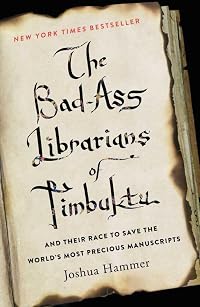
The Bad-Ass Librarians of Timbuktu: And Their Race to Save the World's Most Precious Manuscripts
by Joshua Hammer
On This Page
Description
History. Nonfiction. In the 1980s, a young adventurer and collector for a government library, Abdel Kader Haidara, journeyed across the Sahara Desert and along the Niger River, tracking down and salvaging tens of thousands of ancient Islamic and secular manuscripts that were crumbling in the trunks of desert farmers. His goal was to preserve this crucial part of the world's patrimony in a gorgeous library. But then Al Qaeda showed up at the door.The Bad-Ass Librarians of Timbuktu tells the show more incredible story of how Haidara, a mild-mannered archivist and historian from the legendary city of Timbuktu, became one of the world's greatest and most brazen smugglers by saving the texts from sure destruction. With bravery and patience, he organized a dangerous operation to sneak all 350,000 volumes out of the city to the safety of southern Mali. This real-life thriller is a reminder that ordinary citizens often do the most to protect the beauty and imagination of their culture. It is also the story of a man who, through extreme circumstances, discovered his higher calling and was changed forever by it. show lessTags
Recommendations

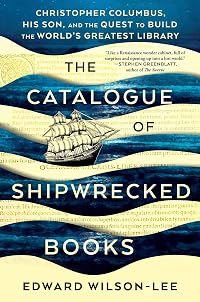
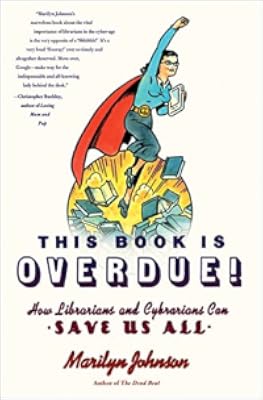

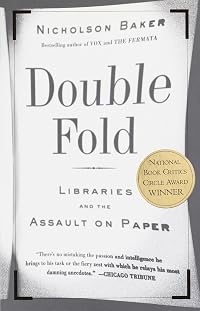
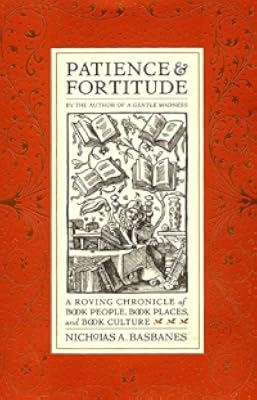




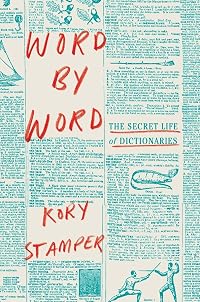

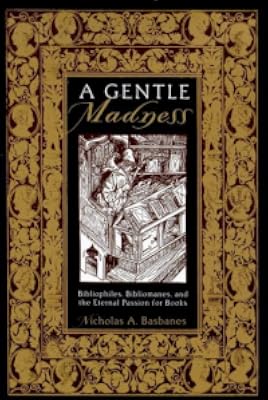
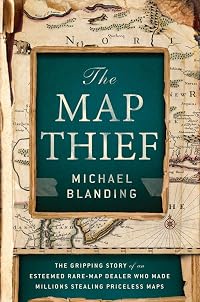
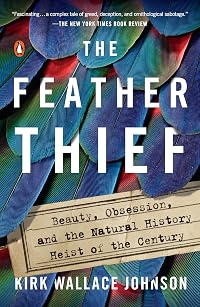




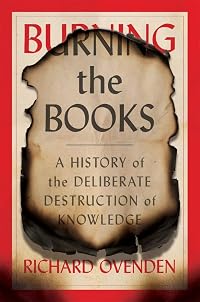

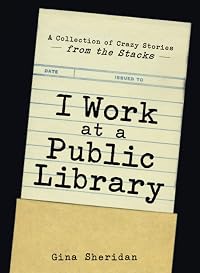

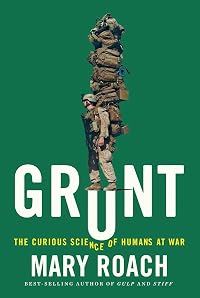

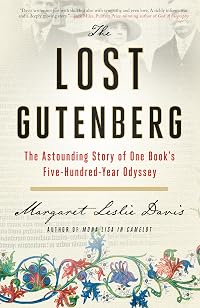


Member Recommendations
Outwitting History: The Amazing Adventures of a Man Who Rescued a Million Yiddish Books by Aaron Lansky
Sandydog1 'the same story, 'cept suburban Long Island isn't as "sporty" as Mali...
Member Reviews
Some days I just feel like screaming.
Reading Joshua Hammer's story about how Abel Kadeem Haidara risked life and limb to save hundreds of thousands of books and manuscripts from destruction at the hands of Al Qaeda operatives is one of those stories that just stops me in my tracks.
Haidara follows in the steps of his near mythical father in finding, fixing, cataloguing, and preserving Arabic books and manuscripts which reach back into the early days of Islam and the origins of Empire in West Central Africa.
And when the collection appears threatened by an Arabist coup, he takes matters into his own hands by coopting friends and family to move the collection to a safe haven.
That such world treasures are at risk boils my blood. Reading as show more Haidara has to resort to bribes to protect the collection drives me to the edge. These people ought to get on their knees and thank the man, not threaten him with extinction.
"Skip" Gates plays a cameo in this story as an important link to the west and western foundations for protecting the heritage.
Equally as valuable in this story are the close-up portraits of the jihadis who take over Timbuktu with their own brand of Salafist Islam. That each of the leaders has a unique personal, sometimes political or cultural agenda shouldn't come as a surprise. History and colonialism plays as big a role in this story as the Islamist revivals.
Here we have principally Sunni financing with a little kidnapping, drug running, sabotage, and smuggling mixed in for good measure. All elements that we see playing themselves out in Afghanistan, Iraq, and Yemen.
And there is the settling of scores aplenty.
This is a near lawless part of the world. I don't see how you separate out religion from domestic corruption and centuries of tribal behaviours.
I don't live in one of these hot, dangerous places but if I did I'd probably keep my head low. show less
Reading Joshua Hammer's story about how Abel Kadeem Haidara risked life and limb to save hundreds of thousands of books and manuscripts from destruction at the hands of Al Qaeda operatives is one of those stories that just stops me in my tracks.
Haidara follows in the steps of his near mythical father in finding, fixing, cataloguing, and preserving Arabic books and manuscripts which reach back into the early days of Islam and the origins of Empire in West Central Africa.
And when the collection appears threatened by an Arabist coup, he takes matters into his own hands by coopting friends and family to move the collection to a safe haven.
That such world treasures are at risk boils my blood. Reading as show more Haidara has to resort to bribes to protect the collection drives me to the edge. These people ought to get on their knees and thank the man, not threaten him with extinction.
"Skip" Gates plays a cameo in this story as an important link to the west and western foundations for protecting the heritage.
Equally as valuable in this story are the close-up portraits of the jihadis who take over Timbuktu with their own brand of Salafist Islam. That each of the leaders has a unique personal, sometimes political or cultural agenda shouldn't come as a surprise. History and colonialism plays as big a role in this story as the Islamist revivals.
Here we have principally Sunni financing with a little kidnapping, drug running, sabotage, and smuggling mixed in for good measure. All elements that we see playing themselves out in Afghanistan, Iraq, and Yemen.
And there is the settling of scores aplenty.
This is a near lawless part of the world. I don't see how you separate out religion from domestic corruption and centuries of tribal behaviours.
I don't live in one of these hot, dangerous places but if I did I'd probably keep my head low. show less
The underlying story here is fascinating: illuminated manuscripts representing muslim thinking through the ages are strewn about as family heirlooms in Mali surrounding the area of Timbuktu. Initially scattered in the face of French colonialism that resisted evidence that Africans and Muslims were highly intelligent with a pre-existing deep culture, many of the manuscripts were being ravaged by time and the elements. A single man, Abdel Kader Haidara, heir to his father's own massive collection, was recruited to save the manuscripts and house them in a formal library in Timbuktu. As a native, armed with his knowledge of the local culture he manages to ingratiate himself and buy back manuscripts. As a well-spoken, well-read individual he show more also manages to ingratiate himself with NGO funders to plan and build a climate-controlled building in Timbuktu to house the documents (despite building the first library on a floodplain by accident and having to ask all of his funders to refund him!) Then Al-Qaeda invades Timbuktu and wants to destroy the manuscripts as they are largely Sufi in origin and have a more nuanced approach to Muslim law. Abdel, aided by his family, "Emily" (Stephanie Diakité, for some reason her real name is obscured but her bibliography is listed, which confused the heck out of me) and crowdfunding to evacuate the manuscripts to safety.
This is a great story. Unfortunately, this is also about all you get of the story in over 300 pages of the Bad-Ass Librarians of Timbuktu, which probably would have been better if left as a longform article.
It's not all bad: I learned a lot about the major players in Al Qaeda in the Islamic Mahgreb, Islamic and North African history, and the Tuareg ethnic group, which is something I wouldn't have otherwise been exposed to and it was interesting. But the writing style really got to me: a frequent complaint I have of popular nonfiction is it is often multiple longform articles strung together, which requires a strong editor to make it cohere. The Bad-Ass Librarians is the most flawed book in this direction that I've ever read: characters would be introduced and discussed in four or five chapters and then all of a sudden at their sixth mention would get several pages of backstory, much of it redundant to their shorter previous introductions. Acronyms would remain undefined for their first ten mentions then arbitrarily expanded on the 11th. This was particularly unwieldy because I think some parts of the book were originally from unrelated articles and plopped down unedited in the book, which made the whole thing feel very incoherent. Remember the story that I told you was the ostensible premise above? Hammer goes over a third of the book in the middle without mentioning a single person or concept from it, instead giving us the entire backstory of a terrorist who never turns out to be related.
My final complaint is that Hammer's self-insertion is really distracting. I love self-insertion in non-fiction (says the girl who's read everything Mary Roach has ever written), but Hammer does it in a way I found intrusive, perhaps because I was frustrated with his diversion from his premise. We hear what he was thinking about while he rode a boat down a river to meet with a source, and what type of iced tea he drank while sitting in a hotel lobby to meet with another source and I did not find it evocative of Northern Africa or introspective I found it completely useless noise.
So overall, these is a really weird book: I'm glad I read it because I learned so much about a region and a history that I had little prior knowledge, but I found it extremely frustrating to read. show less
This is a great story. Unfortunately, this is also about all you get of the story in over 300 pages of the Bad-Ass Librarians of Timbuktu, which probably would have been better if left as a longform article.
It's not all bad: I learned a lot about the major players in Al Qaeda in the Islamic Mahgreb, Islamic and North African history, and the Tuareg ethnic group, which is something I wouldn't have otherwise been exposed to and it was interesting. But the writing style really got to me: a frequent complaint I have of popular nonfiction is it is often multiple longform articles strung together, which requires a strong editor to make it cohere. The Bad-Ass Librarians is the most flawed book in this direction that I've ever read: characters would be introduced and discussed in four or five chapters and then all of a sudden at their sixth mention would get several pages of backstory, much of it redundant to their shorter previous introductions. Acronyms would remain undefined for their first ten mentions then arbitrarily expanded on the 11th. This was particularly unwieldy because I think some parts of the book were originally from unrelated articles and plopped down unedited in the book, which made the whole thing feel very incoherent. Remember the story that I told you was the ostensible premise above? Hammer goes over a third of the book in the middle without mentioning a single person or concept from it, instead giving us the entire backstory of a terrorist who never turns out to be related.
My final complaint is that Hammer's self-insertion is really distracting. I love self-insertion in non-fiction (says the girl who's read everything Mary Roach has ever written), but Hammer does it in a way I found intrusive, perhaps because I was frustrated with his diversion from his premise. We hear what he was thinking about while he rode a boat down a river to meet with a source, and what type of iced tea he drank while sitting in a hotel lobby to meet with another source and I did not find it evocative of Northern Africa or introspective I found it completely useless noise.
So overall, these is a really weird book: I'm glad I read it because I learned so much about a region and a history that I had little prior knowledge, but I found it extremely frustrating to read. show less
Alternate title: “How a Muslim Polygamist Managed to ‘Shame’ and ‘Cajole’ the West into donating money to save Islamic Manuscripts Whose Messages about Inclusivity and Tolerance Are Repeatedly and Systematically Ignored by Other Muslims.” Like other reviewers, I’m conflicted about this book - the title made it seem like it’d be right up my alley. I am very glad these manuscripts were saved from destruction by fundamentalists who despise erudition and learning in favor of an impoverished, murderous interpretation of “God’s Will,” but it’s a shame that the main protagonist manages to decry the West while still taking its money (and being perplexed that his first wife opposed his second, polygamous marriage). Is he show more correct that there is much, much more to Islam and its vast, rich cultural and intellectual heritage than jihadi f*ckwits? Absolutely, but I hope you were aware of that before reading this book. I don’t know - I’m really torn between a high two star and a super low three star rating. It was a chance for me to learn more about the origin and progress of Muslim fundamentalism in Mali and nearby, so that was worthwhile. But overall, meh. I gave it the two star, call it 2.4. show less
A book of great immediacy, and an interesting vision of what shifts the retention of knowledge might have to sink to in the face of religious prejudice. Mr. Hammer has an essentially journalistic approach to his account of the period of history which passed in Mali a few years past. In the face of a very fundamentalist uprising against the government of the sub-Saharan state of Mali, the inhabitants of the famous city of Timbuktu were forced to flee, and smuggle their hoarded manuscripts, at the peril of their lives, or of personal mutilation. The prose is clear, and the escapes hairbreadth. So, it is compelling reading, and a cautionary tale in an age of increasing tendencies towards theocracy in Europe and the Americas.
I know talking about Al-Queda and the Taliban was necessary for context, but I would have liked less of that and more of the librarians and the manuscripts. To me, the the title verges on “false advertising”. For much of the book, the librarians and the manuscripts they worked so hard to save aren't even mentioned. If this book had been written by a librarian or a manuscript scholar, it would have been very different. I would have liked that.
Timbuktu has long been used in slang to refer to the middle of nowhere, so I enjoyed learning that Timbuktu was once a center of Islamic scholarship. I also enjoyed learning about Tuareg music and the Festival in the Desert. And especially, I greatly admire the bravery and sense of history that show more Abdel Kader Haidara exemplifies. show less
Timbuktu has long been used in slang to refer to the middle of nowhere, so I enjoyed learning that Timbuktu was once a center of Islamic scholarship. I also enjoyed learning about Tuareg music and the Festival in the Desert. And especially, I greatly admire the bravery and sense of history that show more Abdel Kader Haidara exemplifies. show less
The title of this book is misleading. As much, if not more, of Joshua Hammer's book is about the rise of radical Islamism in northern Mali as it is about the manuscripts of Timbuktu and their preservation. I appreciate the necessity of providing context as to why the manuscripts were threatened in the first place, and the difficulty of interviewing many of the people who were involved in the rescue operation—after all, why talk to a western reporter if you know that's going to draw the attention of Al-Qaeda to you?
But the fact that even the plural in the title (librarians) was a bit misleading got frustrating—only one librarian, Abdel Kader Haidara, is interviewed or discussed in any depth, and only perhaps one other, to my show more recollection, interviewed at all. Surely there are other employees of the Ahmed Baba Institute or the Mamma Haidara Library with fascinating stories to tell? Or members of the families of Timbuktu who had safeguarded the manuscripts for generations? A single Malian woman?
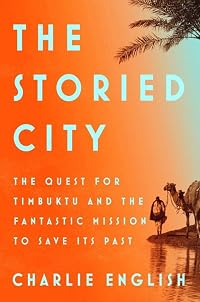
If you want to read a book on the manuscripts of Timbuktu, I'd recommend Charlie English's more nuanced The Storied City: The Quest for Timbuktu and the Fantastic Mission to Save Its Past instead. show less
But the fact that even the plural in the title (librarians) was a bit misleading got frustrating—only one librarian, Abdel Kader Haidara, is interviewed or discussed in any depth, and only perhaps one other, to my show more recollection, interviewed at all. Surely there are other employees of the Ahmed Baba Institute or the Mamma Haidara Library with fascinating stories to tell? Or members of the families of Timbuktu who had safeguarded the manuscripts for generations? A single Malian woman?
If you want to read a book on the manuscripts of Timbuktu, I'd recommend Charlie English's more nuanced The Storied City: The Quest for Timbuktu and the Fantastic Mission to Save Its Past instead. show less
Bad-Ass is the appropriate adjective here, wow.
In a story that's only a moment from being current events, learn about the improbable yet actually true story of how Abdel Kader Haidera rescued ~95% of Timbuktu's precious manuscripts (hundreds of thousands of volumes) from destruction by jihadis. Haidera's bad-assery begins long before occupation of Mali by Al Qaeda in the Islamic Mahgreb (AQIM) as a young man, searching out manuscripts in dusty villages and landing overseas grants to build state-of-the-art restoration facilities.
I'll be honest- before this book, I was only dimly aware of how much math, science, and culture were generated in medieval MENA beyond it existing, but wow. The vibrant literature and depth make it *that* much show more more irritating when I come across online comments implying all Islam "encourages followers to kill as many people as possible" or are backwards in some way- that'd be like assuming all of Christianity is similar to how a sect like Westboro Baptist behaves.
A very timely read, and definitely does it's job of a) highlighting Haidera as the bad-ass librarian he is, b) informing Western readers like me about these cultural gems in need of preservation, and c) pointing out again that the main victims of radical Islamic terror are Muslims, so as much as people handwring here over locking international doors out of safety concerns, our fears are pale in comparison to the threat of mutilation, death, and cultural destruction MENA citizens face daily. The only thing I found lacking was pictures of manuscripts- I understand they're in storage, but descriptions only go so far! show less
In a story that's only a moment from being current events, learn about the improbable yet actually true story of how Abdel Kader Haidera rescued ~95% of Timbuktu's precious manuscripts (hundreds of thousands of volumes) from destruction by jihadis. Haidera's bad-assery begins long before occupation of Mali by Al Qaeda in the Islamic Mahgreb (AQIM) as a young man, searching out manuscripts in dusty villages and landing overseas grants to build state-of-the-art restoration facilities.
I'll be honest- before this book, I was only dimly aware of how much math, science, and culture were generated in medieval MENA beyond it existing, but wow. The vibrant literature and depth make it *that* much show more more irritating when I come across online comments implying all Islam "encourages followers to kill as many people as possible" or are backwards in some way- that'd be like assuming all of Christianity is similar to how a sect like Westboro Baptist behaves.
A very timely read, and definitely does it's job of a) highlighting Haidera as the bad-ass librarian he is, b) informing Western readers like me about these cultural gems in need of preservation, and c) pointing out again that the main victims of radical Islamic terror are Muslims, so as much as people handwring here over locking international doors out of safety concerns, our fears are pale in comparison to the threat of mutilation, death, and cultural destruction MENA citizens face daily. The only thing I found lacking was pictures of manuscripts- I understand they're in storage, but descriptions only go so far! show less
Members
- Recently Added By
Lists

Books about Books
149 works; 24 members

Best books about books
209 works; 106 members

Africa
109 works; 8 members

Shaykh Hamza's Book Recommendations
439 works; 3 members

Tour of Africa
54 works; 2 members

Books Read in 2023
5,547 works; 145 members
Author Information

16+ Works 2,501 Members
Joshua Hammer is the New York Times bestselling author of The Bad-Ass Librarians of Timbuktu. He has written for the New York Times Magazine, GQ, Smithsonian, the Atlantic, the New Yorker, National Geographic, and Outside. He lives in Berlin.
Some Editions
Awards and Honors
Common Knowledge
- Canonical title*
- Hardcorowi bibliotekarze z Timbuktu : historia ludzi, którzy przechytrzyli terrorystów Al-Kaidy
- Original title
- The bad-ass librarians of Timbuktu : and their race to save the world's most precious manuscripts
- Alternate titles
- La biblioteca segreta di Timbuctù; Los contrabandistas de libros
- Original publication date
- 2016-04
- People/Characters
- Abdel Kader Haidara; Abdelhamid Abou Zeid; Mahmoud Zouber; Mohammed Ansar, "Manny"; Ansar Dine; Mokhtar Belmokhtar (show all 20); Emily Brady; Iyad Ag Ghali; Vicki Huddleston; Amadou Toumani Touré; Charles F. Wald, "Chuck"; Hassan Mohammed Al Wazzanb Al Zayati; Mansa Musa; Sunni Ali; Askia Mohammed Touré; Ahmed Baba Al Massufi Al Timbukti; Muammar al-Gaddafi; Abdelmalek Droukdel; Carter Ham; François Hollande
- Important places
- Timbuktu, Mali; Bamako, Mali; Sahara
- Dedication
- For Cordula, Max, Nico, and Tom
- First words
- Prologue
He shifted nervously in the front passenger seat of the four-wheel-drive vehicle as it approached the southern exit of the city.
Abdel Kader Haidara was a small boy when he first learned about the hidden treasures of Timbuktu. - Last words
- (Click to show. Warning: May contain spoilers.)The manuscript had one last journey ahead of it—back to Timbuktu—though when exactly that would take place, not even Haidara could tell.
- Publisher's editor
- Painton, Priscilla
- Blurbers
- Anderson, Jon Lee; Hochschild, Adam; Anderson, Scott; Demick, Barbara; Wilentz, Amy
- Original language
- English
*Some information comes from Common Knowledge in other languages. Click "Edit" for more information.
Classifications
- Genres
- General Nonfiction, History, Nonfiction, Religion & Spirituality
- DDC/MDS
- 025.8 — Computer science, information & general works Library & information sciences Administration; Departments Preservation and Conservation
- LCC
- Z659 .H22 — Bibliography, Library Science and Information Resources Book industries and trade Freedom of the press. Censorship
- BISAC
Statistics
- Members
- 1,911
- Popularity
- 11,181
- Reviews
- 80
- Rating
- (3.53)
- Languages
- 6 — English, French, Italian, Japanese, Polish, Spanish
- Media
- Paper, Audiobook, Ebook
- ISBNs
- 17
- ASINs
- 4