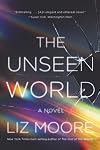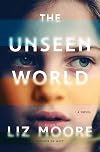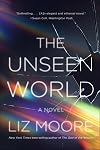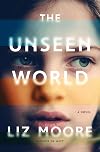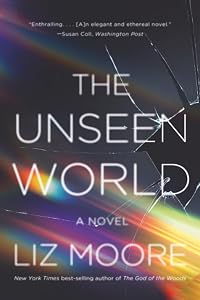
The Unseen World
by Liz Moore
On This Page
Description
"The moving story of a daughter's quest to discover the truth about her beloved father's hidden past. Ada Sibelius is raised by David, her brilliant, eccentric, socially inept single father, who directs a computer science lab in 1980s-era Boston. Home-schooled, Ada accompanies David to work every day; by twelve, she is a painfully shy prodigy. The lab begins to gain acclaim at the same time that David's mysterious history comes into question. When his mind begins to falter, leaving Ada show more virtually an orphan, she is taken in by one of David's colleagues. Soon after she embarks on a mission to uncover her father's secrets: a process that carries her from childhood to adulthood. What Ada discovers on her journey into a virtual universe will keep the reader riveted until The Unseen World's heart-stopping, fascinating conclusion"--Provided by publisher. show lessTags
Recommendations

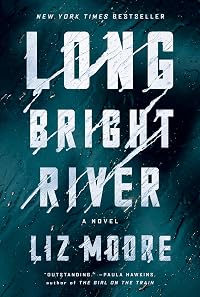







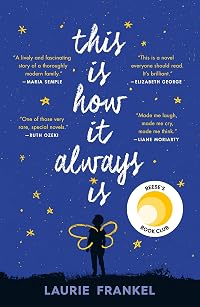
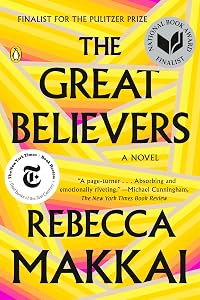

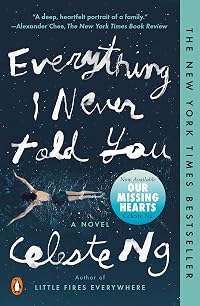
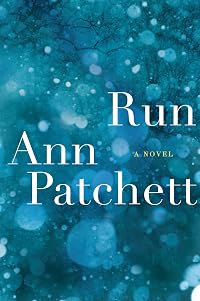









Member Recommendations
Member Reviews
Fabulous and engaging novel. I although there were some flaws in the execution, which may be unavoidable given the premise, I really enjoyed this novel and the way it explores learning and memory, interleaving both AI and machine learning with human learning, memory and experiences. Ada Sibelius is an only child, reared in unexpected ways by a brilliant father who runs a lab at BIT (a thinly veiled MIT). Ada's father teaches her much the same way he teaches a computer, and do not mean this is without compassion. But there are unavoidable gaps. Although the gaps in this book are extreme in one sense -- David dies and it turns out he was not exactly who he said he was, although his brilliance was evident -- these examples of undoing and show more redoing are part of the exploration of learning and memory and the very differences between how a machine learns and how a human learns as well as what each can and cannot accomplish. The novel felt realistically set in its worlds, and I have some peripheral experience with MIT in the 1980s through the aughts. The novel, was clever, emotionally resonant, and engaging. I'm happy to have read it. show less
"The Unseen World" was one of the most pleasurable reading experiences I've had this year. I connected with it on many levels. It wasn't just a storyline I was following or a character that I could vicariously live through. It was much more immersive that."The Unseen World" took up residence in my head and my heart. It's been weeks since I finished reading it and I'm still thinking about the ideas it sparked, still re-experiencing some of the emotions.
Liz Moore has a talent for taking the small things that make up our day to day lives, our habits of speech, our family rituals, the jokes we share, the social awkwardness we cause, the kindnesses we show and the cruelties we are capable of and using them to build up a structure so steeped show more in empathy and so fundamentally honest and human that, at times, it is almost too much to cope with.
There are no heroes or villains in this book, just people, struggling to do the best they can and sometimes making a mess of it.
The predominant emotion that "The Unseen World" evoked in me was compassion. Compassion for Ada the young, preciously bright, daughter of an intellectually brilliant but socially inept man who she always refers to as "David". I could see she was loved and that she loved the adults around her and that working with them in her father's lab fed her intellect in important ways.but I mourned the loss of her childhood, worried about her isolation and her vulnerability and felt angry at what seemed like a negligence with respect to her happiness and her hunger for contact. Compassion for David, who has given his life to researching machine learning and natural language programming and yet who is barely able to communicate with those he loves the most about the things that are most important to him.Compassion for all of the characters in the book who are unable to bridge the distance between themselves and people that they love.
Yet this is not a sentimental book. It takes, if anything, a very scientific and logical view of the world.David's lab is researching machine learning and natural language programming. Looked at through this lens, communication is a puzzle to be solved, meaning is something that is acquired and altered through experience, and memories are the fundamental building blocks of identity.
Liz Moore makes the relationship between identity, language and memory the focus of much of the book. Her characters are often more comfortable talking to the machine in the lab than to each other. When David starts to lose his memories, his identity starts to slide away with it. Ada recalibrates her language to try and change her identity at school but cannot let go of the scientific framework she has been raised to think within.
The only point where I stumbled in the book was when the timelines of the young Ada and the older Ada started to interweave. It felt clumsy and disruptive. It disturbed my image of who Ada was. It took me a while to realise that this disruption was there to make me see that, to some extent, Ada's identity changes over time as she adapts to her experiences and modifies her memories. By the end of the book, I felt the dual timelines had enriched my experience of the book by giving me a less static and less linear view of identity.
At the start of the book, I thought that the unseen world of the title was the one being laid out in David's lab; the links between language and meaning and knowledge. It seemed as though what was unseen were the ontologies that allow the machine to classify information and structure relationships in a way that creates knowledge.
By the end of the book, I felt that the primacy of determining meaning by using ontology and epistemology was being challenged.and that the unseen world was fundamentally phenomenological, consisting of the emotional connections between people and how their emotions shape their actions.
Over time, Ada seems to come to believe that we are not defined by what we know but by who we love, who we hate, who we betray and what we do when we fail ourselves and others. She sees ontology as the way in which a machine might learn about the world but sees phenomenology as the way humans learn about the world. Towards the end of the books, Ada reflect on the fact that
“Only humans can hurt one another, Ada thought; only humans falter and betray one another with a stunning, fearsome frequency. As David's family had done to him; as David had done to her. And Ada would do it too. She would fail other people throughout her life, inevitably, even those she loved best.”
"The Unseen World" is skillfully narrated by Lisa Flanagan. Click on the SourdCloud link below to here a sample of her work
https://soundcloud.com/whyy-public-media/the-unseen-world show less
Liz Moore has a talent for taking the small things that make up our day to day lives, our habits of speech, our family rituals, the jokes we share, the social awkwardness we cause, the kindnesses we show and the cruelties we are capable of and using them to build up a structure so steeped show more in empathy and so fundamentally honest and human that, at times, it is almost too much to cope with.
There are no heroes or villains in this book, just people, struggling to do the best they can and sometimes making a mess of it.
The predominant emotion that "The Unseen World" evoked in me was compassion. Compassion for Ada the young, preciously bright, daughter of an intellectually brilliant but socially inept man who she always refers to as "David". I could see she was loved and that she loved the adults around her and that working with them in her father's lab fed her intellect in important ways.but I mourned the loss of her childhood, worried about her isolation and her vulnerability and felt angry at what seemed like a negligence with respect to her happiness and her hunger for contact. Compassion for David, who has given his life to researching machine learning and natural language programming and yet who is barely able to communicate with those he loves the most about the things that are most important to him.Compassion for all of the characters in the book who are unable to bridge the distance between themselves and people that they love.
Yet this is not a sentimental book. It takes, if anything, a very scientific and logical view of the world.David's lab is researching machine learning and natural language programming. Looked at through this lens, communication is a puzzle to be solved, meaning is something that is acquired and altered through experience, and memories are the fundamental building blocks of identity.
Liz Moore makes the relationship between identity, language and memory the focus of much of the book. Her characters are often more comfortable talking to the machine in the lab than to each other. When David starts to lose his memories, his identity starts to slide away with it. Ada recalibrates her language to try and change her identity at school but cannot let go of the scientific framework she has been raised to think within.
The only point where I stumbled in the book was when the timelines of the young Ada and the older Ada started to interweave. It felt clumsy and disruptive. It disturbed my image of who Ada was. It took me a while to realise that this disruption was there to make me see that, to some extent, Ada's identity changes over time as she adapts to her experiences and modifies her memories. By the end of the book, I felt the dual timelines had enriched my experience of the book by giving me a less static and less linear view of identity.
At the start of the book, I thought that the unseen world of the title was the one being laid out in David's lab; the links between language and meaning and knowledge. It seemed as though what was unseen were the ontologies that allow the machine to classify information and structure relationships in a way that creates knowledge.
By the end of the book, I felt that the primacy of determining meaning by using ontology and epistemology was being challenged.and that the unseen world was fundamentally phenomenological, consisting of the emotional connections between people and how their emotions shape their actions.
Over time, Ada seems to come to believe that we are not defined by what we know but by who we love, who we hate, who we betray and what we do when we fail ourselves and others. She sees ontology as the way in which a machine might learn about the world but sees phenomenology as the way humans learn about the world. Towards the end of the books, Ada reflect on the fact that
“Only humans can hurt one another, Ada thought; only humans falter and betray one another with a stunning, fearsome frequency. As David's family had done to him; as David had done to her. And Ada would do it too. She would fail other people throughout her life, inevitably, even those she loved best.”
"The Unseen World" is skillfully narrated by Lisa Flanagan. Click on the SourdCloud link below to here a sample of her work
https://soundcloud.com/whyy-public-media/the-unseen-world show less
(Audio) This novel, set in Savin Hill, Dorchester, Boston, is an intriguing combination of domestic drama, mystery and virtual reality. The narrator, Ada Sibelius, is the daughter of David, a single parent who runs an important lab at an institute, and as the story opens, his health is failing as he slides into dementia. As a thirteen year old, she cannot imagine the direction her life will take as his guidance falters. With the help of his lab assistant and her son, Ada leaves David's imaginative, intellectual ambit and begins a new life as a teenage in a local high school, with crushes and insecurities. She also needs to find out more about David's background and about the family who abandoned him. The time frames alternate between show more Ada the thirty year old tech wizard, who joins in the quest to invent avatars and other computer models; high school Ada, who tries to decipher a floppy disk left by her father, which holds clues to his background; and fifty-something Ada, whose lab brings formerly artificial intelligence to actual life. With the exception of a neatly tied up romance, the rest of the novel, and especially the spectacular ending, create a memorable narrative. show less
In my opinion, Liz Moore is one of the best current day storytellers. She weaves a plot that is compelling from beginning to end. You don’t know where you are going but are so willing to go there with her. I loved the characters in this book even though they were mostly scientists, except, of course, the dear librarian. She provided a softer sensibility. I wonder if she ever talked to ELIXIR? To say much about the plot would be to ruin the experience. I went in blind, but with the experience of having previously read Long Bright River which I loved. I may now need to be a Liz Moore completist!
Human beings have long been fascinated by artificial intelligence, creating a computer that can learn from us and even one day outstrip us. We worry about the effects of something like this and whether it would turn against us but even that concern doesn't slow us down from pursuing its creation. The fact that a technology like this could be used to capture something of a person, something of their very essence, especially once they themselves are nothing but a memory is incredibly enticing. Liz Moore's novel, The Unseen World, is set in the 1980s, when the idea of computers learning and expanding from that learning was much newer than it is now, the 2010s when technology had advanced well beyond the initial exploration of this idea, show more and the future when the technological frontier could be anything, but it is not just a novel about technology. It is a novel about people and relationship, love and learning, and the deliberate and accidental mistakes and betrayals that make people so very human.
Ada Sibelius is a child prodigy. Conceived by a surrogate and raised by her single father, David, she grows up in the local university's computer science lab where her father is a respected professor and researcher working on the artificial intelligence program ELIXIR, a language processing program. She is homeschooled by her father and her only friends are the graduate students at the lab and her father's close friend and colleague, Diana Liston. She adores her father, enjoys their intellectual fencing, and doesn't realize the extent of her unorthodox upbringing until the year she is twelve, when David starts showing signs of Alzheimer's. As David's condition deteriorates, Ada ultimately moves in with Liston and her sons and goes to school for the first time, having to learn what regular teenage life is like. Alternating with the story of David's decline and young Ada's sudden immersion in a "normal" life that is completely foreign to her is the story of adult Ada trying to solve the puzzle that David left her and uncover the myriad of secrets that bubble up as she tries to figure out who her father really was, not just to her, to his students, and to his pet project, but who he was in a wider sense. In searching for answers, Ada will also come to understand and know herself and others in her life better too.
This is a very slow moving novel and there's a lot of technical information that might cause the non-technical reader to stumble, especially early on as the story is just starting to build. But once the reader is invested in Ada, they will follow her in her journey, eager to understand the truth about David, wanting to know what he left her just as much as she does. This is very much a literary novel, an exploration into identity, how technology preserves or changes that identity, and the messiness and mistakes of human connection. The characters are not only smart, they are at least as interesting as the enigmas they all hope to solve. There are codes and puzzles woven throughout the novel, some obvious (trying to crack David's code), some less so (like Ada's puzzling out how to be a normal kid and have normal relationships) and smart readers will enjoy following the many trails to discovery and the ultimate unveiling at the end. There are touches of mystery and sci-fi combined with personal, human reality here that all come together in one masterfully done literary work. show less
Ada Sibelius is a child prodigy. Conceived by a surrogate and raised by her single father, David, she grows up in the local university's computer science lab where her father is a respected professor and researcher working on the artificial intelligence program ELIXIR, a language processing program. She is homeschooled by her father and her only friends are the graduate students at the lab and her father's close friend and colleague, Diana Liston. She adores her father, enjoys their intellectual fencing, and doesn't realize the extent of her unorthodox upbringing until the year she is twelve, when David starts showing signs of Alzheimer's. As David's condition deteriorates, Ada ultimately moves in with Liston and her sons and goes to school for the first time, having to learn what regular teenage life is like. Alternating with the story of David's decline and young Ada's sudden immersion in a "normal" life that is completely foreign to her is the story of adult Ada trying to solve the puzzle that David left her and uncover the myriad of secrets that bubble up as she tries to figure out who her father really was, not just to her, to his students, and to his pet project, but who he was in a wider sense. In searching for answers, Ada will also come to understand and know herself and others in her life better too.
This is a very slow moving novel and there's a lot of technical information that might cause the non-technical reader to stumble, especially early on as the story is just starting to build. But once the reader is invested in Ada, they will follow her in her journey, eager to understand the truth about David, wanting to know what he left her just as much as she does. This is very much a literary novel, an exploration into identity, how technology preserves or changes that identity, and the messiness and mistakes of human connection. The characters are not only smart, they are at least as interesting as the enigmas they all hope to solve. There are codes and puzzles woven throughout the novel, some obvious (trying to crack David's code), some less so (like Ada's puzzling out how to be a normal kid and have normal relationships) and smart readers will enjoy following the many trails to discovery and the ultimate unveiling at the end. There are touches of mystery and sci-fi combined with personal, human reality here that all come together in one masterfully done literary work. show less
Brilliant, heartfelt, and full of surprises.
(Full disclosure: I received a free electronic ARC for review through NetGalley.)
The work of the Steiner Lab, in simple terms, was to create more and more sophisticated versions of this kind of language-acquisition software. [...]
These applications of the software, however, were only a small part of what interested David, made him stay awake feverishly into the night, designing and testing programs. There was also the art of it, the philosophical questions that this software raised. The essential inquiry was thus: If a machine can convincingly imitate humanity—can persuade a human being of its kinship—then what makes it inhuman? What, after all, is human thought but a series of electrical show more impulses?
###
“What can I get you to eat, hon?” asked Liston, and rattled off a list of all the snacks of the 1980s that Ada was never permitted to have: canned pastas by Chef Boyardee, Fluffernutter sandwiches, fluorescent Kraft macaroni and cheese. In truth, Ada had never even heard of some of the food Liston offered her.
###
I was told to ask you something, said Ada finally.
I know, said ELIXIR. I’ve been waiting.
###
Ada Sibelius had something of an unconventional upbringing, beginning with her very conception. At the tender age of 45, Dr. David Sibelius - "director of a computer science laboratory at the Boston Institute of Technology, called the Bit, or the Byte if he was feeling funny" - decided that he wanted a child. Ada (named after one of David's favorite entries in the Encyclopædia Britannica) was born to a surrogate one year later. This was no small thing back then: 1971, to be exact.
In keeping with his eccentric nature, David decided to homeschool his daughter; or rather lab-school her. Ada accompanied David - as she called him - to work every day, where she was immersed in his world, in the language of mathematics, neurology, physics, philosophy, and computer science. In the absence of any biological relatives, David's colleagues - Charles-Robert, Hayato, Frank Halbert, and Diane Liston - became her extended family; his interests were hers. Ada learned to solve complex equations, decrypt puzzles, and present and defend theories. David filled composition books with the names of books, songs, pieces of artwork, and even wines that she should try one day; a cultured bucket list before its time. In many ways, their relationship was more like that of a teacher and his student than a father and his daughter.
At the Steiner Lab, David and his colleagues studied natural language processing and developed language-acquisition software. Their crowning achievement - David's second child, if you will - was ELIXIR (mmmm, magic!). Everyone at the lab - including Ada - took turns chatting with ELIXIR, to teach it the words and rules and complexities of language. The program was meant to acquire language the way that humans do, and learn it did. Slowly but surely, ELIXIR grew alongside Ada, evolving from garbled, nonsense text to a semi-eloquent conversationalist (albeit one who reflected the habits and speech patterns of its teachers). For Ada, ELIXIR was a confidant, a non-recoverable diary; she poured her heart and soul into ELIXIR, especially when things got bad.
When Ada was ten, David was diagnosed with Alzheimer’s disease - though he waited two years to tell his daughter, until the symptoms were too obvious to ignore. As David's condition continued to deteriorate, the authorities became involved: first the police, then the Boston Department of Children & Families, who required monthly visits and demanded that Ada be enrolled in an accredited school. Within a year, David was institutionalized and Ada, sent to live with Liston, who also took over the lab.
While transferring custody of Ada to Liston, a background check revealed some inconsistencies in David's history. David's parents reported him missing at the age of seventeen; and, while he eventually resurfaced through a letter, they never saw him again. Furthermore, Caltech had no record of a David Sibelius ever attending. Nor could attorneys find any record of David's arrangement with Ada's birth mother, Birdie Auerbach.
Was David a fraud? A baby-napper? A murderer? If he was going to steal someone's identity, why choose such a prominent family? And why not capitalize on the Sibelius family name? If David wasn't who he claimed to be, what became of the "real" David Sibelius? Where did Ada come from?
These questions threaten to upend Ada's life in ways both practical and metaphysical. David has always been the center of Ada's life - for her, he represents everything that is moral, safe, and good in the world - so to find out that he's been lying to her all this time shakes Ada to her very core. And she cannot turn to David for answers, for his mind is failing them both.
Yet Ada is not without hope: There's Miss Holmes, the kind and dedicated librarian who helps Ada troll through microfiche in search of answers. Gregory, the second-youngest Liston kid, who shares her love of science, math, and puzzles. And the mysterious floppy disc David gave her shortly before he disclosed his illness to her. An unassuming little thing, inscribed with a message: "Dear Ada, it said. A puzzle for you. With my love, your father, David Sibelius."
It will be twenty-odd years before David's mystery reveals itself to her - and to us. Luckily, this story has nothing if not a patient and compassionate teller.
The Unseen World is, in a word, brilliant: full of heart, empathy, history - and lots of geeky science stuff. The story starts out rather slowly: a portrait of an unusual childhood, marked by a father-daughter relationship that's both exhilarating and a little unhealthy. While Ada's intelligence and curiosity blossoms under David's unconventional tutelage, she lacks social skills (at least with kids her own age, a fact that becomes painfully apparent when she's forced into Queen of Angels Catholic school) and their relationship seems enmeshed and almost codependent at times. She readily accepts her father's likes and dislikes as her own, without forming her own opinion on anything. Or mostly: Ada craves normalcy, whereas David shuns it. Perhaps this is because the latter had it (and was found it sorely lacking), whereas the former never did (and when she does, she's rather ambivalent on the matter).
Oftentimes it feels as though David expects his child to bend and adapt and mold herself into his life, rather than adjusting his own life to accommodate her. Even as later revelations offer a kinder, gentler perspective on David's more questionable decisions, this thought remained with me; in many ways, David is a neglectful father.
Ada is forced to grow up before her time - well, even more than she's already done - with the onset of David's illness. The story transitions seamlessly into a coming-of-age story that's equally fascinating (see, e.g., the junk food excerpt above) and heart-wrenching. Of course the more normal growing pains are amplified by David's illness and likely death: gone is the father who wrote and directed Christmas plays at the lab, who gave Ada challenges and puzzles, who taught so many. Now David often resembles ELIXIR during its infancy, uttering non sequiturs when more complex and appropriate responses elude him. Ironically, Ada sometimes sees pieces of David - a favored phrase here, a grammatical tic there - in her talks with ELIXIR, which continue even after the rest of the lab has moved on.
Then, of course, there's the mystery that forms the core of the story, which is both more devastating and yet more benign than the places my imagination invariably led me. I don't want to say more, lest I ruin the surprise, but suffice it to say that The Unseen World has something for just about everyone: mystery, historical fiction, romance, STEM fiction, coming of age, speculative fiction, and social justice.
There is diversity like whoah here, woven into the very fabric of the story; diversity that doesn't quite present itself until the denouement, but was in fact hiding in plain sight the whole time. It's beautiful and heartbreaking and had me bawling my damn eyes out. Perhaps best of all, it casts a new light on Ada and David's relationship - particularly David's deception - one that adds nuance and complexity and, yes, understanding and maybe even forgiveness.
And the last chapter. THE LAST CHAPTER. I don't think I've read a more perfect ending in my entire life.
I honestly can't say enough good things about The Unseen World. Moore has created a story that's understated yet surprising; twisty-turny and lyrical and lovely. David, Liston, George, Ada, ELIXIR - these are characters who I won't soon forget (if ever).
http://www.easyvegan.info/2016/07/29/the-unseen-world-by-liz-moore/ show less
(Full disclosure: I received a free electronic ARC for review through NetGalley.)
The work of the Steiner Lab, in simple terms, was to create more and more sophisticated versions of this kind of language-acquisition software. [...]
These applications of the software, however, were only a small part of what interested David, made him stay awake feverishly into the night, designing and testing programs. There was also the art of it, the philosophical questions that this software raised. The essential inquiry was thus: If a machine can convincingly imitate humanity—can persuade a human being of its kinship—then what makes it inhuman? What, after all, is human thought but a series of electrical show more impulses?
###
“What can I get you to eat, hon?” asked Liston, and rattled off a list of all the snacks of the 1980s that Ada was never permitted to have: canned pastas by Chef Boyardee, Fluffernutter sandwiches, fluorescent Kraft macaroni and cheese. In truth, Ada had never even heard of some of the food Liston offered her.
###
I was told to ask you something, said Ada finally.
I know, said ELIXIR. I’ve been waiting.
###
Ada Sibelius had something of an unconventional upbringing, beginning with her very conception. At the tender age of 45, Dr. David Sibelius - "director of a computer science laboratory at the Boston Institute of Technology, called the Bit, or the Byte if he was feeling funny" - decided that he wanted a child. Ada (named after one of David's favorite entries in the Encyclopædia Britannica) was born to a surrogate one year later. This was no small thing back then: 1971, to be exact.
In keeping with his eccentric nature, David decided to homeschool his daughter; or rather lab-school her. Ada accompanied David - as she called him - to work every day, where she was immersed in his world, in the language of mathematics, neurology, physics, philosophy, and computer science. In the absence of any biological relatives, David's colleagues - Charles-Robert, Hayato, Frank Halbert, and Diane Liston - became her extended family; his interests were hers. Ada learned to solve complex equations, decrypt puzzles, and present and defend theories. David filled composition books with the names of books, songs, pieces of artwork, and even wines that she should try one day; a cultured bucket list before its time. In many ways, their relationship was more like that of a teacher and his student than a father and his daughter.
At the Steiner Lab, David and his colleagues studied natural language processing and developed language-acquisition software. Their crowning achievement - David's second child, if you will - was ELIXIR (mmmm, magic!). Everyone at the lab - including Ada - took turns chatting with ELIXIR, to teach it the words and rules and complexities of language. The program was meant to acquire language the way that humans do, and learn it did. Slowly but surely, ELIXIR grew alongside Ada, evolving from garbled, nonsense text to a semi-eloquent conversationalist (albeit one who reflected the habits and speech patterns of its teachers). For Ada, ELIXIR was a confidant, a non-recoverable diary; she poured her heart and soul into ELIXIR, especially when things got bad.
When Ada was ten, David was diagnosed with Alzheimer’s disease - though he waited two years to tell his daughter, until the symptoms were too obvious to ignore. As David's condition continued to deteriorate, the authorities became involved: first the police, then the Boston Department of Children & Families, who required monthly visits and demanded that Ada be enrolled in an accredited school. Within a year, David was institutionalized and Ada, sent to live with Liston, who also took over the lab.
While transferring custody of Ada to Liston, a background check revealed some inconsistencies in David's history. David's parents reported him missing at the age of seventeen; and, while he eventually resurfaced through a letter, they never saw him again. Furthermore, Caltech had no record of a David Sibelius ever attending. Nor could attorneys find any record of David's arrangement with Ada's birth mother, Birdie Auerbach.
Was David a fraud? A baby-napper? A murderer? If he was going to steal someone's identity, why choose such a prominent family? And why not capitalize on the Sibelius family name? If David wasn't who he claimed to be, what became of the "real" David Sibelius? Where did Ada come from?
These questions threaten to upend Ada's life in ways both practical and metaphysical. David has always been the center of Ada's life - for her, he represents everything that is moral, safe, and good in the world - so to find out that he's been lying to her all this time shakes Ada to her very core. And she cannot turn to David for answers, for his mind is failing them both.
Yet Ada is not without hope: There's Miss Holmes, the kind and dedicated librarian who helps Ada troll through microfiche in search of answers. Gregory, the second-youngest Liston kid, who shares her love of science, math, and puzzles. And the mysterious floppy disc David gave her shortly before he disclosed his illness to her. An unassuming little thing, inscribed with a message: "Dear Ada, it said. A puzzle for you. With my love, your father, David Sibelius."
It will be twenty-odd years before David's mystery reveals itself to her - and to us. Luckily, this story has nothing if not a patient and compassionate teller.
The Unseen World is, in a word, brilliant: full of heart, empathy, history - and lots of geeky science stuff. The story starts out rather slowly: a portrait of an unusual childhood, marked by a father-daughter relationship that's both exhilarating and a little unhealthy. While Ada's intelligence and curiosity blossoms under David's unconventional tutelage, she lacks social skills (at least with kids her own age, a fact that becomes painfully apparent when she's forced into Queen of Angels Catholic school) and their relationship seems enmeshed and almost codependent at times. She readily accepts her father's likes and dislikes as her own, without forming her own opinion on anything. Or mostly: Ada craves normalcy, whereas David shuns it. Perhaps this is because the latter had it (and was found it sorely lacking), whereas the former never did (and when she does, she's rather ambivalent on the matter).
Oftentimes it feels as though David expects his child to bend and adapt and mold herself into his life, rather than adjusting his own life to accommodate her. Even as later revelations offer a kinder, gentler perspective on David's more questionable decisions, this thought remained with me; in many ways, David is a neglectful father.
Ada is forced to grow up before her time - well, even more than she's already done - with the onset of David's illness. The story transitions seamlessly into a coming-of-age story that's equally fascinating (see, e.g., the junk food excerpt above) and heart-wrenching. Of course the more normal growing pains are amplified by David's illness and likely death: gone is the father who wrote and directed Christmas plays at the lab, who gave Ada challenges and puzzles, who taught so many. Now David often resembles ELIXIR during its infancy, uttering non sequiturs when more complex and appropriate responses elude him. Ironically, Ada sometimes sees pieces of David - a favored phrase here, a grammatical tic there - in her talks with ELIXIR, which continue even after the rest of the lab has moved on.
Then, of course, there's the mystery that forms the core of the story, which is both more devastating and yet more benign than the places my imagination invariably led me. I don't want to say more, lest I ruin the surprise, but suffice it to say that The Unseen World has something for just about everyone: mystery, historical fiction, romance, STEM fiction, coming of age, speculative fiction, and social justice.
There is diversity like whoah here, woven into the very fabric of the story; diversity that doesn't quite present itself until the denouement, but was in fact hiding in plain sight the whole time. It's beautiful and heartbreaking and had me bawling my damn eyes out. Perhaps best of all, it casts a new light on Ada and David's relationship - particularly David's deception - one that adds nuance and complexity and, yes, understanding and maybe even forgiveness.
And the last chapter. THE LAST CHAPTER. I don't think I've read a more perfect ending in my entire life.
I honestly can't say enough good things about The Unseen World. Moore has created a story that's understated yet surprising; twisty-turny and lyrical and lovely. David, Liston, George, Ada, ELIXIR - these are characters who I won't soon forget (if ever).
http://www.easyvegan.info/2016/07/29/the-unseen-world-by-liz-moore/ show less
Liz Moore’s novel, THE UNSEEN WORLD, is a remarkably intelligent exploration of intelligence, both real and artificial. Alan Turing, who in many ways seems to have been a model for Moore’s character, David Sibelius, seemed optimistic that man would eventually create human-like intelligence in a machine. “What, after all, is human thought but a series of electrical impulses?” The now famous Turing Test holds that "A computer would deserve to be called intelligent if it could deceive a human into believing that it was human."
Moore explores connections between humans and computers in her novel and suggests that the analogy is anything but perfect. After all, being able to imitate human thought does not make computers human. As show more Noam Chomsky somewhat facetiously points out: “Thinking is a human feature. Will AI (i.e., artificial intelligence) someday really think? That's like asking if submarines swim. If you call it swimming then robots will think, yes.”
Moore covers multiple themes in her story. A technological track follows early efforts to make computers imitate human thought by interacting with them, what technological advancements in artificial intelligence may look like in the future and the nature of human communication. Alongside all of this tech talk, Moore maintains her focus on flawed human relationships, like children with parents, scientists with other scientists and between children. Her main emphases are identity and memory. Memories can be rigid and almost infallible in machines, but they prove to be fragile and unreliable in humans.
Moore’s technological and human themes complement each other nicely while circling around her central question of the nature of human thought and whether machines could generate it. An appropriate epigram for this novel might have been a quote from Jean Baudrillard. “The sad thing about artificial intelligence is that it lacks artifice and therefore intelligence.” Moore’s excellent novel lacks neither.
The protagonist is Ada Sibelius. Her somewhat geeky father, David, is raising her in a way that resembles how one might program a computer and her behavior seems to resemble a computer in many ways. She was born from a surrogate; she is home-schooled and is intellectually gifted. She has no connections with other children—her only friends are adult scientists—and is awkward around her peers. Outside of her father, her closest friend seems to be ELIXIR, a program developed by David aimed at simulating human conversation.
The plot evolves from issues related to Ada’s father. David is incapacitated by early onset dementia and Ada is forced to join the real world when Diana Liston, her father’s closest friend and associate, takes her in. Liston and her family have all the strengths and flaws exhibited by normal families of that time and place. David’s identity proves to be troubling, however. Ada seeks to solve the mystery of his identity but ultimately fails. She moves on with a career as a computer scientist and eventually works in Silicon Valley on—you guessed it—AI. Her father leaves her a clue that eventually leads her to the final solution of the mystery of his identity. One cannot reveal the details without spoiling the story, but it is totally engaging and satisfying.
The novel is set in various locations but none is more important than the Savin Hill section of Dorchester, Massachusetts. Moore is quite familiar with this working class neighborhood and exquisitely evokes what living there would have been like in the 80’s. As a brief resident of Savin Hill during the late 60’s, I can vouch for the authenticity of her portrayal of the place.
Moore’s narrative is suspenseful, if slow in places. Her portrayal of the 80’s in Boston and the somewhat driven lifestyle of high-stakes science were pitch perfect. David ran a lab at the fictitious Boston Institute of Technology (BIT), which is a thinly disguised MIT. Once again, personal experience confirms the accuracy of Moore’s portrayal of how science was done at MIT at the time. The portrayals of Ada’s awkward introduction to teenage angst, David’s backstory and his decline into full-blown dementia are all quite riveting. One quibble is the futuristic ending, which seemed contrived, open to debate and totally unnecessary. Otherwise the novel was a satisfying read. show less
Moore explores connections between humans and computers in her novel and suggests that the analogy is anything but perfect. After all, being able to imitate human thought does not make computers human. As show more Noam Chomsky somewhat facetiously points out: “Thinking is a human feature. Will AI (i.e., artificial intelligence) someday really think? That's like asking if submarines swim. If you call it swimming then robots will think, yes.”
Moore covers multiple themes in her story. A technological track follows early efforts to make computers imitate human thought by interacting with them, what technological advancements in artificial intelligence may look like in the future and the nature of human communication. Alongside all of this tech talk, Moore maintains her focus on flawed human relationships, like children with parents, scientists with other scientists and between children. Her main emphases are identity and memory. Memories can be rigid and almost infallible in machines, but they prove to be fragile and unreliable in humans.
Moore’s technological and human themes complement each other nicely while circling around her central question of the nature of human thought and whether machines could generate it. An appropriate epigram for this novel might have been a quote from Jean Baudrillard. “The sad thing about artificial intelligence is that it lacks artifice and therefore intelligence.” Moore’s excellent novel lacks neither.
The protagonist is Ada Sibelius. Her somewhat geeky father, David, is raising her in a way that resembles how one might program a computer and her behavior seems to resemble a computer in many ways. She was born from a surrogate; she is home-schooled and is intellectually gifted. She has no connections with other children—her only friends are adult scientists—and is awkward around her peers. Outside of her father, her closest friend seems to be ELIXIR, a program developed by David aimed at simulating human conversation.
The plot evolves from issues related to Ada’s father. David is incapacitated by early onset dementia and Ada is forced to join the real world when Diana Liston, her father’s closest friend and associate, takes her in. Liston and her family have all the strengths and flaws exhibited by normal families of that time and place. David’s identity proves to be troubling, however. Ada seeks to solve the mystery of his identity but ultimately fails. She moves on with a career as a computer scientist and eventually works in Silicon Valley on—you guessed it—AI. Her father leaves her a clue that eventually leads her to the final solution of the mystery of his identity. One cannot reveal the details without spoiling the story, but it is totally engaging and satisfying.
The novel is set in various locations but none is more important than the Savin Hill section of Dorchester, Massachusetts. Moore is quite familiar with this working class neighborhood and exquisitely evokes what living there would have been like in the 80’s. As a brief resident of Savin Hill during the late 60’s, I can vouch for the authenticity of her portrayal of the place.
Moore’s narrative is suspenseful, if slow in places. Her portrayal of the 80’s in Boston and the somewhat driven lifestyle of high-stakes science were pitch perfect. David ran a lab at the fictitious Boston Institute of Technology (BIT), which is a thinly disguised MIT. Once again, personal experience confirms the accuracy of Moore’s portrayal of how science was done at MIT at the time. The portrayals of Ada’s awkward introduction to teenage angst, David’s backstory and his decline into full-blown dementia are all quite riveting. One quibble is the futuristic ending, which seemed contrived, open to debate and totally unnecessary. Otherwise the novel was a satisfying read. show less
Members
- Recently Added By
Lists

Top Five Books of 2022
736 works; 272 members

Top Five Books of 2016
795 works; 229 members

Top Five Books of 2017
757 works; 230 members

the old and the restless
62 works; 14 members

2017 Notable Books for Adults
26 works; 5 members
Books Read in 2017
4,249 works; 130 members

W. W. Norton & Company
47 works; 2 members

Books That Made Us Cry
278 works; 145 members

Books We Couldn't Put Down
443 works; 197 members
Author Information

5+ Works 8,461 Members
Awards and Honors
Distinctions
Common Knowledge
- Canonical title
- The Unseen World
Classifications
Statistics
- Members
- 817
- Popularity
- 33,861
- Reviews
- 56
- Rating
- (4.11)
- Languages
- English, Italian
- Media
- Paper, Audiobook, Ebook
- ISBNs
- 18
- ASINs
- 5