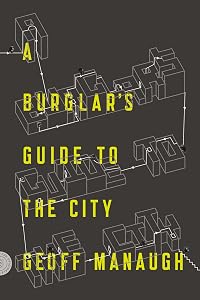
A Burglar's Guide to the City
by Geoff Manaugh
On This Page
Description
Encompassing nearly 2,000 years of heists and tunnel jobs, break-ins and escapes, A Burglar's Guide to the City offers an unexpected blueprint to the criminal possibilities in the world all around us. You'll never see the city the same way again. At the core of A Burglar's Guide to the City is an unexpected and thrilling insight: how any building transforms when seen through the eyes of someone hoping to break into it. Studying architecture the way a burglar would, Geoff Manaugh takes show more readers through walls, down elevator shafts, into panic rooms, up to the buried vaults of banks, and out across the rooftops of an unsuspecting city. With the help of FBI Special Agents, reformed bank robbers, private security consultants, the L.A.P.D. Air Support Division, and architects past and present, the book dissects the built environment from both sides of the law. Whether picking padlocks or climbing the walls of high-rise apartments, finding gaps in a museum's surveillance routine or discussing home invasions in ancient Rome, A Burglar's Guide to the City has the tools, the tales, and the x-ray vision you need to see architecture as nothing more than an obstacle that can be outwitted and undercut. Full of real-life heists--both spectacular and absurd--A Burglar's Guide to the City ensures readers will never enter a bank again without imagining how to loot the vault or walk down the street without planning the perfect getaway. show lessTags
Recommendations






Member Reviews
A Burglar's Guide to the city serves as a survey of the topic of burglary, from historic heists (recent and ancient) to different strategies employed by burglars (to enter, steal, and get away) and police (to prevent break-ins or catch the thieves). There is much discussion of how each building is a puzzle, and how burglars envision buildings differently than the buildings' architects intended, entering and exiting through other means than doors or even windows. The author consults experts and participates in "locksport" (lock-picking) workshops, but a personal experience with burglary strips the romance from the crime - most thefts are opportunistic, not grand Hollywood heists.
See also: Flawless, Sutton
Quotes
People usually focus on show more what burglars take, but it's how they move that's so consistently interesting. Burglars explore. (21)
...the way a city was built can catalyze or help inspire certain criminal acts.
The reverse is also true. The various parameters that define a city...affect how that city can be policed.
...cities get the types of crime their design calls for. (34-35)
The burglar is a three-dimensional actor amid the two-dimensional surfaces and objects of the city. This means operating with a fundamentally different spatial sense of how architecture should work, and how one room could be connected to another. (76)
...burglary...requires architecture: without an inside and an outside, there is no such thing as burglary. (94)
...the disappointing truth is that burglaries more often than not are impulsive and unplanned, based on spur-of-the-moment decisions made in response to some immediately noticed detail....The vast majority of burglaries are not particularly exciting (this book exists to shed light on the exceptions, not the rule). (131)
...an interest in picking locks was by no means the same thing as an interest in stealing other people's property. The two are entirely unrelated....locksport enthusiasts [are more like] an organized puzzle-solving group. (153)
Burglary tools are effectively everywhere, hidden in plain sight...in the right hands, everyday items have an unexpected secondary function... (161)
If the techniques of burglary such as those developed by [Herman] Lamm and [John] Dillinger aren't scientific, they're at least comparable to a folk art: inherited, improved upon, and always available for others to adapt and use. (238)
...any attempt to track down the perfect getaway is made all the more complex because almost everything we know about burglary - including how they did (or did not) get away - comes from the burglars we've caught. (252)
The first rule of a successful getaway is not to look as if you're trying to get away. (257)
It's as if we cannot imagine a building without also imagining someone who wants to break into it... (268)
Burglary reveals that every building, all along, has actually been a puzzle. (273) show less
See also: Flawless, Sutton
Quotes
People usually focus on show more what burglars take, but it's how they move that's so consistently interesting. Burglars explore. (21)
...the way a city was built can catalyze or help inspire certain criminal acts.
The reverse is also true. The various parameters that define a city...affect how that city can be policed.
...cities get the types of crime their design calls for. (34-35)
The burglar is a three-dimensional actor amid the two-dimensional surfaces and objects of the city. This means operating with a fundamentally different spatial sense of how architecture should work, and how one room could be connected to another. (76)
...burglary...requires architecture: without an inside and an outside, there is no such thing as burglary. (94)
...the disappointing truth is that burglaries more often than not are impulsive and unplanned, based on spur-of-the-moment decisions made in response to some immediately noticed detail....The vast majority of burglaries are not particularly exciting (this book exists to shed light on the exceptions, not the rule). (131)
...an interest in picking locks was by no means the same thing as an interest in stealing other people's property. The two are entirely unrelated....locksport enthusiasts [are more like] an organized puzzle-solving group. (153)
Burglary tools are effectively everywhere, hidden in plain sight...in the right hands, everyday items have an unexpected secondary function... (161)
If the techniques of burglary such as those developed by [Herman] Lamm and [John] Dillinger aren't scientific, they're at least comparable to a folk art: inherited, improved upon, and always available for others to adapt and use. (238)
...any attempt to track down the perfect getaway is made all the more complex because almost everything we know about burglary - including how they did (or did not) get away - comes from the burglars we've caught. (252)
The first rule of a successful getaway is not to look as if you're trying to get away. (257)
It's as if we cannot imagine a building without also imagining someone who wants to break into it... (268)
Burglary reveals that every building, all along, has actually been a puzzle. (273) show less
The book is, first, very well-written, with a witty, intelligent narrative that is entertaining yet clear and informative. Substance-wise, the book is equally rich, offering a pleasing assortment of case studies, histories, anecdotes, architectural novelties, and much else involving burglary and related subjects (including some hard-won, firsthand research -- no slouch, this author). However, what I found most interesting was 'Burglar's' insight into the psychology of burglars and burglary, as well as that which lies behind architecture and place in general. There's much to be learned from 'Burglar's Guide,' on several levels.
Additionally, the book makes one really good, notable point, seen in it's reasonably balanced treatment of the show more burglar. That is, the author avoids casting burglars in any kind of traditional, black-and-white light, neither condemning them as simple, regrettable criminals nor glorifying them as praise-worthy supermen. Instead, we are shown a more grounded, realistic picture of the burglar, as, simply, just a person, with certain skills and certain shortcomings, who happens to make the conscious decision to violate their fellow man. Likewise, burglary is treated as something which has indirectly benefited society by exposing problems and forcing us to correct them, while not ignoring the fact that burglary is still a highly damaging crime, both physically and psychologically (and, also, that burglars remain responsible for that damage, whatever unintended benefit they might bestow in the process). Once again, much food for thought, and much to be learned here.
Overall, 'Burglar's Guide' has a lot to offer, and I came away from it feeling enriched.
My thanks goes out to this book's author, subjects, and publisher. I am grateful for, and have benefited from, your work and service. show less
Additionally, the book makes one really good, notable point, seen in it's reasonably balanced treatment of the show more burglar. That is, the author avoids casting burglars in any kind of traditional, black-and-white light, neither condemning them as simple, regrettable criminals nor glorifying them as praise-worthy supermen. Instead, we are shown a more grounded, realistic picture of the burglar, as, simply, just a person, with certain skills and certain shortcomings, who happens to make the conscious decision to violate their fellow man. Likewise, burglary is treated as something which has indirectly benefited society by exposing problems and forcing us to correct them, while not ignoring the fact that burglary is still a highly damaging crime, both physically and psychologically (and, also, that burglars remain responsible for that damage, whatever unintended benefit they might bestow in the process). Once again, much food for thought, and much to be learned here.
Overall, 'Burglar's Guide' has a lot to offer, and I came away from it feeling enriched.
My thanks goes out to this book's author, subjects, and publisher. I am grateful for, and have benefited from, your work and service. show less
This book is primarily a guidebook to more interesting books (most of which seem to have been the inspiration for major motion pictures), padded out with less-gripping firsthand research and a great deal of repetitive prose. It was still an acceptable read, but I wish it had been the book it promised to be.
Like. Am I interested in the tale of the architect who took mid-1800s New York by the throat and shook it until all its money fell out? I cannot overstate how much I am, and also in his co-conspirator, a lady of easy morals who owned a lot of warehouses and was happy to make some cold hard cash. Am I interested in how a cat burglar looks at a building? Again, very much yes. But am I interested in police surveillance and entrapment show more techniques? Not nearly as much. And am I interested in him discussing, yet again, various possible things he never gets around to actually analyzing in detail? No, not at all. But those last two things are two-thirds of the book; it’s just that the other third is so great it kind of makes up for them.
Also, a lot of things seemed to be included in the book thanks to the “I did the research, so I have to include it” rationale. He has a lengthy interlude with lockpickers and then concludes they have nothing to do with burglary. Okay, I believe that. Why did they get a chapter plus mentions elsewhere, then? They’re not related to the subject of the book!
The book is also hampered by two of the major issues with writing about burglary ever: 1. Most burglars aren’t interesting — they’re mostly desperate people doing crimes without thinking much. 2. The burglars whose techniques we know are the ones who got caught, and so not the most interesting ones. (Though he does have one source for the book who claims to be a burglar who didn’t get caught, but rather got out of the profession because of what sounds like a midlife crisis. That was interesting.)
I don’t know. This book gave me a LIST of other books I wanted to read, including the one about the gaslamp-era New York City burglar, but it didn’t give me enough of what I was actually looking for: the influence of architecture on crime. show less
Like. Am I interested in the tale of the architect who took mid-1800s New York by the throat and shook it until all its money fell out? I cannot overstate how much I am, and also in his co-conspirator, a lady of easy morals who owned a lot of warehouses and was happy to make some cold hard cash. Am I interested in how a cat burglar looks at a building? Again, very much yes. But am I interested in police surveillance and entrapment show more techniques? Not nearly as much. And am I interested in him discussing, yet again, various possible things he never gets around to actually analyzing in detail? No, not at all. But those last two things are two-thirds of the book; it’s just that the other third is so great it kind of makes up for them.
Also, a lot of things seemed to be included in the book thanks to the “I did the research, so I have to include it” rationale. He has a lengthy interlude with lockpickers and then concludes they have nothing to do with burglary. Okay, I believe that. Why did they get a chapter plus mentions elsewhere, then? They’re not related to the subject of the book!
The book is also hampered by two of the major issues with writing about burglary ever: 1. Most burglars aren’t interesting — they’re mostly desperate people doing crimes without thinking much. 2. The burglars whose techniques we know are the ones who got caught, and so not the most interesting ones. (Though he does have one source for the book who claims to be a burglar who didn’t get caught, but rather got out of the profession because of what sounds like a midlife crisis. That was interesting.)
I don’t know. This book gave me a LIST of other books I wanted to read, including the one about the gaslamp-era New York City burglar, but it didn’t give me enough of what I was actually looking for: the influence of architecture on crime. show less
Manaugh uses the lens of architecture and public infrastructure, of designed space, and examines burglary through it. It’s not just an interesting series of heist stories, though there are many, but a philosophical discussion of what architecture is, and how our instinct to play and twist the bounds of definitions of a designed space are what make burglary and heists unique and so alluring an object of narration and study.
Manaugh looks at architecture and the central role it plays in the crime of burglary.
The book begins and ends with the 19th-century New York superburglar George Leonidas Leslie, who used his training as an architect to figure out new and unexpected ways to gain entry to building.
There were parts of this book that I found completely fascinating, and it made me look at our own efforts at home security differently. However, Manaugh has a tendency towards repetition. He’s very fond of lists: for example, “burglar, thief, robber, bandit, gang member, miscreant, delinquent” etc. This seemed a little like padding to me.
My own background as a former Probation/Parole Officer kept me reading, however. My interest was further piqued when show more I came across a reference to a particular criminologist … a man to whom I was once engaged! (We never married, but have remained friends for 40 years.) Well, I tell you I read much more closely after that name popped out at me. show less
The book begins and ends with the 19th-century New York superburglar George Leonidas Leslie, who used his training as an architect to figure out new and unexpected ways to gain entry to building.
There were parts of this book that I found completely fascinating, and it made me look at our own efforts at home security differently. However, Manaugh has a tendency towards repetition. He’s very fond of lists: for example, “burglar, thief, robber, bandit, gang member, miscreant, delinquent” etc. This seemed a little like padding to me.
My own background as a former Probation/Parole Officer kept me reading, however. My interest was further piqued when show more I came across a reference to a particular criminologist … a man to whom I was once engaged! (We never married, but have remained friends for 40 years.) Well, I tell you I read much more closely after that name popped out at me. show less
Hamstrung by it's own conceit - there is only so much to be mined from burglary stories and many of the best ones have gotten in-depth treatments elsewhere. The book tiptoes back and forth between repetition and talking about aspects of burglary that don't have strong relevance to the built environment. There are some parts that start to get interesting (like the legality of lockpicking across different jurisdictions), but then moves on too quickly.
Near the end there is a brief anecdote about a burglary where the thief foils pursuers by 'closing' the route behind them. This kind of 'positive' impact on the built environment could have been explored in more depth as compared to 'negative' impacts (demolition/destruction) which receive show more most of the book's focus. show less
Near the end there is a brief anecdote about a burglary where the thief foils pursuers by 'closing' the route behind them. This kind of 'positive' impact on the built environment could have been explored in more depth as compared to 'negative' impacts (demolition/destruction) which receive show more most of the book's focus. show less
I'm a little staggered this was published in 2016 -- its gentle, credulous defense of surveillance seems pre-Snowden. Its discussion of police and security forces is also bizarre. I'm not asking for a book on crime and architecture to go full 1312 over here, but its obsequious, deferential treatment of law enforcement (members of which are 80% of Manaugh's primary sources for this slight and meandering book) gets boring. Parts of it seem as transparently paranoia-baiting as evening news segments ("is YOUR HOUSE a likely target for burglary?"), and then it has the nerve to end with a condemnation of burglary (Manaugh seems convinced that his book has romanticized burglars, somehow.) There's interesting stuff here, but the book is show more essentially several vaguely related journalistic profiles stitched together by quotes taken from other, more interesting books.
Also, this is a petty thing, but Manaugh has an odd prose tic where he loves to begin sentences with some imperative to consider or recall or remember or think of. "Think of the burglar who..." "Consider a panic room which..." "Consider the Roofman..." It wears thin, especially given that this is such a quick read. show less
Also, this is a petty thing, but Manaugh has an odd prose tic where he loves to begin sentences with some imperative to consider or recall or remember or think of. "Think of the burglar who..." "Consider a panic room which..." "Consider the Roofman..." It wears thin, especially given that this is such a quick read. show less
Members
- Recently Added By
Lists

Recommend the 20 best books you've read in the last five years
2,168 works; 606 members

Urban Planning (Michelle TBR)
39 works; 3 members
Author Information

8+ Works 989 Members
Awards and Honors
Common Knowledge
- Original publication date
- 2016
- People/Characters
- George Leonidas Leslie
Classifications
- Genres
- Art & Design, General Nonfiction, Nonfiction, History
- DDC/MDS
- 364.16 — Society, government, & culture Social problems and social services Crime Criminal offenses Crimes of property
- LCC
- HV6648 .M36 — Social sciences Social pathology. Social and public welfare. Criminology Social pathology. Social and public welfare. Criminology Crimes and offenses
- BISAC
Statistics
- Members
- 617
- Popularity
- 47,284
- Reviews
- 22
- Rating
- (3.43)
- Languages
- English, Spanish
- Media
- Paper, Audiobook, Ebook
- ISBNs
- 7
- ASINs
- 2