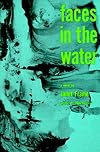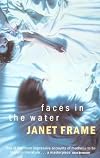
Faces in the Water
by Janet Frame
On This Page
Description
I was now an established citizen with little hope of returning across the frontier; I was in the crazy world, separated now by more than locked doors and barred windows from the people who called themselves sane.' When Janet Frame's doctor suggested that she write about her traumatic experiences in mental institutions in order to free herself from them, the result was Faces in the Water, a powerful and poignant novel. Istina Mavet descends through increasingly desolate wards, with the threat show more of leucotomy ever present. As she observes her fellow patients, long dismissed by hospital staff, with humour and compassion, she reveals her original and questing mind. This riveting novel became an international classic, translated into nine languages, and has also been used as a medical school text. show lessTags
Recommendations















































Member Recommendations

Member Reviews
"Much of living is an attempt to preserve oneself by annexing and occupying others."
For reasons that we are never told about Istina Mavet has been committed to a psychiatric hospital where she spends a number of years oscillating between being well enough to be released to being considered so ill that she is suitable for a lobotomy to change her personality. Yet despite her apparent madness, she is keenly observant of her fellow patients and the dictatorial staff.
If you have read the introduction by Hilary Mantel you will be aware that the author had a very similar experience to Istina. She, too, was stigmatised as being mad and committed to a mental asylum for eight years, if she hadn't won a literary award would herself have undergone show more brain surgery. But whilst there are undoubtedly similarities between what Frame and Istina had to endure it is dangerous to view this book as being purely autobiographical. In fact, you would be missing the point. Instead I believe that it should be viewed as a snapshot of how mental illness was misunderstood during the 1950s and how its sufferers were treated or perhaps that should say mistreated, told from the viewpoint of first hand experience.
In 'Faces in the Water' all of the patients, including Istina, are treated as naughty children who must learn to behave and very little effort is made into trying to discover the root of their illnesses. When the more 'progressive' doctors do attempt to understand their patients their efforts fall woefully short. On pre-ordained occasions the patients are allowed to engage in normal human activities but it is always with the threat that if they misbehave they will be sent for ECT. Public relations is apparently more important that therapy.
Istina's fear of the prospect of being treated with ECT and the lengths she goes to avoid it leaves the reader with little doubt about what Frame thinks about ECT. However, she doesn't totally condemn it, rather she is prefers the reader to make their own mind up; she is simply presenting the facts.
I must admit that I initially struggled with the disjointed nature of the writing even if I understood quite why Frame employed it, but there is undoubtedly a certain artistry in her use of it. Although Istina is released from the mental hospitals for short periods of time she always finds herself returning and sees little likelihood of a better life on the outside making this a remarkable but an unremittingly bleak and depressing read also.
I would certainly recommend it to others to but with the fervent hope that it was a book of it's time and that things have since changed for the better.
"There is no past or future. Using tenses to divide time is like making chalk marks on water" show less
For reasons that we are never told about Istina Mavet has been committed to a psychiatric hospital where she spends a number of years oscillating between being well enough to be released to being considered so ill that she is suitable for a lobotomy to change her personality. Yet despite her apparent madness, she is keenly observant of her fellow patients and the dictatorial staff.
If you have read the introduction by Hilary Mantel you will be aware that the author had a very similar experience to Istina. She, too, was stigmatised as being mad and committed to a mental asylum for eight years, if she hadn't won a literary award would herself have undergone show more brain surgery. But whilst there are undoubtedly similarities between what Frame and Istina had to endure it is dangerous to view this book as being purely autobiographical. In fact, you would be missing the point. Instead I believe that it should be viewed as a snapshot of how mental illness was misunderstood during the 1950s and how its sufferers were treated or perhaps that should say mistreated, told from the viewpoint of first hand experience.
In 'Faces in the Water' all of the patients, including Istina, are treated as naughty children who must learn to behave and very little effort is made into trying to discover the root of their illnesses. When the more 'progressive' doctors do attempt to understand their patients their efforts fall woefully short. On pre-ordained occasions the patients are allowed to engage in normal human activities but it is always with the threat that if they misbehave they will be sent for ECT. Public relations is apparently more important that therapy.
Istina's fear of the prospect of being treated with ECT and the lengths she goes to avoid it leaves the reader with little doubt about what Frame thinks about ECT. However, she doesn't totally condemn it, rather she is prefers the reader to make their own mind up; she is simply presenting the facts.
I must admit that I initially struggled with the disjointed nature of the writing even if I understood quite why Frame employed it, but there is undoubtedly a certain artistry in her use of it. Although Istina is released from the mental hospitals for short periods of time she always finds herself returning and sees little likelihood of a better life on the outside making this a remarkable but an unremittingly bleak and depressing read also.
I would certainly recommend it to others to but with the fervent hope that it was a book of it's time and that things have since changed for the better.
"There is no past or future. Using tenses to divide time is like making chalk marks on water" show less
"Listening to her one experienced a deep uneasiness, as of having avoided an urgent responsibility, like someone who walking at night along the banks of a stream catches a glimpse in the water of a white face or a moving limb turns quickly away refusing to help or to search for help. We all see the faces in the water. We smother our memory of them, even our belief in their reality, and become calm people of the world; or we can neither forget nor help them; sometimes by a trick of a circumstance or dream or a hostile neighbourhood of light we see our own face."
Faces in the Water must be one of the most horrifying and heartbreaking books I have ever read. Deemed as a semi-autobiographical work, this is Istina Mavet's account of her time show more in two, benighted mental facilities. Breakdown, anxiety, and paranoia crawl from the edges of this novel which deliberately and overwhelmingly crowd its pages yet its harrowing content lie not from these but from the manipulation and abuse the mentally ill suffer from the same people—with their families—expected to be sensitive to their needs and provide care for them. In some cases, they're wincingly made as a laughing stock. The crippling social stigma surrounding mental disorders is utterly palpable; the prejudice and discrimination, on Istina and other suffering women, make them start to believe that they are as disgusting and ugly as how they are treated. These horrors stand opposite the beautiful and breathtaking New Zealand landscape.
The breakdown, anxiety, and paranoia eventually worsen. The mind is a prison that hold them without any reprieve.
What do we have then? ECT / shock therapy is administered not as a cure but a punishment to make the patients cower, tame them like rabid animals. Lobotomy, with its mistaken and controversial promise of reconditioning and its serious side effects ignored, is endorsed as the last hope for a patient (** "I will wake and have no control over myself. I have seen others, how they wet the bed, how their faces are vague and loose with a supply of unreal smiles for which there is no real demand. I will be 're-trained'—that is the word used for leucotomy cases. Rehabilitated. Fitted, my mind cut and tailored to the ways of the world." (p189) and a devastating example would be the story of JFK's sister, Rosemary Kennedy).
With all the brutal and limited psychiatric treatments available in this period, although there is much to consider with the available medications at the present with some labeled as "chemical lobotomy", it is a great feat we have eradicated these and continue to seek and improve medical care in the field. But the most agonising of them all is what I think could be misdiagnosis in some of these cases. I watched French actress Sandrine Bonnaire's documentary about her sister with autism (Her Name is Sabine). Her sister was initially misdiagnosed with mental disorders then years later it was discovered she's on the autism spectrum. It took years for Sabine to finally get the care suited for her condition. Sadly, there were irreversible effects from the years she spent, with the incorrect meds, in a mental institution.
"Conversation is the wall we build between ourselves and other people, too often with tired words like used and broken bottles which, catching the sunlight as they lie embedded in the wall, are mistaken for jewels."
Janet Frame's prose lingers and envelops you. You feel like a helpless spectator too. Weaving Istina's story with that of other women, Frame paints a sympathetic environment outside their circumstances through the reader. It is hard not to be swept away by its poignancy and be immensely affected by it. Whilst it's also interspersed with gentle humour, the impact of this book is beyond the haunting ending it has. It's a hard pill to swallow; it is unforgettable. And I believe the social stigma that continues to burden the mentally ill, though not as worse as before, still needs to be addressed and shattered. We should all work together, start with educating ourselves and calling out others on their insensitivity and indifference; mental health should concern us all.
"Living is so much like one of those childhood games where you keep shutting your eyes and on opening them expect to find everything changed—a new city with glass towers, a table laden for a feast, a kindly forest where the trees no longer strike blows or twist themselves into fearful shapes." show less
Faces in the Water must be one of the most horrifying and heartbreaking books I have ever read. Deemed as a semi-autobiographical work, this is Istina Mavet's account of her time show more in two, benighted mental facilities. Breakdown, anxiety, and paranoia crawl from the edges of this novel which deliberately and overwhelmingly crowd its pages yet its harrowing content lie not from these but from the manipulation and abuse the mentally ill suffer from the same people—with their families—expected to be sensitive to their needs and provide care for them. In some cases, they're wincingly made as a laughing stock. The crippling social stigma surrounding mental disorders is utterly palpable; the prejudice and discrimination, on Istina and other suffering women, make them start to believe that they are as disgusting and ugly as how they are treated. These horrors stand opposite the beautiful and breathtaking New Zealand landscape.
The breakdown, anxiety, and paranoia eventually worsen. The mind is a prison that hold them without any reprieve.
What do we have then? ECT / shock therapy is administered not as a cure but a punishment to make the patients cower, tame them like rabid animals. Lobotomy, with its mistaken and controversial promise of reconditioning and its serious side effects ignored, is endorsed as the last hope for a patient (** "I will wake and have no control over myself. I have seen others, how they wet the bed, how their faces are vague and loose with a supply of unreal smiles for which there is no real demand. I will be 're-trained'—that is the word used for leucotomy cases. Rehabilitated. Fitted, my mind cut and tailored to the ways of the world." (p189) and a devastating example would be the story of JFK's sister, Rosemary Kennedy).
With all the brutal and limited psychiatric treatments available in this period, although there is much to consider with the available medications at the present with some labeled as "chemical lobotomy", it is a great feat we have eradicated these and continue to seek and improve medical care in the field. But the most agonising of them all is what I think could be misdiagnosis in some of these cases. I watched French actress Sandrine Bonnaire's documentary about her sister with autism (Her Name is Sabine). Her sister was initially misdiagnosed with mental disorders then years later it was discovered she's on the autism spectrum. It took years for Sabine to finally get the care suited for her condition. Sadly, there were irreversible effects from the years she spent, with the incorrect meds, in a mental institution.
"Conversation is the wall we build between ourselves and other people, too often with tired words like used and broken bottles which, catching the sunlight as they lie embedded in the wall, are mistaken for jewels."
Janet Frame's prose lingers and envelops you. You feel like a helpless spectator too. Weaving Istina's story with that of other women, Frame paints a sympathetic environment outside their circumstances through the reader. It is hard not to be swept away by its poignancy and be immensely affected by it. Whilst it's also interspersed with gentle humour, the impact of this book is beyond the haunting ending it has. It's a hard pill to swallow; it is unforgettable. And I believe the social stigma that continues to burden the mentally ill, though not as worse as before, still needs to be addressed and shattered. We should all work together, start with educating ourselves and calling out others on their insensitivity and indifference; mental health should concern us all.
"Living is so much like one of those childhood games where you keep shutting your eyes and on opening them expect to find everything changed—a new city with glass towers, a table laden for a feast, a kindly forest where the trees no longer strike blows or twist themselves into fearful shapes." show less
Like her first novel, Owls Do Cry, Janet Frame’s second novel draws on the author’s personal history. Istina Mavet, a 20-year-old schoolteacher suffering from a nervous disorder, is placed in Cliffhaven, a mental institution for women. Frame writes in Istina’s voice: in the various wards where she is confined, every observation, every experience, comes to us through the distorted lens of Istina’s troubled perspective. Istina’s story takes place in the days before anti-psychotic drugs (late 1940s, early 1950s), at a time when mental patients were regarded as subhuman and feeble-minded inhabitants of society’s fringe. Electroconvulsive therapy (ECT) was in the ascendant as a preferred treatment. At Cliffhaven, Istina is a show more first-hand witness to ECT being used to alter the behaviour of oversensitive and “difficult” patients and endures the threat of ECT by overworked nurses and staff to encourage compliance. In Istina’s narrative, the suffering of patients is vividly portrayed: their futile struggles against forced treatments, their confusion, tears of despair and inarticulate raving when their greatest fears are realized and all seems lost. Wards are dominated by fear—patients live in terror of being sent “for treatment,” of being put in restraints, of punishment, of humiliation. Every morning Istina wakes fearful, not knowing if the dread command, “No breakfast for you, young lady. You’re for treatment!” will be directed her way. But Faces in the Water is not a horror show from start to finish: not all the hospital staff are ogres, not all the patients are helpless victims. The reader will find a balanced ebb and flow to Istina’s account of her 10-year journey to wellness, and her descriptions of the staff and other patients—their survival strategies, obsessions and tragic delusions—are fascinating and often very moving. The novel is episodic in structure: each short chapter has an individual focus, an event or entertainment that Istina attends, or the quirky behaviour of one of the other patients, or an encounter with a medical professional. Istina begins her therapy at Cliffhaven, leaves to be with her family “up north,” but her symptoms return and she is again institutionalized, this time at Treecroft. Ultimately, she returns to Cliffhaven. It is during her second confinement at Cliffhaven that a new progressive attitude begins to reshape the handling of the mentally ill, leading to more humane treatment, and Istina is permitted to exercise more freedoms and engage with the outside world. Frame’s polished and highly imaginative prose carries the reader through even the most gut-wrenching scenes, often reaching astonishing lyrical heights. The writing is rich in metaphor and crammed with startling and memorable visual details. Harrowing but beautiful, Faces in the Water is a landmark in the literature of mental illness and in 1961 confirmed Janet Frame’s growing stature on the international literary scene as a writer whose work was attracting critical praise in addition to a wide readership. show less
4.5/5
The author of this book was saved from a lobotomy by her first book winning a prestigious literary prize.
Now, tell me, what do you say to that? What do you focus on first? The 'lobotomy', perhaps, one of the most popularly conceived intersections between the unknown and the brutal, a 'how could we' combined with a 'the best medicine has to offer' during a certain period of time. The 'author', the oh, I know what this will be about now, I have her numbered down for my interval of reading depending on my mood and flavor of curiosity. Or perhaps the 'prestigious literary prize' in conjunction with both, for what does that say about the prize, the judges, fiction entire when writing literally saved a person's existence from systematic show more excision?
Those who say space is the last frontier haven't considered the contours of their skull in a biosociocultural context for nearly long enough.
What are your verbs? What are your definitions? What is your metaphorical ideology that powers you through this world and all its clusterfucks of health and sanity, out here in the open where you are considered human enough for freedom of movement and adequate clothing? Tell me, what has saved you from the walls, the clockwork, the nurses jittering about their wards and bear baiting the more entertaining specimens of insanity for a momentary break from boredom? Tell me, what is your reality, and how blessed are you that it happens to conform to the all too easily deconstructed into the void word, normality?
Fiction? Fiction. The author won a prestigious literary prize in the midst of her incarceration. The prefixes of 'voluntary' and 'involuntary' to that are additional, optional, irrelevant. In this fiction, the character is saved at the moment of bypassing all authority, disobeying the rigidly brutal structure of mental 'health care', sacrificing all that had been taught her in the years of nurse and schedule and 'What she needs is...' for a single question of 'What is your opinion'?, asked of a passing doctor/deity normally hedged off for the good of both.
Janet Frame didn't get part of her brain cut out because her book became too famous.
Words. Just words.
The author of this book was saved from a lobotomy by her first book winning a prestigious literary prize.
Now, tell me, what do you say to that? What do you focus on first? The 'lobotomy', perhaps, one of the most popularly conceived intersections between the unknown and the brutal, a 'how could we' combined with a 'the best medicine has to offer' during a certain period of time. The 'author', the oh, I know what this will be about now, I have her numbered down for my interval of reading depending on my mood and flavor of curiosity. Or perhaps the 'prestigious literary prize' in conjunction with both, for what does that say about the prize, the judges, fiction entire when writing literally saved a person's existence from systematic show more excision?
Those who say space is the last frontier haven't considered the contours of their skull in a biosociocultural context for nearly long enough.
What are your verbs? What are your definitions? What is your metaphorical ideology that powers you through this world and all its clusterfucks of health and sanity, out here in the open where you are considered human enough for freedom of movement and adequate clothing? Tell me, what has saved you from the walls, the clockwork, the nurses jittering about their wards and bear baiting the more entertaining specimens of insanity for a momentary break from boredom? Tell me, what is your reality, and how blessed are you that it happens to conform to the all too easily deconstructed into the void word, normality?
Fiction? Fiction. The author won a prestigious literary prize in the midst of her incarceration. The prefixes of 'voluntary' and 'involuntary' to that are additional, optional, irrelevant. In this fiction, the character is saved at the moment of bypassing all authority, disobeying the rigidly brutal structure of mental 'health care', sacrificing all that had been taught her in the years of nurse and schedule and 'What she needs is...' for a single question of 'What is your opinion'?, asked of a passing doctor/deity normally hedged off for the good of both.
"For your own good" is a persuasive argument that will eventually make man agree to his own destruction.What dark and sibilant passages of plashed neuron streaks, thrown forth from mind to matter on the force of the desire to mirror the psychological context with a construct of black and white, appealed to those judges of that 'prestigious literary prize'? What did it say about them, to have so strongly believed in the ravings of a madwoman? What political machinations of 'civilized' society favored the release of the author, rather than the shutting up of the approving audience? The rumors? The scandal? The entertainment value outweighing the threat posed by a person functioning along their own lines of metaphor? Where was the point that prose found its anchor and grew up and out into the 'real' world, changing fact based on the fiction, a list of sentences now to be found on a short biography heading an entry of literary works?
Janet Frame didn't get part of her brain cut out because her book became too famous.
Words. Just words.
He sees the land of meaning, and one path to it, and the so-called "normal" people traveling swiftly and in comfort to the land; he does not include the shipwrecked people who arrive by devious lonely routes, and the many who dwell in the land in the beginning.Tell me, what are your fundamental clear cut and contemporary expoundings on the theme of objectivity? Tell me, what is your hardcore blunt and straightforward rhapsodizing on the motif of truth? How do you use them, and how well? How do you mix and match into the forms of 'sanity'? And how much will you suffer for it? show less
This was quite an incredible piece of work. It's the narrative of a woman in a madhouse in, I guess, the late 1940s.
Frame herself was incarcerated in several mental institutions over about 8 years, and although the book clearly states that it's a work of fiction, some of its power definitely derives from the depth of her own experience.
In many ways, it was a harrowing read - making me angry and sad by turns, and even frightened at the thought of how easily a woman could end up in one of these inhuman places.
It was also oddly poetic, in the narrator's periodic flights of fancy, but also even in the grim descriptions of the institutions. Istina (the narrator) is obsessed by the way that the worst wards have a smell about them, "a temple show more where a mixture of loneliness and despair was burned in place of interest".
And it's a very poignant read, as Istina slips further away from normality, but is still clear-headed enough to realise what is happening to her. At one point an aunt gives her a present of a bag:
"That bag was like my final entry paper into the land of the lost people. I was no longer looking from the outside on the people of Four-Five-and-One [the ward where the worst cases were kept] and their frightening care for their slight store of possessions; I was now an established citizen with little hope of returning across the frontier; I was in the crazy world, separated now by more than locked doors and barred windows from the people who called themselves sane.
I had a pink cretonne bag to put my treasures in."
Highly recommended. show less
Frame herself was incarcerated in several mental institutions over about 8 years, and although the book clearly states that it's a work of fiction, some of its power definitely derives from the depth of her own experience.
In many ways, it was a harrowing read - making me angry and sad by turns, and even frightened at the thought of how easily a woman could end up in one of these inhuman places.
It was also oddly poetic, in the narrator's periodic flights of fancy, but also even in the grim descriptions of the institutions. Istina (the narrator) is obsessed by the way that the worst wards have a smell about them, "a temple show more where a mixture of loneliness and despair was burned in place of interest".
And it's a very poignant read, as Istina slips further away from normality, but is still clear-headed enough to realise what is happening to her. At one point an aunt gives her a present of a bag:
"That bag was like my final entry paper into the land of the lost people. I was no longer looking from the outside on the people of Four-Five-and-One [the ward where the worst cases were kept] and their frightening care for their slight store of possessions; I was now an established citizen with little hope of returning across the frontier; I was in the crazy world, separated now by more than locked doors and barred windows from the people who called themselves sane.
I had a pink cretonne bag to put my treasures in."
Highly recommended. show less
Best for: People who enjoy her style of writing, I’m guessing.
In a nutshell: Istina is mentally ill and being ‘treated’ at an in-patient facility. For nine years.
Worth quoting:
“Later, the same nurses will become impatient with their charges; but at first they are full of sympathy.”
“Few of the people who roamed the dayroom would have qualified as acceptable heroines, in popular taste; few were charmingly uninhibited eccentrics.”
Why I chose it: I’ve been having a hell of a time finding a book for the “Birthday” square. I kind of wish I’d kept looking.
Review:
I’d not heard of Ms. Frame prior to picking up this novel, but she is a much-celebrated author from New Zealand. If this book is representative of her work, show more then I can definitely not count myself as a fan. The book follows Istina from one in-patient facility to another and back again, seeing it through her eyes as she deals with hallucinations, being moved to different wards without understanding why, being given ECT, and being scheduled for a lobotomy.
There are moment in this book that are so frustrating, such as when Istina describes the nurses ‘caring’ for patients who are in an especially challenging situation, as instigating fights just to see what the patients will do. Treating them as zoo animals or, perhaps more aptly, fighting dogs. It’s also so sad, but unsurprising, to read of the doctors who make only the occasional appearance in the lives of the patients. No one is really getting therapy or treatment — they are just housed like cattle, kept away from the rest of society without getting much beyond food and shelter.
This is a novel, but it is likely pulled from Ms. Frame’s own life, as she entered in-patient treatment multiple times over nearly a decade, even publishing her first book while a patient. So I cannot speak to whether this is an amazing example of writing about what it is like as a patient with mental illness, but I can say that it was challenging to read. Ms. Frame (or perhaps Istina?) seems to abhor the comma, so sentences at times wander. Again, I couldn’t tell if this was an affect of the main character or if this is just how Ms. Frame writes. If it’s the former, I’m sure it serves a literary function; if it’s the later, it just seems pretentious.
Obviously Ms. Frame was a celebrated author, so I can’t say that this is a BAD book. It is just not one I enjoyed, nor is it one I would recommend. show less
In a nutshell: Istina is mentally ill and being ‘treated’ at an in-patient facility. For nine years.
Worth quoting:
“Later, the same nurses will become impatient with their charges; but at first they are full of sympathy.”
“Few of the people who roamed the dayroom would have qualified as acceptable heroines, in popular taste; few were charmingly uninhibited eccentrics.”
Why I chose it: I’ve been having a hell of a time finding a book for the “Birthday” square. I kind of wish I’d kept looking.
Review:
I’d not heard of Ms. Frame prior to picking up this novel, but she is a much-celebrated author from New Zealand. If this book is representative of her work, show more then I can definitely not count myself as a fan. The book follows Istina from one in-patient facility to another and back again, seeing it through her eyes as she deals with hallucinations, being moved to different wards without understanding why, being given ECT, and being scheduled for a lobotomy.
There are moment in this book that are so frustrating, such as when Istina describes the nurses ‘caring’ for patients who are in an especially challenging situation, as instigating fights just to see what the patients will do. Treating them as zoo animals or, perhaps more aptly, fighting dogs. It’s also so sad, but unsurprising, to read of the doctors who make only the occasional appearance in the lives of the patients. No one is really getting therapy or treatment — they are just housed like cattle, kept away from the rest of society without getting much beyond food and shelter.
This is a novel, but it is likely pulled from Ms. Frame’s own life, as she entered in-patient treatment multiple times over nearly a decade, even publishing her first book while a patient. So I cannot speak to whether this is an amazing example of writing about what it is like as a patient with mental illness, but I can say that it was challenging to read. Ms. Frame (or perhaps Istina?) seems to abhor the comma, so sentences at times wander. Again, I couldn’t tell if this was an affect of the main character or if this is just how Ms. Frame writes. If it’s the former, I’m sure it serves a literary function; if it’s the later, it just seems pretentious.
Obviously Ms. Frame was a celebrated author, so I can’t say that this is a BAD book. It is just not one I enjoyed, nor is it one I would recommend. show less
This novel completely blew me away. I haven’t read Janet Frame before – I had heard of her famous autobiography An Angel at my Table – though I can’t say I knew the name of Janet Frame in connection with it. I feel as if I should have done – because Janet Frame’s own story is extraordinary – and rather terrifying. New Zealand writer Janet Frame spent years being admitted to psychiatric hospitals where she was treated with ECT and insulin. While she was still a patient in hospital, Janet Frame’s first collection of short stories was published, and won a prestigious award. The news of the award led to her doctors cancelling her scheduled lobotomy, I just shudder at what would have happened to this wonderfully talented show more woman had not that news filtered through. Frame was eventually discharged from hospital – and went on to enjoy a long and prolific writing career, she left New Zealand for some years and travelled in Europe and the US. While in London Frame was diagnosed with Schizophrenia and her psychiatrist encouraged her to keep writing.
Faces in the Water, the second of Frame’s novels, takes us to the world of New Zealand’s psychiatric wards. It is really quite dazzling; Frames prose is perfect. This heavily autobiographical novel has difficult themes, telling the painful stories of women like Frame. Yet, somehow, I didn’t find it a difficult novel to read, a lot of it is shocking and rather disturbing – but somehow it manages to be a compelling and even enjoyable read.
Istina Mavers is the narrator of this novel, a young woman and former teacher who has lost her sense of herself, and her grip on reality. Istina finds herself in Cliffhaven – a psychiatric hospital.
“And at times I murmured the token phrase to the doctor, ‘When can I go home?’ knowing that home was the place where I least desired to be. There they would watch me for signs of abnormality, like ferrets around a rabbit burrow waiting for the rabbit to appear.”
Here she is surrounded by other patients, introduced to the often frightening routines and rules and subject to the vagaries of those supposed to be caring for her. Here, Frame reproduces the sense of powerlessness and fear endured by patients on a daily basis, brilliantly.
Each morning Istina and the other patients wait anxiously to see whether they will be called in to breakfast – or instead selected for the terrifying ECT treatment. The fear of this horrific treatment is quite palpable. Almost like a prisoner granted an exercise period, Istina walks in the grounds, glimpsing the world beyond, a world she no longer feels a part of.
“We stood at the gate, considering the marvel of the World where people, such is the deception of memory, did as they pleased, owned furniture, dressing tables with doilies on them and wardrobes with mirrors; and doors they could open and shut and open as many times as they chose; and no name tapes sewn inside the neck of their clothes; and handbags to carry, with nail files and make-up; and no one to watch while they were eating and to collect and count the knives afterwards and say in a frightening voice, ‘Rise, Ladies.’
In time Istina is discharged and she goes North to stay with her sister, brother-in-law and their children. However, it isn’t long before Istina is back in hospital – this time the hospital is Treecroft – with different rules, different ways of doing things, but always the same fear – that you are one of those who will never go home.
“And the days passed, packing and piling themselves together like sheets of absorbent material, deadening the sound of our lives, even to ourselves, so that perhaps if a tomorrow ever came it would not hear us; its new days would bury us, in its own name; we would be like people entombed when the rescuers, walking about in the dark waving lanterns and calling to us, eventually give up because no one answers them; sometimes they dig and find the victims dead.”
Later, following a short period back home, Istina is back where she started at Cliffhaven – years have gone by, and it seems as if her whole world has been that of a psychiatric ward where others make crucial decisions for her. Here Istina first hears that her doctors are considering the operation – the leucotomy (aka lobotomy) – and she is terrified. All around her nursing staff talk brightly of the wonders of the changed personality. She will be able to leave hospital get a job – yet Istina remembers those taken out the back doors to the mortuary, or left shells of their former selves.
Faces in the Water is an extraordinary novel, written in lyrical, luminous prose it is honest, heart-breaking and raw. I think it is wonderful that Virago have brought out this new edition of this novel – I urge everyone to read it. show less
Faces in the Water, the second of Frame’s novels, takes us to the world of New Zealand’s psychiatric wards. It is really quite dazzling; Frames prose is perfect. This heavily autobiographical novel has difficult themes, telling the painful stories of women like Frame. Yet, somehow, I didn’t find it a difficult novel to read, a lot of it is shocking and rather disturbing – but somehow it manages to be a compelling and even enjoyable read.
Istina Mavers is the narrator of this novel, a young woman and former teacher who has lost her sense of herself, and her grip on reality. Istina finds herself in Cliffhaven – a psychiatric hospital.
“And at times I murmured the token phrase to the doctor, ‘When can I go home?’ knowing that home was the place where I least desired to be. There they would watch me for signs of abnormality, like ferrets around a rabbit burrow waiting for the rabbit to appear.”
Here she is surrounded by other patients, introduced to the often frightening routines and rules and subject to the vagaries of those supposed to be caring for her. Here, Frame reproduces the sense of powerlessness and fear endured by patients on a daily basis, brilliantly.
Each morning Istina and the other patients wait anxiously to see whether they will be called in to breakfast – or instead selected for the terrifying ECT treatment. The fear of this horrific treatment is quite palpable. Almost like a prisoner granted an exercise period, Istina walks in the grounds, glimpsing the world beyond, a world she no longer feels a part of.
“We stood at the gate, considering the marvel of the World where people, such is the deception of memory, did as they pleased, owned furniture, dressing tables with doilies on them and wardrobes with mirrors; and doors they could open and shut and open as many times as they chose; and no name tapes sewn inside the neck of their clothes; and handbags to carry, with nail files and make-up; and no one to watch while they were eating and to collect and count the knives afterwards and say in a frightening voice, ‘Rise, Ladies.’
In time Istina is discharged and she goes North to stay with her sister, brother-in-law and their children. However, it isn’t long before Istina is back in hospital – this time the hospital is Treecroft – with different rules, different ways of doing things, but always the same fear – that you are one of those who will never go home.
“And the days passed, packing and piling themselves together like sheets of absorbent material, deadening the sound of our lives, even to ourselves, so that perhaps if a tomorrow ever came it would not hear us; its new days would bury us, in its own name; we would be like people entombed when the rescuers, walking about in the dark waving lanterns and calling to us, eventually give up because no one answers them; sometimes they dig and find the victims dead.”
Later, following a short period back home, Istina is back where she started at Cliffhaven – years have gone by, and it seems as if her whole world has been that of a psychiatric ward where others make crucial decisions for her. Here Istina first hears that her doctors are considering the operation – the leucotomy (aka lobotomy) – and she is terrified. All around her nursing staff talk brightly of the wonders of the changed personality. She will be able to leave hospital get a job – yet Istina remembers those taken out the back doors to the mortuary, or left shells of their former selves.
Faces in the Water is an extraordinary novel, written in lyrical, luminous prose it is honest, heart-breaking and raw. I think it is wonderful that Virago have brought out this new edition of this novel – I urge everyone to read it. show less
Members
- Recently Added By
Lists

1001 Books You Must Read Before You Die
1,448 works; 1,131 members

1,001 BYMRBYD Concensus
723 works; 27 members

My TBR
371 works; 3 members
Author Information

51+ Works 4,677 Members
Janet Frame is a writer. She was born in Dunedin, New Zealand in 1924. Frame has written eleven novels, five collections of short stories, a volume of poetry, and a children's book. She has received the Commonwealth Literature Prize, the Turnavsky Prize, a Katherine Mansfield Fellowship, a Robert Burns Fellowship, and a Sargeson Fellowship. She show more was awarded an honorary doctorate in literature from Otago University and is an honorary member of the American Academy of Arts and Letters and she is a past President of Honour of the New Zealand Society of Authors. Her three autobiographies, To the Island, An Angel at My Table, and The Envoy from Mirror City, were turned into a three-part television series, and then a 1990 motion picture directed by Jane Campion. Frame was awarded the CBE in 1983. In 2015 Janet Frame's 1957 debut novel, Owls Do Cry, topped the second annual Great Kiwi Classic poll run by the New Zealand Book Council and Auckland Writers Festival. (Bowker Author Biography) show less
Some Editions
Awards and Honors
Series
Belongs to Publisher Series
Virago Modern Classics (538)
Work Relationships
Is contained in
Common Knowledge
- Canonical title
- Faces in the Water
- Original title
- Faces in the Water
- Original publication date
- 1961
- Dedication
- To R. H. C.
- First words
- They have said that we owe allegiance to Safety, that he is our Red Cross who will provide us with ointment and badges for our wounds and remove the foreign ideas the glass beads of fantasy the bent hairpins of unreason embed... (show all)ded in our minds.
- Quotations
- Fear no more the heat of the sun,
Nor the furious winter's rages...
No exorciser harm thee
Nor no witchcraft charm thee.
Ghost unlaid forbeare thee.
Nothing ill come near thee.
- William Shakespeare,... (show all) Cymbeline
At the top of the house the apples are laid in rows
And the skylight lets the moonlight in and those
Apples are deep-sea apples of green.
- John Drinkwater, Moonlit Apples
Where there's a rainbow on the river
You get the feeling
Romance is stealing
Right out of the blue into your heart.
- Paul Francis Webster, Rainbow on the River
There is a green hill far away
Without a city wall
Where the dear Lord was crucified
Who died to save us all.
Bright shines the sun on creatures mortal,
Men of their neighbors become sensible,
In solitude for company.
- W. H. Auden, Lauds
A rainbow and a cuckoo's song
May never come together again,
May never come
This side the tomb.
- W. H. Davies
That which would stay what it is renounces existence;
Does it feel safe in its shelter of lusterless gray?
- Rainer Maria Rilke, from Sonnets to Orpheus
What do you know, he smiled at me in my dreams last night.
My dreams are getting better all the time.
To think that we were strangers a couple of nights ago...
- Mann Curtis, from My Dreams are Getting Better All... (show all) the Time
This catling's jungle heart forlorn
Will die as wild as it was born.
If I could cage the human race
And teach it what it is to face
Never-Get-Out.
- John Galsworthy, Never Get Out
Some enchanted evening you may see a stranger.
On top of Old Smoky all covered in snow
I lost my true lover through courting so slow. - Last words
- (Click to show. Warning: May contain spoilers.)And by what I have written in this document you will see, won't you, that I have obeyed her?
- Original language
- English
Classifications
Statistics
- Members
- 654
- Popularity
- 43,967
- Reviews
- 18
- Rating
- (4.04)
- Languages
- 10 — Catalan, Dutch, English, French, German, Italian, Norwegian (Bokmål), Spanish, Swedish, Turkish
- Media
- Paper, Ebook
- ISBNs
- 30
- ASINs
- 5