On This Page
Description
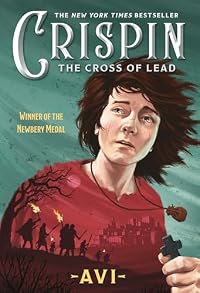
Falsely accused of theft and murder, an orphaned peasant boy in fourteenth-century England flees his village and meets a larger-than-life juggler who holds a dangerous secret.Tags
Recommendations


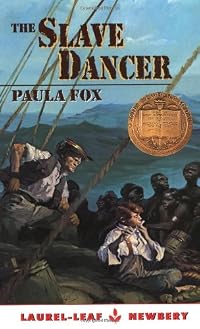
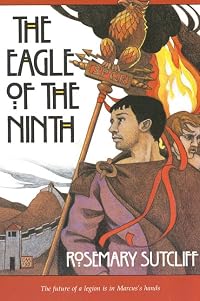

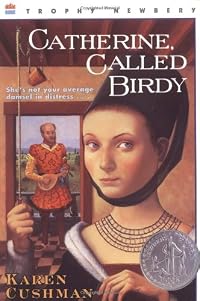
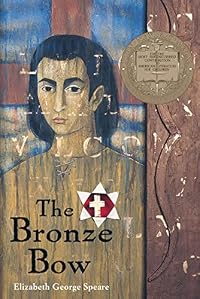
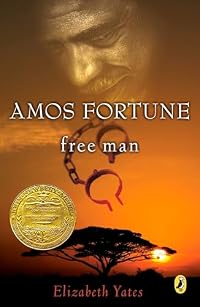
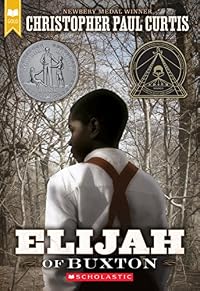
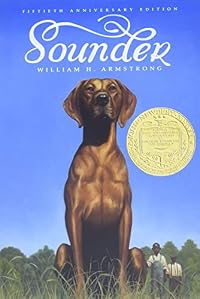
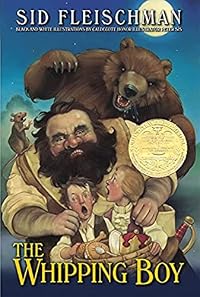




Member Recommendations

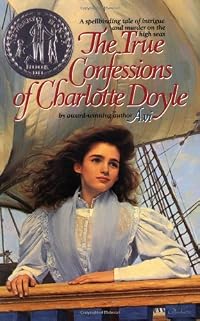
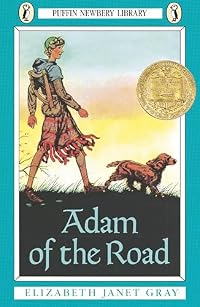
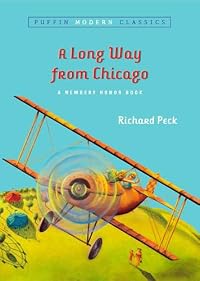
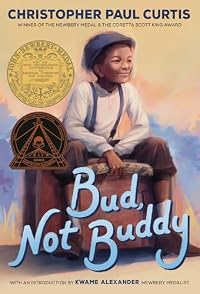
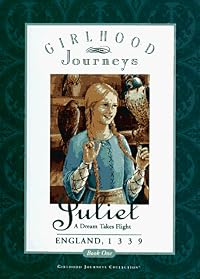
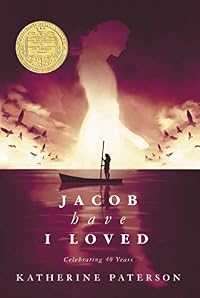
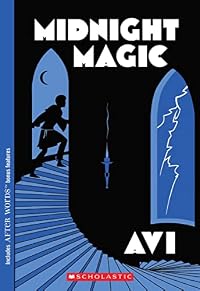
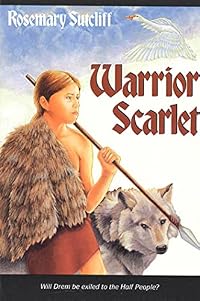
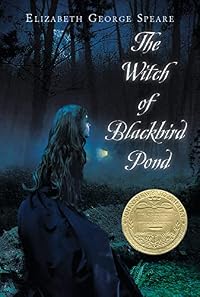
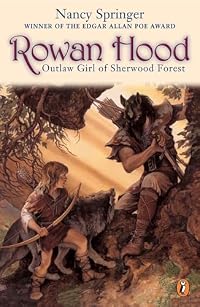
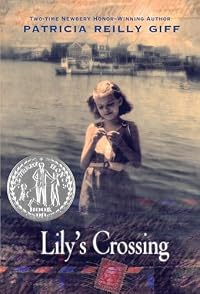
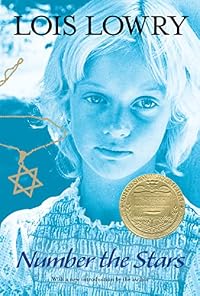
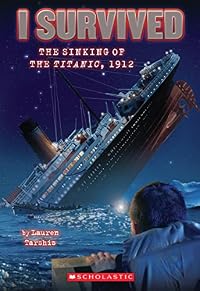
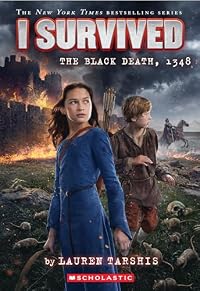
jordantaylor Both are YA books set in medieval times that have the hero / heroine fleeing a false accusation and death sentence.
Member Reviews
I liked this book for two reasons: the character development and the subject matter. Crispin grows throughout the book and finds himself. I liked that he started in the story as almost a blank slate. He has no given name other than “Asta’s son” and he is completely dependent on his religious faith for guidance. Because he starts with very little of his own personality, the reader sees someone invent themselves and discover their interests and beliefs.
Crispin begins to realize himself when he meet a self-appointed guardian and master named Bear. Bear challenges Crispin to think for himself. Instead of turning to his cross, Crispin thinks “I had already asked God for so much . . .perhaps it was time for me to make a decision for show more myself.” Later Crispin realizes that the challenges he faced allowed him to “claim a life of my own.” Because Crispin lives in a medieval society where people are chained to their position, I liked watching Crispin define himself and create a new life. I think the character development allows the reader to relate to a story set so far in the past.
I also liked the subject matter of the story. The story takes place in medieval England and discusses the rights of freedom. While the story focuses on Crispin and his trials, there is a subplot concerning revolt and the premise of equality of men. Bear, Crispin’s guardian, is a spy for the rebellion and he believes all men are created equal. He asks Crispin, “when Adam plowed the earth and Eve spun, who then was the gentlemen,” arguing that the system of nobility was unethical.
The author also shows how difficult life was for the peasants. When Crispin’s mother dies, he is taxed his only ox and his steward tells him “then starve.” I think the subject matter of equality challenges the reader to think about life in the past but also the conditions of freedom in the world today. Reading this book helped me think about how far we have come as a society.
The big idea of the book was self-determination. The plot focuses on Crispin making a name for himself in the world. He explores his talents in learning how to play the recorder. He becomes an apprentice and eventually a free man. He rises above his station as a serf and decides his own life’s path. Overall, I enjoyed the book and thought it contained an uplifting message. show less
Crispin begins to realize himself when he meet a self-appointed guardian and master named Bear. Bear challenges Crispin to think for himself. Instead of turning to his cross, Crispin thinks “I had already asked God for so much . . .perhaps it was time for me to make a decision for show more myself.” Later Crispin realizes that the challenges he faced allowed him to “claim a life of my own.” Because Crispin lives in a medieval society where people are chained to their position, I liked watching Crispin define himself and create a new life. I think the character development allows the reader to relate to a story set so far in the past.
I also liked the subject matter of the story. The story takes place in medieval England and discusses the rights of freedom. While the story focuses on Crispin and his trials, there is a subplot concerning revolt and the premise of equality of men. Bear, Crispin’s guardian, is a spy for the rebellion and he believes all men are created equal. He asks Crispin, “when Adam plowed the earth and Eve spun, who then was the gentlemen,” arguing that the system of nobility was unethical.
The author also shows how difficult life was for the peasants. When Crispin’s mother dies, he is taxed his only ox and his steward tells him “then starve.” I think the subject matter of equality challenges the reader to think about life in the past but also the conditions of freedom in the world today. Reading this book helped me think about how far we have come as a society.
The big idea of the book was self-determination. The plot focuses on Crispin making a name for himself in the world. He explores his talents in learning how to play the recorder. He becomes an apprentice and eventually a free man. He rises above his station as a serf and decides his own life’s path. Overall, I enjoyed the book and thought it contained an uplifting message. show less
"Asta's Son" is all he's ever been called. The lack of a name is appropriate, because he and his mother are but poor peasants in 14th century medieval England. But this thirteen-year-old boy who thought he had little to lose soon finds himself with even less - no home, no family, or possessions. Accused of a crime he did not commit, he may be killed on sight, by anyone. If he wishes to remain alive, he must flee his tiny village. All the boy takes with him is a newly revealed name - Crispin - and his mother's cross of lead.
_Crispin: The Cross of Lead_ follows, in 1377 England, a thirteen-year-old boy known only as "Asta's son" as he leaves the only world he's ever known, that of a small farming village, finding himself in a far larger world than he imagined existed. Exiled, fleeing from a crime he didn't commit, he finds himself in the company of the mysterious Bear, on the surface a simply jester but apparently much more. As Crispin finds himself in the middle of political intrigue, Bear teaches him to think for himself and not blindly follow his ingrained way of thinking.
Narrated by Crispin himself, the story is deeper than the plain text would have you to believe. Crispin is a thoughtful and observant narrator, and if his prose is simple it is also show more limpid and absorbing. There are many twists and turns to the story which are brought to the reader well via Crispin's eyes. If his transformation from dense serf to clever wanderer is a bit abrupt, it at least comes at a point in the story where the reader is quite ready for it.
_Crispin: The Cross of Lead_ is an elegant read, and quite accessible to very young readers despite some complicated ideas. Attentive readers will figure out the plot early on, but getting there is a nice journey. Four stars. show less
Narrated by Crispin himself, the story is deeper than the plain text would have you to believe. Crispin is a thoughtful and observant narrator, and if his prose is simple it is also show more limpid and absorbing. There are many twists and turns to the story which are brought to the reader well via Crispin's eyes. If his transformation from dense serf to clever wanderer is a bit abrupt, it at least comes at a point in the story where the reader is quite ready for it.
_Crispin: The Cross of Lead_ is an elegant read, and quite accessible to very young readers despite some complicated ideas. Attentive readers will figure out the plot early on, but getting there is a nice journey. Four stars. show less
This book is a perfect example of a knock out story with a FLAT ending. I so wanted this to be a great book (I had been looking at it at the library for almost a year.) Unfortunately, I was diappointed. From the beginning to the middle, I was entranced by Crispin. The characters were real and connectable. Each setting was colorfully detailed. The religious undertones were well done. Then I came to the ending. It literally felt like being in a car crash. There I was, cruising along, enjoying the ride, then BAMM! It was over. The only saving grace here could be that Avi picks up the story in the second Crispin novel and carries it through. I have not read it yet. Going off the merits of The Cross of Lead, I wouldn't bother.
It's quite a bit painful waiting for Crispin's slow little brain to catch up with things that are so obvious so early in the story and to watch him immediately do the opposite of whatever advice or command he is given by the other characters
My biggest joy was waiting for the character Orson "Bear" Hrothgar to appear in a sentence with the word pause so I could shout, "Bear paws!" I can be a little dumb too.
My biggest joy was waiting for the character Orson "Bear" Hrothgar to appear in a sentence with the word pause so I could shout, "Bear paws!" I can be a little dumb too.
Sometimes I ran, sometimes all I could do was walk. All I knew was that if the steward overtook me, I'd not survive for long....
Crispin is a poor thirteen-year-old peasant in medieval England. Accused of a crime he did not commit, he has been declared a "wolf's head," meaning he may be killed on sight, by anyone. He flees his tiny village with nothing but his mother's cross of lead.
In the English countryside, Crispin meets a man named Bear, who forces Crispin to become his servant yet encourages him to think for himself. But as Crispin's enemies draw ever closer, he is pulled right into the fortress of his foes, where he must find a way to save their very lives.
Crispin is a poor thirteen-year-old peasant in medieval England. Accused of a crime he did not commit, he has been declared a "wolf's head," meaning he may be killed on sight, by anyone. He flees his tiny village with nothing but his mother's cross of lead.
In the English countryside, Crispin meets a man named Bear, who forces Crispin to become his servant yet encourages him to think for himself. But as Crispin's enemies draw ever closer, he is pulled right into the fortress of his foes, where he must find a way to save their very lives.
This trilogy follows Crispin, a 13-year-old peasant boy in medieval England, as he is accused of a crime he didn't commit and hunted down by the steward of his area for reasons he can't fathom. He meets friends and allies as well as enemies, hunger, and despair. A riveting saga by a skilled author that kept me fully engaged. It deals with the great discrepancy between the poor and wealthy and the educated and ignorant in the feudal system of Medieval England, as well as the dominance of the superstitions of the Catholic church at the time. The first book won the Newbery Medal in 2003.
Content considerations:
Somewhat graphic in descriptions of death, battle, and wounds
The characters pray to and swear by God, Jesus, Mary, and many saints show more and devils show less
Content considerations:
Somewhat graphic in descriptions of death, battle, and wounds
The characters pray to and swear by God, Jesus, Mary, and many saints show more and devils show less
Members
- Recently Added By
Published Reviews
ThingScore 75
Rebecca Barnhouse (VOYA, June 2002 (Vol. 25, No. 2))
In 1377 England, mysteries surround thirteen-year-old Crispin, a serf from a rural village who never knows his own name until his mother dies. Nor does he know just who his mother really was--why she was an outcast or how she learned to read and write. Shortly after her burial, Crispin finds himself pursued by men who mean to kill him for show more reasons he does not understand. He escapes, only to be captured by a huge juggler named Bear. Bear teaches Crispin to sing and play the recorder, and slowly they begin to get to know one another. When they perform in villages and towns, however, they discover that the hunt for Crispin is still in full swing. For Crispin, this situation makes the question of Bear's trustworthiness vital, for Bear has secrets of his own. The suspense stays taut until the very end of the book, when Crispin uncovers his identity and then must decide how to act on that information. His journey to selfhood recalls Alice's in Karen Cushman's The Midwife's Apprentice (Clarion, 1995/VOYA August 1995). Like Alice, Crispin casts off his timidity to make a place for himself within a society that would discard him. As does Cushman, Avi renders the sights, sounds, and smells of medieval England accurately and compellingly. He shows the pervasiveness of the church in medieval society and, in a subplot, weaves in details about John Ball and the Peasant's Rebellion. Exciting and true to the past, this novel is historical fiction at its finest. PLB $16.49. VOYA CODES: 5Q 4P M J (Hard to imagine it being any better written; Broad general YA appeal; Middle School, defined as grades 6 to 8; Junior High, defined as grades 7 to 9). show less
In 1377 England, mysteries surround thirteen-year-old Crispin, a serf from a rural village who never knows his own name until his mother dies. Nor does he know just who his mother really was--why she was an outcast or how she learned to read and write. Shortly after her burial, Crispin finds himself pursued by men who mean to kill him for show more reasons he does not understand. He escapes, only to be captured by a huge juggler named Bear. Bear teaches Crispin to sing and play the recorder, and slowly they begin to get to know one another. When they perform in villages and towns, however, they discover that the hunt for Crispin is still in full swing. For Crispin, this situation makes the question of Bear's trustworthiness vital, for Bear has secrets of his own. The suspense stays taut until the very end of the book, when Crispin uncovers his identity and then must decide how to act on that information. His journey to selfhood recalls Alice's in Karen Cushman's The Midwife's Apprentice (Clarion, 1995/VOYA August 1995). Like Alice, Crispin casts off his timidity to make a place for himself within a society that would discard him. As does Cushman, Avi renders the sights, sounds, and smells of medieval England accurately and compellingly. He shows the pervasiveness of the church in medieval society and, in a subplot, weaves in details about John Ball and the Peasant's Rebellion. Exciting and true to the past, this novel is historical fiction at its finest. PLB $16.49. VOYA CODES: 5Q 4P M J (Hard to imagine it being any better written; Broad general YA appeal; Middle School, defined as grades 6 to 8; Junior High, defined as grades 7 to 9). show less
added by kthomp25
Lists

Best Newbery Medal Winners
94 works; 52 members

1001 Children's Books You Must Read Before You Grow Up
774 works; 101 members

Newbery Medal Winners - By Year
105 works; 7 members

Satori Smiles Children's Book List
262 works; 7 members

Read Alouds for CC Cycle 2
17 works; 2 members

Novels featuring Orphans
76 works; 10 members

Tagged Runaways
13 works; 2 members

Historical Fiction
889 works; 89 members

Books About Boys
175 works; 15 members
Classical Conversations Challenge A Exposition
10 works; 1 member

Books Read in 2021
5,361 works; 114 members
Author Information

Avi was born in 1937, in the city of New York and raised in Brooklyn. He began his writing career as a playwright, and didn't start writing childrens books until he had kids of his own. (Bowker Author Biography)
Some Editions
Awards and Honors
Awards
Distinctions
Series

Work Relationships
Is contained in
Has as a student's study guide
Has as a teacher's guide
Common Knowledge
- Canonical title
- Crispin: The Cross of Lead
- Original publication date
- 2002
- People/Characters
- Crispin (Asta's Son); Orson "Bear" Hrothgar; John Aycliffe; Father Quinel; John Ball
- Important places
- Great Wexly, England (fictional place); Stromford, England (fictional place)
- Important events
- Peasants' Revolt
- Dedication
- To Teofilo F. Ruiz
- First words
- The day after my mother died, the priest and I wrapped her body in a gray shroud and carried her to the village church.
- Last words
- (Click to show. Warning: May contain spoilers.)And my name—I knew with all my heart—was Crispin.
- Original language
- English US
Classifications
- Genres
- Kids, Tween, Children's Books, Fiction and Literature
- DDC/MDS
- 813.54 — Literature & rhetoric American literature in English American fiction in English 1900-1999 1945-1999
- LCC
- PZ7 .A953 .C — Language and Literature Fiction and juvenile belles lettres Fiction and juvenile belles lettres Juvenile belles lettres
- BISAC
Statistics
- Members
- 6,484
- Popularity
- 1,866
- Reviews
- 134
- Rating
- (3.68)
- Languages
- 7 — Chinese, Czech, English, German, Greek, Portuguese, Spanish
- Media
- Paper, Audiobook, Ebook
- ISBNs
- 42
- UPCs
- 2
- ASINs
- 17