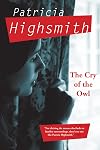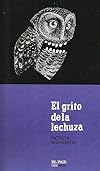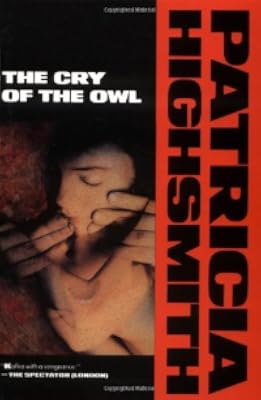
The Cry of the Owl
by Patricia Highsmith
On This Page
Description
A man's obsession with a beautiful woman leads to danger in this psychological thriller by the author of The Talented Mr. Ripley and The Price of Salt. In a small Pennsylvania town, Robert Forrester is recuperating from a nasty divorce and a bout of psychological trouble. One evening, while driving home, he sees a pretty, young woman framed by her bright kitchen window. Soon, he can't keep himself away. But when Robert is inevitably discovered, obsession is turned on its head, and he finds show more himself unable to shake the young woman, nor entirely sure whether he should. From Patricia Highsmith, once called "the balladeer of stalking" by The New Yorker, The Cry of the Owl is a modern classic ready to be reborn. Praise for The Cry of the Owl "Kafka with a vengeance." -The Spectator (London) "Highsmith generates suspense out of a different sort of fear: not the fear of death, which drives most crime-centered entertainment, but the pettier, more intimate dread of humiliation, of being caught on the street with nothing on. . . . There's something else here, hard to identify, pulling us along relentlessly, as thrillers do-an undertow, a surge of third-rail current." -The New Yorker "The Cry of the Owl is a deceptively easy stroll toward personal chaos and destruction. It is thoroughly chilling because nothing seems farfetched. Odd, yes, but believable. . . . The Cry of the Owl is creepy and unsettling, a taut psychological thriller." -Linnea Lannon, Detroit Free Press "One of her lesser-known works . . . and one of her most unsettling. Which is saying plenty. . . . The crime writer Elmore Leonard has written a host of novels with the same basic plot: Plans go wrong. The story message driving all of Highsmith's work is similarly simple and clear: We live on thin ice. Highsmith revolts some readers, yet hypnotizes many others. She's sui generis, a writer of almost occult power." -Richard Rayner, Los Angeles Times. show lessTags
Recommendations
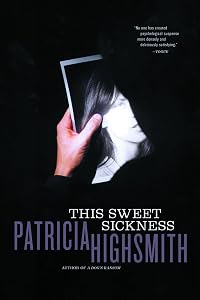
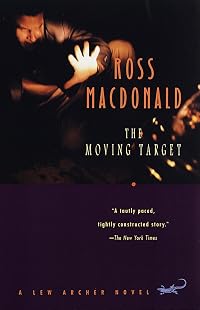


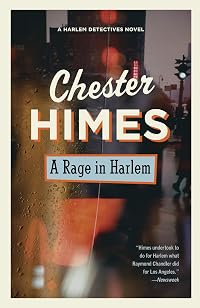
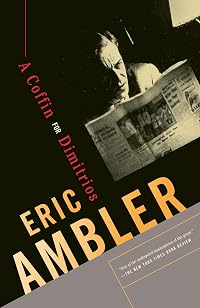



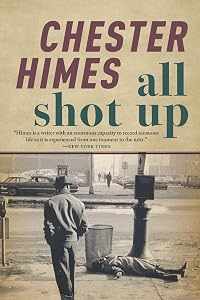
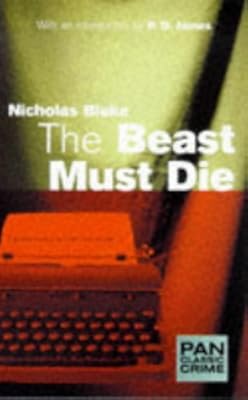
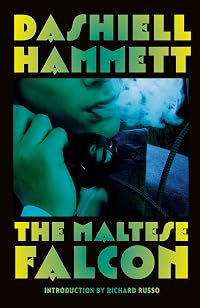
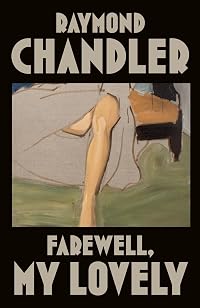
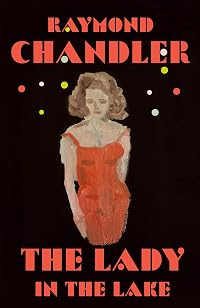
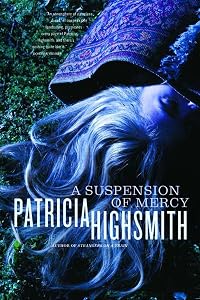
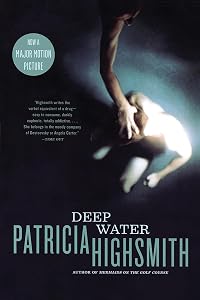
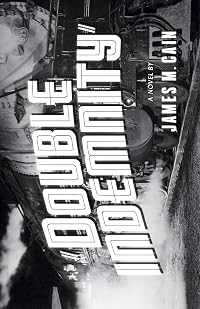






Member Recommendations
Member Reviews
I've only read two of Highsmith's so far, and this one was fine, in that it was another elegantly written, sharply observed mystery/thriller sort of thing that delicately brushed against serious literary topics. I found the novel's central character, Robert Forrester, compelling but I found the book's setting -- the postwar United States at the advent of the suburb and the automobile -- somewhat less so. Still, if you liked "Mad Men", there might be something here for you to enjoy, at least stylistically: just about everybody in "The Cry of the Owl" smokes cigarettes and drinks coffee and alcohol almost continuously and we do take a couple of trips into Manhattan. Beyond the whodunit aspects of the plot, Highsmith seems keen to point show more out the sometimes incomprehensible censoriousness of American small towns -- there are some things, apparently, that your neighbors will forgive and other things that they certainly will not, and there seems to be very little indeed that they don't know about you. The novel's also interested in death, both as a real absence and as a dark foreboding that lurks at the back of some character's unconscious, another thing, I suppose, that postwar Americans were just beginning to discover. It didn't exactly shock or astound me, but this is a good one if you're between really heavy reads. Certainly recommendable if you like the author, the period, or the genre. show less
"She had called him up to give him a piece of her mind, Robert supposed, and what surprised him more than anything was that she could be so voluble, so sure of herself, while addressing someone she considered a murderer. Weren’t people supposed to be afraid of murderers? If she really believed him a murderer, wouldn’t she be afraid he might get angry and come after her, too?"
It appears that this January has been the month of reading gloriously messed up books and it all started with The Cry of the Owl.
Robert is depressed. The only reprieve from his low moods is when he watches Jenny, a twenty-something from behind a tree outside of her house. Robert is a stalker. Of course, this leads to complications, and - this being a Highsmith show more novel - complications lead to twists that turn the hunter into the hunted and make you question the sanity of every one of the characters.
"A crow flew over, cawing. Late at night for a crow, Jenny thought. A crow was black. That was fitting." show less
It appears that this January has been the month of reading gloriously messed up books and it all started with The Cry of the Owl.
Robert is depressed. The only reprieve from his low moods is when he watches Jenny, a twenty-something from behind a tree outside of her house. Robert is a stalker. Of course, this leads to complications, and - this being a Highsmith show more novel - complications lead to twists that turn the hunter into the hunted and make you question the sanity of every one of the characters.
"A crow flew over, cawing. Late at night for a crow, Jenny thought. A crow was black. That was fitting." show less
this very much goes in directions (in terms of both plot and character) that are continually surprising, which was fun for me. and it meant that i liked this more and more as it went on, as by the time we were close to the end, it was so far from what it had first seemed we were going to be virtually unrecognizable. so that is cool. there were so many parts of this that felt so unlikely, even though it was written in 1962, in terms of how the police handled (mostly didn't handle) things, especially with all the attacks and shootings going on. still, this was fun and unexpected in so many ways that by the end i was really enjoying it. (it did take a while to wind up, though.)
So here's a crime novel where the murderer is the least screwed up, most readily understood of all the main characters - the worrying folks with the more or less serious mental health problems are either victims or Ladies MacBeth.
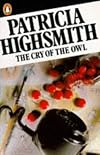
Bleakly dark journey along incremental steps from the mundane to Grand Guignol in small town America. In Highsmith's typical forensically psychological style, lives unravel as personallities collide. To my mind, however, the most interesting aspect of this book was the near absolute disconnection between the story and the cover art of this original Pan edition.
I suppose I’d better say why I gave this such a poor mark. There was almost nobody in this entire book who was not suffering from severe mental health problems. It became ridiculous. I don’t just mean the four main protagonists, I mean the neighbours, the landlady, the friends, the townspeople. The only ones anywhere near sane were the doctor and Jenny’s parents. It started off just being annoying , then became laughable. Shame, I like Highsmith and had high hopes for this one.
Ne uccide più la lingua che la spada, ovvero quando i buoni diventano i cattivi e i cattivi diventano buoni. Il protagonista è un lavoratore solitario, una persona tranquilla che trova ristoro nelle sue piccole manie. Purtroppo è circondato da persone cattive e instabili, che riescono a compromettere la sua amicizia con la giovane Jenny, fino al tragico finale. vicini di casa impiccioni e inclini al giudizio fanno da contorno a questo thriller. Morale: vietato giudocare dalle apparenze!
Members
- Recently Added By
Lists

Put a Bird On It
75 works; 12 members

Recommended Horror and Dark Fiction by Women
81 works; 13 members

Books Read in 2016
4,666 works; 199 members

Canon de la narrativa universal del s. XX (cicutadry)
499 works; 3 members
Author Information

301+ Works 32,929 Members
Patricia Highsmith wrote twenty-one novels including "Strangers on a Train" & the "Ripley" series. She died in 1995 in Switzerland, where she resided much of her life. (Publisher Provided) Patricia Highsmith (January 19, 1921 -- February 4, 1995) was an American novelist and short story writer, most widely known for her psychological thrillers, show more which led to more than two dozen film adaptations. She was born in Fort Worth, Texas. Highsmith grew up with her maternal grandmother in Astoria, Queens, and attended Barnard College. Her first novel, Strangers on a Train (1950), was adapted for stage and screen numerous times, notably by Alfred Hitchcock in 1951. In addition to her acclaimed series about murderer Tom Ripley, which was made into a film in 1955, she wrote many short stories, often macabre, satirical or tinged with black humor. Highsmith liked to examine the ways in which people can get to the point where they are capable of murder, as well as who they become after they have committed a crime. In carefully constructed stories and novels, she integrated this scrutiny of the human psyche into complex plots that often took unexpected twists. In Strangers on a Train, architect Guy Haines meets Charles Bruno on a train. Bruno conceives a plan to have Haines kill Bruno's father, while Bruno will kill Haines's wife. The effect that this plan has on Haines is the focus of the story. Highsmith's awards include: O. Henry Award for best publication of first story, for "The Heroine" in Harper's Bazaar (1946), Grand Prix de Littérature Policière, for The Talented Mr. Ripley (1957), and the Dagger Award -- Category Best Foreign Novel, for The Two Faces of January from the Crime Writers' Association of Great Britain (1964). Highsmith died of aplastic anemia and cancer in Locarno, Switzerland, at age 74. Her last novel, Small G: A Summer Idyll, was published one month after her death in 1995. (Bowker Author Biography) show less
Some Editions
Awards and Honors
Distinctions
Notable Lists
Series
Belongs to Publisher Series
Common Knowledge
- Canonical title*
- Der Schrei der Eule
- Original title
- The cry of the owl
- Original publication date
- 1962
- Related movies
- Le cri du hibou (1987)
- Dedication
- To D.W.
- First words
- Robert worked nearly an hour after quitting time at five.
- Last words*
- (Click to show. Warning: May contain spoilers.)Bloss nicht anfassen!
- Original language*
- Amerikanisch
*Some information comes from Common Knowledge in other languages. Click "Edit" for more information.
Classifications
Statistics
- Members
- 773
- Popularity
- 36,169
- Reviews
- 22
- Rating
- (3.68)
- Languages
- 13 — Catalan, Dutch, English, Finnish, French, German, Hungarian, Italian, Norwegian (Bokmål), Norwegian, Portuguese, Spanish, Swedish
- Media
- Paper, Audiobook, Ebook
- ISBNs
- 52
- ASINs
- 19