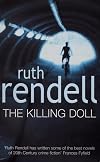
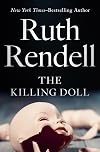
The Killing Doll
by Ruth Rendell
On This Page
Description
A girl experiments with the occult to keep her family together in this psychological thriller from the New York Times–bestselling author of Dark Corners.In a quiet house in the London suburb of Manningtree, fifteen-year-old Pup and his emotionally damaged older sister, Dolly, have become closer than ever since the death of the their mother. Pup's bookish obsession with witchcraft gives their disordered life a sense of purpose. Dolly isn't sure what to expect from the talisman Pup makes show more her, until their father brings home a vulgar new wife. Then, Dolly, resentful and suddenly empowered, makes a deadly wish—the first of many.
In a depressed neighborhood on the other side of town, a paranoid hermit has been questioned in a series of brutal murders. Lately, he's taken to living in a tunnel behind a fort of mattresses, where he keeps his knives. Soon, his life and the lives of Pup and Dolly will converge. As one of them struggles toward something close to sanity, the other two will descend even further into darkness.
"Only Rendell can show us how chillingly easy it is for ordinary people to slide into criminal behavior," and in The Killing Doll, the tumble is relentless (Oprah.com). "Rendell, who perfected the art of the truly suspenseful psychological thriller" is a three-time recipient of the Edgar Award, and the author of numerous bestsellers (The Boston Globe).
. show less
Tags
Recommendations











Member Recommendations
shaunie Minty's character in Adam and Eve and Pinch Me is similar to a character in the earlier book - The Killing Doll is better overall, creepy and haunting.

Member Reviews
The Killing Doll is a focused tale of madness as it infects Dolly and Dairmit and how their paths will inevitably cross. I took an instant dislike to Dolly, even before she really went off the deep end. Her insane hatred of cats and how she deliberately forced her neighbor’s cat into oncoming traffic and death meant I could never root for her and I’m glad she came apart at the seams. Her descent was a thing of beauty. The alcohol. The dolls. The ghosts of mom and stepmom. Their giggling. The obsession with her brother and his “magic”. The occult. Her nevus (it’s a wonder that thing didn’t talk to her too). Boy does Rendell do it well.
Ditto with Dairmit’s unraveling. For a while there, I thought Conal was a construction show more that he built out of whole cloth. Realizing that he was a real guy isn’t quite as creepy, but it was still a very effective way of showing Diarmit’s mind and how it was battling itself to stay sane and cope with his behavior. Even though he was trying so hard to separate it from his core identity, eventually he shed it and put all his evil deeds onto the Conal identity.
I like how Rendell doesn’t get tangled up in providing the why for Dolly’s or Diarmit’s conditions. Each is understood, but that isn’t as important as what’s happening to them now (Diarmit’s is the more sympathetic story, Dolly is her own worst enemy). Portraying each canted psyche is the key and it’s done so well. See -
“As it happened, though, when Conal came Diarmit did not see him come. He must have slipped into the room during the night. For when Diarmit awoke he was there, wearing dark red clothes and taking his knives out of the Harrod’s bag, examining them closely, to check no doubt that Diarmit had taken care of them in his absence. Conal the murderer, Conal the criminal, Conal the outcast. Jobless, friendless, hated, mad Conal.
Because he knew what would happen if he left the house, because he dared not go out yet must have exercise, he began pacing the room. Up and down, he paced the small cluttered room with a heavy dogged tread that after a while grew weary, but he paced on.
He did not speak. There was no one to speak to, for Diarmit had gone.”
Oh that's just brilliant. show less
Ditto with Dairmit’s unraveling. For a while there, I thought Conal was a construction show more that he built out of whole cloth. Realizing that he was a real guy isn’t quite as creepy, but it was still a very effective way of showing Diarmit’s mind and how it was battling itself to stay sane and cope with his behavior. Even though he was trying so hard to separate it from his core identity, eventually he shed it and put all his evil deeds onto the Conal identity.
I like how Rendell doesn’t get tangled up in providing the why for Dolly’s or Diarmit’s conditions. Each is understood, but that isn’t as important as what’s happening to them now (Diarmit’s is the more sympathetic story, Dolly is her own worst enemy). Portraying each canted psyche is the key and it’s done so well. See -
“As it happened, though, when Conal came Diarmit did not see him come. He must have slipped into the room during the night. For when Diarmit awoke he was there, wearing dark red clothes and taking his knives out of the Harrod’s bag, examining them closely, to check no doubt that Diarmit had taken care of them in his absence. Conal the murderer, Conal the criminal, Conal the outcast. Jobless, friendless, hated, mad Conal.
Because he knew what would happen if he left the house, because he dared not go out yet must have exercise, he began pacing the room. Up and down, he paced the small cluttered room with a heavy dogged tread that after a while grew weary, but he paced on.
He did not speak. There was no one to speak to, for Diarmit had gone.”
Oh that's just brilliant. show less
(7/10) "I kill, therefore I am."
This is one of those books I feel I shouldn't give too much away about, suffice to say it is about a teenage boy who sells his soul to the devil and how that decision affects his sister's life. When I say devil I do not mean a literal character, this is not a fantasy, rather a suspenseful study of the occult and mental illness, touching on alcoholism and with a bit of murder thrown in for good measure. Sounds cheery doesn't it?
I honestly had no idea where this was going until I was about 70% through it, Rendell builds the tension very well throughout and kept me interested enough to carry on while I had absolutely no idea what was going to happen. The characters are some of the more interesting I have show more read about (maybe because this would not be my go to choice of genre) and the narration was constantly switching between them which I really enjoyed. By the end I could tell who's mind I was in even if it wasn't made clear for a couple of sentences.
This is a book where the small things matter, you notice the routines of the characters and their little quirks. There is no travelling and the whole book revolves around one house in a London suburb. I think the small scope completely absorbed me and I emerged from the last page a little stunned at having been dumped back into reality.
If you like a little bit of darkness and a slow burn then this is the book for you. show less
This is one of those books I feel I shouldn't give too much away about, suffice to say it is about a teenage boy who sells his soul to the devil and how that decision affects his sister's life. When I say devil I do not mean a literal character, this is not a fantasy, rather a suspenseful study of the occult and mental illness, touching on alcoholism and with a bit of murder thrown in for good measure. Sounds cheery doesn't it?
I honestly had no idea where this was going until I was about 70% through it, Rendell builds the tension very well throughout and kept me interested enough to carry on while I had absolutely no idea what was going to happen. The characters are some of the more interesting I have show more read about (maybe because this would not be my go to choice of genre) and the narration was constantly switching between them which I really enjoyed. By the end I could tell who's mind I was in even if it wasn't made clear for a couple of sentences.
This is a book where the small things matter, you notice the routines of the characters and their little quirks. There is no travelling and the whole book revolves around one house in a London suburb. I think the small scope completely absorbed me and I emerged from the last page a little stunned at having been dumped back into reality.
If you like a little bit of darkness and a slow burn then this is the book for you. show less
The audiobook of this got me through a drive from Connecticut to Maryland. Not my favorite Rendell but definitely one of most disturbing and weird. A lonely woman with steadily worsening psychosis dives into an obsession with black magic while Rendellian complications stew on her block of flats. Much like Live Flesh this book succeeded magnificently at replicating the interior of the head of an individual with mental illness. Reminded me of Highsmith's Edith's Diary.
It's a complex mixing of two separate stories. The main story is about Dolly and Pup, siblings. While a young boy Pup gets interested in magic and becomes quite obsessed with it. Dolly goes along, making him a cape and helping him with his spells as needed. Over time, Dolly's interest grows while Pup's declines. Over time, too, Dolly's need for Pup becomes greater than his need for her.
The book was written in the early 1980s, and I believe the story takes place in the 1950s. I don't remember if this is explicitly stated. I suspect it because of attitudes expressed in the book more than from anything else.
Dolly was born with a large birthmark on her face. Her parents and others assume that she has no chance for a normal married life show more because of this "defect". She is taken out of school early and taught to sew. She accepts her position in life, while doting on her younger brother. When their mother dies, Dolly steps in as substitute mom.
The second story is about Diarmit. Diarmit comes from a large Irish family. An accident changed his mental state and he is no longer able to work as a butcher. He lands in an apartment, where he spends most of his time dwelling on the world he has created in his head. That world is a troubling place, and he has to protect himself from it. Diarmit has a set of knives that are great protection.
There is a point when Pup and Diarmit meet, peripherally, but it is a glancing meeting that changes neither. Thus the stories continue on their paths to an inevitable collision.
As with many of Rendell's stories, this one contains characters who are not perfect. The flaws are what make the plots work and make the characters interesting. It is easy to be drawn into this world and take it with you. show less
Glancing at the publication date of this, 1984, I was prepared to describe it as an early Rendell; yet according to the "Also by" list on the half-title verso she'd already by this time published a dozen Wexford novels (which surprised me less), ten of her psychological thrillers and three books of short stories. (I've no idea if by 1984 she'd instituted her Barbara Vine alter ego.)
The main focus is on brother and sister Pup and Dolly; he as a boy sold his soul to the Devil and took up the practice of ritual White Magic, although since discovering sex he's grown out of such fancies; she, the older sibling, has had a life marred by people's negative attitudes toward her facial nevus and latterly by her steady heavy drinking, and show more refuses to believe her little brother isn't a powerful magus -- a conception bolstered by some not-too-implausible coincidences, primarily the sudden death of the pair's despised stepmother after a cod ritual involving the desecration of a doll of her. Dolly, having attended far too many faked Spiritualist meetings, is convinced the ghosts of her mother and now the stepmother accompany her everywhere, commenting on her every action and offering her advice whether or not it's needed.
A secondary focus of the plot concerns the seriously insane Diarmit Bawne, who lives undiagnosed nearby; already his profound delusions have led him to murder and mutilate an innocent. Much of the tension of The Killing Doll is our knowledge of the inevitability of these two plot strands being brought together . . .
Absorbing, claustrophobic, powerful: all the usual adjectives applied to Rendell's psychological thrillers apply here. It's not in the top drawer of those, but it's a well-wrought piece nonetheless. show less
The Killing Doll is the second book that I have read by Ruth Rendell and both have followed the same thread, one or more of the characters slowly unraveling and descending into madness. Lethal madness. I can't say she is really my sort of thing, though the author has been tauted as the best mystery writer writing in English. I found the stories I have read to be overheated and just barely believable. I'll probably give the writer another try.
The Killing Doll is the second book that I have read by Ruth Rendell and both have followed the same thread, one or more of the characters slowly unraveling and descending into madness. Lethal madness. I can't say she is really my sort of thing, though the author has been tauted as the best mystery writer writing in English. I found the stories I have read to be overheated and just barely believable. I'll probably give the writer another try.
Members
- Recently Added By
Lists

Books Read in 2016
4,666 works; 199 members

Books Set in London
49 works; 3 members
Author Information

315+ Works 51,378 Members
Ruth Rendell (1930-2015) Ruth Rendell was born in Essex, England on February 17, 1930. She was educated at Loughton County High School. Rendell began her career as a journalist. She wrote six novels before sending her work in to a publisher. She writes crime novels and psychological thrillers, and is best known for her Inspector Wexford books. show more Rendell also writes under the pseudonym Barbara Vine. Rendell has received many awards for her writing, including the Silver, Gold, and Cartier Diamond Daggers from the Crime Writers' Association, three Edgars from the Mystery Writers of America, The Arts Council National Book Awards, and The Sunday Times Literary Award. She is a fellow of the Royal Society of Literature. Many of her titles have been made into films and made-for-tv movies. Rendell died on May 2, 2015. She was 85 years old. (Bowker Author Biography) show less
Some Editions
Series
Belongs to Publisher Series
Work Relationships
Common Knowledge
- Original title
- The Killing Doll
- Original publication date
- 1984
- People/Characters
- Peter 'Pup' Yearman; Doreen 'Dolly' Yearman; Harold Yearman; Myra Brewer; Diarmit Bawne
- Important places
- London, England, UK
- Original language*
- Inglese
*Some information comes from Common Knowledge in other languages. Click "Edit" for more information.
Classifications
Statistics
- Members
- 447
- Popularity
- 68,629
- Reviews
- 12
- Rating
- (3.53)
- Languages
- 11 — Danish, Dutch, English, French, German, Icelandic, Italian, Norwegian (Bokmål), Portuguese, Spanish, Swedish
- Media
- Paper, Audiobook, Ebook
- ISBNs
- 45
- ASINs
- 16