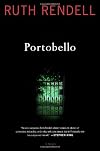
Portobello
by Ruth Rendell
On This Page
Description
Walking to the shops one day in London's Notting Hill, fifty-year-old Eugene Wren discovers an envelope on the street bulging with cash. A man plagued by a shameful addiction, Wren hatches a plan to find the money's rightful owner. Instead of going to the police, or taking the cash for himself, he prints a notice and posts it around Portobello Road. This ill-conceived act creates a chain of events that links Wren to other Londoners--people afflicted with their own obsessions and despairs. As show more these volatile characters come into Wren's life--and the life of his trusting fiancée--the consequences will change them all. show lessTags
Recommendations
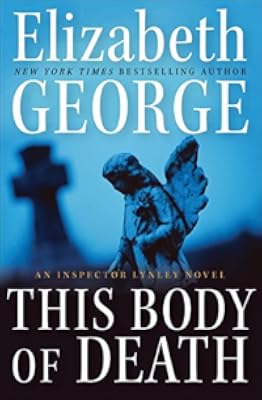

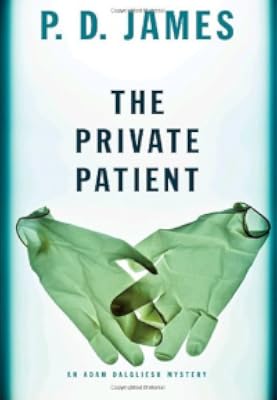


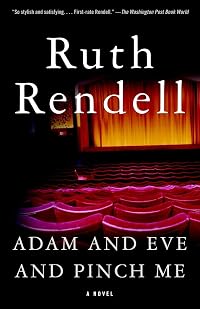
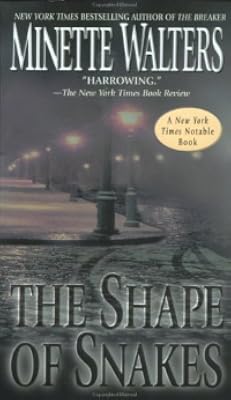







Member Recommendations

Member Reviews
I enjoyed this examination of obsession in many forms and how the fixation of each character dovetailed with the others. The setting is the district of Portobello and its varied residents. I loved the tongue-in-cheek humour. In the new-found dignity of Portobello elite, the pub is to be renamed because no one knows who The Earl of Lonsdale was. The favoured new name is The Slug and Lettuce. This story with its widely diverse characters in an iconic neighbourhood is possibly my favourite Rendell.
The English market on Portobello Road is the focal point for the interwoven lives that make up this novel. Eugene Wren is very secretive. So secretive he (secretly) wonders whether he should propose to his doctor girlfriend, Ella. Eugene is afraid she will discover his growing addiction to a certain flavor of sugar-free sweet.
The plot escalates when Eugene finds an envelope containing quite a bit of money and puts an advert in the paper to try to find the owner. Lance, a pathetic young man with delusions of criminality, seizes the opportunity to case Eugene's home for later robbery. Meanwhile Ella delivers the money to its proper owner, Joel, who has recently had a near death experience and has begun to see things and hear voices.
I show more found this novel charming. The writing and story-telling is truly on point at all times. I immediately loved the characters (or loved to hate them) and was fascinated by their bizarre inner lives. Funny, odd, sometimes creepy, but ultimately satisfying. show less
The plot escalates when Eugene finds an envelope containing quite a bit of money and puts an advert in the paper to try to find the owner. Lance, a pathetic young man with delusions of criminality, seizes the opportunity to case Eugene's home for later robbery. Meanwhile Ella delivers the money to its proper owner, Joel, who has recently had a near death experience and has begun to see things and hear voices.
I show more found this novel charming. The writing and story-telling is truly on point at all times. I immediately loved the characters (or loved to hate them) and was fascinated by their bizarre inner lives. Funny, odd, sometimes creepy, but ultimately satisfying. show less
I feel like this was an idea book. That after decades of writing novels in which people with psychological issues commit crimes, Rendell thought one day about how many people with bizarre psychological issues never go on to commit crimes, and how most crimes are probably committed by really comparatively ordinary people. And she thought about how people are so interconnected sometimes, in unexpected ways. And so she set this situation up, some people with issues who nevertheless, are leading fairly normal lives, and some people who seem saner, yet who end up in inexplicable situations - and she tied them all together, in ways that we can see as the outside observers, but which they themselves cannot. I don't know that this book is the show more edge-of-your-seat thriller you may be expecting from Rendell. But it's a brilliant experiment.
There's a fictitious painting described in the book, Undine in a Goldfish Bowl - a painting so well described that I thought it was real until a Google Image search told me the sad truth. The painting seems to sum up the book very neatly - a mermaid, trapped in a goldfish bowl, struggling to breathe air and get out - as if she, like some of the people in the book, is more afraid of her own potential weakness than she is cognizant of her ability to breathe underwater. As if she is trapped in the bowl for our viewing pleasure. Like a cast of characters, perhaps. show less
There's a fictitious painting described in the book, Undine in a Goldfish Bowl - a painting so well described that I thought it was real until a Google Image search told me the sad truth. The painting seems to sum up the book very neatly - a mermaid, trapped in a goldfish bowl, struggling to breathe air and get out - as if she, like some of the people in the book, is more afraid of her own potential weakness than she is cognizant of her ability to breathe underwater. As if she is trapped in the bowl for our viewing pleasure. Like a cast of characters, perhaps. show less
At her best - in fits and starts - Ruth Rendell is like Graham Greene without the Catholic guilt. But it's a bit frustrating how cack-handed this book is in ways, considering how subtle it can be in others. Dame Rendell has a brilliant touch with human darkness when she wants to - her treatment of Eugene Wren in Portobello and his addiction and the way it's not really an addiction but springs out of his existential dread of being boxed in by human relationships is masterful, and she plays it satisfyingly light, not spelling out what's happening behind his face. And it helps keep him a sympathetic character. And she pulls off the same trick with Ella and Joel/Mithras and the old neighbour who gets burgled, high-strung thoroughbreds show more all.
But - I hesitate to set myself up as a rival authority on the behaviour of the English lower classes, but I can't believe they are all this dull and insensate. Like, you feel like the poor characters in this are all semi-developed lumps of flesh - sensory organs not fully emerged yet - eyes just knots of nerve endings hissing and retreating from the light. Social justice is a work in progress and Gini coefficients are increasing everywhere, but are we really to believe that the London working classes cheat, steal and kill this readily? And have zero or next-to-no self-consciousness or reflection about it, so that the novel's central plot twist depends on a poor person having an ounce of remorse? If that was Rendell's view of he world, dog eat dog like, fine, but her upper- and middle-class characters are mostly all decent people well aware of their overdeveloped neuroses, and that is not a cool contrast to draw.
Still, it has a lot of spills and thrills, and Eugene Wren is well compelling, and Rendell's touch with everyday deets can be inspired, as long as she eschews hubris and sticks with the world she knows. One thing I should mention: this is hardly crime fiction, and less creepy than, um, psychological, I guess. Her oeuvre and the way this is being promoted might give you other ideas. show less
But - I hesitate to set myself up as a rival authority on the behaviour of the English lower classes, but I can't believe they are all this dull and insensate. Like, you feel like the poor characters in this are all semi-developed lumps of flesh - sensory organs not fully emerged yet - eyes just knots of nerve endings hissing and retreating from the light. Social justice is a work in progress and Gini coefficients are increasing everywhere, but are we really to believe that the London working classes cheat, steal and kill this readily? And have zero or next-to-no self-consciousness or reflection about it, so that the novel's central plot twist depends on a poor person having an ounce of remorse? If that was Rendell's view of he world, dog eat dog like, fine, but her upper- and middle-class characters are mostly all decent people well aware of their overdeveloped neuroses, and that is not a cool contrast to draw.
Still, it has a lot of spills and thrills, and Eugene Wren is well compelling, and Rendell's touch with everyday deets can be inspired, as long as she eschews hubris and sticks with the world she knows. One thing I should mention: this is hardly crime fiction, and less creepy than, um, psychological, I guess. Her oeuvre and the way this is being promoted might give you other ideas. show less
 This review was written for LibraryThing Early Reviewers.
I am a devoted fan of Ruth Rendell having read her novels steadily for 20 years and more. She is in my category of "can't wait for the paperback" authors and I enjoyed Portobello thoroughly. It is not as heartstopping as some of her other books which can actually badly frighten the reader and for some strange reason we do like to be frightened. As the Sunday Times (UK) commented, "The suspense is genteel , but palpable.....".
There is murder and mayhem in this book but it is also a fine love story and a harrowing tale of the devastation of mental illness. The character developement is suberb and that is what makes this book a fine novel, not just another thriller. There is humour throughout. The newly religious former thief, Uncle Gib show more and the neurotic art gallery owner, Eugene Wren are just two of the finely drawn characters who will make you laugh. Human foibles and obsessions are exposed with understatement and very mild sarcasm but still cut to the bone. And then there is the story which is the usual tangled web created by Ms Rendell and enjoyable in itself.
I highly recommend this book show less
There is murder and mayhem in this book but it is also a fine love story and a harrowing tale of the devastation of mental illness. The character developement is suberb and that is what makes this book a fine novel, not just another thriller. There is humour throughout. The newly religious former thief, Uncle Gib show more and the neurotic art gallery owner, Eugene Wren are just two of the finely drawn characters who will make you laugh. Human foibles and obsessions are exposed with understatement and very mild sarcasm but still cut to the bone. And then there is the story which is the usual tangled web created by Ms Rendell and enjoyable in itself.
I highly recommend this book show less
Ruth Rendell is not just a great British mystery writer, she is also a plain great writer, whose characters and plots are always a bit off the map. In this one, the Portobello Road in London figures prominantly in the story. There is the art gallery owner who finds money in the street and advertises to find the owner, which starts a rather nasty chain of events. Each of the characters Rendell weaves into the story has a story of his/her own, such as the gallery owner who is secretly addicted to sugarless candies, and is terrified his fiance will find out. The lazy layabout who tries unsuccessfully to claim the money is desperate to get back in the good graces of his girlfriend. The young man who lost the money is the guilt-ridden and show more mentally ill son of a wealthy business man who casts him out because he has inadvertently caused the death of his sister. He's being treated by the young female doctor who is engaged to the sweet addict. It's un-put-downable. Rendell is best known for her Inspector Wexford novels, and they are great in themselves. But Portobello, one of her many psychological suspense stories, is also great. I want to read more!” show less
Rendell has a real talent for creating common place characters that live bizarre turns. In this novel she focuses on obsessions: Joel obsessing on the past, Gib on religion, Eugene on mints (by far the most bizarre and most intriguing) and Lance on Gemma. Rendell creates a web spun around Portobello Road which gives a very solid structure to the novel with the various characters weaving in and out. This is a psychological thriller rather than a murder mystery - it's the evolution of the characters' mindset that keep the reader wanting more. Well done and original, it's a great weekend read.
This review was written for LibraryThing Early Reviewers.Members
- Recently Added By
Published Reviews
sfeervol met suspenseAlweer een geweldig boek van Ruth Rendell, naast een prachtig beeld van de Londense wijk Portobello heeft ze een geweldig portret geschreven van een aantal mensen wier levens verstrikt raken.Het is nauwelijks een misdaadroman, al komen er wel moorden in voor. Het zijn vooral prachtige beschrijving van eenzame, obsessieve mensen in het moderne Londen. Bovendien weet ze weer show more alle touwtje op een geweldige manier aan elkaar te knopen zodat je wil blijven doorlezen. show less
added by Petry
Lists

British Mystery
469 works; 14 members
Author Information

315+ Works 51,363 Members
Ruth Rendell (1930-2015) Ruth Rendell was born in Essex, England on February 17, 1930. She was educated at Loughton County High School. Rendell began her career as a journalist. She wrote six novels before sending her work in to a publisher. She writes crime novels and psychological thrillers, and is best known for her Inspector Wexford books. show more Rendell also writes under the pseudonym Barbara Vine. Rendell has received many awards for her writing, including the Silver, Gold, and Cartier Diamond Daggers from the Crime Writers' Association, three Edgars from the Mystery Writers of America, The Arts Council National Book Awards, and The Sunday Times Literary Award. She is a fellow of the Royal Society of Literature. Many of her titles have been made into films and made-for-tv movies. Rendell died on May 2, 2015. She was 85 years old. (Bowker Author Biography) show less
Some Editions
Series
Belongs to Publisher Series
Mirabilia (164)
Common Knowledge
- Canonical title*
- Portobello
- Original title
- Portobello
- Original publication date
- 2008
- People/Characters
- Eugene Wren; Lance Platt; Dr. Ella Cotswold
- Important places
- London, England, UK; Portobello, London, England, UK
- Dedication
- For Doreen and Lee Massey with love
- First words
- It is called the Portobello Road because a very long time ago a sea captain called Robert Jenkins stood in front of a committee of the House of Commons and held up his amputated ear.
- Last words
- (Click to show. Warning: May contain spoilers.)And in the deep of the night all is silent while the centipede street draws breath and prepares for another day.
- Original language*
- inglise
*Some information comes from Common Knowledge in other languages. Click "Edit" for more information.
Classifications
Statistics
- Members
- 775
- Popularity
- 36,211
- Reviews
- 44
- Rating
- (3.42)
- Languages
- 7 — Czech, Dutch, English, Estonian, French, German, Italian
- Media
- Paper, Audiobook, Ebook
- ISBNs
- 40
- ASINs
- 10