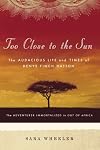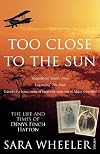
Too Close to the Sun: The Audacious Life and Times of Denys Finch Hatton
by Sara Wheeler
On This Page
Description
Legendary for his good looks, his charm, and his prowess as a soldier, lover, and hunter, Denys Finch Hatton was born to an old aristocratic family. He became a hero without trying at Eton and Oxford. In 1910, searching for novelty and danger, Finch Hatton arrived in British East Africa and fell in love--with a continent, with a landscape, with a way of life that was about to change forever, as the outbreak of World War I engulfed the region. Finch Hatton was a captain when he met Karen show more Blixen in Nairobi and embarked on one of the great love affairs of the twentieth century. Biographer Wheeler teases out truth from fiction in the liaison that Blixen immortalized in Out of Africa. Ever restless, Finch Hatton became an expert bush pilot, leading to his affair with aviatrix Beryl Markham--but Markham was no more able to hold him than Blixen had been.--From publisher description. show lessTags
Recommendations





















Member Reviews
“This is an ordinary story of big guns and small planes, princes from England and sultans from Zanzibar, roulette, a famous divorce case, a Welsh castle and a Gilbertine priority, marauding lions, syphilis, bankruptcy, self-destruction, and the tragedy of the human heart.”
Ok so the reason for reading this book?
Sara Wheeler.
I’ve been wanting to read something by Sara Wheeler again (and have probably waited too long to do so!), since I read – and loved - Terra Incognita.
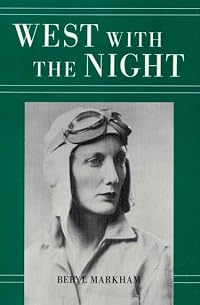
So I went about this in a roundabout way, after reading Beryl Markham’s fantastic West with the Night (some thoughts on this later), and deciding to see what else there was to read about that era of colonial Africa. She does mention Denys Finch Hatton in the show more book.
So this Denys Finch Hatton. Who was he? Besides being played by Robert Redford in the film version that is.
He was immortalised in Isak Dinesen’s Out of Africa (a book I read too long ago to remember – time for a library loot!), he was a loyal Etonian (such that years after he graduated, he took a date there), a game hunter, an aviator, an aristocrat, a charmer and lover of many women. And there has apparently been quite the fascination about him:
“His mysterious otherness caught my attention: he appeared as the eternal wanderer. I quickly discovered that he left few traces, and that I was at the end of a long line of women searching for the real Denys. But the real Denys had escaped into legend.”
Despite the fact that he never quite made it – in terms of what we measure as success and achievements, that is:
“Chief among these was the gap between character and accomplishment, being and doing. Almost everyone who knew Denys spoke of his greatness, yet he did little. I wondered if we are tyrannised by the need for achievement.”
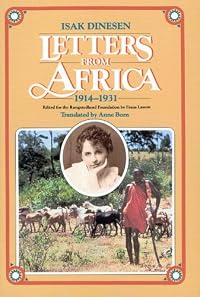
Karen Blixen/Tania/Isak Dinesen loved Denys with all her heart, and wrote to her brother:
“that such a person as Denys does exist, something I have indeed guessed at before, but hardly dared to believe, and that I have been lucky enough to meet him in this life and been so close to him – even though there have been long periods of missing him in between – compensates for everything else in the world, and other things cease to have any significance.”
Unfortunately, while DFH obviously cared for her and he often stayed with her and had such wonderful times together, he doesn’t quite love her as she does him, as he isn’t the sort of man to be tied down to one woman. Sadly he later shacks up for a while with Karen’s good friend, Beryl Markham.
One of the most interesting aspects of this book for me was the insights into Markham’s character. It showed me how much can be omitted, twisted in a book, it made me realise how unreliable some narrators can be, even if it is supposedly their own life story (there are questions about just who wrote Markham’s West with the Night). In Too Close to the Sun, she is so different from what I had read about her in her own book, where she talked about her love for horses, flying, and Africa. And not at all about her men, and there were plenty, for she was “nearly six feet tall, slim-hipped and long-fingered, although she was not classically beautiful – she had a strong chin and toothy jaw – she was handsome; her Nordic looks have often been described as Garboesque. She gave the impression that she cared little for anything on two legs, and men found her nonchalance attractive”. And there you have it, perhaps she really didn’t care much for anything on two legs, which is why she didn’t write much about them in her own book.
Anyway, Too Close to the Sun was a great read, and I had expected nothing less from Sara Wheeler. I suppose one could argue that DFH’s life itself was great fodder, true, but the amount of research it took, her way of piecing together the puzzle, and the way she brings him, and East Africa, to life in her writing, is what makes this a great read. I mean, I never expected to be interested in reading about the war in East Africa, but it was so different from the European front:
“It wasn’t the troglodyte world of the trenches, but it was another kind of hell. The war in East Africa – virtually unknown to the outside world – was, in its safari through purgatory, a negative metaphor for the Kenyan paradise of the epoch handed down in literature and myth.”
This book was a fascinating insight into this man, the woman who devoted herself to him, and what is perhaps his true love – East Africa.
This review was first posted on my blog Olduvai Reads show less
Ok so the reason for reading this book?
Sara Wheeler.
I’ve been wanting to read something by Sara Wheeler again (and have probably waited too long to do so!), since I read – and loved - Terra Incognita.
So I went about this in a roundabout way, after reading Beryl Markham’s fantastic West with the Night (some thoughts on this later), and deciding to see what else there was to read about that era of colonial Africa. She does mention Denys Finch Hatton in the show more book.
So this Denys Finch Hatton. Who was he? Besides being played by Robert Redford in the film version that is.
He was immortalised in Isak Dinesen’s Out of Africa (a book I read too long ago to remember – time for a library loot!), he was a loyal Etonian (such that years after he graduated, he took a date there), a game hunter, an aviator, an aristocrat, a charmer and lover of many women. And there has apparently been quite the fascination about him:
“His mysterious otherness caught my attention: he appeared as the eternal wanderer. I quickly discovered that he left few traces, and that I was at the end of a long line of women searching for the real Denys. But the real Denys had escaped into legend.”
Despite the fact that he never quite made it – in terms of what we measure as success and achievements, that is:
“Chief among these was the gap between character and accomplishment, being and doing. Almost everyone who knew Denys spoke of his greatness, yet he did little. I wondered if we are tyrannised by the need for achievement.”
Karen Blixen/Tania/Isak Dinesen loved Denys with all her heart, and wrote to her brother:
“that such a person as Denys does exist, something I have indeed guessed at before, but hardly dared to believe, and that I have been lucky enough to meet him in this life and been so close to him – even though there have been long periods of missing him in between – compensates for everything else in the world, and other things cease to have any significance.”
Unfortunately, while DFH obviously cared for her and he often stayed with her and had such wonderful times together, he doesn’t quite love her as she does him, as he isn’t the sort of man to be tied down to one woman. Sadly he later shacks up for a while with Karen’s good friend, Beryl Markham.
One of the most interesting aspects of this book for me was the insights into Markham’s character. It showed me how much can be omitted, twisted in a book, it made me realise how unreliable some narrators can be, even if it is supposedly their own life story (there are questions about just who wrote Markham’s West with the Night). In Too Close to the Sun, she is so different from what I had read about her in her own book, where she talked about her love for horses, flying, and Africa. And not at all about her men, and there were plenty, for she was “nearly six feet tall, slim-hipped and long-fingered, although she was not classically beautiful – she had a strong chin and toothy jaw – she was handsome; her Nordic looks have often been described as Garboesque. She gave the impression that she cared little for anything on two legs, and men found her nonchalance attractive”. And there you have it, perhaps she really didn’t care much for anything on two legs, which is why she didn’t write much about them in her own book.
Anyway, Too Close to the Sun was a great read, and I had expected nothing less from Sara Wheeler. I suppose one could argue that DFH’s life itself was great fodder, true, but the amount of research it took, her way of piecing together the puzzle, and the way she brings him, and East Africa, to life in her writing, is what makes this a great read. I mean, I never expected to be interested in reading about the war in East Africa, but it was so different from the European front:
“It wasn’t the troglodyte world of the trenches, but it was another kind of hell. The war in East Africa – virtually unknown to the outside world – was, in its safari through purgatory, a negative metaphor for the Kenyan paradise of the epoch handed down in literature and myth.”
This book was a fascinating insight into this man, the woman who devoted herself to him, and what is perhaps his true love – East Africa.
This review was first posted on my blog Olduvai Reads show less
Denys Finch Hatton is primarily known as Karen Blixen's ( Out Of Africa) lover. Wheeler, however, takes this historical nonentity and writes a compelling biography. Hatton's life exemplifies the transition of Britain from Victorian to modern times and its impact on the nobility. Finch Hatton is a charmer, but he is not shallow. He is a "man's man" , an intellectual aesthete who is equally at home on the polo field, the battlefield or hunting big game. Incapable of developing a lasting committment to women he died young in a plane crash leaving virtually no traces of the life he had led. Wheeler also does a good job of chronicling the comic and largely unknown sideshow of WWI fought between the Brits and Germans on the Kenyan border.. show more One battle began with machine gun fire disturbing some bee hives; the resulting bee swarms forced retreat on both sides. During the first year of the war, more troops were lost to wild animals than to enemy action. I bought this book to gain more insight into Blixen's life. It turned out to be much better than I had expected. show less
A NEW range of clothing hit women's boutiques 20 years ago: severely tailored linen jackets; long, straight skirts and waistcoats, all in shades of khaki ranging from stone beige to goose-turd green.
The occasion? The release of the Hollywood blockbuster, Out of Africa, based on the book by Isak Dineson (the pen name of Karen Blixen), starring Meryl Streep and Robert Redford.
Redford — with his blue eyes, thick hair, strong features, wholesome handsomeness and American accent — played the part of Blixen's lover Denys Finch Hatton, the bald, delicately featured, green-eyed, aesthetically athletic Eton and Oxford Englishman. Undoubtedly irritating, but we are used to Hollywood taking far greater liberties with much less excuse and show more with infinitely more worthy characters than Finch Hatton, whose only real distinction was Blixen's regard for him.
Sara Wheeler resurrects Finch Hatton's life and times with her wonderful description and evokes sights, sounds and especially smells with vivid immediacy. She admits there is no one alive with adult memories of her subject; he left no diaries and almost no letters, so getting to the truth is impossible because “the real Denys has escaped into legend”.
On the face of it, an academically undistinguished stint at Eton and Oxford, a fairly mundane war, and an unprofitable career in Africa is not generally considered inspiration for great biographies.
Yet Wheeler has done an excellent job, with extensive notes, a wide bibliography and a good index. After reading Too Close to the Sun, the only question left unanswered regarding Finch Hatton was: why? Why would anyone go to the trouble of devoting such a closely researched book to such a flimsy character?
I suspect the answer lies in the probability that Wheeler has fallen in love with the idea of Denys Finch Hatton. How else to explain her slighting of the women in his life, especially her digs at Blixen?
Judith Thurman's 1982 biography, Isak Dineson: the Life of Karen Blixen, gives a lyrical and even-handed account of their love affair. Betrayed first by an unfaithful husband, then by the fickle Finch Hatton, Blixen was far from the untalented, bourgeois snob Wheeler describes, albeit in the subtext, and her excusing of Denys's transgressions — his brattish behaviour at school, his academic laziness and his financial irresponsibility — rings hollow.
This book will be of great interest to descendants of those brave lunatics who initially colonised British East Africa (later Kenya), and to anyone who remembers stories of the decadent Happy Valley crowd and the unsolved scandal involving the murder of the Earl of Errol.
Wheeler comes into her own, though, in her treatment of that largely forgotten and disregarded Great War front, east Africa. She gives a wealth of information on the military and social conditions in east Africa in the early 20th century. She compares the self-sufficiency of the German settlers and their good relationship with their army, with the British colonials and the severe distinctions they made between soldier and settler.
As worthy as this biography is, it fails to transform Finch Hatton from a charming wastrel who made friends and broke hearts, into a noble character. show less
The occasion? The release of the Hollywood blockbuster, Out of Africa, based on the book by Isak Dineson (the pen name of Karen Blixen), starring Meryl Streep and Robert Redford.
Redford — with his blue eyes, thick hair, strong features, wholesome handsomeness and American accent — played the part of Blixen's lover Denys Finch Hatton, the bald, delicately featured, green-eyed, aesthetically athletic Eton and Oxford Englishman. Undoubtedly irritating, but we are used to Hollywood taking far greater liberties with much less excuse and show more with infinitely more worthy characters than Finch Hatton, whose only real distinction was Blixen's regard for him.
Sara Wheeler resurrects Finch Hatton's life and times with her wonderful description and evokes sights, sounds and especially smells with vivid immediacy. She admits there is no one alive with adult memories of her subject; he left no diaries and almost no letters, so getting to the truth is impossible because “the real Denys has escaped into legend”.
On the face of it, an academically undistinguished stint at Eton and Oxford, a fairly mundane war, and an unprofitable career in Africa is not generally considered inspiration for great biographies.
Yet Wheeler has done an excellent job, with extensive notes, a wide bibliography and a good index. After reading Too Close to the Sun, the only question left unanswered regarding Finch Hatton was: why? Why would anyone go to the trouble of devoting such a closely researched book to such a flimsy character?
I suspect the answer lies in the probability that Wheeler has fallen in love with the idea of Denys Finch Hatton. How else to explain her slighting of the women in his life, especially her digs at Blixen?
Judith Thurman's 1982 biography, Isak Dineson: the Life of Karen Blixen, gives a lyrical and even-handed account of their love affair. Betrayed first by an unfaithful husband, then by the fickle Finch Hatton, Blixen was far from the untalented, bourgeois snob Wheeler describes, albeit in the subtext, and her excusing of Denys's transgressions — his brattish behaviour at school, his academic laziness and his financial irresponsibility — rings hollow.
This book will be of great interest to descendants of those brave lunatics who initially colonised British East Africa (later Kenya), and to anyone who remembers stories of the decadent Happy Valley crowd and the unsolved scandal involving the murder of the Earl of Errol.
Wheeler comes into her own, though, in her treatment of that largely forgotten and disregarded Great War front, east Africa. She gives a wealth of information on the military and social conditions in east Africa in the early 20th century. She compares the self-sufficiency of the German settlers and their good relationship with their army, with the British colonials and the severe distinctions they made between soldier and settler.
As worthy as this biography is, it fails to transform Finch Hatton from a charming wastrel who made friends and broke hearts, into a noble character. show less
I picked up this book after finishing Isak Dinesen/Karen Blixen's OUT OF AFRICA and Beryl Markham's WEST WITH THE NIGHT. When I found out that a biography about Denys Finch-Hatton had just been published, I thought it was too good to be true - he is so fascinating, and so mysterious, in Blixen and Markham's memoirs that it's hard to read them without wanting to learn more.
It turns out it WAS too good to be true.
Finch-Hatton left little to no record of his own life. There are no diaries and very, very few letters. My burning questions were: What is the interior world of a charming, dashing adventurer like? What is he thinking while he's busy making life brighter, sweeter, and more exciting for others? Wheeler has no more idea than anyone show more else. Finch-Hatton has left no record of what his life was like, from his own point of view.
Aside from Blixen and Markham, whose portraits of Finch-Hatton are already well known, his nearest and dearest didn't sit down to describe his character, his thoughts or hidden sides. I recognized huge sections of OUT OF AFRICA and WEST WITH THE NIGHT rephrased here, with additional comments pulled from research into Blixen or Markham's life, plumped up with (generally fascinating) cultural and historical context and (generally very clever) anecdotes and asides. But this was an enhanced reading of Blixen or Markham's life, nothing new, and at a real distance from the actual subject of this biography.
I learned a lot about a particular moment in the history of British East Africa. I learned some things that I didn't know about Blixen and Markham and, yes, even a few things that I didn't know about Denys Finch-Hatton - a bit about his family history, where he went to school, where he was during the war and how he became involved in big game hunting and conservation.
Wheeler writes beautifully; she has an exquisite style. She clearly hopes that if she can plump up her scanty material with lots of dazzling imagery, we won't notice that this lengthy description of the English countryside or that lengthy description of the Serengeti actually isn't telling us anything at all about Denys Finch-Hatton. This felt like sleight of hand to me, like a trick, and I resented her for it. I want to see gorgeous style used to make good, solid research come to life. I don't want to see it poorly masking the author's failure to gather enough material to justify a book.
In short, even though I generally enjoyed reading TOO CLOSE TO THE SUN, I disliked it. show less
It turns out it WAS too good to be true.
Finch-Hatton left little to no record of his own life. There are no diaries and very, very few letters. My burning questions were: What is the interior world of a charming, dashing adventurer like? What is he thinking while he's busy making life brighter, sweeter, and more exciting for others? Wheeler has no more idea than anyone show more else. Finch-Hatton has left no record of what his life was like, from his own point of view.
Aside from Blixen and Markham, whose portraits of Finch-Hatton are already well known, his nearest and dearest didn't sit down to describe his character, his thoughts or hidden sides. I recognized huge sections of OUT OF AFRICA and WEST WITH THE NIGHT rephrased here, with additional comments pulled from research into Blixen or Markham's life, plumped up with (generally fascinating) cultural and historical context and (generally very clever) anecdotes and asides. But this was an enhanced reading of Blixen or Markham's life, nothing new, and at a real distance from the actual subject of this biography.
I learned a lot about a particular moment in the history of British East Africa. I learned some things that I didn't know about Blixen and Markham and, yes, even a few things that I didn't know about Denys Finch-Hatton - a bit about his family history, where he went to school, where he was during the war and how he became involved in big game hunting and conservation.
Wheeler writes beautifully; she has an exquisite style. She clearly hopes that if she can plump up her scanty material with lots of dazzling imagery, we won't notice that this lengthy description of the English countryside or that lengthy description of the Serengeti actually isn't telling us anything at all about Denys Finch-Hatton. This felt like sleight of hand to me, like a trick, and I resented her for it. I want to see gorgeous style used to make good, solid research come to life. I don't want to see it poorly masking the author's failure to gather enough material to justify a book.
In short, even though I generally enjoyed reading TOO CLOSE TO THE SUN, I disliked it. show less
Beautiful lush prose makes this a delight to read but it is of little value as a historical biography because so little material survives about its subject and this author is too infatuated with her subject. Wheeler is so enamoured of Finch Hatton that she excuses his manifest flaws and is relentless in her implicit denigration of Karen Blixen just as if she were a jealous competitor for his love.
The book is littered with the author's overt opinions and she is not afraid to demonstrate staggering ignorance. Early in one chapter she admits to being baffled by an automobile advertisement that promotes the provision of door handles inside and out; apparently she is unaware that automobile coachwork derived from horsedrawn carriages where show more internal handles were redundant because a servant would open the carriage doors for the passengers. This is not something that I imagine every writer to know but the author of a biography rooted in Edwardian England could easily find the answer to such a puzzle.
Ignorance of technical details is no impediment to the successful evocation of past society, however. Wheeler conveys the privileged world of Eton and the English aristocracy in Britain and Africa with deft fluency. She has read widely in published and unpublished sources and there are extensive references in the endnotes. Furthermore, she neatly separates unsubstantiated material facts from rumours by the use of footnotes even though she shows no hesitation in creating vivid imaginative descriptions of scenes that were unobserved by any but the undocumenting participants.
It seems that between Errol Trzebinski and Sara Wheeler there is no chance for the interested reader to get a balanced picture of this charming man who blinds his biographers to his weaknesses. show less
The book is littered with the author's overt opinions and she is not afraid to demonstrate staggering ignorance. Early in one chapter she admits to being baffled by an automobile advertisement that promotes the provision of door handles inside and out; apparently she is unaware that automobile coachwork derived from horsedrawn carriages where show more internal handles were redundant because a servant would open the carriage doors for the passengers. This is not something that I imagine every writer to know but the author of a biography rooted in Edwardian England could easily find the answer to such a puzzle.
Ignorance of technical details is no impediment to the successful evocation of past society, however. Wheeler conveys the privileged world of Eton and the English aristocracy in Britain and Africa with deft fluency. She has read widely in published and unpublished sources and there are extensive references in the endnotes. Furthermore, she neatly separates unsubstantiated material facts from rumours by the use of footnotes even though she shows no hesitation in creating vivid imaginative descriptions of scenes that were unobserved by any but the undocumenting participants.
It seems that between Errol Trzebinski and Sara Wheeler there is no chance for the interested reader to get a balanced picture of this charming man who blinds his biographers to his weaknesses. show less
If you liked the movie Out of Africa staring Meryl Streep and Robert Redford, then I think you will cherish this book. While the book focuses on the relationship of Denys Finch Hatton and Isak Disenstan, mainly, it paints a loving panorama of the beauty of East Africa. This was the time of big game hunting. Safari's were a great way to see, and slaughter as many animals as possible. Finch Hatton came to realize that shoting from a camera and capturing the stunning beauty of the animal, was much better than the sheer killing for trophy.
If you know if the British subjugation of India, then you will relate to the same behaviors in Africa. Taking over the land that was not theirs to parcel out and collect tax, making the natives unable to show more pay, all too quickly they took a continent of those who had been there first and made it as though they would not be there to last.
Excellent Book show less
If you know if the British subjugation of India, then you will relate to the same behaviors in Africa. Taking over the land that was not theirs to parcel out and collect tax, making the natives unable to show more pay, all too quickly they took a continent of those who had been there first and made it as though they would not be there to last.
Excellent Book show less
There's nothing more satisfying than reading about British colonialists running amok in the tropics. Denys Finch Hatttan was one of these - the archetypal younger son who journied to Kenya to satisfy his wonderlust, seek independence from a class bound English society and, hopefully, make his fortune.
He succeeded in finding adventure, but never quite broke his ties with the aristocracy and certainly never made money. He remains a romantic figure based on his relationships with Karen Blixen (AKA Isak Dineson), Beryl Markham and other "colorful" British expatriots in Kenya during the first decades of the twentieth century as well as his portrayal in Dineson's fiction & the film "Out of Africa."
Wheeler tries to make Finch Hatten a more show more serious (important?) character than he really was. Her book bogs down in too much detail of his World War I exploits and his various doomed efforts at financial success. It's most interesting when discussing his relationship with Blixon & the other women in his life.
This was an interesting read, but a superficial one. show less
He succeeded in finding adventure, but never quite broke his ties with the aristocracy and certainly never made money. He remains a romantic figure based on his relationships with Karen Blixen (AKA Isak Dineson), Beryl Markham and other "colorful" British expatriots in Kenya during the first decades of the twentieth century as well as his portrayal in Dineson's fiction & the film "Out of Africa."
Wheeler tries to make Finch Hatten a more show more serious (important?) character than he really was. Her book bogs down in too much detail of his World War I exploits and his various doomed efforts at financial success. It's most interesting when discussing his relationship with Blixon & the other women in his life.
This was an interesting read, but a superficial one. show less
Members
- Recently Added By
Author Information

18+ Works 1,880 Members
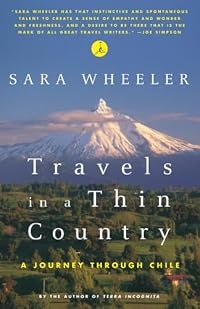
Sara Wheeler is the author of many books of biography and travel, including Access All Areas; Selected Writings 1990-2011 (North Point Press. 2013) and Travels in a Thin Country: A Journey Through Chile. Terra Incognita: Travels in Antarctica was an international bestseller that The New York Times described as "gripping, emotional" and show more "compelling," and The Magnetic North: Notes from the Arctic Circle (FSG, 2011) was chosen as Book of the Year by Michael Palin and Will Self, among others, Wheeler lives in London. show less
Awards and Honors
Distinctions
Common Knowledge
- Original title
- Too Close to the Sun: The Audacious Life and Times of Denys Finch Hatton
- Original publication date
- 2006
- People/Characters
- Denys Finch-Hatton; Karen Blixen; Beryl Markham; Berkeley Cole; Bror Blixen; Hugh Cholmondeley, 3rd Baron Delamere (show all 15); Anne Finch-Hatton, Countess of Winchilsea; Guy Finch-Hatton, 14th Earl of Winchilsea and 9th Earl of Nottingham; Henry Finch-Hatton, 13th Earl of Winchilsea and 8th Earl of Nottingham; Jacqueline Birkbeck; Galbraith Cole; Ingeborg Dinesen; Thomas Dinesen; Edward VIII, Duke of Windsor; Lady Gladys Williams
- Important places
- Kenya; Haverholme Priory, Lincolnshire, England, UK
- Dedication
- For WGW and RGW
- Original language
- English
Classifications
Statistics
- Members
- 230
- Popularity
- 140,481
- Reviews
- 8
- Rating
- (3.20)
- Languages
- English
- Media
- Paper, Ebook
- ISBNs
- 6
- ASINs
- 2