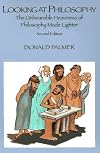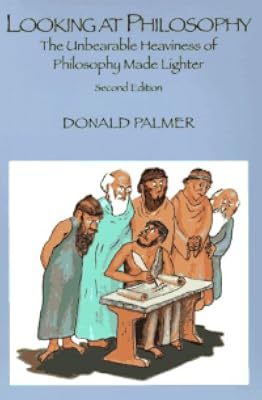
Looking At Philosophy: The Unbearable Heaviness of Philosophy Made Lighter
by Donald Palmer
On This Page
Description
"Distilled from Donald Palmer's more than thirty years of teaching experience, this text exemplifies his very successful approach to teaching introductory philosophy. Through the use of humor and nearly 400 drawings, charts, and diagrams, serious philosophical topics come alive for the reader without compromising the importance of the subject matter. In the author's words, "This book takes philosophy seriously, but not gravely.""-- "Wittgenstein once said that a whole philosophy book could show more be written consisting of nothing but jokes. This is not that book, nor does this book treat the history of philosophy as a joke. This book takes philosophy seriously, but not gravely. As the subtitle indicates, the goal of the book is to lighten the load a bit. How to do this without simply throwing the cargo overboard? First, by presenting an overview of estern philosophy from the sixth century B.C.E. through most of the twentieth century in a way that introduces the central philosophical ideas of the West and their evolution in a concise, readable format without trivializing them, but at the same time, without pretending to have exhausted them nor to have plumbed their depths. Second, following a time-honored medieval tradition, by illuminating the margins of the text. Some of these illuminations, namely those that attempt to schematize difficult ideas, I hope will be literally illuminating. Most of them, however, are simply attempts in a lighter vein to interrupt the natural propensity of the philosophers to succumb to the pull of gravity. (Nietzsche said that only the grave lay in that direction.) But even these philosophical jokes, I hope, have a pedagogical function. They should serve to help the reader retain the ideas that are thereby gently mocked. Thirty years of teaching the subject, which I love--and which has provoked more than a few laughs on the part of my students--convinces me that this technique should work. I do not claim to have achieved Nietzsche's "joyful wisdom," but I agree with him that there is such a thing and that we should strive for it"-- show lessTags
Recommendations








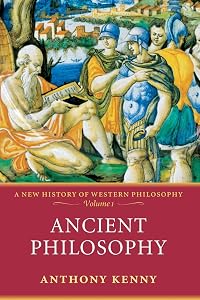








Member Recommendations
Cecrow Same author, similar content but arranged by topic.
Member Reviews
Philosophy - made lighter, made mainly comprehensible - though there remain a few figures in philosophical narrative, even made lighter, who achieve only the status of a decaf skinny latte: why bother? But Palmer overcomes the incomprehensibility of most Western philosophers (well maybe not Heidegger) and makes the journey worthwhile. In 75% of cases he even whets the appetite for more - all with humour and delightful drawings. That and a zany font. This is a wonderful book, and while some philosophy undergrads might turn up their noses at its deceptive simplicity, they should not do so: it makes philosophy an enjoyable discourse.
An excellent (to my uneducated mind) summary of a bunch of important philosophers and their relation to "the tradition" and their own movements. Does a great job of making some of their major ideas relatively understandable. The drawings are pretty goofy but sometimes do actually help to illuminate the text. Enjoyed it a bunch.
2 criticisms:
- It mentions Freud quite a few times but never really describes anything about him
- Doesn't challenge Western orthodoxy - treats the Dark Ages as, well, "dark" when this isn't true and mostly ignores Muslim works, giving them short shrift even when they're essential to what others wrote
2 criticisms:
- It mentions Freud quite a few times but never really describes anything about him
- Doesn't challenge Western orthodoxy - treats the Dark Ages as, well, "dark" when this isn't true and mostly ignores Muslim works, giving them short shrift even when they're essential to what others wrote
This is a very helpful book on major philosophers and philosophies up through post-structuralism. It explains philosophies lucidly while simultaneously mocking them. Highly recommended.
A useful overview of some of the major Western philosophical movements. It’s not a complete look, but it is a great place to get a sense of where to go next and who you’ll need to look up and read more of.
I never realized that Philosophy was so closely related to Mathematics, at least in the early years. That makes it difficult for me to digest a lot of it. The idea of philosophy as an exercise in pure logic dulls its appeal for me. I always thought of philosophy as a more romantic endeavor.
It seems like Plato and Aristotle said it all, and since then philosophers just alternated between the two. Not exactly, but that's about right. Plato was the more ethereal one, and Aristotle the more practical. This covers a couple dozen philosophers, from 6th c. B.C Thales (of earth, air, fire, and water, water is the most basic) of Greek Anatolia, to Wittgenstein (language allows philosophy to become absurd) and the modern day.
Ooit gekocht in een tweedehandswinkel - biedt een heel licht overzicht van de belangrijkste evoluties in de filosofie, en heeft al vaak dienst gedaan als geheugensteun. Wel niet aan te raden voor details.
Members
- Recently Added By
Author Information

15 Works 1,691 Members
Some Editions
Common Knowledge
- Canonical title
- Looking At Philosophy: The Unbearable Heaviness of Philosophy Made Lighter
- Original title
- Looking At Philosophy: The Unbearable Heaviness of Philosophy Made Lighter
- Original publication date
- 1988 (English) (English); 1998 (Dutch) (Dutch)
- People/Characters
- Thales of Miletus; Anaximander; Anaximenes of Miletus; Pythagoras; Heraclitus; Parmenides (show all 59); Zeno of Elea; Empedocles; Anaxagoras; Leucippus; Democritus; Protagoras; Gorgias; Thrasymachus; Callicles; Critias; Socrates; Plato; Aristotle; Epicurus; Zeno of Citium; Plotinus; Augustine of Hippo; John Scotus Eriugena; Anselm of Canterbury; Averroes; Maimonides; Thomas Aquinas; William of Ockham; René Descartes; Thomas Hobbes; Baruch Spinoza; Gottfried Wilhelm von Leibniz; John Locke; George Berkeley; David Hume; Immanuel Kant; Georg Wilhelm Friedrich Hegel; Arthur Schopenhauer; Søren Kierkegaard; Karl Marx; Friedrich Nietzsche; Jeremy Bentham; John Stuart Mill; Gottlob Frege; William James; John Dewey; G. E. Moore; Bertrand Russell; Ludwig Wittgenstein; Willard Van Orman Quine; Edmund Husserl; Martin Heidegger; Jean-Paul Sartre; Ferdinand de Saussure; Claude Lévi-Strauss; Jacques Lacan; Jacques Derrida; Luce Irigaray
- Important events
- Classical Antiquity; Middle Ages; Renaissance; Enlightenment; Existentialism
- Dedication
- For Katarina & Christian
- First words
- The story of Western philosophy begins in Greece.
- Original language
- English
Classifications
Statistics
- Members
- 619
- Popularity
- 47,130
- Reviews
- 11
- Rating
- (3.97)
- Languages
- Dutch, English
- Media
- Paper, Ebook
- ISBNs
- 11
- ASINs
- 2