On This Page
Description
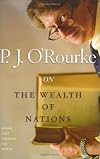
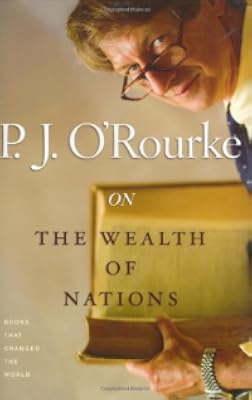
Recognized almost instantly upon its publication in 1776 as the fundamental work of economics, The Wealth of Nations was also recognized as really long: the original edition totaled over 900 pages in two volumes-including the blockbuster 67-page "digression concerning the variations in the value of silver during the course of the last four centuries," which, according to P. J. O'Rourke, "to those uninterested in the historiography of currency supply, is like reading Modern Maturity in Urdu." show more Although daunting, Smith's tome is still essential to understanding such current hot topics as outsourcing, trade imbalances, and Angelina Jolie. In this hilarious, approachable, and insightful examination of Smith and his groundbreaking work, O'Rourke puts his trademark wit to good use and shows us why Smith is still relevant, why what seems obvious now was once revolutionary, and why the pursuit of self-interest is so important. show lessTags
Recommendations






Member Reviews
P J O'Rourke - he of Republican Party Reptile - is a gifted, witty and acerbic writer but one whose views, even when on his mettle, one should take wth a pinch of salt: more useful as an antidote to loony-tunes leftie thinking than as a properly constructive conservative alternative. As with all politically committed writers, left or right, his core analysis tends to be glib: the brushstrokes with which he paints the world are vigorous but, like many paintings that look good at a distance, they don't always bear close examination.
Expounding on Adam Smith's classic The Wealth of Nations, then, O'Rourke both is and isn't on home turf. *Is* in that, superficially, Smith is the godfather of O'Rourke's libertarian, optimistic, Republican show more brand of economics in observing that the natural opposition of interests of buyers and sellers is a functional tension such that folks left to their own devices will, quite without meaning to, generally act is a way which is constructive and efficient in its allocation of resources. *Isn't* in that O'Rourke is a journalist and a polemicist not an economist, much less a moral philosopher (though to give him credit he makes no bones whatever about that) and Smith's 900 page tome is a far more nuanced volume than its hackneyed headline about the invisible hand - which is all most of us know about it: hence O'Rourke's book - suggests.
To his credit, also, O'Rourke has also spent time assimlating Smith's companion (and much less well known) volume A Theory of Moral Sentiments, and does some good work to contextualise Wealth of Nations by reference to it.
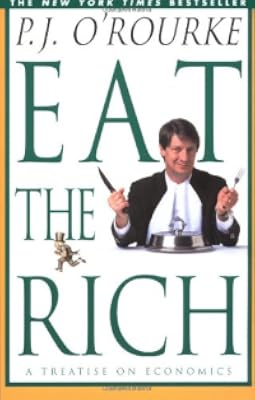
All the same, O'Rourke's simplistic economic viewpoint - and sardonic air - remain untroubled by Smith's nuance, and at times this entry drifts closer to representing O'Rourke's own theory of the Wealth of Nations rather than considering Smith's. Most readers will have far less interest in that, no matter how funny it might be, particularly as O'Rourke has had a go at that book already, a decade ago, in Eat the Rich: A Treatise on Economics, and more particularly because on this outing O'Rourke's wit isn't as sharp, nor his insight as valuable, as it can be.
In any case you can be sure that P J O'Rourke wouldn't need 900 pages to expound his theory. You could write it on a cocktail napkin (Eat The Rich notwithstanding), and for all his praise of Adam Smith's pragmatism in the face of ideologically driven idealism (anachronistic though it may be, at the time of publication the dread socialism being still a good century and more hence) O'Rourke's laissez-faire view of the world is as idealistic as any, supposing as it does perfectly rational actors, a complete absence of government, ubiquity of perfect information and an omnipresent infinity of buyers and sellers, and (as we can now say in November 2008 with 20:20 hindsight) just as flawed: there are, we know know, times where even perfectly rational actors simply won't act and in these times the invisible hand without so much as a by-your-leave vanishes altogether and the only credible mechanic left to deal with the black swans carousing about is good old nanny state. And Warren Buffett.
This is by no means a bad book, and for those interested in a *somewhat* deeper reading of The Wealth Of Nations, more pleasant than the one that can be had by actually reading it, step forward - but bring that salt cellar. For this P J O'Rourke book more than any, you'll be needing it. show less
Expounding on Adam Smith's classic The Wealth of Nations, then, O'Rourke both is and isn't on home turf. *Is* in that, superficially, Smith is the godfather of O'Rourke's libertarian, optimistic, Republican show more brand of economics in observing that the natural opposition of interests of buyers and sellers is a functional tension such that folks left to their own devices will, quite without meaning to, generally act is a way which is constructive and efficient in its allocation of resources. *Isn't* in that O'Rourke is a journalist and a polemicist not an economist, much less a moral philosopher (though to give him credit he makes no bones whatever about that) and Smith's 900 page tome is a far more nuanced volume than its hackneyed headline about the invisible hand - which is all most of us know about it: hence O'Rourke's book - suggests.
To his credit, also, O'Rourke has also spent time assimlating Smith's companion (and much less well known) volume A Theory of Moral Sentiments, and does some good work to contextualise Wealth of Nations by reference to it.
All the same, O'Rourke's simplistic economic viewpoint - and sardonic air - remain untroubled by Smith's nuance, and at times this entry drifts closer to representing O'Rourke's own theory of the Wealth of Nations rather than considering Smith's. Most readers will have far less interest in that, no matter how funny it might be, particularly as O'Rourke has had a go at that book already, a decade ago, in Eat the Rich: A Treatise on Economics, and more particularly because on this outing O'Rourke's wit isn't as sharp, nor his insight as valuable, as it can be.
In any case you can be sure that P J O'Rourke wouldn't need 900 pages to expound his theory. You could write it on a cocktail napkin (Eat The Rich notwithstanding), and for all his praise of Adam Smith's pragmatism in the face of ideologically driven idealism (anachronistic though it may be, at the time of publication the dread socialism being still a good century and more hence) O'Rourke's laissez-faire view of the world is as idealistic as any, supposing as it does perfectly rational actors, a complete absence of government, ubiquity of perfect information and an omnipresent infinity of buyers and sellers, and (as we can now say in November 2008 with 20:20 hindsight) just as flawed: there are, we know know, times where even perfectly rational actors simply won't act and in these times the invisible hand without so much as a by-your-leave vanishes altogether and the only credible mechanic left to deal with the black swans carousing about is good old nanny state. And Warren Buffett.
This is by no means a bad book, and for those interested in a *somewhat* deeper reading of The Wealth Of Nations, more pleasant than the one that can be had by actually reading it, step forward - but bring that salt cellar. For this P J O'Rourke book more than any, you'll be needing it. show less
Part of a forthcoming series "on" books so you don't have to read them, it's good in that I probably (let's be honest) will never manage to read The Wealth of Nations, and O'Rourke does a pretty good job with it. He doesn't rely only on himself to explain Adam Smith to you; he brings in scholarly work on Hume and economics and includes an extensive bibliography. All the same, at times I felt this book was a bit all over the place. There's an awful lot of material on Hume's other writings, which isn't necessarily a bad thing but makes the title a bit misleading, and O'Rourke seems to digress a bit too much sometimes. Still, I would recommend this to any fan of O'Rourke as well as to most people interested in a pretty quick and humorous show more (and interesting) read about Adam Smith. show less
While I found O’Rourke’s “wit and humor” to be mostly at a third grade level, I do think (unlike other reviewers) that he manages to give a decent Sparknotes intro to Smith’s Moral Sentiments and Wealth of Nations. I read the former in University but like many others I never got around to the latter.
I give the book four stars because O’Rourke did whet my appetite to read the original. Moreover, Smith is such a brilliant thinker and there are many quotes of his in the text, which are fun, enlightening and interesting to read.
I give the book four stars because O’Rourke did whet my appetite to read the original. Moreover, Smith is such a brilliant thinker and there are many quotes of his in the text, which are fun, enlightening and interesting to read.
Most interesting for me were O'Rourks's writings about Adam Smith, about what Smith really said about morality and business. Smith would not have been a neo-liberal.
The author has studied Adam Smith's seminal work of the 18th century (1776), and interpreted it in modern terms so that the rest of us are spared that ordeal. The result is a light, quirky, humorous account of the main strands of the treatrise, which as is well known, rests on two principles, the division of labor and specialisation, and the 'hidden hand' of free market exchanges to maximise satisfaction.
After moving from Houston to Tyler, I finally got a new public library card. While I was browsing around, I came across this book in a small display the library had on books about current affairs. I have read O'Rourke's books in the past; I enjoyed his Parliament of Whores very much, so I figured this might be a good bet. If nothing else, it would be a nice way to get exposure to Adam Smith's big book with some sense of humor thrown in. We'll see how it goes.
* * * *
Well, now that I finished reading it, I was not too impressed. On the one hand, it does give a decent overview of Smith's work. On the other hand, the book is mostly a way for O'Rourke to expose his conservative and capitalist views. Smith was by no means perfect, so to show more speak, so in a way, O'Rourke is doing a bit of a PR job. There is some humor throughout the book, but if you want to get an example of O'Rourke's humor, this book is really not it. Having said that, if you have not read Smith's work, and you likely won't, this is a pretty easy way to get an idea of the book's content and significance. The last chapter has a nice biographical note of Smith that puts the book in context. show less
* * * *
Well, now that I finished reading it, I was not too impressed. On the one hand, it does give a decent overview of Smith's work. On the other hand, the book is mostly a way for O'Rourke to expose his conservative and capitalist views. Smith was by no means perfect, so to show more speak, so in a way, O'Rourke is doing a bit of a PR job. There is some humor throughout the book, but if you want to get an example of O'Rourke's humor, this book is really not it. Having said that, if you have not read Smith's work, and you likely won't, this is a pretty easy way to get an idea of the book's content and significance. The last chapter has a nice biographical note of Smith that puts the book in context. show less
Bit of a hard stretch if you want to get into it fully but a brief overview of the main bits - OK - I liked the humour, especially in light of "New" USA.
Members
- Recently Added By
Author Information

46+ Works 12,028 Members
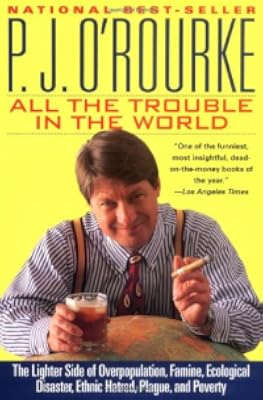
P. J. O'Rourke was born in Toledo, Ohio on November 14, 1947. He received a B. A. from Miami University in Oxford, Ohio and a M.A. in English from Johns Hopkins University. He worked for the magazine National Lampoon, eventually becoming editor-in-chief. He received a writing credit for National Lampoon's Lemmings which helped launch the careers show more of John Belushi and Chevy Chase. In 1981, he left the magazine to write screenplays including Rodney Dangerfield's Easy Money. He contributes regularly to several magazines including Playboy, Esquire, Vanity Fair, The American Spectator, The New Republic, The Atlantic Monthly, The Weekly Standard, and Rolling Stone. He is the author of 20 books including Parliament of Whores, Give War a Chance, All the Troubles in the World, Don't Vote! - It Just Encourages the Bastards, and How It Got That Way (And It Wasn't My Fault) (And I'll Never Do It Again). (Bowker Author Biography) show less
Awards and Honors
Distinctions
Series

Work Relationships
Is a commentary on the text of
Common Knowledge
- Canonical title
- On the Wealth of Nations
- Original publication date
- 2007
- Quotations
- A bank is an institution that doesn't deal in money. If we accept Smith's definition of value as "toil and trouble," banks deal in toil and trouble. Banking is a clever device for storing your toil and trouble. And instead of... (show all) being charged storage fees, you're compensated for engaging in excess toil and going for extra trouble.
Classifications
- Genres
- Economics, Nonfiction, General Nonfiction, Business, History, Philosophy, Politics and Government
- DDC/MDS
- 330.153 — Society, government, & culture Economics Jobs & Careers Theory Schools Classical economics
- LCC
- HB161 .O76 — Social sciences Economic theory. Demography Economic theory. Demography
- BISAC
Statistics
- Members
- 803
- Popularity
- 34,510
- Reviews
- 19
- Rating
- (3.38)
- Languages
- 7 — Dutch, English, Finnish, French, Polish, Portuguese, Swedish
- Media
- Paper, Audiobook, Ebook
- ISBNs
- 22
- ASINs
- 6