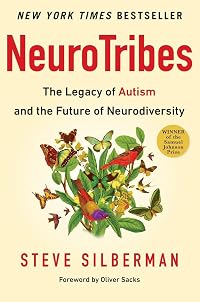
NeuroTribes: The Legacy of Autism and the Future of Neurodiversity
by Steve Silberman
On This Page
Description
What is autism: a lifelong disability or a naturally occurring form of cognitive difference akin to certain forms of genius? In truth, it is both of these things and more-and the future of our society depends on our understanding it. Wired reporter Steve Silberman unearths the secret history of autism, long suppressed by the same clinicians who became famous for discovering it, and finds surprising answers to the crucial question of why the number of diagnoses has soared in recent years. show more Going back to the earliest days of autism research and chronicling the brave and lonely journey of autistic people and their families through the decades, Silberman provides long-sought solutions to the autism puzzle, while mapping out a path for our society toward a more humane world in which people with learning differences and those who love them have access to the resources they need to live happier, healthier, more secure, and more meaningful lives. Along the way, he reveals the untold story of Hans Asperger, the father of Asperger's syndrome, whose "little professors" were targeted by the darkest social-engineering experiment in human history; exposes the covert campaign by child psychiatrist Leo Kanner to suppress knowledge of the autism spectrum for fifty years; and casts light on the growing movement of "neurodiversity" activists seeking respect, support, technological innovation, accommodations in the workplace and in education, and the right to self-determination for those with cognitive differences. show lessTags
Recommendations

















Member Reviews
As a parent who raised an autistic daughter through much of the later history Silverman describes, I loved this book. The early history of diagnosis and treatment was fascinating. Each time he delved into the background or quoted a leading expert from the field, I felt like I was saying hello to an old friend. Like many desperate parents, I met these people at conferences, read their books, tried some of their techniques, and took hope from the smallest "improvements" in my child's behavior. The earliest history of abuse, neglect, and institutionalization of autistics broke my heart. I was aware, but Silverman brought it home with his graphic descriptions and in depth anecdotes of real people. Having grown up clumsy, socially awkward, show more and a SF fan, I can only shudder and be grateful my gifts outweighed my deficits in that awful time.
My favorite part of the book was the last three chapters where the author delved into the more recent activities of autistic adults as they took (and are still taking) control of the tools available to them to build their own communities and advocate for more services, supports, and tolerance. I came to the conclusion early that my daughter would thrive in a more accepting environment that built on her strengths, rather than focusing on "fixing" her. Autistics all along the spectrum have unique gifts to contribute to society...if we only let them.
I highly recommend this book to anyone who has a relative or friend on the spectrum or is interested in the disability rights movement. Frankly, anyone interested in building a more inclusive society would benefit from the insights in this book. Thank you, Mr. Silberman, for taking on the monumental task of documenting the legacy of autism and executing it with thoroughness and sensitivity. I'm looking forward to a world that values neurodiversity.
Note: I received an advanced reading copy of this book from the publisher through the LibraryThing Early Reading program in exchange for an honest review. show less
My favorite part of the book was the last three chapters where the author delved into the more recent activities of autistic adults as they took (and are still taking) control of the tools available to them to build their own communities and advocate for more services, supports, and tolerance. I came to the conclusion early that my daughter would thrive in a more accepting environment that built on her strengths, rather than focusing on "fixing" her. Autistics all along the spectrum have unique gifts to contribute to society...if we only let them.
I highly recommend this book to anyone who has a relative or friend on the spectrum or is interested in the disability rights movement. Frankly, anyone interested in building a more inclusive society would benefit from the insights in this book. Thank you, Mr. Silberman, for taking on the monumental task of documenting the legacy of autism and executing it with thoroughness and sensitivity. I'm looking forward to a world that values neurodiversity.
Note: I received an advanced reading copy of this book from the publisher through the LibraryThing Early Reading program in exchange for an honest review. show less
 This review was written for LibraryThing Early Reviewers.
Let's start with the disclaimer: I am autistic, but my condition is "mild" enough that I wasn't diagnosed until I was fifty-one. In a sense, I live on the boundary between autism and neurotypicality. So where do I belong?
That's the best thing about this book: Author Silberman doesn't care. This is, in effect, a history of autism not as a condition but as a phenomenon -- from the 1940s, when Hans Asperger correctly and Leo Kanner incorrectly described it, until today. At first, it was considered a horrid, life-ruining condition. Now -- it is a recognized, common, but still misunderstood state of being. We still aren't dealing with it very well. But Silberman sees that we can if we choose to.
This is not a perfect book. The section about show more Nazi-ism is perhaps too explicit; so is the section on Ole Ivar Lovaas's brutal form of behavioral conditioning. I think it spends too much time on the movie "Rain Man." And I feel more should have been said about the catastrophic failure of psychodynamic therapy (psychoanalysis/Freudianism) to deal with any genuine neurobiological condition. It wasn't just Leo Kanner and Bruno Bettelheim; they were symptoms of a movement that listened only to itself. And... can we please back off on Temple Grandin? Grandin has done more for autism than any living person, and her insights are brilliant -- but she does not speak for all people with autism. She thinks in pictures; I can't so much as imagine a geometric pattern. She admits to relatively weak feelings toward people; mine can be so strong as to cause severe misunderstandings. She can't do formal mathematics; I have a degree in the subject. And so forth. There is no one who truly speaks for all people with autism; we are a chorus, not a single voice. And that point isn't very clear in the chapter about the current diversity of autism organizations; it really didn't feel as if it described my world.
The section on computer geeks may be a bit much, too. I never knew any of the big names Silberman talked about -- but I knew people very like this in my own college days. To me, it filed under "been there, done that." And, although Silberman doesn't seem to have noticed, people in the science fiction/computer trades have been writing about autism for a very long time. In 1973, Ursula K. LeGuin published "Vaster than Empires and More Slow," which made a wild and incorrect guess about what caused autism -- but correctly suggested that one of the problems associated with the condition was being bombarded by sensations which one could not control. Isaac Asimov around the same time published "Stranger in Paradise," which also had a partially-valid concept of what autistic people felt and didn't feel. Even in the 1970s, the problem wasn't good ideas, it was getting that (still very Freudian) establishment to listen.
But the failure to see the whole vast picture is a very slight weakness, it's also a strength -- because the book knows that our understanding is imperfect. This volume does much to remind us of how much Hans Asperger had right, and how much effort it took by many, many autistic parents, and by experts like Lorna Wing, as well as by people with autism themselves, to clear away the many years of error and false analysis. It is a history of halting progress -- but, as this book shows, it is a history of real progress.
And it looks forward to the next stage: The world in which people with autism are accepted for what they are. Yes, we have problems. (We do, folks.) We also have strengths -- as his chapter on the amazing physicist Henry Cavendish shows. Silberman didn't have to choose Cavendish; he could have chosen Isaac Newton, or Albert Einstein, or Marie and Pierre Curie. Or the many who aren't scientists. Charles Dodgson/Lewis Carroll. C. S. Lewis. Charles Darwin. Archimedes. J. R. R. Tolkien and Thomas Jefferson had many autistic traits. These are people who have made the world much richer. We shouldn't be institutionalizing them, we shouldn't be curing them -- and we shouldn't be rejecting them when they make mistakes. (As they/I do.) We should be giving them a world in which the strengths make us all stronger.
In many ways, this book is itself like a person with autism. It's not quite perfect. It's not quite complete. But there is no other book like it, and it can teach us things we would not have learned any other way. show less
That's the best thing about this book: Author Silberman doesn't care. This is, in effect, a history of autism not as a condition but as a phenomenon -- from the 1940s, when Hans Asperger correctly and Leo Kanner incorrectly described it, until today. At first, it was considered a horrid, life-ruining condition. Now -- it is a recognized, common, but still misunderstood state of being. We still aren't dealing with it very well. But Silberman sees that we can if we choose to.
This is not a perfect book. The section about show more Nazi-ism is perhaps too explicit; so is the section on Ole Ivar Lovaas's brutal form of behavioral conditioning. I think it spends too much time on the movie "Rain Man." And I feel more should have been said about the catastrophic failure of psychodynamic therapy (psychoanalysis/Freudianism) to deal with any genuine neurobiological condition. It wasn't just Leo Kanner and Bruno Bettelheim; they were symptoms of a movement that listened only to itself. And... can we please back off on Temple Grandin? Grandin has done more for autism than any living person, and her insights are brilliant -- but she does not speak for all people with autism. She thinks in pictures; I can't so much as imagine a geometric pattern. She admits to relatively weak feelings toward people; mine can be so strong as to cause severe misunderstandings. She can't do formal mathematics; I have a degree in the subject. And so forth. There is no one who truly speaks for all people with autism; we are a chorus, not a single voice. And that point isn't very clear in the chapter about the current diversity of autism organizations; it really didn't feel as if it described my world.
The section on computer geeks may be a bit much, too. I never knew any of the big names Silberman talked about -- but I knew people very like this in my own college days. To me, it filed under "been there, done that." And, although Silberman doesn't seem to have noticed, people in the science fiction/computer trades have been writing about autism for a very long time. In 1973, Ursula K. LeGuin published "Vaster than Empires and More Slow," which made a wild and incorrect guess about what caused autism -- but correctly suggested that one of the problems associated with the condition was being bombarded by sensations which one could not control. Isaac Asimov around the same time published "Stranger in Paradise," which also had a partially-valid concept of what autistic people felt and didn't feel. Even in the 1970s, the problem wasn't good ideas, it was getting that (still very Freudian) establishment to listen.
But the failure to see the whole vast picture is a very slight weakness, it's also a strength -- because the book knows that our understanding is imperfect. This volume does much to remind us of how much Hans Asperger had right, and how much effort it took by many, many autistic parents, and by experts like Lorna Wing, as well as by people with autism themselves, to clear away the many years of error and false analysis. It is a history of halting progress -- but, as this book shows, it is a history of real progress.
And it looks forward to the next stage: The world in which people with autism are accepted for what they are. Yes, we have problems. (We do, folks.) We also have strengths -- as his chapter on the amazing physicist Henry Cavendish shows. Silberman didn't have to choose Cavendish; he could have chosen Isaac Newton, or Albert Einstein, or Marie and Pierre Curie. Or the many who aren't scientists. Charles Dodgson/Lewis Carroll. C. S. Lewis. Charles Darwin. Archimedes. J. R. R. Tolkien and Thomas Jefferson had many autistic traits. These are people who have made the world much richer. We shouldn't be institutionalizing them, we shouldn't be curing them -- and we shouldn't be rejecting them when they make mistakes. (As they/I do.) We should be giving them a world in which the strengths make us all stronger.
In many ways, this book is itself like a person with autism. It's not quite perfect. It's not quite complete. But there is no other book like it, and it can teach us things we would not have learned any other way. show less
This review was written for LibraryThing Early Reviewers.I picked this expecting something along the lines of NeuroDiversity: The Birth of an Idea by Judy Singer, an exposé of how autistic people used to be treated compared to how they are treated now, but, more in-depth. It's not. I don't know why I had such expectation. I guess I was mislead by the title -I had focused on 'NeuroTribes', while I should have paid more attention to 'Legacy'. Nevertheless, it ended up in fact to be dealing with the history of autism/ Asperger, or, to be more exact, the history behind such a diagnosis. Such historical exposé is truly engrossing and insightful, not least because the author doesn't believe that seeing autism as a beneficial spectrum, as we do now, to be fundamentally new:
'making peace with show more autism -by viewing it as a lifelong disability that deserves support, rather than a disease of children that can be cured- seemed like a new and radical idea. In fact, it was the oldest idea in autism research. But it had been forgotten...'
Autism as a condition has always been around, as Steve Silberman points to by outlining the biographies of a few past geniuses we know suspect of having been so (e.g. Henry Cavendish, Paul Dirac...). There was just no medical diagnosis -these people were just considered, well, bizarre and eccentric! The medical diagnosis will, in fact, come the fore only in the 20th century, and this is where this book really picks its momentum.
The author delves here into the work of Grunia Sukhareva, the Soviet child psychiatrist who had coined the label 'schizoid personality disorder'. It's interesting, because the term 'schizoid' had nothing to do with psychosis, yet it would be completely misinterpreted -what we came to call autism being confused, from then on, as a form of childhood schizophrenia. This is not where the story gets truly fascinating, though. Where it's truly fascinating is when he outlines the work and views of Hans Asperger as opposed to those of Leo Kanner, both clinicians who will be credited with 'discovering' (for lack of a better term) autism. This has struck many as a weird coincidence for decades (Hans Asperger was working in Nazi Austria, while Leo Kanner was a psychiatrist in the USA). Yet, as the author shows, this was everything but a coincidence: Kanner knew of Asperger's work, he just twisted it to fit his own views, and, the impact -not only upon researches but also how autistic people have been perceived for the following decades- would be very damaging.
Strikingly indeed, Hans Asperger is here presented in quite a good light. Yes, he worked for the Nazi regime, and the author acknowledges his participation in crimes (e.g. he sat on committees who had sent 'unfit' children to their fatal fate). But it's his views on autism which matters in here, and they seemed to have been in sharp contrast to what you would expect. He was fascinated by 'autistic intelligence' of the children he encountered:
'These children were bundles of paradoxes: precocious and childish, sophisticated and naïve, clumsy but formal, standoffish but lonely, attuned to the music of language but insensitive to the rhythm of reciprocal interaction.'
Here you may ask: are his views of Asperger somehow naïve? It's hard to say, because Asperger himself remains a controversial man still very difficult to understand, especially since he had to walk that thin grey area people with position of authority have to walk under dictatorships. Just a side note here, but, for whose interested, I recently finish reading a fascinating biography of the man by Edith Scheffer (Asperger's Children: The Origins of Autism in Nazi Vienna), a biography which I think is highly useful in balancing his stance... What is certain, though, is that Kanner knew of his researches (despite having always denied it), not least because he worked alongside Asperger's colleagues who had flee the Nazi regime gripping Austria. And Kanner, unlike Asperger, will not see autism as a form of intelligence resulting from a different way of thinking, let alone as a spectrum, but, on the contrary, as a serious form of psychosis affecting only children, and whose roots are not biological but environmental. In other words: only children can be diagnosed, and they are so because of bad parenting:
'To Kanner, autism was not merely an eccentric cognitive style or an alternate mindset. It was a tragic form of childhood psychosis, akin to schizophrenia, caused by inadequate parenting. It was certainly nothing to be proud of.'
The consequences would be dire:
'By blaming parents for inadvertently causing their children's autism, Kanner made his syndrome a source of shame and stigma for families worldwide while sending autism research off in the wrong direction for decades.'
It won't be until the 1980s and the work of Lorna Wing that autism will finally be assessed again as it should. But, until then, society would be shaped by Kanner's misguided views, with the harms this would have. Only acknowledging children as being autistic would left countless adults in limbo and without any form of support (e.g. education, employment, dating, friendships, daily life...). It would also lead to autism perceived as a terrible disease to be cured at all cost, a view taken even by organisations purporting to support autistic children and their families! Ample pages are dedicated to Bernard Rimland, Ole Ivar Lovaas, and, ultimately, the cranks and fraudsters coming in their paths (not least the whole anti-vax pseudo-science and scaremongering). Ample pages are also dedicated to the evolution of the DSM over the past decades, reflecting a society trying to come to term with an elusive condition.
What about autistic people themselves? Their views had been ignored in the previous generations, they are now getting empowered and so can speak for themselves. It's about time we listen! The remaining parts of the book focus then on how autistic people found niche in various sub-cultures. It also focus on how the culture at large came to accept them. Autism is not only recognised at long last for what it is (a spectrum part of our neurodiverse humanity) but, autistic people themselves, as a result, are being included within society at large. There's still a lot to battle for, but we came a long way.
All in all, this a meticulous and engrossing book about the history behind 'autism/Asperger' as a diagnosis. The topic is highly relevant, because it helps shedding light upon our ever-changing perception of this baffling, yet fascinating condition. Sure, autism can be a severely disabling impairment, with some people with capabilities and a mental capacity so poor they need constant care. But, it's above all a spectrum, an expression of various mindsets which society (especially in our era) can benefit from -and has, indeed, benefited from. In any case, autism shouldn't be the scarecrow too often used by cranks and fraudsters, more often than not with their own agendas with no care for the people concerned. If you have to read one book, just one, about the topic, make it this one. show less
'making peace with show more autism -by viewing it as a lifelong disability that deserves support, rather than a disease of children that can be cured- seemed like a new and radical idea. In fact, it was the oldest idea in autism research. But it had been forgotten...'
Autism as a condition has always been around, as Steve Silberman points to by outlining the biographies of a few past geniuses we know suspect of having been so (e.g. Henry Cavendish, Paul Dirac...). There was just no medical diagnosis -these people were just considered, well, bizarre and eccentric! The medical diagnosis will, in fact, come the fore only in the 20th century, and this is where this book really picks its momentum.
The author delves here into the work of Grunia Sukhareva, the Soviet child psychiatrist who had coined the label 'schizoid personality disorder'. It's interesting, because the term 'schizoid' had nothing to do with psychosis, yet it would be completely misinterpreted -what we came to call autism being confused, from then on, as a form of childhood schizophrenia. This is not where the story gets truly fascinating, though. Where it's truly fascinating is when he outlines the work and views of Hans Asperger as opposed to those of Leo Kanner, both clinicians who will be credited with 'discovering' (for lack of a better term) autism. This has struck many as a weird coincidence for decades (Hans Asperger was working in Nazi Austria, while Leo Kanner was a psychiatrist in the USA). Yet, as the author shows, this was everything but a coincidence: Kanner knew of Asperger's work, he just twisted it to fit his own views, and, the impact -not only upon researches but also how autistic people have been perceived for the following decades- would be very damaging.
Strikingly indeed, Hans Asperger is here presented in quite a good light. Yes, he worked for the Nazi regime, and the author acknowledges his participation in crimes (e.g. he sat on committees who had sent 'unfit' children to their fatal fate). But it's his views on autism which matters in here, and they seemed to have been in sharp contrast to what you would expect. He was fascinated by 'autistic intelligence' of the children he encountered:
'These children were bundles of paradoxes: precocious and childish, sophisticated and naïve, clumsy but formal, standoffish but lonely, attuned to the music of language but insensitive to the rhythm of reciprocal interaction.'
Here you may ask: are his views of Asperger somehow naïve? It's hard to say, because Asperger himself remains a controversial man still very difficult to understand, especially since he had to walk that thin grey area people with position of authority have to walk under dictatorships. Just a side note here, but, for whose interested, I recently finish reading a fascinating biography of the man by Edith Scheffer (Asperger's Children: The Origins of Autism in Nazi Vienna), a biography which I think is highly useful in balancing his stance... What is certain, though, is that Kanner knew of his researches (despite having always denied it), not least because he worked alongside Asperger's colleagues who had flee the Nazi regime gripping Austria. And Kanner, unlike Asperger, will not see autism as a form of intelligence resulting from a different way of thinking, let alone as a spectrum, but, on the contrary, as a serious form of psychosis affecting only children, and whose roots are not biological but environmental. In other words: only children can be diagnosed, and they are so because of bad parenting:
'To Kanner, autism was not merely an eccentric cognitive style or an alternate mindset. It was a tragic form of childhood psychosis, akin to schizophrenia, caused by inadequate parenting. It was certainly nothing to be proud of.'
The consequences would be dire:
'By blaming parents for inadvertently causing their children's autism, Kanner made his syndrome a source of shame and stigma for families worldwide while sending autism research off in the wrong direction for decades.'
It won't be until the 1980s and the work of Lorna Wing that autism will finally be assessed again as it should. But, until then, society would be shaped by Kanner's misguided views, with the harms this would have. Only acknowledging children as being autistic would left countless adults in limbo and without any form of support (e.g. education, employment, dating, friendships, daily life...). It would also lead to autism perceived as a terrible disease to be cured at all cost, a view taken even by organisations purporting to support autistic children and their families! Ample pages are dedicated to Bernard Rimland, Ole Ivar Lovaas, and, ultimately, the cranks and fraudsters coming in their paths (not least the whole anti-vax pseudo-science and scaremongering). Ample pages are also dedicated to the evolution of the DSM over the past decades, reflecting a society trying to come to term with an elusive condition.
What about autistic people themselves? Their views had been ignored in the previous generations, they are now getting empowered and so can speak for themselves. It's about time we listen! The remaining parts of the book focus then on how autistic people found niche in various sub-cultures. It also focus on how the culture at large came to accept them. Autism is not only recognised at long last for what it is (a spectrum part of our neurodiverse humanity) but, autistic people themselves, as a result, are being included within society at large. There's still a lot to battle for, but we came a long way.
All in all, this a meticulous and engrossing book about the history behind 'autism/Asperger' as a diagnosis. The topic is highly relevant, because it helps shedding light upon our ever-changing perception of this baffling, yet fascinating condition. Sure, autism can be a severely disabling impairment, with some people with capabilities and a mental capacity so poor they need constant care. But, it's above all a spectrum, an expression of various mindsets which society (especially in our era) can benefit from -and has, indeed, benefited from. In any case, autism shouldn't be the scarecrow too often used by cranks and fraudsters, more often than not with their own agendas with no care for the people concerned. If you have to read one book, just one, about the topic, make it this one. show less
This is an important and necessary book, an excellent piece of journalism, a well-written and concise history, and a frequently emotionally difficult read. Everyone should read it.
There are three distinct narrative strands in this book. First, there’s the decade-by-decade medical history, which delves into the lives of important psychologists such as Asperger, Kanner, Lovaas, and Wing, and discusses the standard beliefs and treatments at the time (spoilers: resoundingly Not Good most of the time). Alongside the facts, Silberman uses this strand to expose the origins of present-day autism therapies and advice, such as the idea that autism can be regulated by diet or that it’s somehow the result of bad parenting. He gives context show more that’s lacking in the standard autism narrative, portrays the good and bad in both people and treatments, and most importantly to me, makes a point of mentioning less-known researchers, female researchers, and female patients.
The second strand is a history of autistic life and figures. Some of this spins out from the medical history—he follows up on child patients as adults, for instance—but there’s also a lot of looking at the past and asking, “What were autistic people doing at the time?” (His thesis here being that autism isn’t a new thing or a childhood thing, that autistic adults have always existed.) So there are sections on science fiction fandom, on ham radio, on early computing, and on early 2000s online activism and communities. He does also armchair diagnose historical figures, which I know is often fraught, but his cases are compelling at least to the extent of “autism is a spectrum.”
The third strand is parental activism—parents who refused to do the “right thing” and confine their kid in an asylum for the rest of their life, parents who looked into alternative treatments, parents who banded together to support each other and win political battles on behalf of their children. There’s more centering of women here (hooray!), but also discussion of how some of these organizations have drifted into questionable treatments (like eschewing vaccines or promoting chelation therapy) and questionable beliefs (like AutismSpeaks).
All this is woven together into a loose timeline, so that ham radio is side-by-side with early parent movements, applied behavioural therapy, and introduction of autism to the DSM. There’s enough bouncing within the time periods, though, that I’d have liked more concrete dates and possibly a timeline so I could keep things more straight in my mind.
Silberman clearly did a lot of research for this and I learned a lot, even if a lot of it was awful. I appreciated that he relayed the good and the bad throughout the book, that he made a point of reintroducing women as doctors, parents, and autistics, and that he also made a point of exposing the myths and fallacies within the pop culture autistic history narrative. (He didn’t often say he was doing that, but it was there.) He’s also clearly biased, as I mentioned above, and working towards the thesis of “it’s a spectrum, it’s always existed, we’re finally getting somewhere good with society and medicine now but we have a long way to go.” And like I hinted above, that’s rather feel-good for a specific (progressive) segment of the population.
To sum up: I found this a compelling and enlightening read, reasonably balanced, specific without being detailed, and engrossing enough I nearly missed my stop a few times and talked my coworkers’ ears off. It’s also a reasonably easy read in terms of style, but not an easy one for subject matter. (Abuse and bigotry make me mad.) I’d rec this to just about everyone, but am curious to hear if anyone with autism, autistic relatives, or more knowledge of psychology has read it and what they thought.
Warnings: The history of autism is rife with abuse, dehumanization, weak and misguided science and medicine, misdiagnosis, misogyny, homophobia, antisemitism, forced sterilization, eugenics, psychiatric hospitals, shock therapy, forced medication, apathy, poverty, and generally bigoted and neurotypical thinking. Furthermore, because Hans Asperger was working in Austria during the rise of the Nazis, there is discussion of Nazi policies and of decisions made within that political climate to keep one’s job and hopefully save one’s patients. There are also brief mentions of the Holocaust.
Also, there is reference throughout to autism being a disorder and a disability, as well as quotes from historical figures that reflect the biases and bigotry of their day and quotes from living people about how autism has “stolen their child” and the desire to “get my kid back.” Hopefully all of the above is to be expected given the subject matter, but you never know.
9/10 show less
There are three distinct narrative strands in this book. First, there’s the decade-by-decade medical history, which delves into the lives of important psychologists such as Asperger, Kanner, Lovaas, and Wing, and discusses the standard beliefs and treatments at the time (spoilers: resoundingly Not Good most of the time). Alongside the facts, Silberman uses this strand to expose the origins of present-day autism therapies and advice, such as the idea that autism can be regulated by diet or that it’s somehow the result of bad parenting. He gives context show more that’s lacking in the standard autism narrative, portrays the good and bad in both people and treatments, and most importantly to me, makes a point of mentioning less-known researchers, female researchers, and female patients.
The second strand is a history of autistic life and figures. Some of this spins out from the medical history—he follows up on child patients as adults, for instance—but there’s also a lot of looking at the past and asking, “What were autistic people doing at the time?” (His thesis here being that autism isn’t a new thing or a childhood thing, that autistic adults have always existed.) So there are sections on science fiction fandom, on ham radio, on early computing, and on early 2000s online activism and communities. He does also armchair diagnose historical figures, which I know is often fraught, but his cases are compelling at least to the extent of “autism is a spectrum.”
The third strand is parental activism—parents who refused to do the “right thing” and confine their kid in an asylum for the rest of their life, parents who looked into alternative treatments, parents who banded together to support each other and win political battles on behalf of their children. There’s more centering of women here (hooray!), but also discussion of how some of these organizations have drifted into questionable treatments (like eschewing vaccines or promoting chelation therapy) and questionable beliefs (like AutismSpeaks).
All this is woven together into a loose timeline, so that ham radio is side-by-side with early parent movements, applied behavioural therapy, and introduction of autism to the DSM. There’s enough bouncing within the time periods, though, that I’d have liked more concrete dates and possibly a timeline so I could keep things more straight in my mind.
Silberman clearly did a lot of research for this and I learned a lot, even if a lot of it was awful. I appreciated that he relayed the good and the bad throughout the book, that he made a point of reintroducing women as doctors, parents, and autistics, and that he also made a point of exposing the myths and fallacies within the pop culture autistic history narrative. (He didn’t often say he was doing that, but it was there.) He’s also clearly biased, as I mentioned above, and working towards the thesis of “it’s a spectrum, it’s always existed, we’re finally getting somewhere good with society and medicine now but we have a long way to go.” And like I hinted above, that’s rather feel-good for a specific (progressive) segment of the population.
To sum up: I found this a compelling and enlightening read, reasonably balanced, specific without being detailed, and engrossing enough I nearly missed my stop a few times and talked my coworkers’ ears off. It’s also a reasonably easy read in terms of style, but not an easy one for subject matter. (Abuse and bigotry make me mad.) I’d rec this to just about everyone, but am curious to hear if anyone with autism, autistic relatives, or more knowledge of psychology has read it and what they thought.
Warnings: The history of autism is rife with abuse, dehumanization, weak and misguided science and medicine, misdiagnosis, misogyny, homophobia, antisemitism, forced sterilization, eugenics, psychiatric hospitals, shock therapy, forced medication, apathy, poverty, and generally bigoted and neurotypical thinking. Furthermore, because Hans Asperger was working in Austria during the rise of the Nazis, there is discussion of Nazi policies and of decisions made within that political climate to keep one’s job and hopefully save one’s patients. There are also brief mentions of the Holocaust.
Also, there is reference throughout to autism being a disorder and a disability, as well as quotes from historical figures that reflect the biases and bigotry of their day and quotes from living people about how autism has “stolen their child” and the desire to “get my kid back.” Hopefully all of the above is to be expected given the subject matter, but you never know.
9/10 show less
Neurotribes by Steve Silberman is a thorough, fascinating look at the history and current state of autism by a former Wired journalist who knows how to tell a story. I recommend it for anyone interested in the subject.
In writing about the tech industry, Silbermangot inspired by the apparent connection in Silicon Valley between autism and parents who are tech coders and engineers. First spotted by Asperger (who had the high-functioning syndrome named after him), autism unfortunately originally got classified here in the U.S. in the 1940s in a narrow, mostly off-target way. Silberman does an excellent job of combining personal stories of autistic individuals and their parents with a detailed history of the evolution of our understanding show more of autism. We see early wrong-headed stabs in the dark like blaming the condition on cold, unemotional "refrigerator moms" (Leo Kanner later distanced himself from that one and acknowledged autism is inborn). The many and varied attempts to "correct" the behavior and make autistic children "normal" are frustrating to read about and, often, horrifying. Institutionalization was a disaster for autistic children. The worst, for me, was some doctors' infatuation with "aversion" therapy, that is, punishment for abnormal behavior. Oh, those poor children.
Contrast this early view from Hans Asperger, back in the 1930s, which is so in tune with current thinking:
"We claim - not on the basis of theory, but on the basis of our experiences with many children like this - that this boy's positive and negative qualities are two natural, necessary, interconnected aspects of one well-knit, harmonious personality. We could express it this way: this boy's difficulties - which particularly affect his relationships with himself and other people - are the price that he has to pay for his special gifts."
If only that perspective had caught on in the early days! WWII and ignorance of Asperger's work in Austria interfered.
The debunked theory of causation by vaccination is covered, as is the view held by some, even today, that autism needs to be "cured". As famous autistic designer and author Temple Grandin has said, we'd all be losers if autism were eliminated, as some of our greatest accomplishments have been by people we now believe were on the spectrum. One of my favorite parts of the book was the organized and outraged resistance from organizations of autistic individuals, "neurodiversity activists" and parents of autistic children, to a U.S. charity's advertising autism as "stealing children". It agreed to stop the campaign. We now look at autism as a spectrum, thanks to English psychiatrist Lorna Wing, to whom the book is dedicated, and the majority of us view it as a different way of experiencing the world. It needs to be accommodated, not "cured".
I hadn't realized the impact of the Dustin Hoffman 1988 movie "Rain Man' in the autistic world, with parents of autistic children suddenly finding strangers intrigued rather than alarmed by their children's behavior - "oh, he's like the Rain Man". Temple Grandin, beginning in 1989, and other autistic people increasingly after that, began speaking in public about their experiences, and the unnecessary difficulties autistics encounter in the "normal" world. Jim Sinclair, who realized his condition after seeing a movie on autism, gave a poignant speech at an autism conference about the damaging effect of parents wanting their children on the spectrum to be made normal. That conveys a message that they are deficient and inadequate:
"This is what we hear when you mourn over our existence. This is what we hear when you pray for a cure. This is what we know, when you tell us of your fondest hopes and dreams for us: that your greatest wish is that one day we will cease to be, and strangers you can love will move in behind our faces".
Oh my. "Don't mourn for us" he says. "We are alive. We are real. And we're here waiting for you."
Silberman's descriptions of autistic people joyfully gathering together, just them and no "neurotypicals", got to me maybe more than anything else. Neurotribes. The one change I would make to the book, if I could, is to shorten some of the author's digressions. They're unfailingly interesting, and I can see why he did it, but the book is long, and cutting back on some of that would, IMO, give it even more zip. Because of that, I give it 4 and 1/2 stars, but it probably deserves 5 regardless. show less
In writing about the tech industry, Silbermangot inspired by the apparent connection in Silicon Valley between autism and parents who are tech coders and engineers. First spotted by Asperger (who had the high-functioning syndrome named after him), autism unfortunately originally got classified here in the U.S. in the 1940s in a narrow, mostly off-target way. Silberman does an excellent job of combining personal stories of autistic individuals and their parents with a detailed history of the evolution of our understanding show more of autism. We see early wrong-headed stabs in the dark like blaming the condition on cold, unemotional "refrigerator moms" (Leo Kanner later distanced himself from that one and acknowledged autism is inborn). The many and varied attempts to "correct" the behavior and make autistic children "normal" are frustrating to read about and, often, horrifying. Institutionalization was a disaster for autistic children. The worst, for me, was some doctors' infatuation with "aversion" therapy, that is, punishment for abnormal behavior. Oh, those poor children.
Contrast this early view from Hans Asperger, back in the 1930s, which is so in tune with current thinking:
"We claim - not on the basis of theory, but on the basis of our experiences with many children like this - that this boy's positive and negative qualities are two natural, necessary, interconnected aspects of one well-knit, harmonious personality. We could express it this way: this boy's difficulties - which particularly affect his relationships with himself and other people - are the price that he has to pay for his special gifts."
If only that perspective had caught on in the early days! WWII and ignorance of Asperger's work in Austria interfered.
The debunked theory of causation by vaccination is covered, as is the view held by some, even today, that autism needs to be "cured". As famous autistic designer and author Temple Grandin has said, we'd all be losers if autism were eliminated, as some of our greatest accomplishments have been by people we now believe were on the spectrum. One of my favorite parts of the book was the organized and outraged resistance from organizations of autistic individuals, "neurodiversity activists" and parents of autistic children, to a U.S. charity's advertising autism as "stealing children". It agreed to stop the campaign. We now look at autism as a spectrum, thanks to English psychiatrist Lorna Wing, to whom the book is dedicated, and the majority of us view it as a different way of experiencing the world. It needs to be accommodated, not "cured".
I hadn't realized the impact of the Dustin Hoffman 1988 movie "Rain Man' in the autistic world, with parents of autistic children suddenly finding strangers intrigued rather than alarmed by their children's behavior - "oh, he's like the Rain Man". Temple Grandin, beginning in 1989, and other autistic people increasingly after that, began speaking in public about their experiences, and the unnecessary difficulties autistics encounter in the "normal" world. Jim Sinclair, who realized his condition after seeing a movie on autism, gave a poignant speech at an autism conference about the damaging effect of parents wanting their children on the spectrum to be made normal. That conveys a message that they are deficient and inadequate:
"This is what we hear when you mourn over our existence. This is what we hear when you pray for a cure. This is what we know, when you tell us of your fondest hopes and dreams for us: that your greatest wish is that one day we will cease to be, and strangers you can love will move in behind our faces".
Oh my. "Don't mourn for us" he says. "We are alive. We are real. And we're here waiting for you."
Silberman's descriptions of autistic people joyfully gathering together, just them and no "neurotypicals", got to me maybe more than anything else. Neurotribes. The one change I would make to the book, if I could, is to shorten some of the author's digressions. They're unfailingly interesting, and I can see why he did it, but the book is long, and cutting back on some of that would, IMO, give it even more zip. Because of that, I give it 4 and 1/2 stars, but it probably deserves 5 regardless. show less
This review was written for LibraryThing Early Reviewers.The human mind is so complex, and of course our attempts to understand it are themselves just more facets of that very mind, a self-referentiality that is so problematic that it becomes very easy to doubt how much progress we will ever make! The history of psychology does not inspire much confidence!
Silberman's book takes us through much of this tangle, focused specifically on the autism spectrum. While he shows us many of the wrong turns, in the end the picture he presents is so bright and full of hope, it inspires deep optimism. While autism is a very complicated family of psychological patterns, it seems that methods are emerging that really allow psychologists to map and measure the relevant behaviors. Autism seems to be emerging show more from the fog... still it has indistinct boundaries that fold and merge into other syndromes, so it can't be called very distinct. But still, if there is at least a central zone that can be outlined with some clarity, it feels as though we are making some real progress.
This is a fat enough book already. It never bogged down at all - Silberman did a good job of organizing his material around a few coherent narrative threads. The whole story, though, is a lot bigger, I think. There are really two dimensions of optimism here: our increasing understanding of psychology, and our increasing accommodation of psychological differences - of neurodiversity. This accommodation is a part of a broader current in society, of accommodating diversity in many dimensions, of people's different physical abilities, and beyond.
Nowadays, especially with the recent terrorist attacks in Paris, but really accommodation and tolerance are huge political issues. We are still struggling with racism! We are not really free from the dark currents that promote intolerance, purity, and narrow visions of unified coherent truth. Whether it is monotheism or monologism, if there is one right way, then all other ways must be wrong, and the accommodation of diversity is the accommodation of error, which must itself be erroneous.
Silberman paints a beautiful picture of a struggle to reach a promised land. At this point I think we have just a glimpse of that promised land. The struggle to actually enter that land, that struggle has hardly begun. Silberman is certainly right to celebrate the great achievement of glimpsing a world where neurodiversity is cherished. Now we need a strategy for the next steps of the journey.
Look even at biodiversity. Are humans alone of essential value and other species only valuable insofar as they benefit we humans? We are facing a huge conflict. Neurodiversity is a fascinating component of that, but just one component. If the various diversity movements can become allies, they can strengthen each other. There is always the temptation to bargain, to buy accommodation for the diversity that I care about in a trade that sells off accommodation for dimensions of diversity that don't concern me. Of course, this kind of divide and conquer strategy needs to be recognized and an adequate defense built. There is a lot of work in front of us! show less
Silberman's book takes us through much of this tangle, focused specifically on the autism spectrum. While he shows us many of the wrong turns, in the end the picture he presents is so bright and full of hope, it inspires deep optimism. While autism is a very complicated family of psychological patterns, it seems that methods are emerging that really allow psychologists to map and measure the relevant behaviors. Autism seems to be emerging show more from the fog... still it has indistinct boundaries that fold and merge into other syndromes, so it can't be called very distinct. But still, if there is at least a central zone that can be outlined with some clarity, it feels as though we are making some real progress.
This is a fat enough book already. It never bogged down at all - Silberman did a good job of organizing his material around a few coherent narrative threads. The whole story, though, is a lot bigger, I think. There are really two dimensions of optimism here: our increasing understanding of psychology, and our increasing accommodation of psychological differences - of neurodiversity. This accommodation is a part of a broader current in society, of accommodating diversity in many dimensions, of people's different physical abilities, and beyond.
Nowadays, especially with the recent terrorist attacks in Paris, but really accommodation and tolerance are huge political issues. We are still struggling with racism! We are not really free from the dark currents that promote intolerance, purity, and narrow visions of unified coherent truth. Whether it is monotheism or monologism, if there is one right way, then all other ways must be wrong, and the accommodation of diversity is the accommodation of error, which must itself be erroneous.
Silberman paints a beautiful picture of a struggle to reach a promised land. At this point I think we have just a glimpse of that promised land. The struggle to actually enter that land, that struggle has hardly begun. Silberman is certainly right to celebrate the great achievement of glimpsing a world where neurodiversity is cherished. Now we need a strategy for the next steps of the journey.
Look even at biodiversity. Are humans alone of essential value and other species only valuable insofar as they benefit we humans? We are facing a huge conflict. Neurodiversity is a fascinating component of that, but just one component. If the various diversity movements can become allies, they can strengthen each other. There is always the temptation to bargain, to buy accommodation for the diversity that I care about in a trade that sells off accommodation for dimensions of diversity that don't concern me. Of course, this kind of divide and conquer strategy needs to be recognized and an adequate defense built. There is a lot of work in front of us! show less
On one level, Steve Silberman's Neurotribes is a history of Autism Spectrum Disorder that spans hundreds of years, many tragedies, and a thorough examination of the recent "autism epidemic," including the many "cures" touted by experts ranging from behavioral intervention to the Anti-Vaxxer movement. My own son was diagnosed with PDD-NOS in 2003 at the age of three, so the experience of reading Silberman's book was often like revisiting my own family's journey through the confusing and oftentimes downright hostile world of diagnosis, intervention, and the unending fight for proper support and services.
Throughout the book, Silberman makes the case that past focus on "causes" and "cures" is misguided at best, and downright harmful at show more worst. As my own experience illustrates, parents are frequently made to feel as if they somehow "caused" their children's ASD, either through neglect, exposure to some unspecified environmental factor, or, prior to its thorough scientific debunking, through vaccination. Later, inability (or refusal) to submit one's child to a "cure" often further subjects parents to accusations that they did nothing to make their child "better."
As Neurotribes makes clear, however, autistic people don't need to be cured. What they need are the support services which will allow them both a voice in their own lives and as much independence as they can successfully maintain. My own son is frequently underestimated by everyone around him. He is a bright, compassionate, affectionate person who also happens to sometimes flap his hands and repeat sections of dialogue from his favorite movies in order to lessen his feelings of anxiety. As Silberman so beautifully illustrates, he and every other autistic person have so much to offer the world, if only the world will let them. show less
Throughout the book, Silberman makes the case that past focus on "causes" and "cures" is misguided at best, and downright harmful at show more worst. As my own experience illustrates, parents are frequently made to feel as if they somehow "caused" their children's ASD, either through neglect, exposure to some unspecified environmental factor, or, prior to its thorough scientific debunking, through vaccination. Later, inability (or refusal) to submit one's child to a "cure" often further subjects parents to accusations that they did nothing to make their child "better."
As Neurotribes makes clear, however, autistic people don't need to be cured. What they need are the support services which will allow them both a voice in their own lives and as much independence as they can successfully maintain. My own son is frequently underestimated by everyone around him. He is a bright, compassionate, affectionate person who also happens to sometimes flap his hands and repeat sections of dialogue from his favorite movies in order to lessen his feelings of anxiety. As Silberman so beautifully illustrates, he and every other autistic person have so much to offer the world, if only the world will let them. show less
Members
- Recently Added By
Published Reviews
(Actually an excerpt from the book, not a review.)
By autistic standards, the “normal” brain is easily distractible, is obsessively social, and suffers from a deficit of attention to detail and routine. Thus people on the spectrum experience the neurotypical world as relentlessly unpredictable and chaotic, perpetually turned up too loud and full of people who have little respect for show more personal space. show less
By autistic standards, the “normal” brain is easily distractible, is obsessively social, and suffers from a deficit of attention to detail and routine. Thus people on the spectrum experience the neurotypical world as relentlessly unpredictable and chaotic, perpetually turned up too loud and full of people who have little respect for show more personal space. show less
added by elenchus
Lists

BingoDOG - Books About Autism: Nonfiction
14 works; 6 members

Top Five Books of 2022
736 works; 272 members

Phi Beta Kappa reading list
260 works; 8 members

Books Read in 2020
4,379 works; 123 members

Books Read in 2022
5,226 works; 115 members

Favorite Books from the 2010s
75 works; 3 members

Neuro Pride Ireland Recommendations
101 works; 1 member

neurodiversity: autism & ADHD
11 works; 1 member
Author Information

7+ Works 1,560 Members
Steve Silberman worked as an editor and writer for Wired magazine for 14 years. His articles have appeared in several publications including the New Yorker, the MIT Technology Review, Nature, Salon, Shambhala Sun, and Time. In 2010, he received the Kavli Science Journalism Award for Magazine Writing. In 2011, Silberman's twitter account made the show more list of Time magazine's best twitter feeds. His TED talk, The Forgotten History of Autism, has been viewed more than 800,000 times and has been translated into 13 languages. His book, NeuroTribes: The Legacy of Autism and How to Think Smarter about People Who Think Differently, won the Samuel Johnson Prize in 2015. (Bowker Author Biography) show less
All Editions
Some Editions
Awards and Honors
Awards
Work Relationships
Has as a reference guide/companion
Common Knowledge
- Original title
- Neurotribes: The Legacy of Autism and the Future of Neurodiversity
- Alternate titles
- Neurotribes: The Legacy of Autism and How to Think Smarter About People Who Think Differently (Australia: Allen & Unwin) (Australia: Allen & Unwin)
- Original publication date
- 2015
- People/Characters
- Hans Asperger; Bruno Bettelheim; Henry Cavendish; Sigmund Freud; Hugo Gernsbach; Temple Grandin (show all 20); Leo Kanner; Ole Ivar Lovaas; Barry Morrow; Kim Peek; Bernard Rimland; Leo Rosa; Shannon Rosa; Oliver Sacks; Jim Sinclair; Ruth Christ Sullivan; Donald Triplett; Mary Triplett; Andrew Wakefield; Lorna Wing
- Dedication
- For Keith Karraker
- First words
- Foreword
BY OLIVER SACKS
I first met Steve Silberman in 2001. He was a young journalist then, assigned to do a profile of me before the publication of my memoir Uncle Tungsten.
Introduction:
Beyond the Geek Syndrome
There is more than one way to do it.
-- Larry Wall
On a bright May morning in 2000, I was standing on the deck of a ship churning toward Alaska's Inside P... (show all)assage with more than a hundred computer programmers. - Last words
- (Click to show. Warning: May contain spoilers.)He is completely at home on earth.
- Publisher's editor
- Newman, Megan
- Blurbers
- Grandin, Temple; Robison, John Elder; Frith, Uta; O'Reilly, Benison
- Original language
- English
Classifications
- Genres
- General Nonfiction, Science & Nature, Nonfiction, History
- DDC/MDS
- 616.85 — Applied science & technology Medicine & health Diseases, Allergies, Skin Conditions Nervous Disorders: Autism, Anorexia, OCD Miscellaneous
- LCC
- RC553 .A88 .S54 — Medicine Internal medicine Internal medicine Neurosciences. Biological psychiatry. Neuropsychiatry Psychiatry Psychopathology
- BISAC
Statistics
- Members
- 1,553
- Popularity
- 14,772
- Reviews
- 66
- Rating
- (4.23)
- Languages
- 7 — English, French, German, Italian, Korean, Polish, Spanish
- Media
- Paper, Audiobook, Ebook
- ISBNs
- 30
- UPCs
- 1
- ASINs
- 8
